
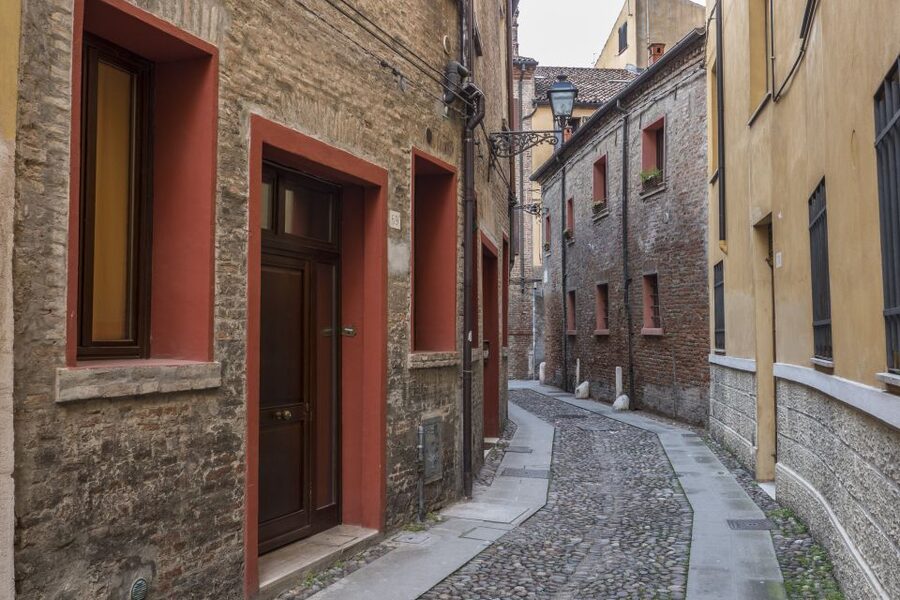
Review · ITALY
Ferrara: City Highlights Walking Tour with Local Guide
Ferrara’s real appeal comes into focus as you walk from the moat-ringed Estense Castle toward the planned Renaissance streets north of the center. In two hours, this tour links ducal power, grand palaces, quiet gardens, a former Carthusian church, and the literary memory of Ludovico Ariosto.
I like the clear route through both medieval and Renaissance Ferrara, and I like that the tour reaches beyond the usual castle stop. The Italian-speaking guides, including Maria Chiara, are praised for being prepared, punctual, courteous, and passionate. The main consideration is language: the live tour and included audio guide are in Italian, and entrance tickets are not included.
Key points at a glance
- Estense Castle sets the story: Begin in Ferrara’s defining monument, the former center of Este family power.
- Corso Ercole I d’Este explains urban planning: Walk along one of Italy’s notable Renaissance streets toward the north gate.
- Palazzo dei Diamanti brings visual drama: Its unusual diamond-shaped stonework is the centerpiece of the Renaissance Addition.
- San Cristoforo alla Certosa adds a quieter stop: Visit the Renaissance church within the former Carthusian complex and monumental cemetery.
- Piazza Ariostea gives the tour a literary finish: Ariosto’s statue and the surrounding loggia provide a fitting final pause.
- At $17, the route is strong value: You get two hours with a live Italian guide, but admission charges are separate.
Starting beneath the Este family’s castle
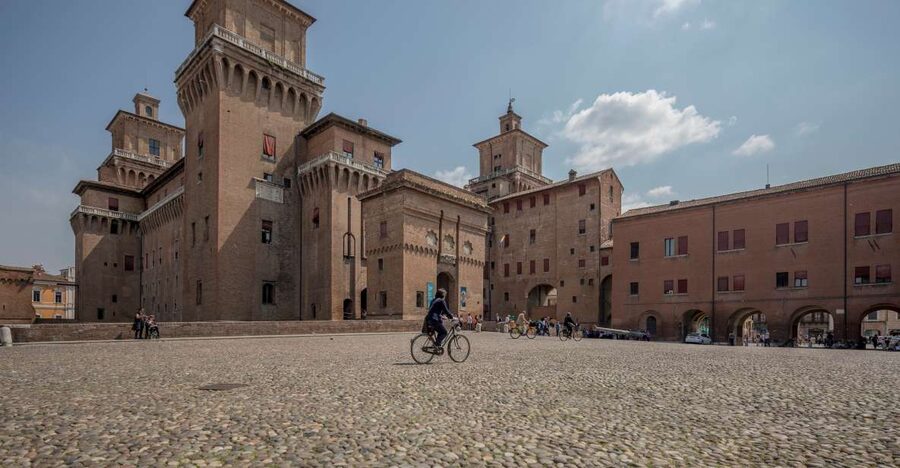
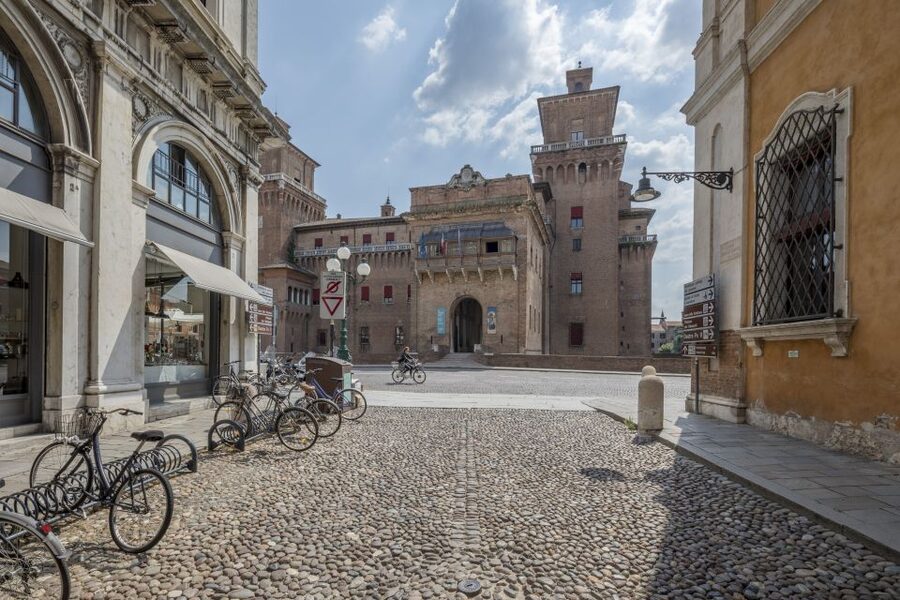
Meet in the courtyard of Estense Castle, near the loggia. This is a practical meeting point because the castle is Ferrara’s easiest landmark to find and the natural place to begin understanding the city.
The castle is more than an attractive photo stop. Its towers, moat, and heavy defensive form speak to the power of the Este rulers, who governed Ferrara for centuries. From here, your guide introduces the family’s stories, secrets, and legends before taking you into the more polished world of Renaissance Ferrara.
I like this beginning because it gives the walk a strong narrative line. You are not simply moving from one pretty building to another. You start with ducal authority, then follow the changes that reshaped the city around it.
The courtyard meeting point also makes the first few minutes easy. You do not need to search through a side street or find an obscure church entrance. Arrive ready to walk, since the tour covers several districts and open spaces rather than staying around the castle.
More City Highlights Walking Tours in Italy
- Florence: Highlights Walking Tour with Expert Guide
★ 4.6 · 4,662 reviews - Skip-the-Line Florence Highlights and David Walking Tour
★ 5.0 · 1,127 reviews - Venice: Walking Guided Tour of the City Must-See Sites
★ 4.7 · 1,095 reviews
Walking Corso Ercole I d’Este
From the castle, the route follows Corso Ercole I d’Este toward the north gate of Ferrara’s walls. This long street crosses the area known as the Renaissance Addition, the major urban expansion ordered by Duke Ercole I d’Este at the end of the 15th century.
The project was designed by the Ferrarese architect Biagio Rossetti. That detail matters because Ferrara was not reshaped by accident. Streets, palaces, churches, and open areas were planned as part of a large extension to the older medieval city.
As you walk, look for the change in mood. The medieval center feels tighter and more enclosed, while the Renaissance section has broader views and a more deliberate arrangement of buildings. Your guide helps you read this contrast, which is one of the most useful parts of the tour for anyone seeing Ferrara for the first time.
The street is also a good place to understand why Ferrara works so well on foot. The city is human-sized, with major sights connected by an easy sequence rather than scattered far apart. You get a sense of the city’s shape while still seeing individual monuments up close.
Palazzo dei Diamanti and the Renaissance Addition
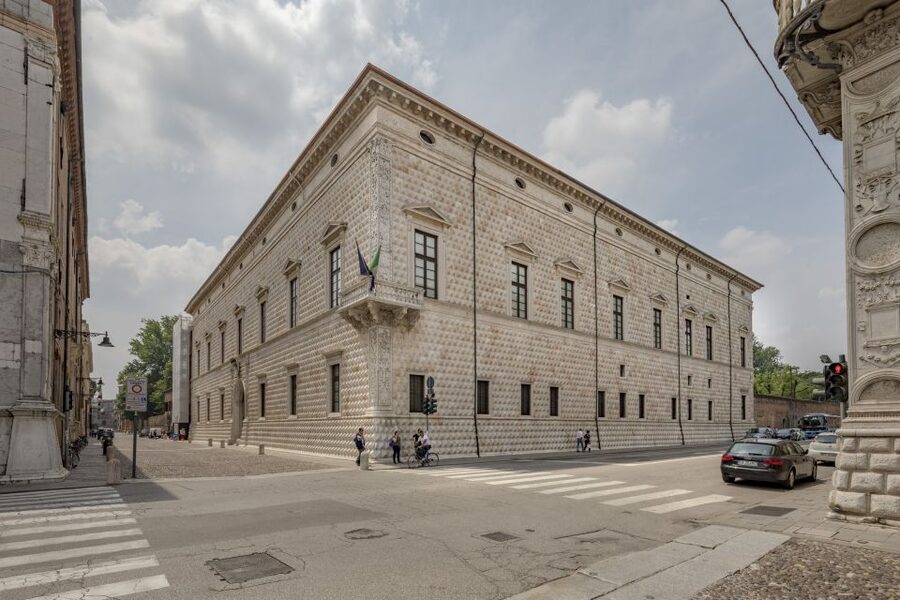
The route leads to Palazzo dei Diamanti, the best-known building in the Renaissance Addition. Its façade is covered with diamond-shaped stone blocks, creating a strong pattern that changes with the light and the angle of the street.
This is the sort of building that can look simple in a quick photograph but becomes more interesting when you stand in front of it. The repeated points give the palace a rough, faceted surface, unlike the smoother façades found elsewhere in Ferrara.
Your guide explains the building within the wider urban plan rather than treating it as an isolated curiosity. That context improves the stop. You see Palazzo dei Diamanti as part of a calculated city extension, not just an unusual palace with a memorable name.
The tour also passes the historic crossroads of the Renaissance Addition. This is a useful point to pause and take in how the streets meet and how the buildings frame the route. The focus here is on exterior architecture and city planning, so you should not assume that a museum interior or special exhibition is part of the $17 tour.
Massari Park and a slower stretch of Ferrara
After the main Renaissance palaces, the walk continues toward Massari Park. The park is marked by old cedars of Lebanon and substantial plant growth, with the University Botanical Garden nearby.
This section gives the tour a needed change of pace. Ferrara’s architecture can command your attention for a long time, but a walk through a green public space helps you notice the city’s quieter side. The route is not only about famous façades. It also shows how open areas and gardens fit into the historic center.
I particularly like this pause because it keeps the outing from becoming a nonstop march through architectural facts. You can look around, catch your breath, and see how the monumental buildings relate to everyday city space.
The exact amount of time at each stop can vary with the guide and the group. Since the full walk lasts only two hours, do not expect a long break or a detailed botanical visit. The park is part of the route and atmosphere, not a separate garden tour.
Same streets, a different story:
- Venice: Doge’s Palace and St Mark’s Basilica Walking Tour
★ 4.4 · 6,291 reviews - Milan: Guided Walking Tour & Last Supper Visit with Ticket
★ 4.7 · 5,409 reviews - Naples: Street Food Walking Tour with Local Guide
★ 4.9 · 4,976 reviews - Venice: San Marco to Rialto Walk & Spritz Like a Local
★ 4.2 · 3,651 reviews
San Cristoforo alla Certosa and the former monastery
A short distance away, the route reaches San Cristoforo alla Certosa. The complex began as a Carthusian monastery, established in Ferrara by Duke Borso d’Este in the mid-15th century. Over time, it became a monumental cemetery.
The church opens toward a square lined with elegant arcades. This arrangement creates a more solemn mood than the lively streets around the castle and palace district. The arcades, open square, and cemetery setting give the stop a sense of order and reflection.
An interior visit to the Renaissance church is included in the route. That is an important detail because it adds an indoor historical space to what is otherwise primarily a walking tour. Inside, you can see the former religious purpose of the complex and better understand the connection between the Carthusian monks and the Este court.
Admission tickets are not included in the tour price. The activity information does not specify a separate fee for entering the church, so I would confirm the current arrangements when booking or with the guide. The key point is simple: the $17 covers the guided experience, not all possible monument admissions.
San Cristoforo is also where comfortable shoes and sensible clothing matter. The tour is only two hours, but it moves through streets, parks, and a monumental complex. Bring an umbrella if rain is possible, as the walk includes outdoor sections and no general weather protection is provided.
Piazza Ariostea and the final literary note
The final major stop is Piazza Ariostea, named for the poet Ludovico Ariosto. His statue rises above the central column, giving the square a clear connection to Ferrara’s literary life.
The square is broad and green, with a loggia along one side. Ending here works well because the tour moves from political power and urban design toward culture and public space. Ariosto’s presence reminds you that Ferrara was not only a court city of dukes, fortifications, and grand building projects. It was also a place tied to major Italian writing.
The closing stop under the loggia provides shelter and a natural place to wrap up the visit. It is less formal than finishing at a ticketed monument, and you can continue exploring on your own afterward.
I would use this final moment to ask your guide for suggestions about the rest of Ferrara. The tour gives you a strong orientation, but two hours cannot cover every church, palace, museum, and medieval lane in the city.
What the guide adds to the walk
The quality of this experience depends heavily on the guide. The strongest feedback centers on guides who are passionate, prepared, precise, professional, punctual, empathetic, and courteous. Maria Chiara is one named guide connected with the tour and is specifically praised for her work.
That combination matters in Ferrara. The city’s buildings are attractive enough to admire without help, but the reasons behind the layout are less obvious. A good guide explains why the Renaissance Addition was planned, how the Este family shaped the city, and why places such as the Certosa matter.
The live guide speaks Italian, and an Italian audio guide is included. If you understand Italian, this is a useful way to hear local context while walking. If you do not, the language limit is the biggest drawback of the experience. There is no stated English-language guiding option, so check carefully before paying if Italian is not comfortable for you.
The tour is wheelchair accessible according to the activity information. Still, the route includes outdoor streets, parks, and a historic religious complex, so you may want to confirm the exact access conditions for the church and any uneven sections before arrival.
Is two hours enough for Ferrara?
Two hours is enough for a well-shaped introduction, not a full examination of Ferrara. The route covers the castle, Corso Ercole I d’Este, Palazzo dei Diamanti, Massari Park, San Cristoforo alla Certosa, and Piazza Ariostea. That is a generous list for a short outing.
The advantage is focus. You receive a connected story about medieval and Renaissance Ferrara without giving up half a day. This works well if you are in the city briefly, if you prefer a compact introduction, or if you want a guided orientation before exploring independently.
The tradeoff is pace. You will likely stop at many places, but the tour cannot offer long visits at each one. If you want to study every façade, spend extended time inside the church, or visit museums within the palaces, you will need extra time after the walk.
I would schedule this near the start of your stay in Ferrara. The route shows you how the center fits together and gives you a better sense of where to return later. You can then revisit Palazzo dei Diamanti, the castle, or the church at your own speed if opening hours and admission arrangements allow.
What $17 gets you
At $17 per person, this is a reasonably priced guided introduction to Ferrara. You get a two-hour walking route, a live Italian-speaking guide, and an Italian audio guide. For a city whose appeal depends on connections between monuments, the guided explanation adds real value.
The price is especially fair if you are interested in urban design and local history rather than simply collecting entrance tickets. The guide links the Este family, Biagio Rossetti’s Renaissance expansion, the palace district, the Carthusian complex, and Ariosto’s square into one readable story.
Keep the limits in mind. Entrance tickets are not included, and the tour does not promise extended interior visits beyond the stated church visit. The value is in the route and interpretation, not in bundled admission.
Flexible booking is another practical advantage. You can reserve now and pay later, and cancellation is free up to 24 hours before the scheduled start for a full refund. Check available start times because the tour lasts two hours, and your preferred departure may not be offered every day.
Who should book this Ferrara walk?
I would choose this tour if you want a short introduction with a clear historical thread. It suits first-time visitors, architecture fans, anyone interested in the Este family, and people who prefer seeing a city on foot rather than moving between isolated attractions.
It also works for visitors who want more than the obvious center. The route goes past the castle and Palazzo dei Diamanti, but it continues to Massari Park, San Cristoforo alla Certosa, and Piazza Ariostea. That wider circuit gives you a better feel for Ferrara as a complete city.
Families and mixed-age groups may appreciate the two-hour length and the variety of stops. The park and open squares break up the architecture, while the castle and palace façades give the walk plenty of visual interest. The wheelchair-accessible designation is helpful, though I would still confirm the church access in advance.
I would skip it if you need an English-language guide, want a museum-heavy tour, or prefer to explore without a fixed route. You might also find it too brisk if your priority is photographing every detail or spending long periods inside monuments.
Should you book it?
Book this tour if you want a well-planned two-hour introduction to Ferrara at a modest price, and if Italian is suitable for you. The route has a good balance: castle legends, Renaissance planning, distinctive architecture, greenery, religious history, and a literary final stop.
The best reason to go is the route itself. You move from Estense Castle along Corso Ercole I d’Este to Palazzo dei Diamanti, then continue through Massari Park to San Cristoforo alla Certosa and Piazza Ariostea. That sequence shows how Ferrara grew and how its courtly, religious, artistic, and public spaces connect.
Skip it only if the Italian-language format or separate entrance costs do not fit your plans. For everyone else, $17 buys a useful orientation and a thoughtful walk through the city’s medieval and Renaissance character.
FAQ
Where does the Ferrara walking tour meet?
The meeting point is in the courtyard of Estense Castle, near the loggia.
How long does the tour last?
The walking tour lasts two hours.
What language is the live tour in?
The live tour guide speaks Italian. An Italian audio guide is also included.
Are entrance tickets included?
No. Entrance tickets are not included in the tour price.
Is the tour wheelchair accessible?
Yes, the activity is listed as wheelchair accessible.
Can I cancel the booking for a refund?
Yes. You can cancel up to 24 hours in advance for a full refund. You can also reserve now and pay later.
New walking tours around Italy
- Rome: Fountains and Squares Small-Group Walking Tour★ 4.7 · 335 reviews
- Napoli: Walking Tour of Naples with Local Tour Guide★ 4.9 · 95 reviews
- Naples: Spanish Quarters Walking Tour★ 4.6 · 72 reviews
- Naples: Street Art, Wine and Food Tasting Walking Tour★ 5.0 · 163 reviews
- Naples: Historic Center and Sansevero Chapel Walking Tour★ 4.8 · 208 reviews
- Naples: Old Town Guided Walking Tour★ 4.8 · 553 reviews
- Naples: Street Food Experience With 6 Stops★ 4.7 · 392 reviews
- Naples: City Walking Tour w/ Underground Roman Ruins Ticket★ 4.6 · 284 reviews
Italy Walking Tours, side by side.
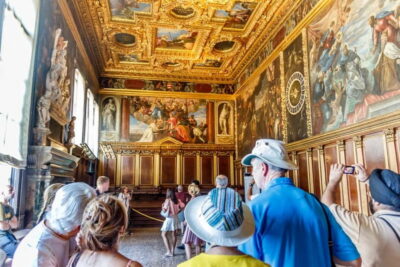
Venice: Doge’s Palace and St Mark’s Basilica Walking Tour
Read our review →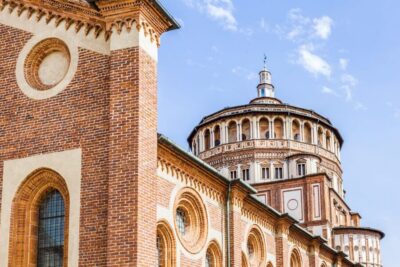
Milan: Guided Walking Tour & Last Supper Visit with Ticket
Read our review →
Naples: Street Food Walking Tour with Local Guide
Read our review →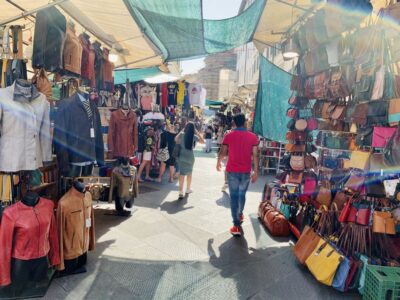
Florence: Highlights Walking Tour with Expert Guide
Read our review →
Venice: San Marco to Rialto Walk & Spritz Like a Local
Read our review →
Uffizi & Accademia Timed Entry: Small Group Duomo Walking Tour
Read our review →
Lists this walk sits on