
Review · FLORENCE
Florence: Renaissance and Medici Tales Guided Walking Tour
Florence’s great sights make more sense when you connect them to the people who paid for them, fought over them, and used them to display power. This walking tour follows that thread from San Lorenzo and the Medici family to the Duomo, Palazzo Vecchio, Ponte Vecchio, and the Uffizi.
I like the tour’s clear route through central Florence and its strong storytelling. I also like that guides such as Chiara, Michele, Glenda, and Angela add useful advice on places to eat, drink, and shop, rather than stopping at dates and names.
The main consideration is simple: this is a walking overview, not an interior visit to Florence’s major museums or monuments. You see and discuss the exteriors, so book separate timed admission if you want to enter the Duomo, Palazzo Vecchio, or the Uffizi.
Key points at a glance
- Medici stories shape the route: Learn how several generations of one family influenced Florence’s buildings, art, and politics.
- The major sights are outside stops: The tour covers San Lorenzo, the Medici palace, the Duomo complex, Palazzo Vecchio, Ponte Vecchio, and more without including entry tickets.
- A useful first-day orientation: The route gives you a working map of central Florence and ideas for what to see next.
- Storytelling is the main attraction: Guides explain symbols, rivalries, artists, and city traditions in an accessible way.
- The pace suits a two-hour introduction: It is designed to cover a lot without racing from one site to the next.
- Plan for weather and walking: Wear comfortable shoes, carry water, and expect the tour to run in rain or sunshine.
Why Medici power is the best way into Florence
Florence can feel like an open-air museum, but a quick look at its façades does not tell you why the city became so important. The Medici connection gives the walk a useful spine. You learn how money, family alliances, political control, religion, and art worked together.
The Medici were not simply generous patrons who happened to like paintings. Their influence reached into banking, government, architecture, sculpture, and public ceremony. As you move through the city, the guide links buildings to different generations of the family and explains how their choices changed Florence.
I appreciate this approach because it gives you a way to read the city after the tour ends. A coat of arms, a position on a building, or a repeated symbol can point to authority and family identity. The guide helps you notice details you might otherwise pass without a thought.
The storytelling also appears to work well for mixed-age groups. One recent group specifically found that teenagers stayed interested, which matters in Florence, where a long list of artists and dates can quickly lose a younger audience. The strongest guides use humor, human conflict, and memorable characters to make the material easier to follow.
More walks with a guide around Florence:
- Florence: Highlights Walking Tour with Expert Guide
★ 4.6 · 4,662 reviews - Florence: Duomo Complex with Tickets & City Walk Guided Tour
★ 4.7 · 2,057 reviews - David & Accademia Guided Tour with Time Entry Ticket
★ 4.5 · 1,705 reviews
Starting at San Lorenzo under the green umbrella
The meeting point is Florence Free Tour-Tale, in Piazza di San Lorenzo. Look for the green umbrella in front of the stairs leading to the main entrance of San Lorenzo Church.
This is a practical starting point. San Lorenzo sits close to Florence’s central sights, and the square immediately gives you a sense of the city’s layered architecture. The Basilica combines Renaissance and Romanesque elements, so the first stop introduces both the older city and the period that made Florence famous.
The square can be busy, and the meeting point is easy to miss if you are looking only for a large office or sign. Arrive with enough time to locate the umbrella and guide. The activity is offered in English and Spanish, and the guide may vary. Chiara, Michele, Glenda, Angela, Antonio, Fabio, Ricardo, and others have led recent departures.
Bring water and wear shoes that are comfortable on stone streets. The route stays in central Florence, but two hours on foot still adds up. The tour runs rain or shine, so a light waterproof layer can make a wet day much more pleasant.
San Lorenzo and Palazzo Medici Riccardi
The Basilica of San Lorenzo is more than a place to gather. It helps explain the Medici connection to Florence. The guide discusses the building’s appearance and its ties to the family, giving you an early example of how religious spaces could also express status and influence.
From here, the route continues to Palazzo Medici Riccardi. This is one of the key stops for understanding how the family presented itself. The palace’s location and architecture tell you something about the shift from private wealth to public power.
The guide also places the family within the wider birth of the Renaissance. You hear about the patrons, artists, and political figures who made Florence a center for new ideas. The emphasis is not only on famous masterpieces, but on the conditions that allowed artists and architects to work at such a high level.
This stop is especially useful if you plan to visit Medici sites later. After the walk, you will have a better sense of why the family’s buildings matter and how different generations left their mark.
Reading the Duomo complex from the outside
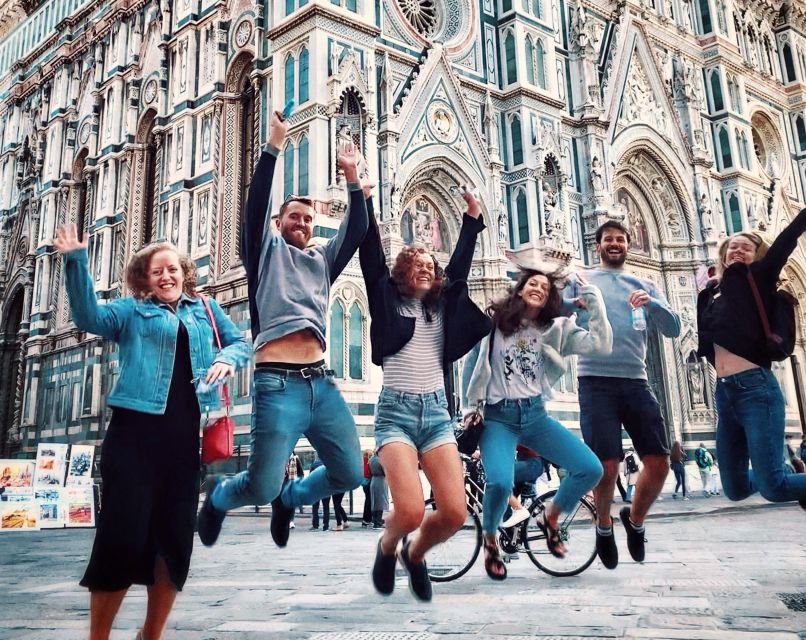
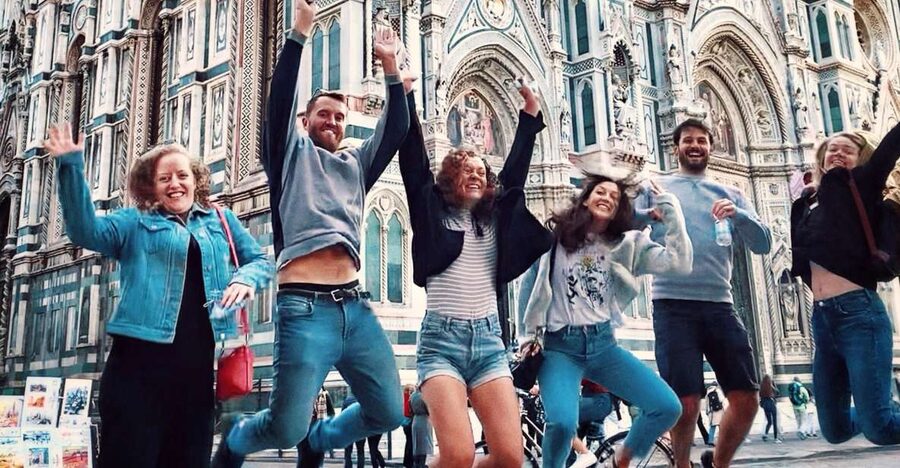
The Florence Duomo complex is the visual high point of the route. The cathedral’s marble façade, Giotto’s Bell Tower, and Brunelleschi’s Dome form a group of buildings that can be hard to understand when you are standing in front of them without context.
The guide explains the story behind the dome and the architectural challenge it presented. Brunelleschi’s achievement is often reduced to a single famous name, but the fuller story involves ambition, technical skill, rivalry, and Florence’s desire to prove its importance.
You will discuss the cathedral, bell tower, and dome from the outside. This is an important limitation. The tour does not include climbing Brunelleschi’s Dome, entering the cathedral, or visiting the other parts of the Duomo complex.
Still, an exterior explanation has real value. The square is crowded, and it is easy to focus only on taking photos. A guide can direct your attention to the relationship between the structures, the decoration, and the symbols placed on them.
If you want to climb the dome or visit the interior, arrange a separate ticket. This walking tour works best as the explanation before that visit, not as a replacement for it.
More walking tours around Florence:
- Uffizi & Accademia Timed Entry: Small Group Duomo Walking Tour
★ 4.5 · 3,630 reviews - Florence: Guided Walking Tour
★ 4.6 · 1,602 reviews - Florence: Uffizi & Accademia Small Group Walking Tour
★ 4.7 · 1,380 reviews - Skip-the-Line Florence Highlights and David Walking Tour
★ 5.0 · 1,127 reviews
Dante’s Florence and the city’s literary side
The stop at the House of Dante adds a different voice to the tour. Florence is often presented through the Medici and Renaissance art, but Dante connects the city to medieval politics, literature, religion, and exile.
The guide uses Dante’s place in Florence to show that the city’s story began before the great Renaissance commissions. You get a broader timeline, moving from earlier Florence into the age of the Medici and the artists associated with the city.
The House of Dante is best treated as a short exterior stop within the walking route. The value comes from the explanation and the connection to Florence’s political and cultural life, rather than from a long museum visit.
This part of the tour can be particularly helpful if you know Dante mainly as the author of the Divine Comedy but do not know his relationship with Florence. It gives the city a more personal and sometimes difficult past.
Palazzo Vecchio, Piazza della Signoria, and public power
The route then reaches Palazzo Vecchio and Piazza della Signoria, where Florence’s political story becomes easier to see. This is one of the most rewarding sections for understanding how power was displayed in public.
Palazzo Vecchio is not simply an attractive medieval building. Its position and appearance reflect Florence’s government and the struggles around who controlled the city. The guide explains the building’s role and connects it to the Medici story.
In Piazza della Signoria, you get a concentrated lesson in public sculpture and political messaging. Statues were not placed here only for decoration. Their subjects and location helped communicate ideas about strength, justice, victory, and civic identity.
The nearby Loggia dei Lanzi provides another useful stop. Its open arcade contains major sculptures and gives you a chance to see how art was placed directly into the public life of Florence. You are not entering a quiet gallery. You are looking at art in the same streets where political ceremonies and daily city life unfolded.
This part can be busy, especially during the middle of the day. Stay close to the guide and make sure you can hear. Some departures use a microphone and earpieces, which can help in noisy streets, though equipment may vary by group.
Ponte Vecchio and the final walk toward the Uffizi
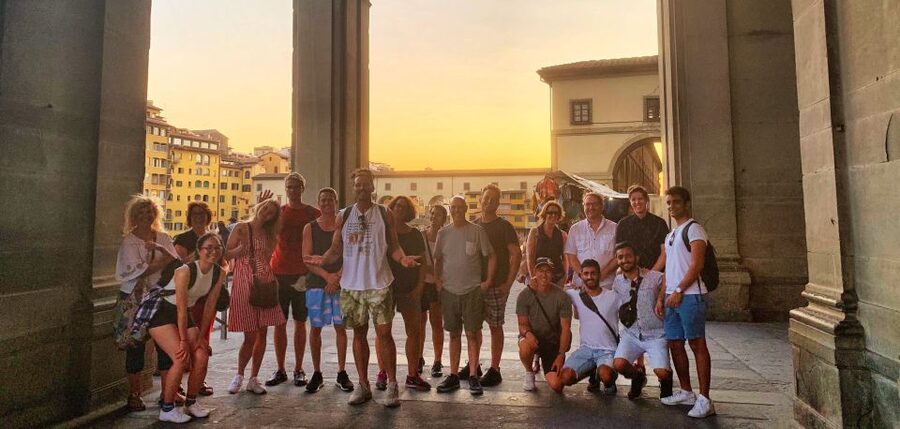
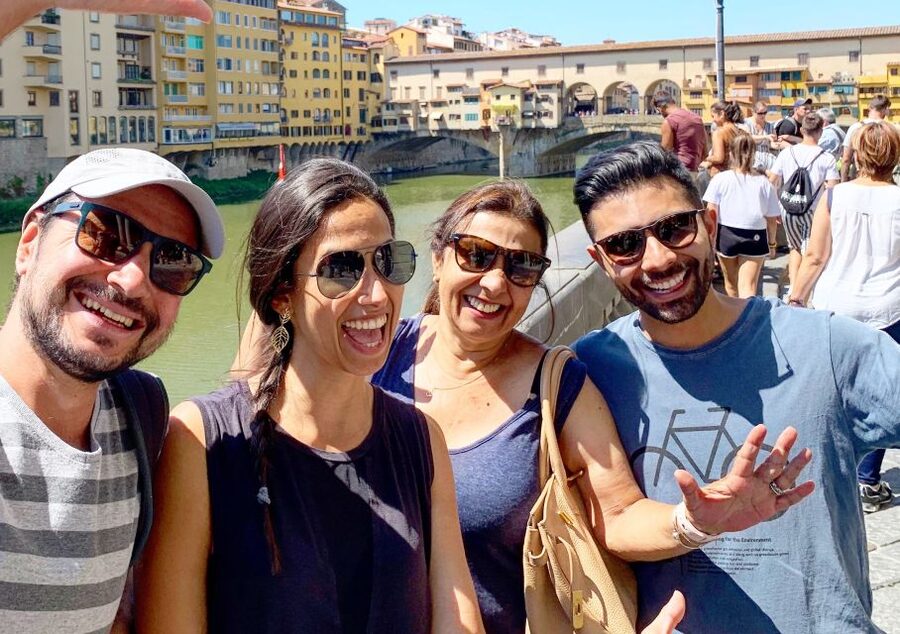
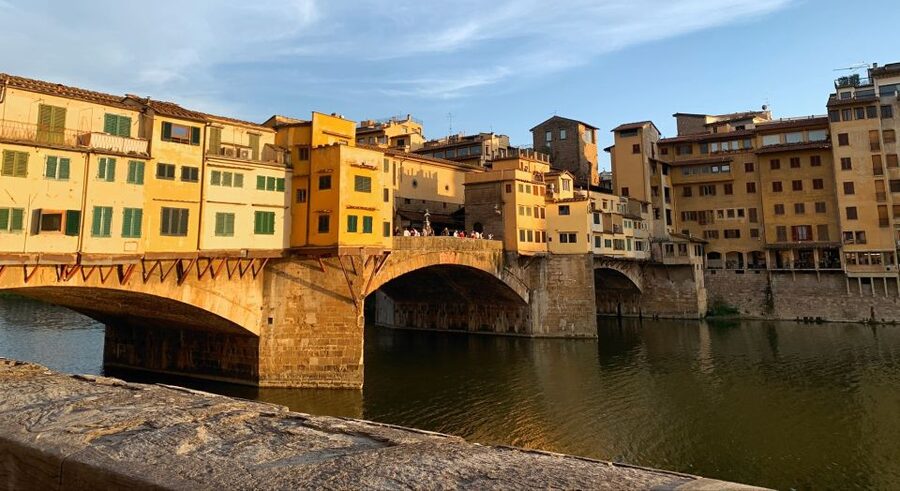
Ponte Vecchio shifts the mood from government and grand squares to commerce and the Arno. The bridge is one of Florence’s most recognizable sights, but the guide places it within the city’s wider story rather than treating it as a quick photo stop.
You walk across or around the bridge as part of the central route, taking in its unusual structure and its connection to Florence’s trade and ruling families. The views are a welcome change after the tighter streets around the Duomo and Piazza della Signoria.
The tour finishes outside the Uffizi Gallery. This is a smart ending point because you are left near one of Florence’s essential museums and close to the river and central squares.
The guide does not take you inside the Uffizi as part of this experience. Instead, the final minutes are used for practical recommendations. You can ask where to eat, where to find a drink, which shopping areas fit your budget, and what sights deserve your time next.
That local advice may be one of the most useful parts of the walk. Florence has plenty of food and shopping options, but the right choice depends on where you are staying and what kind of evening you want. Ask specific questions before the group breaks up.
What the guides do best
The quality of a walking tour depends heavily on the person holding the umbrella. Here, the strongest pattern is lively delivery rather than a dry lecture.
Chiara is repeatedly described as an engaging storyteller who handles questions well and keeps the group moving through narrow streets. Michele is praised for humor, warmth, and his ability to turn Florence’s history into a clear story. Glenda is noted for detailed explanations, while Angela has been especially effective at explaining the Medici family’s final legacy and the protection of Florence’s art.
Other named guides include Antonio, Fabio, Ricardo, Gabriella, Manuel, Autumn, and Gabriel. Because the guide is not fixed, your experience may differ in tone and emphasis. The common aim is a human account of Florence, with history tied to buildings you can see around you.
I would choose this tour for people who learn best through stories. If you prefer to study art labels alone or spend long stretches inside one monument, the format may feel too broad. If you want a clear crash course before exploring on your own, it fits well.
Price, tipping, and what the value really is
The listed price is $2.36 per person, which is unusually low for a two-hour guided walk. This operates on a free-tour model, so the booking price is not the whole financial picture. Tipping is expected, and the amount is your choice. One recent participant referred to paying 4.90 euros and then tipping according to satisfaction, while another advised carrying cash.
Think of the price as a low-cost way to reserve a place rather than the full cost of the guide’s work. You should budget a cash tip that reflects the quality and length of the tour. Since the tour includes no entry tickets, the value comes from orientation, interpretation, and local suggestions.
At this price, it is a strong choice for a first look at Florence. You can decide afterward which interiors deserve separate admission. That is often better value than paying for a long sightseeing package that tries to cover every museum in one morning.
Who should book this Florence walk
I would choose this tour early in a Florence stay, ideally on your first day or soon after arrival. The route helps you understand the center, and the food and shopping advice can improve the rest of your visit.
It suits:
- First-time visitors who want the major landmarks explained in context
- Families with older children or teenagers
- History and art lovers who enjoy stories about people and power
- Visitors who want a low-cost introduction before buying museum tickets
- Anyone who wants advice from a local guide on food, drinks, and shopping
It may not suit you if you want extensive interior access, a small private group, or a tightly focused art lecture. You should also consider the weather, the two hours on foot, and the possibility of a busy group around the most famous squares.
For accessibility, the activity is listed as wheelchair accessible. Florence’s central streets and crowds can still affect comfort, so ask the operator for current route details if you have specific mobility needs.
Should you book it?
Book it if you want Florence to make sense quickly. The route covers an impressive number of important places, but its real strength is the link between architecture, Medici ambition, Renaissance art, Dante, and public life.
I would not book it as your only cultural activity in Florence. Use it as a well-priced introduction, then choose the interiors that interest you most. Arrive at San Lorenzo with comfortable shoes, water, weather-ready clothing, and some cash for the guide’s tip.
For a first-day orientation led by an engaging storyteller, this is an easy recommendation. For a museum-heavy visit, pair it with timed entries to the Duomo complex, Palazzo Vecchio, and the Uffizi.
FAQ
How long does the Florence walking tour last?
The activity is listed as lasting two hours. The itinerary also describes a guided tour of about 2.25 hours, so allow a little extra time rather than planning another fixed activity immediately afterward.
Where does the tour meet?
Meet at Florence Free Tour-Tale in Piazza di San Lorenzo. Look for the green umbrella in front of the stairs leading to the main entrance of San Lorenzo Church.
Which languages are available?
The live guide is available in English or Spanish.
Does the tour include entry to the Duomo or Uffizi Gallery?
No. The tour discusses the Duomo complex, Brunelleschi’s Dome, and the Uffizi area from outside. Admission tickets are not included.
Is the tour wheelchair accessible?
Yes, the activity is listed as wheelchair accessible.
What should I bring?
Bring comfortable shoes, water, a camera, and clothing suited to the weather. The tour runs rain or shine, so prepare for wet conditions if rain is forecast.
New walking tours around Florence
- Florence: Walking Tour with David, Duomo & Uffizi Gallery★ 4.7 · 414 reviews
- Florence Walking Tour & Skip-the-Line David at Accademia★ 4.7 · 159 reviews
- Florence: The Medici Family Guided Walking Tour★ 4.7 · 129 reviews
- Florence: Tuscan Food and Wine Guided Walking Tour★ 4.8 · 72 reviews
- Florence Street Food Walking Tour with Wine in Duomo Area★ 4.9 · 76 reviews
- Florence: Uffizi & Accademia Small Group Walking Tour★ 4.7 · 1,380 reviews
- Florence: Small Group Guided Walking Tour★ 4.7 · 176 reviews
- Florence: Street Food Walking Tour with Wine★ 4.9 · 719 reviews
Florence Walking Tours, side by side.
Florence: Highlights Walking Tour with Expert Guide
Read our review →
Uffizi & Accademia Timed Entry: Small Group Duomo Walking Tour
Read our review →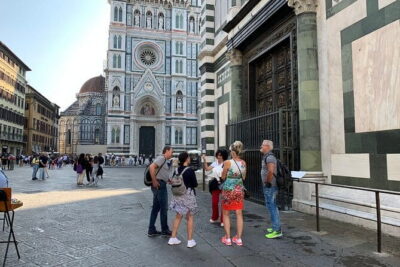
Florence: Duomo Complex with Tickets & City Walk Guided Tour
Read our review →
Michelangelo’s David, Accademia & Uffizi Small Group Tour
Read our review →
David & Accademia Guided Tour with Time Entry Ticket
Read our review →
Florence: Uffizi & Accademia Small Group Walking Tour
Read our review →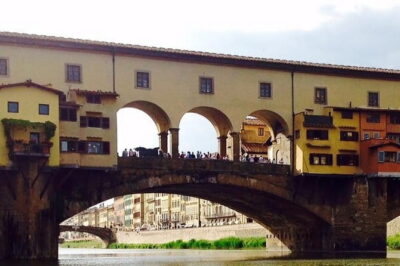
Skip-the-Line Florence Highlights and David Walking Tour
Read our review →Lists this walk sits on