
Review · ITALY
Genoa Must-See Attractions Walking Tour
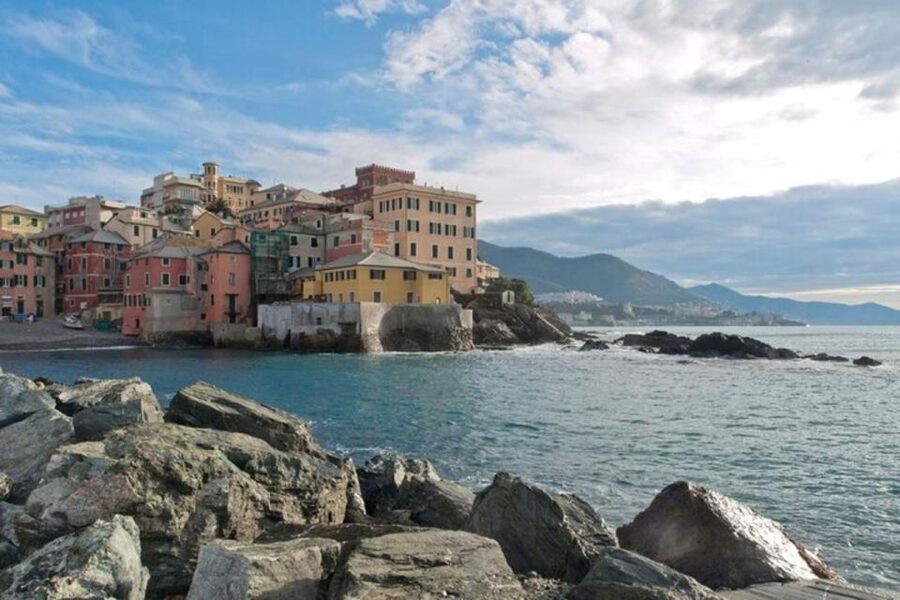
Genoa’s old center unfolds best on foot, and this two-hour route gives you a useful first look at its grand squares, medieval gate, cathedral, and narrow streets. Guides such as Giulio and Fulvio explain the buildings clearly, with extra attention to art, local history, and places to eat.
I like the compact route and the practical ending at Piazza De Ferrari, where you can keep exploring on your own. I also like that the guides share lesser-known streets and local food tips, not just the standard photo stops. The main drawback is pace: two hours is enough for an overview, but not for long visits inside every building.
Key points at a glance
- A two-hour introduction to central Genoa: The route connects major sights without requiring transport between them.
- San Lorenzo Cathedral is the visual high point: You get time to admire Genoa’s most important church and its striking exterior.
- Local guides add context: Giulio and Fulvio have been praised for clear explanations of art, history, and local customs.
- The tour includes both famous and quieter places: Along with Doge’s Palace and Porta Soprana, you see Piazza San Giorgio and the streets around it.
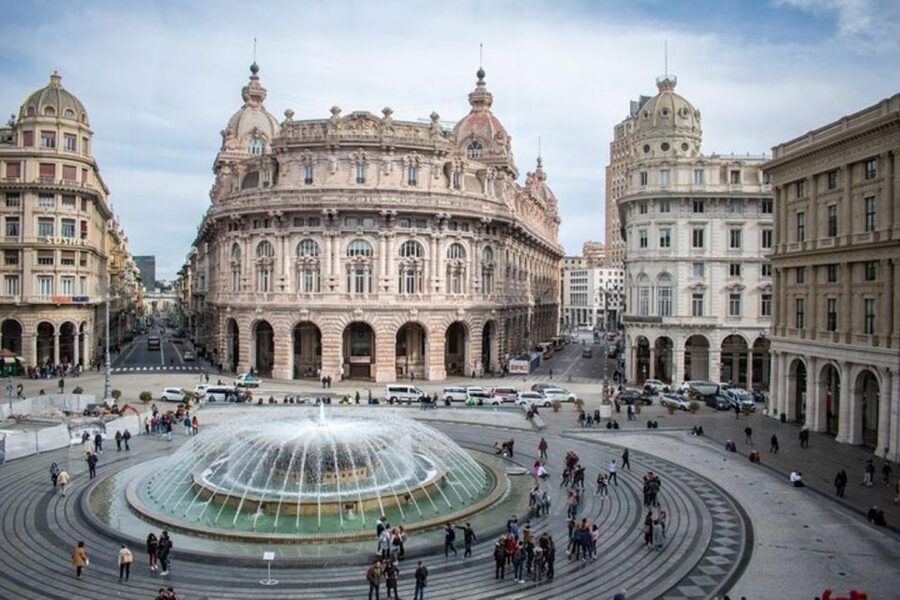
- The route ends in a useful location: Piazza Raffaele de Ferrari is Genoa’s main square and a good base for further sightseeing.
- Good flexibility for many visitors: English, Spanish, Italian, and French are offered, private groups are available, and the route is wheelchair accessible.
Starting in Piazza Giacomo Matteotti
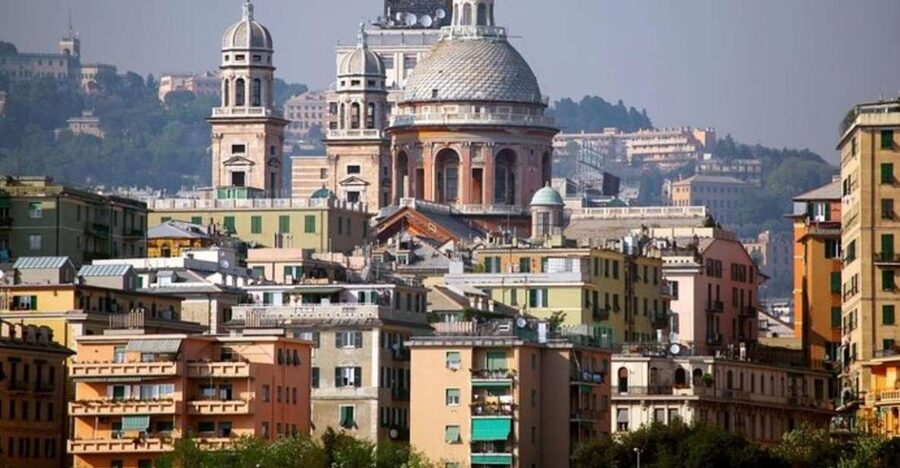
The meeting point is Piazza Giacomo Matteotti, 60, a central square surrounded by cafes, shops, and cultural sights. It is a sensible place to begin because you are already in the heart of Genoa’s historic center rather than spending the opening minutes getting there from the outskirts.
I would arrive a little early. The tour begins in a busy central area, and finding the guide is easier when you are not rushing in at the scheduled time. Have comfortable shoes on from the start. Even though the route lasts only two hours, Genoa’s old center includes uneven paving, narrow streets, and plenty of walking.
The starting point also gives you a good first sense of the city. Genoa is not arranged like a simple collection of monuments on one broad avenue. Its historic center is made up of squares, lanes, churches, former political buildings, and old gateways. A guide helps connect these pieces so the walk feels like a story rather than a string of unrelated stops.
More City Highlights Walking Tours in Italy
- Florence: Highlights Walking Tour with Expert Guide
★ 4.6 · 4,662 reviews - Skip-the-Line Florence Highlights and David Walking Tour
★ 5.0 · 1,127 reviews - Venice: Walking Guided Tour of the City Must-See Sites
★ 4.7 · 1,095 reviews
Christopher Columbus’ House and Genoa’s medieval setting
The first listed stop is Christopher Columbus’ House, where you have about 15 minutes for a visit, guided explanation, sightseeing, and photographs. The stop provides an immediate link to Genoa’s maritime past and gives the tour a personal starting point before it moves toward larger public buildings.
You should think of this as an introduction, not a museum visit with a long indoor exploration. The schedule allows time to see the site and hear its background, but the tour continues quickly. If Columbus is a major interest for you, you may want to return later and spend more time in the area.
This is also where the value of a local guide becomes clear. A bare photo stop tells you what a building is. A good guide explains why it matters to Genoa and how it fits into the city’s wider story. Giulio, who guides in English and French as well as other languages, has been praised for connecting historical details with art and local food advice.
Doge’s Palace, a former seat of power
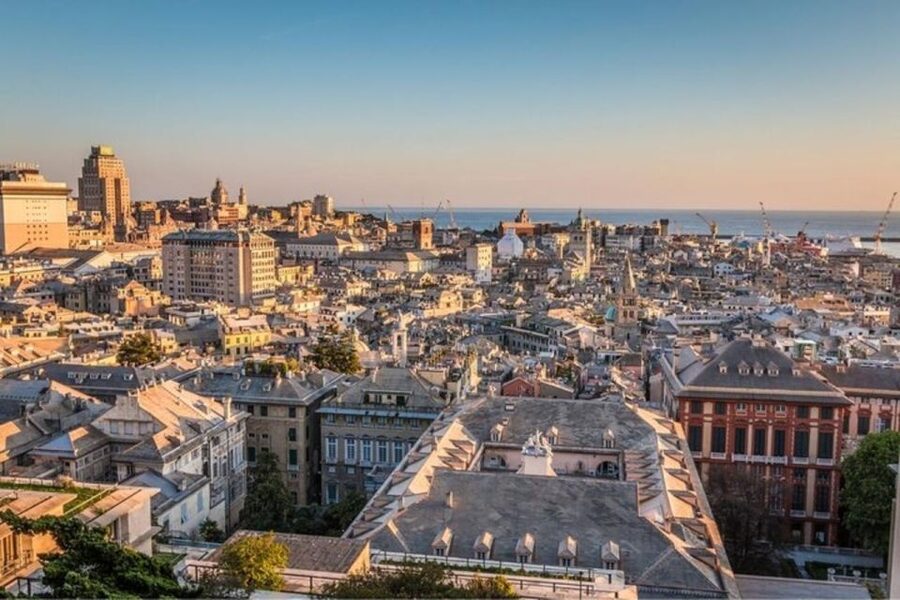
From Columbus’ House, the group walks to Doge’s Palace. The former home of Genoa’s doges is now used as a museum and cultural center, so this stop links the city’s political past with its present-day cultural life.
The palace is one of the route’s most useful stops for understanding Genoa as a powerful maritime republic. You are not simply looking at an impressive facade. You are seeing the old center of government, where the city’s ruling figures once worked and lived.
The schedule again gives you around 15 minutes. That is enough for an explanation, exterior views, and photographs, but it is not a full palace tour. If you want to visit museum rooms or exhibitions, plan a separate visit after the walk and check opening details independently.
I appreciate this kind of stop because it gives scale to the rest of the route. After seeing a former seat of government, the smaller squares and medieval lanes feel less like decorative leftovers and more like parts of a working historic city.
Piazza San Giorgio and the city’s smaller corners
Piazza San Giorgio is one of the places that keeps the tour from becoming a simple greatest-hits walk. The square offers a chance to see a less obvious part of central Genoa and to hear about the city beyond its biggest monuments.
You have approximately 15 minutes here for sightseeing and photographs. The guide can point out details that are easy to miss when you are moving through the center alone. This is especially useful in Genoa, where an attractive doorway, small church, or side street can appear between major sights without much explanation.
Fulvio has received particular praise for showing secret streets and for explaining local art and history. That makes this portion of the route especially appealing if you want more than a checklist of famous places. You still see the headline sights, but the walk leaves room for a sense of how the old center fits together.
Do not expect a long pause at every corner. The tour has several stops to cover, and the guide must keep the group moving. The benefit is breadth. The tradeoff is that you may leave with a list of places you want to revisit.
Same streets, a different story:
- Venice: Doge’s Palace and St Mark’s Basilica Walking Tour
★ 4.4 · 6,291 reviews - Milan: Guided Walking Tour & Last Supper Visit with Ticket
★ 4.7 · 5,409 reviews - Naples: Street Food Walking Tour with Local Guide
★ 4.9 · 4,976 reviews - Venice: San Marco to Rialto Walk & Spritz Like a Local
★ 4.2 · 3,651 reviews
Piazza Banchi and Genoa’s commercial life
The route continues to Piazza Banchi, another central square with an important place in Genoa’s civic and commercial story. Like Piazza San Giorgio, it helps show how the city worked as well as how it looked.
This is a good place to listen for the link between architecture and daily life. Genoa’s squares were not built only for grand ceremonies. They were tied to trade, movement, government, and public activity. A guide can point out those connections while you take in the surrounding buildings.
The 15-minute format suits this stop. You get a focused explanation and time for photos without losing the rhythm of the walk. If you prefer slow photography or want to study architectural details, you may feel hurried. If you want a clear orientation to the city in a short period, the timing works well.
One useful feature is the food advice. The guides have offered tips about typical places to eat and local specialties. Food is not included, but these suggestions can help you choose lunch or dinner with more confidence after the tour.
Porta Soprana and the old city walls
Porta Soprana is one of the route’s most distinctive sights. This towered gate formed part of Genoa’s 12th-century city walls and gives you a clear physical reminder that the old city was once defended and carefully bounded.
The gate is a strong photo stop because it has a direct, recognizable connection to medieval Genoa. More important, it helps you understand the relationship between the historic center and the streets around it. The city’s past is not confined to a museum label. It survives in the walls, gates, and routes through which people still walk.
You have around 15 minutes here. That is enough for the guide to explain the gate and for you to take in its form, but not for an extended study of the surrounding archaeological details. If medieval architecture is your main reason for booking, note the location and return later at your own pace.
The stop also breaks up the sequence of palaces and piazzas. After several urban squares, Porta Soprana gives the walk a more defensive and medieval character.
The Castello stop needs a quick clarification
The supplied route includes a stop labeled Castello, Venice. That wording does not match a Genoa walking tour, and no further description is provided for it. I would confirm this point with the operator before booking or before the tour begins.
It may refer to a Genoa neighborhood or a simple labeling error, but the available information does not establish which. This is the one itinerary detail that deserves clarification because you should know exactly where the group is going and how the stop fits into a two-hour route.
That uncertainty does not affect the clearly described Genoa sights, but it is worth checking if you are arranging a tight cruise-day schedule, meeting the group at a precise location, or booking a private version.
Cattedrale di San Lorenzo, the tour’s main architectural stop
Genoa Cathedral, or Cattedrale di San Lorenzo, is the major architectural highlight. The church is known for its imposing exterior, and the guided stop gives you a chance to appreciate its design with someone explaining what you are seeing.
This is the point where a guide with an art background can add real value. A quick look at a cathedral facade can easily become a blur of stone, arches, stripes, and sculpture. Clear commentary helps you separate the important features and understand why the building matters within Genoa’s center.
You have approximately 15 minutes here for a visit, guided tour, sightseeing, and photos. That is a useful introduction, but it is not enough for a full examination of every chapel, artwork, or interior detail. If the cathedral is a priority, ask the guide what deserves a closer look, then return independently if time allows.
I would save a little energy for this stop. By this point, you have already covered several squares and historic buildings, and the cathedral rewards a slower glance. Look up, take in the facade, and let the guide explain the details rather than treating it as another quick photograph.
Finishing at Piazza Raffaele de Ferrari
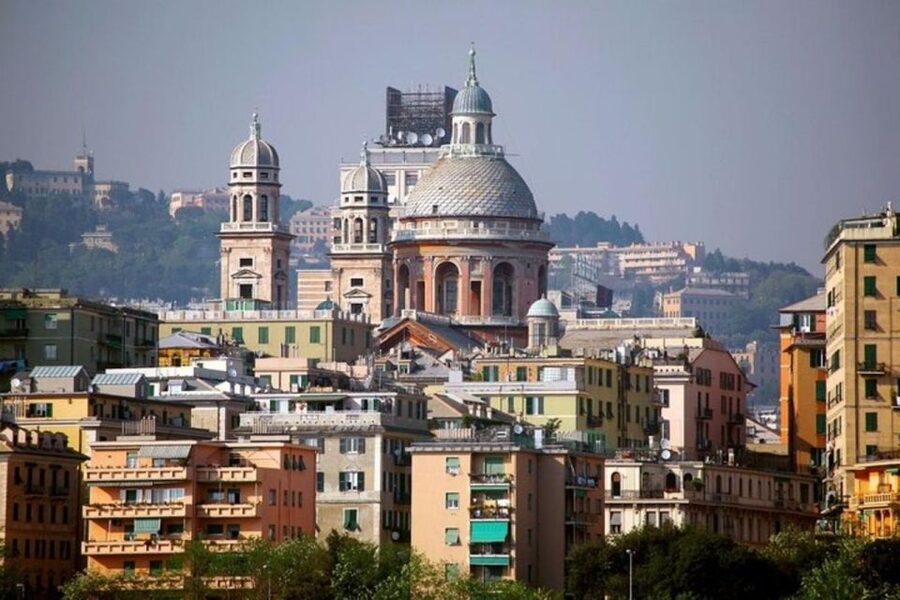
The tour ends at Piazza Raffaele de Ferrari, Genoa’s main square. This is a practical finish because you are not left at an obscure side street. You can use the square as a launching point for more sightseeing, shopping, food, or a return to the waterfront.
The ending also gives the tour a useful shape. It begins in the old center, moves through Genoa’s political, religious, commercial, and defensive landmarks, then finishes in one of the city’s broadest public spaces. You come away with a basic map in your head.
Ask your guide for final suggestions before separating. The tour specifically includes insider advice on places to explore afterward, and this is the moment to use it. If you have only one day in Genoa, guidance about where to go next may be nearly as useful as the formal stops.
What $41 buys you in two hours
At $41 per person, this tour is priced as a short orientation with a live local guide rather than as a full-day cultural program. I consider that fair if you want structure, context, and help finding the main sights without committing half a day.
The price is easier to justify if you are visiting Genoa for the first time, arriving by cruise ship, or working with limited time. You cover several important places in two hours, and you do not need to plan the walking order yourself.
The value is less obvious if you already know the historic center or prefer to explore slowly with a guidebook. Food and drinks are not included, and the schedule does not provide long indoor visits. You are paying mainly for interpretation, orientation, and the chance to ask questions.
A private group is available, which may make the price more worthwhile for families or friends who want a more personal pace. The standard experience may suit independent visitors who want company and explanations without arranging a custom tour.
Who should book this Genoa walk?
I would recommend it to first-time visitors who want a clear introduction before exploring alone. It also suits people who enjoy architecture, city history, and short walks that combine major sights with less obvious streets.
The tour works well for visitors who speak English, Spanish, Italian, or French. The guide languages make it easier to follow detailed explanations, especially at the cathedral and former government buildings.
It can also help you decide what deserves more of your time. A two-hour overview lets you see the shape of central Genoa before choosing where to return. That is often better than spending your whole visit guessing which streets lead to the most worthwhile sights.
You may want something else if you dislike timed stops, want extensive museum access, or prefer a slow food-focused walk. The tour includes food suggestions, but no food or drinks, and its main purpose is sightseeing.
Bring comfortable shoes and clothing suited to the weather. The experience is wheelchair accessible, but because exact street conditions are not provided, you may still wish to confirm the route details if you have specific mobility needs.
Should you book it?
Book this tour if you want to get your bearings fast and understand Genoa through its cathedral, medieval gate, public squares, and former seats of power. The strongest reasons are the compact route, multilingual guides, and the added local advice about food and quieter streets.
The main limitation is its short length. You will see many places, but most stops last about 15 minutes, so this is an overview rather than an in-depth examination. At $41, it offers solid value for a first visit, especially when your time is limited.
Before booking, confirm the Castello, Venice wording so there is no confusion about the route. If that point is clarified and the schedule suits you, this is a practical way to begin exploring Genoa.
FAQ
How long does the Genoa walking tour last?
The tour lasts two hours.
What is the price?
The price is $41 per person.
Where does the tour begin?
It begins at Piazza Giacomo Matteotti, 60.
Where does the tour end?
The tour ends at Piazza Raffaele de Ferrari, Genoa’s main square.
Which languages are available?
The live guide is available in English, Spanish, Italian, and French.
Is the tour wheelchair accessible?
Yes, the activity is listed as wheelchair accessible.
Can I cancel the booking?
You can cancel up to 24 hours in advance for a full refund. You can also reserve now and pay later.
New walking tours around Italy
- Rome: Fountains and Squares Small-Group Walking Tour★ 4.7 · 335 reviews
- Napoli: Walking Tour of Naples with Local Tour Guide★ 4.9 · 95 reviews
- Naples: Spanish Quarters Walking Tour★ 4.6 · 72 reviews
- Naples: Street Art, Wine and Food Tasting Walking Tour★ 5.0 · 163 reviews
- Naples: Old Town Guided Walking Tour★ 4.8 · 553 reviews
- Naples: Street Food Experience With 6 Stops★ 4.7 · 392 reviews
- Naples: Historic Center and Sansevero Chapel Walking Tour★ 4.8 · 208 reviews
- Naples Essentials: Monuments, Local Life & Street Art★ 4.9 · 79 reviews
Italy Walking Tours, side by side.
Venice: Doge’s Palace and St Mark’s Basilica Walking Tour
Read our review →
Milan: Guided Walking Tour & Last Supper Visit with Ticket
Read our review →
Naples: Street Food Walking Tour with Local Guide
Read our review →
Florence: Highlights Walking Tour with Expert Guide
Read our review →
Venice: San Marco to Rialto Walk & Spritz Like a Local
Read our review →
Uffizi & Accademia Timed Entry: Small Group Duomo Walking Tour
Read our review →
Lists this walk sits on