
Review · ITALY
Marsala: Guided Salt Pans Walk Tour with Windmill Visit
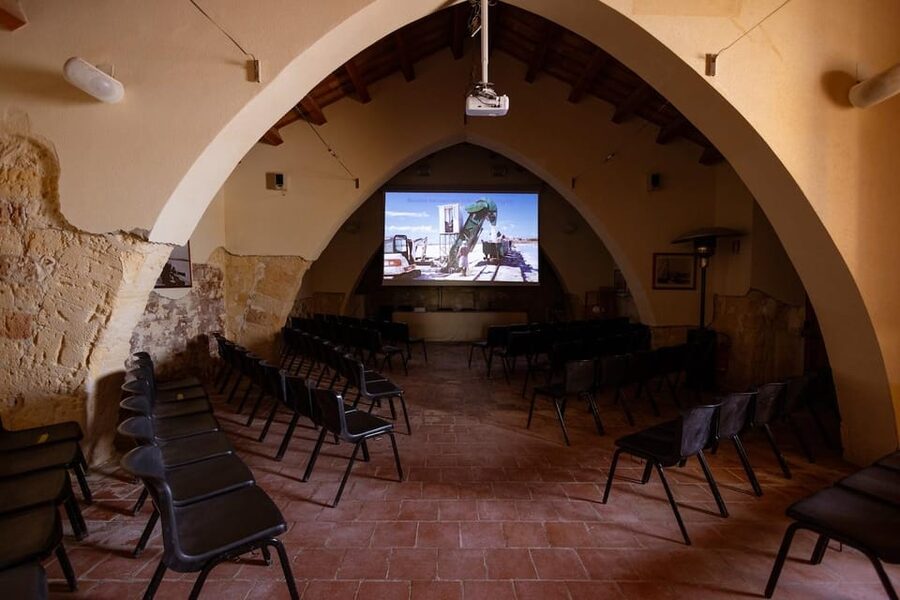
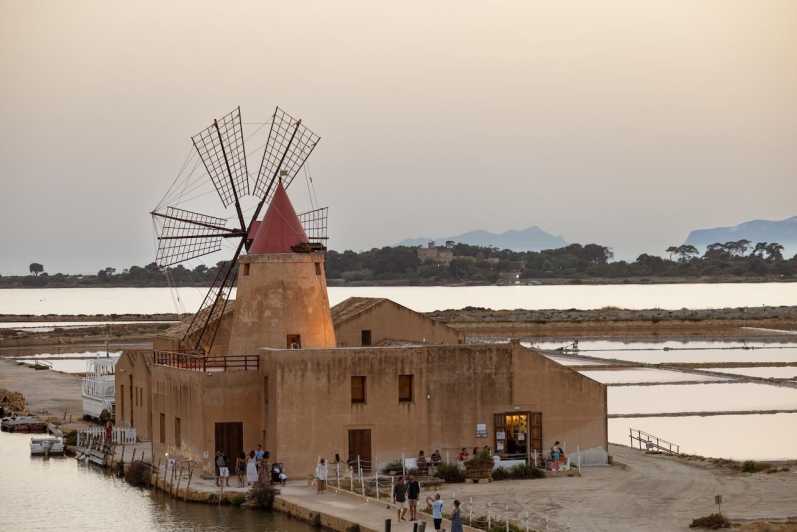
Marsala’s salt pans turn a basic ingredient into a memorable Sicilian outing. You walk among shallow pools that shift through pale blue, pink, white, and copper tones, while old windmills point to the work that has shaped this coast for centuries. The tour begins inside a 16th-century windmill, where a short film explains the salt-making process.
I like two things right away: the one-hour length fits neatly into a busy day, and the guide-led walk gives the colorful basins a purpose instead of leaving you to guess what you are seeing. At $18 per person, it is also a sensible way to add something local and unusual to a Marsala or western Sicily itinerary.
The main drawback is practical. The tour involves walking outdoors over salt-pan ground and is not suitable for wheelchair users or people with mobility impairments. You also need to reach the saltworks yourself, so check your transport plan before booking.
Key points to know before you go
- Start inside a 16th-century windmill: Watch an English-language film before walking through the working salt-pan area.
- See salt pools in changing colors: The shallow basins create the iridescent views that make this place so photogenic.
- Learn the full salt cycle: Your guide explains seawater, evaporation, basin management, productivity, and harvesting.
- Allow extra time after the tour: You can look around the windmill, enjoy the rooftop view, and visit the salt shop.
- Plan for sun and uneven walking: Comfortable shoes, water, sunscreen, and a hat matter here.
- Use the free parking: The SEI saltworks has a free parking area, toilets, and a restaurant.
Why Marsala’s salt pans are worth your time
The salt pans near Marsala are not simply white fields beside the sea. They are a carefully managed series of basins, each serving a different part of the production process. Seawater moves through the pans, gradually losing water to sun and wind until salt crystals can be collected.
That process is easy to miss if you only stop for a photograph. The walking tour explains the pace of the work and why salt production depends on weather, water movement, timing, and patient management. You come away understanding that the bright pools are part of a working system, not just a scenic backdrop.
The setting is the Stagnone Nature Reserve, a coastal area known for its shallow water and striking colors. The pools can look like pieces of a mosaic, with the windmills adding a strong Sicilian character to the view. I particularly like this combination of nature and industry. You get a scenic walk, but also a clear lesson in how people have used the coast.
More walks with a guide around Italy:
- Milan: Guided Walking Tour & Last Supper Visit with Ticket
★ 4.7 · 5,409 reviews - Naples: Street Food Walking Tour with Local Guide
★ 4.9 · 4,976 reviews - Florence: Highlights Walking Tour with Expert Guide
★ 4.6 · 4,662 reviews
Inside the old windmill
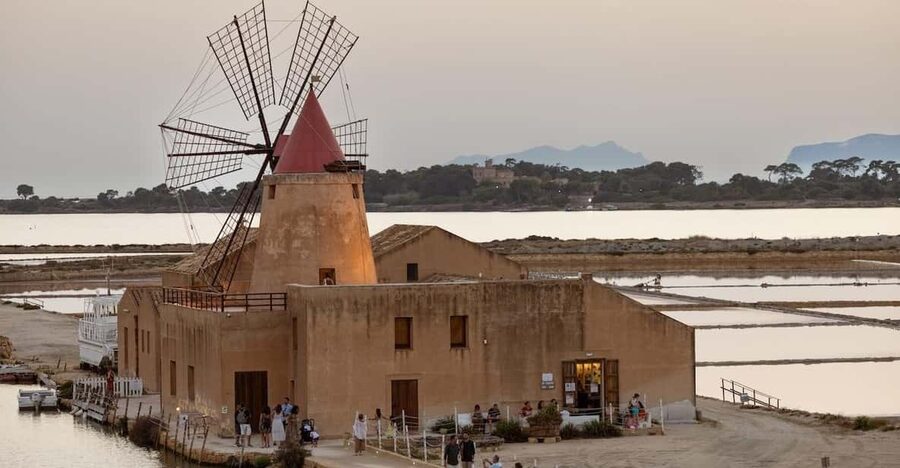
Your visit starts inside the large windmill at the SEI, or Saline Ettore e Infersa, saltworks. The mill dates to the 16th century and gives the tour a useful sense of place before you head outside.
A short film explains sea-salt production and harvesting. The film is in English, which helps set up the guided walk, especially if you do not know much about salt making. It gives you the basic vocabulary and sequence first, so the outdoor explanations have something to build on.
The windmill itself is also part of the visit. After the guided portion, you can spend time looking at photographs and information inside the mill. You can also go up to the rooftop, which provides a particularly good view over the pans. This extra time matters because the formal tour lasts only one hour, and the mill offers more context than the walk alone.
The rooftop is worth saving for the end. From above, the layout of the basins makes more sense, and you can better see how the windmills relate to the surrounding saltworks. Bring a camera, but do not expect every pool to have the same color. Light, water, and the stage of the salt cycle affect what you see.
What the guided walk explains
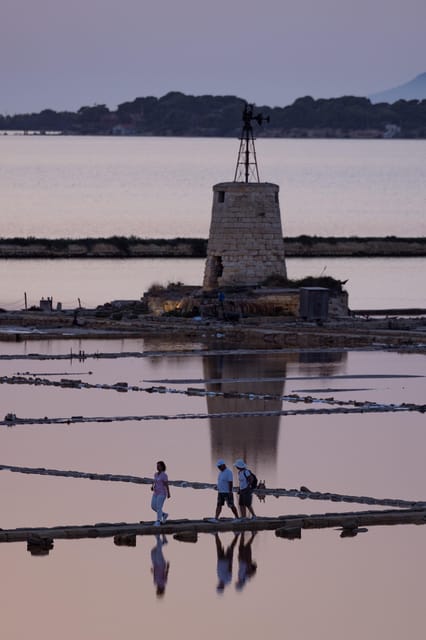
The outdoor part takes you through the salt flats and around the pools. Your guide explains the life cycle of a salt pan, from the arrival of seawater to evaporation and salt collection.
This is the part that gives the experience its value. Without a guide, you might see a series of shallow ponds and old machinery. With the explanation, you learn why the basins are arranged as they are and how their management affects the final product.
You will hear about:
- The sea-salt production process
- The movement and gradual evaporation of seawater
- The timing and pace of collection
- The productivity of a salt pan
- The traditional techniques still used at the saltworks
- The way the pans are managed through their yearly cycle
The guide speaks English and leaves room for questions. Several group sizes have been small, including a visit with only four people, which can make it easier to ask about details that interest you. The experience is not a silent photo stop. It is a proper explanation, but the pace remains manageable because the visit lasts about an hour.
English ability can vary from one guide to another. Most of the feedback is strongly positive about the explanations and the guides’ friendly manner, but one visitor found the English difficult to follow and relied more heavily on the film. If clear spoken English is essential for you, pay close attention during the film and ask questions when needed.
The colors of the Stagnone Reserve
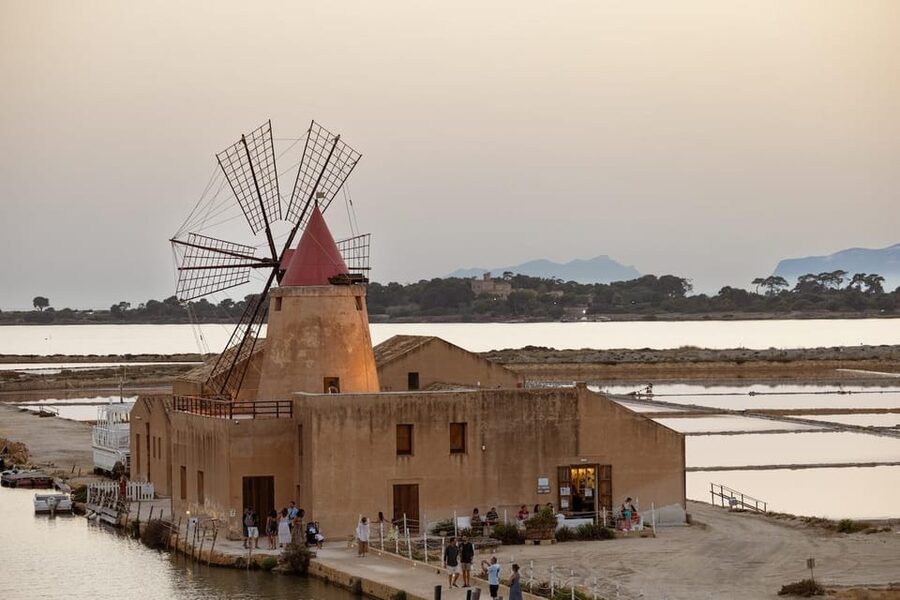
The salt pools are the visual reward of the visit. Their colors can range from pale and glassy to stronger pink or orange tones, creating a patchwork effect beside the white salt banks. The term iridescent is useful here because the appearance changes with the light and the water.
Do not expect a single dramatic viewpoint to explain the whole area. The pleasure comes from seeing the pans from several angles as you walk, then looking down over them from the windmill. The scene is broad, open, and exposed, with little shade mentioned as part of the experience. That makes sun protection especially important.
A sunset visit can be a good choice if the available time suits you. The low light can soften the colors and make the windmills especially attractive in photographs. One important timing detail is that a sunset plan may involve different activities at different hours. An afternoon visit has been used for the water tour, followed by the English salt-pan tour later in the day, so check the start time you are actually booking.
The salt pans are also connected to seasonal nature. Depending on the time of year, you might plan around flamingo sightings or the salt-harvesting season. The supplied information does not promise either event, so treat them as possible additions rather than guaranteed features.
More walking tours around Italy:
- Venice: Doge’s Palace and St Mark’s Basilica Walking Tour
★ 4.4 · 6,291 reviews - Venice: San Marco to Rialto Walk & Spritz Like a Local
★ 4.2 · 3,651 reviews - Uffizi & Accademia Timed Entry: Small Group Duomo Walking Tour
★ 4.5 · 3,630 reviews - Venice Walking Tour and Gondola Ride
★ 3.5 · 3,630 reviews
A short tour with useful extras
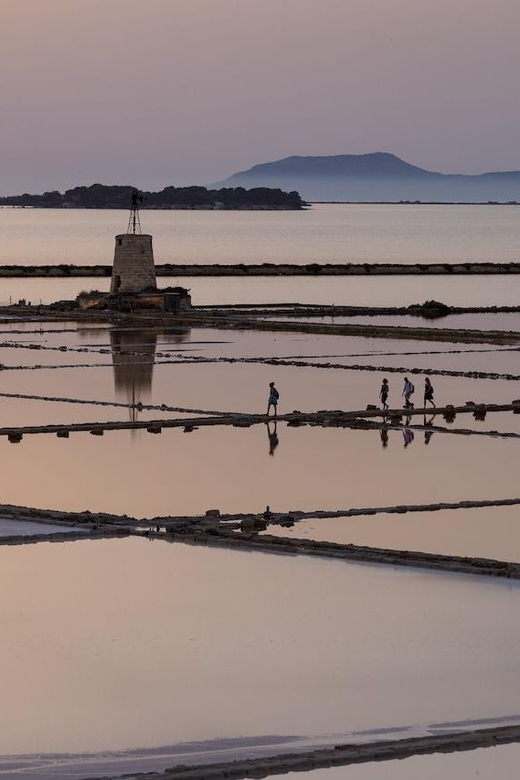
One hour is enough to understand the basic process without turning the visit into a full-day commitment. I like this timing for several reasons. You can fit it between other stops, use it as a break during a drive through western Sicily, or schedule it around accommodation check-in.
The site has free parking, toilets, and a restaurant serving sandwiches and main meals. The restaurant overlooks the pans, making it a practical place to eat before or after the walk. That is useful if you are driving rather than staying in central Marsala.
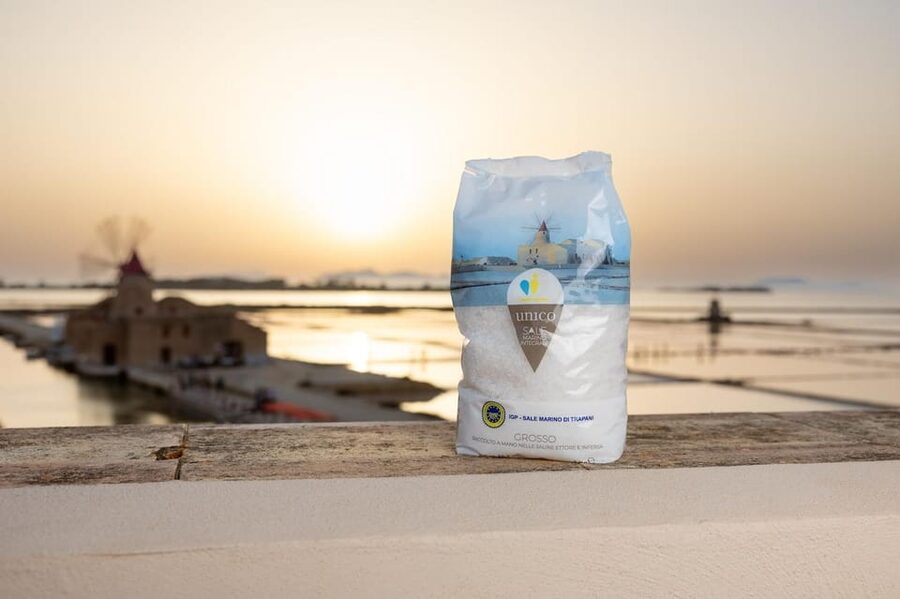
After the guided part, you can continue looking around the windmill and visit the salt shop. The shop sells Whole Trapani Sea Salt PGI, described here as the only such protected product in Italy. Buying salt is optional, but it makes a more meaningful souvenir than a generic trinket. You are taking home a product tied directly to the place you just visited.
I would allow more than the advertised one hour if you want the rooftop, the indoor displays, a meal, or time in the shop. The formal visit is short, but the setting deserves a slower finish.
Price, value, and what you actually receive
At $18 per person, this is good value if you want a guided introduction rather than only a scenic stop. The fee includes the English walking tour, the film about production and harvesting, and the explanation of salt-pan management.
You are not paying for a long excursion or a large collection of attractions. You are paying for access to a working saltworks, an organized explanation, and the chance to understand a distinctive part of Sicilian coastal life. For a one-hour activity, that is a fair price.
The value improves if you make use of the whole site. Watch the film carefully, join the walk, look around the windmill afterward, go to the rooftop, and browse the salt shop. If you arrive only for a quick photograph and leave immediately, the price feels less rewarding.
The main extra cost is getting there. The meeting point is inside the SEI saltworks, about 9 kilometers north of Marsala according to one practical account. A taxi can be expensive, with a reported round trip costing around 50 euros. If you do not have a car, confirm the transport cost before booking. The free parking is a real advantage for drivers.
Getting to the right meeting point
The meeting point is inside the SEI, Saline Ettore e Infersa saltworks. There is a free parking area, and you should go directly to the large windmill where the visit begins.
You do not need to wait outside for a separate meeting. Enter with your ticket, say that you have a reservation, and the guide will direct you to the visit. Keep your booking details easy to find.
The location is not in the center of Marsala, so do not rely on an address that simply says Marsala. Check the map and allow time for the drive. This is one of the few details that can cause avoidable trouble, especially if you are arriving by taxi or trying to fit the tour between other appointments.
Shoes, heat, and mobility
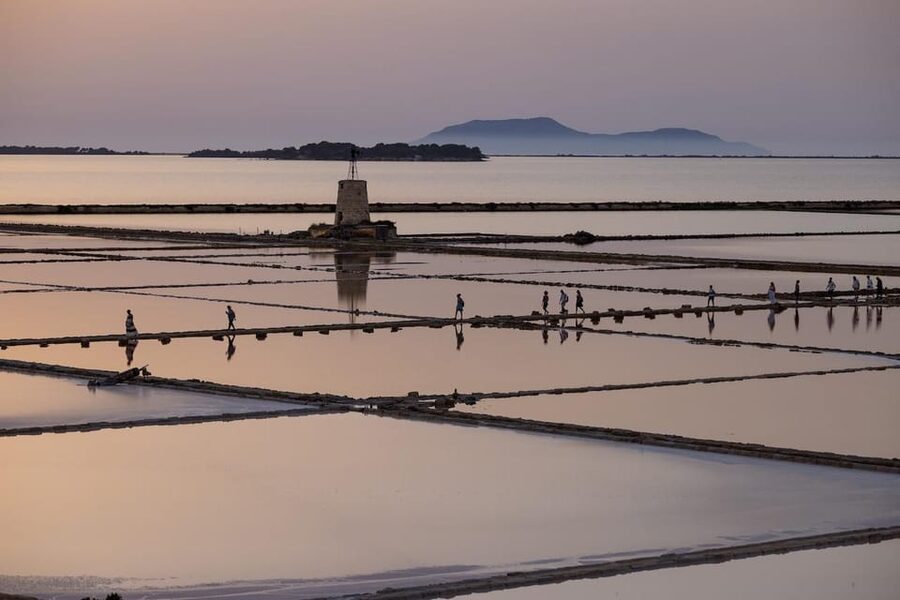
Wear comfortable walking shoes. The tour is not presented as suitable for wheelchair users or people with mobility impairments, so you should expect outdoor walking that may not be smooth or fully accessible.
Bring water, sunscreen, and a sun hat. The salt pans are open and exposed, and the bright ground and water can make the sun feel stronger than expected. A camera is worthwhile because the pools, windmills, and rooftop views provide the best visual reason to visit.
Pets are not allowed inside the salt pans, and smoking is not allowed. Families can take part, and one visit included a seven-month-old baby carried by a parent, but the formal accessibility guidance remains important. If you have mobility concerns, contact the provider before relying on this tour.
Who will enjoy this visit most
I would recommend the tour to you if you enjoy local production, old machinery, unusual scenery, or short cultural stops. It works particularly well for people who want more than another church or museum but do not have time for a long excursion.
Photographers will appreciate the colors and windmills. Food-minded visitors will like the connection between the saltworks and Whole Trapani Sea Salt PGI. Families can use the short duration and film to keep younger children engaged, although the outdoor sun and walking surface may be tiring for some.
The tour is less suitable if you want a long nature walk, a boat trip, or a relaxed visit with no fixed explanation. It is also not a good fit if you cannot walk around the salt pans or if reaching the site would require an expensive taxi that strains your budget.
Should you book the Marsala salt pans tour?
Book it if you have a car, want a one-hour activity with real local character, and are curious about how salt moves from seawater to the table. The price is modest, the film makes the process easy to follow, and the guide adds the practical details that photographs cannot provide.
I would choose an afternoon or sunset time if the schedule works, while checking the exact English tour hour before setting off. Leave room afterward for the rooftop, restaurant, and salt shop. Skip it only if mobility limits make the walk difficult, or if transport from Marsala costs more than you are comfortable paying.
For a short stop in western Sicily, this is a useful choice: scenic, informative, and pleasantly different from the usual sightseeing circuit.
FAQ
How long does the Marsala salt pans tour last?
The guided experience lasts one hour. You can spend additional time afterward inside the windmill, on the rooftop, at the salt shop, or at the site restaurant.
What language is the tour in?
The live tour guide speaks English, and the introductory film explaining sea-salt production and harvesting is also in English.
Where does the tour begin?
The tour begins inside the large windmill at the SEI, Saline Ettore e Infersa saltworks. Enter the saltworks with your ticket and tell the staff that you have a reservation.
Is parking available?
Yes. The saltworks has a free parking area. The site also has toilets and a restaurant serving sandwiches and main meals.
What should I bring?
Bring comfortable walking shoes, water, sunscreen, a sun hat, and a camera. The salt pans are exposed to the sun, and the views are worth photographing.
Are pets and wheelchairs allowed?
Pets are not allowed inside the salt pans. The activity is not suitable for wheelchair users or people with mobility impairments.
New walking tours around Italy
- Rome: Fountains and Squares Small-Group Walking Tour★ 4.7 · 335 reviews
- Napoli: Walking Tour of Naples with Local Tour Guide★ 4.9 · 95 reviews
- Naples: Spanish Quarters Walking Tour★ 4.6 · 72 reviews
- Naples: Street Art, Wine and Food Tasting Walking Tour★ 5.0 · 163 reviews
- Naples: Historic Center and Sansevero Chapel Walking Tour★ 4.8 · 208 reviews
- Naples: Old Town Guided Walking Tour★ 4.8 · 553 reviews
- Naples: Street Food Experience With 6 Stops★ 4.7 · 392 reviews
- Naples Essentials: Monuments, Local Life & Street Art★ 4.9 · 79 reviews
Italy Walking Tours, side by side.
Venice: Doge’s Palace and St Mark’s Basilica Walking Tour
Read our review →
Milan: Guided Walking Tour & Last Supper Visit with Ticket
Read our review →
Naples: Street Food Walking Tour with Local Guide
Read our review →
Florence: Highlights Walking Tour with Expert Guide
Read our review →
Venice: San Marco to Rialto Walk & Spritz Like a Local
Read our review →
Uffizi & Accademia Timed Entry: Small Group Duomo Walking Tour
Read our review →

Lists this walk sits on