
Review · ITALY
Matera walking tour in English
Matera’s magic begins underground. On this two-hour walk through the Sassi, you enter a former cave home and the huge palombaro cistern, then connect those physical places with the human story of families who once lived in them. The result is far more useful than simply wandering past stone façades and taking photographs.
I like two things here. First, Gaetano Campanile’s local connection gives the tour a personal feel, especially when he explains stories passed down by people born in the caves. Second, the pace leaves room for photographs, questions, and stops in shady spots. The main consideration is the terrain: Matera is built on a hill, so stairs and uneven surfaces are part of the deal.
Key points
- Enter a real cave house: See how several generations could live in a single rock-cut dwelling.
- Visit the palombaro: Learn how Matera collected and stored rainwater in its enormous underground cistern.
- Meet at S. Pietro Caveoso: The church is the clear starting landmark, with the guide wearing a badge.
- Hear Matera’s difficult social story: Understand how the Sassi went from poverty and overcrowding to UNESCO recognition.
- Enjoy a small-group feel: The group can be limited to 13 people, and headsets help you hear the guide clearly.
- Plan for stairs: The walk is leisurely, but comfortable shoes and water are important.
Why a guided walk matters in Matera
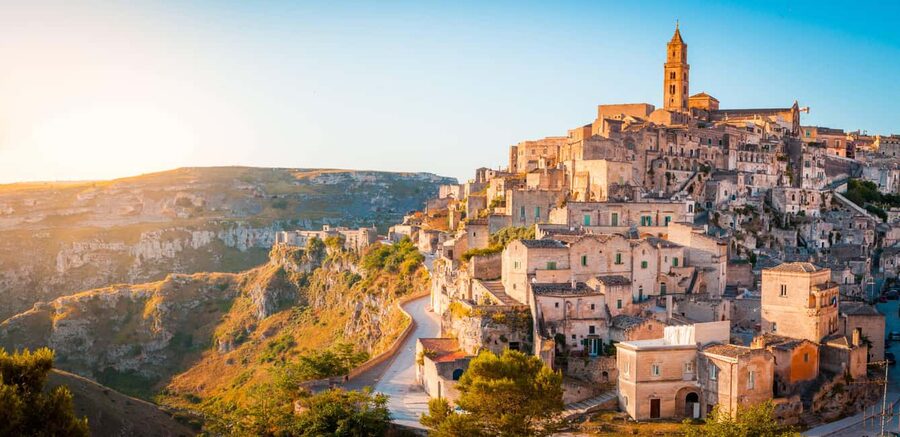
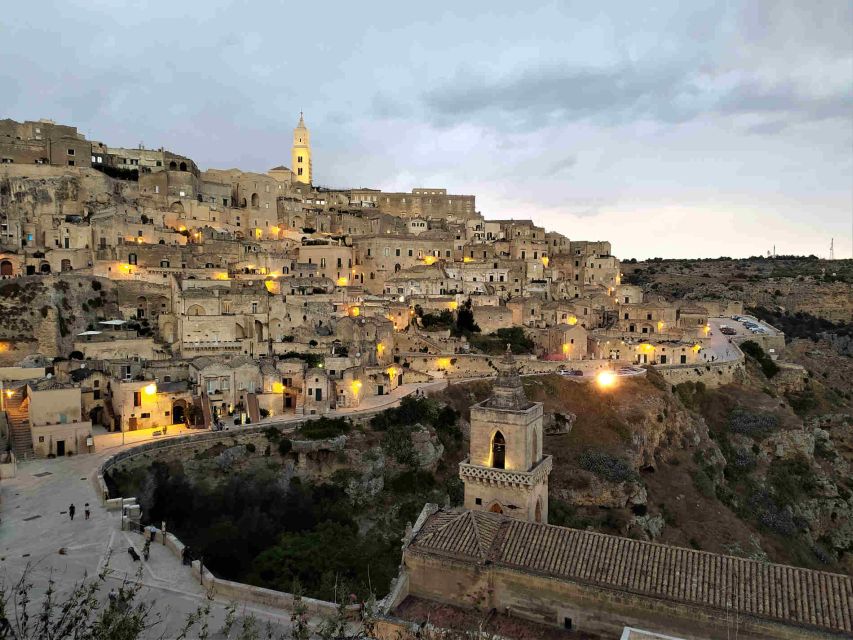
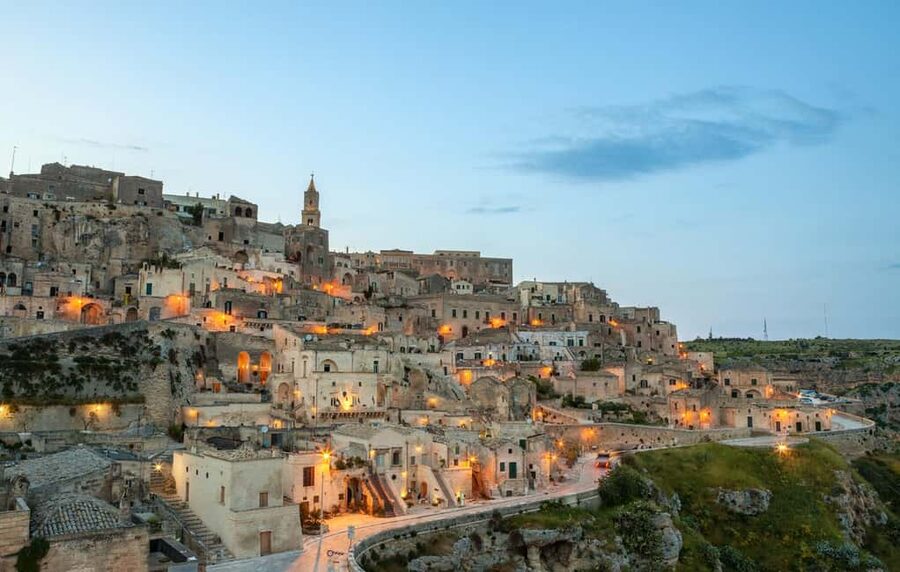
Matera is easy to admire and surprisingly hard to understand on your own. From a viewpoint, the Sassi can look like a beautiful jumble of caves, stairways, balconies, and pale stone. The view tells you little about how people obtained water, shared cramped homes, raised children, or coped with poverty.
That is where this tour earns its keep. Gaetano, a native of Matera, explains the city through its people rather than treating it as a film set or a collection of pretty viewpoints. He has spoken with older residents whose families lived in the caves, so the story includes everyday details and local memory, not only dates and architectural labels.
I particularly like the focus on social history. You hear how the Sassi became known as the shame of Italy because of poor living conditions, then learn about the changes that led to its recognition as a UNESCO site and an important part of Italy’s cultural heritage.
The walk also gives you a useful orientation for the rest of your stay. Several people who took it early in their visit found that later walks through Matera made more sense. That is good advice. Book this near the start of your time in the city if you can, then return to the places that caught your eye.
More walking tours around Italy:
- Venice: Doge’s Palace and St Mark’s Basilica Walking Tour
★ 4.4 · 6,291 reviews - Milan: Guided Walking Tour & Last Supper Visit with Ticket
★ 4.7 · 5,409 reviews - Naples: Street Food Walking Tour with Local Guide
★ 4.9 · 4,976 reviews
Starting at Piazza S. Pietro Caveoso
The meeting point is in front of the church of S. Pietro Caveoso. Look for the guide wearing a badge. This is a practical location because you begin right beside the old districts and do not spend your limited tour time walking in from the newer part of town.
The opening section introduces the Sassi and sets up the geography. Matera’s old districts spread across a steep area, with homes cut into rock and routes that rise and fall by stairway. You should expect a walk that feels leisurely rather than athletic, but do not mistake slow for flat.
The guide adjusts the pace for the group. That matters if your party includes children, older adults, or anyone who needs time on steps. One past group included people in their mid-sixties, including someone with recently replaced knees, and found the route manageable. Still, that is not a promise that every stairway will feel easy. Wear shoes with a firm sole and bring water, particularly in warm weather.
From the beginning, the guide uses viewpoints to explain what you are seeing. These pauses are not only for photographs. They help you spot the relationship between the cave dwellings, the lanes, and the broader shape of the old city.
Inside a Matera cave house
The cave house is the emotional center of the experience. From outside, a cave may look like a dark opening in the rock. Inside, the space shows how families adapted to a home shaped by the stone itself.
You learn how people lived in these rooms and how limited space affected daily life. The value of entering is simple: a description cannot match the feeling of standing inside the dwelling. You begin to understand that the Sassi were not originally arranged for sightseeing. They were homes, workshops, storage areas, and places where families built their lives over many generations.
Gaetano’s strongest explanations deal with people rather than decoration. He describes the social ties that helped residents manage difficult conditions and the traditions that held the community together. This gives needed balance to Matera’s beauty. The city is photogenic, but the cave homes also represent hardship, overcrowding, and a painful period of forced relocation.
That context keeps the visit from becoming a romanticized look at poverty. You see resourcefulness and community, but you also learn why the old living conditions became unacceptable. Matera’s later transformation is meaningful only after you understand what residents endured.
The palombaro and Matera’s water supply
The palombaro is the tour’s most useful stop for understanding survival in the Sassi. This large cistern collected rainwater, which was essential to the population. The visit explains how water was gathered and stored rather than treating the cistern as just another underground chamber.
The word itself may be unfamiliar, so the guide’s explanation helps you connect the structure with the wider city. In a place shaped by rock and limited resources, water management was central to everyday life. Rain collection was not a minor household trick. It was a basic condition for survival.
I like that the cistern is included in the price. Many short city walks offer viewpoints and stories but skip the practical systems that made an old settlement work. Here, the palombaro adds a clear lesson: Matera’s caves were part of an organized way of living, with the stone used for shelter and water storage.
The underground setting also breaks up the walking route. You move from open views and stairways into a cool, enclosed space, then return to the Sassi with a better idea of how the city functioned below street level.
Same streets, a different story:
- Florence: Highlights Walking Tour with Expert Guide
★ 4.6 · 4,662 reviews - Venice: San Marco to Rialto Walk & Spritz Like a Local
★ 4.2 · 3,651 reviews - Uffizi & Accademia Timed Entry: Small Group Duomo Walking Tour
★ 4.5 · 3,630 reviews - Venice Walking Tour and Gondola Ride
★ 3.5 · 3,630 reviews
Viewpoints, lanes, and the Sasso Caveoso focus
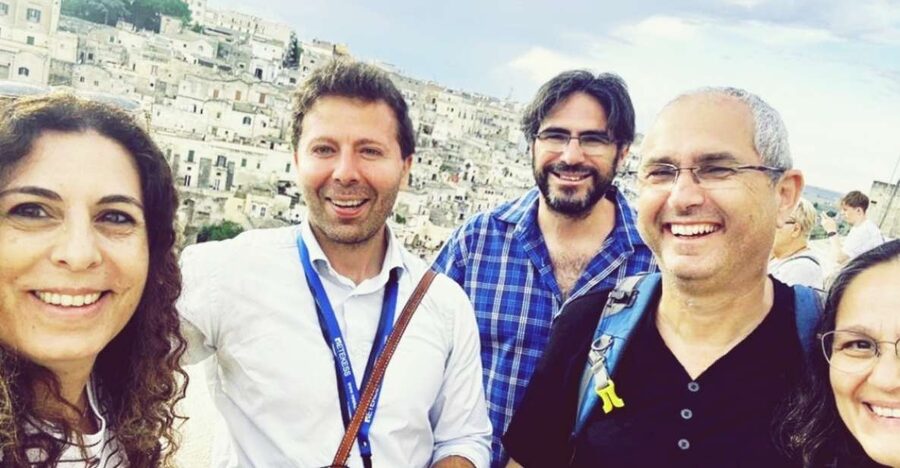
The route concentrates mainly on Sasso Caveoso. That is a sensible choice for a two-hour tour. Matera offers more sights than any short walk can cover, and trying to race through every corner would leave you with a blur of stone and incomplete explanations.
Instead, the guide spends time on selected viewpoints and quieter corners. You get chances to take photographs without being pushed from one stop to the next. The route is also shaped around storytelling, so the walking distance does not overwhelm the information.
Some groups have been small, with four, six, or around eleven people. The stated maximum is 13. A small group makes a real difference in Matera, where a guide can be hard to hear on steps or in narrow lanes. Headsets are used, and they help you listen without standing shoulder to shoulder with the guide.
The experience is not designed as a full tour of every church or monument. Churches are not part of the official visit, so do not book this expecting an interiors-focused religious art tour. The strength is the Sassi, the cave dwellings, the cistern, and the social story of the city.
The story of the shame of Italy
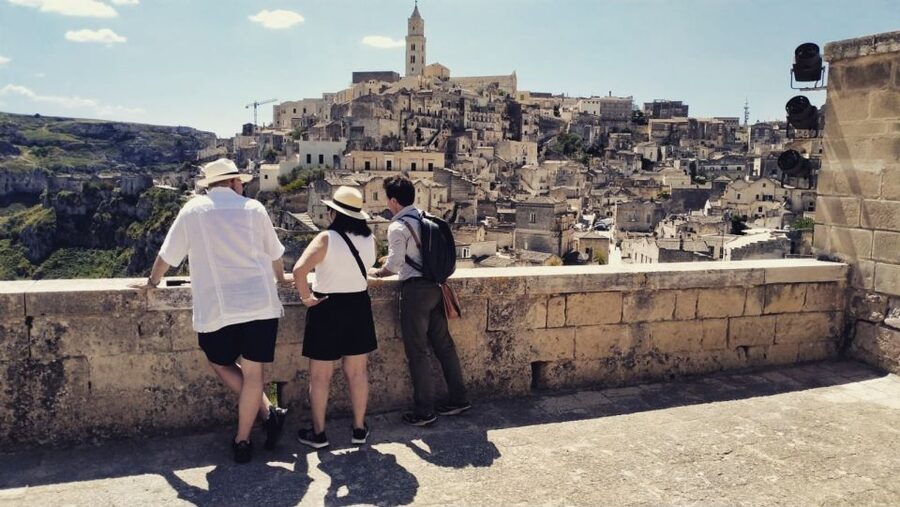
Matera’s modern story is one of the reasons I would choose a guide instead of exploring alone. The phrase shame of Italy refers to the poor conditions associated with the Sassi before residents were moved out. You learn why the caves became a national embarrassment and how relocation changed the old districts.
This part needs a careful explanation, and the tour appears to give it one. Matera was not simply a place where people chose an unusual style of home. Families lived within social and economic limits, and the caves could become overcrowded and unhealthy. At the same time, the community had its own customs, shared responsibilities, and strong local bonds.
The guide’s job here is to hold both truths together. You see the ingenuity of the residents without pretending that hardship was charming. You also learn how the Sassi later changed from a symbol of neglect into a protected cultural site and one of Italy’s best-known historic destinations.
That shift is easier to grasp when you are standing in the old neighborhoods. The stone is not just old. It carries the evidence of several different eras, from daily life in the caves to abandonment, restoration, and renewed pride.
What the guide adds
Gaetano is repeatedly praised for his clear English, humor, and enthusiasm for Matera. Those qualities matter because the subject could easily become a dry sequence of dates. Instead, the tour is built around stories, local details, and explanations that answer questions before you need to ask them.
His background as someone who grew up in Matera also adds a useful personal angle. He can speak about the city as a living place, not just as an archaeological site. Another guide named Vito has also led the experience, and the tour is conducted in English.
The delivery is lively but not rushed. Families with children have found the storytelling engaging, while older participants appreciated the patient pace. You should still expect the guide to cover a lot in two hours. One group’s walk lasted about two and a half hours, but the advertised duration is two hours, so allow a little flexibility if you have a tight schedule.
The use of headsets is a practical bonus. In a city with stairways, open viewpoints, and narrow passages, clear sound can be the difference between following the explanation and missing half of it.
Price, group size, and practical value
At $29 per person, this is a reasonable price for a licensed guide, a cave house, and entry to the palombaro. You are not paying only for a walk. You are paying for interpretation that helps you understand what the stone spaces meant to the people who used them.
The value is strongest if you are new to Matera or have only a day in town. With limited time, a guide helps you spend two hours on the parts that give the city its meaning. It is also good value for people who usually avoid tours but want help with a place that can be confusing at first.
The experience may be less useful if you want a private, highly customized itinerary or a broad tour covering every district. The group can reach 13 people, and the route focuses on one main Sasso rather than attempting the whole city.
You can cancel up to 24 hours before the start for a full refund, and you can reserve while postponing payment. Those terms are helpful if your route through Basilicata or Puglia is still changing. Check the available start times before booking, since the walk lasts two hours and includes outdoor sections.
If you are driving, two garages are noted near Matera, one on Via Vena and another on Via Scotellaro. Parking in the old city area can require planning, so do not leave arrival until the last minute.
Who should take this Matera walk
I would recommend it to first-time visitors, history fans, families, and anyone who wants the Sassi explained in plain English. It also suits independent travelers who prefer to explore alone but know that Matera has a story too important to leave entirely to chance.
It is a good choice for mixed-age groups because the walk is described as relaxed and the guide can adapt the pace. Children may respond well to the cave house and cistern, which are easier to understand than a long lecture about city development.
You should think twice if stairs are difficult for you. The route is not presented as strenuous, but Matera’s old city lies on a hill. Comfortable shoes are essential, and I would carry water because there may not be many convenient places to refill along the route.
Do not choose this walk if your main goal is visiting churches. Churches are not included in the official experience. Choose it for the Sassi, cave life, water collection, views, and the story of Matera’s change.
Should you book it?
Yes, if you want to understand Matera rather than simply photograph it. The combination of a cave home, the palombaro, local stories, and a gentle pace makes this a strong introduction to the city.
The best reason to book is Gaetano’s personal approach. His English, humor, and connection to Matera help turn a striking but puzzling place into a city with understandable human stories. Book early in your stay, wear good shoes, bring water, and leave time afterward to wander the Sassi with your new bearings.
Skip it only if you want a fast panoramic walk, a church tour, or a private itinerary covering every corner. For most visitors spending a day or more in Matera, $29 is a sound investment in making the rest of the city more meaningful.
FAQ
How long does the Matera walking tour last?
The advertised duration is two hours. Some groups have spent around two and a half hours with the guide, so allow a little extra time if your schedule is tight.
Is the tour conducted in English?
Yes. The tour has a live English-speaking guide. Gaetano Campanile leads the experience, and Vito has also guided some departures.
Where does the tour meet?
The guide waits in front of the church of S. Pietro Caveoso and wears a badge.
Does the tour include a cave house?
Yes. Entry to a cave house is included, along with the walking tour and admission to the palombaro cistern.
Does the tour visit churches?
No. Churches are not included in the official tour.
Are there many stairs?
Yes. Matera’s old city is on a hill, and the route includes stairways. The pace is leisurely, but you should bring comfortable shoes.
New walking tours around Italy
- Rome: Fountains and Squares Small-Group Walking Tour★ 4.7 · 335 reviews
- Napoli: Walking Tour of Naples with Local Tour Guide★ 4.9 · 95 reviews
- Naples: Spanish Quarters Walking Tour★ 4.6 · 72 reviews
- Naples: Street Art, Wine and Food Tasting Walking Tour★ 5.0 · 163 reviews
- Naples: Historic Center and Sansevero Chapel Walking Tour★ 4.8 · 208 reviews
- Naples: Old Town Guided Walking Tour★ 4.8 · 553 reviews
- Naples: Street Food Experience With 6 Stops★ 4.7 · 392 reviews
- Naples: City Walking Tour w/ Underground Roman Ruins Ticket★ 4.6 · 284 reviews
Italy Walking Tours, side by side.
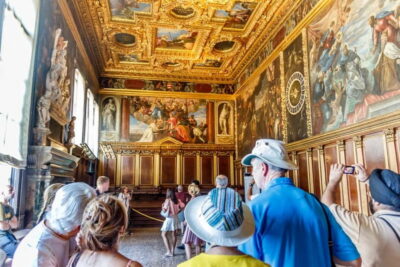
Venice: Doge’s Palace and St Mark’s Basilica Walking Tour
Read our review →
Milan: Guided Walking Tour & Last Supper Visit with Ticket
Read our review →
Naples: Street Food Walking Tour with Local Guide
Read our review →
Florence: Highlights Walking Tour with Expert Guide
Read our review →
Venice: San Marco to Rialto Walk & Spritz Like a Local
Read our review →
Uffizi & Accademia Timed Entry: Small Group Duomo Walking Tour
Read our review →
Lists this walk sits on