Review · NEW ORLEANS
New Orleans Food and History Walking Tour
The best thing about this New Orleans food tour is its mix of eating and storytelling. You move through the French Quarter from one food stop to the next, learning why gumbo, po’boys, muffulettas, pralines, and red beans and rice belong to this city. It is a progressive lunch with a history lesson built in.
I like the access to places you might skip on your own, and I like the generous portions. Guides including Beth, Meg, John, and Dylan are praised for explaining recipes, immigration, language, and local customs with humor. The main caution is that this is not a tour for strict dietary needs: there is a vegetarian option, but no vegan, gluten-free, or dairy-free menu.
Key points to know before booking
- Five food stops create a full lunch: Expect a substantial spread rather than a few token nibbles.
- Gumbo starts the story: Chicken and andouille sausage gumbo introduces the Cajun and Creole flavors that shape the tour.
- The French Quarter is your classroom: You walk between food stops while learning about New Orleans geography, ethnic traditions, and food names.
- The menu is meat-heavy: Vegetarian requests are accepted, but vegan, gluten-free, and dairy-free options are not offered.
- The pace is manageable but still active: Most stops are close together, yet you should wear walking shoes and be ready to move along.
- The group is capped at 16: That is small enough for questions without making the tour feel like a large procession.
Starting with gumbo at 3rd Block Depot
Meet at 3rd Block Depot on Chartres Street, in the French Quarter. This first stop sets the tone with rustic Cajun gumbo made from a dark roux, chicken, and andouille sausage. It comes with a spoonful of warm country-style potato salad, a detail that helps show how local gumbo is often served at the table.
Gumbo is more than a bowl of stew. Your guide explains how ingredients, cooking methods, and cultural influences came together in Louisiana. You also hear about the role of andouille, the use of roux, and the difference between a dish that looks simple and one that takes patient cooking.
The first restaurant stop can take a little longer than the others, which is useful if you want time to settle in and ask questions. It also means you need to pace yourself. The meal keeps coming for most of the next three hours, so you should not treat the opening bowl as a quick appetizer.
You can buy a drink at the bar here, but beverages beyond water are not included. Since the food portions are described as generous, I would avoid filling up on a drink at the start.
More Food Walking Tours in the USA
- New Orleans Food Walking Tour of the French Quarter with Small-Group Option
★ 5.0 · 6,118 reviews - New Orleans: French Quarter Food History Walking Tour
★ 4.9 · 713 reviews - Little Havana Food and Walking Tour in Miami
★ 5.0 · 8,882 reviews
A hot-sauce stop with more variety than heat
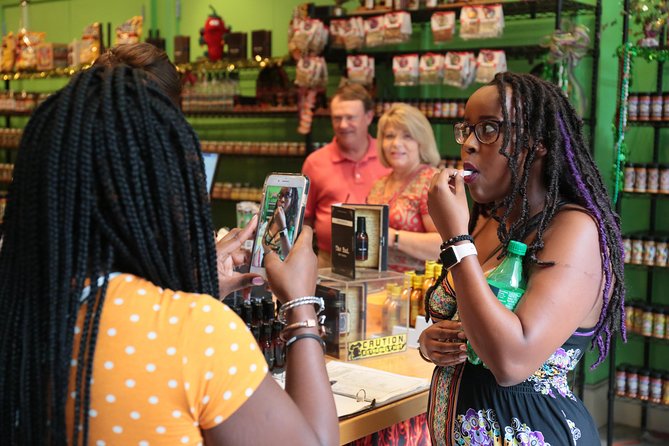
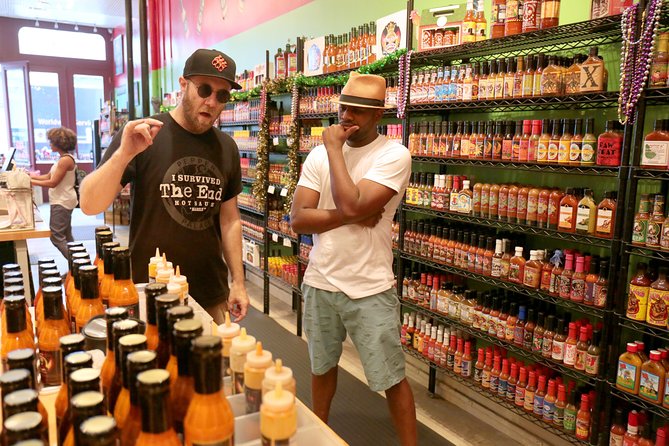
After gumbo, the route makes a quick stop at a hot sauce shop. You can sample a wide selection of hot sauces, dry rubs, barbecue sauces, marinades, Buffalo wing sauces, and other seasonings.
This is a useful part of the tour because it gives you a chance to compare flavors instead of simply being told that New Orleans food is spicy. Some sauces bring heat, while others add smoke, sweetness, vinegar, or seasoning. You can take your time and decide what kind of spice suits you.
The hot-sauce stop is also the part most likely to divide your interests. If you are focused on tasting as many classic dishes as possible, you may wish this time were used for another restaurant. A few people would prefer smaller servings of more dishes, such as jambalaya or étouffée, instead of spending time with sauces.
I see its value differently for first-time visitors. It is a short, easy stop, and it gives you something practical to take home. Still, this tour cannot cover every famous New Orleans dish in three hours, and this is where the limited schedule is most noticeable.
Pralines and Creole sweets at Leah’s
At Leah’s Pralines, you sample a classic New Orleans sweet made with local brown sugar, dairy, and pecans. You may also find a newer variation, such as bacon pecan brittle.
Pralines show the sweet side of the city’s food traditions. The stop also gives you a chance to learn how local ingredients and older European cooking ideas were adapted in Louisiana. The shop can be a good place to buy gifts, especially if you want something small that travels better than a bottle of hot sauce or a restaurant meal.
Do not think of this as a long dessert break. It is a tasting stop within a larger lunch. The praline is rich, so a small sample can be enough before the savory dishes resume.
Learning the story behind the po’boy
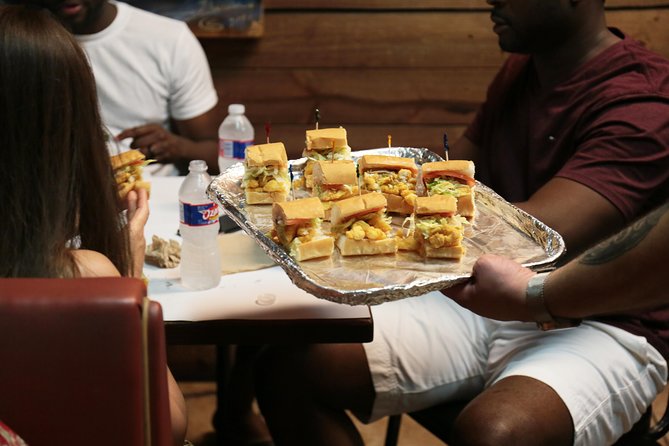
At NOLA Poboys, the planned main course includes a fried catfish po’boy on local French bread. It is dressed with lettuce, tomato, mayonnaise, and pickles, with hot sauce available if you want more kick.
The guide explains how seafood harvesting connects to Louisiana’s food culture. That context matters. A po’boy is not simply a sandwich with fried fish inside. The bread, dressing, seafood, and local setting all help explain why this became one of New Orleans’ defining casual meals.
The sandwich is also filling. If you expect only a bite-sized sample, adjust your expectations. This is one reason I would make the tour an early meal rather than schedule a large lunch before it.
You will also hear about the names of classic dishes, including étouffée and jambalaya, and how language shaped the vocabulary of New Orleans cooking. The talk moves beyond food rankings and restaurant suggestions. It explains how different groups brought ingredients, techniques, and words to the city.
More History Walking Tours in New Orleans
- New Orleans Garden District History Walking Tour
★ 5.0 · 2,879 reviews - French Quarter Historical Sights and Stories Walking Tour
★ 5.0 · 2,724 reviews - New Orleans: Drunk History Walking Tour
★ 4.2 · 165 reviews
Muffulettas, boudin, and red beans and rice
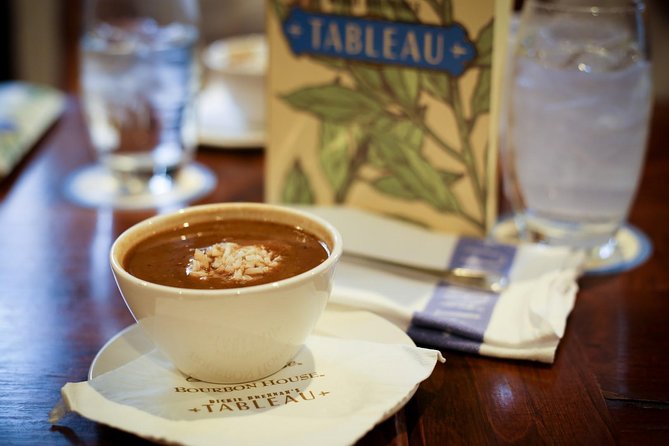
The menu can include several other major Louisiana dishes, with the exact stops subject to availability. A muffuletta is an Italian-style sandwich on Sicilian bread, layered with smoked ham, mortadella, Genoa salami, provolone, mozzarella, and olive salad.
This is one of the most useful comparisons on the tour. The muffuletta shows the Italian influence on New Orleans food, while gumbo and boudin point toward other parts of the city’s culinary story. The sandwich is dense and savory, so you may want to share portions if the group is offered larger pieces.
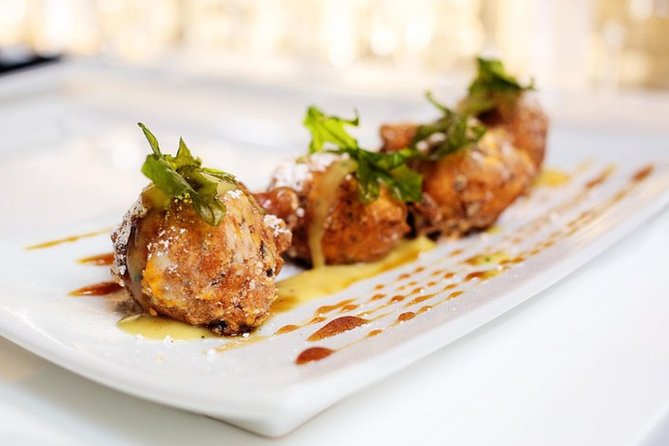
Boudin appears as a fried sausage ball made from smoked pork, rice, and spices, served with Creole remoulade. It is an approachable way to try a classic Cajun combination without committing to a full plate of sausage and rice.
Red beans and rice with andouille sausage may also be included. The dish is slow cooked with smoked ham and served over rice with green onions. It is hearty, home-style food, and it helps explain why New Orleans cooking is often about long cooking times and layered seasoning rather than elaborate presentation.
Because stops depend on availability, you should treat the sample menu as a guide rather than a promise that every item will appear exactly as listed. The food remains local in character, but the final lineup can change.
Ending with bread pudding and a full belly
The sweets continue with seasonal bread pudding, which may be baked or fried. One version can include bananas and a fried preparation, making it a particularly rich ending to the meal.
By this point, you should expect to be full. The tour is not built around tiny decorative tastes. Portions are substantial enough that several people have found they did not need another meal afterward.
That is good value if you want lunch included in your sightseeing. It can be less ideal if your goal is to sample the widest possible list of dishes. A tour built around smaller bites could fit in more items, but this one lets you understand each dish while eating enough to judge it properly.
The French Quarter walk between bites
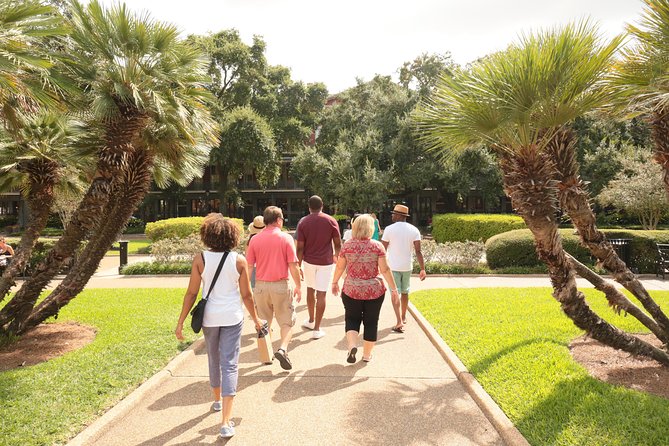
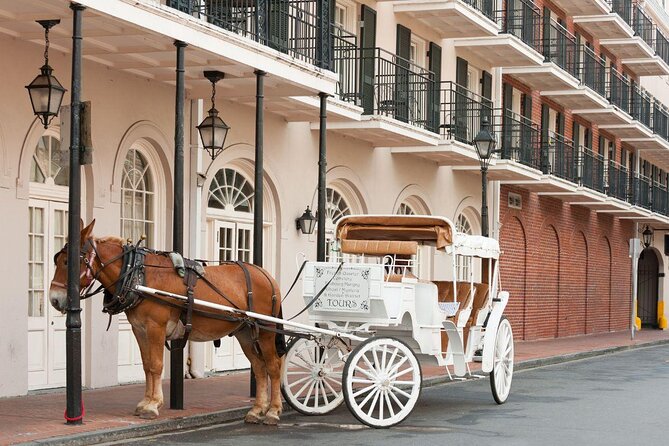
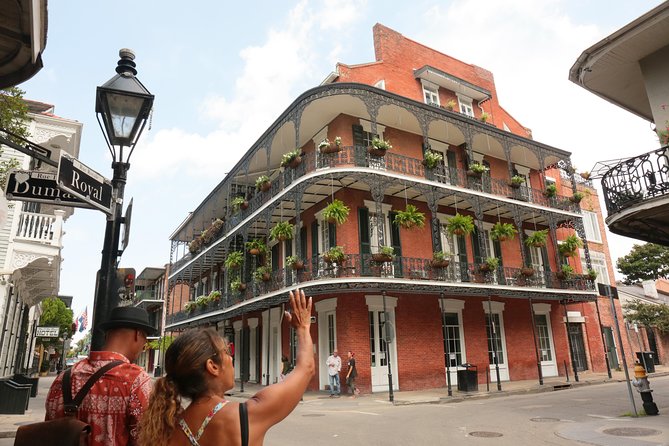
This is a walking tour, but the walking is mainly a link between food stops rather than a long architectural outing. The route moves through the Vieux Carré, the French Quarter’s old square, with its restaurants, markets, shops, and street life.
You will hear about New Orleans geography and the people who settled here. The food gives the history a practical shape. Instead of trying to remember a list of dates, you connect migration and local customs to the meal in front of you.
The walk is generally considered easy by distance, but the tour is not suitable for people with significant mobility or walking problems. One guide may keep the group moving quickly, so wear comfortable shoes and be ready for uneven sidewalks and outdoor conditions. The tour runs in all weather, so bring suitable clothing and an umbrella or rain jacket when the forecast calls for wet weather.
The route ends at New Orleans Creole Cookery on Toulouse Street. That gives you a useful location in the French Quarter for continuing your own food plans, although the tour itself does not include further meals or drinks.
Guides who make the history work
The guide matters greatly here. Beth is praised for her humor, food knowledge, recipe tips, and ability to keep questions moving. Meg is described as personable and well prepared, with an upbeat style. John is noted for explaining both the city and the dishes, while Dylan, sometimes called Dr. Gumbo, is especially strong at connecting food with New Orleans culture and history.
You may receive a different guide, but the best version of this tour is clearly guide-led rather than simply stop-led. A list of restaurants would not explain why Creole cooking uses certain ingredients or why New Orleans food carries so many different cultural fingerprints.
The group size helps. With a maximum of 16 people, you can ask questions without needing to shout across a crowd. Solo visitors can also fit in comfortably, and the tour works well for couples, families, and friends.
I would book this near the beginning of your New Orleans stay. The guide can point you toward dishes and places you may want to revisit. Some people have returned to favorite stops later for cocktails, food, or gifts, which is one of the better signs that the tour gives you usable ideas rather than one meal you forget.
Is $85 a fair price?
At $85 per person, the cost is not cheap, but it includes a full lunch set, tastings at several eateries, and gratuities for servers at those establishments. Your guide’s tip is not included, and drinks other than water cost extra.
The value depends on how you normally explore a city. If you would spend three hours buying separate samples, researching dishes, and finding your own route through the French Quarter, the price saves effort and reduces guesswork. You also get explanations that are hard to pick up from a menu.
If you mainly want a historical walking tour with a few food samples, this may feel food-heavy. It is not a tour of grand buildings with occasional snacks. The food is the main event, and the history explains what you are eating.
For an $85 outing, I would expect a hungry start and no major meal beforehand. The number of servings makes the price easier to justify, especially when the guide is engaging and the group stays small.
Who should book this tour?
I recommend it for first-time visitors who want a practical introduction to New Orleans food. You will try several signature dishes, learn how different communities shaped the city’s cooking, and leave with a clearer idea of what to order elsewhere.
It also suits solo visitors. The group is limited in size, the format gives you natural conversation, and the guides make room for questions. Families can enjoy it too, provided children are comfortable walking and trying strongly seasoned food.
Adventurous eaters will get the most from the experience. The menu includes pork, sausage, seafood, dairy, and rich desserts. If you are vegetarian, request the available vegetarian option at checkout. If you are vegan, gluten-free, or dairy-free, this is not the right tour.
Tell the operator about food allergies during checkout. The distinction matters because an allergy is different from a food dislike, and the tour cannot accommodate every restriction.
Practical details that matter
The experience lasts about three hours and offers morning and afternoon departures. It begins at 3rd Block Depot, 310 Chartres Street, and ends at New Orleans Creole Cookery, 508 Toulouse Street.
You receive a mobile ticket, and the tour is offered in English. Service animals are allowed, and most people can participate, but the route requires walking between stops.
You can cancel for a full refund up to 24 hours before the start time. Late cancellations and changes are not accepted, and the tour may be rescheduled or refunded if poor weather or low enrollment causes a cancellation.
Should you book it?
Book this tour if you want to eat the classics, understand where they came from, and use the French Quarter as your dining room. Its strongest points are the full portions, small group, and guides who connect every bite to New Orleans culture.
Skip it if you need a strict allergy-friendly menu, dislike walking, or want a broad architecture tour with only light food sampling. For most first-time visitors who arrive hungry and wear good shoes, the $85 price buys a useful first taste of the city, plus enough local knowledge to improve the rest of your meals.
FAQ
How long does the New Orleans Food and History Walking Tour last?
The tour lasts approximately three hours.
Where does the tour begin and end?
It begins at 3rd Block Depot, 310 Chartres Street, in the French Quarter. It ends at New Orleans Creole Cookery, 508 Toulouse Street.
What food is included?
The planned food lineup can include chicken and andouille sausage gumbo, hot-sauce and seasoning samples, pralines, bacon pecan brittle, fried catfish po’boys, muffulettas, boudin balls, red beans and rice with andouille sausage, and bread pudding. Stops and dishes can change based on availability.
Is there a vegetarian option?
Yes. A vegetarian option is available, but you must request it at checkout.
Can the tour accommodate vegan, gluten-free, or dairy-free diets?
No. The tour does not offer vegan, gluten-free, or dairy-free options. You should notify the operator about food allergies during checkout.
Are drinks included in the price?
Water is included, but other beverages are not. You can buy drinks at your own expense, including at the first stop.
More Food Walking Tours in New Orleans
- Reykjavik Food Walk – Local Foodie Adventure in Iceland
★ 5.0 · 18,952 reviews - Ho Chi Minh City Street Food Tour & Sightseeing By Motorbike
★ 5.0 · 9,413 reviews - Naples: Street Food Walking Tour with Local Guide
★ 4.9 · 4,976 reviews - Authentic Parisian Gourmet Food Tour with 10 Local Dishes & Wines
★ 5.0 · 4,754 reviews
More History Walking Tours in the USA
- History and Hauntings of Salem Guided Walking Tour
★ 5.0 · 14,564 reviews - Boston: Freedom Trail History Small Group Walking Tour
★ 5.0 · 6,450 reviews - Historic Charleston Guided Sightseeing Walking Tour
★ 5.0 · 6,216 reviews - Savannah History and Haunts Candlelit Ghost Walking Tour
★ 5.0 · 3,235 reviews
New walking tours around New Orleans
- New Orleans: French Quarter Ghost and Legends Walking Tour★ 4.3 · 129 reviews
- New Orleans: Witches Coven Garden District Walking Tour★ 4.9 · 113 reviews
- New Orleans: 2-Hour Homes of the Rich & Famous Walking Tour★ 4.6 · 115 reviews
- New Orleans: French Quarter Photo Shoot and Walking Tour★ 5.0 · 74 reviews
- New Orleans: Garden District Guided Walking Tour★ 4.9 · 514 reviews
- New Orleans: 2 or 3 Day Hop-On Hop-Off Bus with Walking Tour★ 4.5 · 291 reviews
- New Orleans: Five-in-One City Walking Tour★ 3.8 · 272 reviews
- New Orleans: Drunk History Walking Tour★ 4.2 · 165 reviews
New Orleans Walking Tours, side by side.
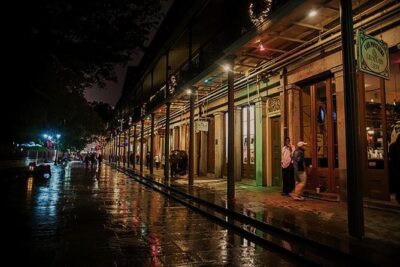
New Orleans Premier Ghost, Voodoo and Vampire Walking Tour
Read our review →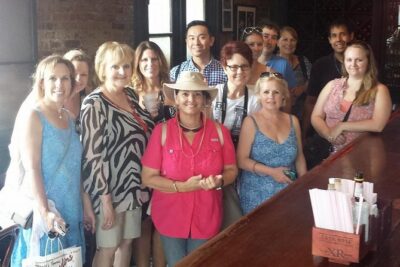
New Orleans Food Walking Tour of the French Quarter with Small-Group Option
Read our review →
St. Louis Cemetery No. 1 Official Walking Tour
Read our review →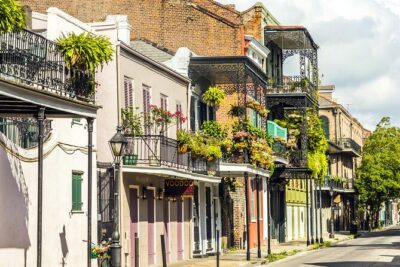
New Orleans French Quarter, Voodoo and Culture Walking Tour
Read our review →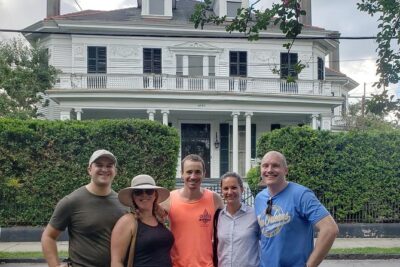
New Orleans Garden District History Walking Tour
Read our review →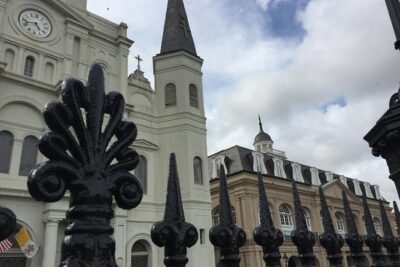
French Quarter Historical Sights and Stories Walking Tour
Read our review →
Ghost and Vampire Walking Tour Of The French Quarter
Read our review →