
Review · ITALY
Alberobello: Walking Tour among Trulli Houses with a Local
Alberobello’s cone-roofed trulli look almost too neat to be real, but their dry-stone construction reflects a building tradition several thousand years old. This two-hour walk gives you the useful backstory that is easy to miss when you simply wander among the white houses and souvenir shops.
I like the local angle, especially when guides such as Guido and Ksenia explain both old building methods and present-day life in town. I also like the route through Aia Piccola, a quieter area with more residential trulli. The main drawback is that some groups can be large or hard to hear, and the tour may focus more on one side of Alberobello than the other.
Key points to know before you book
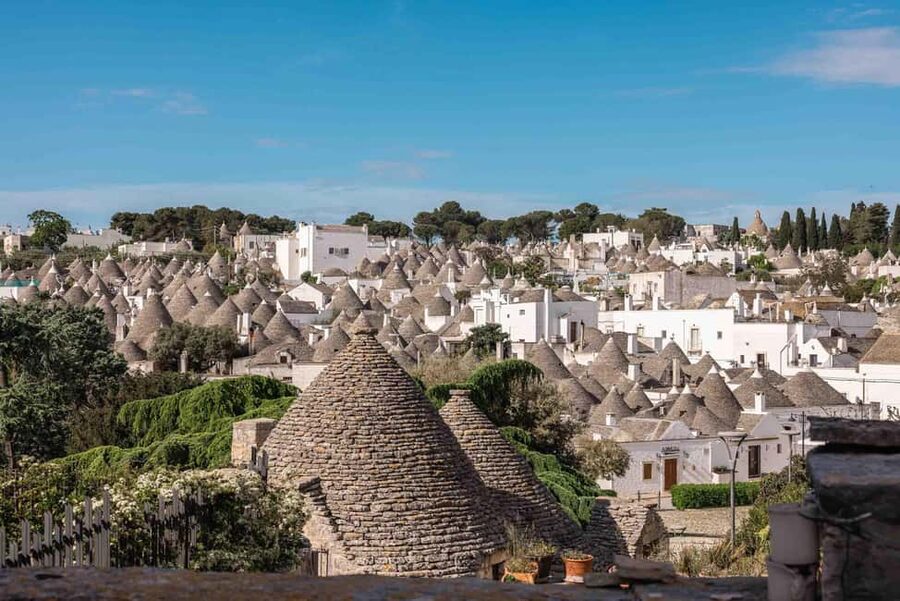
- See Alberobello beyond the postcard view: The walk includes Aia Piccola, where the trulli feel less like shopfronts and more like homes.
- Learn how dry-stone trulli work: Your guide explains the cone roofs, stacked stone walls, and long-standing local building traditions.
- Expect strong local guiding: Guido and Ksenia are frequently praised for clear explanations, patience, humor, and practical help.
- Plan for a gentle two-hour walk: The pace includes stops for stories, photos, shade, and questions rather than a nonstop march.
- Bring your own museum budget: Entry tickets are not included, although the route visits the outside of several important sights.
- Use the ending well: The tour finishes at Largo Martellotta, close to shops, cafés, and places to continue exploring.
Why Alberobello makes a guided walk worthwhile
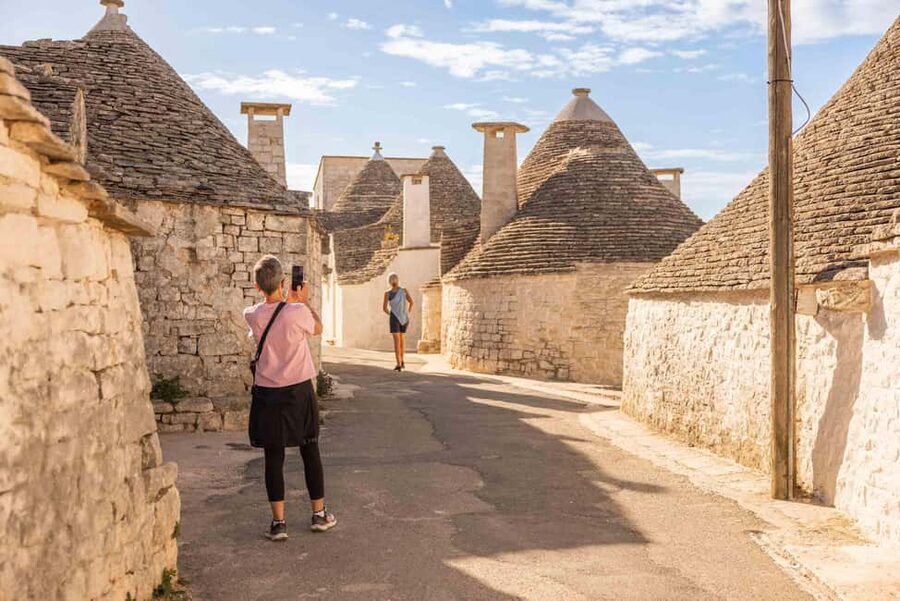
You can walk through Alberobello on your own in minutes and see the basic picture: whitewashed buildings, gray stone cones, narrow lanes, and plenty of shops. The harder part is understanding why the buildings look this way and how they fit into the town’s story.
That is where this tour earns its keep. The guide turns a collection of picturesque roofs into a lesson in dry-stone construction, local customs, and changing life in the Itria Valley. You hear the legends attached to the trulli, learn how the structures were made, and get a sense of why UNESCO recognized Alberobello in 1996.
I especially value the difference between looking and seeing. Without explanation, the painted symbols on some roofs, the unusual roof shapes, and the thick stone walls can blur into decoration. With a local guide, they become clues to the town’s past and its building traditions.
The tour is conducted in English and includes a live local guide. The supplied information names Explorea di Guido Convertino as the provider, with Guido and Ksenia receiving especially strong praise for their guiding. Other guides may lead the walk, so the exact style can vary.
More walking tours around Italy:
- Venice: Doge’s Palace and St Mark’s Basilica Walking Tour
★ 4.4 · 6,291 reviews - Milan: Guided Walking Tour & Last Supper Visit with Ticket
★ 4.7 · 5,409 reviews - Naples: Street Food Walking Tour with Local Guide
★ 4.9 · 4,976 reviews
Starting at Piazza Sacramento and meeting the town
The walk begins at Piazza Sacramento. From there, you head into central Alberobello rather than starting with a long transfer or a complicated meeting point outside town.
This matters because the tour is entirely on foot. There is no hotel pickup or drop-off, so you need to make your own way to the starting point. Once you arrive, the route gives you an efficient introduction to the main sights and finishes in a central area where you can keep exploring.
Expect narrow streets, stone surfaces, and frequent pauses. The guide may stop in shade when possible, a useful touch in the hot months. Several people found the pace comfortable, with enough time for questions and photographs. A toilet stop may also be included, depending on the guide and the group.
If you arrive early, use the time to get your bearings around Piazza Sacramento. Alberobello can feel confusing at first because the trulli districts, churches, shops, and viewpoints sit close together. A clear starting point helps you understand how the walk fits together.
Trullo Sovrano: a useful first look at trullo design

The first listed stop is Trullo Sovrano, which receives about 15 minutes. It is an important place to begin because it gives the guide a clear setting for explaining the basic form of a trullo.
You will hear about the cone-shaped roof and the stone construction that defines these buildings. The point is not simply that the roofs look unusual. You learn how the trulli relate to a local tradition of building with stone, without conventional mortar in the way many modern buildings use it.
Trullo Sovrano can be visited, but museum entry is not included in the tour price. That distinction is worth noting. The walking tour gives you context and an exterior view of the town’s architecture, but you may need to pay separately if you want to enter a museum or specific attraction.
I would treat this stop as the foundation for the rest of the walk. Once you understand the basic structure, later streets make more sense. You begin to notice how each roof, wall, and clustered room adds to the larger pattern.
Chiesa dei Santi Medici and Alberobello’s local character
The route continues to Chiesa dei Santi Medici Cosma e Damiano, with about 10 minutes of guided attention. This stop adds a religious and civic layer to the town, keeping the tour from becoming only an architecture walk.
Your guide can place the trulli beside the more familiar form of a church and explain how the town developed around both domestic buildings and public spaces. The contrast is useful: the trulli feel intimate and compact, while the church gives you a larger sense of community.
The stop is brief, so do not expect a long interior visit or a full museum-style talk. It works best as part of the overall sequence. You move from private homes to a public religious building, then back into the lanes where the trulli tradition is most visible.
Same streets, a different story:
- Florence: Highlights Walking Tour with Expert Guide
★ 4.6 · 4,662 reviews - Venice: San Marco to Rialto Walk & Spritz Like a Local
★ 4.2 · 3,651 reviews - Venice Walking Tour and Gondola Ride
★ 3.5 · 3,630 reviews - Uffizi & Accademia Timed Entry: Small Group Duomo Walking Tour
★ 4.5 · 3,630 reviews
Casa D’Amore and stories behind the stone walls
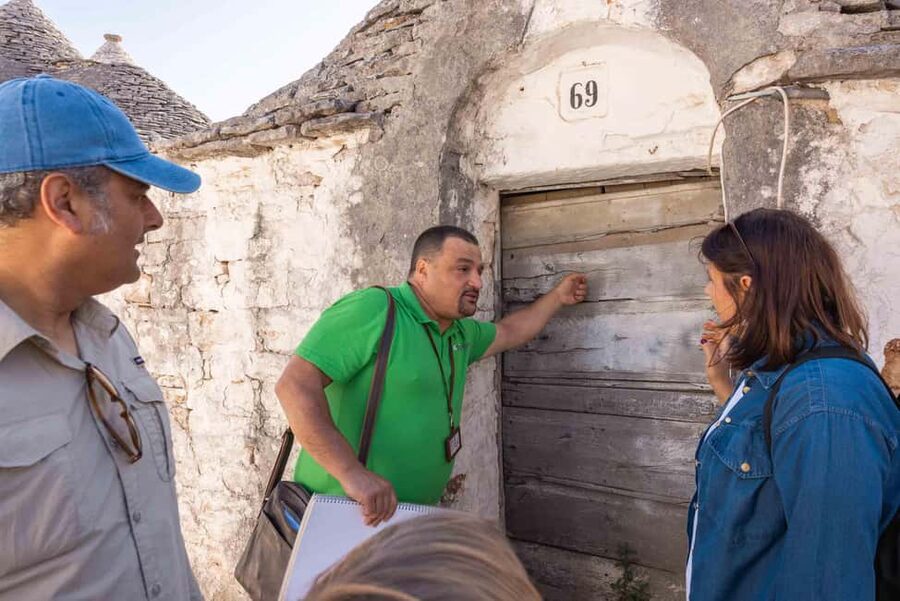
Casa D’Amore comes next, with around 10 minutes of guided commentary. The name gives the stop an easy hook, but the value lies in the explanation of how local buildings and local stories connect.
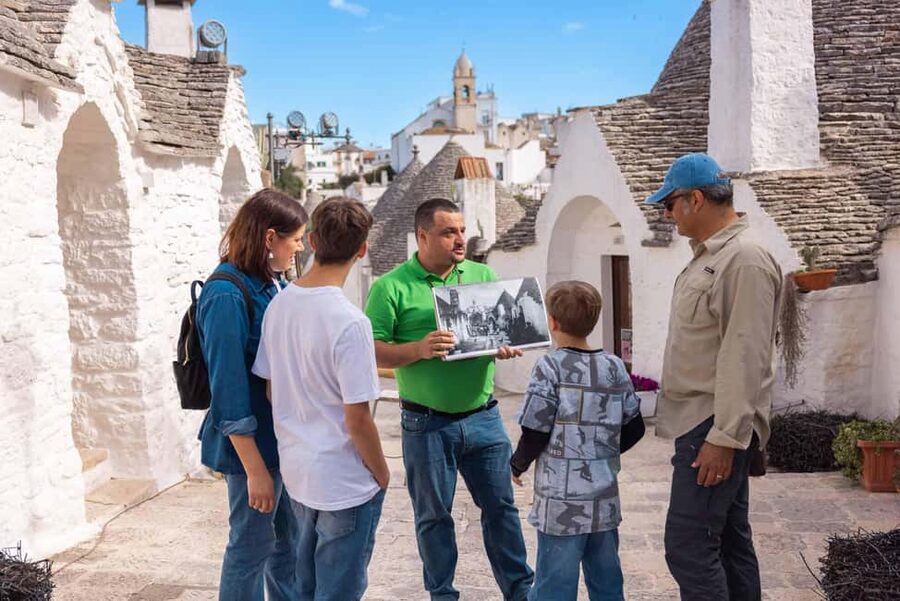
This is the kind of place where a guide’s storytelling matters. Guido is praised for using old photographs, maps, and visual material to make the past easier to picture. Ksenia is also praised for answering questions and adjusting her explanations to the interests of the group.
That personal approach is a real advantage over a recorded audio guide. You can ask why the buildings were made in a certain way, how people used them, or what has changed. The answer may depend on the particular guide, but the format allows for conversation rather than a fixed script.
The panoramic view and the best photo pauses
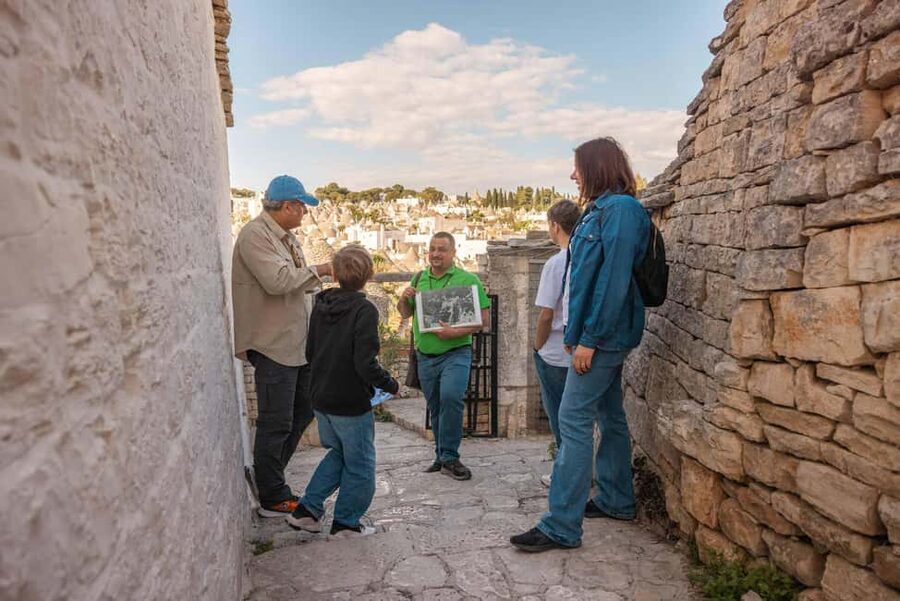
The stop described as the Trulli Panoramic View lasts about 10 minutes. This is one of the natural highlights for anyone who wants photographs of Alberobello’s unusual roofs.
From a wider viewpoint, the town’s layout becomes easier to read. Instead of seeing one trullo at a time, you can take in clusters of white walls and gray cones. This is also when the fairytale quality of Alberobello comes through most clearly.
Your guide may help with photos. Several guide reports praise this small service, especially from Ksenia, who is described as patient with picture stops and willing to take photographs for the group. That is useful if you are traveling alone or want everyone in the picture.
The best light and crowd levels will depend on the time of day. One afternoon group found the town quieter, while other walks took place in crowded conditions. If you have a choice, an afternoon start may offer a calmer feel, but it can also mean less forgiving heat in summer. Check the available start times before booking.
Aia Piccola: the most valuable part of the route
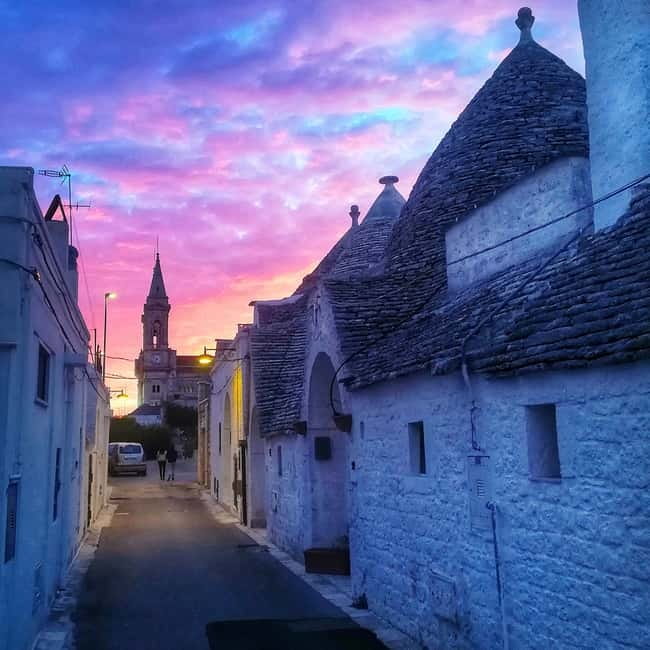
Aia Piccola receives the longest stop, about 20 minutes, and I suspect this will be the most rewarding section for many people. It is one of Alberobello’s key trulli areas and offers a more authentic look at the town than the busiest commercial lanes.
The difference is simple. In the shop-heavy streets, the trulli are attractive but often filled with boutiques, tasting rooms, and souvenir displays. In Aia Piccola, you get a stronger sense of residential Alberobello and the way the buildings function as part of a neighborhood.
This is also where a local guide can add the most value. A guide who grew up in Alberobello, as Guido is described, can talk about what it is like to live in the town today, not only what the buildings meant in the past. That link between old construction and modern daily life gives the walk more substance.
You should still expect a public walking route, not access to private homes. The tour shows you the area from its streets and viewpoints. Even so, the change in atmosphere helps explain why you should not judge Alberobello only by its shopping lanes.
The trulli streets and the difference between seeing and understanding
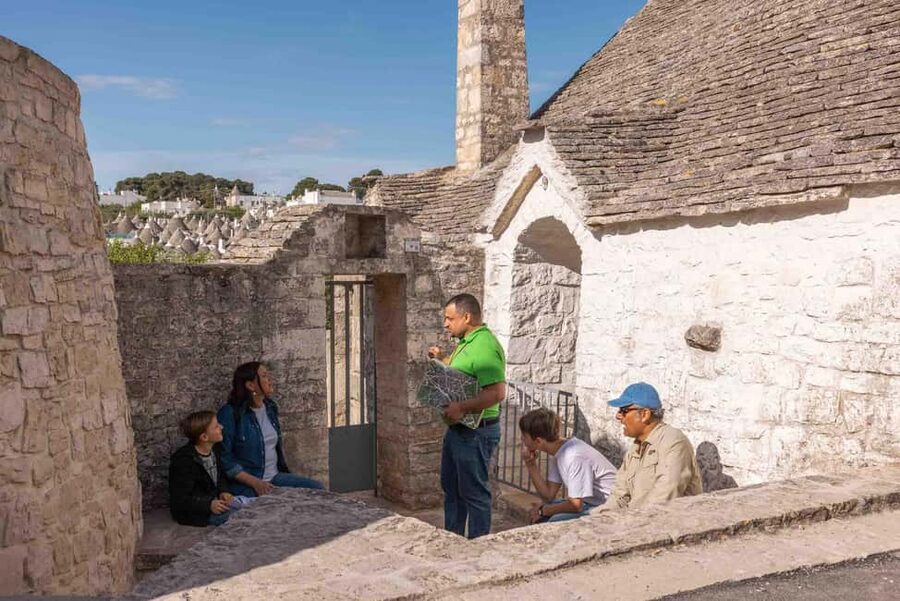
The route then returns to the broader group of trulli known simply as the Trulli of Alberobello, with about 10 minutes set aside for the visit. This section ties together what you have already learned.
You will see the familiar white walls, cone roofs, stone details, and narrow lanes that make Alberobello so recognizable. The guide’s task is to help you sort out the visual repetition. Once every roof looks similar, stories about construction, symbols, legends, and local use give each street more character.
This is also the part of town where shopping can take over your attention. That is not necessarily a bad thing. The tour finishes near Largo Martellotta, so you can return to shops, cafés, and streets you want to explore at your own speed.
I would not expect the guide to replace independent wandering. The best plan is to use the tour for context, then spend extra time afterward taking photos, browsing, or sitting down for a drink. Several guides also offer restaurant suggestions at the end, and some have helped with plans for the next stop in an Italian itinerary.
The guides: what kind of experience should you expect?
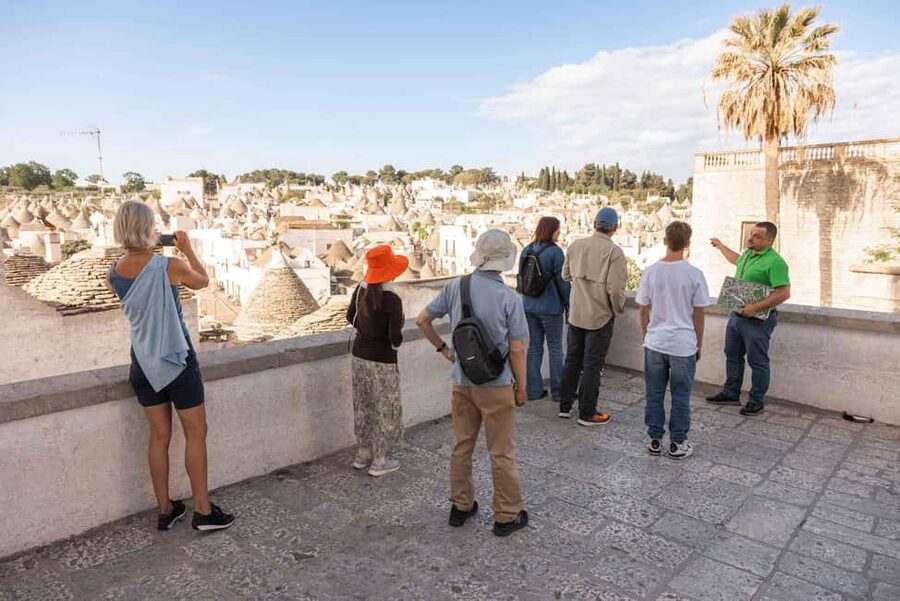
The strongest part of this activity is the guiding. Guido is repeatedly described as friendly, funny, well prepared, and especially familiar with Alberobello. His use of personal visual material, including old photos and maps, can make the town’s past easier to grasp.
Ksenia is praised for a slightly different strength. She is described as patient, attentive to the group’s pace, careful that everyone can hear, and willing to answer questions. She has also helped with photographs and shared extra information after the walk.
That said, a local guide does not guarantee perfect audio in every group. One person found a guide’s fast speech and strong accent difficult to follow. Another group struggled to hear because the town was crowded and other large tours were nearby.
Group size can affect the experience. A small group makes it easier to ask questions and stay close to the guide. One person felt a group limited to 10 would have been better, while another praised having a small group. If you are sensitive to noise or want a highly personal walk, ask about the expected group size when booking.
Price, pace, and practical value at $44
At $44 per person, this is not the cheapest way to walk through Alberobello. You can see the streets for free. The question is what you get for the extra cost.
For me, the price makes sense if you want the architecture explained rather than simply photographed. The tour lasts two hours, includes a local English-speaking guide, and covers several parts of town without requiring you to plan the route yourself. It can also save you from spending your first hour figuring out which lanes and viewpoints matter.
The value is strongest for first-time visitors, people interested in architecture, and anyone who wants local food or sightseeing suggestions afterward. It is less useful if you already know Alberobello well or prefer to browse alone without scheduled stops.
You should budget separately for museum entry because tickets are not included. You also need to arrange your own transport to Piazza Sacramento. The walk ends at Largo Martellotta, so there is no return transfer to organize.
The activity is listed as wheelchair accessible, but the setting still includes narrow lanes and stone streets. If you have specific mobility needs, confirm the route details before booking rather than assuming every surface will be easy.
Who will enjoy this Alberobello walk most?
I would recommend it to:
- First-time visitors who want a clear introduction to the town
- People curious about dry-stone construction and local architecture
- Families, since children’s activities are included
- Solo visitors who want help with photos and orientation
- Couples who want restaurant suggestions after the walk
- Anyone who prefers stories and conversation to a printed guide
It is also a smart choice in hot weather because the tour is not a nonstop march. Guides have made efforts to use shade, pause for explanations, and adjust the pace. Still, wear comfortable shoes, carry water, and avoid assuming that a two-hour walk will feel cool in midsummer.
Independent explorers may prefer to skip the tour if they mainly want shopping time. The commercial side of Alberobello is easy to explore without help, and even a guided walk leaves you free to return there afterward.
Should you book it?
Book this walk if you want to understand why Alberobello’s trulli matter, not just take pictures of them. The combination of Aia Piccola, local stories, construction details, photo stops, and practical food advice gives you more than a quick circuit of the tourist streets.
I would be cautious if you need a very small group, perfect audio, or a guaranteed start time. Schedule changes and late arrivals have affected some walks, and crowded streets can make it harder to hear.
For most first visits to Alberobello, though, two hours and $44 is a fair trade for a local introduction. Take the tour early in your stay, then use the central finish at Largo Martellotta as a launch point for lunch, shopping, or a second, slower walk through the trulli.
FAQ
How long is the Alberobello trulli walking tour?
The tour lasts two hours.
Where does the walking tour start?
It starts at Piazza Sacramento in Alberobello.
Where does the tour finish?
The tour finishes at Largo Martellotta, 70011 Alberobello, Italy.
Is an English-speaking guide included?
Yes. A live local guide conducting the tour in English is included.
Are museum entry tickets included?
No. Museum entry tickets are not included in the $44 price.
Can I cancel the booking and receive a refund?
Yes. You can cancel up to 24 hours in advance for a full refund. You can also reserve now and pay later.
New walking tours around Italy
- Rome: Fountains and Squares Small-Group Walking Tour★ 4.7 · 335 reviews
- Napoli: Walking Tour of Naples with Local Tour Guide★ 4.9 · 95 reviews
- Naples: Spanish Quarters Walking Tour★ 4.6 · 72 reviews
- Naples: Street Art, Wine and Food Tasting Walking Tour★ 5.0 · 163 reviews
- Naples: Historic Center and Sansevero Chapel Walking Tour★ 4.8 · 208 reviews
- Naples: Old Town Guided Walking Tour★ 4.8 · 553 reviews
- Naples: Street Food Experience With 6 Stops★ 4.7 · 392 reviews
- Naples Essentials: Monuments, Local Life & Street Art★ 4.9 · 79 reviews
Italy Walking Tours, side by side.
Venice: Doge’s Palace and St Mark’s Basilica Walking Tour
Read our review →
Milan: Guided Walking Tour & Last Supper Visit with Ticket
Read our review →
Naples: Street Food Walking Tour with Local Guide
Read our review →
Florence: Highlights Walking Tour with Expert Guide
Read our review →
Venice: San Marco to Rialto Walk & Spritz Like a Local
Read our review →
Uffizi & Accademia Timed Entry: Small Group Duomo Walking Tour
Read our review →
Lists this walk sits on