Review · BARCELONA
Barcelona: Gothic Quarter Walking Tour
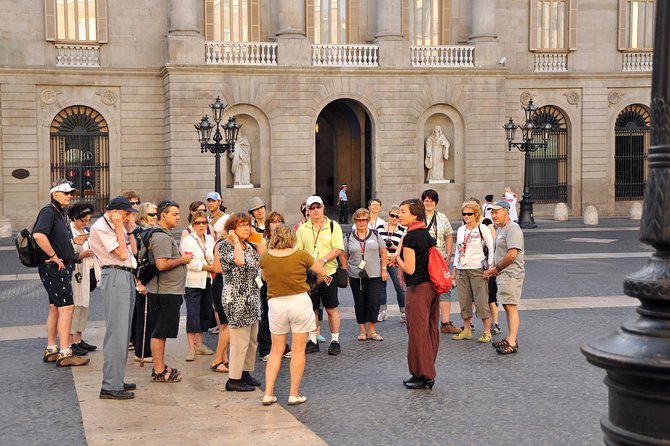
Barcelona’s old city is best understood on foot, one crooked lane and quiet square at a time. This German-language walk connects Roman Barcelona, the medieval Crown of Aragon, the Jewish Quarter, the Inquisition, the Bourbon crackdown, and the scars of the Spanish Civil War without treating the city like a dusty museum.
I like the slow pace with time for photos and bathroom breaks, and I like that the guide adds practical advice about restaurants, shopping, and local specialties. One consideration: the tour focuses mainly on exterior views, so you should not book it expecting long interior visits or museum time.
Key points at a glance
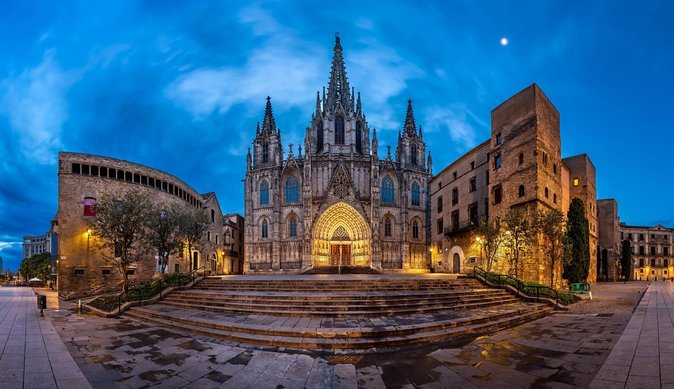
- Roman beginnings: Hear how an early convalescent colony had access to flowing water and how Barcelona grew from its ancient foundations.
- Medieval power: Follow the rise of the Crown of Aragon, Barcelona’s maritime strength, and the political struggles that shaped the old city.
- Jewish Quarter and Inquisition: See the remaining traces of a lost world and learn how religious power changed daily life.
- Ribera highlights: Reach Santa Maria del Mar, the old mulberry grave, and the streets around Passeig del Born.
- German-language guidance: The tour is designed for German speakers, with Johannes among the guides named in recent booking information.
- Practical format: Expect a private group, a relaxed walk, exterior sightseeing, and a route that runs in sun, rain, and wind.
Starting at Plaça de Catalunya
The tour begins in front of the Hotel Olivia Plaza at Plaça de Catalunya, 19. This is a useful starting point because the square sits between the newer central city and the older quarters. You are not dropped into a random back street with no sense of direction. You begin at one of Barcelona’s main reference points, then walk toward the medieval core.
From here, the route heads into the Gothic Quarter and later toward the Ribera Quarter. The transition matters. Barcelona is not one perfectly preserved medieval block. It is a city built in layers, with ancient foundations, later political power, religious institutions, modern streets, and daily city life pressed close together.
I would arrive a little early. Plaça de Catalunya is large, busy, and easy to cross in the wrong direction if you are watching traffic, signs, and people at once. The meeting point is specific, in front of the hotel, so use that detail rather than simply aiming for the middle of the square.
More Old Town Walking Tours in Barcelona
- Barcelona Helicopter, Sailboat & Old Town Private Walking Tour
★ 5.0 · 1,395 reviews - Barcelona: Old Town and Gothic Quarter Walking Tour
★ 4.8 · 1,393 reviews - Barcelona Old Town & Gothic Quarter Small Group Tour
★ 5.0 · 1,308 reviews
Roman water and Barcelona’s first layers
The first part of the story reaches back to Roman times. One topic is Roman luxury, including flowing water for a convalescent colony. That detail gives the past a human scale. Instead of hearing only about emperors and dates, you get a sense of how water, health, comfort, and settlement affected the city.
The Gothic Quarter can seem entirely medieval at first glance, but its streets sit over older foundations. A good walking explanation helps you read the stones, walls, and street plan as evidence of different periods. The point is not simply to collect ancient facts. It is to understand why Barcelona developed where it did and why its old center feels so tightly packed.
The route uses the streets and squares themselves as the main teaching space. That is a strength if you learn best by seeing the places being discussed. It is less suitable if you want a long stop inside an archaeological museum, since interior visits are generally not part of the program.
Small lanes, quiet squares, and the Barrio Gotico
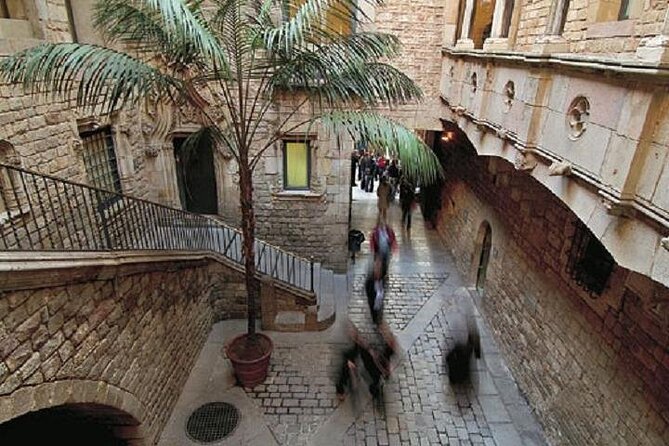
The Gothic Quarter rewards a guide who can make sense of its turns. Its narrow lanes are atmospheric, but without context they can blur together. This tour links the buildings and public spaces to former residents, religious groups, rulers, soldiers, and political movements.
You will walk through small alleyways and romantic squares rather than rushing from one famous facade to the next. The experience is meant to use all five senses: the look of worn stone, the changing sound of footsteps and city life, the feel of the close streets, and the smells coming from shops and food stops along the way.
That does not mean every stop is quiet. Barcelona’s old center is still a working part of the city. The value of the route is seeing old and new together, not pretending the quarter is a preserved stage set. The guide’s job is to show you where the historic story ends and modern Barcelona begins.
From holy city to nation building
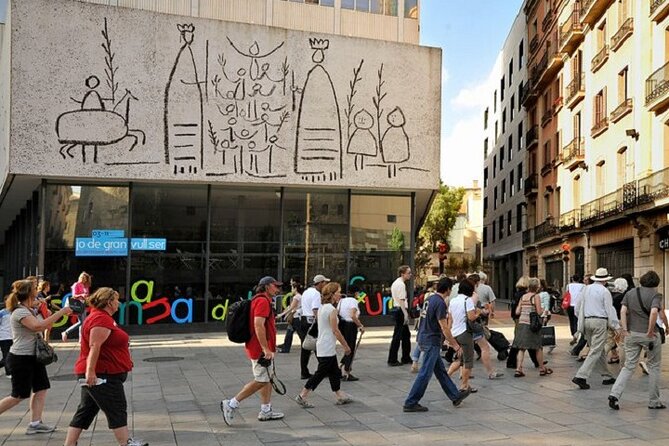
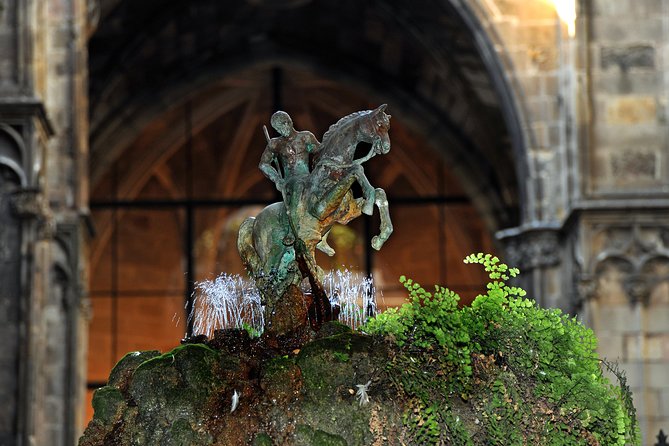
The tour follows the city’s religious and political development, including the idea of a holy city and the birth of a nation through conflict. The program uses memorable story titles about a nasty affair, a bloody situation, a dragon, a young girl in the pines, and a French soldier’s bayonet.
These subjects suggest a tour built around vivid incidents rather than a plain list of rulers. That approach can make complicated Catalan and Spanish history easier to retain. You may not remember every date, but you are more likely to remember how violence, faith, legend, and political ambition shaped the streets around you.
Some stories are likely to be more dramatic than tidy. Barcelona’s past includes saints, soldiers, royal families, public arguments, executions, and legends that have changed over time. A good guide needs to distinguish the official story from the colorful one. The tour’s wide range of topics gives you room to ask those questions in person.
More Old Town Walking Tours in Spain
- Ramblas, Old Town, Gothic and Gaudi Architecture Walking Tour
★ 5.0 · 723 reviews - Barcelona: Gothic Quarter Walking Tour with 10+ Attractions
★ 5.0 · 369 reviews - Barcelona: Ramblas, Old Town & Gaudí Houses Walking Tour
★ 4.9 · 239 reviews - Barcelona: Old Town Private Walking Tour of Past and Present
★ 5.0 · 160 reviews
The Jewish Quarter and the Inquisition
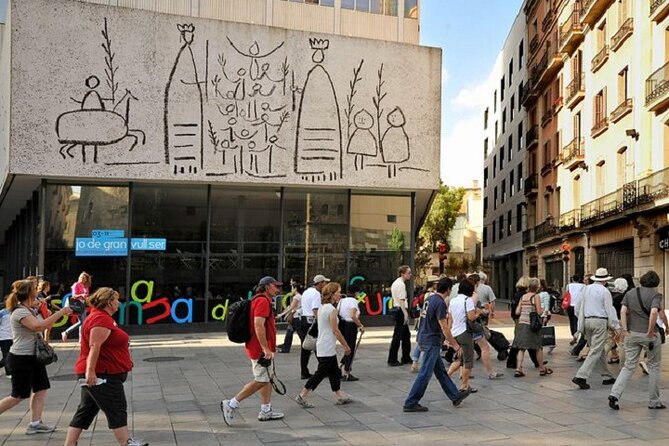
The Jewish Quarter is one of the most important parts of this walk. The tour addresses the remains of a lost Jewish world and then turns to the Inquisition and the dangers of religious authority.
Here, the tight street plan carries emotional weight. You are not only looking at old walls. You are considering communities that once lived, worked, worshipped, and traded in these spaces, then faced pressure, persecution, and disappearance. The physical remains are limited, which makes careful explanation especially useful.
The program also includes the hound kings and the warning that praise is nothing to play with. These unusual phrases point toward the politics of accusation, loyalty, and public power. You should expect a story-driven treatment rather than a detailed museum lecture, with the street itself providing the setting.
Royal power and the Crown of Aragon
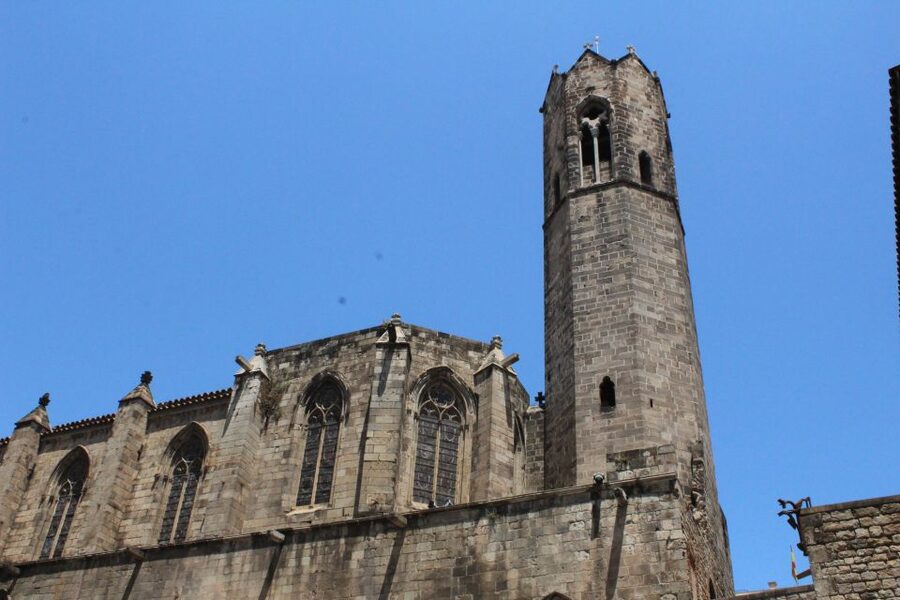
Barcelona’s medieval importance grew far beyond its original size. The tour follows the Crown of Aragon from a small city to a maritime force, then examines the city’s political institutions and the general assembly.
One theme is the city speaking to its own government, with a reference to the advice of the hundreds and the general. Another is the death of King Martin and the beginning of the end of shared political power. Together, these subjects show that Barcelona was not only ruled from above. Local institutions, merchants, citizens, and royal interests all competed for influence.
This is where a private group can be useful. You can ask how power worked, who benefited, and what the changes meant for ordinary people. The advertised rate is $212 for up to four people, so the value is strongest when a small party shares the cost and wants a German-language guide focused on its pace and questions.
For two people, the per-person cost is high. For four, it works out to $53 per person before any additional booking considerations. Since the tour lasts about 3.5 hours, the price buys a substantial block of guide time, but it does not include interior entry fees.
Santa Maria del Mar and the Ribera Quarter
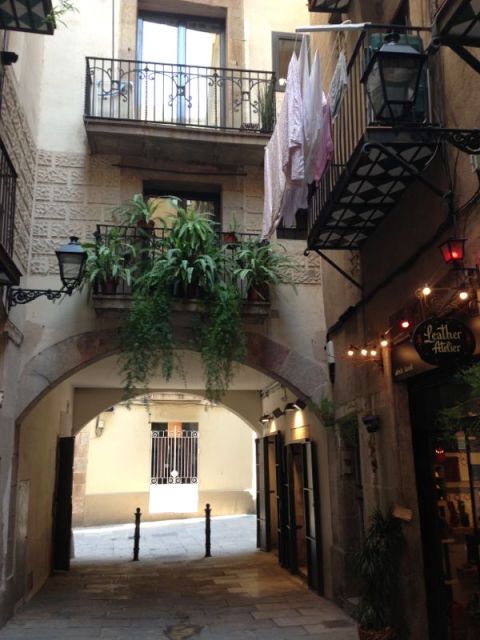
The route eventually moves into the Ribera Quarter and finishes at Passeig del Born, 22. Santa Maria del Mar is a major highlight here. The church is presented as an early collaborative project, with legends and heroes connected to its construction and place in the city.
Because interior visits are not part of the normal program, you should expect to admire the building from outside rather than spend a long time studying the nave, chapels, or artwork. That may feel limiting if Santa Maria del Mar is high on your must-see list. On the other hand, an exterior-focused stop keeps the walking route moving and leaves you with a clear idea of where to return independently.
The finish near Passeig del Born is well chosen for orientation. The area ties together the old city, Ribera streets, royal history, and later political memories. It also gives you a practical endpoint from which to continue exploring on your own, though the tour itself ends there rather than including a separate onward activity.
The mulberry grave and the scars of war
One of the more striking subjects is the mulberry grave, tied to the vengeance of the Bourbon kings and the head of the general. This section turns toward the political punishment that followed the War of the Spanish Succession and the reshaping of Barcelona under Bourbon rule.
The tour then reaches a romantic place marked by the scars of the Spanish Civil War. That contrast is very Barcelona: an attractive square or old wall can carry a painful memory beneath its surface. The walk does not treat beauty as proof that the past was peaceful.
You will also hear about a half house and the song of the knife-grinder. These details point to the unusual stories that make a walking tour different from reading a general city guide. They give the old quarter a human voice, with odd corners, working people, and reminders that history is often found in small details.
A Gothic theme park, moved houses, and the dancing egg
The tour includes the idea of a Gothic theme park, with houses moved stone by stone. This is an important caution for anyone who assumes every old-looking feature in the quarter is exactly where it has always been.
Barcelona has used, restored, rearranged, and sometimes reconstructed historic elements to create a particular image of its past. That does not make the old city worthless. It means you should look at it with curiosity rather than accepting every medieval appearance at face value.
The route also includes the dancing egg, a local tradition associated with the city’s religious calendar. The topic is a pleasant change from war and political conflict. It shows how the old city’s customs can be playful, seasonal, and still tied to public spaces.
For a cloister visit, you need clothing that covers your shoulders and reaches at least to the knees. That requirement is easy to handle, but it is worth planning for if you are walking in summer clothes.
Fernando, Columbus, and the royal palace
Another stop concerns the royal palace, King Fernando’s fears, and the fact that he did not receive Columbus at home. This section places Barcelona within the wider story of Spanish monarchy, exploration, and royal ceremony.
The value here is the correction of a familiar simplified story. Columbus is often presented as a figure who moves directly from voyage to royal approval, but the city’s own palace history gives you a more specific and less polished setting. The tour connects famous names to an actual place rather than leaving them floating in a textbook timeline.
As with the other royal subjects, the exterior focus matters. You will learn what happened around the palace and how the site fits into the old city, but you should not expect a full palace tour included in the price.
What the 3.5-hour pace feels like
The published duration is 3.5 hours, while the included city tour is described as three hours. Since the route details also allow time for photos and bathroom breaks, you should confirm the exact timing when booking. In practical terms, plan to keep most of half a day free.
This is a walking tour through streets and squares, with no need to rush from stop to stop. It is described as suitable in all weather, including sun, rain, wind, and strong showers. Bring a hat, sunglasses, sunscreen, and water in summer. In winter, a jacket or thin coat should be enough according to the tour information.
The old city has uneven surfaces and plenty of standing. The experience is listed as wheelchair accessible, but the route’s narrow streets, weather, and long duration still make it sensible to consider your own comfort. The relaxed pace helps, but this is not a seated sightseeing activity.
German guidance and personal practical tips
The live guide language is German, and the group type is private. One guide named in the booking information is Johannes. His approach has included extra photographs, a structured route, and useful advice on restaurants, shopping, and local specialties.
Those practical tips can be as valuable as the historical material. A guide who knows how to connect the old city to the rest of your stay can help you decide where to eat, what products to look for, and which local customs deserve a closer look. You should ask questions while you have the guide’s attention, especially if you are staying in Barcelona for several days.
The German-only format is also the main limitation for anyone who does not speak German comfortably. The route may be visually enjoyable in any case, but the historical content is the reason to book it, so language fit matters.
Who should book this walk?
I would choose this tour if you want a broad, story-led introduction to Barcelona’s oldest quarters and prefer German guidance. It suits couples, families, or a small group of up to four who want a private pace rather than a large public walk.
It is also a good match if you like political history, local legends, religious buildings, Jewish heritage, and the way modern cities reuse their past. The route offers more than a list of architectural names.
I would look elsewhere if you mainly want interior access to churches, museums, or palaces. I would also think twice if a 3.5-hour outdoor walk feels tiring, especially in poor weather. The tour runs in rain and wind, so comfortable shoes and sensible clothing matter.
Should you book the Barcelona Gothic Quarter Walking Tour?
Book it if you want a German-language walk that joins Roman beginnings, medieval power, Jewish history, royal politics, Santa Maria del Mar, and Civil War memories into one route. The 4.9 rating from 383 bookings and the repeated praise for clear structure, extra photos, personal attention, and practical Barcelona tips support its appeal.
The best value comes with four people sharing the $212 group price. Be clear about the exterior-only format, the long walking time, and the possible difference between the listed 3.5-hour duration and the three-hour city tour description. If those terms suit you, this is a thoughtful way to get your bearings in Barcelona’s oldest streets.
FAQ
Where does the tour begin?
It begins in front of the Hotel Olivia Plaza at Plaça de Catalunya, 19, 08002 Barcelona.
Where does the tour finish?
The walk finishes at Passeig del Born, 22, 08003 Barcelona.
How long does the tour last?
The activity is listed as lasting 3.5 hours. The included city tour is described as three hours, so you should confirm the exact schedule when booking.
What language is the tour offered in?
The live tour guide language is German.
Is this a private tour?
Yes. The group type is listed as a private group, with the price covering up to four people.
Are interior visits included?
No. Interior visits and entry fees are not included. Monuments are generally viewed from the outside, with a couple of exceptions.
Is the tour wheelchair accessible?
Yes, the activity is listed as wheelchair accessible.
What should I wear for the cloister visit?
Wear clothing that reaches at least the knees and covers your shoulders. The tour also recommends a hat, sunglasses, sunscreen, and water in summer, plus a jacket or thin coat in winter.
New walking tours around Barcelona
- From Barcelona: Montserrat Walking and Horseback Riding Tour★ 4.8 · 81 reviews
- Barcelona: Walking tour with Montjuic Castle & Cable Car★ 4.7 · 832 reviews
- Barcelona: Gothic Quarter Walking Tour w/ Montjuïc Cable Car★ 4.4 · 90 reviews
- Barcelona Walk Like a Local: El Born & Gothic 15+ Sights★ 4.9 · 88 reviews
- Barcelona: Private Walking Tour with a Local★ 4.5 · 202 reviews
- Barcelona: Jewish Quarter 2-Hour Walking Tour★ 4.8 · 333 reviews
- Barcelona: Ramblas, Old Town & Gaudí Houses Walking Tour★ 4.9 · 239 reviews
- Barcelona: Old Town Private Walking Tour of Past and Present★ 5.0 · 160 reviews
Barcelona Walking Tours, side by side.

Barcelona Tapas and Wine Experience Small-Group Walking Tour
Read our review →
Barcelona: Tapas Walking Tour with Food, Wine, and History
Read our review →
Barcelona Helicopter, Sailboat & Old Town Private Walking Tour
Read our review →
Barcelona: Old Town and Gothic Quarter Walking Tour
Read our review →
Barcelona: City Walking Tour with a Local Guide
Read our review →
Barcelona: Helicopter Flight, Boat Ride, and Walking Tour
Read our review →
Barcelona Old Town & Gothic Quarter Small Group Tour
Read our review →