
Review · ITALY
Catania: Heart of the City Guided Walking Tour
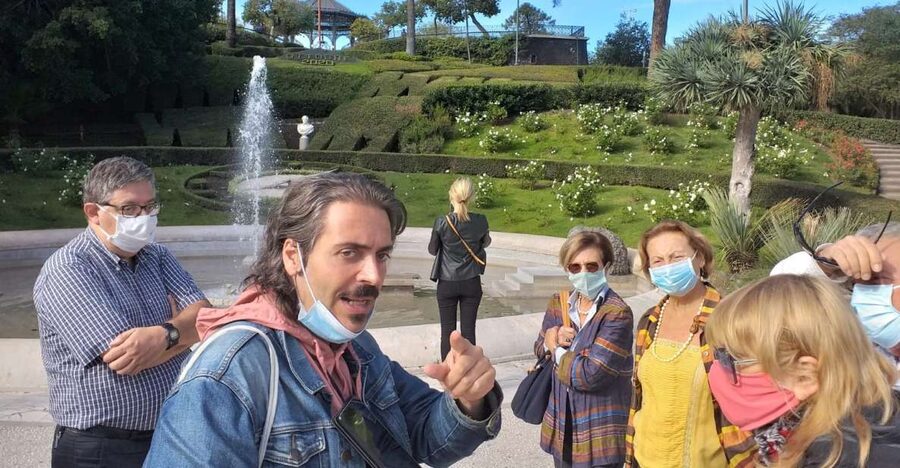
Catania’s city center makes a good walking lesson because its grand churches, lively market, medieval castle, and volcanic past sit close together. This two-hour tour links them with stories about Mount Etna, the 1693 earthquake, local saints, food, and everyday Sicilian life. I especially like the fish market stop and the practical restaurant advice from guides such as Esther, Maria Louisa, and Tiziana.
I also like that the walk gives you a useful first look rather than trying to fill your day with long museum visits. You see the Cathedral of Catania, Ursino Castle, Via Crociferi, and Piazza Università at a steady pace. The main consideration is that most sights are explained from outside, so you will need to return on your own if you want a full museum or church visit.
Key points at a glance
- Start beside the Elephant Fountain: Meet at the tourist information point on Via Erasmo Merletta, right by Piazza Duomo.
- See Catania’s essential center: The route covers the cathedral, fish market, Ursino Castle, Via Crociferi, and Piazza Università.
- Hear the city’s volcanic story: Guides connect Catania’s streets and monuments with Mount Etna and the earthquake of 1693.
- Get useful local advice: Guides offer ideas for restaurants, cafés, nightlife, shopping, and later sightseeing.
- Expect a moderate two-hour walk: The main sites are close together, but you will spend time standing and walking on city streets.
- Book early in your stay: The route is especially useful for getting your bearings before choosing where to eat and what to visit next.
Why this Catania walk works so well
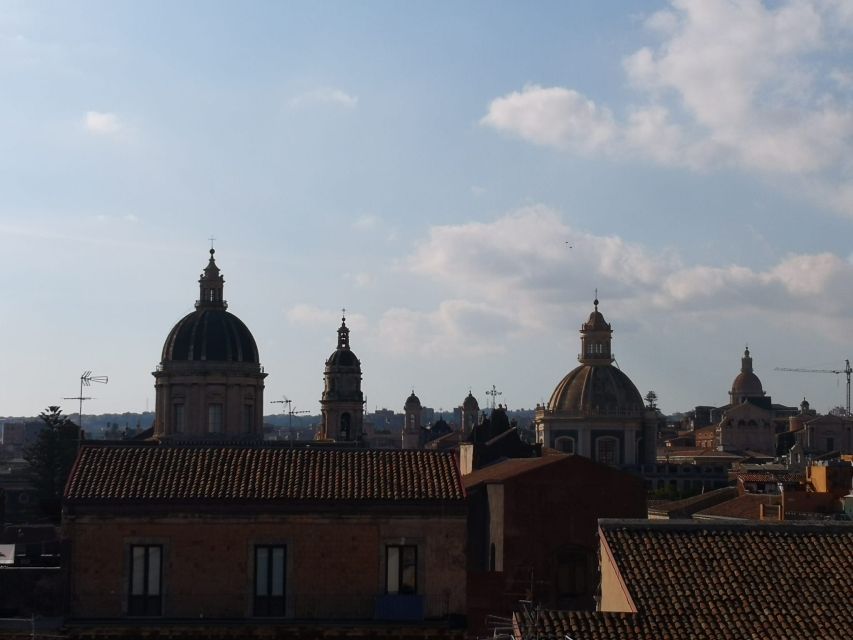
Catania can look a little rough around the edges at first. Dark volcanic stone, busy streets, grand Baroque buildings, and everyday city life all meet in a compact center. Without context, you might see a handsome square here and an old church there. With a good guide, the city’s pieces begin to connect.
The route is strongest as an introduction. You hear about Catania’s past, its relationship with Etna, local customs, legends, and the damage caused by the 1693 earthquake. The guide also points out places you might miss when walking alone, including churches, monasteries, palaces, and smaller corners around the old center.
I would book this early in a stay, ideally on your first day in Catania. The walk ends close to where it begins, and the advice about food, cafés, nightlife, safety, and shopping can shape the rest of your visit.
The tour has a score of 4.6 from 708 ratings, with repeated praise for the guides’ storytelling, local tips, and ability to make Catania easier to understand. Guides named in the experience include Maria, Esther, Maria Louisa, Matteo, Tiziana, Emanuella, Mario, Gordon, and Emmy. Your guide will vary, but the experience is built around a local, licensed English-speaking guide.
More walks with a guide around Italy:
- Milan: Guided Walking Tour & Last Supper Visit with Ticket
★ 4.7 · 5,409 reviews - Naples: Street Food Walking Tour with Local Guide
★ 4.9 · 4,976 reviews - Florence: Highlights Walking Tour with Expert Guide
★ 4.6 · 4,662 reviews
Meeting the guide at Piazza Duomo
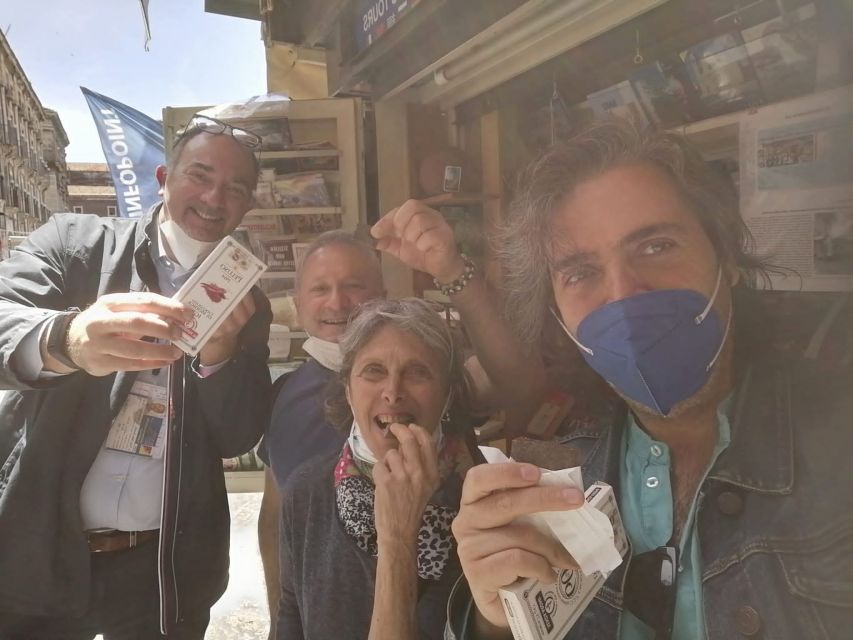
The meeting point is the Infopoint Turistico GS Guiding Sicily on Via Erasmo Merletta, at the corner with Piazza Duomo. Look for a blue flag inside a large flowerpot and a panel with the blue Guidingsicily Beauty logo.
This detail matters because Piazza Duomo is a busy central meeting place, and the surrounding streets can be confusing if you are looking only for a building number. The tour begins on the western corner of the town hall, Palazzo degli Elefanti, so allow a few minutes to find the exact spot.
The first orientation is likely to focus on the square and the famous elephant statue. The elephant, carved from volcanic stone and topped with an obelisk, is Catania’s symbol. It gives the guide an easy way to introduce the city’s identity, its use of lava stone, and its long relationship with Etna.
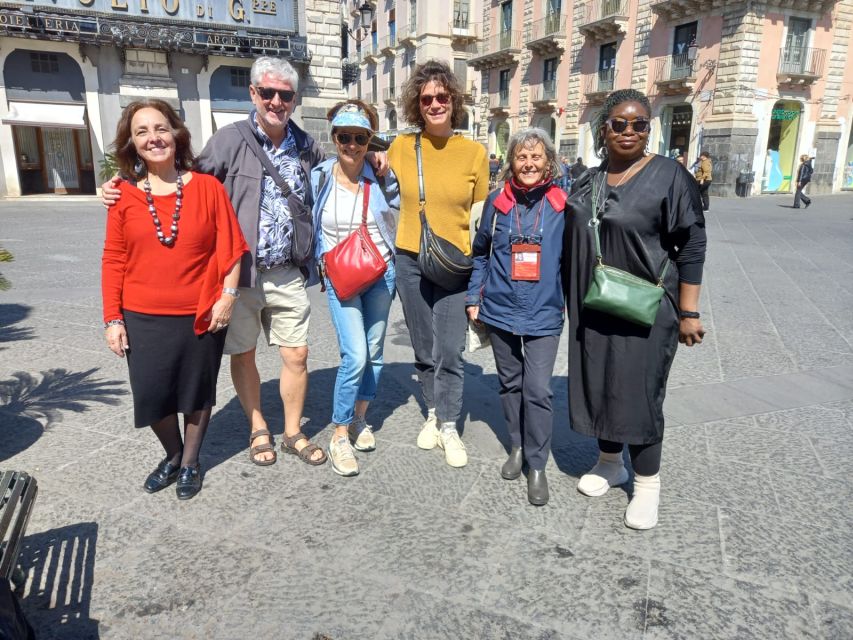
Some groups use radio equipment so you can hear the guide while walking. If you have hearing trouble, tell the guide at the start and stay close. One guide, Esther, made a point of adjusting her position so a participant could hear her clearly. That kind of simple attention can make a real difference on a city walk.
Catania Cathedral and the story beneath Piazza Duomo
The Cathedral of Catania receives about 30 minutes of guided attention. You get a look inside, along with an explanation of its role as the seat of the Archbishops of Catania. The church is dedicated to Saint Agatha, the city’s patron saint, whose story is an important part of Catania’s religious and civic life.
The cathedral has been rebuilt more than once after earthquakes and volcanic disasters, so it offers a useful way to understand Catania’s repeated cycle of destruction and renewal. The surrounding square also gives you a clear first taste of the city’s Baroque style and its dark lava-stone architecture.
Do not expect a full art-history lecture or a long quiet visit inside. This is a walking tour, and the guide needs to keep the group moving. Still, the explanation helps you decide if you want to return later for a slower look.
The religious stories can be more personal than a list of dates and architectural terms. Esther’s account of Saint Agatha was described as especially moving, while other guides have brought in local legends and details about daily life. If you enjoy learning why a city cares about a saint, rather than simply photographing a church façade, this part adds real value.
The fish market and Catania after dark
The fish market is one of the most useful stops because it shifts the tour from monuments to daily life. You spend about 15 minutes walking through the market area, where the guide explains the setting and points out restaurants and places connected with Catania’s food scene.
This is not simply a market photo stop. It shows you a part of the city that still works as a local meeting place. The noise, smells, displays, and nearby eateries give you a better sense of how Catania functions beyond its grand squares.
The guide can also point out areas for nightlife and evening meals. That advice is valuable because restaurant quality and atmosphere can change quickly from one street to the next. You might not eat during the tour, since food and drinks are not included, but you can make notes for later.
The market may feel crowded or messy, especially at a busy time of day. That is part of its appeal, but it may not suit anyone looking for a quiet, polished sightseeing stop. Wear shoes that can handle uneven city paving, and keep your belongings secure in crowded areas.
More walking tours around Italy:
- Venice: Doge’s Palace and St Mark’s Basilica Walking Tour
★ 4.4 · 6,291 reviews - Venice: San Marco to Rialto Walk & Spritz Like a Local
★ 4.2 · 3,651 reviews - Uffizi & Accademia Timed Entry: Small Group Duomo Walking Tour
★ 4.5 · 3,630 reviews - Venice Walking Tour and Gondola Ride
★ 3.5 · 3,630 reviews
Ursino Castle, Catania’s medieval survivor
The stop at Ursino Castle lasts about 15 minutes and takes place outside the monument. The castle is presented as the only medieval monument to survive the earthquake that destroyed much of Catania in 1693.
That fact gives the castle a special place in the route. Much of central Catania is associated with later rebuilding, especially the Baroque style that followed the disaster. Ursino offers a visible link to the city before that rebuilding. Its sturdy form also helps you picture how different Catania might have looked before the earthquake changed the center.
You will not receive an entrance ticket as part of this activity. The guide explains the castle and its role, then leaves you with enough background to decide if you want to return and go inside independently.
This short exterior visit is useful, but anyone hoping for a full castle tour should plan extra time afterward. The same applies to the cathedral and other major buildings. The strength here is the route and the interpretation, not extended time inside every attraction.
Via Crociferi and Catania’s grand Baroque side
The walk along Via Crociferi is given about 30 minutes. This is one of the visual highlights, with monasteries, churches, and palaces packed along a street known for its architectural character.
A guide makes this stretch easier to appreciate. On your own, you might photograph the façades and keep walking. With explanations, you can notice how the buildings relate to the rebuilding of Catania and how religious institutions shaped the street.
The route is also a good place for stories. The guides bring in legends, local customs, and details about the people who lived around these buildings. Their approach is not limited to dates and names. It connects the street to the city’s character and to the forces that have shaped Catania, including earthquakes and Etna.
Several people who took the walk with Esther, Maria Louisa, Matteo, and Tiziana praised the guides’ ability to make architecture easier to follow. That is important on a street where many buildings can begin to blur together. A lively explanation gives you a reason to pause.
In hot weather, the shade matters. During a heatwave, Esther adjusted the stops so the group could spend more time out of the sun. Even so, you should bring water, a hat, and sun protection. The tour runs in rain or shine unless conditions become particularly bad, so light rain gear is sensible.
Piazza Università and the final orientation
The tour finishes in Piazza Università, about 30 minutes after the Via Crociferi portion. This square is one of the most attractive spaces in central Catania and sits only a short walk from Piazza Duomo.
Ending here works well because you are still close to the city’s main center. You can return to the cathedral, continue toward another sight, stop for a coffee, or follow the guide’s restaurant suggestions. The finish also avoids leaving you in an unfamiliar outer district.
The final part can serve as a practical question-and-answer period, although the exact flow depends on the guide and group. One participant appreciated the wealth of detail but wished there had been more chances to ask questions while walking. If you have specific interests, ask early rather than waiting until the last few minutes.
Use the end of the tour to clarify anything you want to see later. Ask the guide to repeat the names of recommended restaurants or cafés, and note down the locations. This is when the walk shifts from a history lesson into a useful plan for the rest of your visit.
What the $23 price gets you
At $23 per person, this is a modestly priced way to get a structured introduction to central Catania. You are paying for two hours with a local, licensed guide, not for attraction tickets, meals, or transportation.
I think the value is strongest if you are new to Catania and want the city explained rather than simply pointed out. A private guide would cost far more, while exploring alone gives you no built-in way to connect the earthquake, cathedral, castle, market, and Baroque streets.
The price is less compelling if you already know the center well or plan to enter every major attraction immediately. Since entrances are not included and most monuments are explained from outside, you will need to budget separately for museums and church visits.
The tour can also be cancelled the day before if the minimum of four participants is not reached. That is worth remembering if your schedule is tight. You can cancel up to 24 hours ahead for a full refund, and the reserve-now, pay-later option keeps your plans flexible.
Who will enjoy this tour most
I would recommend it to first-time visitors, couples, solo visitors, and anyone who wants a clear introduction without spending half a day on one museum. It also suits people who like local stories, food advice, and practical orientation as much as formal sightseeing.
Families may appreciate the short route and the mix of a cathedral, market, castle, and open-air streets. The tour is wheelchair accessible, though city-center surfaces and crowds can still affect how comfortable the walk feels.
It is a good choice for anyone interested in Mount Etna’s influence on Catania. Several guides use the volcano to explain the city’s disasters, legends, buildings, and habits, giving the tour a stronger sense of place.
You may want something else if you prefer a quiet, small-scale walk with long visits inside monuments. The group size can vary, and a large group may make it harder to hear or ask questions. Radio equipment is used on some tours, but staying near the guide remains helpful.
Practical advice before you go
Wear comfortable shoes and expect a mixture of walking and standing. The major sights are close together, so the tour does not involve a long-distance trek, but old city streets can still be tiring.
Bring water, especially in summer. Guides try to use shady spots when possible, but Catania can be hot, and the route includes open squares.
Choose the English tour if you want English commentary. Italian and French versions are available through separate bookings. Food and drinks are not included, so plan to eat before or after the walk, or use the guide’s suggestions for later.
I would also keep a little space in your schedule after the tour. You may want to return to the cathedral, enter Ursino Castle, explore a church on Via Crociferi, or follow a restaurant tip while the directions are fresh.
Should you book the Catania Heart of the City walk?
Book it if you want context, orientation, and local food advice in a compact two-hour route. The combination of Piazza Duomo, the cathedral, fish market, Ursino Castle, Via Crociferi, and Piazza Università gives you a solid first picture of Catania.
The best reason to choose it is the guides’ storytelling. Esther, Maria Louisa, Tiziana, Matteo, and others have been praised for making the city’s past, Etna connection, saints, architecture, and daily life easy to follow. The most useful timing is early in your stay, before you decide where to eat and which sights deserve more time.
Skip it only if you already know central Catania or want paid entrance visits built into the tour. For $23, though, it is a sensible way to get your bearings and see the city with more understanding than a self-guided stroll usually provides.
FAQ
Where does the Catania walking tour meet?
Meet at the Infopoint Turistico GS Guiding Sicily on Via Erasmo Merletta, at the corner with Piazza Duomo. Look for a blue flag inside a large flowerpot and a panel with the blue Guidingsicily Beauty logo.
How long does the tour last?
The walking tour lasts two hours. The route begins near Piazza Duomo and finishes in Piazza Università.
Which sights are included?
The route covers the Cathedral of Catania, the fish market, Ursino Castle, Via Crociferi, and Piazza Università. The elephant statue in Piazza Duomo is also part of the opening orientation.
Are entrance tickets included?
No. There are no entrance fees included because the main monuments are explained during the walk, mostly from outside. You can decide which attractions you want to visit later on your own.
What language is the tour offered in?
This booking is for an English-language tour with a live guide. Italian and French versions are available through separate bookings.
Can I cancel or pay later?
You can cancel up to 24 hours in advance for a full refund. The reserve-now, pay-later option lets you book without paying immediately. The tour requires at least four participants and may be cancelled the day before if that number is not reached.
New walking tours around Italy
- Rome: Fountains and Squares Small-Group Walking Tour★ 4.7 · 335 reviews
- Napoli: Walking Tour of Naples with Local Tour Guide★ 4.9 · 95 reviews
- Naples: Spanish Quarters Walking Tour★ 4.6 · 72 reviews
- Naples: Street Art, Wine and Food Tasting Walking Tour★ 5.0 · 163 reviews
- Naples: Old Town Guided Walking Tour★ 4.8 · 553 reviews
- Naples: Street Food Experience With 6 Stops★ 4.7 · 392 reviews
- Naples: Historic Center and Sansevero Chapel Walking Tour★ 4.8 · 208 reviews
- Naples Essentials: Monuments, Local Life & Street Art★ 4.9 · 79 reviews
Italy Walking Tours, side by side.
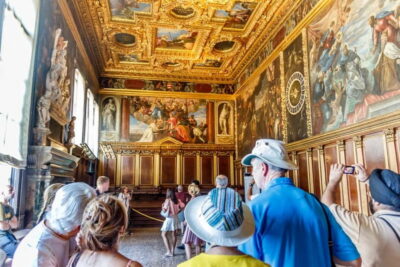
Venice: Doge’s Palace and St Mark’s Basilica Walking Tour
Read our review →
Milan: Guided Walking Tour & Last Supper Visit with Ticket
Read our review →
Naples: Street Food Walking Tour with Local Guide
Read our review →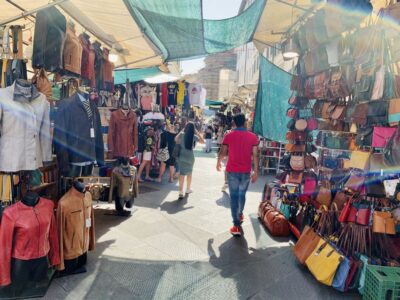
Florence: Highlights Walking Tour with Expert Guide
Read our review →
Venice: San Marco to Rialto Walk & Spritz Like a Local
Read our review →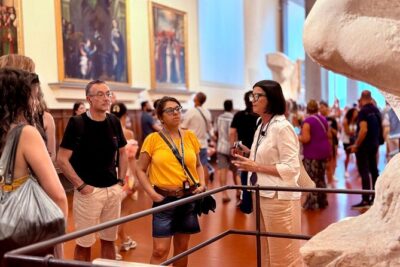
Uffizi & Accademia Timed Entry: Small Group Duomo Walking Tour
Read our review →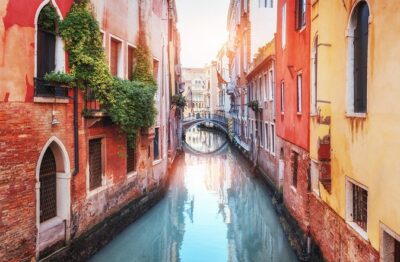
Lists this walk sits on