
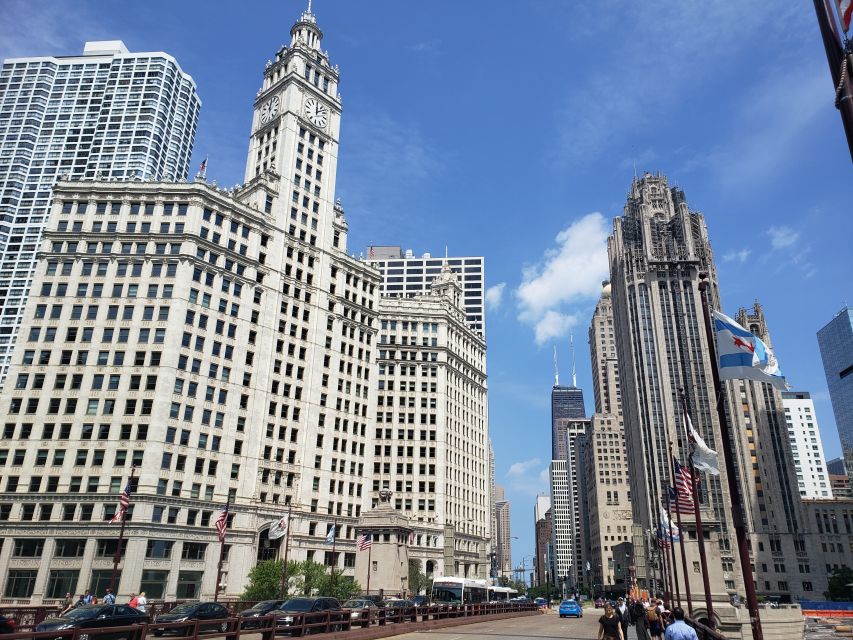
Review · CHICAGO
Chicago: Must See Chicago 90 minute Walking Tour
Chicago’s best architecture lesson takes place on the sidewalk. In 90 minutes, this tour links the Chicago Loop, the Chicago River, and Millennium Park while explaining why buildings such as the Wrigley Building, Willis Tower, and Carbide & Carbon Building look so different. Guides such as Claudia, Paige, Anna, Howard, and Lori have led recent tours, and the guide’s storytelling is the heart of the experience.
I like the clear mix of architecture and city history, and I like that your ticket also gets you into the Chicago Architecture Center’s exhibits. The main catch is simple: this is an architecture tour, not a general Chicago sightseeing walk, and the tour stays outside the buildings.
Key points
- Three downtown anchors: Explore the Loop, the Chicago River, and Millennium Park in one compact walk.
- Four major design traditions: See Beaux Arts, Art Deco, Modernist, and Post-Modernist buildings from street level.
- CAC-trained guides: Expect an English-speaking guide trained to explain both design and the stories behind it.
- A useful museum add-on: Visit the Chicago Architecture Center within seven days, including its large miniature city model.
- Good value for a short introduction: The $35 listed price includes the 90-minute walk and exhibit admission, normally $15.
- Bring walking shoes: The tour runs rain or shine, and there is no luggage or stroller storage.
Why Chicago’s sidewalks make a fine classroom

Chicago’s architectural story is easiest to understand when you can look up and compare buildings from one block to the next. This walk gives you that useful comparison without asking you to spend half a day inside a museum or commit to a long river cruise.
Your guide explains styles, construction methods, and materials as you move through downtown. That matters because Chicago’s famous skyline can otherwise look like a wall of glass and steel. With a little context, the older stone buildings, decorative towers, and newer high-rises begin to make sense as parts of one long design story.
The tour is led by a guide trained by the Chicago Architecture Center. That training is important here. You need more than a list of dates and architects. You need someone who can point out the details above street level, explain why a building uses a particular style, and connect architecture with the growth of the city.
Recent guides have included Claudia, Paige, Anna, Howard, and Lori. The strongest guide experiences have been described as informed, prepared, accommodating, and passionate. That is the right mix for this subject. A guide who can explain a building clearly, then add a good story about how Chicago changed, makes the walk much more memorable.
More walking tours around Chicago:
- Chicago: Gangsters and Ghosts Walking Tour
★ 5.0 · 7,155 reviews - Chicago Favorites Ultimate Food and Walking Tour
★ 5.0 · 1,962 reviews - Chicago: Gangsters and Ghosts Guided Walking Tour
★ 4.7 · 1,697 reviews
Starting at the Chicago Architecture Center
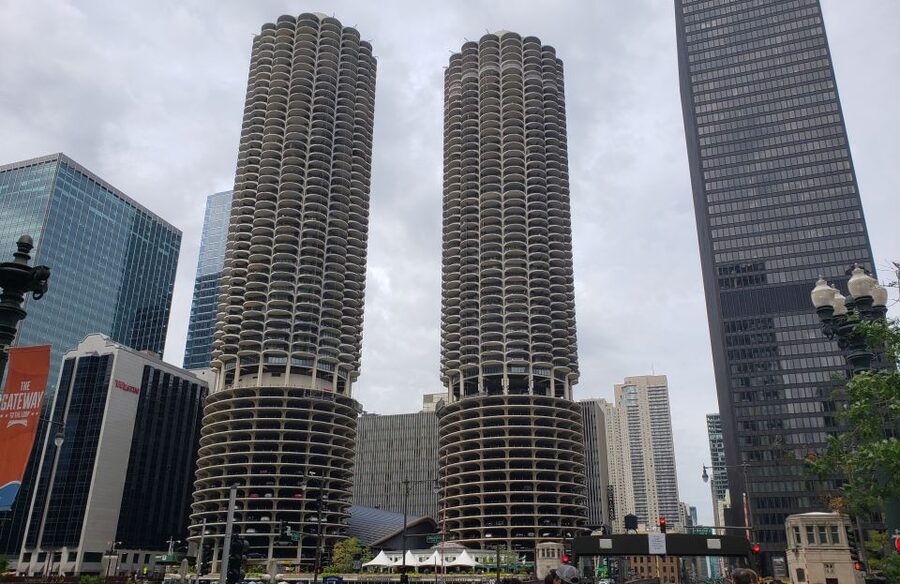
You begin at the Chicago Architecture Center, where you should arrive 15 minutes before departure and show your ticket at the box office. The Center is not just a meeting point. It gives you a useful preview of what you will see outside.
Entry to the Center’s exhibits is included with your walking tour ticket and can be used within seven days of the tour. If your schedule allows, visit before the walk to get a basic sense of Chicago’s building eras. If not, return afterward while the sights are still fresh.
The Center includes exhibits on Chicago neighborhoods, housing types, leading architects, and future projects. Its largest attraction is a model of the city with more than 4,250 miniature buildings. A cinematic backdrop brings key moments in Chicago’s story to life, helping you connect the small model with the full-sized streets you have just walked.
The admission normally costs $15, so it adds real value to the $35 tour price. The exhibit space is not huge, but it is focused and useful. I would plan at least a little extra time for it rather than treating admission as a throwaway bonus.
The Chicago Loop and its classical faces
The Chicago Loop is the historic heart of downtown, and it supplies much of the tour’s visual variety. Here, you see buildings that borrow from classical European design alongside towers that use newer materials and bolder forms.
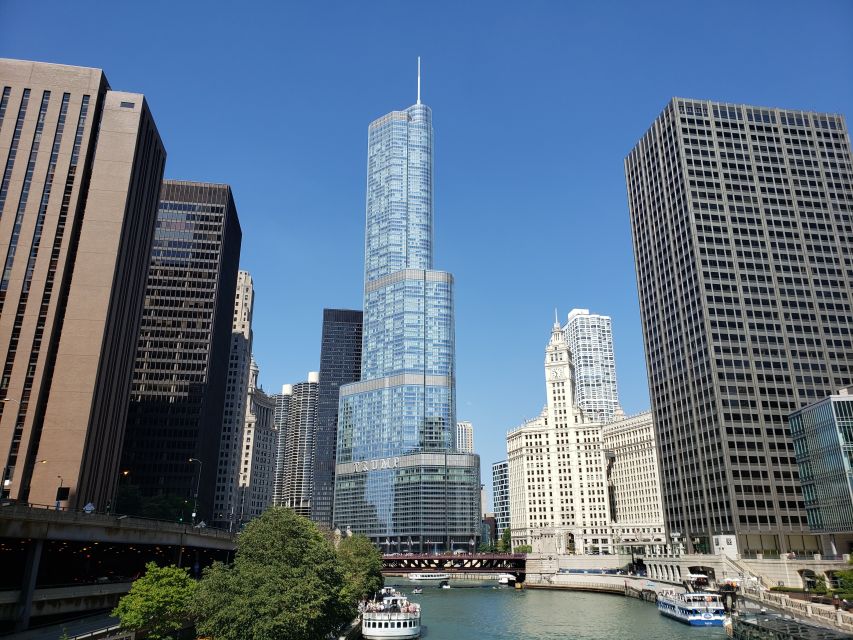
The Wrigley Building is one of the easiest landmarks to recognize. Its bright exterior and classical details make it a good example of how a commercial tower can use older design ideas to create a strong public identity. Your guide can help you notice the decorative choices rather than simply snapping a photo and moving on.
The Tribune Building offers another look at classical influence. It pays homage to older European styles and shows how early skyscrapers were often designed to look established, formal, and permanent. I like this part of the tour because it makes clear that the skyscraper was not only a technical achievement. It was also a statement about business, civic pride, and taste.
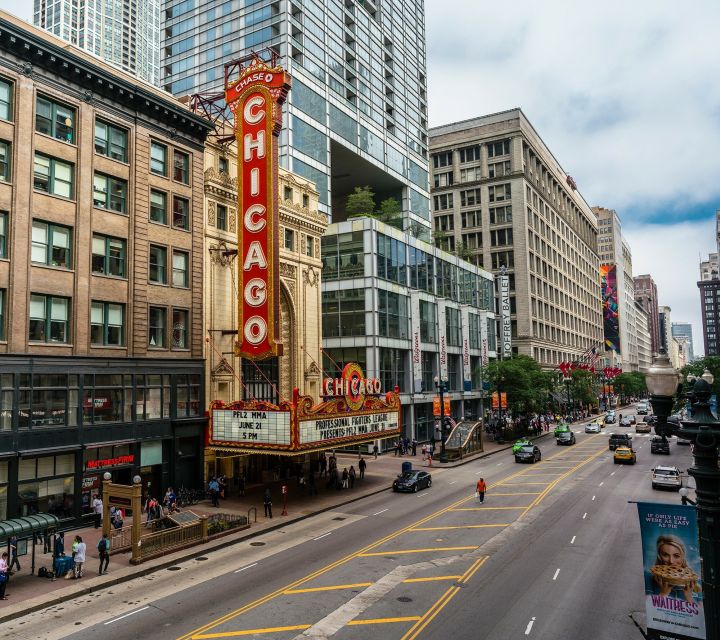
The Chicago Theatre adds a different kind of landmark to the route. Its facade is closely tied to entertainment and downtown culture, while the Art Institute of Chicago brings art and architecture into the same conversation. You see how public buildings can shape the identity of an entire area, even when you are only viewing them from outside.
Do not expect interior visits on this walk. Current rules mean the tour cannot go inside the buildings, so the guide works from the street, using exterior details and views to explain each site. That is a limitation if you hoped to see grand lobbies or theater interiors, but it also keeps the route moving and lets you cover more ground.
The Chicago River and the city’s working core
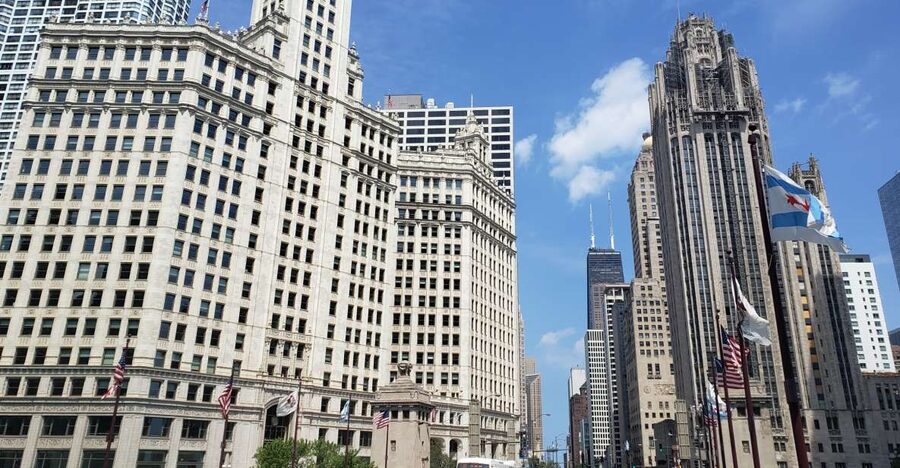
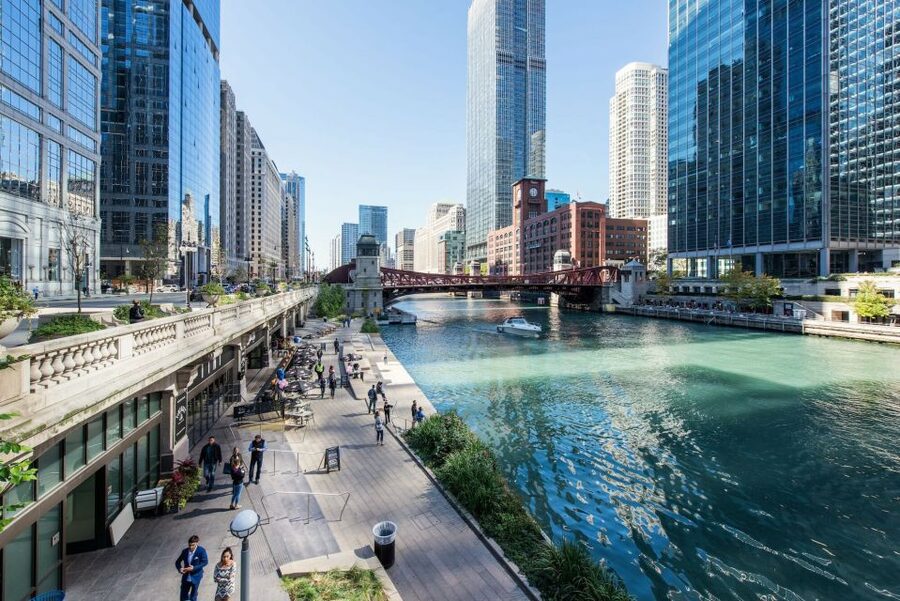
The Chicago River is one of the tour’s three main focal points. It is more than a scenic break between buildings. The river helped shape the city’s growth, movement, and commercial importance, and the walk uses it to give downtown a sense of place.
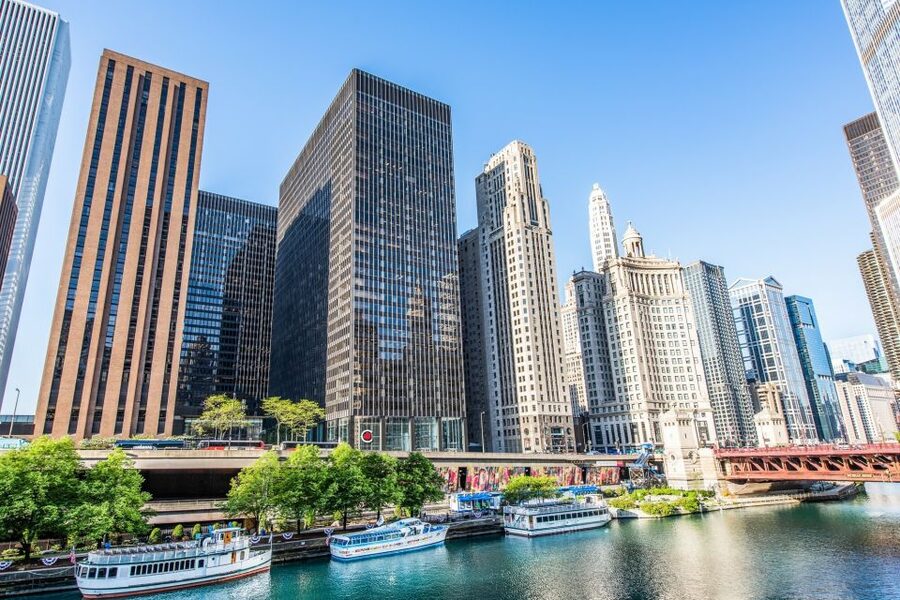
From the river area, you can look back at a mix of old and new towers. This is one of the best parts of the route for photography because the buildings gather into a compact view. Bring a camera, but also keep looking up. Many of the details your guide points out are high above the sidewalk.
The river also helps you understand why Chicago’s architecture feels so dense. Buildings were designed to meet practical needs while competing for attention in a tight central area. The walk does not simply show you isolated landmarks. It helps you read the relationship between them.
A 90-minute tour has to move at a sensible pace. The schedule is long enough to cover many major examples, but not long enough for a full architectural study of every building. If you want detailed information on one architect or one style, you may need a separate museum visit or a longer tour. For a first look, the pace works well.
Same streets, a different story:
- Chicago Loop District Food Tour with Deep Dish & Beef Sandwich
★ 5.0 · 870 reviews - Chicago: Secret Interiors Architecture Walking Tour
★ 4.9 · 498 reviews - Chicago: Underground Pedway & Downtown Secrets Walking Tour
★ 4.7 · 268 reviews - Chicago: Gangsters and Food Tasting Walking Tour
★ 4.6 · 228 reviews
Art Deco details at Carbide & Carbon and the Board of Trade
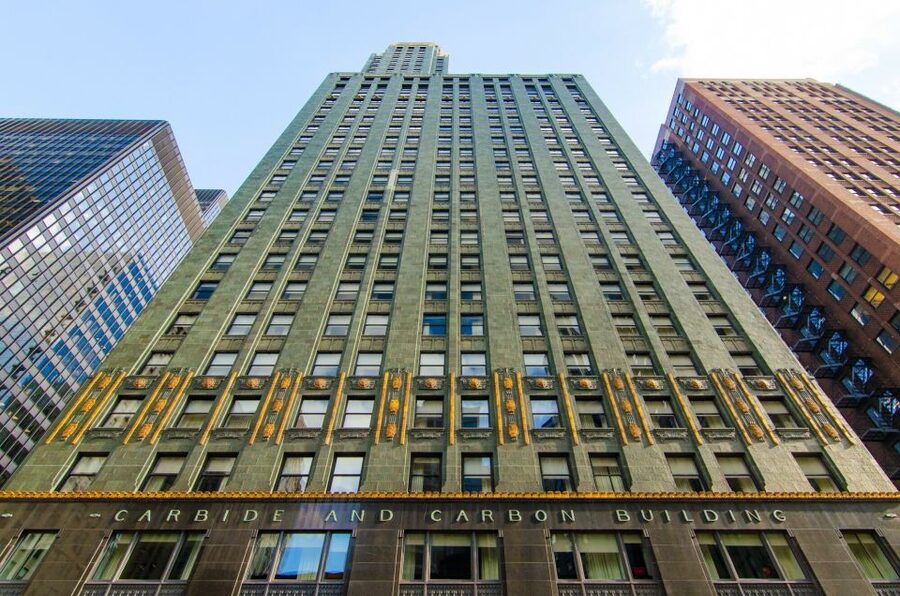
The Art Deco buildings are among the most enjoyable stops for anyone who likes ornament. The Carbide & Carbon Building is especially useful for seeing how the style uses strong geometry, rich decoration, and a dramatic silhouette.
The Chicago Board of Trade Building gives you another Art Deco example, but with a more forceful commercial presence. It reflects the scale and confidence of Chicago’s financial district. Your guide can show how decoration, height, and massing work together to make the building feel powerful from the street.
These stops help break up the usual glass-tower view of Chicago. Instead of treating architecture as a contest to build higher, Art Deco asks you to look at surfaces, patterns, entrances, and carefully planned shapes. This is where a trained guide adds the most value. From a distance, you may notice that a building is attractive. From the sidewalk, you learn why.
Modernist towers and the changing skyline
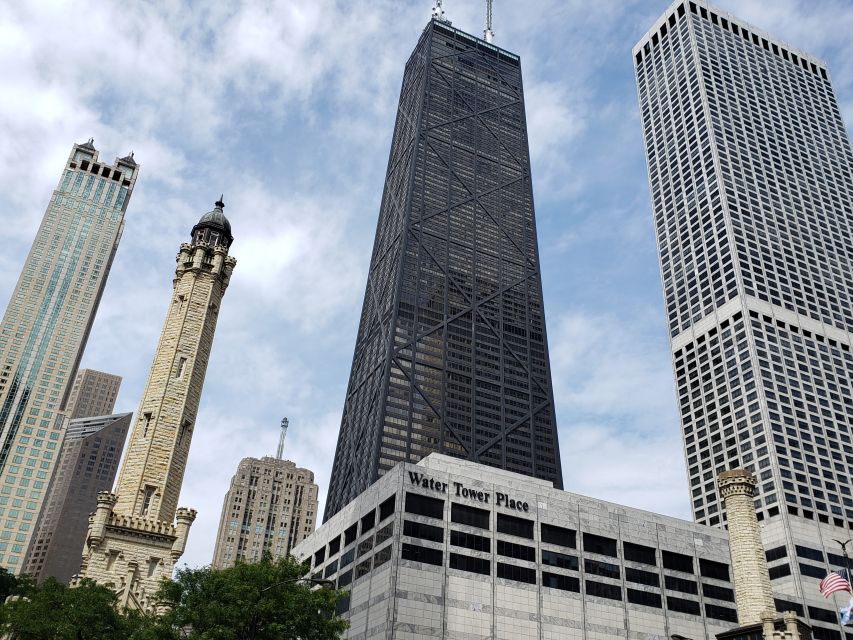
The route also covers major Modernist skyscrapers, including Willis Tower, the John Hancock Center, and the AON Building. Each represents a different answer to the question of how to build tall in a modern city.
Willis Tower is one of Chicago’s most recognizable high-rises. The John Hancock Center gives you another strong example of modern structural expression, while the AON Building shows how a simpler tower can still make a major mark on the skyline.
You will not go up to an observation deck on this tour, and no building entry is included. The point is to understand the towers from street level and see how they fit into the downtown group. That makes this a good orientation walk, especially early in a Chicago visit.
I would not book this tour solely for skyline views. You will get photo opportunities, but the main reward is learning how the buildings were designed and how the city changed around them. If you want a high-altitude panorama, you need a different ticket and a different plan.
Millennium Park, Aqua, and newer Chicago
Millennium Park is the final major area named in the route and a natural place to connect architecture with public space. The park is home to the famous Bean sculpture, officially known as Cloud Gate, and gives you a chance to see how newer Chicago projects use art, open space, and bold forms together.
The tour also covers newer skyscrapers such as Aqua and Trump Tower. These buildings show how recent design has moved beyond the straight-sided towers associated with earlier Modernism. Aqua is especially notable for its changing exterior shape, while Trump Tower contributes another recent high-rise presence near the river.
This part of the walk keeps the story current. Chicago’s architectural identity did not end with the historic Loop. New towers continue to change the views between older landmarks, and the guide can help you see the city as an ongoing project rather than a preserved museum.
Millennium Park can also be a busy place, and the walk may feel more crowded here than on quieter downtown blocks. Keep your group together and listen closely when the guide is speaking. The open setting provides good photos, but it can make a moving explanation harder to hear.
How much information fits into 90 minutes
The tour covers a lot for its length. You see major buildings from several design periods, learn about materials and construction methods, and get a basic outline of Chicago’s development. The short format is useful if you have only a morning or afternoon free.
The tradeoff is depth. You will not receive a detailed architectural history of every stop, and the tour cannot linger at every photo point. The best way to use it is as an introduction. Take note of the buildings and ideas that catch your interest, then return to one or two sites on your own.
The guide style can shape the experience. Recent guides such as Claudia and Howard have been praised for accommodating groups and explaining how Chicago keeps changing. Paige and Anna have also led tours described as especially engaging. Individual guides naturally differ, but the CAC training gives the experience a clear educational purpose.
The group size can vary. One booking even had a solo participant with a private-feeling experience, while another noted a perfect group size. You should not assume every departure will be private, but a smaller group makes it easier to hear questions and keep up with the guide.
Price, timing, and practical details
The listed price is $35 per group up to one person. Check the rate and availability for your date before booking, since the displayed pricing is tied to the booking setup. For that price, you receive the 90-minute walking tour, a CAC-trained guide, and exhibit admission normally priced at $15.
That is solid value if you want a guided introduction rather than simply walking around with a map. The price is less compelling if you only want photographs and do not plan to use the Center admission. In that case, you are paying for the guide’s explanations, so listen closely and ask questions.
Tours depart rain or shine. Wear comfortable shoes and bring a face mask or protective covering as required by the activity information. There is no hotel pickup, hotel drop-off, luggage storage, stroller storage, or coat check.
Large bags and luggage are not allowed, though assistance dogs are permitted. Plan to arrive at the Chicago Architecture Center with only what you can comfortably carry for the walk.
You can cancel up to 24 hours before departure for a full refund, and the reserve-now, pay-later option keeps your plans flexible. The tour is conducted in English.
Who should book this Chicago walk
I would recommend this tour to a first-time Chicago visitor who wants a quick and useful introduction to downtown. It also suits repeat visitors. One person taking the tour on a third visit still found plenty to learn, which makes sense because a trained guide can reveal details you missed on earlier walks.
It is a good choice for architecture fans, photographers, students, and anyone who likes learning how a city works. The route gives you a broad sample of styles rather than focusing on one architect or one building.
Families may also find the mix of tall towers, public art, and the miniature city model engaging, but you need to plan for 90 minutes on foot. The lack of stroller storage matters, so arrive without bulky equipment.
You should skip it if your main goal is to enter famous buildings, ride to a skyline viewpoint, or take a relaxed food-and-neighborhood tour. The focus is architecture, and the buildings are viewed from outside.
Should you book it?
Book this walk if you want to understand why Chicago’s architecture is famous, not just photograph the skyline. The strongest reasons are the CAC-trained guide, the wide range of styles, and the included exhibit admission with its 4,250-building city model.
Give yourself extra time at the Chicago Architecture Center, wear good shoes, and arrive early. If you can accept an all-outdoor route and a brisk introduction rather than an in-depth study of each landmark, the $35 price offers a smart start to exploring downtown Chicago.
FAQ
How long is the Chicago walking tour?
The walking tour lasts 90 minutes.
Where does the tour begin?
It begins at the Chicago Architecture Center. Arrive 15 minutes before departure and present your ticket at the box office.
What languages are available?
The tour is conducted in English with a live guide.
Which Chicago areas does the tour cover?
The route covers the Chicago Loop, the Chicago River, and Millennium Park.
Which buildings can I see on the tour?
The tour includes views of Willis Tower, the John Hancock Center, the AON Building, the Wrigley Building, the Tribune Building, the Chicago Theatre, the Art Institute of Chicago, the Carbide & Carbon Building, the Chicago Board of Trade Building, Aqua, and Trump Tower.
Can I enter the buildings during the walk?
No. The tour currently views the buildings from outside and cannot go inside them.
Is admission to the Chicago Architecture Center included?
Yes. Your ticket includes admission to the Center’s exhibits, which you can use within seven days of the walking tour.
What should I bring, and what is not allowed?
Bring comfortable shoes and a face mask or protective covering. Luggage and large bags are not allowed, and the Center cannot store luggage or strollers. Assistance dogs are allowed, but other pets are not.
New walking tours around Chicago
- Chicago: Treasures of the Golden Age Walking Tour★ 4.8 · 206 reviews
- Chicago: Secret Interiors Architecture Walking Tour★ 4.9 · 498 reviews
- Chicago: The Ultimate Foodie Walking Tour with Tasty Stops★ 4.6 · 92 reviews
- Chicago: Underground Pedway & Downtown Secrets Walking Tour★ 4.7 · 268 reviews
- Chicago: Prohibition Speakeasies Bus Tour or Walking Tour★ 4.8 · 168 reviews
- Chicago: Gangsters and Food Tasting Walking Tour★ 4.6 · 228 reviews
- Chicago: Taste of Chinatown Food and Cultural Walking Tour★ 4.9 · 97 reviews
- Chicago: Classic Food & Walking Tour with Free Bike or Kayak★ 4.9 · 145 reviews
Chicago Walking Tours, side by side.


Chicago Favorites Ultimate Food and Walking Tour
Read our review →
Chicago Loop District Food Tour with Deep Dish & Beef Sandwich
Read our review →
Chicago: Secret Interiors Architecture Walking Tour
Read our review →
Chicago: Underground Pedway & Downtown Secrets Walking Tour
Read our review →
Chicago: Gangsters and Food Tasting Walking Tour
Read our review →

Chicago: Prohibition Speakeasies Bus Tour or Walking Tour
Read our review →Lists this walk sits on