Review · VENICE
Eat Like a Local: Venice 3-Hour Small-Group Food Tasting Tour
Venice reveals itself especially well through food, and this tour takes you from the Rialto Market area into small bars, pastry shops, and local restaurants for a full Venetian grazing session. You’ll try cicchetti, fresh seafood, wine, cured meats, cheese, pasta or risotto, pastries, coffee, cookies, and gelato. Fifteen tastings make this much more than a snack walk.
I like the way the tour mixes food with practical city advice. Guides such as Anna, Marianna, Greta, and Carlo explain how locals eat, how to spot a sound restaurant, and how to avoid paying extra for a canal view. I also like the route through San Polo and Santa Croce, where the stops feel tied to ordinary Venetian eating rather than a parade of famous sights.
The main consideration is the amount of standing and walking. The group can reach 15 people, and on exceptionally busy dates it may reach 19, so this is not the intimate walk promised by the phrase small group every single time. You should also give advance notice for dietary restrictions, especially if you do not eat fish, meat, or gluten.
Key points to know before booking
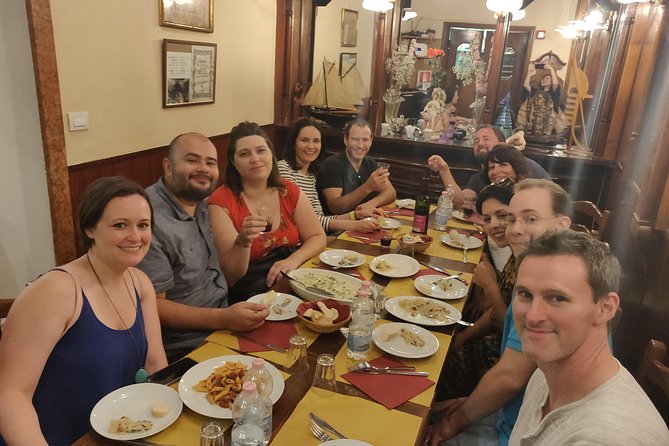
- Fifteen tastings across seven or eight stops: Plan this as a meal, not a light appetizer tour.
- Venetian specialties lead the way: Expect cicchetti, several fish preparations, sarde in saor, local wine, pastries, and gelato.
- A practical introduction to Venice: Guides share tips on eating well, avoiding tourist traps, and finding local-style restaurants.
- A mix of standing and sitting: Much of the food is eaten at counters or outside, with a more relaxed meal at a local restaurant.
- Rialto is both the start and finish: The tour begins at Campo San Giacomo di Rialto and ends near the Rialto Bridge.
- Best early in your stay: The food advice can help you choose restaurants and Venetian dishes for the rest of your visit.
Why this food walk works in Venice
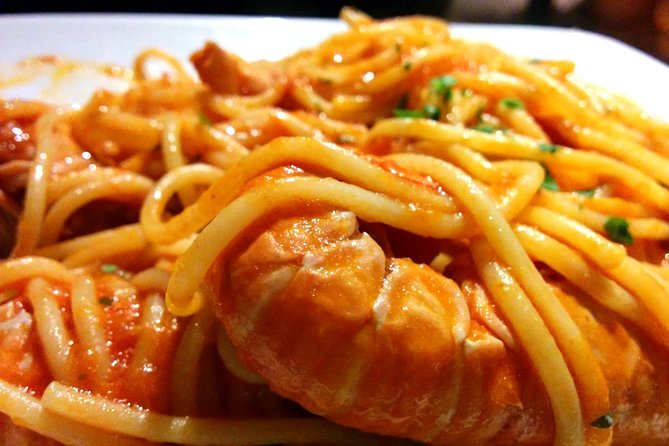
Venice can be tricky to eat in well. Menus near major sights often look similar, and a restaurant with a fine view may charge you for the view more than the food. This walking tour gives you a starting point for understanding local habits before you spend the rest of your holiday choosing meals on your own.
The focus is Venetian food, not generic Italian food. Cicchetti are small savory bites served in bacari, the informal wine bars of Venice. They work much like tapas, though the ingredients and customs are distinctly local. Depending on what is fresh, you might taste seafood, fish, cured meats, cheeses, or other small preparations with a glass of regional wine.
The guides add the human side of the meal. Anna is repeatedly described as warm, funny, and good at explaining the history behind both savory and sweet dishes. Marianna brings a strong connection to Venice, having been born and raised there, and shares advice on food and getting around. Greta is praised for keeping the group organized, while Carlo is known for his energy and love of the city.
The tone matters. You are not simply handed a plate and moved along. You hear why a dish belongs in Venice, how it is made, and how locals order and eat it. That makes the food easier to understand, especially if anchovies, sardines, or other unfamiliar seafood are not part of your usual diet.
More Food Walking Tours in Italy
- Naples: Street Food Walking Tour with Local Guide
★ 4.9 · 4,976 reviews - Rome: Guided Food Walking Tour with Wine in Trastevere
★ 4.9 · 3,105 reviews - Rome: Trastevere & Campo de Fiori Street Food Walking Tour
★ 4.9 · 2,768 reviews
Starting at Rialto with coffee and pastries
Meet your guide at Campo San Giacomo di Rialto, near the fountain by the steps of the Chiesa San Giacomo di Rialto. The meeting point is only steps from the Rialto Bridge, but allow extra time to find it. Venice’s lanes and bridges can turn a short map distance into a small navigation exercise.
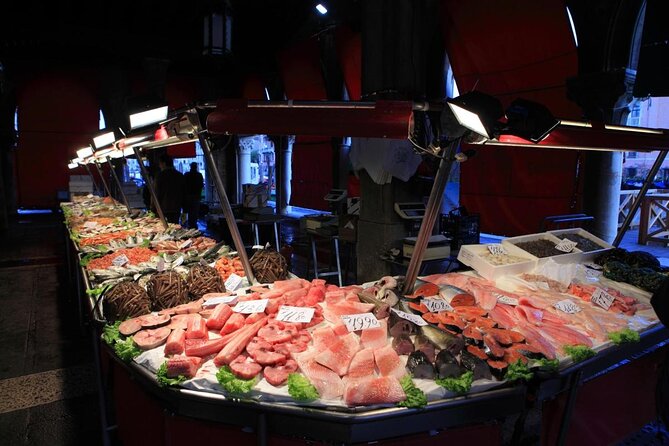
The first stop is around the Mercati di Rialto. You begin with coffee, as many Italians do, along with Venetian pastries. This is a smart opening because it eases you into the day and gives the guide a chance to explain local food customs before the heavier tasting begins.
The Rialto Market area also provides useful context. The tour may include a stroll around the market, with stories about vendors and market-day eating habits. The market itself is not simply decoration for the route. It helps explain why seafood, seasonal produce, and quick meals have such a strong role in Venetian cooking.
Do not eat a large breakfast before arriving. The tour promises enough food to replace a meal, and the tastings build steadily from coffee and sweets to wine, fish, pasta, cured meats, and gelato.
San Polo and the old bacaro tradition
In San Polo, the route reaches one of Venice’s oldest bacari. The bar is associated with a story about Giacomo Casanova and retains an old-fashioned setting with wooden beams, copper pots, and standing counters. You taste cicchetti while learning how these small bars fit into everyday Venetian life.
This is one of the most interesting parts of the experience because the setting teaches you how to use a bacaro after the tour. You may be standing rather than sitting at a table, and the food comes in small portions meant to be shared with a drink. That is a different rhythm from a formal restaurant meal.
The old bar can also be a drawback for anyone expecting a quiet, polished dining room. The point is the informal atmosphere, and that means limited seating and a more compact setting. Wear shoes that are comfortable on Venice’s bridges and paving stones, and be ready to eat on your feet.
Venetian pastry and the story of sugar
A family-owned pastry shop follows. Here the guide explains Venice’s early links with sugar imported from the East and how that helped shape the city’s pastry traditions. The discussion may touch on treats such as tiramisu and frittelle, the festive fried pastries associated with Carnival.
This stop adds welcome variety. After savory cicchetti and wine, you get a closer look at the sweet side of Venetian cooking. The pastries are not just filler between wine stops. They show how trade, celebration, and local craft influenced the food people still eat today.
The amount and exact type of pastry can change with the season. That is true throughout the tour. The operator says the ingredients and dishes follow what is fresh at the market, while the total amount of food remains consistent. If you have a strong preference for one particular sweet, you should not assume it will be available on your date.
More Small-Group Walking Tours in Italy
- Uffizi & Accademia Timed Entry: Small Group Duomo Walking Tour
★ 4.5 · 3,630 reviews - Michelangelo’s David, Accademia & Uffizi Small Group Tour
★ 4.5 · 1,986 reviews - Florence: Uffizi & Accademia Small Group Walking Tour
★ 4.7 · 1,380 reviews - Rome: Small-Group Guided Day or Night Walking Tour
★ 4.8 · 1,009 reviews
Santa Croce for more cicchetti
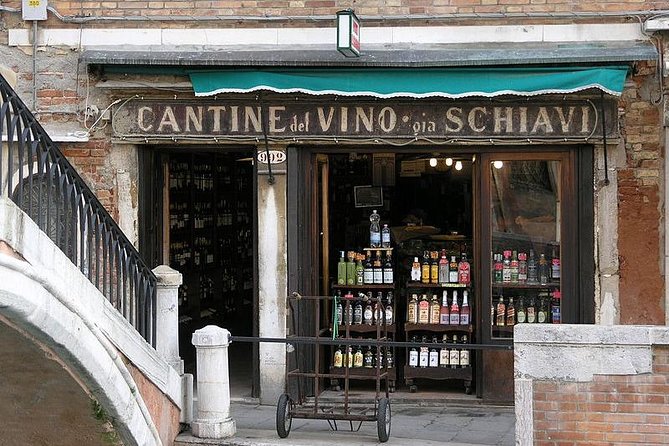
The walk continues into Santa Croce, where another local bar serves more cicchetti. By this stage, you should have a clearer idea of how these small dishes differ from one stop to the next. One bar might emphasize seafood, while another may offer a different mix of savory bites and regional drinks.
The route is useful because it shows that Venetian food is not confined to one famous market or one restaurant. You move through several neighborhoods and see how food stops fit into the fabric of the city. The canals and historic buildings are part of the walk, but the meal remains the main event.
There is no promise that every stop will be open in precisely the same way on every date. The order of stops can change, and the guide may use Cannaregio or Castello for a later cicchetti stop. Think of the tour as a flexible food route rather than a fixed checklist.
Cured meats and cheese with a local owner
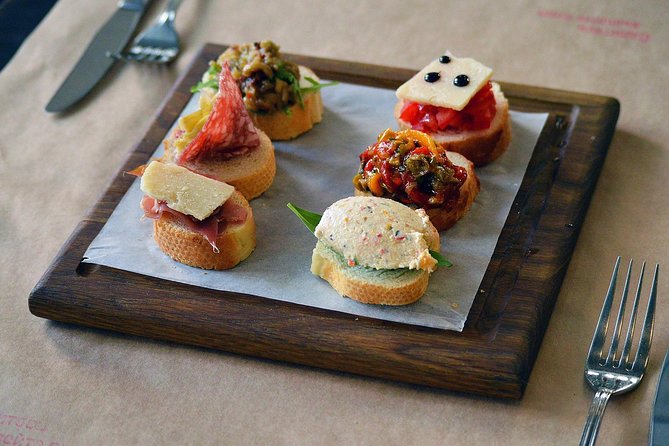
In Santa Croce, the owner of a food shop prepares a selection of regional cured meats and cheese. You hear how these products are made and what to look for when buying them. This is a useful addition for anyone planning to shop for food during the rest of a trip through Italy.
The stop also breaks up the seafood focus. Venice is famous for fish, but the tour does not pretend that the city’s food culture ends there. Cured meats and cheese add salt, texture, and variety before the sit-down course.
If you have dietary limits, this is one of the stops where advance notice matters. The tour asks you to report restrictions at least 24 hours before departure. Without warning, the restaurant and food shops may not be able to adjust the menu as well.
The substantial restaurant meal in San Polo
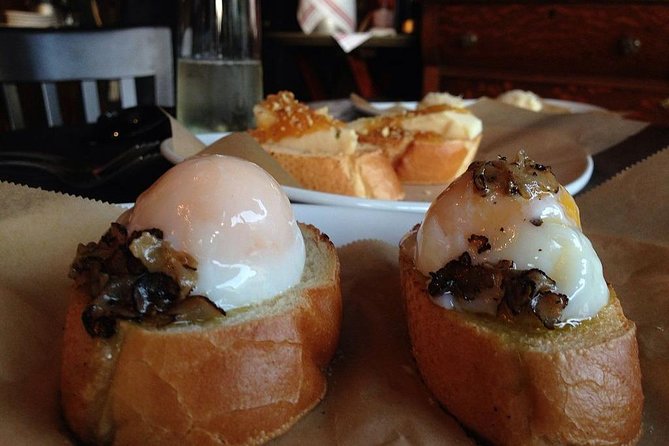
The longest stop is at a locally frequented restaurant in San Polo, a place that has also attracted celebrity chefs. Here you receive the most substantial part of the tour: the daily special, such as pasta or risotto, a fresh fish dish, and sarde in saor with wine.
Sarde in saor is a classic Venetian preparation of sardines with onions and a sweet-sour balance. It is one of the dishes worth trying even if it sounds unfamiliar. The tour presents it as a specialty of this restaurant, giving you a chance to taste a traditional preparation in a proper dining setting rather than as a quick sample at a counter.
The fish selection depends on the catch and the season. The full experience includes roughly five or six kinds of fish across the tastings, but the exact dishes can change. That flexibility is a benefit for freshness, though it means you should not book expecting one precise menu.
This is also the point that gives the $107.10 price its strongest value. You are paying for a guided route, but you are also receiving a sit-down meal plus food and wine at several other stops. If you would rather eat one large meal and spend the rest of the afternoon sightseeing, this tour may be too food-heavy. If you want to sample many small portions and learn what to order later, the price is easier to justify.
A final bar and artisan gelato
The final savory stop may be in Cannaregio or Castello, depending on the day. You get another chance to try cicchetti and compare a different neighborhood bar with the earlier stops.
Dessert comes in the form of artisan gelato. The guide explains how gelato is made and how to identify a good artisan shop in Venice. The gelato may be served in Cannaregio or elsewhere, so tell the operator in advance if you have a particular interest in a district or food preference. The route can sometimes accommodate requests, but it is not guaranteed.
Cookies may also appear before the gelato. Ending with a cold, sweet course makes sense after the fish, wine, and savory snacks, though you may be very full by then. The operator promises that you can ask the guide for more food if you have eaten everything provided and are still hungry at the end. Based on the menu, that is an unlikely problem for most people.
How much food do you really get?
The tour includes about 15 tastings, cicchetti, wine, and a sit-down lunch or dinner. The dishes can include coffee and pastries, multiple fish preparations, pasta or risotto, sarde in saor, cured meats, cheese, cookies, and gelato.
You should treat this as a replacement for a meal. Several people describe finishing full, and the itinerary is designed to cover breakfast, lunch, or dinner rather than merely offer a few bites. Do not schedule another major meal immediately afterward.
The phrase all you can eat should be read in context. The operator guarantees that you will be well-fed if you eat what is served and tell the guide near the end if you are still hungry. Dietary restrictions do not fall under that guarantee if they were not provided at least 24 hours ahead.
Group size, walking, and timing
The advertised duration ranges from about two and a half to three and a half hours. The planned stops add up to several hours, but the exact pace depends on the group, the food service, and the route that day.
The normal maximum is 15 people. Current demand can push a departure to 19, and the operator says additional food and wine may be provided in that case. If you arrive and find the group larger than the stated maximum, you can request a refund only if you decide not to participate. Joining partway through means you give up that option.
You need a moderate level of physical fitness. Expect walking over bridges and through several districts, along with standing at bars and outside eateries. One family with elderly parents and teenagers found the pace manageable, but the experience still requires you to remain on your feet for much of the food route.
The tour ends near the Rialto Bridge. That makes it easy to continue sightseeing in central Venice, return toward the train station, or use the bridge as a navigation point for the rest of your day.
Weather, language, and booking details
The tour is offered in English. On Venetian and Italian national holidays, English is the only language available. On other dates, a requested language may be combined with an English-speaking group if fewer than five people book that language.
The published information says the tour operates in rain or shine, while the cancellation terms also say poor weather can lead to a cancellation with a new date or full refund. Check the status before setting out if the forecast looks poor. Bring a light waterproof layer and shoes suited to wet paving.
Book at least 24 hours ahead if you need a full refund for cancellation. Changes or cancellations inside that window are not refunded. A minimum group size also applies, and if the operator cancels for that reason, you can choose another date or receive a full refund.
Who should book this Venice food tour?
I would choose this tour for a first or second day in Venice. The food lessons are useful right away, and the guide’s advice can shape where you eat afterward. It also suits people who like meeting others, since the small group often includes families and couples from different places.
It is a good fit if you enjoy seafood, wine, pastries, and trying dishes without needing to know exactly what they are beforehand. It can work for families, too, though parents should be comfortable with standing, walking, and a long sequence of tastings.
I would skip it if you dislike fish, need a strictly controlled menu, or prefer a quiet meal in one restaurant. I would also think twice if you want a tour focused mainly on monuments. You will see canals and historic corners, but the food and local eating customs get most of the attention.
With a price of $107.10 per person, this is not the cheapest way to eat in Venice. It is a fair value if you count the 15 tastings, wine, substantial restaurant meal, local guide, and neighborhood orientation. If you only want a few cicchetti and a drink, you can spend less on your own. If you want someone to connect the dishes, customs, and streets into one useful introduction, the added cost makes sense.
Should you book it?
Book this tour if you want to understand Venice through what people eat, not just what they build. You will leave near Rialto full of food and equipped with practical tips about bacari, restaurants, seafood, pastries, and gelato.
The strongest reasons to book are the generous amount of food, the mix of standing bars and a proper restaurant, and guides such as Anna and Marianna who bring warmth and strong local ties to the walk. Just arrive early, disclose dietary needs, wear comfortable shoes, and accept that the route and menu may change with the market and group size.
FAQ
Where does the Venice food tour begin?
It begins at Campo San Giacomo di Rialto, near the fountain next to the steps of the Chiesa San Giacomo di Rialto and close to the Rialto Bridge.
Where does the tour end?
The tour ends near the Rialto Bridge.
How long does the experience last?
The approximate duration is two and a half to three and a half hours.
How many food stops are included?
The tour includes seven to eight stops at bars, restaurants, pastry shops, and other food locations.
What food and drinks are included?
The tastings can include coffee, pastries, cicchetti, regional wine, five to six kinds of fish, cured meats, cheese, pasta or risotto, sarde in saor, cookies, and artisan gelato. The exact menu changes according to what is fresh.
Is this tour offered in languages other than English?
English is offered. If a requested language group has fewer than five people, it may be combined with an English-speaking group and a multilingual guide. On Venetian and Italian national holidays, tours operate in English only.
How large is the group?
The stated maximum is 15 people. Because of exceptionally high demand, some departures may reach 19 people.
Can I cancel for a refund?
You can receive a full refund if you cancel at least 24 hours before the local start time. Cancellations or changes within 24 hours are not refunded. If the operator cancels because of weather or an insufficient minimum group, you can receive a full refund or choose another option.
More three-hour walks around Italy
- Siena: 3h Private City Walking Tour with Optional Cathedral
★ 4.7 · 392 reviews - Prague: 3-Hour Walking Tour of Old Town & Prague Castle
★ 4.7 · 5,696 reviews - Experience Porto’s Charm: 3-Hour Guided Walking Tour
★ 5.0 · 2,432 reviews - Valletta: 3-Hour Walking Tour
★ 4.7 · 2,219 reviews
New walking tours around Italy
- Rome: Fountains and Squares Small-Group Walking Tour★ 4.7 · 335 reviews
- Napoli: Walking Tour of Naples with Local Tour Guide★ 4.9 · 95 reviews
- Naples: Spanish Quarters Walking Tour★ 4.6 · 72 reviews
- Naples: Street Art, Wine and Food Tasting Walking Tour★ 5.0 · 163 reviews
- Naples: Historic Center and Sansevero Chapel Walking Tour★ 4.8 · 208 reviews
- Naples: Old Town Guided Walking Tour★ 4.8 · 553 reviews
- Naples: Street Food Experience With 6 Stops★ 4.7 · 392 reviews
- Naples: City Walking Tour w/ Underground Roman Ruins Ticket★ 4.6 · 284 reviews
Venice Walking Tours, side by side.
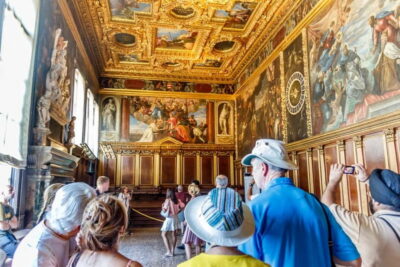
Venice: Doge’s Palace and St Mark’s Basilica Walking Tour
Read our review →
Venice: San Marco to Rialto Walk & Spritz Like a Local
Read our review →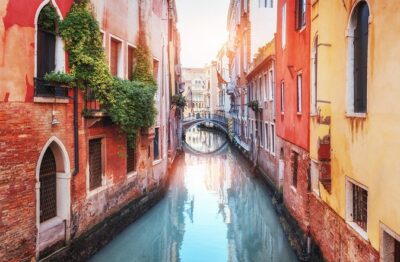
Private 3 hrs Venice Tour: St Mark’s, Walking tour & Boat tour
Read our review →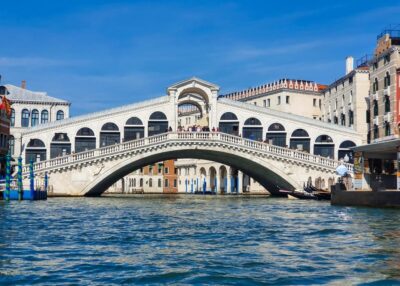
Venice: City Center Historical Guided Walking Tour
Read our review →
Venice: Walking Guided Tour of the City Must-See Sites
Read our review →
Private Best of Venice Walking Tour with St Mark’s Basilica
Read our review →