
Review · MUMBAI
Group Guided Walking Tour in Fort and Colaba
Mumbai’s story comes into focus on this 2.5-hour walk from Town Hall to the Gateway of India. You move through the old Fort district, past grand Victorian buildings, church memorials, university towers, a former Jewish quarter, and the city’s most famous waterfront landmark. The route shows how a fishing and farming settlement grew into a major port and modern metropolis.
I like the small maximum group of 12, which gives your guide room to answer questions and point out details you could easily miss alone. I also like the clear route: it begins at the Asiatic Society and finishes at the Gateway of India, so you spend your time walking through the city instead of backtracking. The main consideration is pace. Nine stops in 150 minutes means some visits are brief, and Mumbai’s heat, traffic, and uneven city sidewalks can make the walk tiring.
Key points to know before you book

- The route covers nine major sights, including Town Hall, Flora Fountain, Oval Maidan, Kala Ghoda, and the Gateway of India.
- A maximum of 12 people keeps the experience more personal than a large coach tour.
- The walk links several layers of Mumbai’s past, from Portuguese and British rule to Indian cricket, Jewish life, and the modern city.
- The ending is especially strong, with time at both the Gateway of India and the Taj Mahal Palace Hotel.
- A guide can add useful local context, including food, sightseeing, and neighborhood tips for the rest of your stay.
- The price is $16.73 per person, a fair rate for a guided introduction to central Mumbai’s historic districts.
Why this Fort and Colaba route works
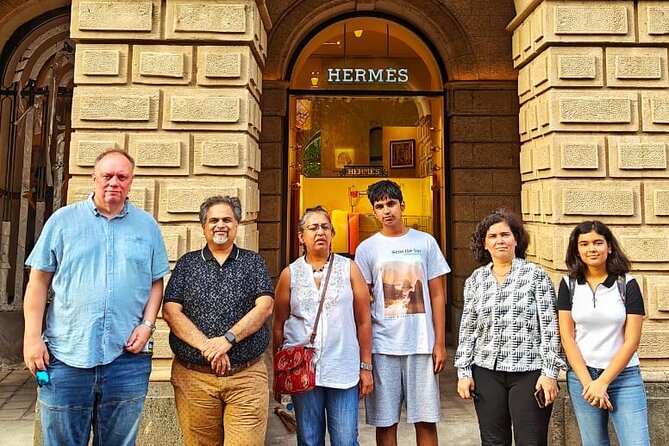
Fort and Colaba are among the best parts of Mumbai to explore on foot. Their streets pack together public buildings, religious sites, gardens, sports grounds, museums, and famous hotels. The appeal is not simply seeing one grand monument. It is watching the city change from block to block.
This tour gives you a useful timeline. At Town Hall, you hear how Mumbai took shape under Portuguese and British colonial rule. Later stops show the institutions that grew around that period, including the church, university, courts and civic spaces. By the time you reach the Gateway of India, the story has widened into one about trade, empire, migration, religion, sport, and tourism.
The group size matters here. A guide leading 12 people can stop beside a facade, explain a statue, or answer a question without losing half the group. In a dense city center, that is much easier than trying to follow a large crowd across busy streets.
The tour is also practical for a first visit. You learn the layout of Fort and Colaba while collecting places to revisit later. Your guide can offer local recommendations and tips, which is useful if you want help choosing what to see, where to eat, or how to spend the rest of your time in South Mumbai.
More walks with a guide around India:
- Private Guided Walking Tour in Fort & Colaba
★ 5.0 · 895 reviews - Private Guided Walking Tour in Bandra Queen of Suburbs
★ 5.0 · 383 reviews - Private Guided Spiritual Walk in Banganga Hindu Temples
★ 5.0 · 271 reviews
Starting at Town Hall and the Asiatic Society
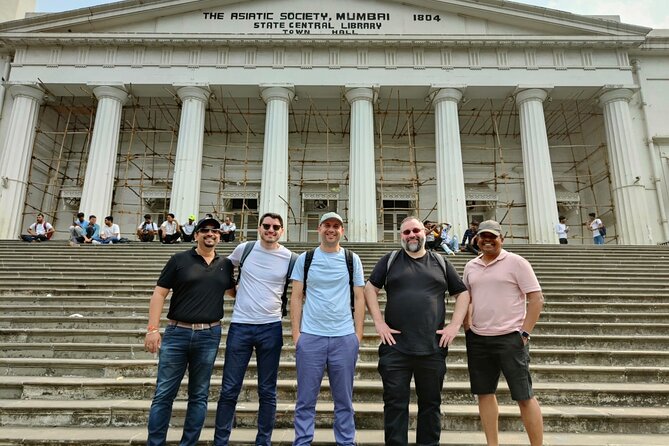
The meeting point is the Asiatic Society in Town Hall, at Shahid Bhagat Singh Road in Fort. This is a strong starting place because it immediately puts you among the city’s old civic buildings rather than beginning with a generic street introduction.
The opening 20 minutes focus on how Mumbai came into being after Portuguese and British colonization. That framing helps you understand the unusual shape of the city and why Fort contains so many formal public buildings. You are not just looking at old stonework. You are hearing why this part of Mumbai developed as it did.
The stop is free, as are all the listed stops on the walk. That does not mean the tour lacks value. The fee pays for the guide’s interpretation and for connecting the sites into one coherent story.
Horniman Circle and Mumbai’s civic center
Horniman Circle Garden takes about 15 minutes. It is described as Mumbai’s oldest garden, surrounded by Victorian buildings. The guide explains the activities that once took place here, giving you a sense of how this space functioned within the old town.
This is a good stop for architecture fans because the garden provides an open view of the surrounding buildings. You can pause, look around, and begin to see how Fort was planned as a formal administrative district.
The short timing is worth noting. You should expect an explanation and a chance for photos, not a long break or an extended visit inside the surrounding buildings. Bring your attention to the setting, since the value is in understanding the garden and its relationship to the city around it.
St. Thomas Cathedral’s memorials and altar
The next stop is St. Thomas Cathedral Mumbai, where you spend about 15 minutes inside Mumbai’s oldest Anglican church. The focus is on the memorials and grand altar.
This brief interior visit adds an important change of mood. The route has taken you through public streets and open civic spaces. Inside the cathedral, the emphasis shifts to worship, commemoration, and the people connected with colonial Mumbai.
If church interiors interest you, this is one of the stops where a guide can make a real difference. Memorials often mean little when seen without context. A short explanation can tell you what to notice and why the building matters.
Do not expect a long religious or architectural tour. Fifteen minutes is enough for a focused look, but not enough to study every detail.
More walking tours around India:
- Fontainhas Heritage Walk by Make It Happen
★ 5.0 · 2,834 reviews - The Great Indian Food Tour: Old Delhi Food and Heritage Walk
★ 5.0 · 1,698 reviews - Old Goa Heritage Walk by Make It Happen
★ 5.0 · 797 reviews - Old Delhi Food, Heritage&Cultural Walk with Rickshaw ride to Masterji Kee Haveli
★ 5.0 · 742 reviews
Flora Fountain and the city’s main square
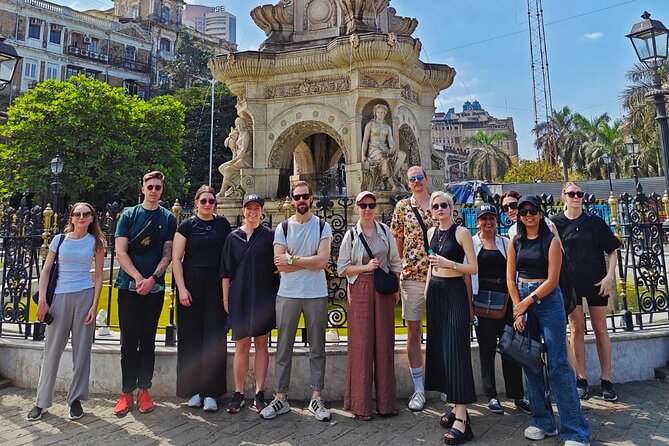
Flora Fountain gets another 15-minute stop. The guide presents it as Mumbai’s answer to Piccadilly Circus and explains the Martyrs’ Memorial in the city’s main town square.
This is one of the most useful places to understand present-day Mumbai. Traffic, pedestrians, offices, monuments, and historic facades meet here. It is a working part of the city, not a preserved museum district.
The stop should appeal to photographers. The fountain and surrounding architecture offer strong visual contrasts, though the setting can also be busy and noisy. Keep your belongings secure and listen closely when crossing or moving between viewpoints.
Oval Maidan and the birthplace of Indian cricket
At Oval Maidan, you spend around 20 minutes looking at the grand buildings around what is described as the birthplace of Indian cricket and a UNESCO World Heritage site.
This is one of the route’s broader views. Instead of examining one building at close range, you get space to see how the sports ground relates to the long rows of historic architecture around it. That contrast makes the city easier to read.
The cricket connection gives the walk a welcome shift away from colonial administration and religion. Sport is part of Mumbai’s public identity, and Oval Maidan shows how an open urban space can carry both historic and everyday meaning.
This stop may feel less intimate than the cathedral or synagogue because you are mainly viewing the area from outside. Still, the wider perspective is valuable, and the 20-minute timing gives the guide room to explain the setting without rushing too sharply.
Rajabai Clock Tower and the University of Mumbai
The Rajabai Clock Tower stop lasts about 15 minutes. You see Mumbai’s answer to Big Ben and hear how the University of Mumbai developed.
The tower is an easy landmark to remember, but the more interesting part is the institution behind it. Universities tell you something about the ambitions of a growing city. Here, the guide connects the architecture to the evolution of higher education in Mumbai.
This is another stop where details can disappear if you are walking alone. A clock tower may seem like a quick photo opportunity, yet the surrounding buildings and university story give it more meaning.
The tour does not advertise entry into the university or the tower, so plan on an exterior visit. You will have time to see the structure and hear its story, but not to explore the campus at length.
Kala Ghoda’s art district and architecture
Kala Ghoda receives 15 minutes. This is Mumbai’s premier art district, known for diverse architecture and buildings with their own stories.
The route’s strength becomes clear here. You have already seen civic buildings, a cathedral, a garden, a fountain, and a cricket ground. Kala Ghoda adds an arts-focused part of the city and shows how old structures continue to sit within a modern cultural district.
The guide points out architectural details and shares the secrets associated with the buildings. That makes this a good place to slow down visually. Look above shopfront level, where older facades and decorative work are easy to miss.
Again, the time is short. If Kala Ghoda catches your interest, treat the tour as an introduction and return later on your own. The walk helps you decide which areas deserve a longer visit.
Keneseth Eliyahoo Synagogue and disappearing Jewish life
The 15-minute stop at Keneseth Eliyahoo Synagogue brings a different strand of Mumbai’s past into the route. You explore the city’s Jewish enclave and learn about Jewish life that is now almost extinct in Mumbai.
This may be the most distinctive stop for people interested in communities that shaped the city but are less visible today. It widens the tour beyond the familiar colonial story and shows that Mumbai’s identity was formed by many religious and cultural groups.
The description emphasizes seeing the synagogue and learning about the surrounding Jewish presence. It does not promise a long interior visit or a full religious service experience, so think of this as a focused heritage stop.
That makes the guide especially important. Without context, you might simply photograph another historic building. With an explanation, you can understand what has changed and what traces remain.
Ending at the Gateway of India
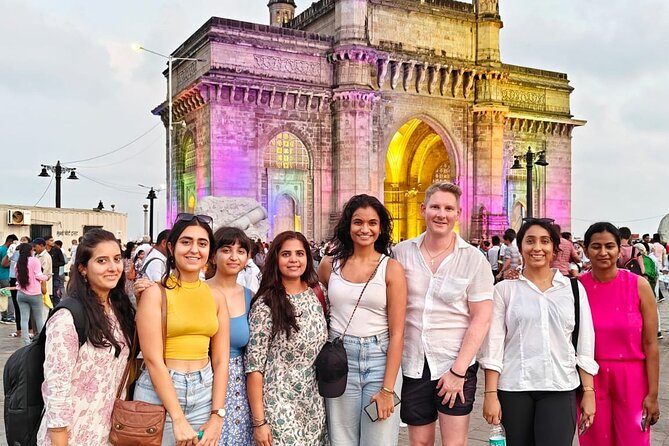
The walk ends at the Gateway of India, with the Taj Mahal Palace Hotel nearby. This final stop takes about 20 minutes and gives you the grand photo finish the tour promises.
The Gateway is one of Mumbai’s defining symbols, and its waterfront setting makes a natural endpoint. After moving through the inland streets of Fort, you arrive in Colaba at a place most first-time visitors want to see.
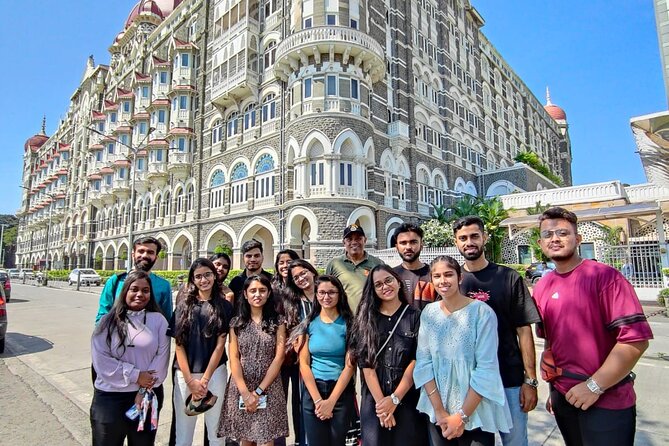
The nearby Taj Mahal Palace Hotel adds another famous landmark to the finish. You get time for photos and a final explanation rather than being dropped at the destination without context.
This ending is also practical. You are finishing in Colaba, an area that many people want to explore afterward. Your guide’s local recommendations can help you decide what to do next, though the tour itself ends at the Gateway.
What $16.73 gets you
At $16.73 per person, this is priced as an accessible introduction rather than a luxury private tour. You are paying for a guide, a planned route, historical interpretation, and the convenience of connecting nine sights in one walk.
The value is strongest if you are new to Mumbai. In 150 minutes, you cover enough ground to understand the core of Fort and Colaba, then return to the places that interest you most. A self-guided walk costs less, but you would need to research the sites, plan the route, and supply the connections between them yourself.
The price is also helped by the group cap. You do not get a private guide, but a maximum of 12 people is small enough to keep questions and conversation manageable.
The main limit is time. If you prefer long interior visits, slow photography, or detailed architectural study, you may want to follow this with independent visits. Think of the tour as a well-shaped orientation to South Mumbai, not a full museum program.
Timing, meeting point, and who should book
The tour begins at the Asiatic Society in Town Hall and ends at the Gateway of India in Apollo Bandar, Colaba. It runs for approximately 2 hours and 30 minutes and is near public transportation.
You receive a mobile ticket, and confirmation comes at booking. Most people can participate, and the group is limited to 12. The supplied details do not give a specific accessibility assessment, so if you have mobility concerns, confirm directly before booking.
Good walking shoes make sense for any city walk of this length. The tour requires good weather. If poor weather causes cancellation, you are offered another date or a full refund.
Free cancellation is available until 24 hours before the start time. Changes or cancellations inside that 24-hour window are not refunded or accepted, and the cut-off follows Mumbai local time.
This walk suits first-time visitors, architecture fans, history-minded travelers, and anyone who wants a quick introduction before exploring independently. It is also a useful choice for people who prefer a small group but do not need a private tour.
Should you book this Mumbai walking tour?
Book it if you want to understand why Fort and Colaba look the way they do, rather than simply collecting photos of the Gateway of India. The route covers an impressive range of subjects, and the small group gives the guide a fair chance to explain details you would likely miss.
The strongest parts are the clear Town Hall to Gateway route, the mix of well-known and less obvious sites, and the chance to hear about Mumbai’s Jewish community, university, cricket grounds, and colonial civic center in one outing.
Skip it if you want extended time inside every building or dislike a brisk schedule. Nine stops in two and a half hours means each place receives a focused introduction.
For $16.73, I consider this a sound first-day choice in South Mumbai. It gives you the city’s framework, leaves you at one of its most famous sights, and helps you choose where to spend more time afterward.
FAQ
How long does the walking tour last?
The tour lasts approximately 2 hours and 30 minutes.
Where does the tour begin?
It begins at the Asiatic Society in Mumbai Town Hall, on Shahid Bhagat Singh Road in Fort.
Where does the tour finish?
The walk ends at the Gateway of India in Apollo Bandar, Colaba, near the Taj Mahal Palace Hotel.
How many people can join the tour?
The maximum group size is 12 travelers.
What sights are included?
The route includes Town Hall, Horniman Circle Garden, St. Thomas Cathedral Mumbai, Flora Fountain, Oval Maidan, Rajabai Clock Tower, Kala Ghoda, Keneseth Eliyahoo Synagogue, and the Gateway of India.
Does the tour include admission tickets?
All listed stops have free admission according to the tour details.
Is the tour close to public transportation?
Yes. The experience is described as being near public transportation.
Can I cancel for a full refund?
Yes. You can cancel at least 24 hours before the start time for a full refund. Poor-weather cancellations offer a different date or a full refund.
New walking tours around India
- Mumbai Street Food Tour with Evening Bazaar Walk★ 4.9 · 79 reviews
- Mumbai: Dharavi Slum Walking Tour by First Female Tour Guide★ 4.9 · 192 reviews
- Blue City Heritage Walking Tour With Pick Up & Drop Off★ 4.8 · 164 reviews
- Heritage Walk & Street Food Tasting in Jaipur★ 5.0 · 158 reviews
- Evening Walking Tour with Fire Rituals-The Pushkar Route★ 4.9 · 108 reviews
- Chennai Walking Tour ( 2 hours guided tour)★ 3.8 · 85 reviews
- Bangalore: Palace, Temples, Fort & Markets Walking Tour★ 4.9 · 97 reviews
- Agra: Street Food Walking Tour, Spice Market, & Tuk-tuk Ride★ 4.9 · 102 reviews
Mumbai Walking Tours, side by side.
Private Guided Walking Tour in Bandra Queen of Suburbs
Read our review →
Private Guided Spiritual Walk in Banganga Hindu Temples
Read our review →
Mumbai: Dharavi Slum Walking Tour by First Female Tour Guide
Read our review →
Mumbai Street Food Tour with Evening Bazaar Walk
Read our review →Lists this walk sits on