
Review · LONDON
London: Winston Churchill and London in WWII Walking Tour
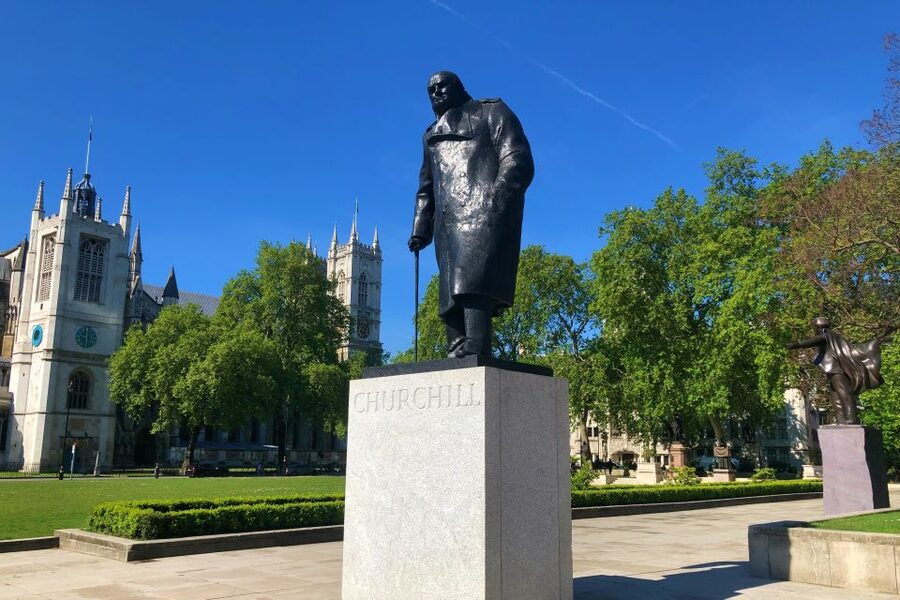
The most interesting thing about this tour is its setting: Westminster becomes wartime London, not just a parade of famous buildings. You follow the route from the RAF Monument toward Parliament, Whitehall, Downing Street, and the Churchill War Rooms while your guide explains how these places worked during the Second World War.
I like the way the tour joins grand landmarks with stories about pilots, politicians, and ordinary Londoners. I also like its strong guides, especially Nathan, Richard, Francis, and Babs, who are praised for clear storytelling, humor, and personal detail. The main drawback is time: the 1.5-hour walk can feel short, especially if you want a full account of Churchill and the wartime city.
Key points to know before booking
- Start at the RAF Monument: Meet by the Boadicea and Her Daughters Statue outside Westminster Station, Exit 2.
- See Westminster through wartime eyes: The route includes Big Ben, Westminster Abbey, the Cenotaph, Whitehall, Downing Street, and the Houses of Parliament.
- Expect a talk-led walk: You move around Westminster, but much of the value comes from listening to stories at each stop.
- Finish at Churchill’s War Rooms: The guided portion ends outside the underground bunker museum, and admission is separate.
- Choose shared or private: A shared walk suits most people, while a private option gives you more control over the pace and questions.
- Wear good shoes and pack light: Large bags and luggage are not allowed, and the tour is not suitable for wheelchair users or people with mobility impairments.
Why wartime Westminster makes a strong walking tour
London’s wartime story is easy to reduce to Churchill speeches and the Blitz. This walk gives you a more physical way into that period. You are not simply hearing dates in a classroom. You are standing near the buildings where the government operated, where national ceremonies took place, and where decisions affected millions of people.
The route focuses on Westminster, the political center of Britain. That makes it efficient for a short tour. You see several major landmarks without crossing a large part of London, and each stop connects to the wartime government, public morale, military service, or civilian life.
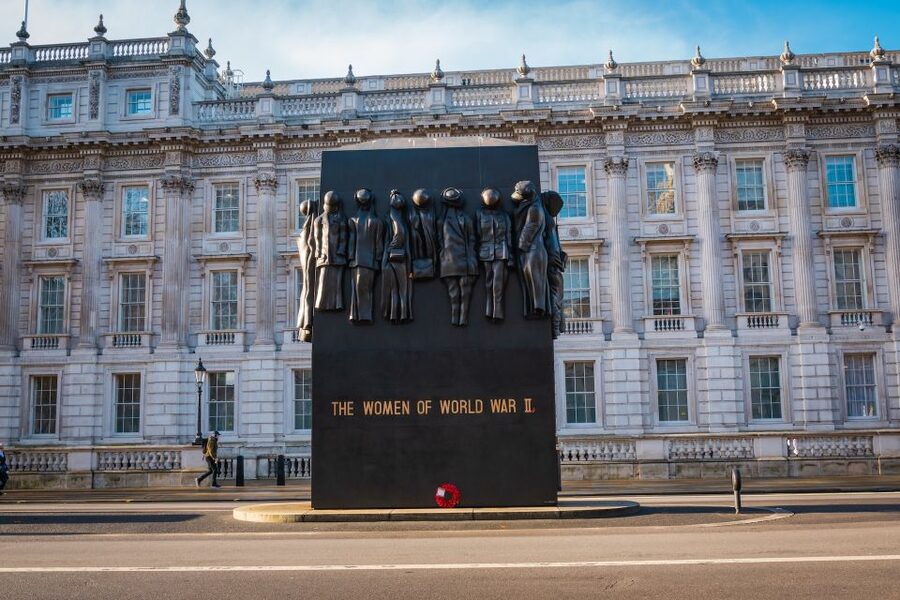
I particularly like the balance between famous names and smaller human details. The guides have been praised for telling stories about pilots, civilians, and people whose names do not usually appear in major history books. That approach helps you understand the war as something lived by families and workers, not only directed by Churchill and his cabinet.
The experience is conducted in English, with a live local guide. Guide quality matters here because the buildings themselves do not explain their wartime role from the pavement. The strongest accounts describe Nathan as witty and precise, Richard as engaging and broad in his knowledge of London, and Francis as someone who keeps the group moving without making the walk feel hurried. Babs has also been singled out for her energy and passion.
More walking tours around London:
- Magical London: Harry Potter Guided Walking Tour
★ 4.7 · 22,044 reviews - London: The Original Jack the Ripper Walking Tour
★ 4.7 · 7,833 reviews - Tour for Muggles The Ultimate Harry Potter Walking Tour in London
★ 5.0 · 4,684 reviews
Beginning at the RAF Monument near Westminster Station
Your meeting point is outside Westminster Station, by the Boadicea and Her Daughters Statue at the top of the stairs from Exit 2, marked Victoria Embankment. Look for the Urban Saunters orange tour sign.
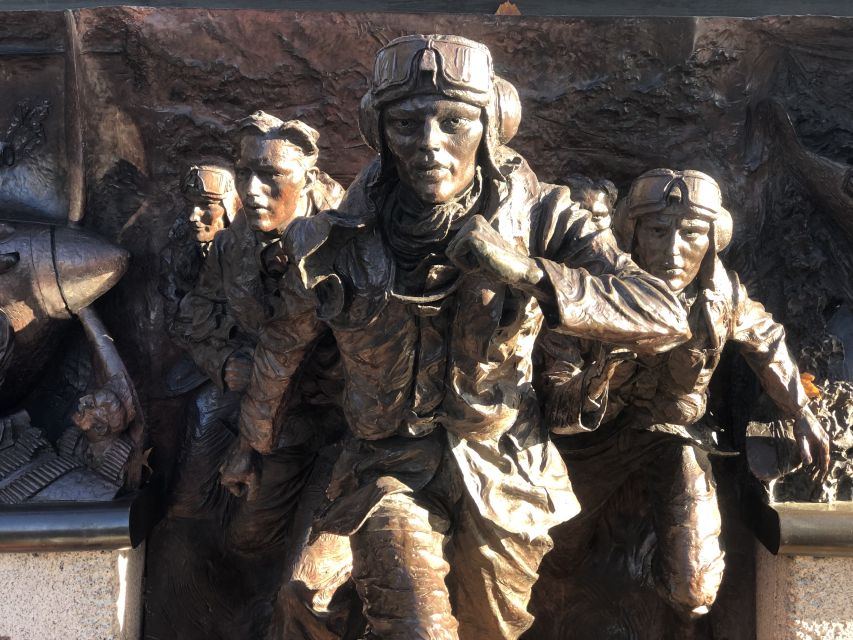
The nearby Monument to the RAF is the real starting point for the story. It commemorates the people who took part in the Battle of Britain, so the opening sets a military and human tone before you reach the grand government buildings.
This is a useful meeting location if you are arriving by Underground, but follow the exit instructions carefully. Westminster Station has several exits, and you need Exit 2 for Victoria Embankment. Give yourself a few minutes to come up to street level and find the statue.
The guide begins with the local setting and wartime life. That opening matters because it prevents the tour from becoming a procession of monuments. You start with the people who defended Britain, then move into the political center that directed the war.
Big Ben and the Houses of Parliament
From the starting point, the route brings you toward Big Ben and the Houses of Parliament. These are among London’s most photographed sights, but the wartime framing gives them a different purpose.
Here, I would pay attention to how your guide explains the tension between ceremony and crisis. Parliament represents the visible face of government, while wartime decisions often depended on secure rooms, limited information, and constant pressure. The tour uses the surrounding buildings to explain how Britain’s political system functioned while the country was under attack.
You should expect commentary rather than an interior visit. The activity includes a guided walking tour of Westminster, but entrance tickets to named monuments are not included. So this is a chance to understand the buildings from outside, not a Parliament or Big Ben admission tour.
The route can work well for people who already know the main sights. Instead of spending your short visit only on photographs, you get a reason to pause and ask what these places meant in the 1940s.
Westminster Abbey and the public face of Britain
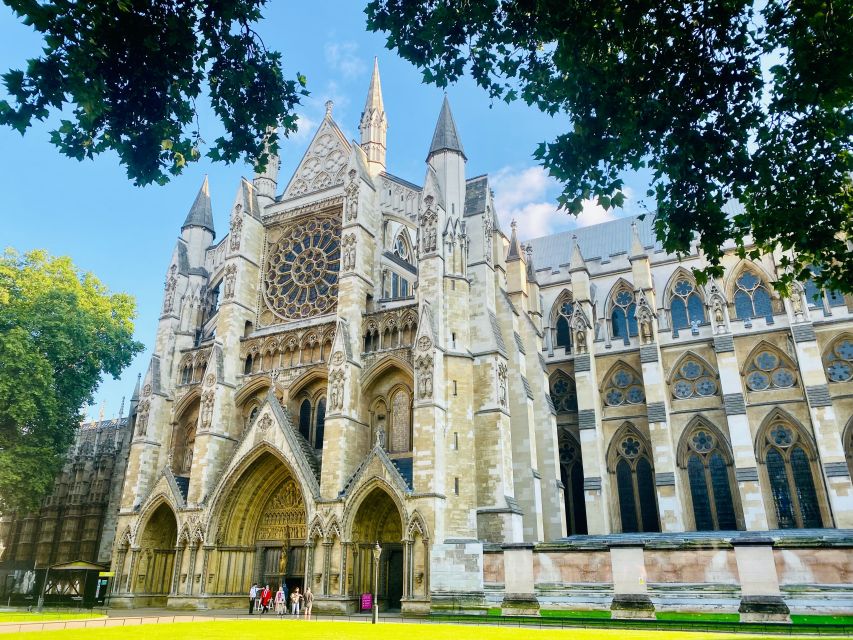
Westminster Abbey adds another layer to the walk. It is a major national landmark, and the tour considers it through the pressure of wartime London.
Your guide may connect the abbey and nearby public spaces with national identity, ceremony, and the emotional strain of a country at war. The supplied experience details do not promise entry, so plan to view the abbey from outside during this tour. If you want to go inside, you need a separate ticket and additional time.
This stop works best when the guide moves beyond architecture. The value lies in hearing how familiar places were seen by people living through the conflict. The strongest guides on this route are praised for making history personal, using biographies and anecdotes instead of only listing events.
If you are not a military-history specialist, that storytelling style should help. One parent joined with a 10-year-old who loved military history, while another participant described arriving with little interest in the subject and still finding the stories engaging. The tour aims to keep both types of people involved.
Same streets, a different story:
- London Jack The Ripper Guided Walking Tour
★ 5.0 · 3,131 reviews - London: Harry Potter Movies Walking Tour (Kids Go Free)
★ 4.7 · 3,071 reviews - London Bridge & Borough Market Food Tour with 7 Authentic Dishes
★ 5.0 · 1,972 reviews - Changing of the Guard Guided Walking Tour in London
★ 5.0 · 1,793 reviews
The Cenotaph, Whitehall, and the Ministry of War
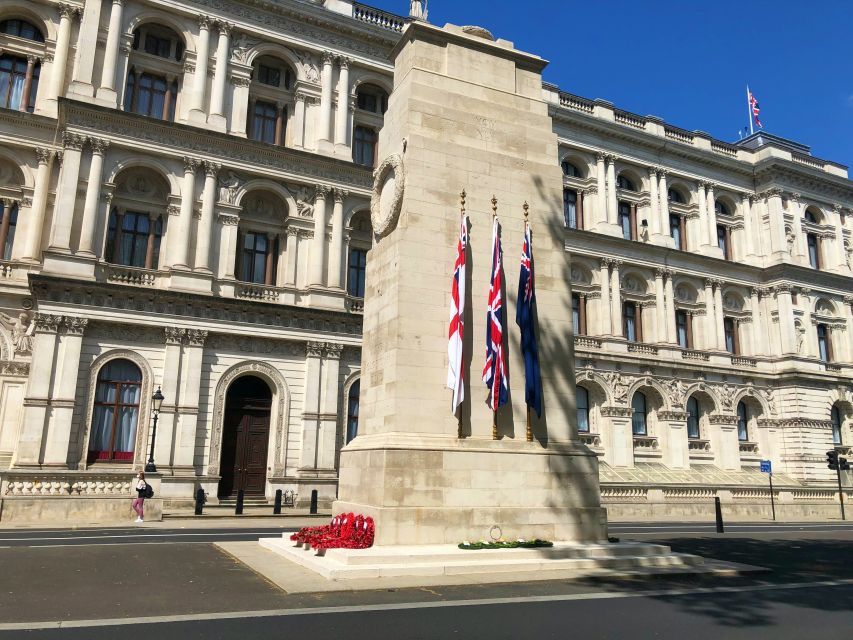
Whitehall is where the tour’s political and military themes come together. You pass the Cenotaph, the Ministry of War, and other government buildings while hearing how the war shaped public life and official decision-making.
The Cenotaph is especially important because it links the Second World War with Britain’s wider memory of military loss. It is not just a monument to examine. It is part of a ceremonial route and a reminder that wartime remembrance affected public life long after the fighting ended.
The Ministry of War adds the administrative side. Churchill’s speeches are memorable, but wars also depend on offices, orders, planning, and people working behind the scenes. This part of the walk helps explain that machinery without requiring you to visit a military museum.
I would expect plenty of standing and listening here. One useful description of the experience calls it more of a talking tour than a long-distance walk. That is a fair warning. You cover Westminster on foot, but the main effort is concentrating on the guide, not racking up miles.
Downing Street and Churchill’s leadership
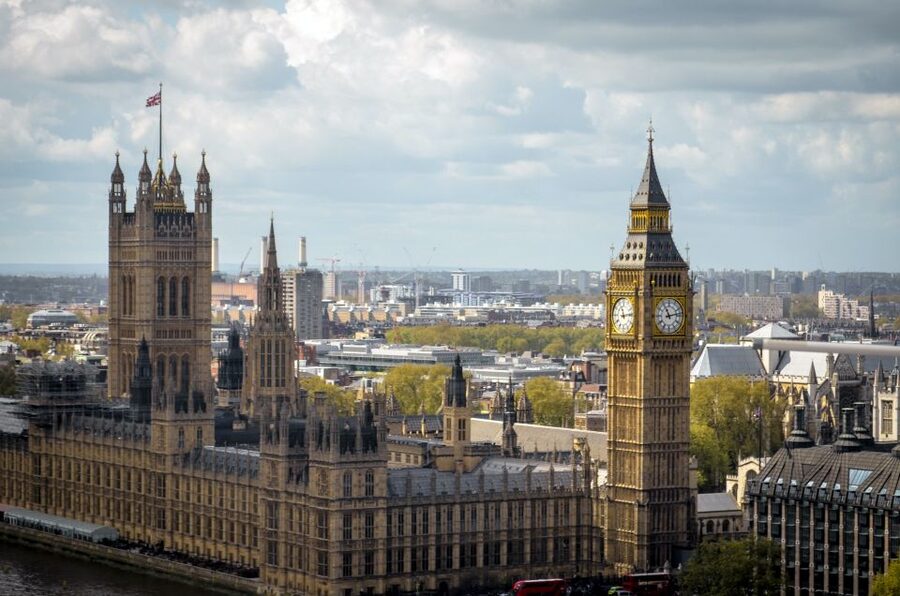
The stop near 10 Downing Street brings the story close to Churchill’s office and the center of British political power. The guide uses the location to discuss Churchill’s role, his personality, and the people around him.
This is one of the places where a strong storyteller makes a clear difference. Richard has been praised for bringing Churchill to life through descriptive detail and anecdotes. Nathan is also frequently credited with explaining both Churchill and the ordinary people living through the war.
You should not expect access to 10 Downing Street. The tour is an exterior walking experience, and the value comes from the historical explanation attached to the location.
I like that the tour does not treat Churchill as a flawless statue. The available descriptions point to biographies, personal touches, and opinions, which can make the subject more human. You hear about the man who led Britain, but also about the people and institutions that surrounded him.
Ending outside Churchill’s War Rooms
The walk finishes outside Churchill’s War Rooms. This is a sensible ending because the underground bunker gives you a chance to continue the story indoors.
Admission to the Churchill War Rooms is not included. That affects the real cost of the day, but it also gives you flexibility. If you have already visited, you can finish after the walk. If you want the full Churchill experience, you can buy a separate entry ticket and explore the bunker complex on your own.
The War Rooms are described as strategic underground spaces used by Churchill and his cabinet during the war. Inside, you can see the setting where government work continued below London, with rooms preserved for interpretation.
I see the walking tour as a lead-in rather than a replacement for the museum. The guide gives you a framework for the buildings and people above ground. The War Rooms then provide the indoor detail. If Churchill and wartime government are central interests for you, combining both will make better use of your day.
The timing matters. A 1.5-hour guided walk leaves room for the museum afterward, but you should not expect the guide to explain every detail of the War Rooms. The guided portion ends outside, and the museum visit is your own separate activity.
What the guides add to the experience
The repeated praise for the guides centers on storytelling, clear explanations, humor, and the ability to answer questions. Nathan appears often in the feedback, with particular praise for his command of World War II, his wit, and his attention to everyday citizens as well as famous leaders.
Richard is valued for a broad grasp of London and British history, along with an entertaining style. Francis is described as organized and good at keeping the group moving. Babs is praised for making the subject lively and memorable. Rosie and Amber have also been described as funny, enthusiastic, and effective communicators.
You cannot select a specific guide unless the booking option allows it, so treat these names as examples of the standard to expect rather than a guarantee. Still, the pattern is useful: this tour depends heavily on the person holding the orange sign.
A guide who can answer questions changes the experience. You may want to ask about Churchill, the Battle of Britain, civilian life, or the buildings along Whitehall. The tour seems best suited to curious people who enjoy conversation and historical anecdotes, not just a fixed script.
Price, duration, and practical value
At $39 per person, the tour is reasonably priced for a guided Westminster walk, but its value depends on how you use it. The core experience is around 1.5 hours, with the wider duration listed as 1.5 to 3 hours depending on the selected time or format. You are paying for the guide’s interpretation, not entry to a museum or monument.
For someone new to London, the price can make sense because the route combines many major sights with a focused subject. You get Big Ben, Westminster Abbey, Whitehall, Downing Street, the Cenotaph, and the Houses of Parliament in one compact outing.
The value is weaker if you want long stops, interior visits, or a slow photographic walk. One participant felt the tour was too short and a little expensive for its length. That is the key criticism to take seriously.
The private option may suit families or small parties that want to ask many questions. The shared option should be the better value if you are comfortable listening with a group. The activity is also eligible for free cancellation up to 24 hours before the start, and you can reserve now and pay later, which helps if your London plans are still shifting.
Wear comfortable shoes, even though this is not a strenuous walk. Do not bring luggage or a large bag. The tour is not suitable for wheelchair users or people with mobility impairments, so check the route and format carefully before booking.
Who should book this Westminster tour
I would recommend it to anyone who wants London’s main political sights to make more sense. It is especially useful if you have an interest in Churchill, the Battle of Britain, wartime government, or the daily experience of civilians during the conflict.
Families can also get value from it. The storytelling style has kept teenagers and children interested, particularly when the guide uses personal stories instead of long speeches. It may suit a mixed group better than a highly technical military lecture.
You should think twice if you need step-free access, dislike standing outdoors, or want to enter every landmark. This is not an interior sightseeing pass, and the War Rooms cost extra. It is also not the best choice if you want a full-day World War II program. The subject is broad, while the walking time is short.
Should you book it?
Book this tour if you want a compact, story-led introduction to Churchill and wartime Westminster. The route is efficient, the subject is focused, and the best guides make the period feel personal rather than dusty or remote.
I would plan to visit the Churchill War Rooms afterward if your budget and schedule allow. Together, the walk and museum give you both the outdoor political setting and the underground command center. If you only want a quick historical orientation before seeing Westminster’s main sights, the $39 price is easier to justify.
Skip it if you need wheelchair access, want monument admissions included, or prefer to explore silently at your own pace. For most history-minded visitors who enjoy a good storyteller, this is a lively way to see familiar London streets with their wartime meaning restored.
FAQ
Where does the Winston Churchill and London in WWII Walking Tour start?
Meet by the Boadicea and Her Daughters Statue outside Westminster Station, Exit 2. Follow signs for Exit 2, Victoria Embankment, then take the stairs to street level. The guide will hold an Urban Saunters orange tour sign.
Where does the tour finish?
The guided walk finishes outside Churchill’s War Rooms.
Is admission to Churchill’s War Rooms included?
No. Entrance to Churchill’s War Rooms is not included in the tour price.
Are tickets to Westminster Abbey, Parliament, or other monuments included?
No. Entrance tickets to the named monuments are separate from the guided walking tour.
How long does the walking tour last?
The guided tour is listed as 1.5 hours, while the available duration range is 1.5 to 3 hours. Check the available start times and selected option when booking.
Is the tour offered privately?
Yes. You can choose between a shared group walking tour and a private walking tour.
What language is the tour conducted in?
The tour is conducted in English with a live English-speaking local guide.
What should I bring?
Wear comfortable shoes. Do not bring luggage or large bags.
Can wheelchair users join the tour?
No. The tour is not suitable for wheelchair users or people with mobility impairments.
New walking tours around London
- London: Old City Walking Tour★ 4.8 · 135 reviews
- London: Witches and History Bankside Walking Tour★ 4.8 · 223 reviews
- London: Palaces and Parliament Walking Tour★ 4.8 · 365 reviews
- London: Westminster Walking Tour & The Tower of London Entry★ 4.6 · 131 reviews
- London: Tootbus Christmas Lights Tour incl walking tours★ 3.6 · 227 reviews
- London: Westminster Walking Tour & Westminster Abbey Visit★ 4.7 · 315 reviews
- London: Secrets of the London Underground Walking Tour★ 4.6 · 211 reviews
- London: Best Landmarks Walking Tour★ 4.6 · 132 reviews
London Walking Tours, side by side.

Magical London: Harry Potter Guided Walking Tour
Read our review →
London: The Original Jack the Ripper Walking Tour
Read our review →
Tour for Muggles The Ultimate Harry Potter Walking Tour in London
Read our review →
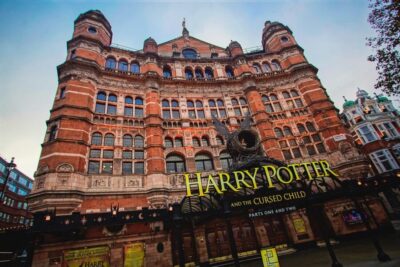
London: Harry Potter Movies Walking Tour (Kids Go Free)
Read our review →
London Bridge & Borough Market Food Tour with 7 Authentic Dishes
Read our review →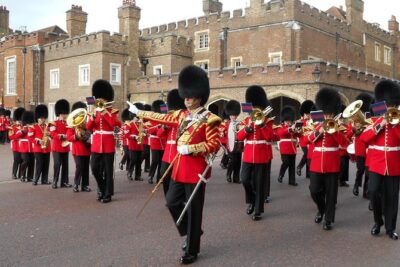
Changing of the Guard Guided Walking Tour in London
Read our review →
London: The Great British Rock and Roll Music Walking Tour
Read our review →Lists this walk sits on