Review · LYON
Lyon: Private Walking Tour of “Traboules” in the Old Town
The most memorable part of this Lyon walk is not a grand monument. It is the moment a plain doorway in Vieux Lyon opens onto a quiet corridor, stairway, or courtyard. These traboules turn the old town into a puzzle, and guide Yannick helps you read the clues.
I especially like two things here: the access to lesser-known passageways and the way the tour connects architecture to ordinary life, from silk workers to wartime resistance. The main drawback is practical: stairs and narrow routes make this a poor fit for wheelchair users, people with mobility limits, and some strollers.
- Secret routes through Vieux Lyon: See several of the roughly 50 traboules still open to the public.
- A guide who knows the neighborhood: Yannick has lived in Vieux Lyon for more than 25 years.
- History with a human face: Follow Lyon’s silk trade, religious conflicts, political struggles, and Resistance activity.
- Small-group format: Groups are limited to 10, giving you room to ask questions.
- A two-and-a-half-hour walk: The pace leaves time for stories, architecture, and local advice.
- Useful planning note: Wear comfortable shoes and keep noise down inside residential passageways.
Why Lyon’s Traboules Are Worth Your Time
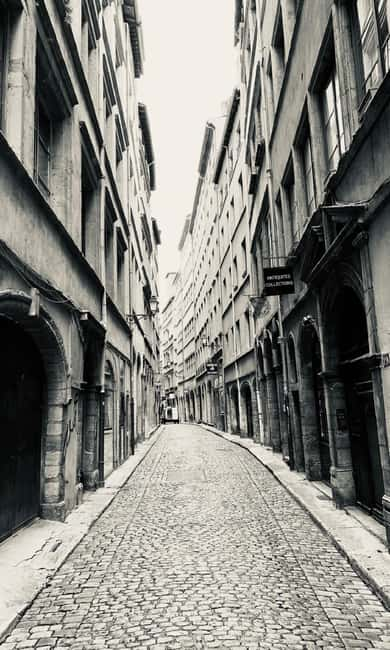
Lyon’s traboules are passageways that cut through buildings, courtyards, and connected streets. Some are simple shortcuts. Others reveal staircases, vaulted spaces, old doors, and architectural details that are easy to miss from the street.
The real value of this tour is not simply entering a few corridors. You learn why these routes mattered. Their design relates to the shape of Vieux Lyon, the movement of silk workers, the daily business of the old city, and periods when secrecy was useful.
Without a guide, you can find some public traboules, but you may walk past others without realizing what is behind the door. You also miss the connections between the buildings. A passageway becomes more interesting when you understand who used it and why it survived.
This is not a tour built around quick photo stops. It is a walking lesson in how a city works. You will spend much of the time on foot, listening, looking up, and moving through narrow spaces. That makes comfortable shoes more important than camera gear.
Meeting Yannick in Cathedral Square
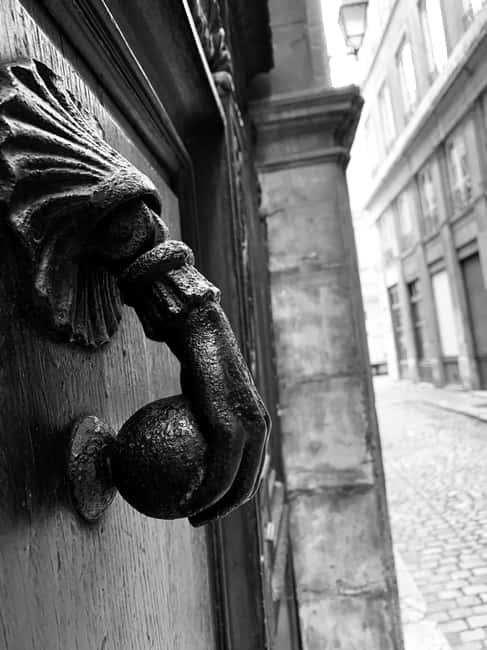
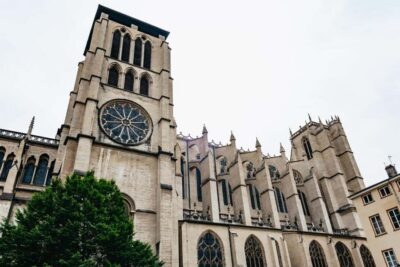
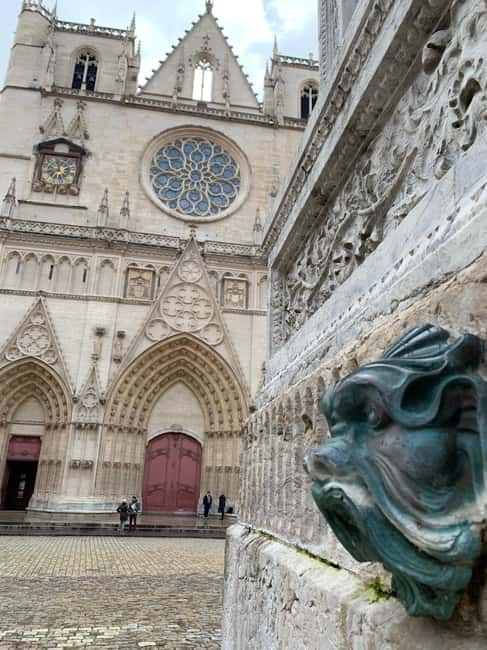
The meeting point is in front of the old fountain in the middle of the cathedral square. That gives you a clear place to begin, but arrive ready for a walking tour rather than a formal museum visit. The route moves through the streets of Vieux Lyon and into passageways that can be easy to overlook.
The guide is a major part of the experience. Yannick, also called Yan in some tour introductions, has lived in the neighborhood for more than 25 years. His approach combines facts, jokes, local observations, and a strong sense of place.
The many positive comments about his style are consistent: he explains difficult subjects in an easy way, keeps the group involved, and uses humor without turning the walk into a comedy show. Several groups found that the two and a half hours passed quickly because the storytelling kept their attention.
That does not mean the tour is only light entertainment. Yannick covers architecture, politics, religion, commerce, class, and the lives of ordinary workers. His humor helps you remember the material, while the historical detail gives the corridors a reason to matter.
More Old Town Walking Tours in France
- Nice Old Town and Castle Hill: Guided Cultural Walking Tour
★ 4.8 · 790 reviews - Nice: Food and Wine Old Town Guided Walking Tour
★ 4.9 · 411 reviews - Nice: Old Town Treasures Walking Tour
★ 4.6 · 388 reviews
Following the First Traboules in Vieux Lyon
The walk begins in the largest Renaissance district in Lyon, Vieux Lyon. This is a good setting for the subject because the neighborhood still shows how streets, residences, workshops, courtyards, and religious buildings once worked together.
As you move from a public street into a traboule, pay attention to the change in atmosphere. The city noise drops. A narrow opening may lead to a courtyard or stairway, then return you to another street. The route is practical, but it also feels secret because the entrances are often understated.
You will explore some of the approximately 50 traboules that remain open to the public. The exact route can vary, and the tour also includes lesser-known passageways. That variety matters. If you only visit the most famous corridors, you get a quick visual impression. A longer walk shows how widespread this old system was.
You may also see details that make more sense after Yannick explains them. Architecture here was not just decoration. The size of a stairway, the layout of a courtyard, and the connection between streets could reflect work, wealth, status, or practical needs.
The tradeoff is that these are living spaces, not a theme park. Some traboules pass through buildings where people still live. You need to keep your voice down and follow the guide’s instructions. That small restriction is actually part of the experience: you are seeing a working neighborhood, not a preserved set.
Silk Workers and the Business of the City
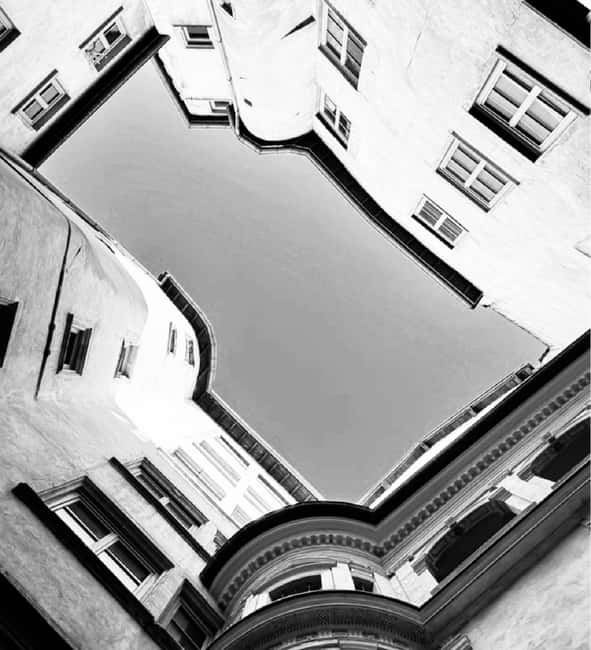
Lyon’s silk trade is one of the main threads running through the walk. The tour explains how the city developed around silk production and how the old streets supported that work.
You will hear about the people who worked in the trade, not only the wealthy merchants who benefited from it. This gives the old buildings a social dimension. A beautiful façade can suggest prosperity, but the passageways also help you picture labor, movement, and the daily pressures of production.
The route connects the physical city to the working lives of its residents. You begin to see why a shortcut through a building mattered, how courtyards could support several activities, and why access between streets was useful.
This is one of the tour’s strongest features for anyone who wants more than a list of dates. You are not simply told that Lyon was a silk center. You are shown how commerce shaped the neighborhood and how architecture responded to it.
Families can also find this section approachable. Children and teenagers may not want a long lecture on economic history, but the corridors and staircases give the subject something concrete. The guide’s jokes and visual explanations help keep younger participants involved.
Power, Religion, and Lyon’s Changing Identity
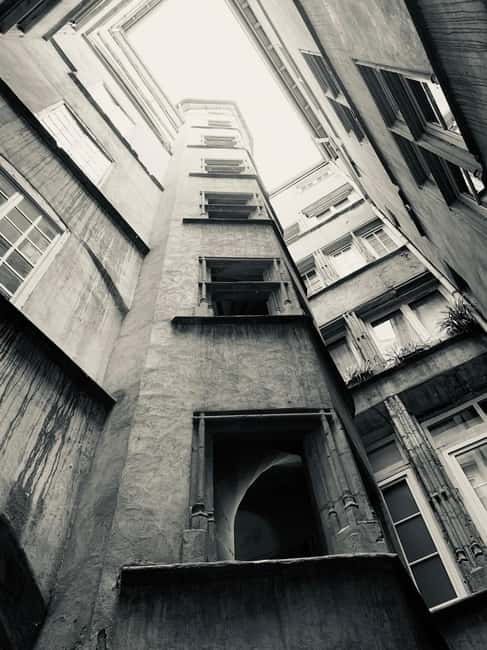
The traboules also provide a way to discuss Lyon’s political and religious struggles. The tour looks at the rivalry between the bishop and the governor, along with the influence of powerful families and outside forces.
These subjects can sound dry on paper. They become easier to follow when attached to streets, buildings, and competing claims over the city. The old town was not only a pretty quarter. It was shaped by people trying to control trade, religion, government, and public life.
The walk also brings in the Medici influence and the upheavals that affected Lyon. One memorable story concerns Swiss soldiers who sacked the city in the 16th century. Yannick’s comic phrasing makes the incident stick in your mind, but the event itself adds weight to the city’s past.
I like this approach because it avoids treating architecture as a silent backdrop. A doorway or courtyard can reflect who had authority, who had money, and who had to adapt. You leave with a better sense of how Lyon’s people shaped the city, and how the city shaped them in return.
More Private Walking Tours in France
- Private Montmartre Food Tour with Wine, Cheese & Pastries
★ 5.0 · 1,027 reviews - Paris: Private Walking Tour with a Local
★ 4.6 · 506 reviews - Paris Private Walking Tour with a Personal Photographer
★ 5.0 · 262 reviews - Private – Best of Bordeaux Walking Tour + Glass of Bordeaux Wine
★ 5.0 · 240 reviews
Wartime Corridors and the French Resistance
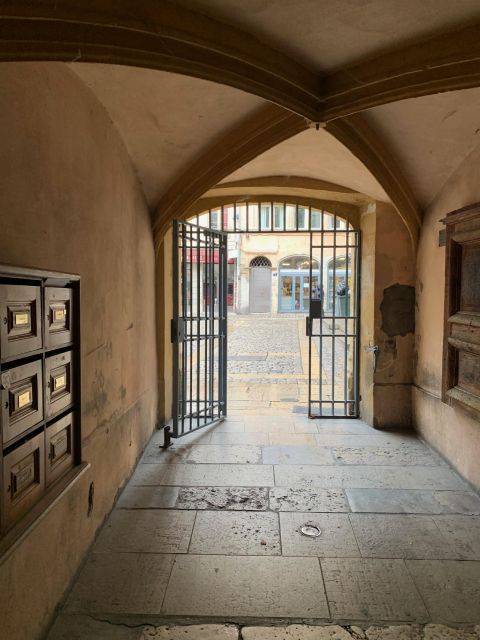
Another important part of the walk concerns the French Resistance during the Second World War. The traboules were useful because they offered routes through the city that were less visible from the main streets.
The tour does not present the passageways as a single-purpose wartime invention. They existed long before the 1940s, serving trade and daily movement, but their layout gained a different importance during dangerous times.
That change in meaning is one of the most interesting ideas on the walk. The same corridor could be an ordinary shortcut in one period and a valuable escape or meeting route in another. You begin to understand why a city’s older structures can matter during a crisis.
This section also adds balance to the tour. Lyon is often presented through food, architecture, and pleasant old streets. Those are worthwhile, but the city’s past also includes conflict, occupation, political pressure, and fear. The traboules connect those subjects without requiring a separate museum visit.
Why the Small Group Makes a Difference
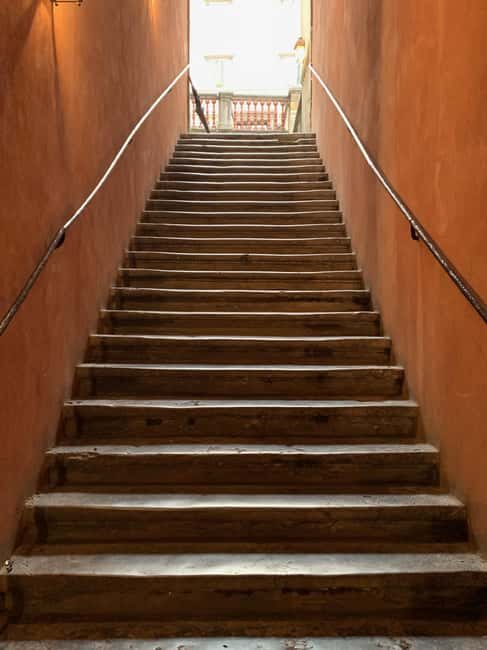
The group limit is 10 people, and that is a useful size for this setting. Narrow corridors are awkward with a large crowd, especially when other people are using the buildings. A small group can gather around the guide without blocking every doorway.
You also have a better chance to ask questions. The tour is designed to respond to the group’s interests, so you can spend more time on architecture, silk, politics, local food, or wartime history if those subjects catch your attention.
Some departures may be much smaller than the limit. That can make the walk feel almost personal, though you should not assume you will have a private guide all to yourself. The advertised format is a private walking tour with a small group limited to 10 participants, so check the terms for your chosen booking.
The small scale also supports respectful behavior. Since some traboules pass through residential areas, a group that moves quietly and listens to its guide is less intrusive. You get a better experience and show consideration to the people who live there.
Two and a Half Hours on Uneven Ground
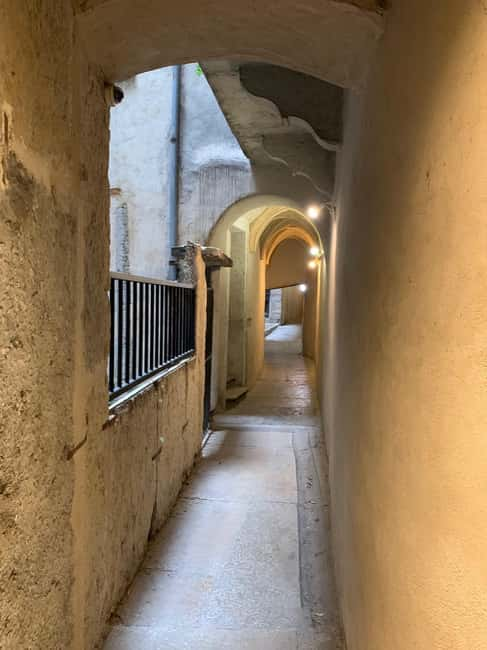
The tour lasts 150 minutes. That is long enough to build a story rather than rush from one opening to the next. You will have time to learn the broader history of Lyon, examine architectural details, and hear local stories.
The same length can feel demanding in cold weather or if you are not used to walking. One participant found the tour felt long in the cold, even while deciding it was worth the time. Plan your clothing with the season in mind, and wear shoes that handle stairs and hard pavement well.
Strollers can be difficult inside the traboules because of stairs and stairways. The activity is not suitable for wheelchair users or people with mobility impairments. If someone in your group walks slowly or has trouble with steps, consider this carefully before booking. One group appreciated the guide’s patience with a participant who needed a slower pace, but the physical limits of the route remain.
Noise is not allowed inside the passageways. That is not a minor rule to ignore. Keep conversations low, follow the guide, and remember that these corridors are part of homes and active buildings.
Is $43 a Fair Price?
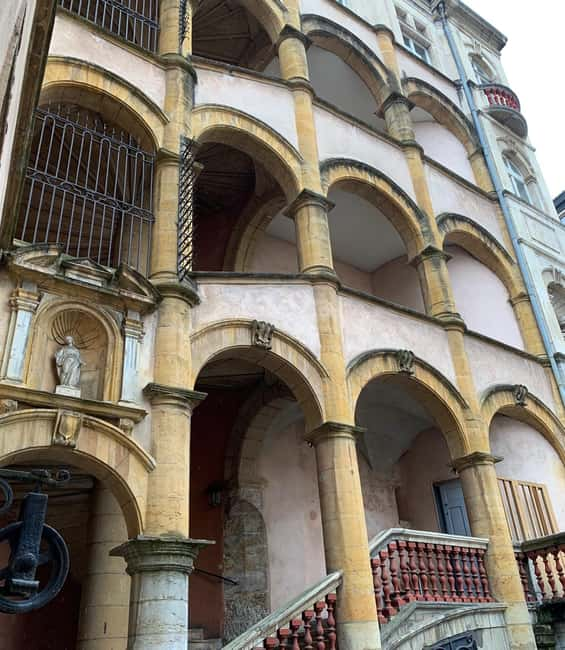
At $43 per person, this is not the cheapest way to stroll through Vieux Lyon. You can walk the old town streets for free, and some public traboules can be found without a guide.
The question is what you want from the visit. If you only want a few atmospheric photographs, the price may be hard to justify. If you want the passageways placed into Lyon’s social, political, commercial, and wartime story, the value is much stronger.
You are paying for access, route-finding, interpretation, and two and a half hours of a local guide’s time. Yannick’s long connection to the neighborhood is especially useful because the appeal of the traboules is often in the details. A quick online description cannot easily show you which doorway matters or how several streets connect.
I would book this early in a Lyon visit. The walk teaches you how to look at Vieux Lyon, which can improve the rest of your independent sightseeing. You may also get practical local advice about traditional bouchons and avoiding tourist traps, as several tour experiences included that kind of guidance.
Free cancellation up to 24 hours before the start and the option to reserve now and pay later reduce the risk if your plans are still changing. The tour is offered in English and French, so choose the language that will let you follow the historical explanations comfortably.
Who Will Enjoy This Walk Most?
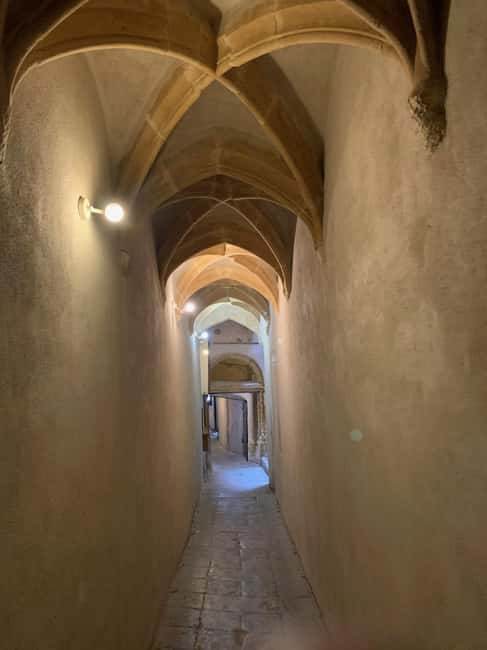
I would recommend it to people who like city history, architecture, social stories, and places that reward careful looking. It suits couples, families with older children, and small groups who want a focused introduction to Lyon.
Teenagers can enjoy it because the route has movement and mystery rather than only standing in front of monuments. Younger children may manage it too, but the two-and-a-half-hour duration and stairs could test their patience.
It is also a good match for repeat visitors. If you have already seen the cathedral and walked the main streets, the traboules offer a different side of Vieux Lyon. You are not just repeating the standard old-town circuit.
I would hesitate if you dislike guided storytelling, have difficulty standing or climbing stairs, or want a fast tour with lots of free time. The experience depends on listening. You need to give the guide time to explain why each place matters.
Should You Book Lyon’s Traboule Walk?
Book it if you want Vieux Lyon to make sense, not just look attractive. The strongest reasons are the lesser-known passageways, the small group, and Yannick’s lively way of linking buildings to silk, power, religion, resistance, and everyday work.
Skip it if stairs are a serious problem or if you only want a short, self-guided look at the old town. For most visitors who can manage the walking, $43 buys a useful introduction to a part of Lyon that is easy to miss from the street.
FAQ
Where does the traboule walking tour meet?
Meet your guide in front of the old fountain in the middle of the cathedral square.
How long does the tour last?
The walking tour lasts 150 minutes, or two and a half hours.
How much does the tour cost?
The listed price is $43 per person.
What languages are available?
The live tour guide is available in English and French.
How many people can join the tour?
The group is limited to 10 participants.
What should I bring?
Bring comfortable shoes, since the tour involves walking through passageways and stairways.
Can I bring a stroller?
Strollers can be hard to manage inside the traboules because the route includes stairs and stairways.
Is the tour suitable for wheelchair users?
No. The activity is not suitable for wheelchair users or people with mobility impairments.
New walking tours around France
- Montmartre Walking Tour with a Local Guide★ 4.9 · 478 reviews
- Paris: Montmartre Small Group Guided Walking Tour★ 4.8 · 139 reviews
- Paris: Montmartre Hidden Gems and Highlights Walking Tour★ 4.7 · 378 reviews
- Montmartre & Sacré Coeur: 2.5-Hour Walking Tour★ 4.9 · 71 reviews
- Mont Saint Michel: Walking Tour & Optional Abbey Ticket★ 4.3 · 562 reviews
- Montmartre for Art Lovers – Walking tour with Expert Guide★ 5.0 · 456 reviews
- Mont Saint Michel: Village History and Legends Walking Tour★ 4.8 · 96 reviews
- Mont-saint-Michel : Walk in the heart of the Bay★ 4.7 · 167 reviews
Lyon Walking Tours, side by side.

Vieux Lyon Cultural & Historical Walking Guided Tour (English)
Read our review →

Lyon Highlights & Secrets Walking Guided Tour (small group) including Funicular
Read our review →