
Review · MILAN
Milan: Guided Walking Tour with Last Supper Skip-the-Line
The main reason to book this tour is simple: The Last Supper is one of Italy’s hardest cultural tickets to secure on your own. This experience pairs that timed visit with a brisk introduction to Milan’s major sights, including the Duomo, La Scala, the Galleria Vittorio Emanuele II, and Sforza Castle.
I like the practical combination of art and city orientation, especially if this is your first morning in Milan. I also like the guides’ personal touch. Cristina, Chiara, Simon, Eddie, and others have been praised for clear storytelling, humor, local tips, and strong explanations of Leonardo’s painting. The main drawback is the price, $106 per person, and the fact that the Last Supper may come at the beginning or end rather than at a time you choose.
Key points at a glance
- The Last Supper is the centerpiece: Your timed ticket gives you access to Leonardo’s fragile masterpiece at Santa Maria delle Grazie.
- One tour covers several Milan essentials: You see Sforza Castle, Piazza dei Mercanti, La Scala, the Galleria, and the exterior of the Duomo.
- Guides make the difference: Cristina, Chiara, Simon, Eddie, and other guides have been praised for warmth, humor, art knowledge, and clear English.
- The pace is useful for a first day: Three hours gives you a strong sense of the central sights without spending the whole day indoors.
- The Duomo visit is exterior only: You see the cathedral from the outside, so arrange a separate ticket if you want to enter or visit the roof.
- Plan around the timed painting visit: The Last Supper can be scheduled at the start or end, depending on the available entry slot.
Why The Last Supper makes this tour worth considering
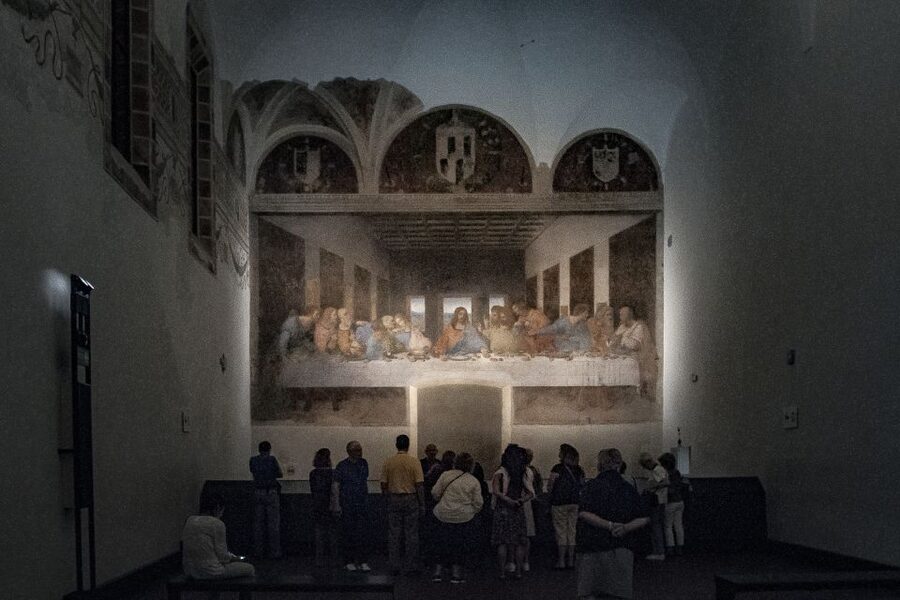
Leonardo da Vinci’s The Last Supper is not displayed in a standard museum gallery. It covers a wall in the refectory of Santa Maria delle Grazie, and entry is tightly controlled. You cannot simply arrive, buy a ticket, and expect to walk in.
That limited access is the strongest practical reason to consider this tour. The $106 cost is high for a three-hour walk, but part of what you are paying for is access to a timed admission that can be difficult to arrange separately. If seeing the painting is one of your main Milan goals and you did not organize tickets far ahead, the price may feel fair.
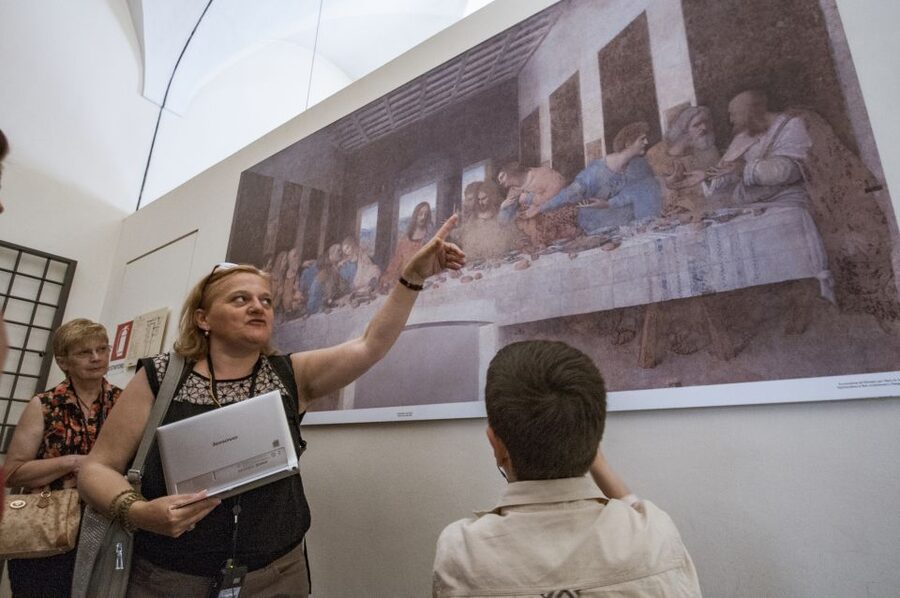
Your guide explains the scene before or during the visit, helping you notice details that are easy to miss. The tour is not just a quick look at a famous wall. The discussion has included the figures around Christ, the painting’s artistic choices, its historical setting, and contrasts with other religious works. One guide was especially praised for explaining the painting without talking over the quiet experience.
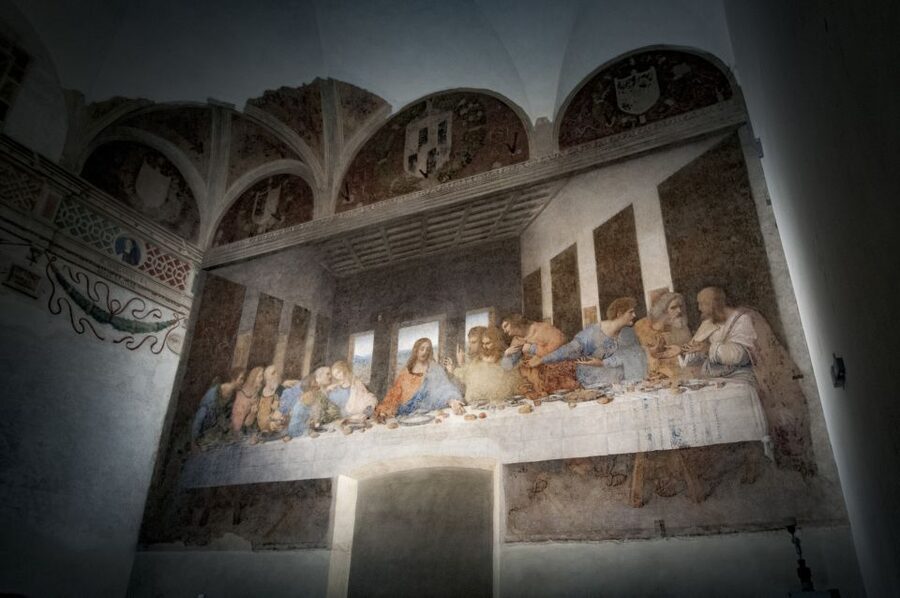
The room visit itself is short and controlled. That is normal for this artwork. The painting has suffered serious deterioration over the centuries, so the number of people and length of each visit must be limited. You should arrive ready to look closely and listen carefully rather than expecting a long, relaxed museum stop.
More skip-the-line entries on the way around Italy:
- Skip-the-Line Florence Highlights and David Walking Tour
★ 5.0 · 1,127 reviews - From Naples: Guided tour of Pompeii skip-the-line and round-trip train
★ 4.5 · 811 reviews - Herculaneum: 3D Walking Tour with Skip-the-Line Ticket
★ 4.3 · 313 reviews
Santa Maria delle Grazie and the fragile Leonardo fresco
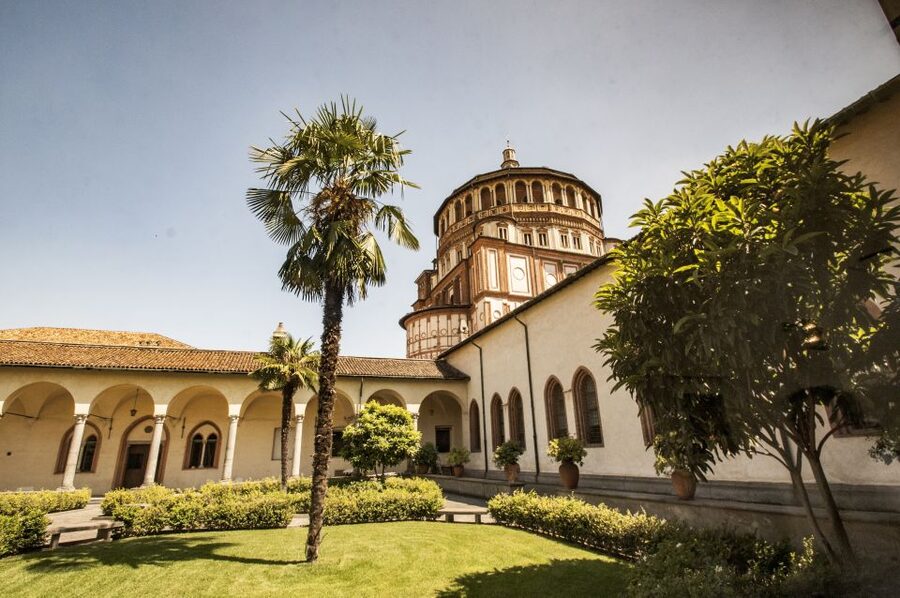
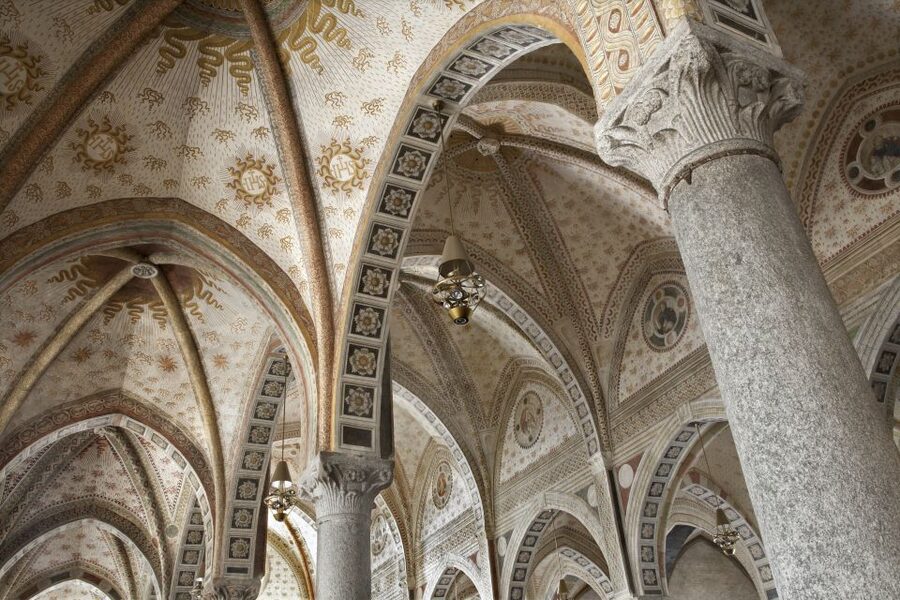
Santa Maria delle Grazie gives the tour an excellent opening or closing point. The church is linked to Milan’s Sforza rulers and houses Leonardo’s most famous work, though The Last Supper is in the former dining hall rather than the main church interior.
The painting shows Christ and the Apostles at the moment Christ announces that one of them will betray him. Leonardo arranged the figures in groups, using gestures and expressions to create a wave of reaction across the scene. A good guide helps you read those movements instead of treating the work as a flat religious image.
The setting matters. The painting is not a portable canvas that can be moved to a better-protected gallery. It remains attached to the wall where Leonardo created it, which makes the visit feel tied to Milan itself. The tradeoff is that the artwork is much more damaged than many people expect. Do not come expecting the bright, perfect image often reproduced in books and online.
The tour includes headsets, which are useful when the group is walking through busy streets or standing near major monuments. They also help you follow the explanation without crowding around the guide. Several guides have been praised for clear speech and for using the audio equipment well.
Sforza Castle: Milan’s ducal fortress
From the Santa Maria delle Grazie area, the route continues to Sforza Castle. This large medieval fortress was home to Milan’s dukes for centuries and now contains museums and important art collections.
Even from outside, the castle gives you a useful sense of Milan’s political past. The Duomo tells the story of civic and religious ambition, while Sforza Castle points to military power and court life. Seeing both in one walk helps connect the city’s major monuments.
Do not confuse this stop with a museum visit. The tour takes you to the castle as part of the walking route, but the listed experience does not include time inside its museums or art collections. If the castle’s interiors interest you, treat this stop as a preview and return later with a separate ticket.
The scale of the fortress also makes this a good point to pay attention to your guide’s broader explanation. Milan was not shaped only by fashion, shopping, and modern business. Its central buildings reflect centuries of rivalry, rule, art, and wealth.
Piazza dei Mercanti and medieval Milan
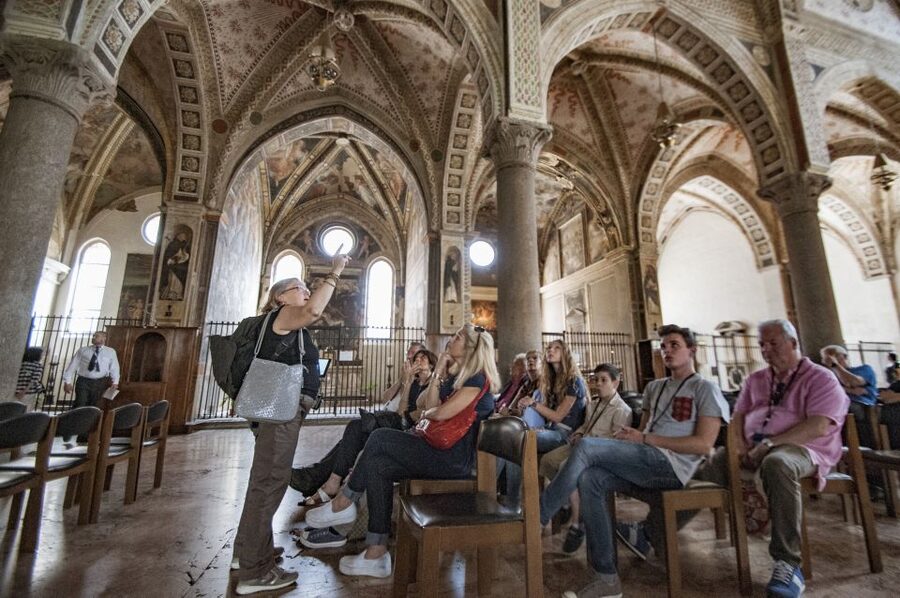
Piazza dei Mercanti is one of the most rewarding stops on the route because it is easy to miss. It sits close to the Duomo but feels tucked away from the main crowds and wide streets.
The square preserves a medieval atmosphere and gives your guide a chance to explain how Milan worked before the modern city spread around it. You will hear about its civic role and the Renaissance illusion of space associated with Bramante.
This is the kind of stop that adds value to a guided walk. You could pass nearby on your own without realizing what you were looking at. With context, the square becomes more than an attractive pause between major sights.
The route is not designed as a slow architectural study. Your guide needs to keep the group moving and fit several landmarks into three hours. Still, Piazza dei Mercanti helps break up the headline monuments with a quieter, more intimate part of the old center.
More walks with a guide around Italy:
- Milan: Guided Walking Tour & Last Supper Visit with Ticket
★ 4.7 · 5,409 reviews - Naples: Street Food Walking Tour with Local Guide
★ 4.9 · 4,976 reviews - Florence: Highlights Walking Tour with Expert Guide
★ 4.6 · 4,662 reviews - Rome: Guided Food Walking Tour with Wine in Trastevere
★ 4.9 · 3,105 reviews
La Scala and the city’s musical identity
At Piazza della Scala, you see La Scala, one of the world’s best-known opera houses. The building is important not only for its architecture but also for the musicians and singers who have performed there.
The value of this stop depends on what you want from the tour. If you are hoping to attend an opera or tour the interior, this experience does not promise that. You see the opera house as part of the city walk, with your guide explaining its role in Milan’s cultural life.
I like this stop because it shows a side of Milan that is different from the Duomo and Leonardo. The city is not only a place of churches and fortresses. It has long been tied to music, performance, fashion, design, and public life.
Your guide may also connect older landmarks to modern Milan. Past tours have included links to sports, politics, local customs, cafés, bakeries, and other places worth visiting. That sort of commentary is useful when you want more than dates and architectural labels.
The Galleria Vittorio Emanuele II as Milan’s drawing room
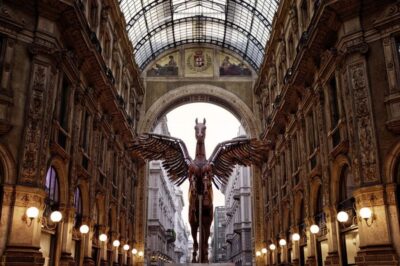
The Galleria Vittorio Emanuele II is one of Milan’s most memorable public spaces. Its nineteenth-century glass roof and iron structure create a grand indoor passage between Piazza della Scala and the Duomo.
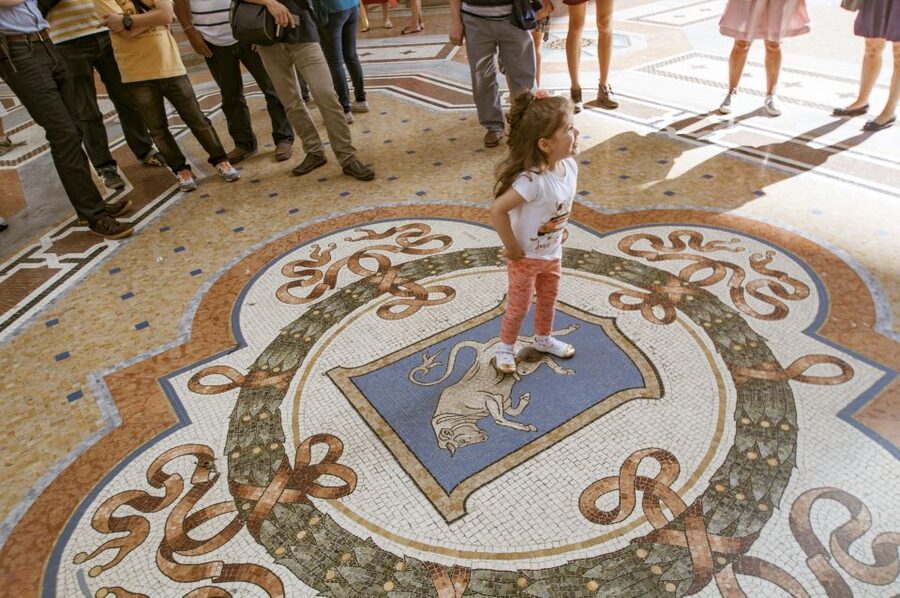
The arcade is lined with shops and cafés, but the main attraction is the building itself. Milanese life has long passed through this space, which is why it is often called the city’s drawing room. Your guide gives you a reason to look up at the roof, examine the floor, and notice how the passage functions as both shopping center and meeting place.
This is also a practical orientation stop. Once you understand the Galleria’s location, it becomes easier to move between La Scala and the Duomo on your own. If you are planning a return visit for shopping, coffee, or photographs, you will already know where to go.
Expect people and limited room for the group to pause, particularly at busy times. The headset helps, but you still need to stay close to the guide and watch for foot traffic.
The Duomo from the outside
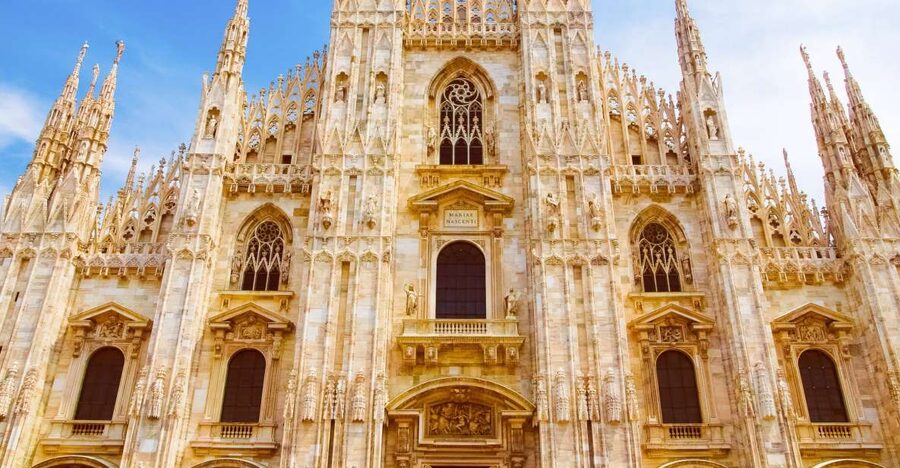
The walk finishes at the Duomo, or the painting visit may be scheduled here in relation to the rest of the route. The cathedral is the visual centerpiece of central Milan, with a pale stone exterior covered in spires, statues, and elaborate Gothic detail.
The tour includes the exterior rather than a full interior or rooftop visit. That distinction matters. If you want to see the nave, archaeological area, or rooftop views, plan a separate Duomo ticket and allow extra time.
Even without going inside, the exterior deserves a proper explanation. From the square, you can appreciate the building’s size and its long construction history. A guide can also point out details that disappear in the overall view, rather than leaving you to take a quick photograph and move on.
The square is a natural ending point for a first look at Milan. From here, you can continue to nearby restaurants, shopping streets, museums, or public transport. One useful feature of a morning departure is that you still have much of the day left for a second visit to the places that caught your attention.
What the guiding is really like
The strongest part of this experience is often the person leading it. Guides praised by name include Cristina and Christina, Chiara, Simon, Eddie, Samantha, Carmine, Flavia, Simone, and Emanuela. You should not assume a particular guide will lead your departure, but the pattern is clear: the tour depends heavily on a guide who can manage both art commentary and city storytelling.
The best guides on this route do three things well. They explain The Last Supper in a way that adds meaning without rushing you, keep the walking route organized, and connect Milan’s past to daily life now. Humor also appears often in the feedback, which matters during a three-hour walk with several stops.
The headset system is another quiet advantage. You can hear the guide while walking or standing at a monument instead of pressing into a tight circle. One parent found the three-hour route engaging even for a ten-year-old, though the length may still be demanding for young children who dislike walking and listening.
Group size can vary. One departure was described as a small group of about ten people, which allowed plenty of questions. You should not count on every group being that small, but the format supports interaction better than a large bus tour.
Price, pace, and practical tradeoffs
At $106 per person, this is not a budget walking tour. The price makes the most sense if you place high value on guaranteed access to The Last Supper and want a guide to interpret it.
If you already have a timed Last Supper ticket, you may prefer to book a less expensive city walk or explore the center independently. If you have only a short stay and want a strong first look at Milan, combining the painting with the city’s major landmarks saves planning time.
The three-hour length is efficient but not leisurely. You will walk between stops and spend enough time at each place for an explanation, not for a full museum visit. Wear comfortable shoes and keep your schedule flexible around the painting appointment.
The meeting point is Duomo Square number 4, under the arches next to 12 OZ Coffee Joint. Check the exact starting time when booking, since departures vary. The Last Supper may be at the very beginning or the very end of the tour, depending on the available timed slot.
There is free cancellation up to 24 hours before the activity, and you can reserve now and pay later. Those terms help if your Milan schedule is still moving around.
There is conflicting accessibility information in the supplied details: one section describes the activity as wheelchair accessible, while another says it is not suitable for wheelchair users. If you use a wheelchair, confirm access arrangements directly before booking rather than relying on the general label.
Who should book this Milan walking tour?
I would recommend it most strongly to first-time visitors who want to see The Last Supper and get oriented quickly. It also suits anyone who prefers context and storytelling to checking monuments off a list.
The tour is a good fit for:
- First-time visitors with only a day or two in Milan
- Art lovers who want help understanding The Last Supper
- People unable to secure an independent timed ticket
- Families who prefer a guide to keep the route moving
- Visitors who want practical suggestions for cafés, bakeries, shopping, and later sightseeing
You may want another plan if you dislike group tours, want to spend a long time inside each monument, or already have tickets and detailed plans for the Duomo and Sforza Castle. The route gives you an introduction, not an all-day study of Milan’s museums.
Should you book it?
Book this tour if The Last Supper is a priority and you want the painting placed within Milan’s larger story. The combination of a difficult-to-arrange ticket, strong art explanation, and a route through the Duomo area gives the $106 price a reasonable purpose.
Skip it if you already have Last Supper admission and prefer to wander independently. For most first-time visitors, though, the three-hour format is a useful start, especially with a guide such as Cristina, Chiara, Simon, or Eddie leading the way. Just remember that the Duomo is an exterior stop, the route moves at a steady pace, and your painting appointment may come first or last.
FAQ
How long is the Milan walking tour?
The experience lasts three hours.
What does the tour include?
It includes a licensed English-speaking guide, a ticket to see The Last Supper, a guided walk through Milan’s medieval center, and headsets.
Where is the meeting point?
Meet at Duomo Square number 4, under the arches next to 12 OZ Coffee Joint.
Is the tour conducted in English?
Yes. The live guide and included audio support are in English.
When will I see The Last Supper?
The visit may take place at the beginning or the end of the tour, depending on the available timed entry slot.
Does the tour go inside the Duomo?
The experience includes viewing the Duomo, but the provided details do not include interior or rooftop admission.
Can I cancel the booking?
You can cancel up to 24 hours in advance for a full refund. You can also reserve now and pay later.
New walking tours around Italy
- Rome: Fountains and Squares Small-Group Walking Tour★ 4.7 · 335 reviews
- Napoli: Walking Tour of Naples with Local Tour Guide★ 4.9 · 95 reviews
- Naples: Spanish Quarters Walking Tour★ 4.6 · 72 reviews
- Naples: Street Art, Wine and Food Tasting Walking Tour★ 5.0 · 163 reviews
- Naples: Old Town Guided Walking Tour★ 4.8 · 553 reviews
- Naples: Street Food Experience With 6 Stops★ 4.7 · 392 reviews
- Naples: Historic Center and Sansevero Chapel Walking Tour★ 4.8 · 208 reviews
- Naples Essentials: Monuments, Local Life & Street Art★ 4.9 · 79 reviews
Milan Walking Tours, side by side.
Milan: Guided Walking Tour & Last Supper Visit with Ticket
Read our review →
Milan: Guided Street Food Walking Tour with Food Tasting
Read our review →
Milan: Guided Walking Tour with Duomo and the Last Supper
Read our review →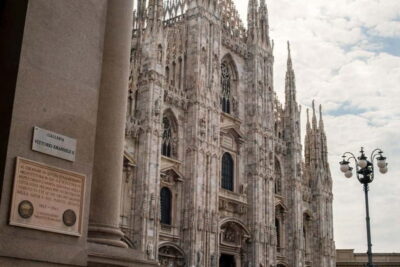
Milan: Best of City Walking Tour with Last Supper Tickets
Read our review →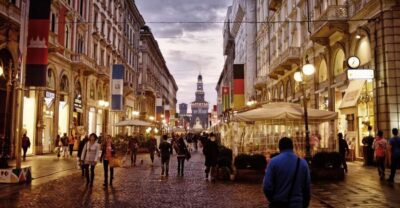

Milan: Private Custom Walking Tour With A Local Guide
Read our review →Lists this walk sits on