Review · NEW YORK CITY
NYC: History of Slavery & Underground Railroad Walking Tour
New York’s financial district was also a place of enslavement, resistance, escape, and Black achievement. This 150-minute walking tour brings those stories into the open, linking familiar sights such as Wall Street and Trinity Church with the people whose lives helped shape the city.
I like the visit to the African Burial Ground National Memorial, which gives the tour a quiet and respectful center. I also like the way the route connects slavery to the Underground Railroad, abolition, and real New Yorkers who risked money, property, and safety to help people escape. The main drawback is that the subject is painful, and the tour asks for serious attention rather than light sightseeing.
Key points to know before you go
- The African Burial Ground begins the story: You start at an archaeological site and memorial honoring enslaved Africans in colonial America.
- Wall Street gets a different context: Famous financial sights are tied to New York’s early economy, slavery, resistance, and Black life.
- Underground Railroad stories are part of the route: You visit former locations linked with escape networks and safe houses.
- Guides make or break a history walk: Guides named Maia, Maya, Shawn, Sean, Ludie, and Damaras have led this experience.
- The walk is manageable but not effortless: It lasts two and a half hours, so wear comfortable shoes and dress for the weather.
- The price is fair for a focused history tour: At $49, you are paying for a live guide and a carefully connected route, not transportation or admission to a large attraction.
Seeing Lower Manhattan through Black history
Most first-time walks through Lower Manhattan focus on colonial buildings, the Stock Exchange, famous churches, and the beginnings of American government. This tour asks you to look again. The same streets also hold the record of forced labor, African resistance, family separation, abolition, and escape.
That change in focus is the tour’s main strength. You are not simply collecting landmarks. You are learning how African Americans shaped the foundations of New York and how slavery affected a city often presented through commerce and architecture alone.
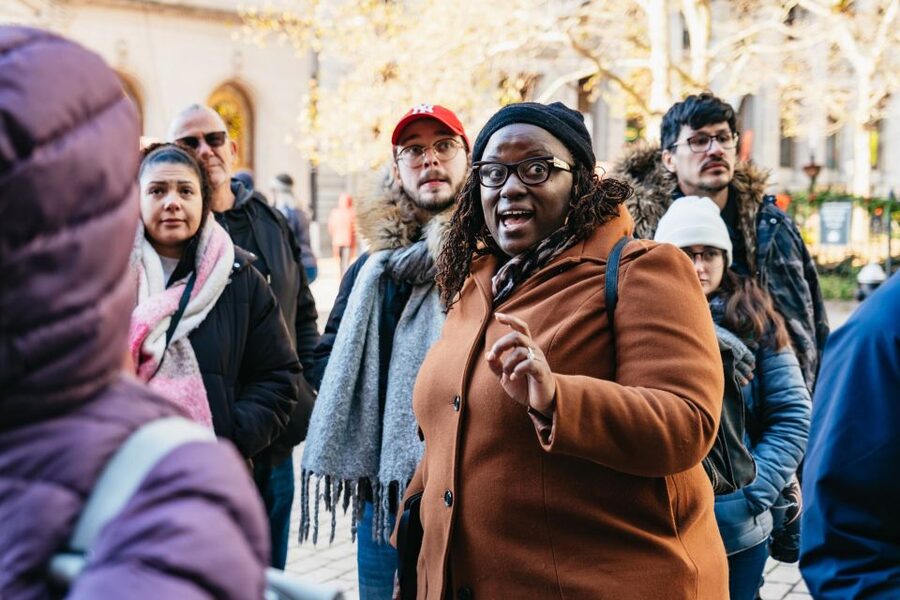
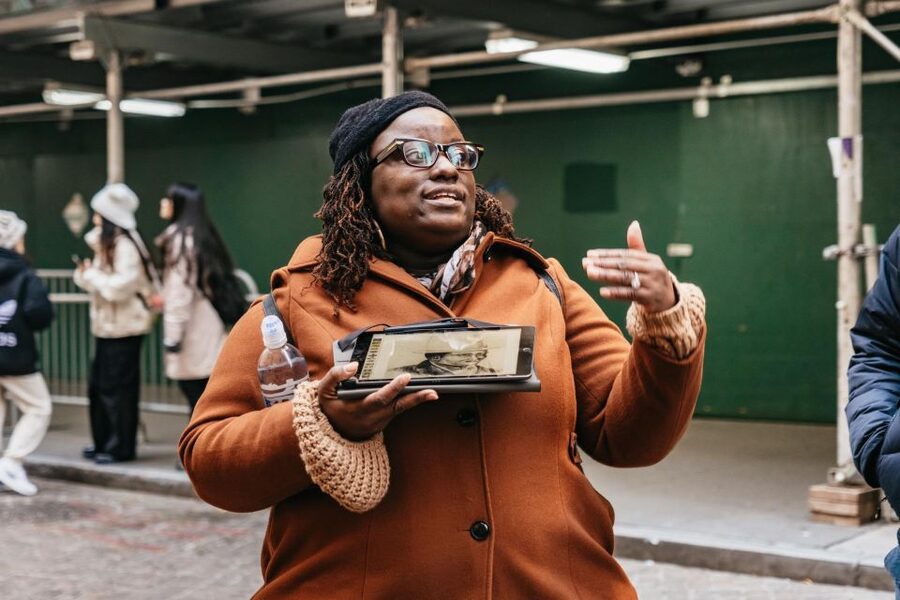
The guide explains the stories on site, so the setting matters. A church, tavern, street corner, or burial ground becomes a prompt for discussion. You get a stronger sense of how close these events were to the places people still visit today.
The tone is serious but not cold. The best guides add questions, explain difficult subjects with care, and leave room for conversation. Past guides have included Maia, Maya, Shawn, Sean, Ludie, and Damaras. The names are worth noting because the guide’s delivery matters greatly on a subject involving violence, racism, courage, and loss.
More History Walking Tours in the USA
- History and Hauntings of Salem Guided Walking Tour
★ 5.0 · 14,564 reviews - Boston: Freedom Trail History Small Group Walking Tour
★ 5.0 · 6,450 reviews - Historic Charleston Guided Sightseeing Walking Tour
★ 5.0 · 6,216 reviews
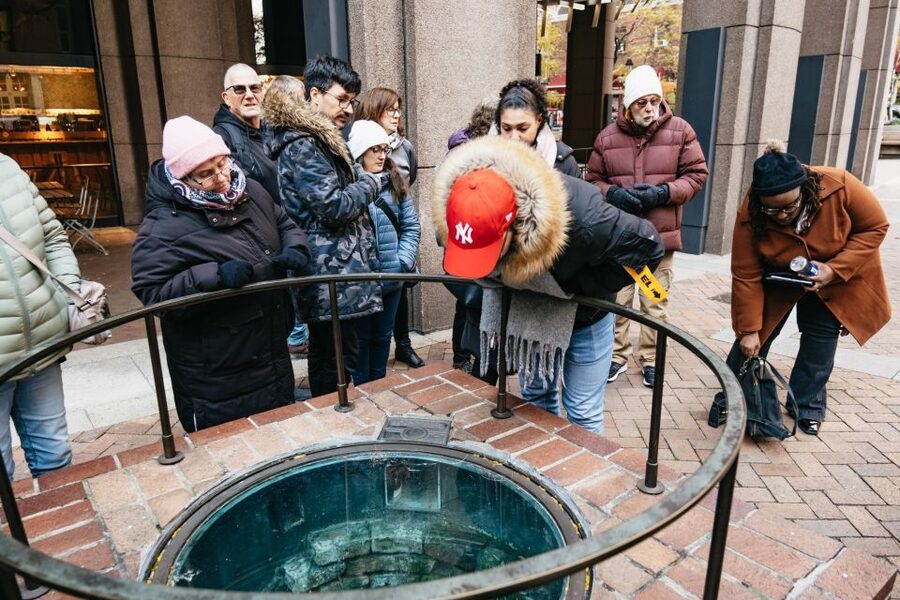
Starting at the African Burial Ground National Memorial
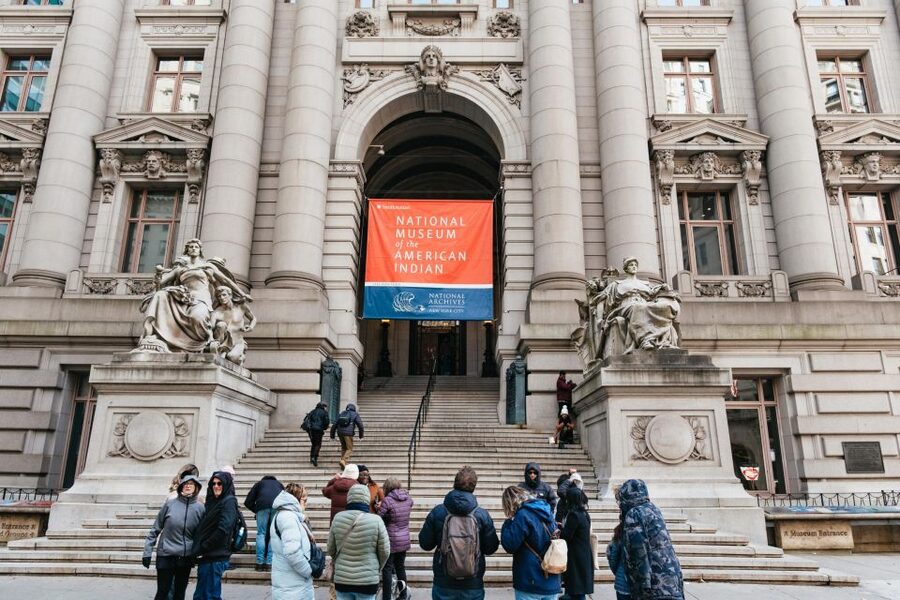
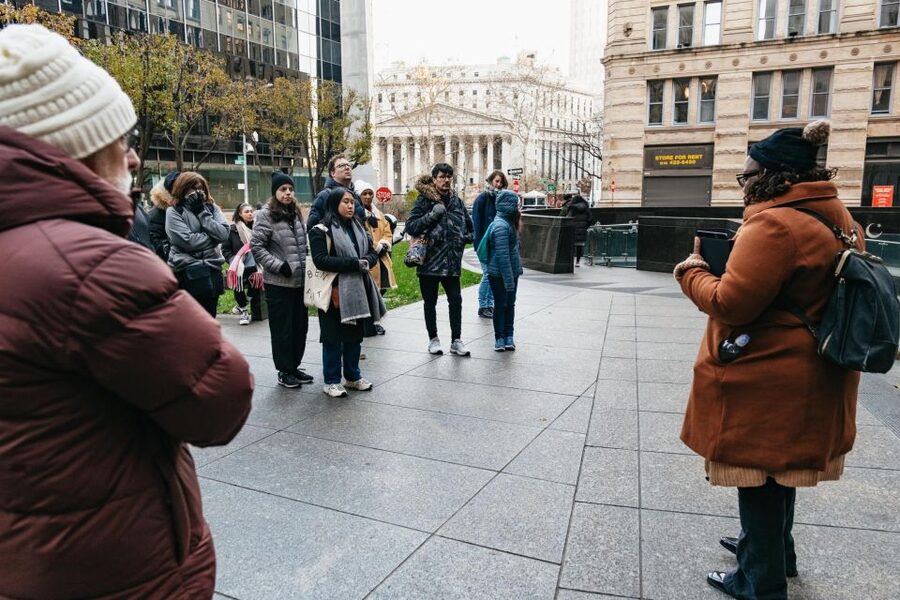
The meeting point is in front of the American Indian Museum. From there, the tour begins at an archaeological site and memorial dedicated to enslaved Africans in colonial America.
The African Burial Ground National Memorial is not a quick photo stop. It gives you a place to pause and consider the people who lived, worked, suffered, and died in early New York. The memorial honors those buried there and helps restore people to a story that was long overlooked.
This opening also sets the right mood. Instead of treating slavery as a distant national issue, the tour places it directly in New York City. That is important if you grew up nearby or have already visited Lower Manhattan many times. Familiar streets can look very different once you understand whose labor and lives helped build them.
Allow yourself time to listen closely here. The memorial is the emotional anchor of the walk, and the rest of the route gains meaning from this beginning.
Fraunces Tavern and the city’s early foundations
Fraunces Tavern is one of the well-known historic sights on the route. It is often associated with the colonial period and the American Revolution, but this tour uses the location to widen the story.
You learn about the role of African Americans in early New York and the ways slavery was connected to the city’s growth. The important point is not simply that enslaved people were present. It is that their labor, resistance, family lives, and community life were part of the city from its earliest years.
A stop like this is useful because it corrects the narrow way historic buildings can be presented. You are not asked to discard the familiar story of New York. Instead, you add the people and power structures that are often left out.
The guide’s storytelling is especially useful between stops. The walk is not just a series of unrelated facts. Guides have used the time on the way to explain other parts of New York’s history, answer questions, and connect one location to the next.
Trinity Church, Wall Street, and overlooked connections
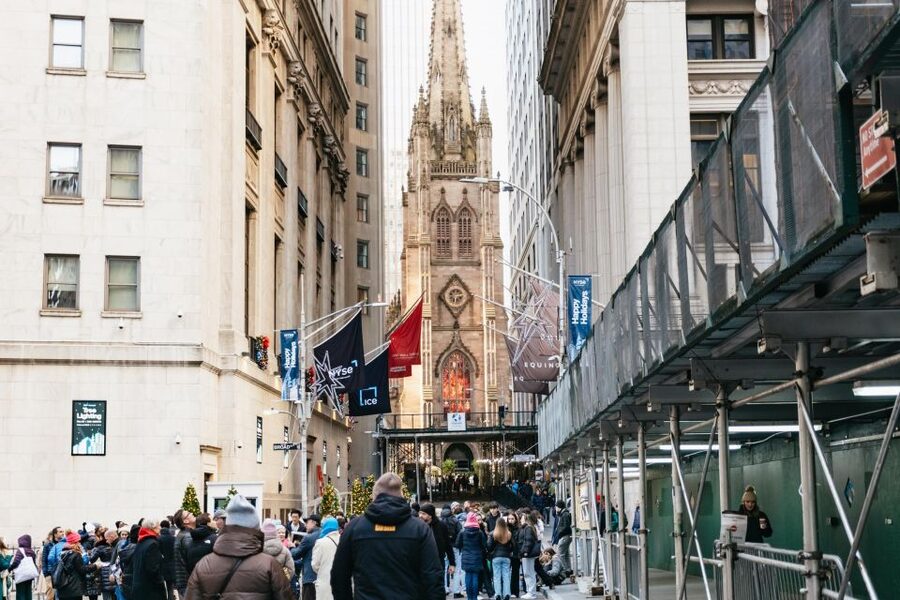
Trinity Church and Wall Street give the tour a powerful contrast. These are among the most recognized places in Lower Manhattan, yet they can be easy to see only as architecture or symbols of wealth.
Here, you consider what stood behind New York’s early development. The tour examines slavery, trade, resistance, and the lives of African Americans in the city. The exact details depend on the guide and the day’s conversation, but the purpose is clear: to place Black history inside the story of New York, not in a separate chapter.
This is where local residents may gain as much as first-time visitors. Several people who grew up in New York have found that the tour revealed facts they had never learned in school or noticed on ordinary walks. That makes the experience a good choice if you want more than the standard downtown route.
Do not expect every stop to have a large sign or a dramatic physical remnant. Much of the value comes from the explanation. The places are often familiar, while the history attached to them is not.
More History Walking Tours in New York City:
- Lisbon: History, Stories and Lifestyle Walking Tour
★ 4.8 · 10,902 reviews - Barcelona: Tapas Walking Tour with Food, Wine, and History
★ 4.8 · 4,261 reviews - Savannah History and Haunts Candlelit Ghost Walking Tour
★ 5.0 · 3,235 reviews - Historic Savannah Guided Walking Tour
★ 5.0 · 2,918 reviews
Former Underground Railroad locations and the mechanics of escape

The tour continues to places connected with the Underground Railroad. You learn how the network operated through secret routes, safe houses, and people willing to take serious risks.
It is useful to remember that the Underground Railroad was not a literal railway. The guide explains it as a hidden network that helped enslaved African Americans move toward free states and Canada. Escape depended on secrecy, timing, trust, and practical help from many people.
The stories include revolts, kidnappings, and dramatic escapes. You also hear about New Yorkers who offered assistance despite the danger to their own property and safety. These accounts give the subject a human scale. Instead of hearing only about laws and dates, you encounter decisions made under pressure.
This section may be the most gripping part of the walk, but it also needs careful treatment. Escapes were not simple adventures. People faced capture, violence, family separation, and the constant risk that a trusted contact might be exposed. A good guide keeps both the courage and the danger in view.
The route is also a reminder that freedom did not arrive in one clean moment. The tour connects the Underground Railroad with the wider fight for abolition and the continuing effects of slavery. That connection helps you understand why this history still matters in New York today.
A serious subject handled with care
This is not a casual sightseeing outing. The tour deals with slavery, exploitation, racism, kidnapping, resistance, and the long impact of those systems. You should come ready to listen and think.
The strongest part of the experience is the guide’s ability to explain difficult material without turning it into a dry lecture. Guides have been praised for answering awkward questions, encouraging thought, and treating the subject with empathy. That balance matters. You want clear facts, but you also need a guide who understands the human weight of the subject.
The tour can also challenge comfortable assumptions. That is part of its purpose. If you want a polished version of American history that avoids responsibility and conflict, this is not the right walk. If you want a fuller account of how New York developed, it offers useful perspective.
Group size may vary. Some tours have been intimate, including a walk with only three people, while other departures may include a broader mix of people from New York, Boston, France, Germany, Ireland, and the United Kingdom. A smaller group can make it easier to ask questions, but you should not book with the expectation of a private tour.
How much walking is involved?
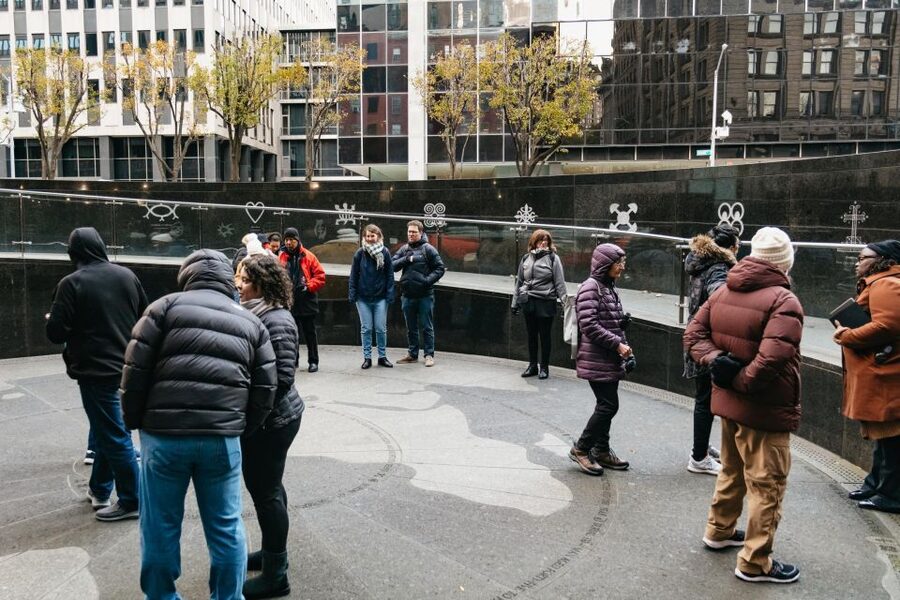
The tour lasts 150 minutes and takes place on foot through Lower Manhattan. One person described the amount of walking as manageable, but you should still wear comfortable shoes because you will be standing and moving between several sites for more than two hours.
The route includes historic streets, outdoor stops, and memorial spaces. The tour is not presented as a strenuous hike, but the exact pace and time spent at each stop can vary with the guide and group.
Weather matters. Bring clothing suited to the forecast, since the experience is outdoors for much of its duration. Rain does not necessarily ruin the tour, but wet conditions can make a long walk less comfortable. Comfortable shoes are the one item you should not overlook.
Because the walk is in Lower Manhattan, plan your day around it rather than squeezing it between two tightly timed attractions. You will get more from the experience if you are not watching the clock.
Is $49 a good value?
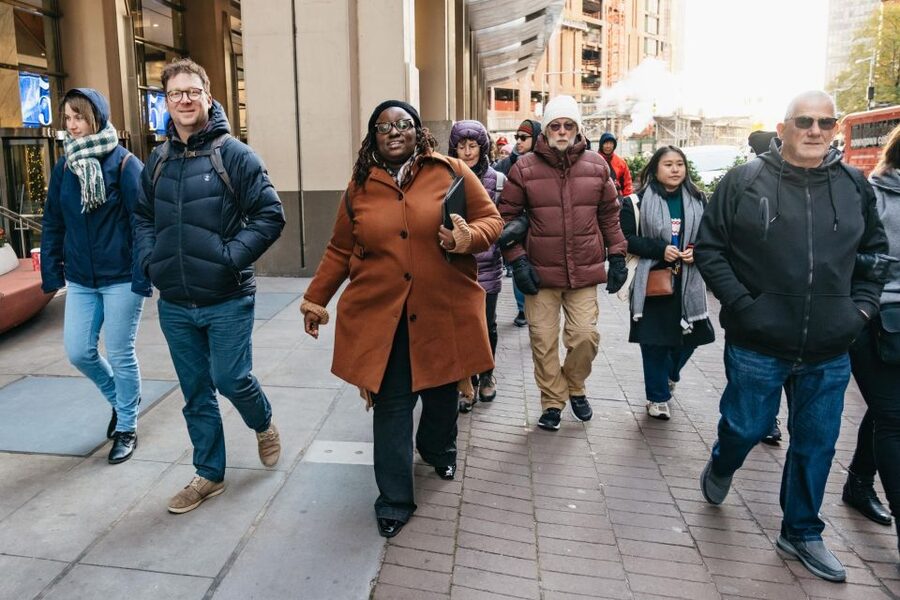
At $49 per person, this is a reasonable price for a focused, live history tour in Manhattan. You receive a 150-minute walking experience led by a licensed New York guide. You are paying for interpretation, local context, and access to a carefully connected story rather than for transport or a ticketed attraction.
The value is strongest if you would otherwise walk around Wall Street, Trinity Church, and Fraunces Tavern without understanding their connection to African American history. A guide can save you hours of piecing that story together on your own.
The price may feel less attractive if you prefer to explore at your own pace, rarely join group tours, or want a broad sightseeing overview. This is a specific subject, not a general introduction to every period of New York history.
Hotel pickup and drop-off are not included, so you make your own way to the meeting point. English is the tour language. You can cancel up to 24 hours before the start for a full refund, and the reserve-now, pay-later option can help if your plans are still shifting.
Who should book this walking tour?
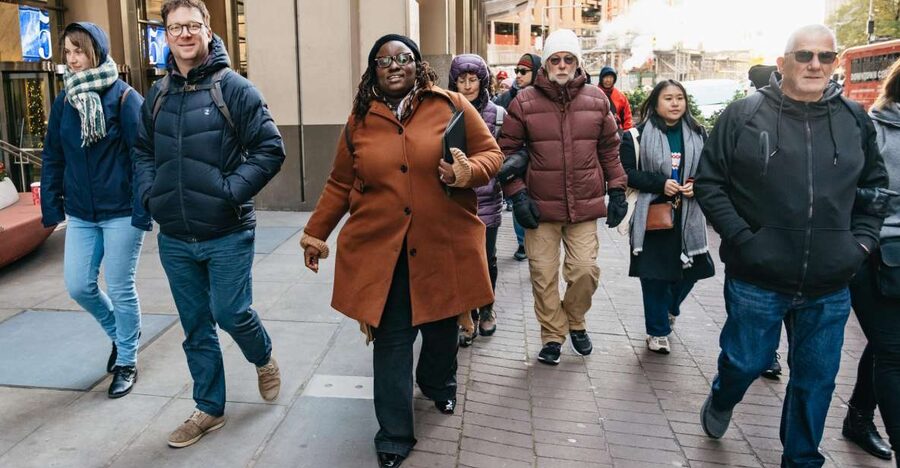
I would recommend it to first-time visitors who want to understand more than New York’s famous buildings. It also suits lifelong New Yorkers, students, teachers, and anyone interested in slavery, abolition, African American history, or the Underground Railroad.
The tour is especially useful for people who learn best through place. You hear the story, then look at the street, building, or memorial connected with it. That link between information and location makes the past easier to remember.
Families with older children may find it worthwhile, but the subject is serious. The provided information does not give a recommended minimum age, so parents should decide based on a child’s readiness for discussions of slavery, violence, and escape.
You should also book it if you value conversation. The guides have answered difficult questions, encouraged thoughtful discussion, and adjusted their explanations to the group. That makes the experience more personal than simply reading plaques or following a self-guided map.
Practical tips for getting the most from the route
- Arrive ready to meet in front of the American Indian Museum.
- Wear shoes you can comfortably use for a 150-minute city walk.
- Check the weather and dress for outdoor time.
- Keep the afternoon or morning fairly open so you are not rushed.
- Listen for the links between each stop rather than treating the sites as separate attractions.
- Ask questions. The guides are expected to explain, respond, and place the history in a wider New York setting.
- Give the African Burial Ground National Memorial your full attention. It is more than a quick stop on the way to Wall Street.
Should you book the NYC History of Slavery and Underground Railroad Walking Tour?
Book it if you want a serious, place-based look at New York’s African American past. The combination of the African Burial Ground National Memorial, Underground Railroad locations, Fraunces Tavern, Trinity Church, and Wall Street creates a strong two-and-a-half-hour introduction.
I would not choose it for a relaxed architecture stroll or a general city overview. The subject is difficult, the walk needs your attention, and the experience depends heavily on the guide. But at $49, it offers good value for anyone ready to see Lower Manhattan through a fuller and more honest account of its past.
FAQ
Where does the tour meet?
The meeting point is in front of the American Indian Museum.
How long does the walking tour last?
The tour lasts 150 minutes, or two and a half hours.
What language is the tour offered in?
The live tour is offered in English.
What places are included on the route?
The tour includes the African Burial Ground National Memorial, former Underground Railroad locations, Fraunces Tavern, Trinity Church, Wall Street, and other significant sites in Lower Manhattan.
Is transportation included?
No. Hotel pickup and drop-off are not included. This is a walking tour.
What should I bring?
Bring comfortable shoes and clothing suited to the weather. The tour takes place on foot and includes outdoor stops.
New walking tours around New York City
- NYC: Walking Tour with Local Guide and 30+ Top NYC Sights★ 4.5 · 248 reviews
- New York City’s Hell’s Kitchen: Walking Food Tour★ 4.8 · 200 reviews
- New York City: Central Park Walking Tour★ 4.7 · 82 reviews
- NYC: Brooklyn Bridge and DUMBO Guided Walking Tour★ 4.8 · 93 reviews
- NYC: High Line, Chelsea, & Meatpacking District Walking Tour★ 4.9 · 195 reviews
- NYC: Ground Zero Walking Tour and 9/11 Museum Ticket★ 4.9 · 260 reviews
- New York City: Greenwich Village Guided Walking Tour★ 4.8 · 300 reviews
- NYC: Fifth Ave Gilded Age Mansions Guided Walking Tour★ 4.8 · 240 reviews
New York City Walking Tours, side by side.

SoHo, Little Italy, and Chinatown Walking Tour in New York
Read our review →
Secrets of Grand Central Station Walking Tour New York City
Read our review →
Greenwich Village Walking and Food Tasting Tour
Read our review →
Artistic, Alternative Greenwich Village Walking Tour
Read our review →
New York City: Private Walking Tour with a Local
Read our review →
NYC Professional Photoshoot and Walking Tour with Private Guide
Read our review →
Manhattan Neighborhood Private Customized Walking Tour
Read our review →