
Review · FLORENCE
Florence: LGBTQ Renaissance Walking Tour with Mila
Florence’s grand Renaissance sights take on a different meaning when you follow the city’s LGBTQ history. With local guide Mila, you’ll move from Piazza della Repubblica across the Arno and into the old gay district, connecting famous monuments with stories of desire, law, punishment, power, and survival. I especially like the route’s use of familiar places, including the Ponte Vecchio and Piazza della Signoria, and Mila’s habit of explaining the sources behind her stories. The main drawback is that the subject is weighted toward the experiences of gay men, partly because historical records focused more on men than women.
I also like the practical two-hour length. You get a focused history walk without giving up an entire day of museum time, and the route includes major sights you may already want to see. Still, this is a walking tour in central Florence, so expect outdoor stops, changing pavement, heat in summer, and rain if the forecast turns sour.
Key points to know before you book
- Mila connects famous sights to queer history: The Ponte Vecchio, Cellini’s Perseus, and the Medici family all become part of the story.
- The route crosses the Arno: You’ll walk from Piazza della Repubblica toward Santa Trinita Bridge, Pitti Palace Square, the Ponte Vecchio, and the old gay district.
- The subject includes difficult laws: Mila explains historic fines and punishments for people accused of sodomy, along with later changes in Italian law and society.
- The tour adds context to standard sightseeing: You still see some of central Florence’s major landmarks, but through a perspective often missed on general city walks.
- It costs $29 per person: For two hours with a live English-speaking guide and headset, that is a reasonable price if the subject interests you.
- It works well for curious newcomers and repeat visitors: You’ll get both queer history and useful background on Florence, the Renaissance, and the Medici family.
Why this Florence LGBTQ walking tour feels different
Many Florence walks move quickly from one masterpiece to the next. This one asks you to look again at places you might otherwise treat as photo stops. A bridge, square, church, or statue becomes evidence of how people lived, met, feared the law, and found room for themselves in a tightly controlled society.
That change in viewpoint is the tour’s real value. You are not simply being shown a separate LGBTQ attraction, because Florence has no single building that tells this whole story. Instead, Mila places queer history inside the city’s political, religious, artistic, and social setting.
I like this approach because it avoids making LGBTQ history feel detached from Florence itself. The Medici, Renaissance art, public squares, and church institutions all mattered. The result is a city walk with a clear focus, but enough general background to help you understand the places around you.
Mila is central to the experience. Her style, based on the comments of people who have taken the walk, combines serious discussion with warmth and humor. That balance matters here. The tour deals with criminal charges, public shame, and harsh punishment, but it does not treat the past as a dry list of laws.
More LGBTQ-friendly walks around Florence:
- Berlin: Gay Berlin Out in Schöneberg Walking Tour
★ 4.8 · 281 reviews - San Francisco: Castro LGBTQ Walking Tour
★ 5.0 · 90 reviews
Starting in Piazza della Repubblica
Meet Mila in Piazza della Repubblica, next to the Hard Rock Café under the loggia. She carries a sign, which helps in a busy central square where several groups may be gathering for different tours.
The piazza is a good starting point because it is a major public space with layers of Florence’s past visible around you. Here, Mila introduces the legal treatment of people accused of sodomy and explains the fines and punishments used in different periods.
This opening gives you an important warning about the tour: the word queer cannot be applied to the past without care. People in medieval and Renaissance Florence did not necessarily use modern identities or labels. Mila’s job is to explain the behavior, laws, records, and social conditions that can be connected to present-day LGBTQ history without pretending that the past worked exactly like the present.
You’ll also hear how the law changed as Italy’s political and social climate shifted. That broad timeline keeps the tour from becoming a collection of isolated scandals. The point is not simply that queer people existed in Florence. The point is to understand how authorities, religious institutions, families, and public opinion responded to them.
Crossing Santa Trinita Bridge toward Pitti Palace Square
From Piazza della Repubblica, the route heads across the Arno by Santa Trinita Bridge. The bridge provides one of the tour’s clearest changes of scene. Florence’s historic center can feel compact, but crossing the river makes you notice the relationship between the civic core and the Oltrarno side of the city.
The walk continues to Pitti Palace Square. Here, the Medici family becomes a major part of the discussion, especially Gian Gastone, the last male member of the Medici line.
This is a useful stop even if you already know the Medici as patrons of Michelangelo, Botticelli, and other Renaissance artists. The family story was not only about banking, collecting art, and political control. It also involved private behavior, dynastic pressure, marriage, reputation, and the expectations placed on powerful men.
Mila’s treatment of Gian Gastone gives the tour a human focus. You hear why he became one of Europe’s most controversial figures, rather than receiving only a name and a date. The stop also shows how the lives of wealthy and politically important people could be judged differently from the lives of ordinary Florentines.
That contrast is worth keeping in mind throughout the walk. Laws might be written broadly, but enforcement depended on status, connections, visibility, and the interests of powerful families. The Medici setting helps you see how personal life and public power could overlap.
The Ponte Vecchio and medieval cruising
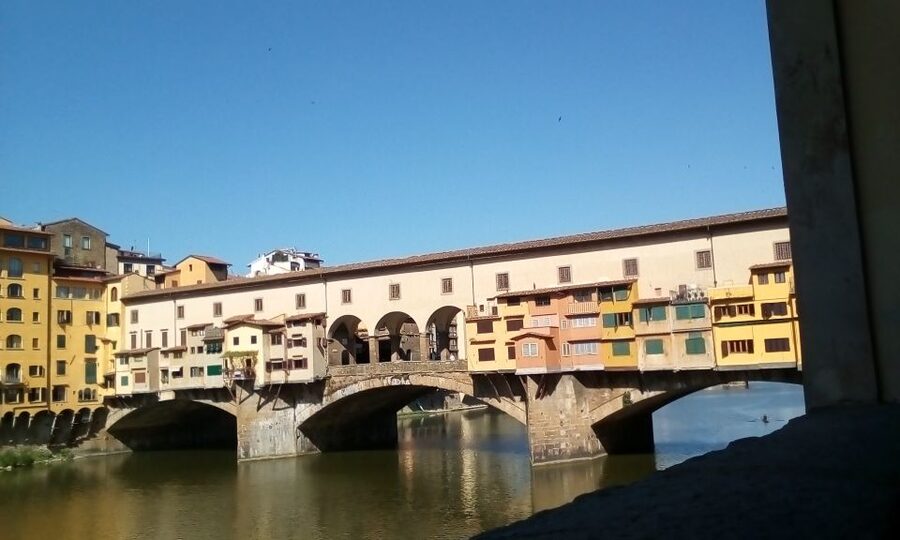
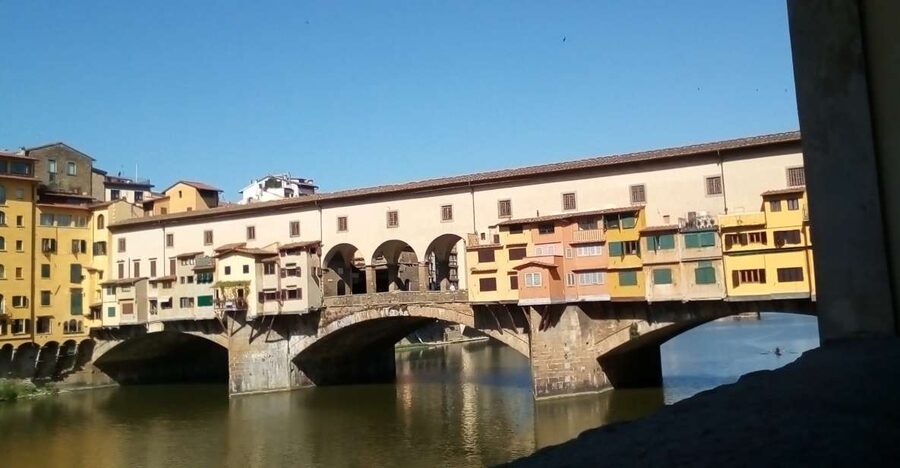
The walk then reaches the Ponte Vecchio, Florence’s best-known bridge. Its shops, views, and crowds make it easy to think of the bridge as a postcard subject. This tour adds another layer by explaining its connection with queer life and cruising during the medieval and Renaissance periods.
The idea that a famous landmark could also function as a place for meeting and sexual contact gives the bridge a more complicated past. Public spaces were not used only for commerce or ceremony. They were also places where people watched one another, sought privacy in plain sight, and took risks.
Mila’s explanation is especially useful here because the modern meaning of cruising can make it easy to project today’s expectations onto earlier centuries. The historical setting was shaped by surveillance, religious rules, family honor, and the threat of punishment. A place that offered opportunity could also bring real danger.
The Ponte Vecchio is one of the tour’s strongest stops for practical reasons, too. You are seeing a landmark most first-time visitors already want to visit, so the tour does not ask you to choose between queer history and Florence’s essential sights. You get both, with a new reason to pay attention to the bridge.
The route is still a walking route, not a sightseeing bus. On the Ponte Vecchio and nearby streets, you may need to stay aware of other pedestrians. The supplied headset helps you hear Mila while she speaks, which is useful in central Florence.
More walking tours around Florence:
- Florence: Highlights Walking Tour with Expert Guide
★ 4.6 · 4,662 reviews - Uffizi & Accademia Timed Entry: Small Group Duomo Walking Tour
★ 4.5 · 3,630 reviews - Florence: Duomo Complex with Tickets & City Walk Guided Tour
★ 4.7 · 2,057 reviews - Florence: Guided Walking Tour
★ 4.6 · 1,602 reviews
Piazza della Signoria and Cellini’s Perseus
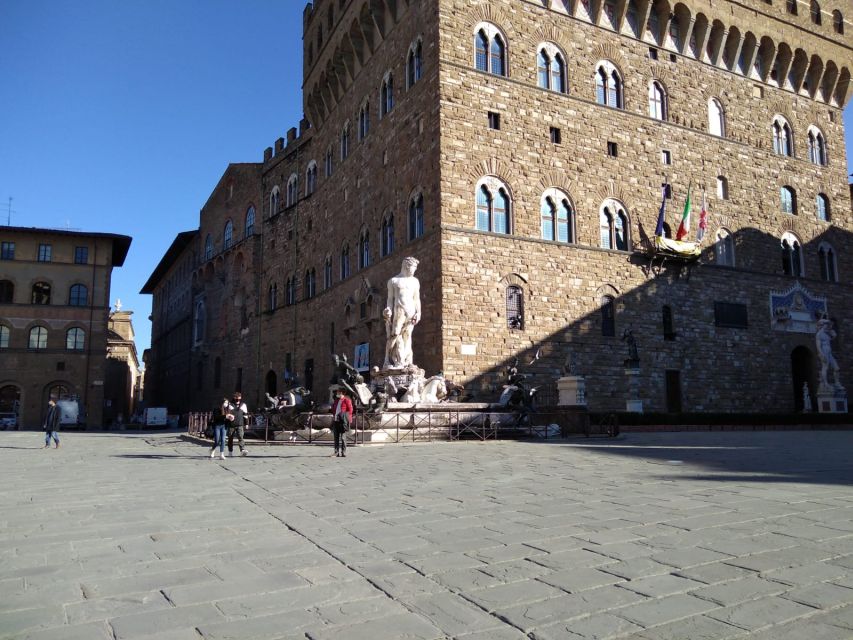
Near Piazza della Signoria, the tour reaches the ancient gay district. This part of the walk brings together public art, political power, and the older social geography of Florence.
You’ll see a copy of Michelangelo’s David and Perseus with the Head of Medusa by Benvenuto Cellini. Perseus is especially relevant because the sculpture was created by Cellini, a famous Florentine artist whose life and reputation make him an important figure in discussions of sexuality, violence, artistic freedom, and Renaissance culture.
The square itself is one of Florence’s great outdoor galleries. Even if you have visited before, it can be hard to absorb every statue and story in one pass. Mila’s approach gives you a reason to stop and listen rather than simply photograph the sculptures.
The ancient gay district is not presented as a theme park or preserved neighborhood with obvious signs. Its importance comes from the historical accounts and the way Mila connects locations to the lives and behavior recorded in the past. That means you should expect interpretation rather than a row of LGBTQ museums, plaques, or dedicated buildings.
This is also where the tour’s focus on gay men becomes most apparent. Historical records from patriarchal societies tend to preserve men’s public lives more often than women’s private experiences. The walk does include some discussion of lesbians and women, but if you want a tour centered equally on every part of the LGBTQ spectrum, keep that limitation in mind.
Orsanmichele Church and public denunciation
The route continues to Orsanmichele Church, where Mila explains the special boxes used by the Church to denounce members of the LGBTQ community, particularly gay men.
This stop shows how religious institutions could shape public behavior beyond worship. Accusations could affect a person’s reputation, family, employment, and place in society. The practice of denunciation also reveals how fear can become part of daily life when private conduct is treated as a public offense.
I appreciate that this subject is handled with both seriousness and care. Several people who took the tour describe Mila as warm, funny, and attentive, including when discussing painful or uncomfortable parts of the past. That balance is not just a matter of presentation. It helps you keep listening when the material becomes grim.
The church stop also encourages you to look closely at Florence’s institutions. A church, bridge, palace, or square may look permanent, but the way people used it changed over time. The tour repeatedly asks you to see the city as a place of rules and choices, not only as a collection of beautiful old stones.
What Mila adds to the experience
Mila’s greatest strength is the way she combines storytelling with explanation. You are not simply given a string of anecdotes. She provides context about Florence, the Renaissance, powerful families, social expectations, and changing laws.
She also identifies the sources behind her narratives. That is a valuable habit on a history tour, especially when the topic includes private lives, rumor, and behavior that may have been recorded by hostile authorities. You can better judge what is documented, what is interpretation, and what has survived through imperfect historical records.
Her personality matters, too. The tour calls for a guide who can be direct about discrimination without turning every stop into a lecture. Mila’s style is described as charming, funny, patient, and passionate. She also takes care with people in hot weather and has helped visitors who have limited movement.
Do not expect a silent academic seminar. The tour is designed to be engaging and conversational, with time for questions. If you have a particular interest in Renaissance figures, queer law, women’s experiences, or modern LGBTQ connections, ask Mila. People who had many questions found her willing to respond.
Price, length, and physical demands
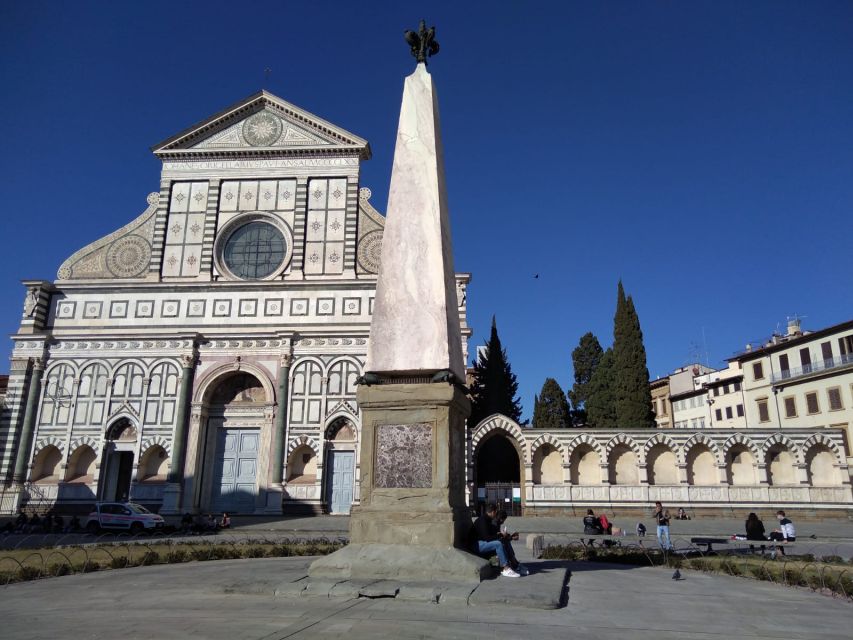
At $29 per person, this is fairly priced for a two-hour guided walk with a live English-speaking guide and headset. Florence has many expensive museum visits, so a focused outdoor tour can be a good way to add historical context without another major admission fee.
Entrance fees are not included, but the listed route is built around public streets, squares, bridges, and outdoor artworks. You should not book this expecting a museum tour or interior access to the palaces and churches mentioned.
Two hours is enough to cover the central route without making the subject feel rushed. It also makes the walk easy to fit before or after a museum visit. I agree with the practical suggestion to take it near the start of your Florence stay. Mila can give you ideas for other places to see, eat, or visit, and the tour may change how you read the city for the rest of your trip.
The walk takes place rain or shine. Wear shoes suitable for city streets, bring water in hot weather, and check the forecast before you set out. The activity is listed as wheelchair accessible, though the route includes bridges, public streets, and historic areas, so anyone with specific mobility needs should confirm details at booking.
Cancellation is free up to 24 hours before the tour, and you can reserve now and pay later. Those terms are useful if your Florence schedule is still shifting.
Who will enjoy this walk most
I would recommend this tour to anyone interested in LGBTQ history, social history, or a less predictable way to see Florence. It suits couples, solo visitors, friends, and mixed groups. You do not need to identify as LGBTQ to appreciate it. Curiosity and respect are the main requirements.
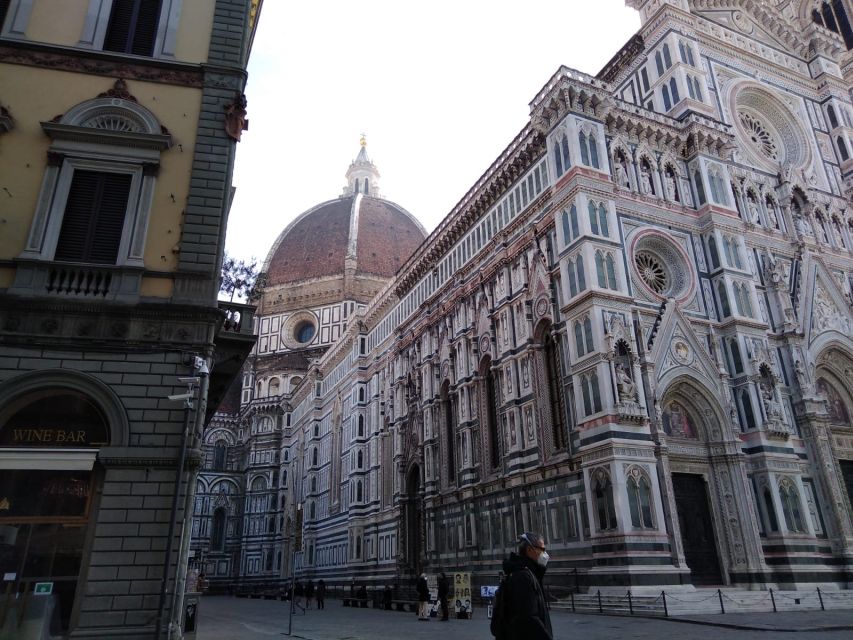
It is also a good choice for repeat visitors who have already seen the Duomo, Ponte Vecchio, and Piazza della Signoria. The landmarks remain familiar, but Mila gives you reasons to stop at them again.
The tour can work for teenagers as well. One parent specifically found the content appropriate for a 15-year-old, though the discussion includes punishment, sexuality, and discrimination. Families should decide based on the young person’s maturity and interest.
You may want something else if you prefer art-history tours focused on painting technique, architecture, or museum interiors. This walk includes art and major sights, but its purpose is social history. It also concentrates most heavily on men because that is where the surviving historical record is strongest.
Should you book Mila’s LGBTQ Renaissance walking tour?
Book it if you want Florence to feel less polished and more human. The walk shows how queer life was shaped by law, religion, class, family power, public space, and personal risk. It also lets you see major landmarks without repeating the usual Renaissance script.
I especially recommend taking it early in your visit, when Mila’s suggestions and fresh perspective can guide the rest of your time in the city. At $29, the two-hour format offers good value for a focused English-language history walk.
Skip it only if your schedule allows no outdoor walking, you want equal attention across every part of LGBTQ history, or your main goal is interior access to museums and churches. For most curious visitors, Mila offers a thoughtful and memorable way to understand Florence beyond its famous paintings and palaces.
FAQ
How long is the LGBTQ Renaissance walking tour?
The tour lasts two hours.
How much does the tour cost?
The price is $29 per person.
Who leads the tour?
The tour is led by Mila, a local English-speaking guide.
Where does the tour meet?
Meet Mila in Piazza della Repubblica, next to the Hard Rock Café under the loggia. She will have a sign.
Which places does the tour visit?
The route includes Piazza della Repubblica, Santa Trinita Bridge, Pitti Palace Square, the Ponte Vecchio, the ancient gay district near Piazza della Signoria, Orsanmichele Church, and outdoor artworks including Cellini’s Perseus with the Head of Medusa.
Is the walking tour wheelchair accessible?
The activity is listed as wheelchair accessible.
What happens if it rains?
The tour operates rain or shine. Free cancellation is available up to 24 hours in advance for a full refund.
New walking tours around Florence
- Florence: Walking Tour with David, Duomo & Uffizi Gallery★ 4.7 · 414 reviews
- Florence Walking Tour & Skip-the-Line David at Accademia★ 4.7 · 159 reviews
- Florence: Tuscan Food and Wine Guided Walking Tour★ 4.8 · 72 reviews
- Florence: The Medici Family Guided Walking Tour★ 4.7 · 129 reviews
- Florence Street Food Walking Tour with Wine in Duomo Area★ 4.9 · 76 reviews
- Florence: Uffizi & Accademia Small Group Walking Tour★ 4.7 · 1,380 reviews
- Florence: Small Group Guided Walking Tour★ 4.7 · 176 reviews
- Florence: Street Food Walking Tour with Wine★ 4.9 · 719 reviews
Florence Walking Tours, side by side.
Florence: Highlights Walking Tour with Expert Guide
Read our review →
Uffizi & Accademia Timed Entry: Small Group Duomo Walking Tour
Read our review →
Florence: Duomo Complex with Tickets & City Walk Guided Tour
Read our review →
Michelangelo’s David, Accademia & Uffizi Small Group Tour
Read our review →
David & Accademia Guided Tour with Time Entry Ticket
Read our review →
Florence: Renaissance and Medici Tales Guided Walking Tour
Read our review →
Florence: Uffizi & Accademia Small Group Walking Tour
Read our review →Lists this walk sits on