
Review · BERLIN
Berlin: Gay Berlin Out in Schöneberg Walking Tour
Berlin’s Schöneberg is more than a nightlife district. It was one of Europe’s great centers of queer life before the Nazis came to power, and this walking tour shows you where that story unfolded. You’ll trace the old clubs around Nollendorfplatz, visit the former site of the Nationalhof, and see where Christopher Isherwood lived.
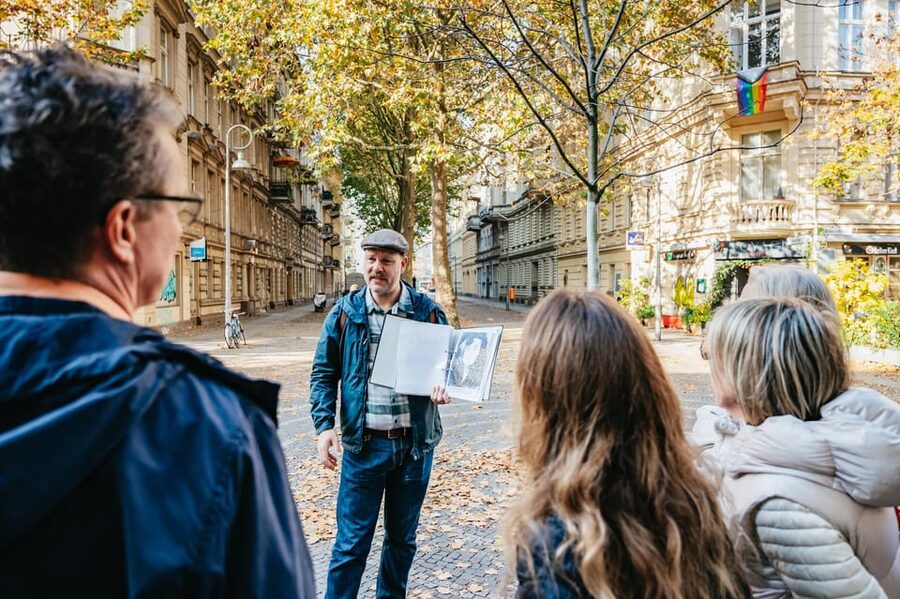
I like the tour’s clear historical arc, from the gay scene of the 1920s through its postwar revival and the renewed life of West Berlin from the late 1960s onward. I also like Tobias’s use of archive pictures and personal stories, which helps you connect names and places to the streets under your feet.
The main consideration is the weather. You are outdoors for 2.5 hours, and the tour continues in cold or wet conditions, although Tobias has adjusted the route and added comfort stops when needed. At $23, it is a strong value for a focused, specialist tour, but it suits curious walkers more than anyone seeking a quick sightseeing stop.
Key points to know before booking
- Nollendorfplatz is the starting point for a major queer history lesson: The surrounding streets were central to Berlin’s gay life before the Nazi era.
- The Nationalhof site connects the walk to early gay rights activism: You learn about the movement of the 1920s, not just the club scene.
- Motzstraße brings the interwar years into focus: The former El Dorado cabaret club once helped define Berlin’s famously open nightlife.
- Christopher Isherwood’s former home adds a literary angle: His writing later became important to the Gay Liberation movement.
- The tour includes lesbian, trans, intersex, and gender nonconforming stories: It is broader than a narrow account of gay male nightlife.
- Tobias is the key part of the experience: He leads in English or German and uses humor, archive material, and personal anecdotes to make the past easier to grasp.
Why Schöneberg matters to Berlin’s queer story
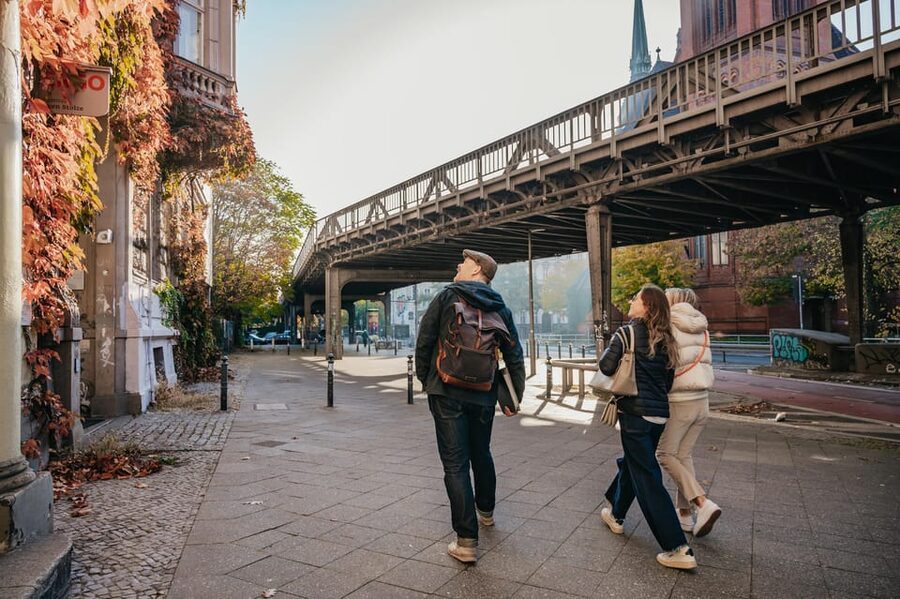
Start around Nollendorfplatz, where ordinary city streets carry an extraordinary past. The area became famous for its clubs, cafés, meeting places, and political activity. Much of what you see today looks like a normal Berlin neighborhood, which is precisely why a guide helps. The important evidence is often found in former addresses and vanished venues rather than grand monuments.
The tour focuses on the period between the end of World War I and the rise of the Nazi Party in the early 1930s. This was the great prewar flowering of Berlin’s gay scene. You learn how social spaces and early rights campaigns supported one another, giving people places to meet while also building a public movement.
I appreciate that the tour does not treat this era as a simple party story. The cabarets and clubs are part of it, but so are the activists, writers, and ordinary people who helped form a community. That balance gives the walk more weight than a list of old nightlife addresses.
The Nazi period is part of the wider historical frame, but the supplied tour details focus especially on the years before the Nazis and on the later return of queer life. If you want a full tour of persecution under the Nazi regime, this may not be the complete answer. If you want to understand how Schöneberg became such a key district, it gives you the essential setting.
More LGBTQ-friendly walks around Berlin:
- San Francisco: Castro LGBTQ Walking Tour
★ 5.0 · 90 reviews - Florence: LGBTQ Renaissance Walking Tour with Mila
★ 4.9 · 85 reviews
Nollendorfplatz and the former gathering places
The walk takes you around Nollendorfplatz and points out former centers of queer social life, including the Hollandais club, the Kleist Casino, and the Nationalhof. These places matter because they show how a neighborhood becomes a community through repeated use. A club is not just a building. It can be a meeting point, a source of news, and a place where people find others like themselves.
The Nationalhof is especially important. It is presented as the heart of the gay rights movement, so this stop shifts the focus from nightlife to organized activism. You get a sense of how Berlin’s queer community pushed for recognition and rights during the 1920s.
The Hollandais club and Kleist Casino help fill out that picture. Their former locations show the scale and range of the old district. Some stops are sites rather than preserved interiors, so do not expect to walk into a restored club or see original rooms. The value is in understanding what once happened at that address.
Tobias’s approach appears well suited to these vanished places. He brings archive images and text, giving you something to compare with the present street. That visual aid is useful because otherwise an empty address can be hard to picture.
Motzstraße and the El Dorado cabaret
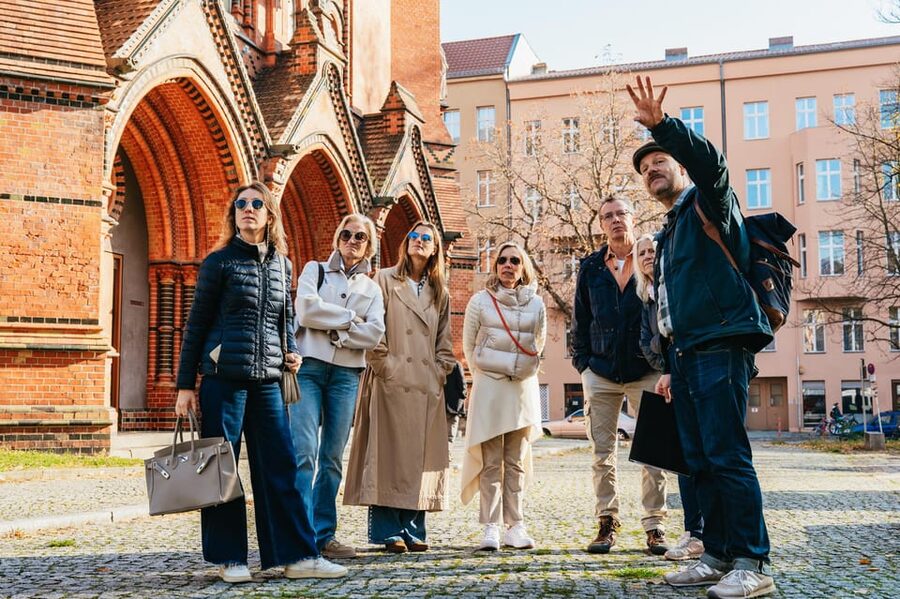
Motzstraße provides one of the most memorable stops. Here you visit the site of El Dorado, the famed cabaret club associated with Berlin’s interwar gay scene. The name carries the glamour and risk of the period, when Berlin was known for nightlife that challenged conventional ideas about gender and sexuality.
This is also where the guide’s storytelling matters most. A former club site can seem unremarkable until you understand who gathered there and why the venue mattered. Tobias’s mix of facts, humor, and stories about people from the period helps put the address back into its social setting.
You should expect history rather than a show. There is no indication that the tour includes a performance, club entry, food, or drinks. The experience is a street-level history walk, with the cabaret site used as a doorway into a larger discussion of interwar Berlin.
I would put this stop near the top of the tour’s appeal for first-time visitors. It gives you one of those useful Berlin contrasts: a present-day street that looks calm and ordinary, paired with a past that was daring, public, and internationally famous.
Christopher Isherwood’s Nollendorfstraße address
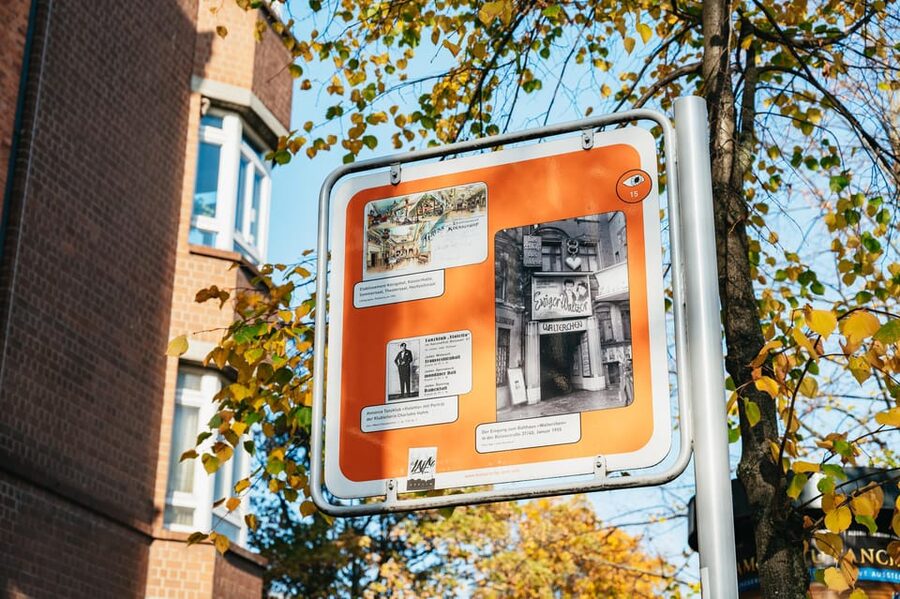
The stop at Christopher Isherwood’s former home on Nollendorfstraße adds a literary thread. Isherwood’s work helped shape the way later generations understood Berlin’s queer life, and his writing became an important part of the Gay Liberation movement.
You do not need to be an Isherwood expert to enjoy this section. The address connects literature to place. Instead of treating books as separate from the city, the tour shows you the streets and buildings that informed the writer’s view of Berlin.
This stop also helps explain why Schöneberg has attracted artists and storytellers. The district was not only a place for nightlife. It was a setting where writers could observe changing social customs and record lives that were often ignored elsewhere.
If you have read Isherwood, you will likely get extra value from this part of the walk. If not, Tobias supplies enough context to make the stop useful without turning the whole tour into a literary lecture.
More walking tours around Berlin:
- Discover Berlin Half-Day Walking Tour
★ 5.0 · 9,624 reviews - Berlin City walk Government District and Places of Democracy
★ 4.7 · 8,467 reviews - Berlin: Third Reich & Cold War Guided Walking Tour
★ 4.9 · 8,378 reviews - Berlin: Discover Berlin Walking Tour
★ 4.9 · 5,998 reviews
From postwar silence to West Berlin’s gay district
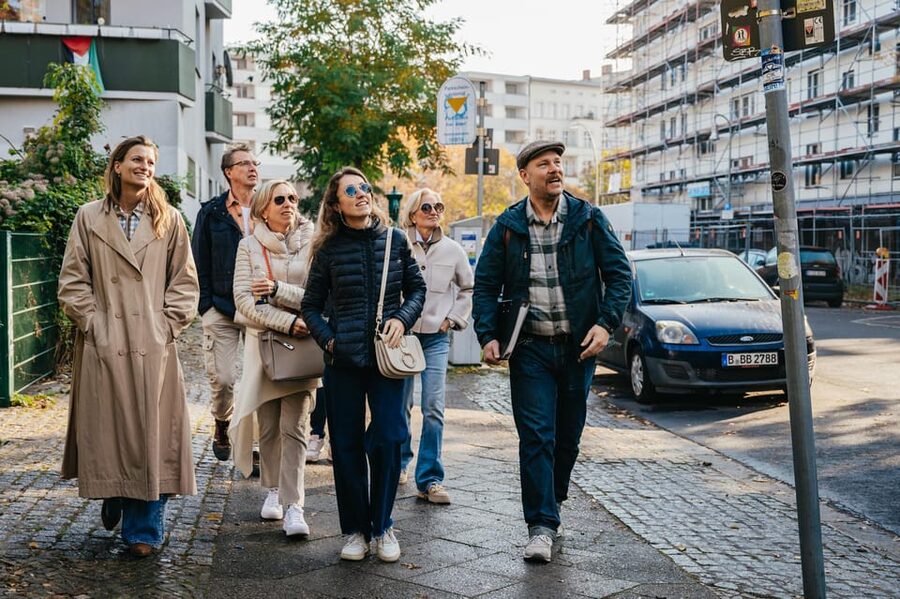
The tour then moves forward to the area’s resurgence from the end of the 1960s. Schöneberg became West Berlin’s only gay district, and the walk explains how queer life returned and developed into the neighborhood you see today.
This change is important because it prevents the tour from ending in the 1920s. Berlin’s queer story was interrupted and damaged, but it did not stop there. By looking at the late 1960s and the decades that followed, you can see the connection between earlier activism, later liberation movements, and present-day community life.
Eisenacher Straße is one of the streets used to show how the district continues to reflect varied queer life. The tour also passes through the lesbian quarter on Schwerin Straße, which broadens the focus beyond the places most often associated with gay men.
That wider scope is one of the tour’s strongest features. You are not given a single, tidy version of queer Berlin. The route includes lesbian history as well as gay history, and the guide also brings in trans, intersex, and gender nonconforming stories. Those subjects are especially valuable because they are often left out of general city tours.
Tobias’s guiding style and the pace of the walk
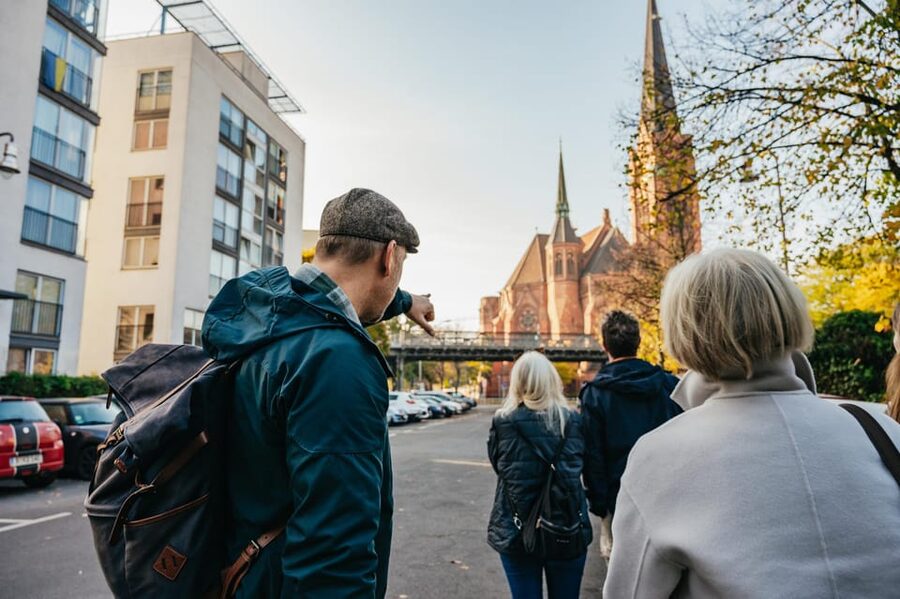
Tobias is the named guide associated with this experience, and his approach is central to its appeal. He leads in English and German, speaks with humor, and brings a personal connection to the subject. His own anecdotes and references to his husband add warmth without replacing the historical material.
The strongest description of his style is prepared but flexible. He has a clear route and a large store of facts, yet he is also willing to answer questions as you walk. That matters on a specialist tour, since people arrive with different levels of interest. You can listen quietly, ask about a particular figure, or connect the material to your own experience.
The pace is designed for a 2.5-hour walk, with time to stop, look at buildings, discuss archive images, and take comfort breaks. It is not a race from one address to the next. In cold weather, Tobias has adapted the route and made efforts to keep people comfortable, including offering tea on one particularly freezing, snowy tour.
Still, plan sensibly. Wear shoes suited to city walking and check the forecast. Even with pauses, this is an outdoor activity, and the tour is long enough for cold, rain, or heat to affect your enjoyment.
What $23 buys you
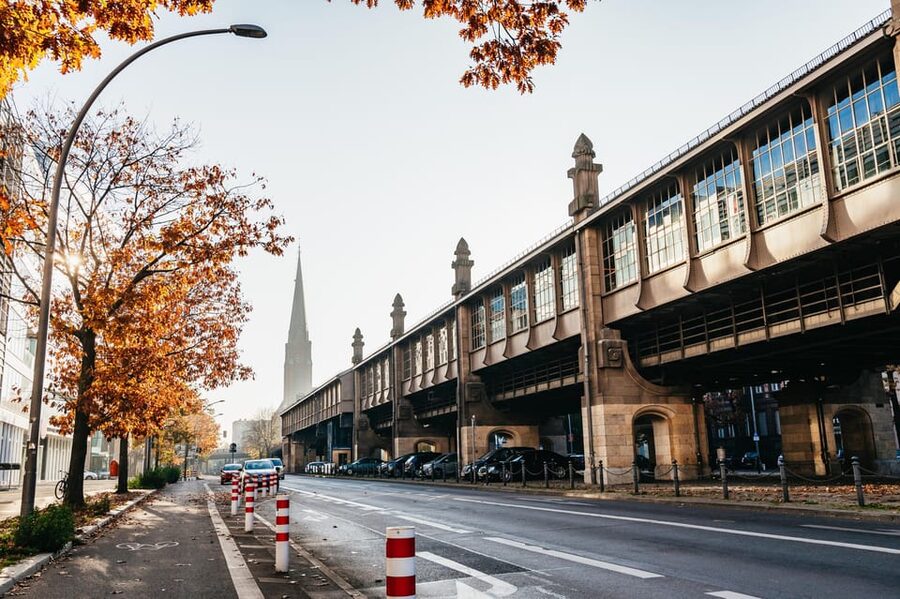
At $23 per person, the tour offers good value if queer history is one of your reasons for visiting Berlin. You get 2.5 hours with a specialist guide, a planned route through several historically important streets, and visual material that would be difficult to assemble on your own.
The value is not in the number of attractions entered. Food, drinks, and admission to interior venues are not included, and several stops are former sites rather than preserved buildings. You are paying for interpretation, local research, and the links between places.
That is a fair trade for this subject. You could walk around Nollendorfplatz, Motzstraße, Nollendorfstraße, Schwerin Straße, and Eisenacher Straße by yourself, but you would miss much of the meaning. Plaques and modern storefronts rarely explain which vanished club stood where or why a particular address mattered to the rights movement.
I would not choose this tour only because it is cheap. I would choose it because it gives you a concentrated way to understand one neighborhood. For a couple or solo visitor interested in Berlin’s social history, the price is modest for the amount of context provided.
Who will get the most from this experience
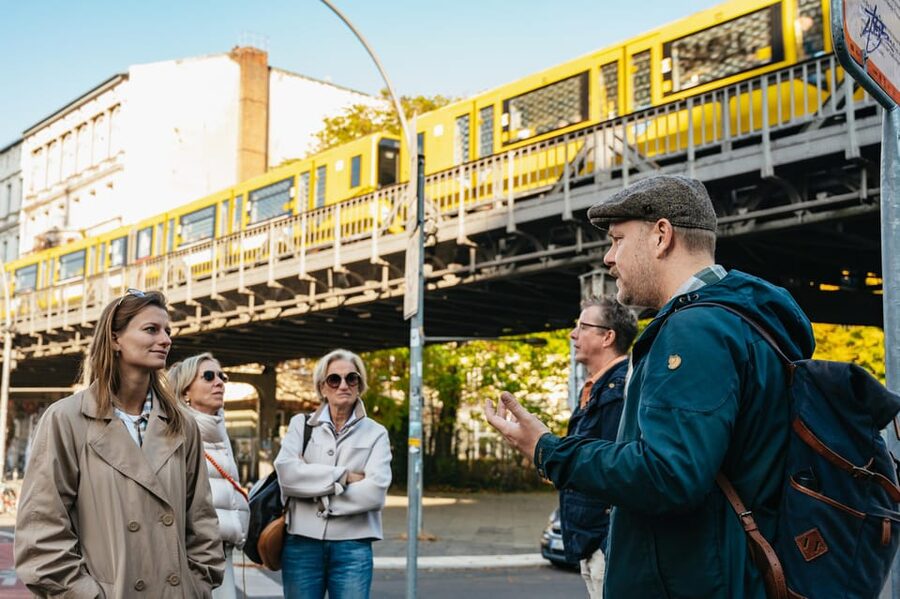
You should consider booking if you want more than Berlin’s standard sights. The tour suits visitors interested in queer history, social movements, literature, cabaret, urban change, and the lives of people who shaped the city outside official institutions.
It is also a good first-day or early-trip activity if you want to understand Schöneberg before returning later for its cafés, shops, nightlife, or cultural sites. One person who joined the walk ended nearby at a queer café and bookshop, which makes sense as a follow-up, though those purchases are separate from the tour.
The tour works for LGBTQIA+ visitors and for allies who want a thoughtful introduction to the subject. It is not limited to one age group or identity. The material reaches from early 20th-century gay rights work to present-day queer community life.
You may want to skip it if you dislike walking tours, prefer indoor attractions, or want a broad overview of all Berlin rather than a close look at one district. It also may not suit you if you expect preserved interiors, nightlife access, or a party atmosphere. This is a history walk with moments of humor, not a pub crawl.
The tour is listed as wheelchair accessible. Meeting points can vary by the option booked, and special dates, times, and meeting places can be arranged for private groups if requested by telephone.
Practical tips for a better walk
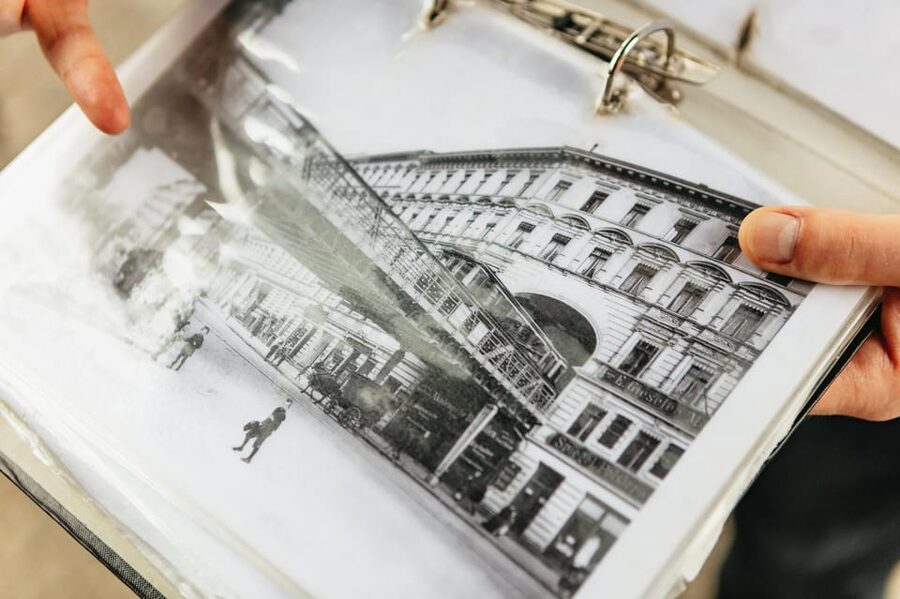
Book with enough time to confirm the exact meeting point, since it can vary. Arrive ready for an outdoor tour and bring water, especially because food and drinks are not included.
If you are visiting in winter, dress more warmly than you think you need. The route can be adjusted, and comfort stops may be included, but you will still spend much of the experience outside.
Bring a phone or notebook if you expect the stories to send you toward further reading. The tour covers enough names, clubs, and dates to reward a little follow-up. Archive images are supplied during the walk, but your own notes can help you remember which address connects to which story.
English and German are available. If language is important to your booking decision, choose carefully when reserving. Free cancellation is available up to 24 hours before the activity, and you can reserve now and pay later, which gives you useful flexibility when Berlin plans are still shifting.
Should you book the Schöneberg queer history walk?
Book it if you want a focused, human account of Berlin’s LGBTQIA+ past and present. The best reasons are the route through real neighborhood streets, the former Nationalhof and El Dorado sites, the Isherwood connection, and Tobias’s use of archive material and personal storytelling.
I would especially recommend it to anyone who has already seen Berlin’s main monuments and wants to understand the city through its communities. At $23, the tour offers strong value, provided you are happy with a walking experience rather than museum entry or nightlife access.
The one real caution is simple: allow 2.5 hours outdoors and dress for the weather. If that works for you, this is a thoughtful, lively way to see Schöneberg as a place where queer life, political action, writing, and everyday community have met for more than a century.
FAQ
Where does the Gay Berlin Out in Schöneberg Walking Tour take place?
The tour explores the area around Nollendorfplatz in Schöneberg, along with nearby streets and former queer meeting places.
How long does the walking tour last?
The tour lasts 2.5 hours.
What languages are available?
The tour is available in English and German.
Who guides the tour?
Tobias is the named guide associated with the experience. He uses historical information, archive images, humor, and personal anecdotes during the walk.
What historic sites are included?
The route includes the former sites of the Hollandais club, the Kleist Casino, the Nationalhof, and El Dorado cabaret club. It also stops at Christopher Isherwood’s former home on Nollendorfstraße.
Does the tour cover lesbian history?
Yes. The walk includes the lesbian quarter on Schwerin Straße and also discusses trans, intersex, and gender nonconforming stories.
Is food or drink included?
No. Food and drinks are not included in the tour price.
Is the tour wheelchair accessible?
Yes, the activity is listed as wheelchair accessible.
Can I cancel the booking?
Yes. You can cancel up to 24 hours in advance for a full refund. Reserve now and pay later is also available.
New walking tours around Berlin
- Berlin: 2.5-Hour Walking Tour through Kreuzberg 61★ 4.9 · 525 reviews
- From Berlin: Potsdam & Sanssouci half day Walking Tour★ 4.9 · 85 reviews
- East Berlin and the Wall: Walking Tour★ 4.9 · 407 reviews
- Cold War, Berlin Wall, Spies and the East Side Gallery★ 4.8 · 254 reviews
- Berlin: Walking Tour of the Top 10 Sightseeing Attractions★ 4.7 · 150 reviews
- Berlin: The Time of National Socialism Walking Tour★ 5.0 · 220 reviews
- Berlin: walking tour about Charité★ 4.4 · 537 reviews
- Berlin: Kreuzberg Guided Walking Evening Tour★ 4.7 · 555 reviews
Berlin Walking Tours, side by side.
Berlin City walk Government District and Places of Democracy
Read our review →
Berlin: Third Reich & Cold War Guided Walking Tour
Read our review →
Berlin’s Best: 2 Hour Walking Tour Third Reich and the Cold War
Read our review →
Explore Berlin: See All The Iconic Sights & Some Hidden Gems
Read our review →
Third Reich Berlin: Hitler and WWII Walking Tour
Read our review →Lists this walk sits on