
Review · ITALY
Genoa: 2-Hour Guided Walking Tour of the Historical Center
Genoa’s old center is easiest to understand on foot, and this tour takes you straight into its maze of Caruggi, the narrow lanes that make the city feel wonderfully confusing. I like the way it links major sights such as San Lorenzo Cathedral and Via Garibaldi with small squares and tucked-away corners that are easy to miss alone. I also like that the $16 price includes museum admission for later the same day. The catch is that the tour is bilingual, so English speakers share the guide’s time with Italian speakers.
This is a useful first look rather than a museum-by-museum study. Guides such as Irene, Barbara, Roberta, Daniel, and Paola have been praised for clear explanations, local tips, and a friendly pace. Plan to continue exploring after the tour, since the guide introduces the museums but does not escort you through their galleries.
Key points at a glance
- Genoa’s Caruggi: Follow the narrow lanes of Europe’s largest historical center, with a guide to explain how the streets fit together.
- The Rolli palaces: See the grand homes on Via Garibaldi that once received visiting rulers and important dignitaries.
- San Matteo Square: Learn how the Doria family displayed its power in one of Genoa’s most atmospheric small squares.
- San Lorenzo Cathedral: See the Gothic church and hear about its religious treasures, including relics connected with Saint John the Baptist.
- Two museum visits included: Enter the Strada Nuova Museums and Sant’Agostino Museum independently on the same day.
- Bilingual format: The guide speaks English and Italian, which can lengthen stops but gives both language groups the same core information.
Starting on Via Garibaldi, Genoa’s palace street
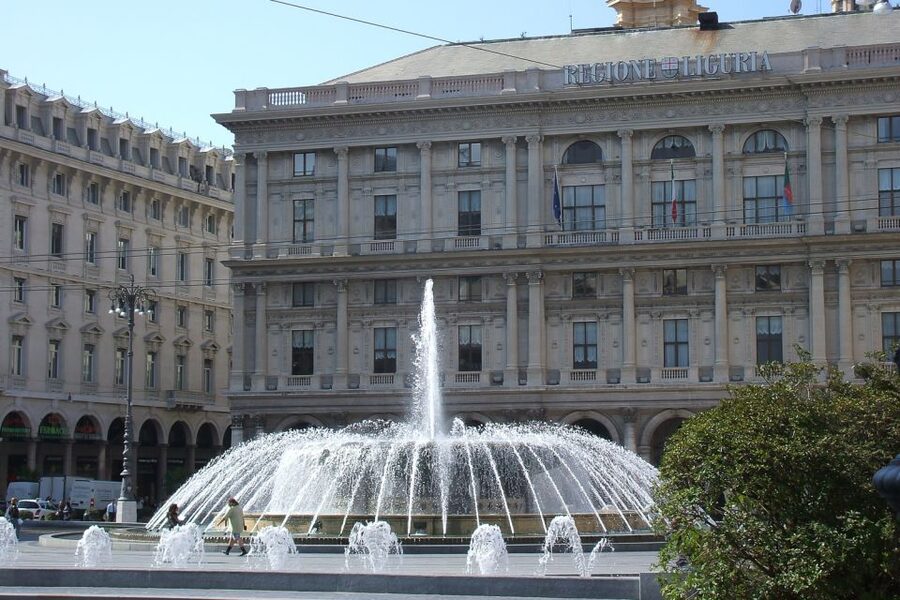
Meet at the Tourist Information Center at Via Garibaldi 12red. This is a sensible starting point because Via Garibaldi, once known as Strada Nuova, puts Genoa’s aristocratic past right in front of you.
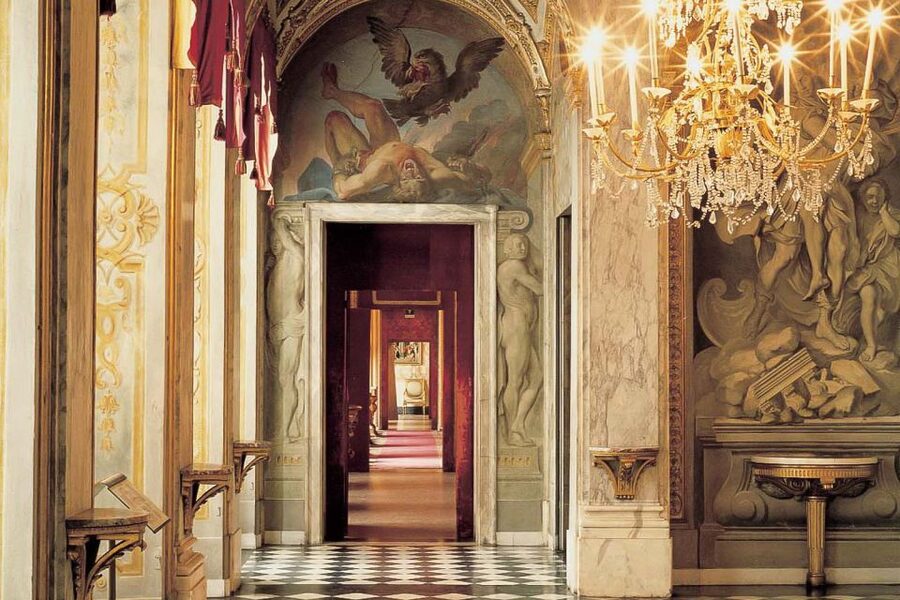
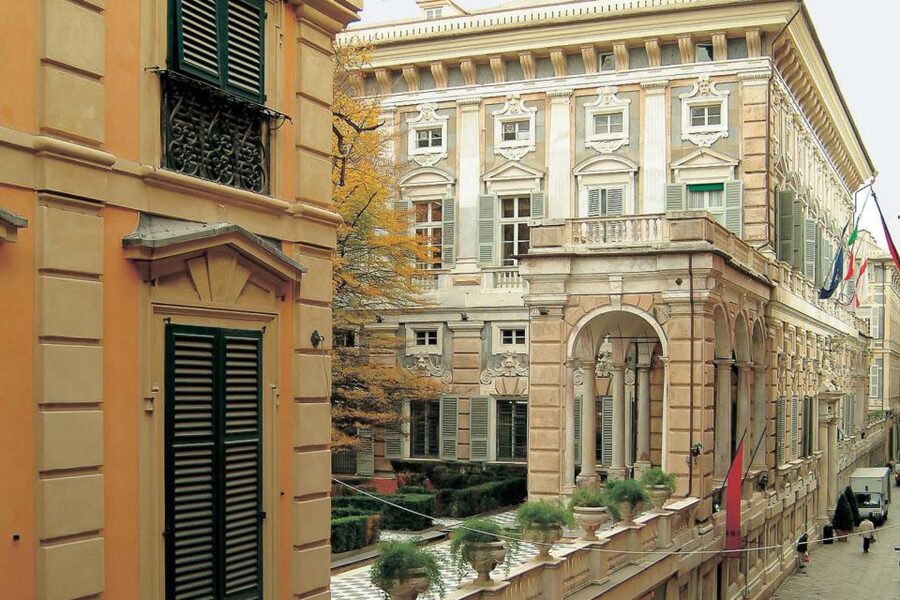
The street is lined with the Palazzi dei Rolli, grand residences built in the 16th and 17th centuries. These were not simply private houses. Genoa’s powerful families placed their palaces on official lists, or Rolli, and offered them for visiting dignitaries when the republic needed suitable accommodation.
The palace facades give you an immediate lesson in Genoa’s wealth. Behind them were courtyards, staircases, painted rooms, and collections built by merchant families whose fortunes came from trade, finance, shipping, and political influence. The Rolli palaces are now a UNESCO World Heritage Site, and this tour gives you the context to appreciate them before you visit any interiors.
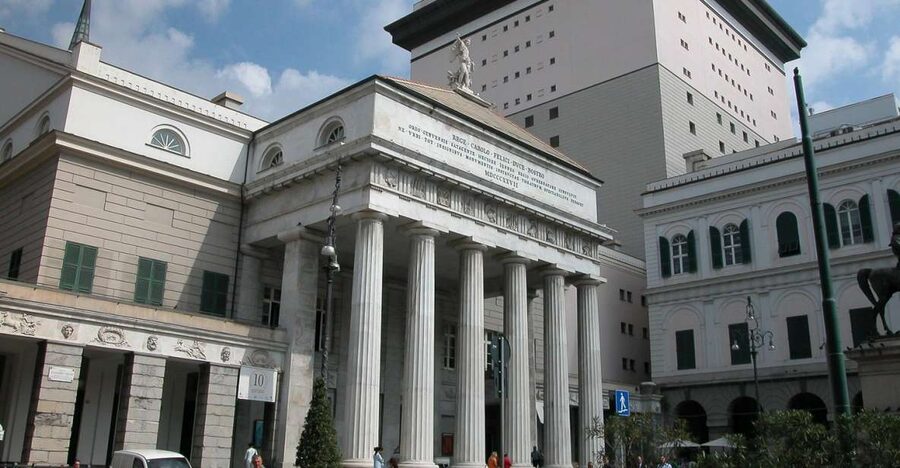
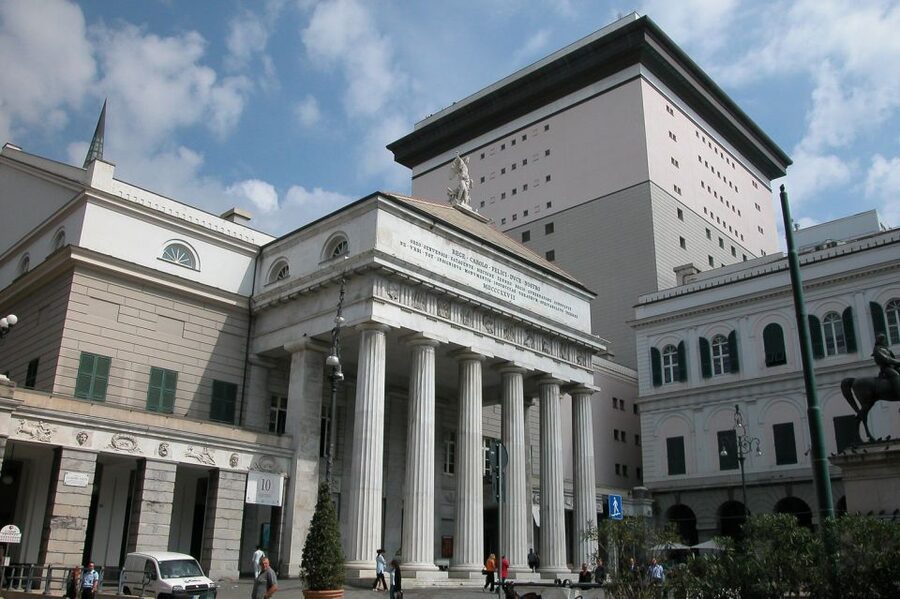
Your guide will point out the Opera House and other major buildings in this part of the center. The experience is strongest when you stop looking only at the grand fronts and notice the contrast around them: a formal palace street can lead quickly into a narrow lane, a tiny square, or a less polished corner of the old city.
More History Walking Tours in Italy
- Venice: City Center Historical Guided Walking Tour
★ 4.2 · 1,873 reviews - Palermo: Street Food and History Walking Tour
★ 4.9 · 1,486 reviews - Verona: History and Hidden Gems Guided Walking Tour
★ 5.0 · 1,379 reviews
Into the Caruggi, where Genoa turns narrow
The Caruggi are the heart of the walk. These lanes were built in a dense medieval city where land inside the walls was valuable and every turn served a purpose. They can feel like a puzzle, especially if you are trying to move from one major sight to another without local help.
That is where a walking guide earns the fee. You are not just following a route between monuments. You are learning how the old center developed, how the lanes connect, and why Genoa is sometimes described as a vertical city. Several past guides have added practical advice along the way, including suggestions for places to find chocolate, ice cream, focaccia, or a good meal.
The route covers a limited amount of ground, but that is not a weakness here. Genoa rewards close looking. A slow pace lets you study stone doorways, old facades, little squares, and architectural details that would disappear from a sightseeing bus. One guide, Barbara, was especially praised for taking time with the group and adding local recommendations.
You should wear comfortable shoes. The tour lasts two hours and takes place on foot through narrow historic streets, so the main physical demand is steady walking rather than a long-distance march. Guides have been praised for keeping the pace manageable, including for people with different physical abilities.
San Matteo Square and the Doria family
San Matteo Square is one of the most rewarding stops because it gives a compact picture of Genoa’s ruling class. The square is tied to the Doria family, one of the city’s most powerful political and commercial families.
Here, your guide can explain how family identity shaped the city. Genoa was not organized like a modern capital with one ruler and a broad public center. Power was held by influential families, and their churches, homes, and memorials made that influence visible.
The square is small enough to take in at once, which makes the details matter. Look at the relationship between the church, the surrounding buildings, and the patterned stonework. Your guide’s explanation turns what might otherwise be a quick photo stop into a lesson in Genoese politics.
This is also a good example of the tour’s general approach. You will see famous places, but the value lies in connecting them to the city’s social structure. If you want a long stop for photographs or quiet reflection, the bilingual format may limit the time available. If you enjoy hearing the story behind a place, it works well.
San Lorenzo Cathedral and Genoa’s sacred treasures
San Lorenzo Cathedral brings a different side of Genoa into view. Its Gothic architecture and striped exterior make it one of the Old Town’s most recognizable buildings, but the important part of the visit is the explanation of what the cathedral holds.
The church houses religious objects and relics associated with Genoa’s medieval power. The tour includes the story of relics connected with Saint John the Baptist, brought back during the Crusading era and now kept in the cathedral. That kind of detail helps explain why Genoa’s trading and military reach mattered at home. Distant voyages returned not only money and goods, but also sacred objects that strengthened the city’s prestige.
You should not expect a full guided study of every chapel or artwork. This is a city walk, not a cathedral specialist tour. Still, the stop gives you enough background to return later with more purpose if the interior catches your interest.
The cathedral also helps tie together several threads from the walk: medieval religion, merchant wealth, civic pride, and the movement of people and objects across the Mediterranean. Genoa’s past can seem scattered when you first arrive. Stops like this give it shape.
More Old Town Walking Tours in Italy:
- Rome Food Tour in the Historic Centre with 8+ Food Tastings
★ 5.0 · 1,000 reviews - Cagliari: Walking Tour of the Old City
★ 4.8 · 560 reviews - Naples: Old Town Guided Walking Tour
★ 4.8 · 553 reviews - Naples: Historic Center and Sansevero Chapel Walking Tour
★ 4.8 · 208 reviews
The Doge Palace and the Opera House
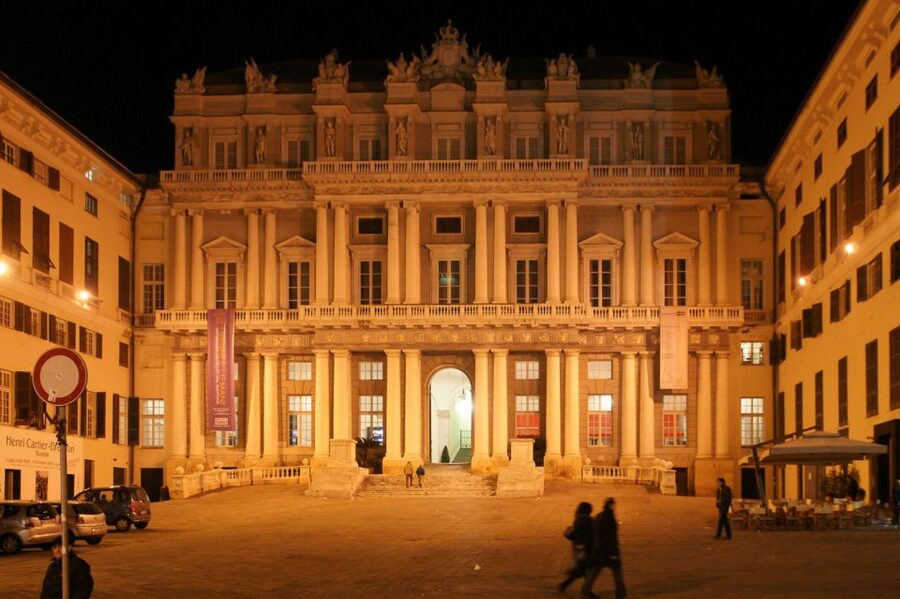
The route also takes in the Doge Palace and the Opera House. These sights show how Genoa’s public institutions changed over time, from the medieval and republican city to a more modern cultural center.
The Doge Palace represents the political side of the old republic. A guide can explain how the city was governed and how public authority related to the great families. The Opera House points toward a later period, when music, performance, and civic life became part of the city’s public identity.
These are primarily exterior stops within the walking itinerary. You should not assume that the tour includes a full interior visit to either building unless your booking details say otherwise. Their main role here is to help you read Genoa as a layered city, where medieval lanes, aristocratic palaces, religious buildings, and modern institutions sit close together.
The included museums on Via Garibaldi
At the end of the guided walk, you receive admission for an independent visit to the Strada Nuova Museums and the Sant’Agostino Museum. This is one of the tour’s best value features, but it requires you to manage your own time.
The Strada Nuova Museums form Genoa’s main museum center. Their collections cover Italian and foreign art from the 15th through the 19th centuries, with particular strength in Genoese and Flemish works. After hearing about the families who built Via Garibaldi, you can see the kind of art and decorative culture associated with that world.
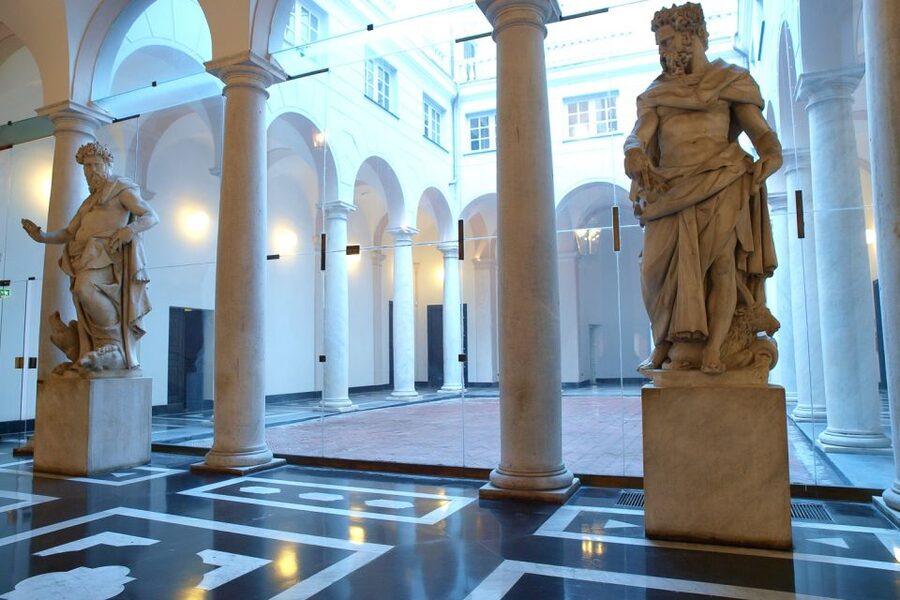
Sant’Agostino Museum offers a different setting. It occupies spaces connected with a triangular cloister and a preserved Gothic church, presenting important medieval art from Genoa. The building itself is part of the experience, so do not rush straight to the displays.
The admissions need to be used on the same day as the tour. That matters when planning your schedule. A two-hour walk followed by two museum visits can make for a full half-day, especially if you want to look carefully rather than hurry through. You may prefer to take a break for coffee or lunch and return to the museums later that day, provided you keep within the same-day requirement.
The guide introduces the museums but does not accompany you through the collections. I consider that a fair arrangement at this price. You get a guided city orientation and museum access, then choose how much time to spend with the art.
What the bilingual format feels like
The tour is conducted in English and Italian with one bilingual guide. This is the most important practical point to understand before booking.
At each stop, the guide explains the subject in both languages. That means English speakers may wait while the Italian explanation is given, then hear the same material in English. For some people, the pause is useful. You can take photographs, look closely at the building, or catch your breath.
Past guides have been praised for giving both groups equal attention. Barbara was noted for clear English and a good sense of humor. Other guides, including Irene, Roberta, Daniel, and Paola, were praised for strong local knowledge, warmth, and enthusiasm. The quality naturally depends on the individual guide and group mix, but the bilingual structure itself is consistent.
A few practical habits help. Stand close to the guide, especially in a noisy lane. If the group is large, position yourself where you can see the building and the guide at the same time. One past participant suggested that guides avoid turning away while pointing out details, since this can make hearing harder. That is a fair concern, particularly in busy streets.
The format may not suit you if you want a fast, all-English walk. It is a good fit if you are comfortable with a measured pace and want a shared local tour.
Price, timing, and who gets the best value
At $16 per person, the tour is inexpensive for a two-hour guided introduction, especially with admission to both museum sites included. The value is strongest if you actually use the museum tickets the same day.
The tour also offers free cancellation up to 24 hours before the start and a reserve-now, pay-later option. Starting times vary, so check availability when you book. The meeting point is central, and the walk begins at the tourist information center on Via Garibaldi.
Cruise passengers should pay close attention to timing. The port is within walking distance of the historic center, but the tour will follow its scheduled departure. One past experience involved a delayed arrival, and staff helped the late party catch up, but you should not count on that. Allow enough time to reach Via Garibaldi and find the tourist information center.
This tour suits you best if:
- You are visiting Genoa for the first time and want a clear orientation.
- You enjoy history, architecture, and stories about powerful families.
- You prefer walking through real city streets to sightseeing from a bus.
- You want museum access but prefer exploring galleries independently.
- You are comfortable listening to English and Italian explanations.
- You have only a few hours and want to identify places worth revisiting.
It may not suit you if you need a private tour, dislike bilingual commentary, or want extended interior visits at every major sight. It also offers only an introduction to Genoa, so plan extra time if the city’s art, churches, or food catch your interest.
Should you book this Genoa walking tour?
Book it if you want an affordable first orientation to Genoa’s Old Town, especially if the Rolli palaces, medieval lanes, and city history appeal to you. The combination of a guided walk and same-day museum admission gives you a useful plan for a half-day.
I would treat the tour as a starting point, not the entire Genoa experience. Afterward, return to the places that grabbed your attention, spend time inside the museums, and explore the Caruggi at your own pace. If you can accept the bilingual format, $16 buys a practical introduction with real cultural value.
FAQ
How long is the guided walking tour?
The guided portion lasts two hours.
What languages are offered?
The live guide speaks English and Italian. The tour takes place in both languages with a bilingual guide.
Where does the tour begin?
It begins at the Tourist Information Center at Via Garibaldi 12red.
Are museum admissions included?
Yes. Admission to the Strada Nuova Museums and Sant’Agostino Museum is included.
Can I visit the museums with the guide?
No. At the end of the walking route, the guide introduces the Strada Nuova Museums, and you continue independently.
When must I use the museum admission?
You should visit the Strada Nuova Museums and Sant’Agostino Museum on the same day as the walking tour.
What major sights are included on the route?
The route includes the Caruggi, Palazzi dei Rolli, San Matteo Square, San Lorenzo Cathedral, the Doge Palace, the Opera House, and Via Garibaldi, also known as Strada Nuova.
Can I cancel the booking?
You can cancel up to 24 hours in advance for a full refund. A reserve-now, pay-later option is also available.
More two-hour walks around Italy
- Lucca: 2-Hour City Center Walking Tour
★ 4.7 · 1,314 reviews - Milan by Night 2-Hour Walking Tour
★ 4.4 · 286 reviews - Florence: Dan Brown’s Inferno 2-Hour Walking Tour
★ 4.5 · 187 reviews - Berlin’s Best: 2 Hour Walking Tour Third Reich and the Cold War
★ 5.0 · 5,486 reviews
New walking tours around Italy
- Rome: Fountains and Squares Small-Group Walking Tour★ 4.7 · 335 reviews
- Napoli: Walking Tour of Naples with Local Tour Guide★ 4.9 · 95 reviews
- Naples: Spanish Quarters Walking Tour★ 4.6 · 72 reviews
- Naples: Street Art, Wine and Food Tasting Walking Tour★ 5.0 · 163 reviews
- Naples: Historic Center and Sansevero Chapel Walking Tour★ 4.8 · 208 reviews
- Naples: Old Town Guided Walking Tour★ 4.8 · 553 reviews
- Naples: Street Food Experience With 6 Stops★ 4.7 · 392 reviews
- Naples Essentials: Monuments, Local Life & Street Art★ 4.9 · 79 reviews
Italy Walking Tours, side by side.
Venice: Doge’s Palace and St Mark’s Basilica Walking Tour
Read our review →
Milan: Guided Walking Tour & Last Supper Visit with Ticket
Read our review →
Naples: Street Food Walking Tour with Local Guide
Read our review →
Florence: Highlights Walking Tour with Expert Guide
Read our review →
Venice: San Marco to Rialto Walk & Spritz Like a Local
Read our review →
Uffizi & Accademia Timed Entry: Small Group Duomo Walking Tour
Read our review →
Lists this walk sits on