Review · VERONA
Verona: History and Hidden Gems Guided Walking Tour
Verona reveals its best stories in the spaces between the famous sights. This two-hour walk with Fabio Massimo Rapanà, a licensed guide born and raised in the city, connects the Arena and Juliet’s balcony with Roman gates, medieval courtyards, river views, old market buildings, and details you could easily miss on your own. It is less about rushing from monument to monument and more about learning how the city fits together.
I like the small groups of up to 10 and the supplied headsets. Fabio can point out a carving or speak from a busy square without making you crowd around him or strain to hear. I also like the route’s mix of major sights and quieter corners, especially the views toward Castelvecchio and Ponte Scaligero.
The main consideration is pace. You cover many stops in two hours, and most are exterior views or short photo stops rather than extended visits inside monuments. If you want a slow look at the Arena or a full visit to Juliet’s House, you will need extra time afterward.
Key points to know before booking
- A true local perspective: Fabio was born and raised in Verona, and his stories connect the city’s Roman, medieval, architectural, and modern sides.
- A compact but full route: In two hours, you walk from Piazza Bra through the old center and return near the Town Hall.
- More than the usual postcard stops: The walk includes Roman remains, lesser-seen lanes, old market spaces, churches, courtyards, and architectural details.
- Easy listening in a busy city: Headsets let you hear the guide clearly while walking and standing in crowded areas.
- Good value at $41: The price covers a licensed guide, a small group, and a carefully planned route, but not entrance tickets.
- Best as an early Verona activity: It gives you context for places you may want to revisit later, especially the Arena, Piazza delle Erbe, and Juliet’s House.
Starting under the Italian flag in Piazza Bra
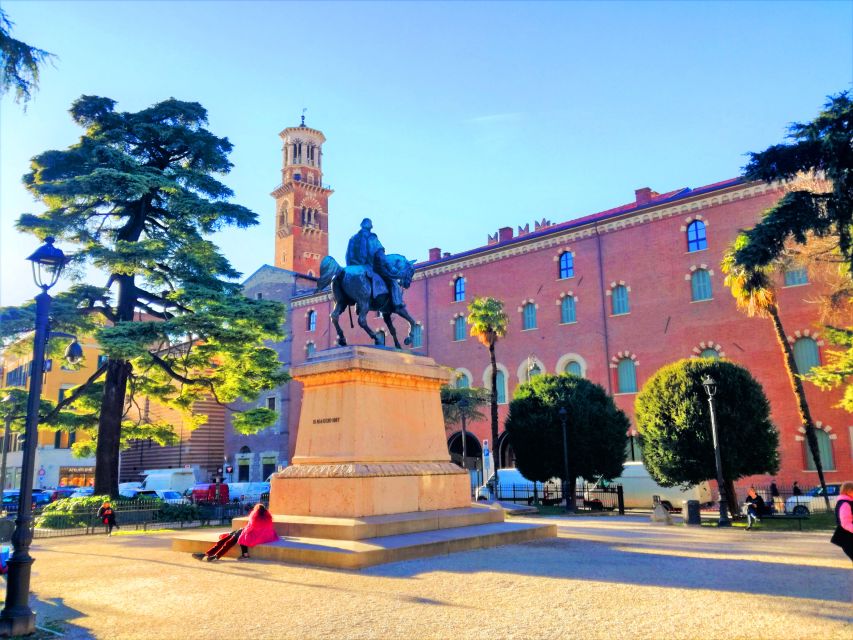
The meeting point is below the Italian flag at Palazzo Barbieri, Verona’s Town Hall, on Piazza Bra. This is a practical place to begin because the square opens directly onto the Arena and is easy to recognize.
Piazza Bra gives you your first sense of Verona’s scale. It is broad, formal, and framed by important buildings, with the Arena dominating the scene. The tour spends only a short time here, so do not expect a long lesson in the square’s architecture. Instead, it sets the stage for the city’s Roman past and the way later Verona grew around it.
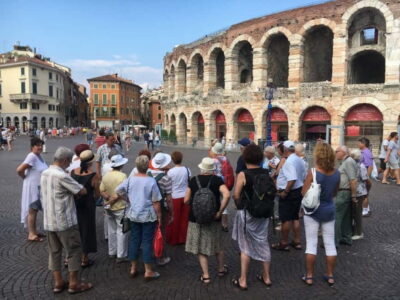
The Arena receives a longer look, with time for photographs and an explanation of the gladiatorial contests once held here. You will also hear about its structure and place in the city. The tour does not include entry, so the Arena remains an exterior stop during the walk.
That arrangement is useful if you plan to attend an opera or visit the amphitheater separately. It is less satisfying if you have come mainly to explore the interior. Think of this tour as an introduction, not a substitute for a full Arena visit.
More History Walking Tours in Italy
- Venice: City Center Historical Guided Walking Tour
★ 4.2 · 1,873 reviews - Palermo: Street Food and History Walking Tour
★ 4.9 · 1,486 reviews - Rome Food Tour in the Historic Centre with 8+ Food Tastings
★ 5.0 · 1,000 reviews
From Roman walls to Porta Borsari
Leaving Piazza Bra, the route follows traces of Verona’s early medieval walls toward the Corso, one of the city’s oldest streets. This transition helps explain a point that guidebooks often miss: Verona is not a collection of isolated monuments. Roman foundations, medieval defenses, religious buildings, and later palaces overlap in the same compact center.
Porta Borsari is one of the clearest examples. This Roman-era gate once marked an important entrance to the city. Today, you see it from the street, but its surviving stonework gives you a direct link to ancient Verona.
The stop is brief, so listen closely and keep your camera ready. Fabio’s style, based on the supplied details about the experience, places weight on small architectural clues and the stories behind them. This is the kind of place that can look like a decorated wall if you do not know what you are seeing.
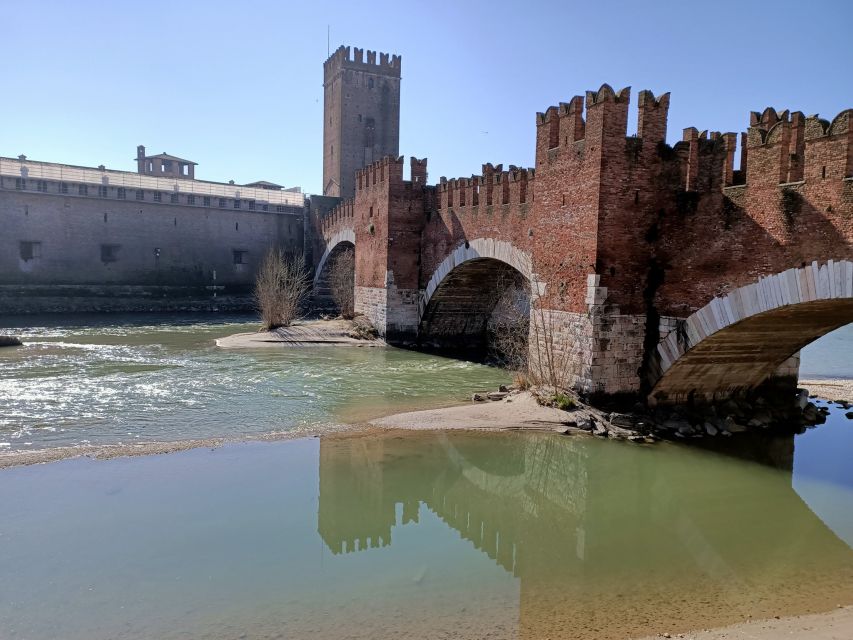
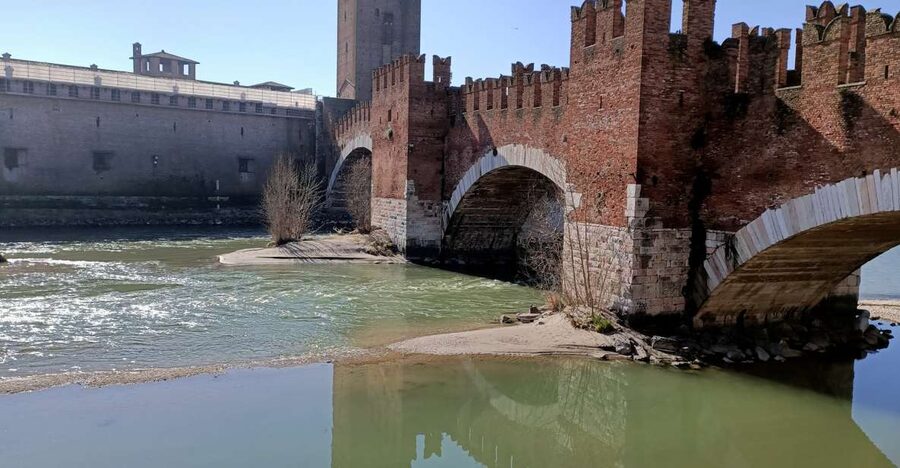
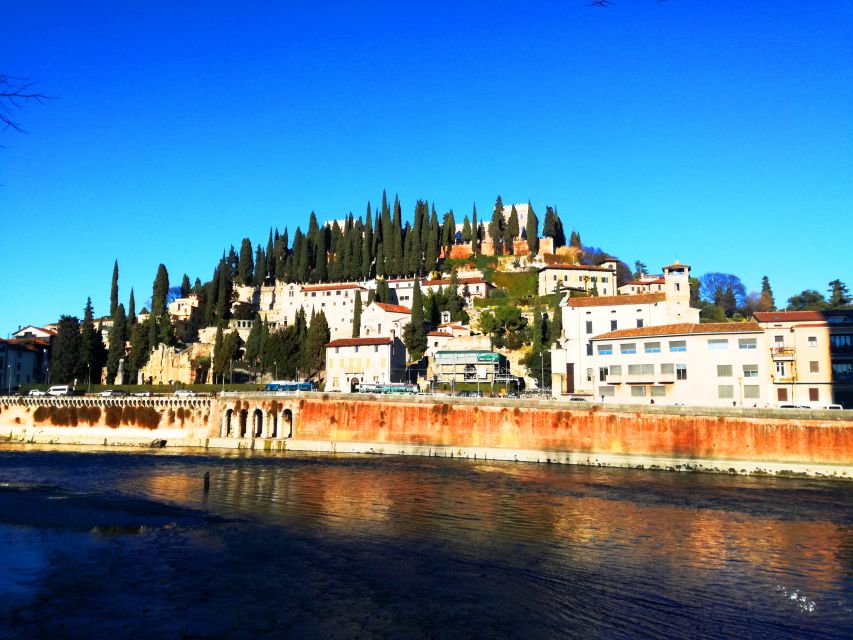
The walk then reaches Riva San Lorenzo, where the Adige River and the Ponte Scaligero come into view. These are some of the most rewarding visual moments of the route. Castelvecchio and the bridge show Verona’s medieval power in a setting that also gives you a welcome change from narrow streets.
Quiet corners around the old center
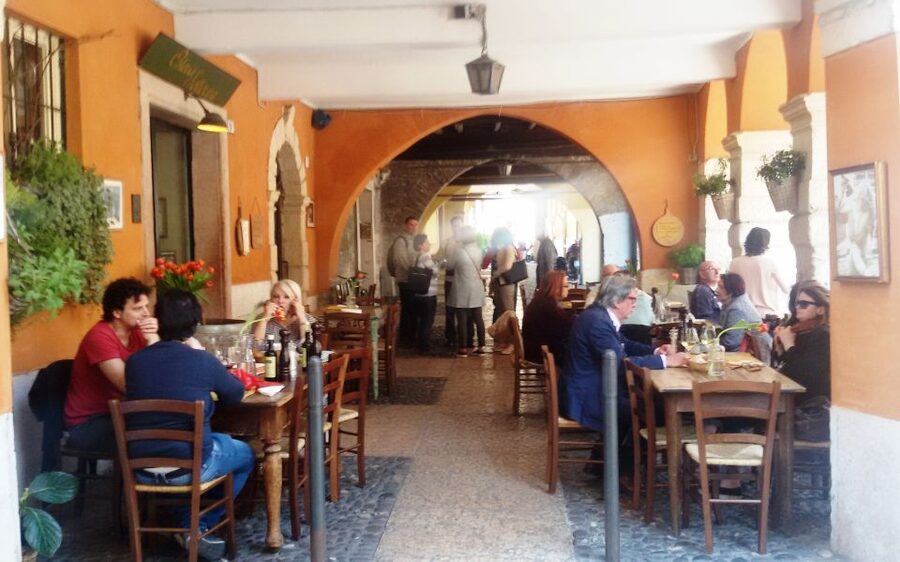
Between the major landmarks, the route pauses at several less obvious spots. Some are brief photo stops or pass-by points, so you should not expect every location to receive a long explanation. Their value is in the connections Fabio draws between buildings, streets, and different periods of the city.
Chiesa di San Giovanni in Foro is one such stop. Its name recalls the Roman forum that once occupied this part of Verona. You may find that the most useful part of the visit is not the church alone, but the reminder that the modern street grid still carries traces of the ancient city.
The route also passes through Piazzetta Monte and other small spaces before reaching Piazza delle Erbe. These short pauses keep the walk from becoming a standard checklist of Verona’s biggest sights. They also make the tour more useful for your later wandering because you begin to look upward, along side streets, and at details around doorways and façades.
The trade-off is that the itinerary includes many stops in quick succession. If you prefer one long discussion at each monument, the pace may feel brisk. If you enjoy seeing how a city changes from block to block, the variety works well.
Piazza delle Erbe and the city market
Piazza delle Erbe is one of Verona’s essential stops. The square occupies the site of the Roman forum and has long served as a market and meeting place. Here, you have time to study the oldest fountain in the city, along with the historic townhouses and their decorated façades.
This is a good place to understand Verona’s public life. The square is not only attractive; it shows how commerce, politics, religion, and daily routines have shared the same space for centuries. Fabio’s approach puts the buildings into that wider setting instead of treating them as a row of pretty façades.
You will have time for photographs and scenic views, but this is still a walking tour rather than a market tour. Food and drinks are not included. If you want to browse stalls or stop for a coffee, plan to return after the walk.
From here, the route continues to Piazza dei Signori, a more formal square surrounded by public buildings. Palazzo della Ragione, Palazzo Della Scala, and Palazzo del Capitano help tell the story of Verona’s medieval government and ruling families.
The city’s highest tower is also part of this section. The square rewards a slow look because each side has a different function and character. You get a useful contrast with Piazza delle Erbe: one space built around trade and public activity, another shaped by administration and power.
More Hidden Gems Walking Tours in Italy:
- Rome: Paranormal Night Walking Tour & Secret Backstreets
★ 4.9 · 1,921 reviews - Florence: Private Walking Tour of Florence’s Hidden Gems
★ 4.6 · 297 reviews - Alternative Walking Tour of Rome’s City Center & Hidden Gems
★ 4.8 · 244 reviews - Florence: Dark Secrets & Scandals Evening Walking Tour
★ 4.5 · 120 reviews
The Scaliger monuments and medieval Verona
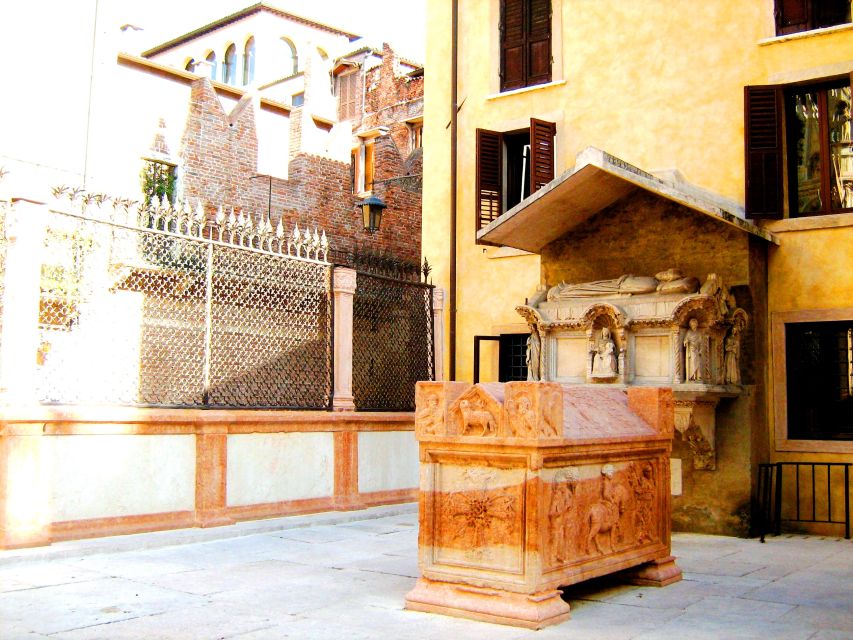
The Arche Scaligere mausoleums are among the route’s most dramatic exterior sights. These ornate Gothic structures commemorate the Scaliger family, who ruled Verona during a major period of medieval expansion and political influence.
The stop is short, but the monuments are visually striking enough to make an impression quickly. Look at the relationship between the tombs and the surrounding streets. They are not tucked away in a distant cemetery; they occupy a prominent place in the old center, making power and memory part of everyday city life.
The tour also includes Basilica di Santa Anastasia as a photo stop. Even from outside, the basilica helps show Verona’s religious and artistic importance. You do not enter as part of the tour, so anyone wanting to study the interior should return independently.
The route then moves through Piazza Indipendenza, the Courtyard of the Old Market, and other small spaces. The old market courtyard is especially useful for seeing how commerce once operated in a more enclosed setting. These locations add texture to the walk and prevent the medieval story from being reduced to grand palaces alone.
Romeo, Juliet, and the limits of the legend
Verona’s Shakespeare connections are unavoidable, and this tour includes Romeo’s house and Juliet’s House. You will also pass Juliet’s balcony and hear about the historical inspiration behind the tragedy.
The useful part is the distinction between literary tradition and documented history. The tour presents the story as part of Verona’s cultural identity while also giving you the background needed to understand how the legend developed. That is more helpful than treating the balcony as a stand-alone attraction.
Juliet’s House is a photo stop, not a full museum visit. The courtyard and balcony are usually among the city’s busiest locations, and two hours do not allow time for a long wait or detailed interior visit. If you want the full attraction, return later and check the entry arrangements separately.
Romeo’s house receives the same exterior treatment. Its value lies in seeing how the literary story is woven into the old city rather than in expecting a large museum or preserved domestic interior.
This section is best for first-time visitors who want the famous names included without letting them dominate the whole walk. If Shakespeare is your main reason for visiting Verona, plan a separate visit after the tour.
A final loop through overlooked Verona
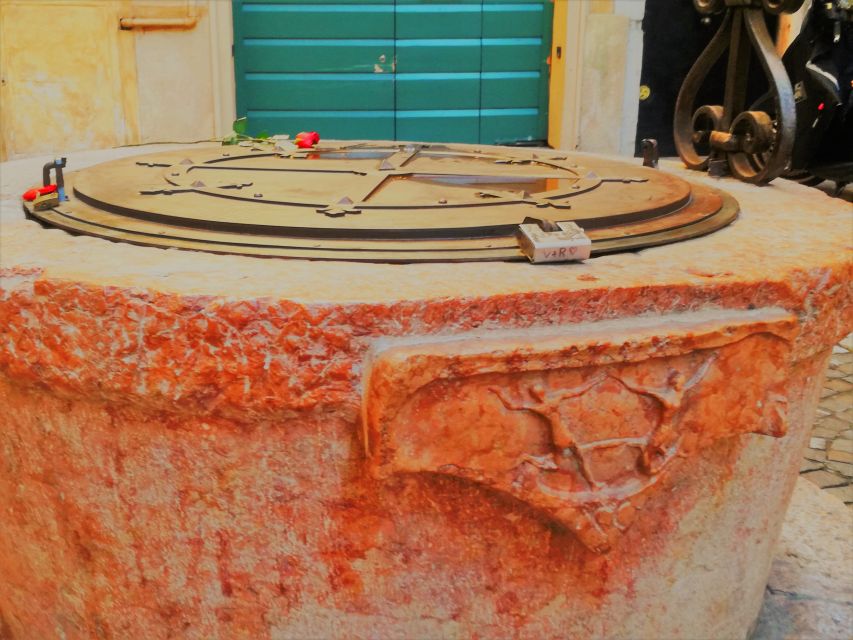
The route continues past the Verona synagogue, the former convent of Saint Mary della Scala of the Servants of Mary, and Via Dietro Anfiteatro before returning to Palazzo Barbieri. Some of these are quick photo stops or pass-by points, but they broaden your picture of the city.
The synagogue is a reminder that Verona’s story includes more than Roman ruins, medieval rulers, and Shakespeare. The convent and nearby streets add religious and urban history to the walk. These final stops also bring you back toward the Arena, showing how close the city’s different eras remain to one another.
By the end, you have crossed a relatively small part of Verona but encountered a wide range of subjects: ancient gates, medieval government, churches, monuments, market squares, bridges, literary tradition, and local architecture. That is the tour’s main strength. It gives you a framework for understanding the center instead of handing you disconnected facts.
What the two-hour format means for you
Two hours is long enough to cover a lot of ground but short enough to fit into a busy Verona schedule. I would take it near the start of your stay, then use the rest of the day to revisit the places that caught your attention.
The route is wheelchair accessible, and the walk takes place rain or shine. You should bring comfortable shoes and water. Summer conditions can make any city walk harder, though Fabio has been attentive about finding shade and allowing short cooling breaks when possible. The headsets are particularly useful for anyone with hearing difficulty or anyone who dislikes standing shoulder to shoulder with a guide.
The tour is available in English, German, Italian, and Spanish. Private and small-group options are available, but the advertised group size is limited to 10 participants. That is a meaningful difference from large groups of 25 or 30, especially in tight lanes and crowded squares.
There is no transport, food, drink, or entrance ticket included. The $41 price is reasonable if you value interpretation, local orientation, and a small group. It is less compelling if you only want a quick walk past the main sights or if you plan to visit every monument inside during the same two hours.
Who should book this Verona walking tour?
I would recommend it to first-time visitors, history and architecture fans, families with older children, and anyone who wants a local introduction before exploring independently. The route includes enough famous sights to feel satisfying, but its real purpose is to show you the overlooked details around them.
Families may appreciate Fabio’s ability to adjust his explanations and keep younger participants involved. The tour also suits visitors with limited time because it returns to the central Town Hall area and covers much of the historic core without transport.
You may want something else if you dislike walking, want extended indoor visits, or prefer a very slow photography tour. The many short stops are a strength for curious walkers, but they can feel fast if you need a long time at each site.
Should you book it?
Book this tour if you want Verona to make sense as a living city rather than a backdrop for the Arena and Juliet’s balcony. Fabio’s local roots, clear headsets, small groups, and story-led route give you a useful two-hour orientation at a fair price.
Skip it only if you already know Verona well or if you want entry to the Arena, Juliet’s House, and churches included. For most first visits, I would take the walk early, note the places you want to revisit, and then spend the rest of your stay exploring with sharper eyes.
FAQ
Where does the Verona walking tour begin?
Meet the guide below the Italian flag at Palazzo Barbieri, Verona’s Town Hall, in Piazza Bra.
How long does the tour last?
The walking tour lasts two hours and returns to Palazzo Barbieri near the end.
Who leads the tour?
The guide is Fabio Massimo Rapanà, a professional licensed guide born and raised in Verona.
What languages are available?
The tour is offered in English, German, Italian, and Spanish.
Are entrance tickets included?
No. The tour includes guided commentary and exterior visits, but attraction entries are not included.
Is the tour wheelchair accessible?
Yes, the activity is listed as wheelchair accessible.
What should I bring?
Bring comfortable shoes and water. The tour runs rain or shine.
New walking tours around Italy
- Rome: Fountains and Squares Small-Group Walking Tour★ 4.7 · 335 reviews
- Napoli: Walking Tour of Naples with Local Tour Guide★ 4.9 · 95 reviews
- Naples: Spanish Quarters Walking Tour★ 4.6 · 72 reviews
- Naples: Street Art, Wine and Food Tasting Walking Tour★ 5.0 · 163 reviews
- Naples: Historic Center and Sansevero Chapel Walking Tour★ 4.8 · 208 reviews
- Naples: Old Town Guided Walking Tour★ 4.8 · 553 reviews
- Naples: Street Food Experience With 6 Stops★ 4.7 · 392 reviews
- Naples Essentials: Monuments, Local Life & Street Art★ 4.9 · 79 reviews
Verona Walking Tours, side by side.
Verona: Small Group Guided Walking Tour with Arena Tickets
Read our review →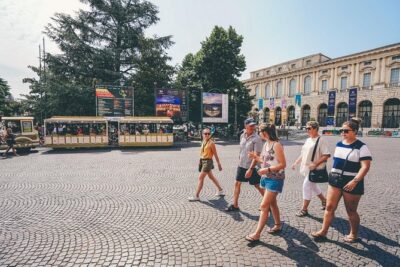
Discover Verona: City Highlights Guided Walking Tour
Read our review →