Review · BRUGES
Historical Walking Tour: The Story of Bruges – by Legends
Bruges reveals its best stories on foot, and this two-hour route packs the medieval center into one lively circuit. You move from the Markt and Belfry to the Beguinage, Lake of Love, old churches, canals, and lesser-known corners, with 360° virtual reality views showing how key places looked in the Middle Ages.
I like the mix of useful city orientation and entertaining storytelling. Guides such as Sam, Louie, Mauricio, Victoria, Thomas, and Jan have been praised for clear explanations, humor, and a knack for keeping children involved. I also like the very low listed price of $2.27, which makes this an easy first activity in Bruges. The main drawback is the pace: cobblestones can tire your feet, and ten minutes at each listed stop leaves little time for a detailed look inside.
Key points at a glance
- Thirteen central stops: See major sights from the Markt to De Burg without arranging separate visits.
- A guide-led history lesson: Expect legends, jokes, facts, and practical advice about present-day Bruges.
- 360° medieval reconstructions: Virtual reality images help you picture buildings and streets as they once appeared.
- Small subgroup limit: Groups larger than six should book a private tour.
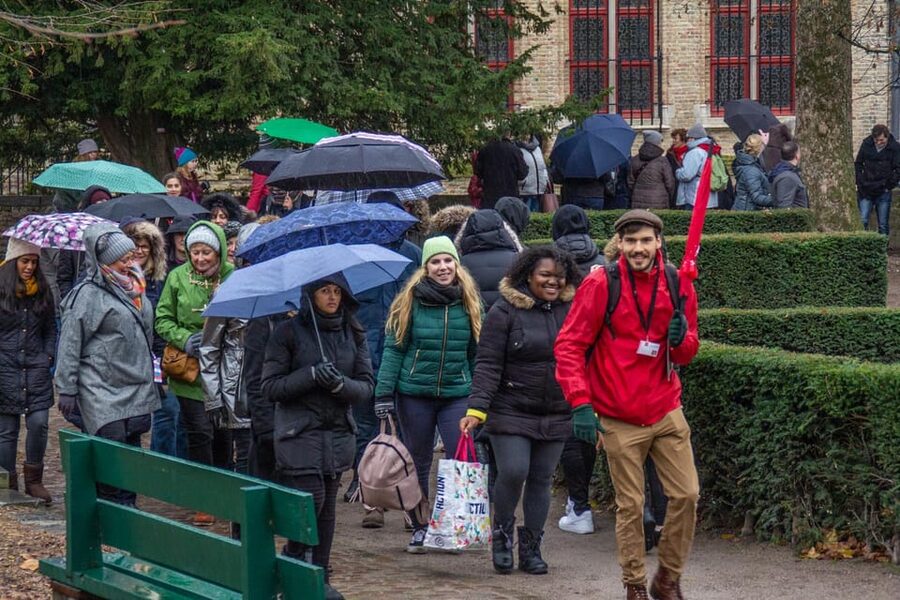
- Outdoor, rain-or-shine route: Wear shoes suited to cobblestones and bring weather protection.
- Useful extras: You receive a chocolate treat and a booklet with coupons and discounts.
Why this Bruges walk works as a first introduction
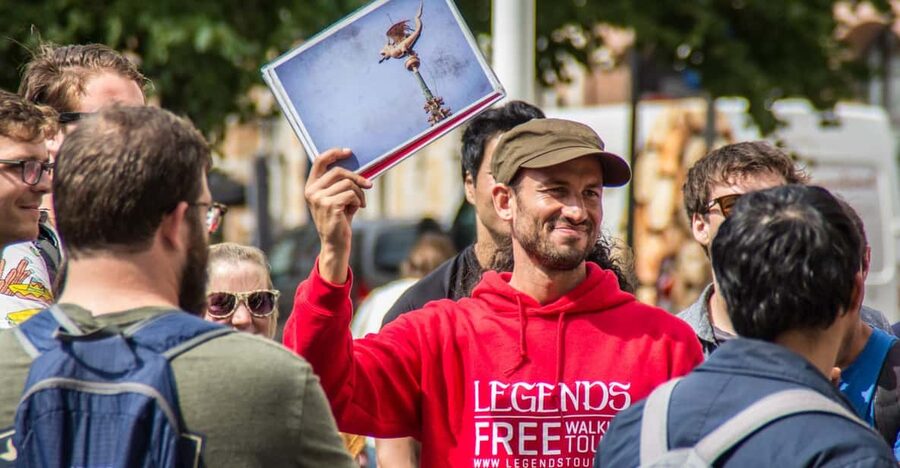
Bruges can feel almost too pretty to understand at first. You see canals, stepped gables, towers, and horse-drawn carriages, but it takes context to connect the buildings with the merchants, religious communities, hospitals, and brewing traditions that shaped the city.
This tour gives you that framework while you walk. The guide does not simply point at a church and name it. You hear stories about Bruges in its medieval heyday, local legends, funny details, and facts that help the city feel like a lived-in place rather than a collection of postcard views.
The route also gives you a practical sense of direction. Starting at the Markt and ending near De Burg, it crosses much of the historic core. Afterward, you can decide which sights deserve a longer visit, where to return for photographs, and which museums fit your interests.
The format suits first-time visitors especially well. You see the main landmarks in a single outing, but you also pass through quieter streets and less obvious corners. If you already know Bruges well, the stories and VR images may still add something new, though the brief stops will not replace a full museum visit.
More History Walking Tours in Belgium
- Historical Walking Tour: Legends of Bruges
★ 5.0 · 2,541 reviews - Historical Walking Tour: Legends of Antwerp
★ 5.0 · 1,837 reviews - Historical Walking Tour: Legends of Gent
★ 5.0 · 1,761 reviews
Meeting at the Markt and finding your bearings
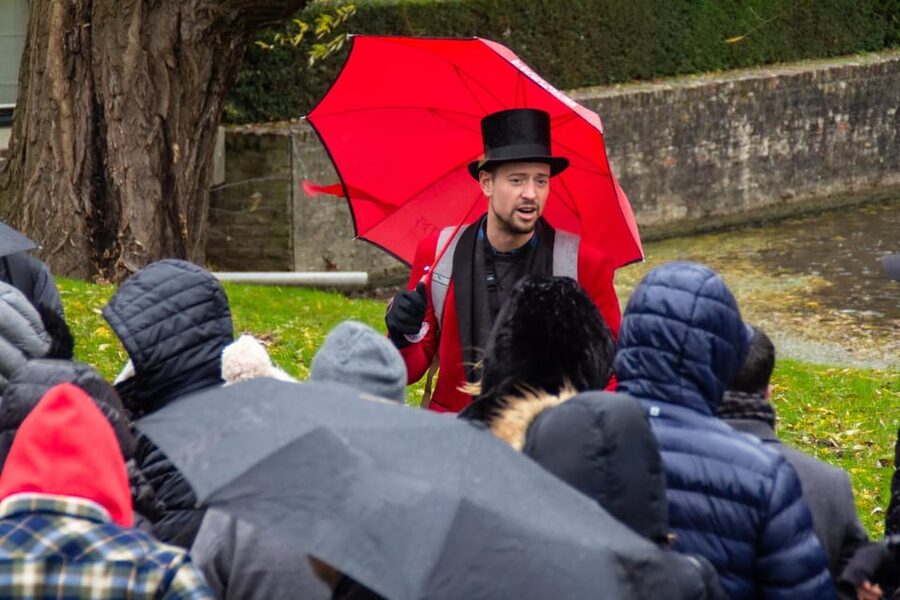
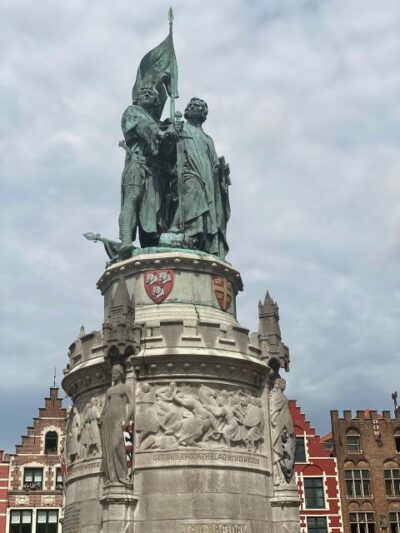
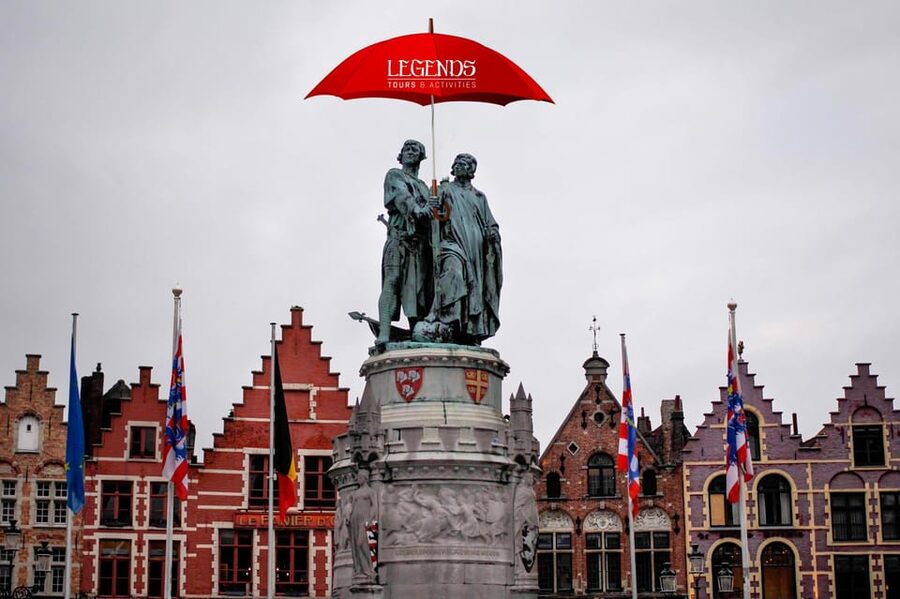
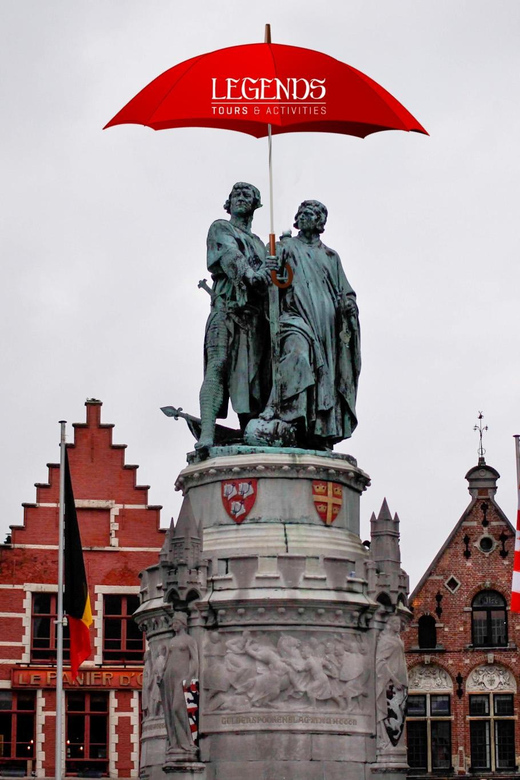
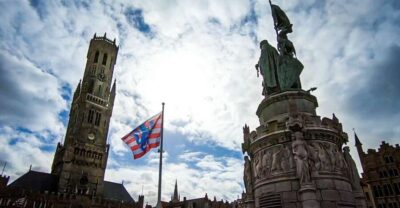
The walk begins in the Grote Markt, Bruges’ main square. Look for the statue in the middle and a guide carrying a red umbrella. One practical warning: construction around the statue has occasionally made the meeting point harder to spot, so arrive with enough time to look around the square rather than rushing in at the start.
The Markt is a fitting place to begin. It gives you an immediate view of Bruges’ medieval character and sets up the city’s commercial story. Your guide can explain how the center functioned, then use the square as a reference point for the rest of the route.
The tour ends at De Burg, another central square. That means you finish close to the heart of Bruges rather than far out on the edge of town. The start and finish are both walkable parts of the old center, so you can continue sightseeing afterward.
Belfry stories from Bruges’ tallest landmark
The Belfry of Bruges receives a guided stop of about ten minutes. From the square, its height and broad stone base make it an easy landmark to understand, even before you hear the stories attached to it.
This is a stop for history and atmosphere, not a tower climb. Admission to museums is not included, and the experience information does not promise entry into the Belfry itself. If climbing the tower is on your wish list, treat that as a separate plan.
The short talk is useful because the Belfry helps explain Bruges as a city that valued trade, civic power, and independence. Listen for the guide’s legends and local details, then return later if you want a closer look at the building.
Gruuthusemuseum and Sint-Janshospitaal
The next stops bring together two very different parts of Bruges’ past. At the Gruuthusemuseum, your guide introduces a former noble setting and the objects connected with city life. At Sint-Janshospitaal, the focus shifts toward care, religion, and art.
Each receives roughly ten minutes, enough for orientation but not enough for a full museum visit. Since museum admission is not included, you will need a separate ticket if you want to go inside. That arrangement keeps the walking tour affordable, but it also means you should not expect detailed gallery time.
I find this pairing useful because it shows how Bruges was shaped by more than wealthy merchants. The city’s story includes powerful families, religious institutions, hospital work, and art. A good guide can connect those threads in a way that a quick photograph from outside cannot.
The tour’s VR feature adds a helpful visual layer here. When a modern street or altered building makes the medieval city hard to picture, a 360° reconstruction can show how the setting once looked.
More crime and mystery walks around Belgium:
- Bruges Guided Walking Tour: Stories, Mysteries and People
★ 4.2 · 71 reviews - Prague: Ghost Walking Tour Where Legends Come To Life
★ 4.4 · 5,253 reviews - Edinburgh Darkside Walking Tour: Mysteries, Murder and Legends
★ 5.0 · 3,862 reviews - New Orleans Adults-Only True Crime and Ghost Walking Tour
★ 5.0 · 1,666 reviews
The Beguinage and Lake of Love
The route continues to the Beguinage, one of Bruges’ most distinctive historic places. This stop introduces a religious community and a quieter side of city life. It is a welcome change from the open squares, with a calmer setting and a different mood.
The nearby Lake of Love brings one of Bruges’ most recognizable views. The name itself invites legend, and this is the sort of place where your guide’s storytelling matters as much as the view. Expect an explanation of local tales and the role the spot plays in Bruges’ image today.
You should have your camera ready, but do not let photographs make you lose the group. The route keeps moving, and the guide needs to balance scenic pauses with the remaining stops. A few participants have found the cobbles tiring, so supportive shoes are more useful here than stylish but stiff footwear.
Halve Maan brewery and Bruges’ brewing tradition
The Halve Maan brewery gives the walk a taste of living Bruges. This is not presented as a brewery tasting or a full brewing tour. Instead, the guide explains the place and its connection to the city, adding a practical link between medieval commerce and a local tradition that still matters.
That distinction is important when you book. The included extras are a chocolate treat and a coupon booklet, but no brewery admission or tasting is listed. You can decide later if you want to return for a separate visit.
I like this stop because it keeps the tour from becoming a parade of churches and grand façades. Food and drink are part of how a city makes sense, and the brewery gives you a more everyday subject in the middle of the historic route.
Stoofstraat and the smaller streets of Bruges
Stoofstraat is one of the route’s more unusual stops. It is not the kind of landmark you would necessarily plan around on your own, which makes it useful for anyone who wants more than the standard square-and-canal circuit.
Here, the guide’s local knowledge becomes especially valuable. The tour description promises legends, funny stories, facts, and lesser-known places, and Stoofstraat is the sort of setting where those details can bring a narrow street to life.
Do not expect a long pause or a major attraction at every stop. Some places are included because they help explain how the city fits together. The reward is a more complete walk through Bruges, rather than a list of only its most famous buildings.
Church of Our Lady and the Dijver
The Church of Our Lady gives the route another major architectural landmark. A ten-minute guided stop lets you understand its place in the city and hear the stories tied to it, but it is not enough time for an unhurried interior visit.
Again, museum and monument admission is not included. If you want to study the church carefully, or see a specific artwork, plan a return visit after the walk. The tour works best as a briefing that helps you know what to notice later.
Dijver then leads you toward one of Bruges’ classic canal areas. This section is well suited to the guide’s visual material because the present-day streets can be compared with the medieval city shown through the 360° VR images. I find that feature more useful than a simple spoken description. It gives you a clear before-and-after picture.
Rozenhoedkaai and the Fish Market
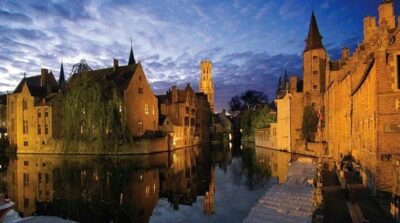
Rozenhoedkaai is one of the city’s most photographed canal views. You will likely pause for the scene, but the guide also uses it to explain Bruges as a place built around waterways, trade, and movement.
The stop can be busy, so stay close enough to hear. The route does not use headphones, and the guide is expected to speak clearly and loudly enough for the group. That makes the experience feel more personal, though a large crowd around the canal can still make listening harder.
At the Fish Market, the story moves toward commerce and daily city life. It is a useful counterpoint to grand churches and noble buildings. You get another reminder that Bruges was not built only for beauty. It was a working city with markets, goods, and people moving through its center.
Finishing at De Burg
The walk finishes at De Burg, another important central square. By this point, you have crossed a substantial part of old Bruges and collected enough background to make sense of the streets around you.
The ending is practical. You are not left at a distant attraction, and you can continue to nearby sights, cafés, museums, or shops on your own. The guide may also offer tips about what to do next, which is one of the useful benefits of taking this walk early in your stay.
The two-hour length is a good compromise for many people. It gives you a broad introduction without consuming half a day. Still, the route is active, and the cobblestones can be tiring. One person specifically wished the walk were shorter, so consider your energy level if you have mobility concerns, young children, or a full day of sightseeing planned afterward.
What the guide quality means for your experience
The strongest part of this experience is the guide. Names vary by departure, but guides praised for this route include Sam, Louie, Mauricio, Victoria, Thomas, Woulter, Natalie, Martin, Sander, Michel, Marc, Patrick, Eric, Jan, and Martín.
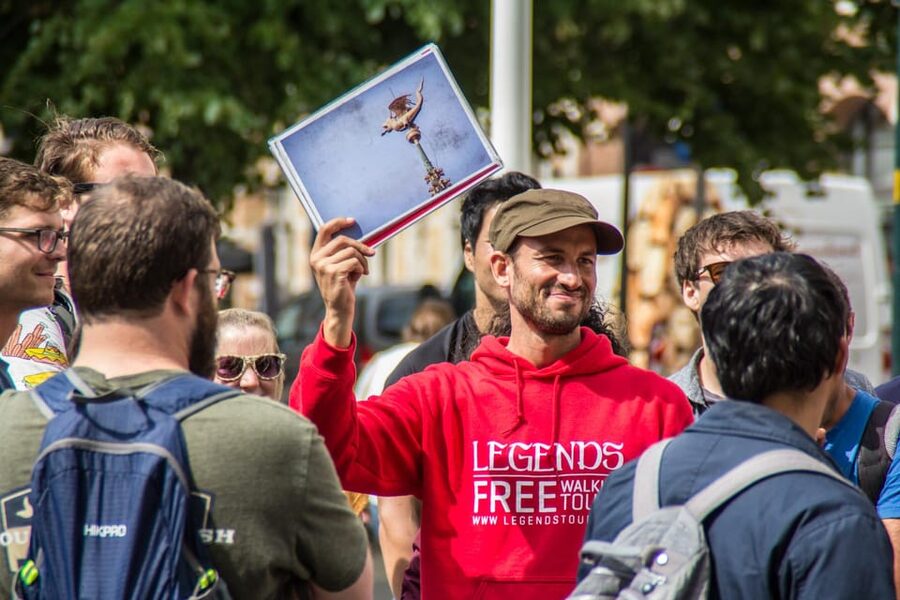
The recurring strengths are clear explanations, humor, enthusiasm, and patience. Guides have kept children interested, waited for slower members of the group, answered questions, and pointed out places that are easy to miss. That human element matters in Bruges because the buildings can blur together without a story to connect them.
Language options are English, French, and Spanish. The tour uses a live guide rather than an audio recording, so you can ask questions and receive practical advice in real time. If you need a particular language, check the available departure before booking.
Groups are limited to subgroups of up to six people. If your party is larger, you are asked to arrange a private tour. The small-group rule should help keep the guide audible and make it easier to stop in narrow streets, though the exact group size at a departure can affect how intimate it feels.
Price, extras, and overall value
At $2.27 per person, the listed cost is unusually low for a two-hour guided walk. The value is strongest if you want a broad introduction to Bruges before deciding which museums or attractions deserve paid admission.
You also receive a chocolate treat and a booklet with coupons and discounts. Those are modest extras, but they fit the city and may help you choose what to do after the tour. Museum entry is not included, so budget separately if you plan to visit the Gruuthusemuseum, Sint-Janshospitaal, or another paid attraction.
The tipping arrangement deserves attention. One participant described the experience as donation-based and encouraged tipping the guide well. Because the stated price and the guide’s income model may be presented differently at booking or at the end, read the current payment details carefully. If the tour relies on donations or tips, your guide’s preparation, time, and effort should be reflected in what you give.
Free cancellation up to 24 hours before the activity and reserve-now, pay-later booking make the plan flexible. The route runs rain or shine, so your clothing and footwear matter more than the forecast alone.
Who should book this Bruges walking tour?
I would choose this tour if you are visiting Bruges for the first time, want the main sights in one route, or prefer history delivered through stories rather than a formal lecture. Families may appreciate the jokes, short stops, and visual VR material, especially when children need more than architectural description.
It also suits independent visitors who want a quick orientation before exploring alone. Take notes on the places that catch your interest, then return at your own pace for photographs, museum visits, or a longer look inside a church.
You may want another format if you dislike walking on cobbles, need long indoor breaks, or want extensive time inside museums. The tour is broad rather than slow, and the ten-minute stop pattern favors coverage over detailed inspection.
FAQ
How long does the Bruges walking tour last?
The tour lasts two hours. Starting times vary, so check availability when choosing a departure.
Where does the tour begin?
Meet in the middle of Bruges’ Grote Markt, by the statue. The guide will be carrying a red umbrella.
Where does the tour finish?
The tour finishes at De Burg, in the historic center of Bruges.
Which languages are available?
Live tours are offered in English, French, and Spanish.
Is the tour wheelchair accessible?
Yes, the activity is listed as wheelchair accessible.
Are museum admissions included?
No. Admission to museums is not included in the tour price.
Can a group of more than six people join?
Groups larger than six should book a private tour. The regular tour is reserved for subgroups of up to six people.
Should you book it?
Book this walk if you want a low-cost, lively introduction to Bruges with plenty of landmarks, local stories, and practical advice. The best reason to go is the guide-led storytelling, supported by 360° VR images that help you picture the medieval city behind the modern streets.
Skip it if you want a slow museum tour or dislike walking on cobblestones. For most first visits, though, the route offers strong value: two hours, thirteen useful stops, a chocolate treat, and a clear sense of how Bruges’ famous center fits together.
New walking tours around Belgium
- Antwerp: Historical Walking Tour in the Old City★ 4.8 · 373 reviews
- Ghent Walking Tour with Optional Add-ons: Boat & Beer★ 4.0 · 124 reviews
- Ghent: Private Walking Tour with a Local★ 4.6 · 93 reviews
- Ghent: Private 2-Hour Walking Tour★ 4.7 · 134 reviews
- Ghent: Guided Walking Tour and Canal Boat Trip★ 3.8 · 128 reviews
- Ghent: Belgian Chocolate Walking Tour with Tastings★ 4.9 · 259 reviews
- Brussels: Private Walking Tour with a Local★ 4.4 · 102 reviews
- Brussels: Guided Walking Tour with Optional Beer Tasting★ 4.2 · 89 reviews
Bruges Walking Tours, side by side.
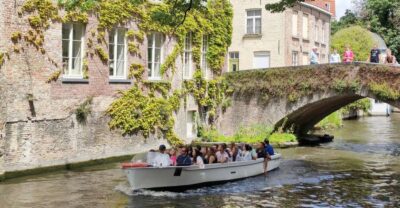
Bruges: Small Group Boat Cruise and Guided Walking Tour
Read our review →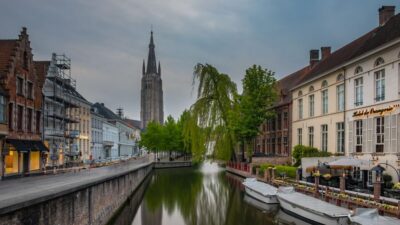
Bruges: Walking Tour, Canal Boat Trip w/Beer Tasting Option
Read our review →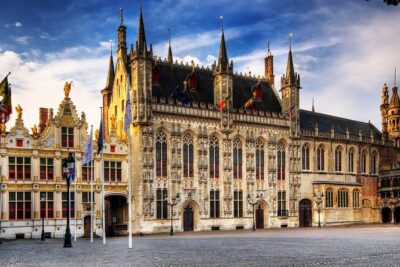
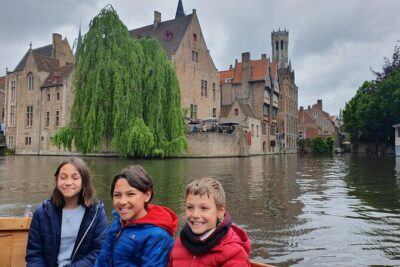
Bruges: Nightly Tales and Untold History Walking Tour
Read our review →