
Review · SPAIN
Málaga: Cathedral, Alcazaba, Roman Theater Walking Tour
Málaga’s best historic sights sit close together, but they tell very different stories. This three-hour guided walk links the Renaissance Cathedral, the Moorish Alcazaba, the Roman Theater, and Picasso’s old neighborhood, giving you a useful first look at the city rather than a single isolated monument.
I like the skip-the-line tickets, especially at the Alcazaba and Cathedral, and I like the way the tour connects monuments with ordinary city streets. Guides such as Carmen, Eduardo, Rachel, Antonio, and Daniel have been praised for lively explanations, humor, and helpful food recommendations. The main catch is that the tour involves hills, steps, and steady walking, and Cathedral access can change during Mass.
Key points at a glance

- Four major sights in three hours: See the Cathedral, Alcazaba, Roman Theater, and Picasso-related streets in one compact introduction.
- The Alcazaba provides the best view: An elevator takes you to the highest point, where Málaga opens out below.
- History comes with local context: Guides explain changes to the port, Picasso’s connection to the city, and the layers of Roman, Moorish, and Christian Málaga.
- Skip-the-line entry saves time: Tickets are included for the Alcazaba, Roman Theater, and Cathedral.
- Guide quality is central: Carmen, Eduardo, Rachel, Antonio, Daniel, Luis, and others have earned repeated praise for clear English, humor, and patience.
- Plan for uneven ground: This is not a good choice for people with mobility impairments.
Starting at Plaza de la Marina

You meet by the door of the Tourist Information Office near Plaza de la Marina. This is a sensible starting point because you are already close to Málaga’s historic center, the harbor, and the main pedestrian streets.
The first part is a walking orientation. Your guide does not simply rush you from ticket entrance to ticket entrance. The route includes streets and public squares between the monuments, so you get a feel for how central Málaga fits together.
That wider view is one of the tour’s strengths. The most useful guides add small pieces of city context along the way, including the story of how part of the port was filled in to create a larger public area. It is the sort of detail you might miss if you visit the sights alone.
The tour is offered in English or Spanish. Guide quality may vary by departure, but the names praised most often include Carmen, Eduardo, Rachel, Antonio, Daniel, Luis, and Ana. The repeated pattern is clear: strong guides explain history in plain language, answer questions, and keep the walk moving without making it feel like a lecture.
More walking tours around Spain:
- Barcelona Tapas and Wine Experience Small-Group Walking Tour
★ 5.0 · 5,804 reviews - Barcelona: Tapas Walking Tour with Food, Wine, and History
★ 4.8 · 4,261 reviews - Madrid Tapas & Wine Tasting Walking Tour – Small Group Local Bars
★ 5.0 · 3,644 reviews
Inside Málaga Cathedral
The Cathedral of Málaga is usually the first major interior stop. Your guide points out details of the Renaissance building and explains how to read what you are seeing, from the scale of the structure to its religious and artistic purpose.
This is where a guide earns the admission price. A grand church can become a blur of chapels, columns, and decoration when you walk through it alone. A good explanation gives you a few things to notice and helps place the cathedral within Málaga’s long transition from Islamic rule to Christian Spain.
The tour includes the Cathedral ticket, along with entry to the Alcazaba and Roman Theater. That matters because the price is $53 per person, and you are not paying only for a walk through the streets. You are also getting three admission tickets plus a live guide for three hours.
There is an important qualification. On days when Mass affects access, the guide may explain the Cathedral from outside rather than inside. One past participant found the Cathedral closed, although the guide still gave a useful account of Málaga’s history. If seeing the interior is your main reason for booking, check the departure details and accept that religious services can alter the visit.
The Alcazaba and Málaga from above
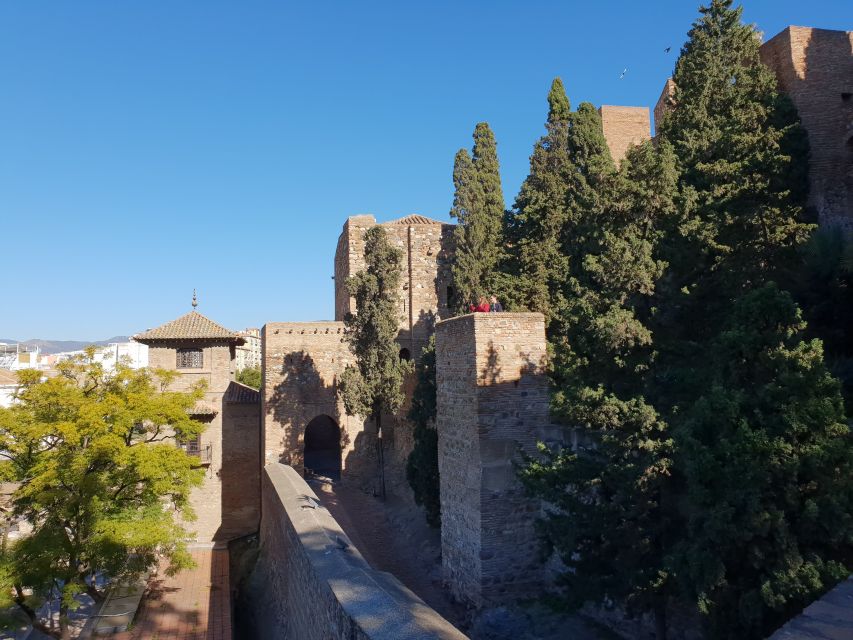
The Alcazaba is the centerpiece of the tour. Built into the side of Gibralfaro Mountain, this fortified complex gives you both history and views. Its position explains why it mattered: from above, Málaga and the coast are easier to watch and control.
The route uses an elevator to reach the highest point. That is a practical feature, but do not mistake it for a completely easy visit. You still walk through a historic fortress area, and the route can include uneven surfaces and changes in level. Comfortable clothes are specifically recommended, and sensible shoes are a good idea.
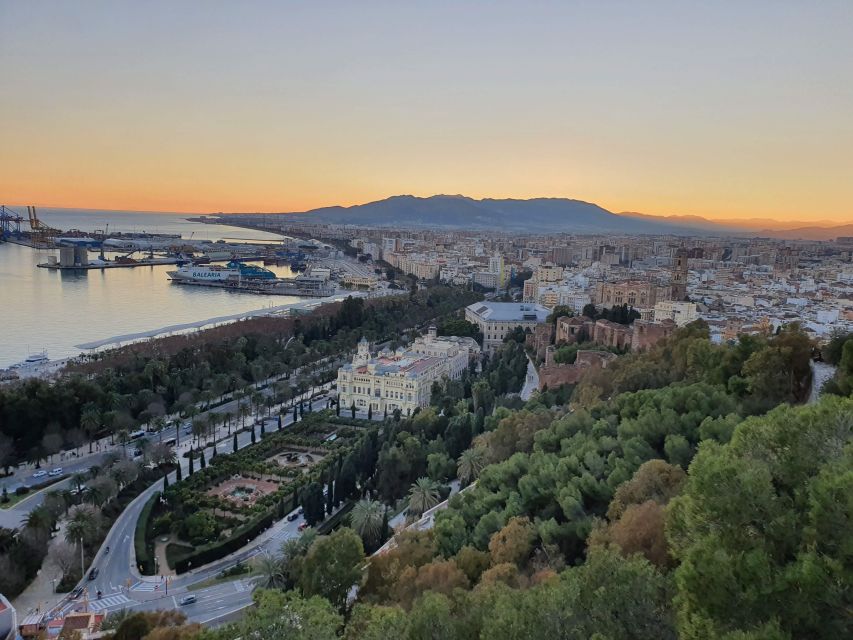
At the top, you get panoramic views over Málaga. This is the moment when the city’s layout begins to make sense. You can look toward the port, the central streets, and the hills around the city, then understand why the Alcazaba was built where it is.
Inside the complex, the guide provides the story rather than leaving you to guess at broken walls and courtyards. Raquel was praised for turning the Alcazaba visit into one continuous story, while other guides were valued for explaining details and answering questions. That style works well here because the site is large enough to feel confusing without a clear route.
One useful piece of advice comes from a past participant who wanted more time inside the Alcazaba and returned the next day with an audio guide. I would keep that possibility in mind. The group tour gives you an efficient introduction, but three hours must also cover the Cathedral, Roman Theater, Picasso’s streets, and the walk between them. If the Alcazaba is your chief interest, plan a separate return visit.
The Roman Theater below the fortress
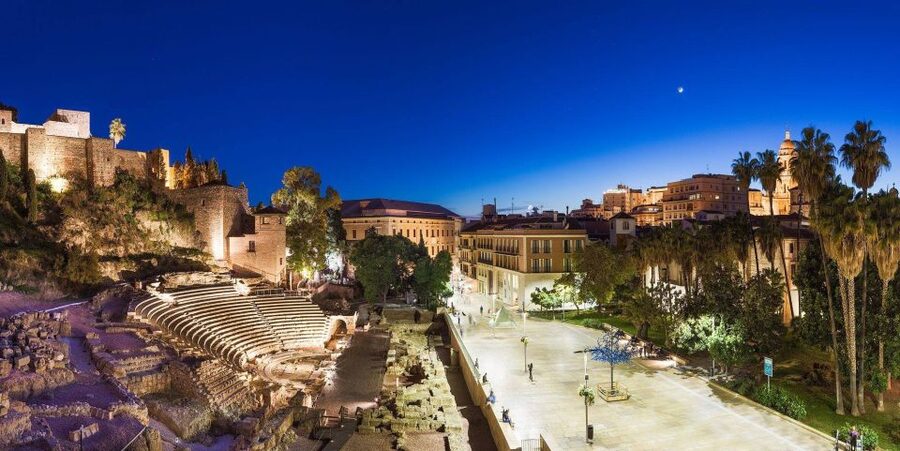
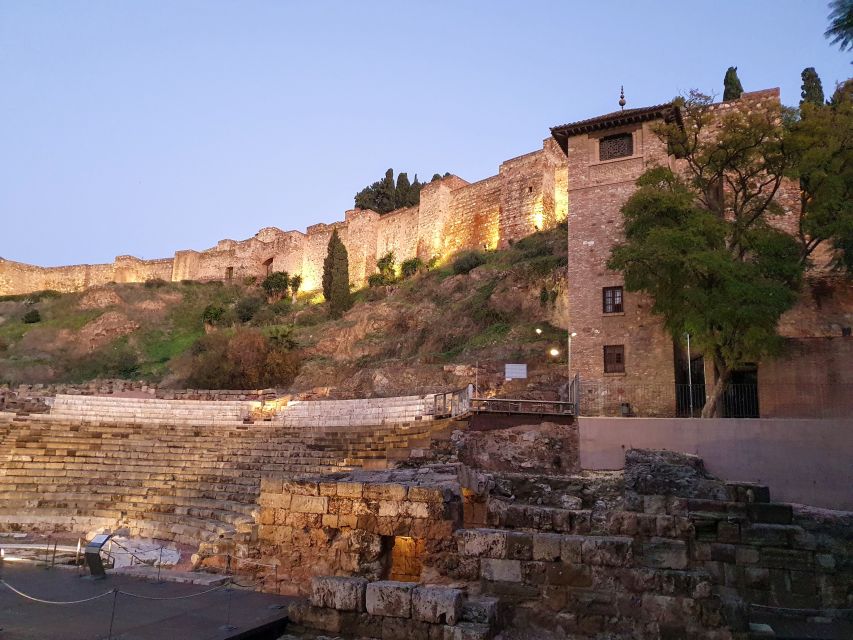
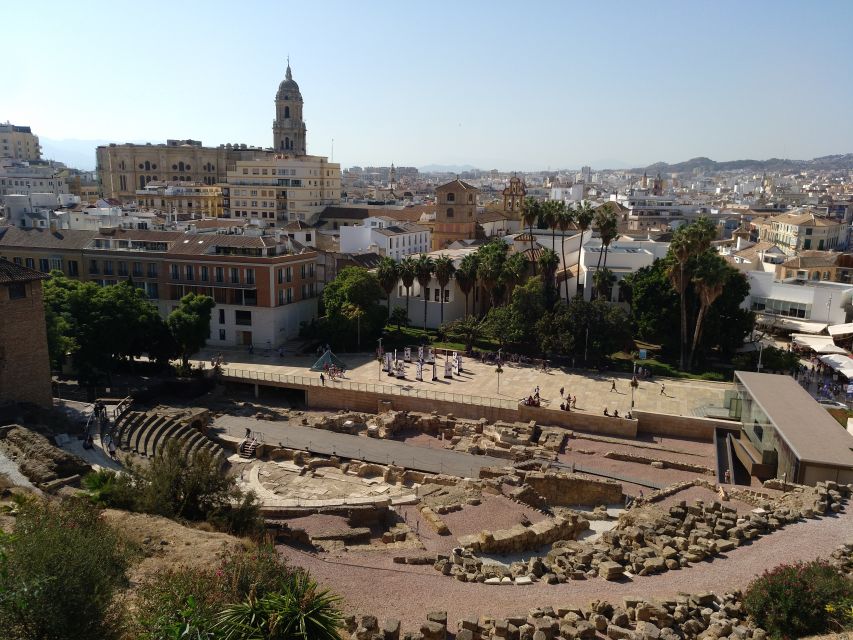
The ancient Roman Theater sits near the foot of the Alcazaba. Its location makes the history of Málaga feel unusually compact: Roman remains, a Moorish fortress, and a Christian cathedral are all part of the same central walk.
Your guide explains what you are seeing at the theater and places it within Málaga’s earlier past. The stop is shorter than the Alcazaba, but it adds an important layer to the day. You are not looking at one period in isolation. You are seeing how different eras occupy the same city center.
The theater also helps balance the tour. The Cathedral offers religious art and architecture, while the Alcazaba gives you fortified views and Moorish design. The Roman Theater provides an archaeological stop that is more direct and stripped back.
The skip-the-line arrangement is useful here, although the real benefit depends on the crowd at your departure time. You should still arrive promptly at the stated meeting point. The guide needs to gather the group and keep the timed route together.
Same streets, a different story:
- Granada: Albaicín and Sacromonte Guided Sunset Walking Tour
★ 4.9 · 2,962 reviews - Toledo Tour & Vineyard Walk with Wine Tasting from Madrid
★ 5.0 · 2,546 reviews - Madrid Walking Tour from Puerta del Sol to Retiro Park
★ 5.0 · 2,285 reviews - Barcelona: Food Walking Tour with Tapas and Wine
★ 4.9 · 2,180 reviews
Picasso’s Málaga on foot
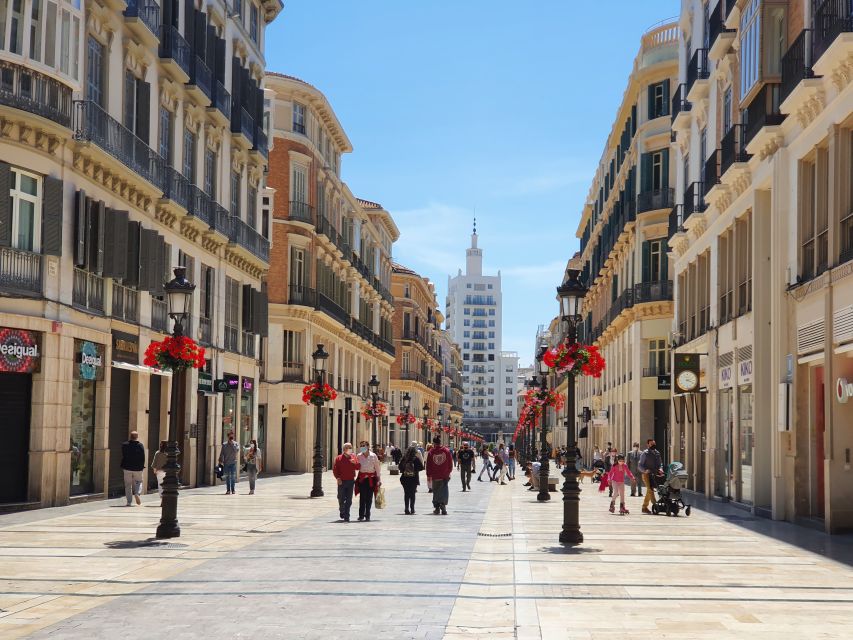
The final part moves into the streets connected with Pablo Picasso. You see his statue and explore Plaza de la Merced, Plaza del Obispo, and Calle Larios.
This section is not a museum visit. It is a city walk focused on place and biography. Your guide explains where Picasso lived and points out the streets and squares connected with his early life. That makes it a good addition for anyone interested in art, but it also gives non-art lovers a more personal way to understand Málaga.
Plaza de la Merced is especially useful as a transition point between the old monuments and the modern city. Calle Larios, one of Málaga’s best-known central streets, helps you see how the historic core functions today. Plaza del Obispo brings you back toward the Cathedral area and gives the route a coherent shape.
Several guides also offer practical suggestions for food and drinks after the tour. That is valuable because you finish in the center, where you can continue exploring on foot. I would ask your guide for recommendations during the walk rather than waiting until the end, when the group may be breaking up.
What the $53 price really covers
At $53 per person, this is not Málaga’s cheapest walking tour. The value depends on whether you want the three major paid sights explained in one visit.
The price includes:
- An official live guide
- Skip-the-line tickets for the Alcazaba
- Entry to the Roman Theater
- Entry to the Cathedral
- Three hours of guided walking
If you planned to visit all three sites independently, you would still need to buy tickets and work out the route. You would also lose the historical links between them. For a first visit, the convenience and explanation make the price reasonable, particularly if your schedule is short.
The value is strongest when you get a guide like Carmen, who was praised for answering questions and adjusting to the group, or Eduardo, who was described as clear, engaging, and good-humored. Several people also enjoyed guides who added background beyond the formal stops, including Málaga’s port, local food, and Picasso.
The value is weaker if you prefer to linger. One person wanted more time at the Alcazaba and returned the next day. A group walk has to keep a schedule, so you cannot expect the same freedom as a private visit.
Pace, group size, and practical comfort
The tour lasts three hours and is described as a group walking tour. The group size can vary. Some departures have been very small, while one past group had eight people. A smaller group usually means more room for questions and easier contact with the guide, but you should not assume every departure will be intimate.
The walking pace is generally manageable. One participant described it as kind and comfortable, while another said the length and variety were just right. Still, the route covers several historic areas and includes the Alcazaba’s hillside setting. You should wear comfortable clothes and shoes, bring water, and avoid scheduling a demanding activity immediately afterward.
This tour is not suitable for people with mobility impairments. The combination of walking, historic surfaces, steps, and the Alcazaba’s setting makes that restriction important, not a minor footnote.
There is no hotel pickup or drop-off. You make your own way to Plaza de la Marina and leave from the final central area. That is not a problem for most visitors staying in central Málaga, but you should allow time to find the Tourist Information Office door before the start.
The booking terms are flexible: you can cancel up to 24 hours ahead for a full refund, and the reserve-now, pay-later option lets you hold a place without paying immediately. Starting times vary, so check availability for your date.
The guide can make or break the experience
The attractions are worth seeing on their own, but the guide is the main variable. The strongest accounts describe guides who combine facts with personality rather than reciting dates.
Carmen received repeated praise for clear English, patience, and a warm manner. Eduardo was valued for his command of history and art, as well as his humor. Rachel was described as thorough and entertaining, while Antonio was praised for local recommendations as well as historical detail. Daniel earned a reputation as a good storyteller.
That range matters because Málaga’s history can become dry if it is presented as a string of names and dates. The better approach is to explain why the Alcazaba sits where it does, how the city changed, and what Picasso’s Málaga looked like. You should feel free to ask questions. Several people specifically valued guides who took time to answer them.
There have been minor organizational problems. One person had to catch up with the group after the guide did not realize they were part of the booking. That seems unusual, but it is a reminder to arrive early, stand clearly by the meeting point, and keep the guide’s contact details handy.
Who should book this Málaga walk?
I would recommend this tour to a first-time visitor who wants the city’s main historic sights explained without spending a full day on separate visits. It also suits cruise passengers or anyone with only a short stay, since the route gathers several major attractions into one morning or afternoon.
It is a good fit if you:
- Want history explained in English or Spanish
- Prefer a guide to an audio guide
- Like moving between monuments and city streets
- Want to see the Alcazaba’s views
- Need skip-the-line tickets
- Enjoy asking questions and getting local suggestions
I would choose something else if you want to explore each site at your own pace, need an accessible route, or mainly want a long, quiet visit inside the Cathedral. The tour covers a lot, and the Alcazaba may deserve extra time afterward.
Should you book it?
Book this Málaga walking tour if you want a strong first orientation with the Cathedral, Alcazaba, Roman Theater, and Picasso’s streets all in one route. The best reason to choose it is not simply the ticket convenience. It is the connection between the sites, especially when the guide explains how Roman, Moorish, Christian, and modern Málaga meet in the same compact center.
At $53, it offers fair value for three admissions and three hours with a live guide. Go in expecting a brisk overview, not an exhaustive study of every room and courtyard. Wear comfortable shoes, allow for hills and uneven ground, and confirm the Cathedral arrangements if seeing its interior is essential.
FAQ
How long does the tour last?
The tour lasts three hours.
What sights are included?
The route includes Málaga Cathedral, the Alcazaba, the Roman Theater, and streets and squares connected with Picasso.
Are entrance tickets included?
Yes. Tickets for the Alcazaba, Roman Theater, and Cathedral are included.
Does the tour offer skip-the-line access?
Yes. Skip-the-line access is included for the Alcazaba, Roman Theater, and Cathedral.
What languages are available?
The live guide service is available in English and Spanish.
Where is the meeting point?
Meet by the door of the Tourist Information Office at Plaza de la Marina.
Is hotel pickup included?
No. Hotel pickup and drop-off are not included.
Can the Cathedral visit change on Mass days?
Yes. On days when Mass affects access, the guide gives the Cathedral explanations from outside the building.
Is the tour suitable for people with mobility impairments?
No. The activity is not suitable for people with mobility impairments.
New walking tours around Spain
- Menorca: Mahon Guided Walking Tour with History & Tastings★ 4.9 · 110 reviews
- Malaga Private Walking Tour, Alcazaba & Catamaran Cruise★ 4.7 · 92 reviews
- Malaga: Taste-of-Spain Walking Food Tour★ 4.8 · 72 reviews
- Málaga: 2h Walking Historical Tour–Art, Culture and Legends★ 4.9 · 341 reviews
- Malaga: Walking Tour of Must-See Attractions★ 4.8 · 79 reviews
- Madrid: Visit to the Royal Palace & Walking Tour of the City★ 4.4 · 288 reviews
- Madrid: Welcome to Madrid Guided Walking Tour in English★ 4.9 · 263 reviews
- Ardales: Caminito del Rey Private Walking Tour★ 4.7 · 91 reviews
Spain Walking Tours, side by side.

Barcelona Tapas and Wine Experience Small-Group Walking Tour
Read our review →
Barcelona: Tapas Walking Tour with Food, Wine, and History
Read our review →
Madrid Tapas & Wine Tasting Walking Tour – Small Group Local Bars
Read our review →
Granada: Albaicín and Sacromonte Guided Sunset Walking Tour
Read our review →
Toledo Tour & Vineyard Walk with Wine Tasting from Madrid
Read our review →

Madrid: Tapas & Wine Tasting Tour with Local Guide
Read our review →
Madrid: Royal Palace Skip-the-Line Guided Tour
Read our review →Lists this walk sits on