
Review · THE UK
Manchester City Highlights Walking Tour
Manchester’s story is unusually easy to read while walking. Roman foundations, Victorian trade, women’s rights campaigns, football culture, street art, and the modern Gay Village all sit within the central area. This tour links those pieces with a local guide, so you get more than a march past handsome buildings.
I like the wide range of subjects and the way the route includes both major sights and less obvious corners. I also like the local flavor: guides such as Gordon, Sam, David Hey, and Rebecca bring personal stories, pub tips, football opinions, and a clear affection for the city.
The main limitation is time. Ninety minutes moves quickly, and the tour focuses on the city center rather than going inside attractions. The meeting point can also change with the option you book, so check your confirmation carefully.
Key points to know before you book
- Roman roots and industrial power: Connect Manchester’s early foundations with the mills, merchants, and inventions that changed the world.
- Central sights in a short walk: See St Peter’s Square, Manchester Central Library, the Medieval Quarter, Printworks, Sackville Gardens, and the Gay Village.
- Local guides make the difference: Gordon, Sam, David Hey, and Rebecca are praised for clear explanations, humor, patience, and strong local feeling.
- A city told through social change: Hear about suffragettes, LGBTQ+ life, music, street art, football, and the merchants who helped shape Manchester.
- Good first-day orientation: The route gives you a useful map of central Manchester and ideas for pubs, food, and later sightseeing.
- Practical but weather-dependent: Wear comfortable shoes and weatherproof clothing because the walk goes ahead in rain or shine.
Why this short Manchester walk works
Manchester can feel scattered on a first visit. Its grand civic buildings sit near old commercial streets, modern entertainment venues, canals, universities, memorials, and districts with very different identities. This 90-minute tour gives you a frame for the city before you start exploring on your own.
I see the strongest value in the way it joins places that might otherwise seem unrelated. A square linked to political protest, a garden tied to LGBTQ+ history, a medieval street, and a former industrial center become parts of one story. You begin to understand why Manchester is proud, sometimes rough around the edges, and always changing.
The tour is led in English by a local guide. The most frequently praised guides in the supplied information are Gordon, Sam, and David Hey, with Rebecca also receiving warm comments. Their styles differ, but the useful pattern is clear: expect conversation, questions, humor, and personal observations rather than a dry list of dates.
Some tours give you a polished speech and send you on your way. This one appears better suited to people who want to ask where to eat, which pub to try, what else to see, or how a local views the city’s football rivalry. That extra exchange is important because the formal route is short.
More City Highlights Walking Tours in the UK
- Wizard Walk of York – WINNER Best Tour & Best of York Award
★ 5.0 · 918 reviews - York: City Highlights Small Group Walking Tour
★ 4.9 · 867 reviews - London Sightseeing Walking Tour with 30+ sights
★ 5.0 · 705 reviews
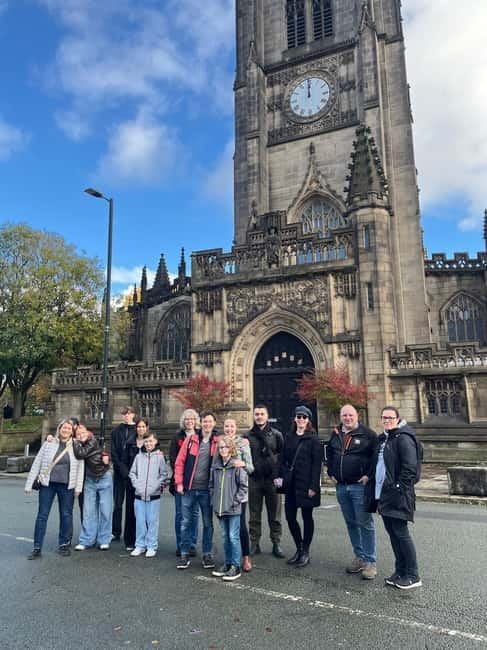
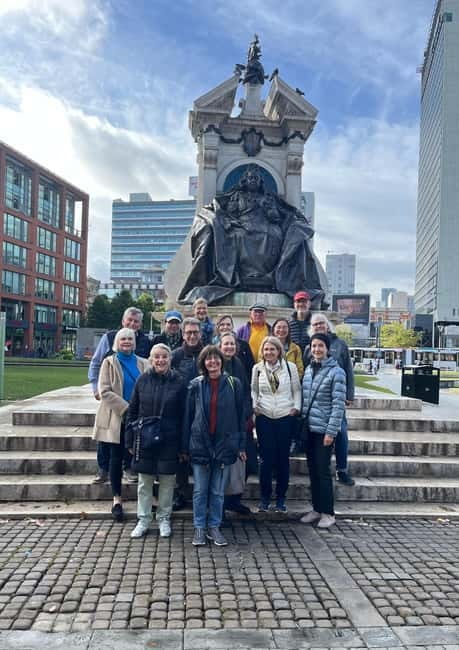
St Peter’s Square and Manchester Central Library
St Peter’s Square is one of the best places to begin understanding modern Manchester. It is a civic space with major public buildings and strong links to the city’s political and social life. Your guide uses the area to connect architecture with the people who have argued, organized, and campaigned here.
Manchester Central Library gives the square a grand sense of scale. Even if you only see it from outside, the building helps show how seriously the city treats education, public access, and civic life. The tour’s focus on suffragettes fits naturally here, since Manchester’s story is not only about factories and commerce. It is also about people pressing for rights and representation.
This stop is useful early in your visit because it gives you a fixed point in the city center. You can return later to explore nearby streets and buildings at your own pace. The limitation is simple: this is a walking tour, not an interior visit, so do not expect extended time inside the library.
The Medieval Quarter and Manchester’s older face
The Medieval Quarter provides a sharp contrast to Manchester’s better-known industrial image. Here, the city feels older and more layered. The streets and buildings offer a chance to hear about Manchester before the age of cotton mills, railways, and mass urban growth.
The tour describes the city through Roman and Viking connections, along with its medieval development. That does not mean you should expect a large archaeological site or a reconstructed Viking settlement. The value is in understanding that Manchester did not begin with the Industrial Revolution. The industrial city grew over older foundations.
I like this section because it prevents a common mistake: treating Manchester as a purely Victorian city. Once your guide points out the older layers, later sights make more sense. You can better appreciate how the center has been rebuilt and reused over many centuries.
The Medieval Quarter is also a good place to listen for small details. A guide may point out a building, street alignment, or local reference that you would pass without noticing. These are the moments that turn a general sightseeing walk into a lesson in reading the city.
Sackville Gardens and the Gay Village
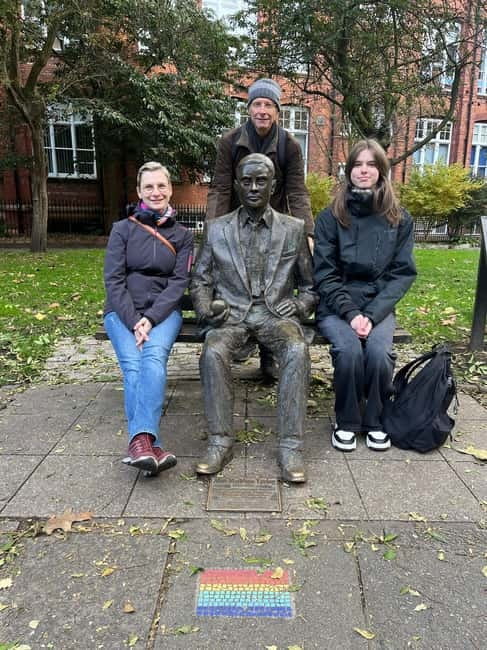
Sackville Gardens and the Gay Village bring Manchester’s recent social history into the route. This section looks at LGBTQ+ life and the way the city’s identity has developed beyond its industrial past.
The area matters because Manchester is not presented as a museum of old factories and civic buildings. It is shown as a living city with communities, nightlife, music, public art, and ongoing change. The Gay Village also gives the guide a chance to discuss culture in a direct, human way rather than treating it as a separate theme.
You should expect respectful historical context and a look at the area’s place in Manchester today. The precise stops and amount of time can vary, especially if the meeting point or route changes with the booking option. Still, this is one of the tour’s most distinctive features.
For many visitors, the Gay Village will be easy to explore again later. The walking tour helps you see it as part of the city’s wider story, not simply as a nightlife district. That context is a real benefit if you have limited time in Manchester.
Same streets, a different story:
- Magical London: Harry Potter Guided Walking Tour
★ 4.7 · 22,044 reviews - Edinburgh: Harry Potter Magical Guided Walking Tour
★ 4.8 · 11,944 reviews - Edinburgh Castle: Guided Walking Tour with Entry Ticket
★ 4.7 · 11,699 reviews - Underground Vaults Walking Tour in Edinburgh Old Town
★ 4.5 · 8,506 reviews
Street art, music, and the city’s modern voice
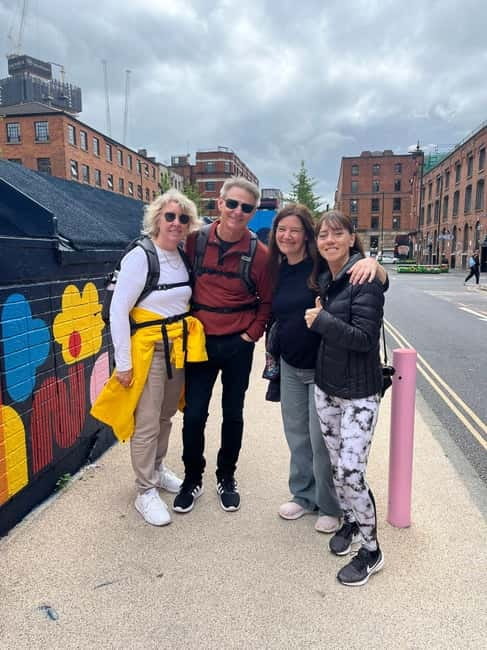
Local street art adds visual variety to a route that could otherwise focus heavily on stone, brick, and civic architecture. Manchester has a strong creative reputation, and the tour uses public art to show how the city expresses itself now.
The music scene also fits this modern section. The supplied tour details point to Manchester’s thriving music culture, while the guides bring the local angle. Do not expect a dedicated music tour with long stops at recording studios or venues. Instead, music forms part of the city story alongside art, nightlife, and popular culture.
I find this mix useful because it keeps the tour from becoming too academic. You might hear about a historical figure at one stop, then move to a modern cultural reference at the next. That change of pace helps the information stay fresh during a 90-minute walk.
Street art is also a good reason to keep your phone ready for pictures, though the tour’s purpose is explanation rather than a photography session. The best images may be small details rather than famous landmarks.
Manchester Printworks and the industrial city
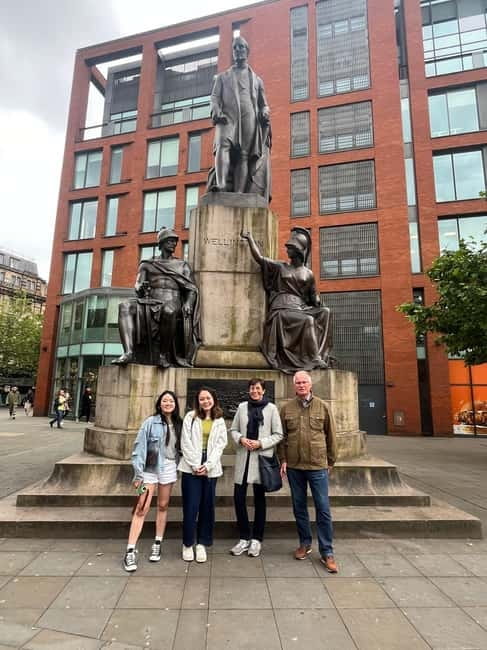
Manchester Printworks represents the city’s working and commercial past, as well as its later transformation. The name points to the printing trade, while the area today is associated with entertainment and food. It is a useful place to discuss how central Manchester has changed use over time.
This is where the tour’s industrial theme becomes especially practical. Manchester’s growth was not just about factories in the abstract. It involved merchants, workers, printing, trade, transport, and crowded urban life. Guides may also connect the city’s economic rise with the people who financed, built, and challenged that system.
The modern setting helps you see that cities do not preserve history in one neat block. Old buildings are adapted, districts are renamed, and former working areas become places to eat, meet, and go out. That tension between heritage and present-day use is part of Manchester’s appeal.
Printworks is also a handy orientation point. If you are staying in the center, you can use the tour’s route to plan a later evening stop. Just keep your expectations realistic: the guide shows the district as part of the walk, but the experience does not include meals, drinks, or entry to entertainment venues.
Football, merchants, and local pride
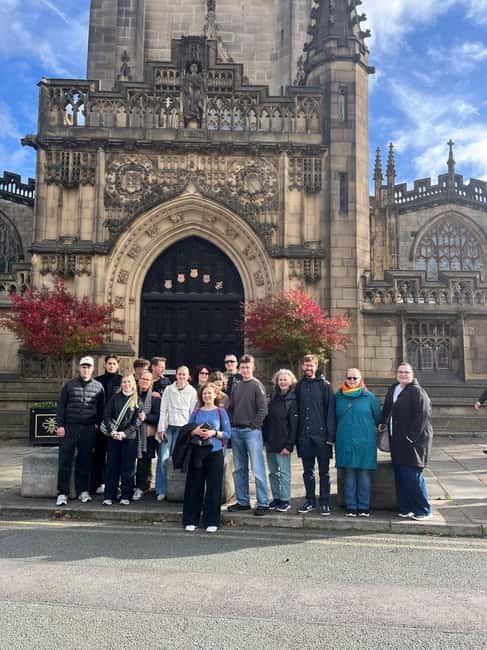
Football icons are part of the tour’s wider story, and that is hardly surprising in Manchester. The city’s football identity is strong, but this walk is not a stadium tour and does not promise entry to Old Trafford or the Etihad Stadium.
The better reason to include football is that it reveals local feeling. A guide such as Gordon may bring a personal club connection into the conversation, while Sam or David may offer a different local angle. Those details can make the city feel less like a collection of attractions and more like a place where people have loyalties and arguments.
The tour also points to pioneering merchants. This is important context for Manchester’s rise. The city’s wealth and influence came from trade, business, manufacturing, and transport, not only from famous buildings. A good guide helps connect the grand civic center with the people and industries behind it.
You will not leave knowing every club statistic or merchant family. You should leave with a clearer sense of how business, politics, culture, and sport overlap in Manchester.
The guides and the tone of the walk
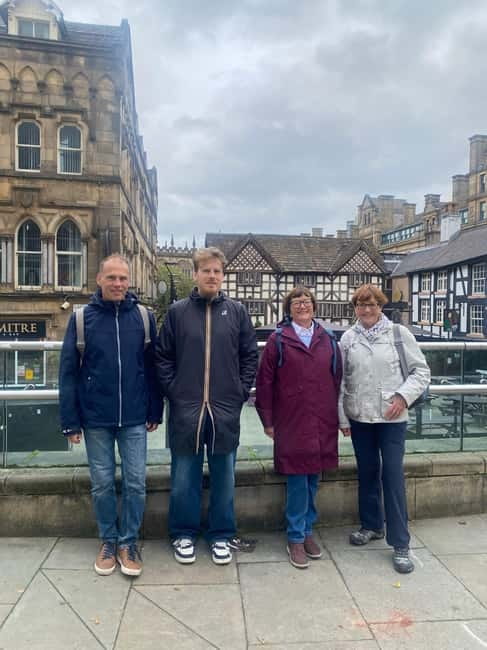
The strongest feature here is the guiding. Gordon is repeatedly described as friendly, clear, funny, and generous with his time. He is also praised for speaking at a comfortable pace, which matters if English is not your first language.
Sam’s style comes through as warm and chatty, with useful suggestions for food, drinks, and other things to do. David Hey is described as friendly and strong on Manchester’s past. Rebecca is praised for her enthusiasm. You cannot choose a particular guide unless the booking option allows it, but the repeated names give you a sense of the team’s local approach.
The pace appears relaxed rather than hurried. One group found the walk so conversational that it continued about 40 minutes beyond the planned time. That is a pleasant bonus when schedules allow, but you should not build your onward plans around an extension. The advertised duration is 90 minutes.
Small groups can make this style work especially well. One supplied comment describes a one-to-one walk that covered more ground and allowed more questions. A private group is available, which may suit families, friends, or visitors who want a more personal conversation.
Price, timing, and practical value
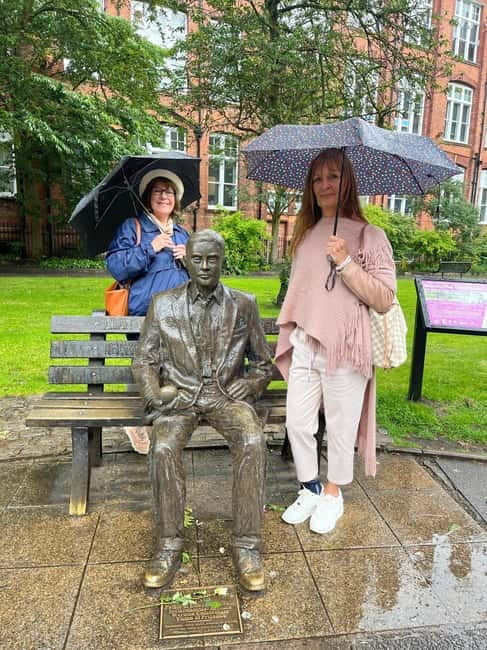
At $18 per person, the tour is priced well for a 90-minute introduction to central Manchester. You are paying for a local guide, not admission to attractions, transport, food, or a long museum visit. The value depends on how much you want context and orientation.
I would call it good value for a first morning or afternoon in the city. A guide can help you understand several districts in one outing, then you can decide where to return for a longer visit. It may also save you from spending half a day wandering without knowing what you are looking at.
The walk is wheelchair accessible, though city-center conditions can still vary from street to street. Wear comfortable shoes. Bring clothing suited to the forecast, since the tour runs in rain or shine.
English is the stated language. The meeting point may vary according to the option booked, so check that detail before setting out. You can cancel up to 24 hours ahead for a full refund, and the reserve-now, pay-later option keeps your plans flexible.
Who should book this Manchester tour?
I would choose this walk if you are visiting Manchester for the first time, have only a day or two, or want a useful introduction before visiting museums and other attractions. It also suits returning visitors who know the center but want more context around the streets they already use.
The tour works well for adults, families, solo visitors, and small groups who enjoy asking questions. It is especially helpful if you want history presented in plain language rather than a long academic lecture.
You may want something else if you prefer private indoor visits, a dedicated football experience, a music-only route, or detailed time inside historic buildings. The tour covers many subjects, so each one receives an introduction rather than a full treatment.
Should you book it?
Yes, if you want a friendly, fairly priced way to get your bearings and understand what makes Manchester different from other British cities. The strongest reasons are the broad route, the local voices, and the balance between old history and present-day culture.
Book it early in your stay so the places and tips can guide the rest of your visit. Just remember that the experience is a fast central-city overview, not a deep study of any single district. With comfortable shoes, weather-ready clothing, and an hour and a half to spare, it is a sensible first step into Manchester.
FAQ
How long does the Manchester City Highlights Walking Tour last?
The advertised duration is 90 minutes. Some walks may run longer when the guide has time to answer questions, but you should plan around the stated 90 minutes.
How much does the tour cost?
The listed price is $18 per person.
What language is the tour offered in?
The tour is conducted in English with a live English-speaking guide.
Which Manchester sights are included?
The route includes Manchester Central Library, St Peter’s Square, Sackville Gardens, the Gay Village, the Medieval Quarter, Manchester Printworks, local street art, and other lesser-known city-center sights.
Is the tour wheelchair accessible?
Yes, the activity is listed as wheelchair accessible.
Can I book a private group?
Yes, a private group option is available.
What should I bring?
Wear comfortable shoes and clothing suited to the weather. The walk takes place rain or shine.
New walking tours around the UK
- London: Old City Walking Tour★ 4.8 · 135 reviews
- Manchester: Music-Themed City Walking Tour★ 4.4 · 109 reviews
- Manchester: Media City & The Quays Guided Walking Tour★ 5.0 · 165 reviews
- London: Witches and History Bankside Walking Tour★ 4.8 · 223 reviews
- London: Palaces and Parliament Walking Tour★ 4.8 · 365 reviews
- London: Winston Churchill and London in WWII Walking Tour★ 4.8 · 143 reviews
- London: Westminster Walking Tour & The Tower of London Entry★ 4.6 · 131 reviews
- London: Tootbus Christmas Lights Tour incl walking tours★ 3.6 · 227 reviews
UK Walking Tours, side by side.

Magical London: Harry Potter Guided Walking Tour
Read our review →
Edinburgh Castle: Guided Walking Tour with Entry Ticket
Read our review →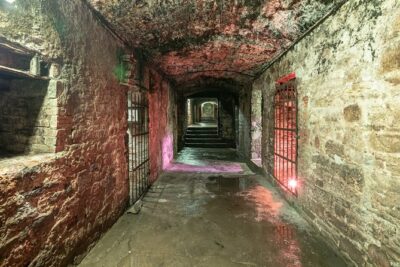
Underground Vaults Walking Tour in Edinburgh Old Town
Read our review →
London: The Original Jack the Ripper Walking Tour
Read our review →
Oxford University Walking Tour With University Alumni Guide
Read our review →
Edinburgh Castle Guided Walking Tour in English
Read our review →
Tour for Muggles The Ultimate Harry Potter Walking Tour in London
Read our review →
Edinburgh Darkside Walking Tour: Mysteries, Murder and Legends
Read our review →Lists this walk sits on