
Review · MARRAKECH
Marrakech: 3-Hour Monuments, Souks & Old Medina Walking Tour
Marrakech reveals itself best on foot, and this tour gets you quickly into the maze of the old Medina. You move from Jemaa el-Fna and the Koutoubia area into craft quarters, spice stalls, hammams, palaces and grand Islamic architecture. I especially like the clear local storytelling and the chance to see metalworkers, leather workers, textile makers and other artisans at work.
I also like the practical side. Guides such as Ibrahim, Fatah, Abdennabi and Elhoussine have been praised for giving useful shopping advice without forcing purchases, and several guides have adjusted the pace for children, older walkers and curious questioners. The main drawback is that the walk can last closer to four hours, and one guide was reported to move too fast through traffic, so comfortable shoes and attention around motorbikes matter.
Key points to know before you book
- Café Argana is the meeting point: Find your guide in front of the restaurant in Jemaa el-Fna, with confirmation sent by WhatsApp the day before.
- The souks are the heart of the walk: You see working craft areas, including the lantern quarter, rather than simply passing shop windows.
- Two major indoor stops may be possible: The published route offers Ben Youssef Madrasa or Le Jardin Secret, while several tours have included both.
- Entry fees depend on your option: Bahia Palace and Le Jardin Secret are listed at 100 MAD, and Ben Youssef Madrasa at 50 MAD.
- Guides make the difference: Ibrahim, Fatah, Elhoussine and Abdennabi are among the guides praised for history, humor, patience and fair shopping advice.
- Allow three to four hours: The tour is a proper walking morning or afternoon, not a quick circuit of photo stops.
Why this Medina walk works well as a first introduction
Marrakech’s old city can feel confusing on your first day. The lanes twist, signs are limited, scooters appear from nowhere, and the souks are arranged by trade rather than by a neat tourist map. A local guide gives you a useful framework before you return on your own.
The tour begins near Café Argana, beside Jemaa el-Fna. This is an easy landmark, but it is also a busy meeting place with many guides and groups. You receive the guide’s name and meeting details by WhatsApp the day before. I would still arrive a little early and look for the correct person rather than assuming every guide near the café belongs to your group.
The walk usually covers major sights along with less polished everyday corners of the Medina. That mix gives you more than a string of grand buildings. You see how the old city functions, where trades are grouped, how hammams fit into daily life and why certain scents and sounds follow you through the lanes.
The price begins at about $21 per person, which is fair for a three to four-hour guided walk. The value is strongest if you are new to Marrakech and want context, orientation and help reaching places that are easy to miss. Check your selected booking option carefully, since some choices include entrance fees and others do not.
More Old Town Walking Tours in Morocco:
- Marrakech: Colorful Medina Souks Guided Walking Tour
★ 4.7 · 2,470 reviews - Marrakech: Saadian Tombs & Bahia Palace, Medina Guided Tour
★ 4.6 · 1,989 reviews - Explore Fes: Unforgettable Guided Walking Tour of the Medina
★ 4.7 · 1,339 reviews
Jemaa el-Fna and the Koutoubia setting
Jemaa el-Fna is the natural opening scene. The square is a meeting place, performance space and gateway to the Medina. Your guide uses it to explain the layout of central Marrakech before leading you away from the open square and into the narrower streets.
Do not expect a quiet historical plaza. The square is active, crowded and full of people trying to sell things or attract attention. That energy is part of the experience, but it can make the first meeting slightly confusing. Stay near Café Argana and keep your phone available for the guide’s message.
The Koutoubia Mosque is another key landmark. Its minaret is one of Marrakech’s best-known symbols, and the surrounding gardens give you a little breathing room before the tight lanes of the Medina. The tour focuses on the mosque’s exterior and Islamic design, since non-Muslim visitors generally do not enter the prayer hall.
I like this early orientation because it gives you a fixed point. After an hour in the souks, you may have no idea which direction you are facing. Knowing where Koutoubia and Jemaa el-Fna sit helps you find your way back later.
Bahia Palace and stories of power
Bahia Palace provides one of the tour’s strongest history lessons. Its rooms and courtyards open a window onto late nineteenth-century Morocco, with stories involving former slaves who rose to power, polygamy, concubines, status and family politics.
The building matters as much for its human stories as for its decoration. Your guide points out tilework, painted ceilings, carved plaster and the way rooms connect around courtyards. Without explanation, it is easy to see only attractive patterns. With a guide, the palace becomes a place shaped by ambition, wealth and complicated household relationships.
Allow time for photographs, but stay aware of the group. Bahia Palace can feel crowded, especially in its most decorative rooms. The tour includes guided sightseeing and some free time, though the exact amount depends on the group and the pace.
One advantage here is the guide’s ability to connect architecture with social life. Several highly praised guides, including Fatah and Elhoussine, have been described as bringing the buildings to life with stories rather than reciting dates. That approach suits this palace especially well.
The Medina’s craft quarters and working souks
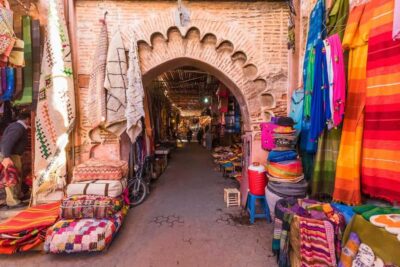
The souks are not one market. They are a series of lanes connected by trade, family businesses and small workshops. You may pass displays of textiles, pottery, leather, woodwork, spices, lamps and metal goods. The point is not simply to shop, but to see how Moroccan craftsmanship is presented and made.
The lantern quarter, Souk Haddadine, is a particularly memorable section. Metalworkers shape lampshades and lanterns, and the finished pieces create a warm glow even in narrow streets. If you are interested in buying one, ask about size, packing and shipping before agreeing to a price. If you are not shopping, say so clearly and enjoy the demonstration without feeling obliged.
Shopping is part of the route, but the tour is not supposed to require purchases. This is important in Marrakech, where a friendly introduction can quickly become a sales pitch. Guides such as Abdennabi and Elhoussine have been praised for explaining how to bargain and for warning visitors about pressure tactics without steering them toward commission shops.
Some routes may include a pharmacy or a shop demonstrating argan oil, spices, oud, tea and perfumes. These stops can be interesting, especially if you want to understand local products, but the sales pressure is not equally comfortable for everyone. One participant specifically disliked pressure at a pharmacy and an antique artisan stop. If you prefer a no-shopping walk, say so at the beginning.
The guide can also help you understand what you are seeing. A pottery shop is one thing; a craft quarter organized around a long-standing trade is another. I find that this context makes the souks feel less like a maze of souvenirs and more like a working part of the city.
More three-hour walks around Morocco:
- Marrakech 3-Hour Walking Tour
★ 4.3 · 120 reviews - Prague: 3-Hour Walking Tour of Old Town & Prague Castle
★ 4.7 · 5,696 reviews - Eat Like a Local: Venice 3-Hour Small-Group Food Tasting Tour
★ 5.0 · 3,137 reviews - Experience Porto’s Charm: 3-Hour Guided Walking Tour
★ 5.0 · 2,432 reviews
The old hammam and Spice Square
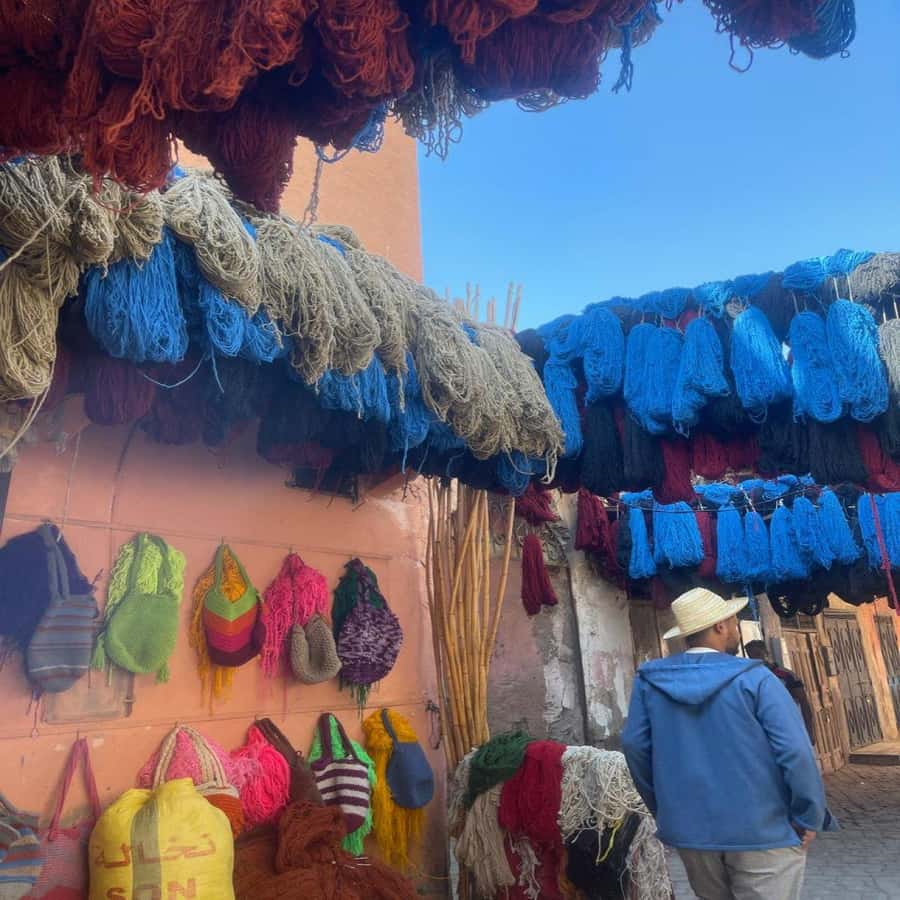
The route passes one of the area’s oldest hammams. Your guide explains the role of public baths in Moroccan culture, including their place in washing, routine and social life. You may not enter, but this brief stop adds useful context to the Medina.
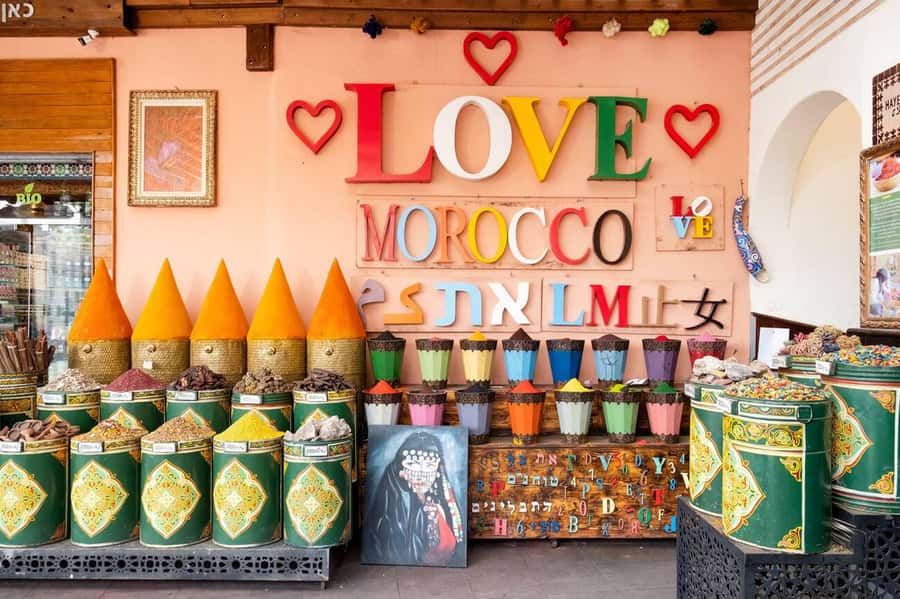
Spice Square brings a different mood. The displays are colorful, and the smells can change within a few steps. You might see herbs, spices and traditional products arranged for both daily use and visitors looking for gifts.
This is another point where a guide can save you time and awkwardness. You can ask what an item is used for, how it is prepared and whether it is being sold as a food, cosmetic or fragrance. If you buy something, bring cash and remember that the first price is not always the final one.
The tour does not promise a cooking class or a formal tasting session. It is a guided walk through the market, with time to look, ask questions and shop if you wish.
Ben Youssef Madrasa’s tilework and calm courtyard
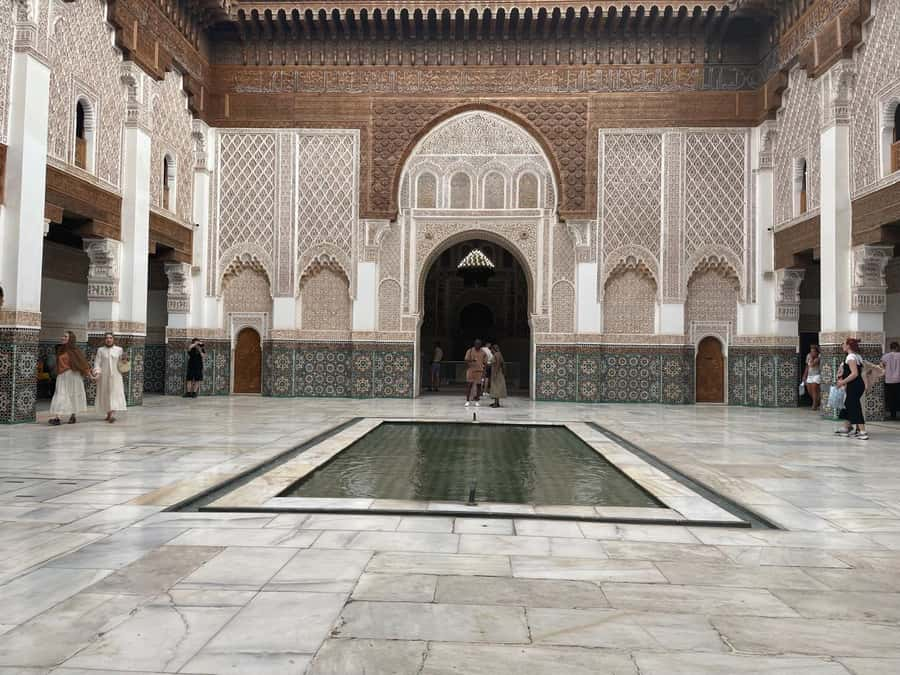
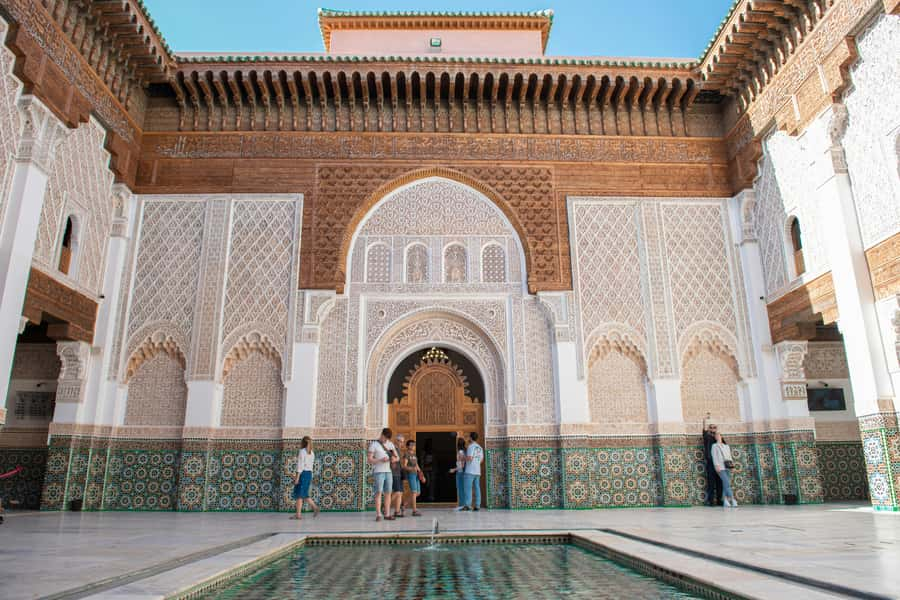
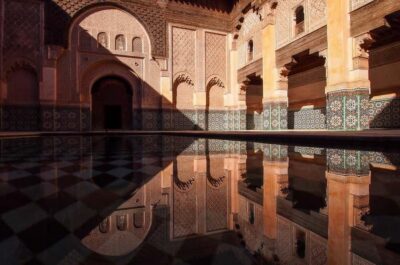
Ben Youssef Madrasa is the most visually striking stop for many people. This former Islamic college is known for intricate mosaics, carved stucco, timber details and a central courtyard that feels surprisingly calm after the noise of the souks.
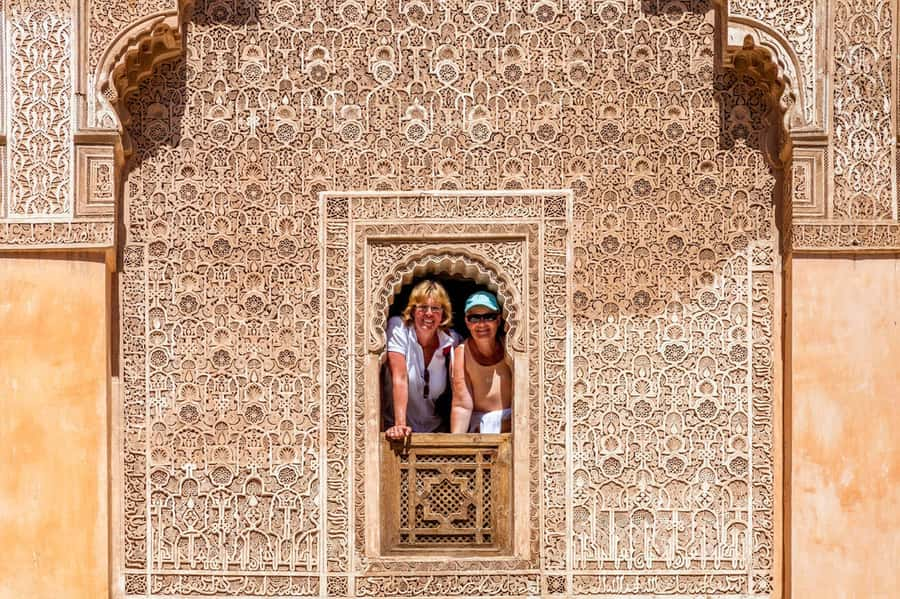
Your guide helps you read the decoration. Look closely at the geometric zellij tilework, the carved plaster and the repeated patterns. The craftsmanship rewards slow attention, and a good explanation helps you notice details you might otherwise photograph and forget.
The planned visit lasts about 40 minutes, though timing can shift. That is enough for a guided look and photographs, but not enough for a long architectural study. If Ben Youssef is your priority, tell the guide early and avoid spending all your free time shopping before reaching it.
The entrance fee is listed as 50 MAD when it is not included in your chosen option. Some bookings are sold with entrance fees included, so read the exact choice before paying. Skip-the-line access is also listed, which can save useful time at a popular monument, but it does not mean the site will be empty.
Several families have found this stop suitable for children because the building offers patterns, courtyards and visual details rather than only dates and names. It is also a good place to ask questions, since guides often explain Islamic design in simple terms.
Le Jardin Secret as a pause from the lanes
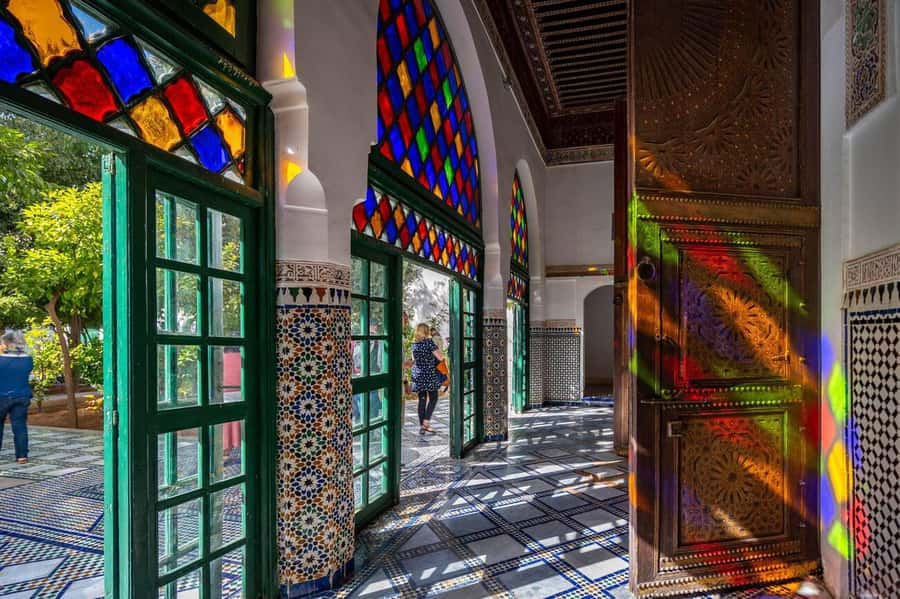
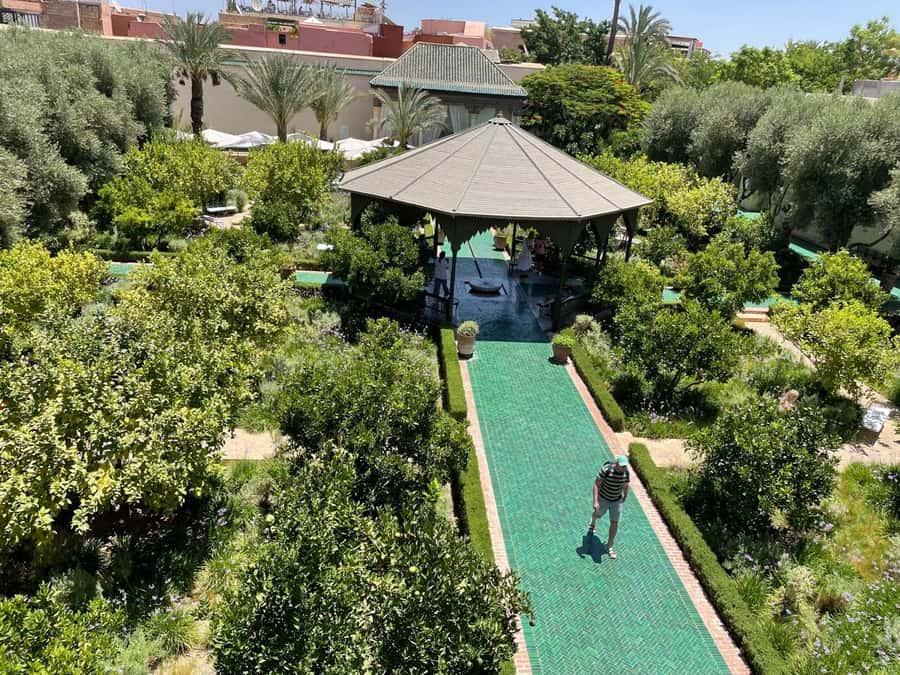
Le Jardin Secret offers a different kind of visit. Instead of grand palace rooms or religious architecture, you find a planted oasis inside the old Medina, with carefully designed spaces and a history tied to the city’s water and garden traditions.
The garden makes a welcome pause after the souks. You can slow down, take photographs and sit for a drink if time allows. One participant found it especially useful as shelter during heavy rain, which shows its practical value as well as its beauty.
The planned visit lasts around 40 minutes. The entrance fee is listed as 100 MAD if it is not included in your booking option. The route presents Ben Youssef Madrasa and Le Jardin Secret as a choice, but several tours have included both. Because the exact selection can vary, confirm what your option covers before you arrive.
I would choose the garden if you need a quieter break or enjoy planting, water design and photography. Choose Ben Youssef if architecture and Islamic decoration are your main interests. If both are included, the contrast makes the tour stronger.
Pace, comfort and group size
This is a walking tour through uneven, crowded streets. Wear supportive shoes, bring sunglasses and carry cash. The tour may run for four hours, so do not schedule an airport transfer or a tight lunch reservation immediately afterward.
The provider allows shared groups and private groups. A shared walk can be good value and often creates a friendly atmosphere, but the pace must suit several people. One guide was reported to walk too quickly, and a motorbike injured someone in the group. Keep children close, watch for bikes and tell the guide if the pace is too fast.
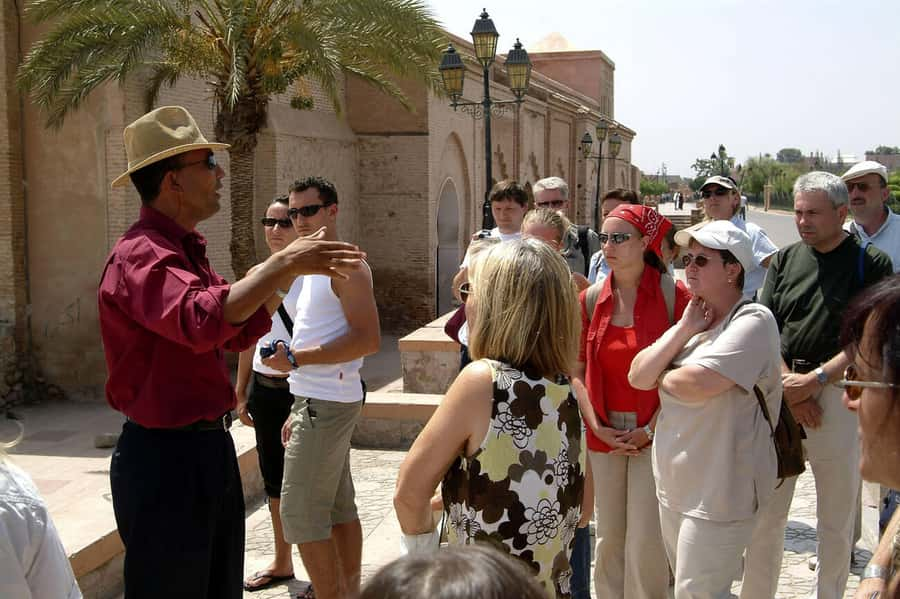
The guides have generally been praised for patience and flexibility. Fatah, Ibrahim, Elhoussine, Abdennabi, Mouhcin and others have been described as friendly, clear and willing to answer questions. One guide helped a late participant find the group, while another adjusted the visit for an older parent. These details matter more than a polished script.
A five to ten-minute delay is possible if someone in the group is late. That is normal for a shared tour, but it is another reason to avoid planning something immediately afterward.
The tour is wheelchair accessible according to the activity information, though the Medina’s crowded lanes and uneven surfaces are still worth discussing with the provider in advance. Hotel or riad pickup is available only with the private tour and Medina pickup option. Otherwise, plan to meet at Café Argana.
What you pay and what you receive
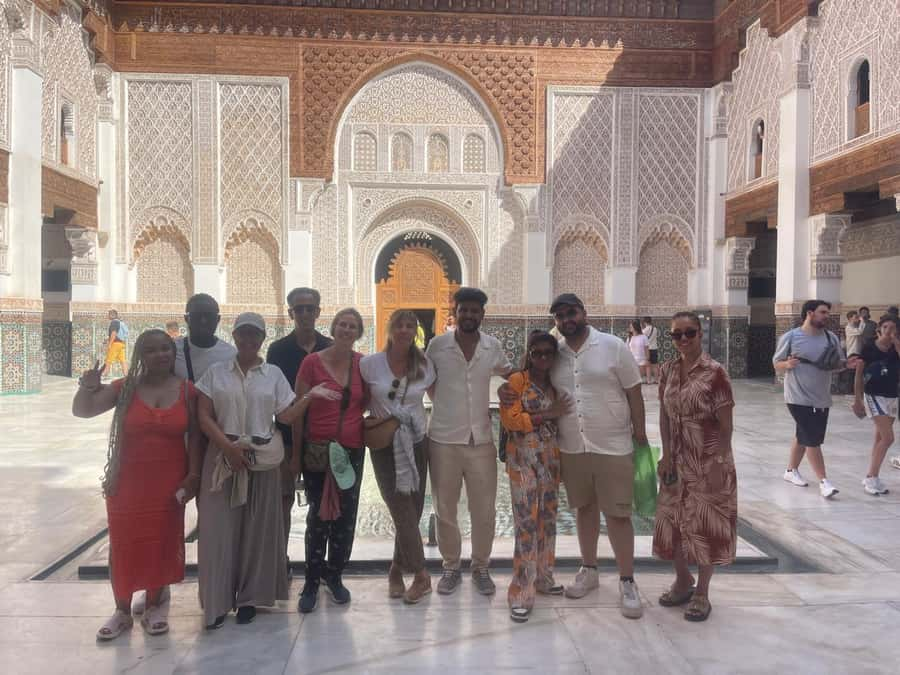
At about $21, the basic price is attractive for the amount of time and local guidance involved. You get a licensed guide, free time at selected sights, a route through the souks and Medina, and WhatsApp confirmation with the guide’s name and meeting point.
The key cost question is admission. Bahia Palace and Le Jardin Secret are listed at 100 MAD, while Ben Youssef Madrasa is listed at 50 MAD. The shared tour options may be sold with or without entrance fees, so compare them before booking. Bringing cash is still sensible for small purchases and any admission not covered by your selection.
The price is less compelling if you only want a quick walk around Jemaa el-Fna. It becomes good value if you want help with orientation, monument explanations, shopping advice and access to craft areas you might not find alone.
Free cancellation up to 24 hours before the start gives you useful flexibility, and reserve-now-pay-later availability can help if your Marrakech plans are still moving.
Who should choose this tour
I would recommend it for a first morning in Marrakech, especially if you want a useful map in your head before exploring alone. It suits solo visitors, couples, families and first-time Medina walkers who want history without a formal lecture.
It is also a good choice if you want to shop but dislike being dropped into the souks without guidance. The best guides explain bargaining and local products while leaving the decision to you.
I would be more cautious if you dislike crowds, commercial stops or four hours on foot. Tell the guide at the start if you want more architecture and less shopping, or if you need a slower pace. A private option costs more, but it gives you a better chance to shape the route around Ben Youssef, Le Jardin Secret, photography or family needs.
Should you book it?
Book this tour if you want an affordable introduction to Marrakech that combines major monuments with the working Medina. The strongest reasons are the local guides, the practical shopping advice and the chance to understand what lies behind the souk stalls.
Before booking, check three things: which monument admissions are included, whether your option visits Ben Youssef or Le Jardin Secret, and whether pickup is part of the package. Arrive early at Café Argana, wear good shoes, carry cash and ask for a comfortable pace.
If you want to explore independently from the start, you can skip it. But for most first-time visitors, this walk gives you enough history and street sense to make the rest of your stay easier and more rewarding.
FAQ
Where does the tour meet?
Meet your guide in front of Café Restaurant Argana in Jemaa Al Fna square. The provider sends the guide’s name and meeting details by WhatsApp one day before the tour.
How long does the walking tour last?
The stated duration is three to four hours. A five to ten-minute delay is possible if members of a shared group arrive late.
Which languages are available?
Live guiding is available in English, French, Arabic and Italian.
Are entrance fees included?
That depends on the option you select. Bahia Palace and Le Jardin Secret are listed at 100 MAD, while Ben Youssef Madrasa is listed at 50 MAD when those fees are not included.
Does the tour visit both Ben Youssef Madrasa and Le Jardin Secret?
The published activity presents them as two possible landmark choices, but some tours include both. Check the exact option you select before booking.
Is hotel or riad pickup available?
Pickup is available with the Private Tour and Medina Pickup option. If your riad is in the Medina, the guide can meet you there with that option.
What should I bring?
Bring sunglasses, cash and comfortable walking shoes. Cash is useful for admission fees if they are not included and for purchases in the souks.
New walking tours around Morocco
- Marrakech 3-Hour Walking Tour★ 4.3 · 120 reviews
- Marrakech: Monuments, Souks and Medina Guided Walking Tour★ 4.8 · 208 reviews
- Marrakech: Souk by Night Medina Guided Walking Tour.★ 4.3 · 166 reviews
- Marrakech: Customized Guided Walking Tour★ 4.3 · 82 reviews
- Marrakech: Uncover Hidden Gems on a Half-Day Walking Tour★ 4.2 · 92 reviews
- Marrakech Guided Souks Tour with a Local Insider★ 4.6 · 109 reviews
- Marrakech: Authentic Moroccan Food Walking Tour & Dinner★ 4.8 · 261 reviews
- Private Tour –In Old Medina of Fez with a Professional Guide★ 4.7 · 146 reviews
Marrakech Walking Tours, side by side.
Marrakech: Ben Youssef, Secret Garden, & Souks Walking Tour
Read our review →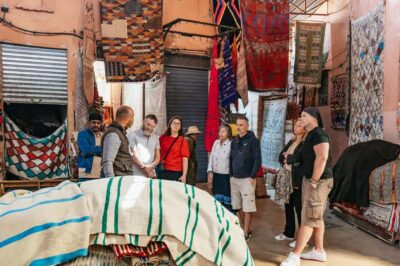
Marrakech: Colorful Medina Souks Guided Walking Tour
Read our review →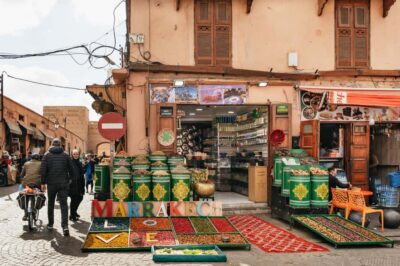
Marrakech: Saadian Tombs & Bahia Palace, Medina Guided Tour
Read our review →
Marrakech: Medina by Night Walking Tour with Moroccan Tea
Read our review →
Marrakech: Authentic Moroccan Food Walking Tour & Dinner
Read our review →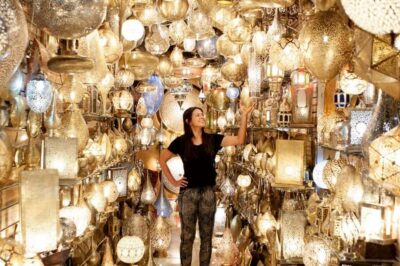
Marrakech: Souk by Night Medina Guided Walking Tour.
Read our review →
Marrakech Guided Souks Tour with a Local Insider
Read our review →Lists this walk sits on