
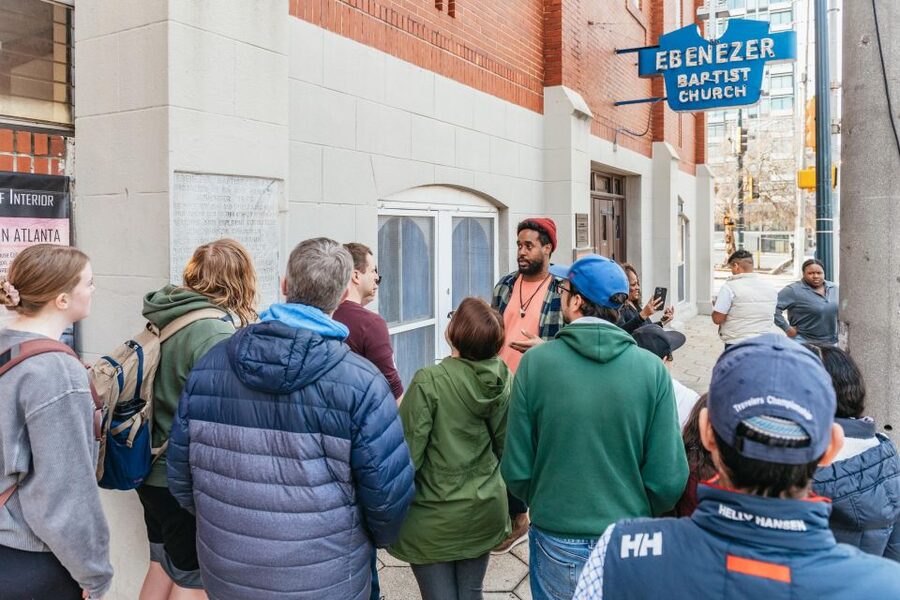
Review · THE USA
Atlanta: Martin Luther King Historical Park Walking Tour
Atlanta’s Martin Luther King Jr. National Historical Park is more than a collection of historic buildings. It is a neighborhood where Dr. King lived, worshipped, worked, and organized. This 1.7-mile walking tour helps you connect those places, rather than viewing each one as an isolated stop.
I like the way the tour links Dr. King to other civil rights leaders and to Atlanta’s broader story. I also like the personal touches: guides have used photographs, short audio clips, humor, and answers to family questions to make the past easier to grasp. The main drawback is practical: you spend about two and a half hours outdoors, with plenty of standing, and admission to the King birth home and Ebenezer Baptist Church is not included.
Key points to know
- See the neighborhood where Dr. King lived and worshipped: The route includes Ebenezer Baptist Church and the surrounding Sweet Auburn district.
- Visit Prince Hall Grand Lodge: This important civil rights site once housed the Southern Christian Leadership Conference during the 1960s.
- Use the King Center to add personal detail: Photos and artifacts help put faces and objects to the larger story.
- Hear more than a biography: Guides connect Dr. King with other leaders, Atlanta’s development, and the civil rights movement.
- Expect a steady outdoor walk: The route covers 1.7 miles and includes a lot of standing, so comfortable shoes matter.
- Pay attention at Jackson Street Bridge: The short stop offers a memorable view and a chance to place the historic district within modern Atlanta.
Walking into Atlanta’s civil rights story
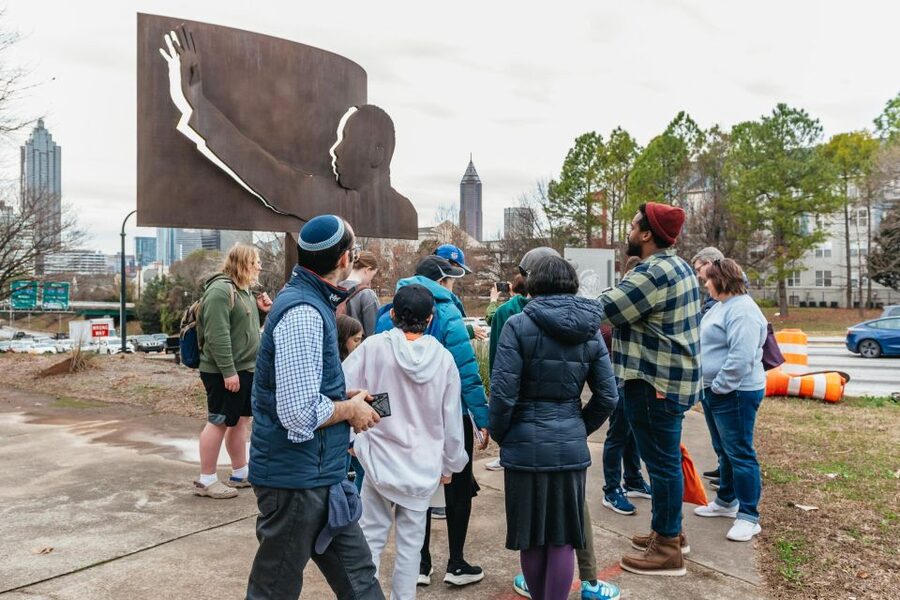
Meet your guide beside the Behold Monument, across from Ebenezer Baptist Church at the entrance to the national historical park. The monument shows an African man lifting a baby toward the sky, making it an easy landmark. Your guide will carry an orange flag.
From the first minutes, the tour focuses on place. You are not simply hearing about Dr. King in a museum room. You are walking the same streets tied to his family, church, and work. That physical connection gives the history a useful order: home, worship, organizing, public memory, and the city around it.
The tour is conducted in English and lasts 150 minutes. Group size can vary, though one outing had 10 people, a size that allowed for conversation without losing the guide in a crowd. Other outings were described as intimate, with only a few people. I would expect the exact feel to depend on the date and booking level.
More History Walking Tours in the USA
- History and Hauntings of Salem Guided Walking Tour
★ 5.0 · 14,564 reviews - Boston: Freedom Trail History Small Group Walking Tour
★ 5.0 · 6,450 reviews - Historic Charleston Guided Sightseeing Walking Tour
★ 5.0 · 6,216 reviews
Ebenezer Baptist Church and the King family connection

Ebenezer Baptist Church is one of the essential stops. Dr. King served there as co-pastor with his father, and the church helps explain how his public work grew from family, faith, and community life.
The tour does not include entry tickets to the church or the King birth home. That distinction matters. You can still learn about their role and see the sites as part of the walking route, but you should not book this experience expecting a complete interior tour of every building.
I like this part of the route because it gives the civil rights story a human scale. Public speeches and famous photographs can make Dr. King seem removed from ordinary life. Learning where he worshipped and worked with his father brings the story closer to the neighborhood.
Guides have handled this material in different ways. Joy, Jay, Kristen, Ariel, Zoe, and Jennifer were praised for making connections between people and places rather than presenting a list of dates. Kristen also used photographs and short relevant voice recordings, a useful touch if you learn best through sound and images.
Prince Hall Grand Lodge, an essential stop
The Prince Hall Grand Lodge is one of the tour’s most valuable stops. It is less familiar to many first-time visitors than Ebenezer Baptist Church, yet it played a key role in the civil rights movement. During the 1960s, the building served as the headquarters of the Southern Christian Leadership Conference.
That detail changes how you read the neighborhood. The movement was not created only at famous podiums or in televised marches. It also depended on offices, meeting places, planning sessions, and local institutions. Prince Hall Grand Lodge gives you a way to think about that practical work.
This is also where a good guide makes a real difference. The tour’s best feature is not simply reaching the building. It is hearing why the building mattered, who used it, and how it fits into the wider story of Atlanta and the Southern Christian Leadership Conference.
You may want to ask questions here. Several guides were praised for making room for tailored questions and for adding wider historical context when the group showed interest. The tone is educational, but it is not stiff. Past guides including Jay, Joy, Arielle, and Joe were described as warm, engaging, and easy to follow.
The King Center and its personal artifacts
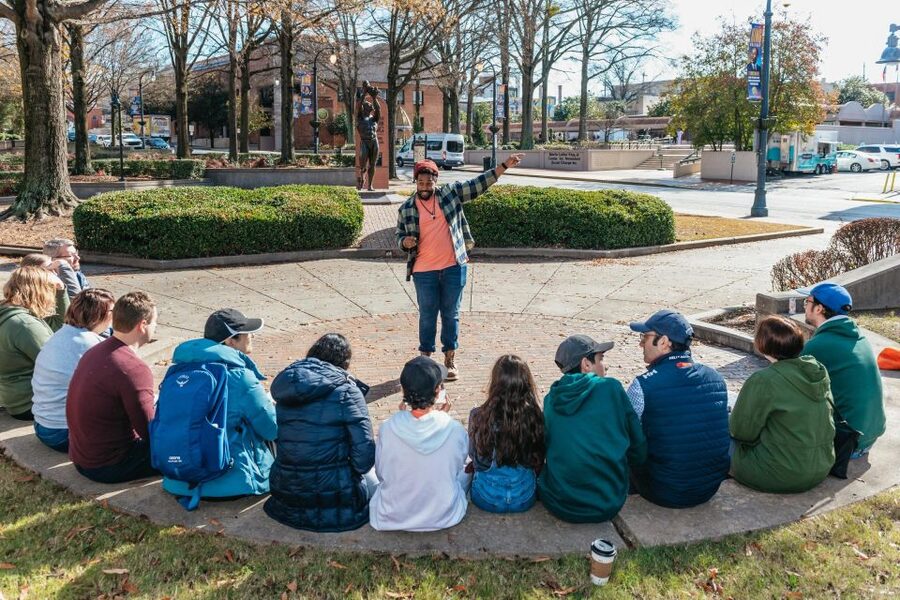
The King Center adds an indoor element and gives the tour a place to focus on Dr. King’s life through photographs and artifacts. The Freedom Hall of the King Center is included in the route, and the activity includes a donation to the King Center.
This part works best after you have walked through the surrounding district. You already have a sense of the streets and institutions, so the objects and photographs can add detail to places you have just heard about. A photograph is more useful when you understand where the people stood and what the neighborhood meant.
The King Center also keeps the tour from being only about architecture. Buildings matter, but personal objects and images remind you that the movement was shaped by individuals making difficult choices. You get a closer look at the public and private sides of Dr. King’s life.
The time available at each location may feel brief. One person wished the tour were longer and allowed more time at the stops. I agree that this experience works best as a guided introduction, not as the only time you spend in the district. If you want to read every display slowly, take photographs, and study each building in detail, plan additional time before or after the walk.
Same streets, a different story:
- New Orleans Premier Ghost, Voodoo and Vampire Walking Tour
★ 4.5 · 12,856 reviews - Little Havana Food and Walking Tour in Miami
★ 5.0 · 8,882 reviews - Chicago: Gangsters and Ghosts Walking Tour
★ 5.0 · 7,155 reviews - New Orleans Food Walking Tour of the French Quarter with Small-Group Option
★ 5.0 · 6,118 reviews
Jackson Street Bridge and the view over Atlanta
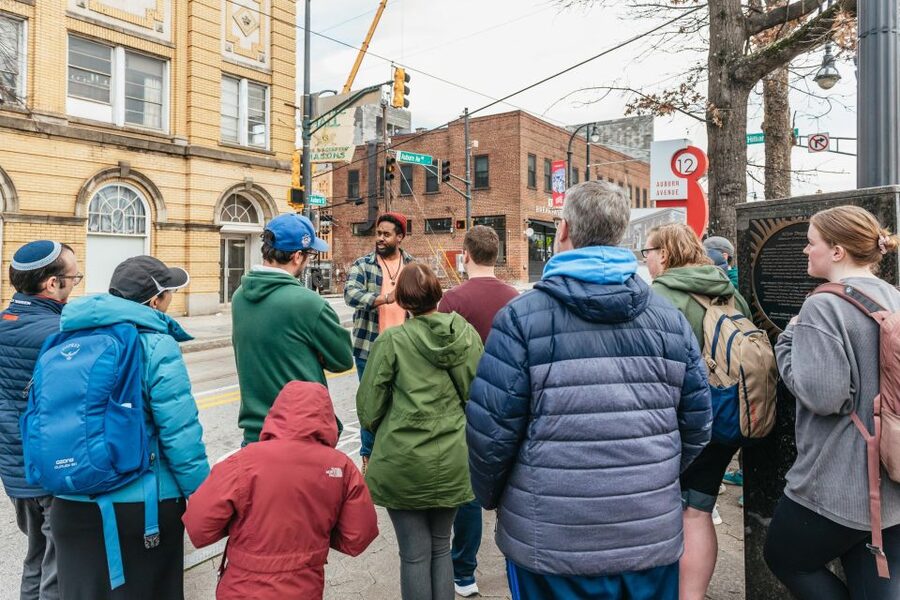
The stop at Jackson Street Bridge lasts about 10 minutes and provides one of the tour’s clearest visual pauses. From here, you take in a broad view of Atlanta and can place the historic district within the modern city.
This is not just a photo stop. The view helps you understand that the civil rights story happened in a changing city, not on a sealed historic set. Streets, buildings, and neighborhoods continue to develop, while the places connected to Dr. King remain part of Atlanta’s present.
The bridge also breaks up the walking and talking. After several historic sites, a short pause outdoors gives you time to process what you have heard. Bring weather-appropriate clothing because the route is outside, and hot weather can make the walk more tiring. One family found the heat bearable, while another guide adjusted the pace and plans where possible to deal with high temperatures.
Sweet Auburn and the surrounding streets
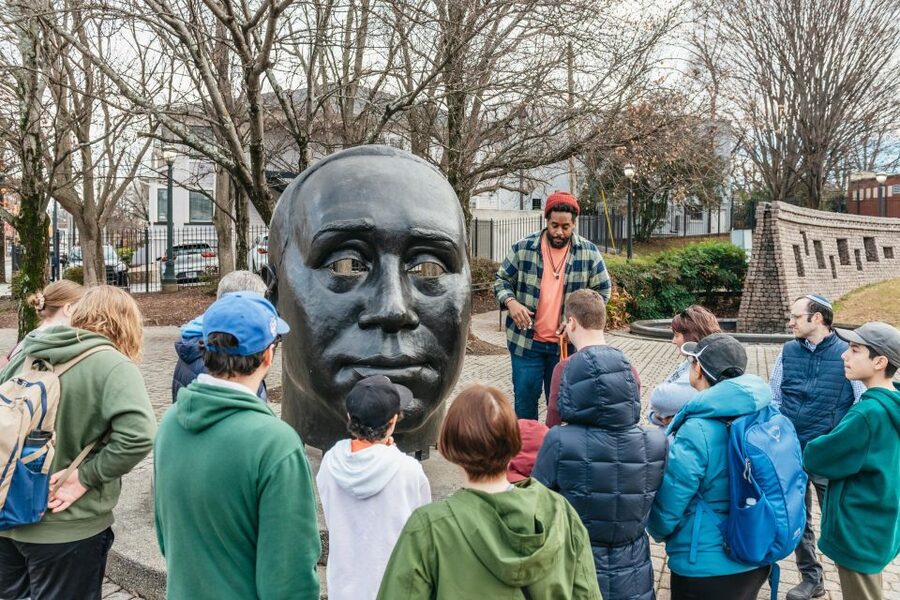
The tour passes through Sweet Auburn, a district closely tied to Atlanta’s African American history and to the civil rights movement. The route is valuable because it treats the neighborhood as part of the story, rather than using it only as a backdrop for Dr. King’s biography.
You hear how people, organizations, churches, and civic buildings connected with one another. That wider frame was one of the most praised parts of the experience. Guides have explained not only Dr. King’s work, but also Atlanta’s infrastructure, city history, and the roles of other civil rights leaders.
This is where the walking format earns its price. A bus tour could show you the same general area, but walking makes distances and relationships easier to grasp. You see how close the sites are and how a neighborhood can support religious life, political work, community organizing, and daily routines at the same time.
The tradeoff is that you need to stay alert to the physical demands. The walk is not described as suitable for people with mobility impairments, and there is considerable standing. Wear comfortable shoes, carry water if needed, and dress for the forecast.
International Civil Rights Walk of Fame
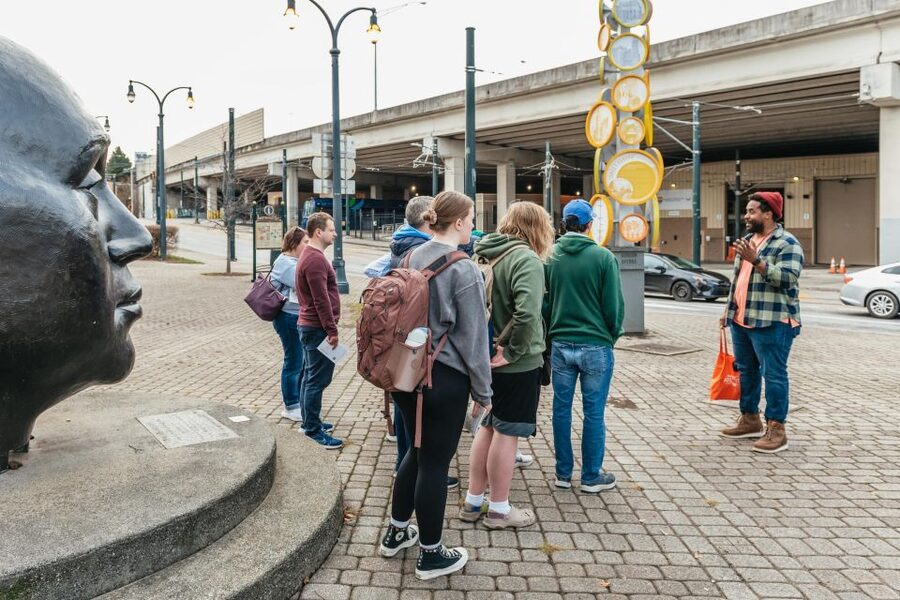
The International Civil Rights Walk of Fame is another meaningful stop, with about 10 minutes of guided explanation. It broadens the focus beyond one person and reinforces the international reach of civil rights work.
This stop fits the tour’s wider approach. You learn about Dr. King, but you also hear about other leaders and the ideas, partnerships, and struggles connected with the movement. Guides have been praised for bringing in additional historical figures without losing the main thread.
A short stop means you will not study every name at length. Think of it as a guided introduction that may leave you with people or subjects to explore later. That is a strength if you want a focused tour with a clear route, but a limitation if you prefer long, quiet visits at each landmark.
Storytelling that works for adults and children
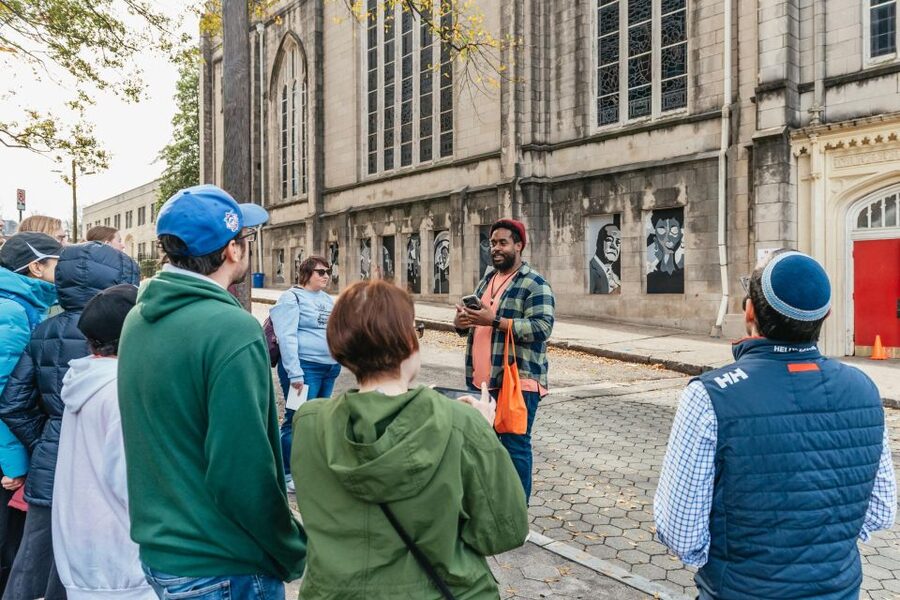
The guide is the heart of this experience. Different outings have been led by Jay, Joy, Ariel or Arielle, Kristen, Zoe, Jennifer, Emily, Jessica, Jen, Joe, and Margaret. You cannot choose a particular guide based on the information provided, but the recurring strengths are clear: strong storytelling, warmth, humor, visual aids, and a willingness to answer questions.
One guide used photos and short audio recordings. Another took group pictures to share. One parent found the storytelling easy for children aged 9 and 11 to follow, while a teenager in another group stayed engaged through the full journey. An 85-year-old participant also found the route suitable, though individual mobility and stamina will vary.
I especially value the combination of public and personal history. The tour can explain a major movement without turning Dr. King into a distant symbol. It also leaves room for the city itself, including its streets, institutions, and changing infrastructure.
The humor mentioned in several accounts should not be confused with a light treatment of serious subjects. It is used to keep the group attentive and comfortable during a long walk, while the central material remains respectful.
Is $40 a fair price?
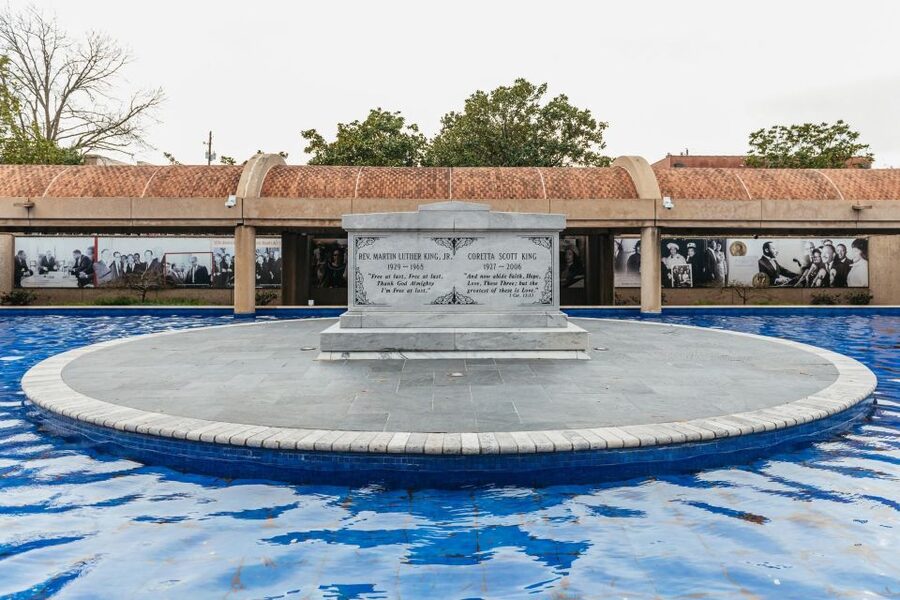
At $40 per person, this is a reasonable price if you want a guided introduction to the district. You are paying for 150 minutes of live interpretation, a planned route, access to the King Center portion, and a donation to the King Center. The guide’s ability to connect the sites is the main value.
The price is less appealing if you already know the area well or prefer to move independently. You will still need to pay separately for any entry tickets to the King birth home and Ebenezer Baptist Church. Hotel pickup and drop-off are not included, so you must reach the meeting point on your own.
For a first visit, I think the fee is justified because the context is hard to assemble from signs alone. The tour shows you where to look, explains why each place matters, and gives you a useful framework for returning on your own.
Free cancellation up to 24 hours before the start and a reserve-now, pay-later option make the booking more flexible. Those policies are useful, but the bigger planning issue is the weather. A hot afternoon can change the feel of a 1.7-mile walk.
Who should book this walking tour?

I would recommend it to first-time visitors to Atlanta, families with older children, and anyone who wants civil rights history explained through real places. It also suits people who prefer conversation and storytelling to a self-guided audio route.
The tour is a good fit if you want to understand how Dr. King’s life connects with other leaders and with Atlanta’s Black community institutions. It is especially useful before a longer independent visit to the King Center or the surrounding historic district.
I would be cautious if you need frequent seating, have mobility limitations, dislike outdoor walking, or want long interior visits at each attraction. The tour involves a lot of standing, and two and a half hours can feel long in heat or rain.
Practical details before you go
Meet at 407 Auburn Ave NE, next to the Behold Monument across from Ebenezer Baptist Church. Look for the orange flag.
Wear comfortable shoes and weather-appropriate clothing. Bring cash, and remember that the tour does not include hotel transportation. Pets and smoking are not allowed.
The experience is in English and has a five-star rating from 86 reviews, with repeated praise for the guides’ storytelling, warmth, and ability to connect local places with national events. The strongest guide names mentioned in the feedback include Jay, Joy, Kristen, Zoe, Jennifer, Emily, Ariel, and Margaret, but guide assignments can change.
Should you book it?
Book this tour if you want the human story behind the landmarks, not just a quick list of addresses. At $40, it offers a well-organized route, strong historical context, a King Center visit, and a chance to see important places such as Prince Hall Grand Lodge that you might otherwise pass by.
Skip it if you want a slow, self-directed museum visit or cannot manage 1.7 miles with frequent standing. For most first-time visitors who can handle the walk, this is a thoughtful and practical way to begin exploring Atlanta’s Martin Luther King Jr. National Historical Park.
FAQ
How long is the Martin Luther King Historical Park walking tour?
The tour lasts 150 minutes, or two and a half hours.
How far do you walk?
The outdoor route covers about 1.7 miles and includes a lot of standing.
Where does the tour meet?
Meet next to the Behold Monument at the entrance to the Martin Luther King Jr. National Historical Park, across from Ebenezer Baptist Church. Your guide will have an orange flag.
What is the Behold Monument?
The Behold Monument shows an African man holding a baby up toward the sky. It serves as the meeting landmark for the tour.
Is the tour offered in English?
Yes. The live tour guide speaks English.
Is entry to the King birth home included?
No. Entry to the King birth home is not included in the tour price.
Is entry to Ebenezer Baptist Church included?
No. Entry tickets to Ebenezer Baptist Church are not included.
Does the tour include hotel pickup and drop-off?
No. Hotel pickup and drop-off are not included.
Is the tour suitable for people with mobility impairments?
The tour is not considered suitable for people with mobility impairments because it involves a 1.7-mile outdoor walk and a lot of standing.
Can I cancel the booking for a refund?
Yes. You can cancel up to 24 hours in advance for a full refund. You can also reserve now and pay later.
New walking tours around the USA
- NYC: Walking Tour with Local Guide and 30+ Top NYC Sights★ 4.5 · 248 reviews
- New York City: Gangsters and Ghosts 2-Hour Walking Tour★ 4.7 · 615 reviews
- NYC: History of Slavery & Underground Railroad Walking Tour★ 4.7 · 87 reviews
- New York City’s Hell’s Kitchen: Walking Food Tour★ 4.8 · 200 reviews
- New York City: Central Park Walking Tour★ 4.7 · 82 reviews
- NYC: Brooklyn Bridge and DUMBO Guided Walking Tour★ 4.8 · 93 reviews
- New Orleans: French Quarter Ghost and Legends Walking Tour★ 4.3 · 129 reviews
- New Orleans: Witches Coven Garden District Walking Tour★ 4.9 · 113 reviews
USA Walking Tours, side by side.

History and Hauntings of Salem Guided Walking Tour
Read our review →
New Orleans Premier Ghost, Voodoo and Vampire Walking Tour
Read our review →


Boston: Freedom Trail History Small Group Walking Tour
Read our review →
Historic Charleston Guided Sightseeing Walking Tour
Read our review →
New Orleans Food Walking Tour of the French Quarter with Small-Group Option
Read our review →
St. Louis Cemetery No. 1 Official Walking Tour
Read our review →Lists this walk sits on