
Review · THE USA
Austin: Morning History Walking Tour of Downtown Austin
Austin’s best introduction may be a walk that connects its big sights with the odd little stories between them. This 90-minute tour moves from the Warehouse District and Willie Nelson’s statue to Congress Avenue, the Capitol, the Driskill Hotel, Sixth Street, and the city’s famous bat bridge.
I like the local advice on coffee, restaurants, and live music, and I like the easy pace and flexible storytelling. Guides such as Tyler, Audrey, William, and Jake have been praised for making history fun and practical. The main drawback is time: 90 minutes can feel short, especially if you want to enter more buildings or linger at each stop.
Key points at a glance
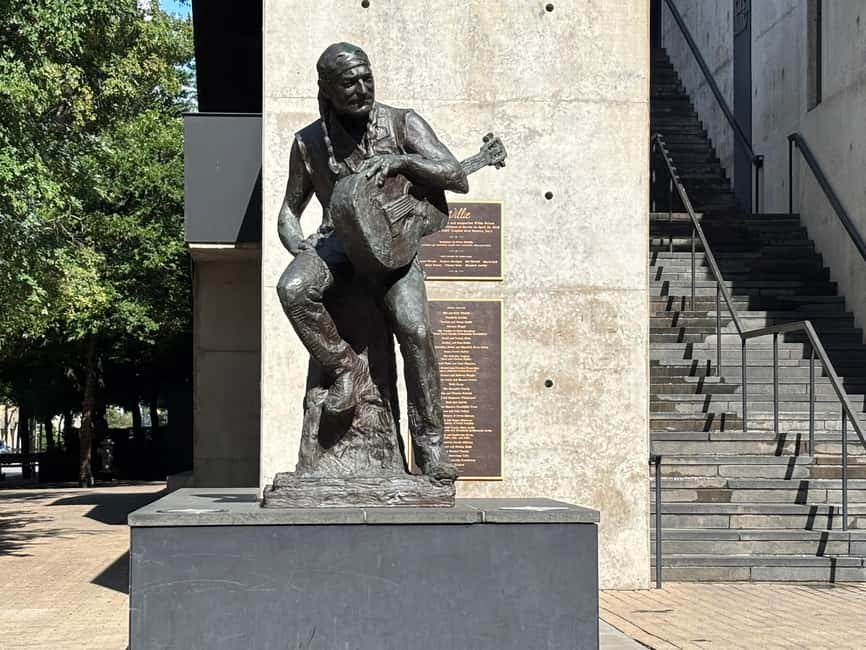
- Start with breakfast savings: Show proof of your tour purchase at Jo’s Coffee on West 2nd Street for 20% off your breakfast order.
- See Austin’s music side: Walk past Sixth Street venues and the Moody Theater, home to the Willie Nelson statue.
- Hear the Angelina Eberly story: Learn how one woman helped save Austin in 1842.
- Step inside a Texas landmark: Visit the Driskill Hotel’s grand lobby and Driskill Bar and Lounge.
- Get your bearings quickly: Cover the Warehouse District, Guytown, Congress Avenue, the Capitol area, and the bat bridge.
- Expect a friendly, adaptable guide: Tyler, Audrey, William, Jake, and other local guides are known for answering questions and offering useful follow-up suggestions.
Why this morning walk works so well in Austin

Austin can feel scattered at first. Music venues, government buildings, modern towers, old hotels, barbecue spots, coffee shops, and nightlife districts sit close together, but the connections are not always obvious from street level.
This tour gives you a useful downtown map in your head. You are not simply taken from one famous building to another. You hear how Austin developed, see where its entertainment districts sit, and get a feel for the parts of town you may want to revisit later.
The morning timing is a smart choice. Downtown streets are easier to appreciate before the heat and evening crowds build, and the Jo’s Coffee discount gives you a reason to arrive early. Restrooms are available at Jo’s Coffee, which is useful before setting out.
The tone is more conversational than formal. Guides including Tyler, Audrey, William, and Jake have been singled out for clear explanations, humor, personal stories, and practical recommendations. If you ask questions, you should expect the walk to bend a little rather than follow a stiff script.
That flexibility matters. Austin’s past can be presented as a list of dates, but it makes more sense when linked to the buildings and streets around you. A good guide helps you notice why one corner matters, then points out what is still part of Austin life today.
More History Walking Tours in the USA
- History and Hauntings of Salem Guided Walking Tour
★ 5.0 · 14,564 reviews - Boston: Freedom Trail History Small Group Walking Tour
★ 5.0 · 6,450 reviews - Historic Charleston Guided Sightseeing Walking Tour
★ 5.0 · 6,216 reviews
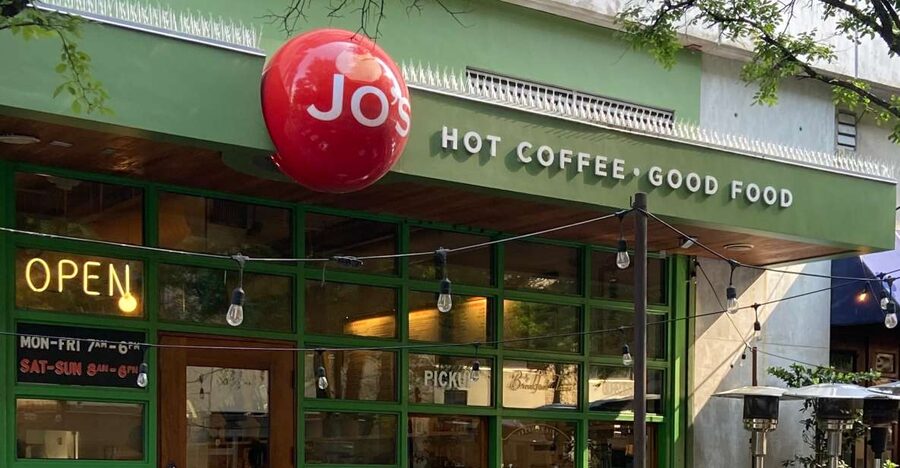
Beginning at Jo’s Coffee on West 2nd Street
Meet your guide in front of Jo’s Coffee at 242 West 2nd Street. Look for the Walking Tours of Austin cap and shirt, along with an A-frame sign identifying the Morning Walk Austin tour.
Before the walk, you can order breakfast and receive 20% off by showing proof of your purchase. Food and drinks are not included in the tour price, so bring money if you want coffee or a treat. The discount is a small but useful extra, especially if this is your first activity of the day.
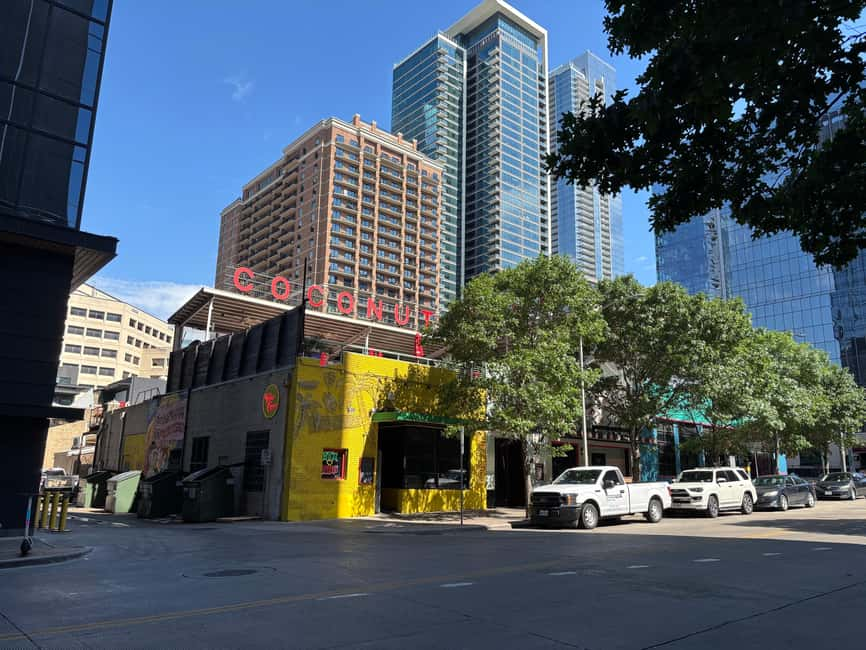
The starting point also places you in the 2nd Street District, often called the Warehouse District. This area gives you an immediate sense of Austin’s mix of older commercial buildings, newer development, restaurants, bars, and entertainment spaces.
The meeting arrangement is simple, but do not wander off looking for a separate ticket office. Your guide meets you at Jo’s Coffee, and the visible sign should make the group easy to spot.
The Warehouse District and the Moody Theater
The first part of the walk heads through the 2nd Street District on the west side of Congress Avenue. This is a useful opening because it introduces one of downtown Austin’s main themes: old buildings reused for modern city life.
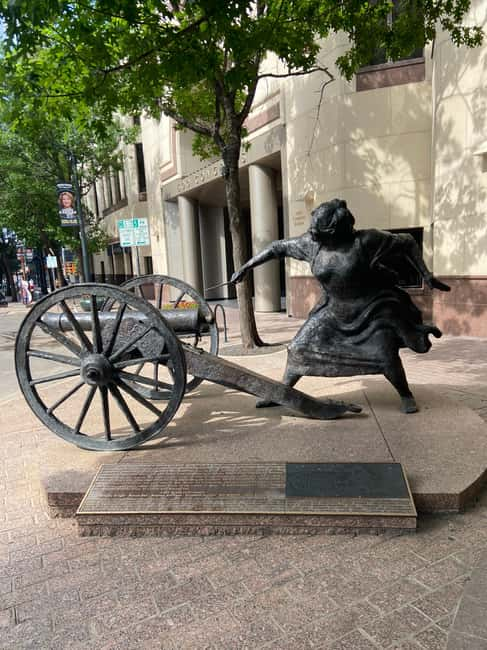
You pass the Moody Theater, an important music venue, and see Austin’s statue of Willie Nelson. The stop connects the city’s public image with its performing arts scene. Austin is known for live music, but this tour helps you place that reputation on an actual street rather than treating it as a slogan.
Your guide may use archive photos or visual aids to show how the area looked in earlier periods. Tyler, in particular, has been praised for bringing historical images into the walk. That kind of comparison is helpful because the modern district can otherwise make it hard to picture Austin before recent construction.
The pace here is manageable. You are walking, stopping, and listening rather than racing from landmark to landmark. Still, comfortable shoes are a good idea. This is a city walk with several turns and outdoor stops, not a short stroll between two buildings.
Guytown and Austin’s first railroad depot
From the Warehouse District, the route continues toward Guytown and the site of Austin’s first railroad depot, dating to about 1871. The building was later associated with the Spaghetti Warehouse.
This is one of the more interesting stops because it shifts attention away from the usual Austin postcard sights. Railroads helped connect Austin to the wider region, and the depot gives the guide a chance to explain how transportation shaped the city’s growth.
You will not spend the morning touring a series of fully preserved museums. Instead, you learn to read the downtown streets as evidence of change. That approach suits visitors who want context without committing to a long museum visit.
The route also shows how quickly Austin’s identity changes from block to block. A historic railroad site, a repurposed commercial building, and current restaurants and entertainment spaces can all appear within the same section of downtown.
Same streets, a different story:
- New Orleans Premier Ghost, Voodoo and Vampire Walking Tour
★ 4.5 · 12,856 reviews - Little Havana Food and Walking Tour in Miami
★ 5.0 · 8,882 reviews - Chicago: Gangsters and Ghosts Walking Tour
★ 5.0 · 7,155 reviews - New Orleans Food Walking Tour of the French Quarter with Small-Group Option
★ 5.0 · 6,118 reviews
Congress Avenue and the Angelina Eberly story
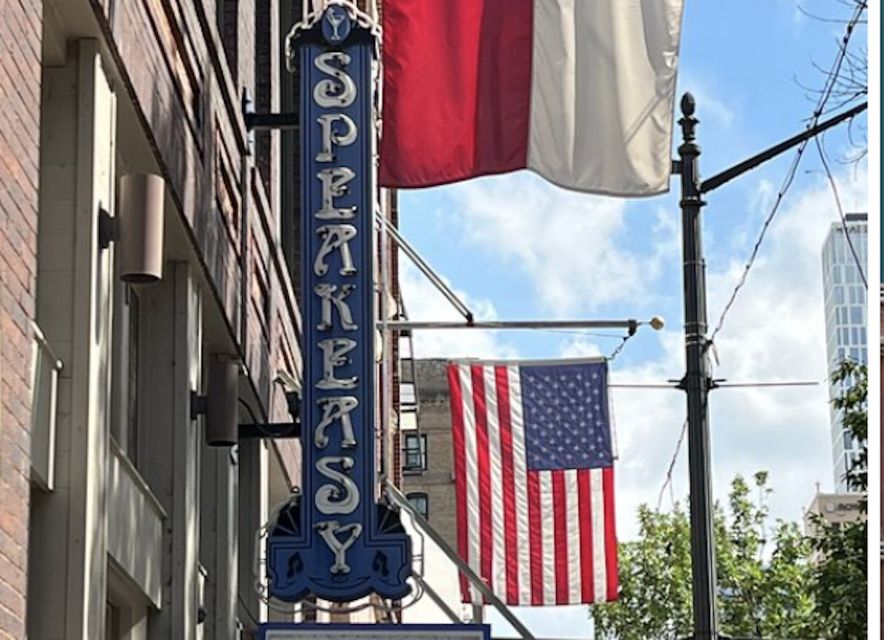
The walk continues to Congress Avenue, one of Austin’s central streets. Along the way, you pass a speakeasy tavern located in a building that was once the Southwestern Telephone and Telegraph Company, dating to about 1886.
That detail is exactly the sort of small piece of information that makes a walking tour worthwhile. You may pass an attractive old façade on your own, but you are unlikely to know what occupied it in the past or how the building fits into Austin’s growth.
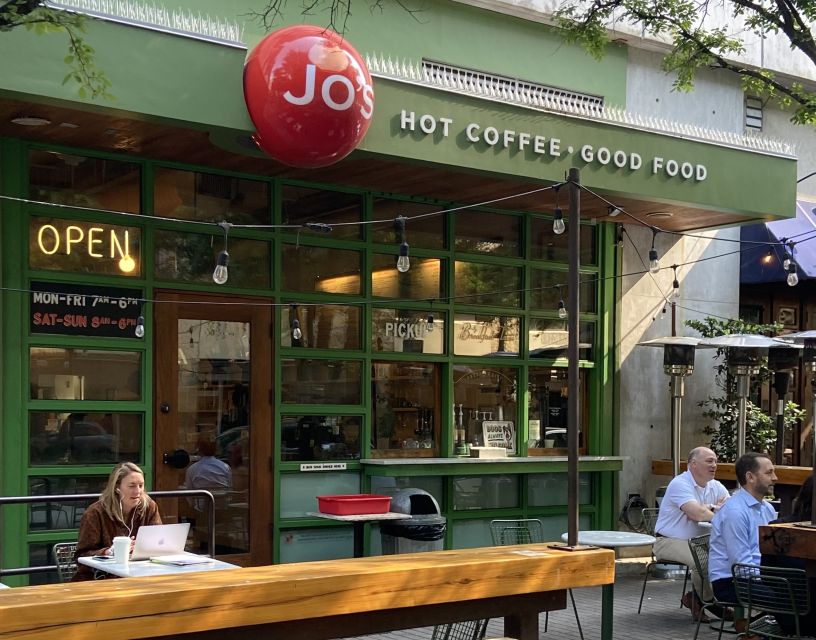
Heading north on Congress, the group crosses Sixth Street and reaches the statue of Angelina Eberly. Here the guide tells the story of how Eberly helped save Austin in 1842.
This is one of the tour’s strongest history moments because it centers a person and an action rather than just a building date. The story gives you a memorable way to understand an important point in the city’s early past. It also adds a welcome human angle to a route otherwise filled with grand civic buildings and commercial landmarks.
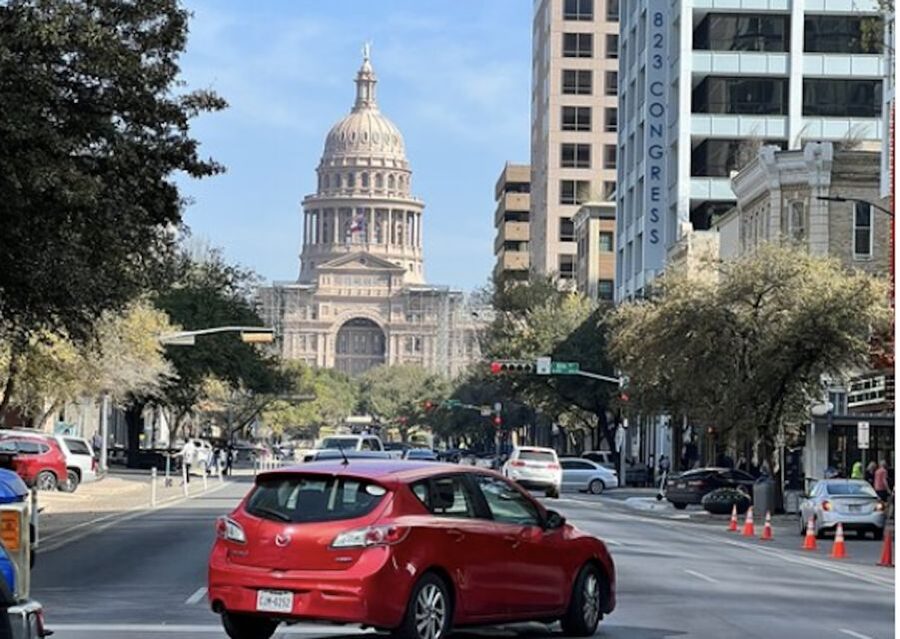
From the statue, you get a view toward the Texas Capitol, only two blocks away. The route uses the sightline well, allowing the Capitol to become the next major destination without making the walk feel like a series of unrelated stops.
The Texas Capitol from Congress Avenue
The Capitol is one of the most impressive sights on the route. The tour discusses its history and significance from the downtown area, giving you useful context before you visit it independently.
The information provided for this experience does not promise a full interior tour of the Capitol. That distinction matters. You will learn about the building and see it from the route, but the included building entry is for the Driskill Hotel, not the Capitol.
I like this part of the walk because it gives you a clear orientation to Austin’s government center. If you plan to return for a closer look, you already know where it sits in relation to Congress Avenue, Sixth Street, and the rest of downtown.
The Capitol stop also provides a visual break from the music and nightlife side of Austin. The city’s character is not just bars and bands. It is also shaped by state government, public institutions, older civic buildings, and the people who have argued over Austin’s direction.
Inside the Driskill Hotel, built in 1885
The tour then turns toward the Driskill Hotel, built in 1885. Entry to the hotel is included, and your guide takes you through the beautiful lobby and the Driskill Bar and Lounge.
This is the clearest interior experience on the walk. The Driskill gives you a chance to step inside a landmark rather than viewing everything from the pavement. The lobby and bar help show the kind of grand public space that once defined downtown hotels and still gives the area some of its historic character.
The stop also breaks up the outdoor walking. On a hot or rainy morning, even a short indoor visit is welcome. Keep in mind, though, that this is not a full hotel tour with access to every floor or room. The focus is the lobby and bar area, along with the stories your guide shares.
The Driskill is especially useful for visitors who want a sense of old Austin but have limited time. You get a major historic interior without spending several hours at a museum. If you enjoy architecture and hotel history, this may be the most satisfying stop on the route.
Sixth Street, music venues, and Voodoo Donuts
After the Driskill, the walk heads east along Sixth Street. Your guide points out music venues as the group passes, and you also go by Voodoo Donuts.
Sixth Street is one of Austin’s most recognizable entertainment areas. Seeing it in the morning gives you a different view from the one you might get at night. The venues are quiet or closed, storefronts are easier to inspect, and the guide can explain how the street fits into Austin’s music culture without the distractions of evening crowds.
This is also where the tour’s practical advice can pay off. Guides are encouraged to share tips about live music venues, restaurants, and coffee shops. If you are unsure where to go later, ask for specific suggestions that fit your interests.
One limitation is that you are mainly passing the venues rather than attending a performance. The tour introduces the area, but it does not include live music, food tastings, or a stop inside Voodoo Donuts. You should treat this section as orientation and save your appetite for later.
San Jacinto, modern buildings, and the return to 2nd Street
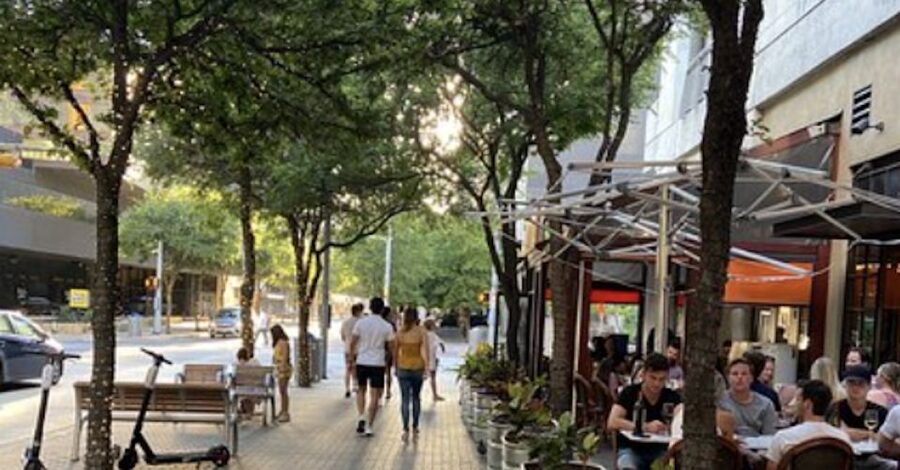
The route turns down San Jacinto, where you see a mix of newer and older buildings. This section is less about one famous attraction and more about noticing how Austin has changed.
The guide then turns near Vince Young’s Steakhouse and makes the way back toward Congress Avenue. From there, the group continues to the Pearl House Hotel and returns to 2nd Street.
This part can feel less packed with headline sights than the Capitol or Driskill Hotel sections. That is not necessarily a weakness. It gives your guide room to point out buildings and local details that would be easy to miss on a faster sightseeing route.
For some people, this will be the most useful part of the walk. You get a better sense of downtown’s shape, including the relationship between the entertainment streets, office areas, historic buildings, and newer construction.
One past assessment of the tour wished for more concrete destinations such as parks and venues. That is a fair consideration. The route is strongest as a city orientation and history walk, not as a deep visit to multiple attractions.
The bat bridge and the final stop
Near the Pearl House Hotel and 2nd Street, you can see Austin’s famous bat bridge. The guide stops to explain the bat phenomenon before the tour ends.
The bat bridge is one of Austin’s best-known natural spectacles, but this morning walk does not promise an evening bat viewing. You get the location and the basic story, which helps you plan a separate visit if you want to see the bats emerge later in the day.
Ending here makes practical sense. The bridge is close to the starting area, and you finish with a distinctive Austin subject rather than another standard civic landmark. It also leaves you in a convenient part of downtown for breakfast, lunch, shopping, or further sightseeing.
The guides and the style of storytelling
The guide can shape this experience more than any single building. The strongest pattern in the feedback is clear, friendly storytelling combined with useful answers and recommendations.
Tyler is often praised for his enthusiasm, historical explanations, archive photos, and city tips. Audrey has been described as offering a local perspective and personal insight. William is noted for clear stories, fun facts, patience, and follow-up suggestions. Jake has been praised for his energy and for making each person feel included.
Guide assignments can change, so you should not book expecting one specific person. Still, the range of names and repeated comments gives you a good idea of the style: conversational, informed, and willing to answer questions.
The walk can also adapt to the group. One booking had only a single participant, creating a more personal experience. That will not be the norm, but the guide-led format allows for questions and discussion instead of a one-way speech.
Price, timing, and who gets the best value
At $32 per person, the tour is reasonably priced for a 90-minute guided walk that includes entry to the Driskill Hotel and a 20% Jo’s Coffee breakfast discount. The value comes less from admission savings and more from the time you save finding your way around downtown.
You are paying for a local introduction, historical context, and recommendations you can use for the rest of your stay. That is a good deal if Austin is new to you and you want a clear first look before making your own plans.
The price is less compelling if you already know downtown well or prefer to explore entirely on your own. You will cover several areas, but you will not receive a long interior tour of the Capitol, a meal, a music performance, or a series of museum entries.
The tour runs rain or shine. Wear comfortable shoes and dress for outdoor conditions. It is listed as wheelchair accessible, though the route includes ordinary city streets and several stops, so you may want to confirm any particular mobility needs before booking.
Cancellation is free up to 24 hours before the tour, and you can reserve now and pay later. Those options are useful if your Austin schedule is still shifting.
Should you book the Austin Morning History Walking Tour?
Book this tour if you want a friendly introduction to downtown Austin, enjoy short historical stories, and value practical advice about where to eat, drink coffee, and hear music. It is especially useful on your first morning in town because you can use the route and recommendations to shape the rest of your visit.
You should also book it if you prefer a relaxed walk over a formal lecture. The tour connects major sights with small details, including the railroad depot, Angelina Eberly’s story, the former telephone company building, and the Driskill’s grand interior.
Skip it if you want a long, in-depth visit inside the Capitol or several attraction entries. The 90-minute format moves at a sensible pace, but it cannot give every landmark much time.
For most first-time visitors, I would book it early in the trip. Start with the Jo’s Coffee discount, take notes on the guide’s recommendations, and use the final view of the bat bridge to plan what you want to do next.
FAQ
Where does the Austin Morning History Walking Tour meet?
Meet your guide in front of Jo’s Coffee at 242 West 2nd Street. Look for a guide wearing a Walking Tours of Austin cap and shirt and standing near an A-frame Morning Walk Austin sign.
How long is the walking tour?
The scheduled duration is 90 minutes.
What landmarks are included?
The route includes the 2nd Street District, Warehouse District, Moody Theater, Willie Nelson’s statue, Guytown, Austin’s first railroad depot site, Congress Avenue, Sixth Street, the Angelina Eberly statue, the Texas Capitol area, the Driskill Hotel, San Jacinto, the Pearl House Hotel, and the bat bridge.
Can I go inside the Driskill Hotel?
Yes. Entry to the Driskill Hotel is included, with a visit to its lobby and Driskill Bar and Lounge.
Is the Texas Capitol interior included?
No interior entry to the Capitol is listed. The tour discusses the Capitol’s history and provides a view of the building from the route.
Do I get a discount at Jo’s Coffee?
Yes. Show proof of your Morning Walk purchase on the day of the tour to receive 20% off your breakfast order at Jo’s Coffee at 242 West 2nd Street.
What happens if it rains?
The tour takes place rain or shine. Bring clothing and shoes suited to the weather, and bring money if you want to buy a drink or treat during the walk.
New walking tours around the USA
- NYC: Walking Tour with Local Guide and 30+ Top NYC Sights★ 4.5 · 248 reviews
- New York City: Gangsters and Ghosts 2-Hour Walking Tour★ 4.7 · 615 reviews
- NYC: History of Slavery & Underground Railroad Walking Tour★ 4.7 · 87 reviews
- New York City’s Hell’s Kitchen: Walking Food Tour★ 4.8 · 200 reviews
- New York City: Central Park Walking Tour★ 4.7 · 82 reviews
- NYC: Brooklyn Bridge and DUMBO Guided Walking Tour★ 4.8 · 93 reviews
- New Orleans: French Quarter Ghost and Legends Walking Tour★ 4.3 · 129 reviews
- New Orleans: Witches Coven Garden District Walking Tour★ 4.9 · 113 reviews
USA Walking Tours, side by side.
History and Hauntings of Salem Guided Walking Tour
Read our review →
New Orleans Premier Ghost, Voodoo and Vampire Walking Tour
Read our review →
Boston: Freedom Trail History Small Group Walking Tour
Read our review →
Historic Charleston Guided Sightseeing Walking Tour
Read our review →
New Orleans Food Walking Tour of the French Quarter with Small-Group Option
Read our review →
St. Louis Cemetery No. 1 Official Walking Tour
Read our review →Lists this walk sits on