
Review · MUMBAI
Mumbai: Dharavi Slum Walking Tour by First Female Tour Guide
Dharavi is not a backdrop for a quick photo. It is a working community, an industrial center, and home to families, schools, markets, and small businesses. This 2.5-hour walking tour takes you beyond the usual Mumbai sights, with a local female guide leading you through places you would be unlikely to find on your own.
I like two things right away: the tour gives real attention to local industries, from plastic recycling to leather work, and the guides explain Dharavi as a place of skill and enterprise rather than reducing it to poverty. The main consideration is that this is a walking tour through narrow, active streets, so you should be ready for a direct and sometimes uncomfortable look at urban life.
Key points at a glance
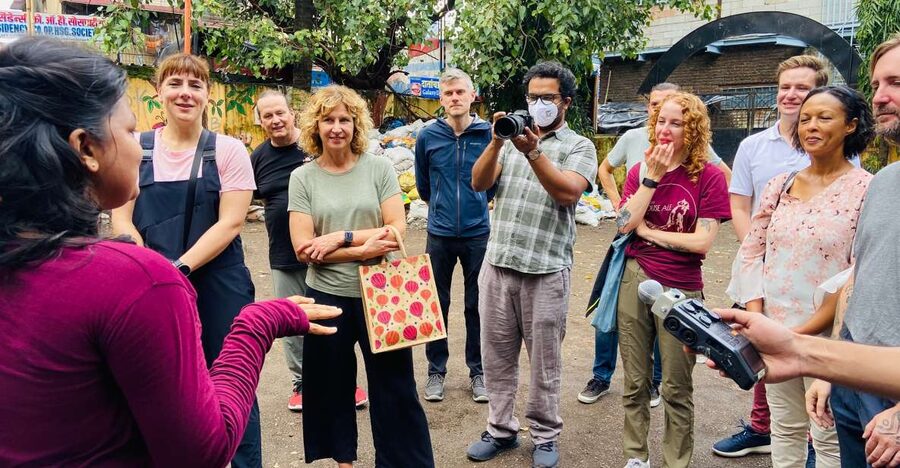
- Local guides with personal ties: Guides including Pooja, Varsha, Sneha, Anu, and Anushka have been praised for their clear English, warmth, and first-hand understanding of Dharavi.
- A working neighborhood: See plastic, paper, and aluminium recycling, soap making, cloth production, leather work, pottery, markets, and commercial lanes.
- More than industry: The route also includes schools, colleges, residential areas, and everyday community life.
- Small-group feel: A private group option is available, which can make questions and conversation easier.
- Strong value: At $5 per person, the tour offers 2.5 hours of guiding, local context, and bottled mineral water.
- Easy meeting point: Meet outside Third Wave Coffee and return to the same location at the end.
Why Dharavi is worth seeing with a local guide
Dharavi can be difficult to understand from a car window or a quick internet search. The district is often described as one of Asia’s largest slum areas, but that label tells you very little about how it functions.
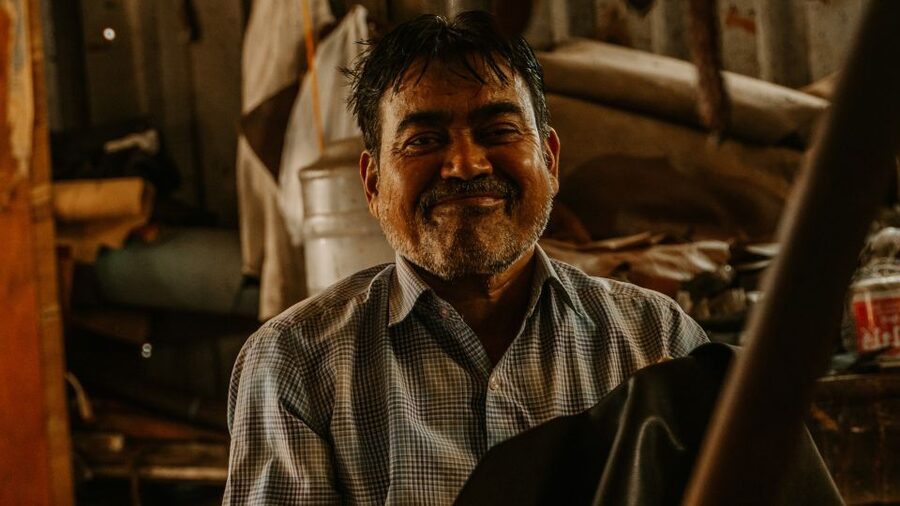
Inside, you find homes beside workshops, small factories beside shops, and narrow lanes linking commercial and residential areas. The tour helps you see these connections. You are not only looking at where people live. You are learning how people work, make products, run businesses, educate their children, and support their families.
That local explanation matters. A visitor walking alone might notice piles of material, crowded lanes, or workshop doors, but miss the larger story. Your guide can explain what is being produced, how different businesses fit together, and how residents use limited space with remarkable efficiency.
The guides also bring different personalities to the experience. Pooja has been praised for her humor and lively explanations. Varsha is described as an excellent English speaker with a strong grasp of local life. Sneha has been especially appreciated for showing both the commercial and residential sides of Dharavi. Anu, Anushka, Sarah, and Mahek have also led tours, so the exact guide may vary.
More walks with a guide around India:
- Group Guided Walking Tour in Fort and Colaba
★ 5.0 · 1,073 reviews - Private Guided Walking Tour in Fort & Colaba
★ 5.0 · 895 reviews - Private Guided Walking Tour in Bandra Queen of Suburbs
★ 5.0 · 383 reviews
Starting outside Third Wave Coffee
The tour begins outside Third Wave Coffee, where your guide meets you. This is a useful starting point because it gives you a clear, recognizable place to wait before entering the neighborhood.
The coffee shop also gives you a short chance to get organized. Arrive with comfortable shoes, water if you prefer to carry your own, and as little luggage as possible. Bottled mineral water is included, but you will be walking for around two and a half hours.
The meeting point is close to a station, according to one detailed account of the outing. If you are coming by car, allow extra time. Mumbai traffic can be slow, and the coffee shop is easier to reach by train than by a rushed taxi ride in heavy traffic.
Your guide will meet you outside the shop. If you cannot find the guide, the activity instructions advise you to contact the tour provider.
Following Dharavi’s recycling economy
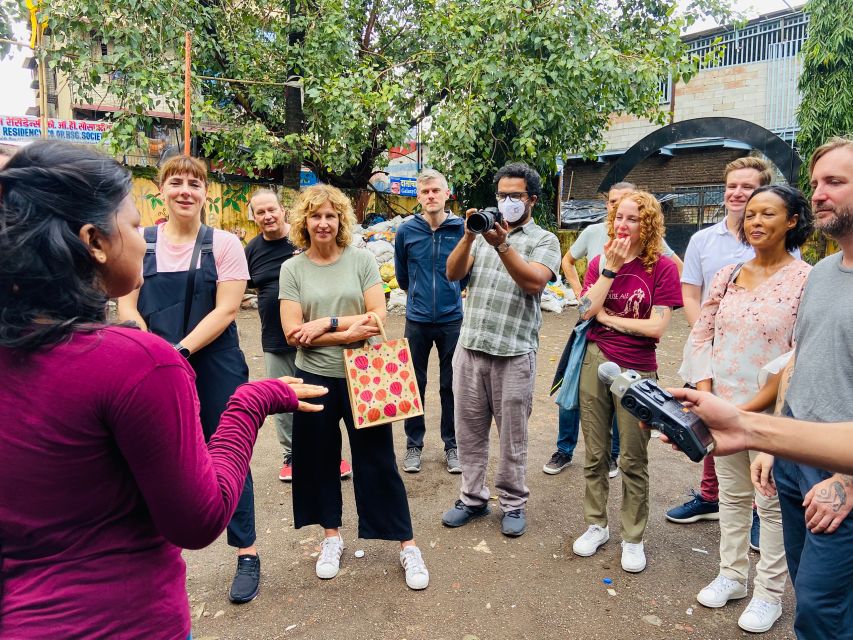
One of the most interesting parts of the route is the recycling work. You may see plastic, paper, and aluminium being sorted and processed. This is not a staged demonstration. It is part of the area’s working economy.
For you, the value is in seeing what happens after discarded material leaves a home, office, or shop. The route shows how waste can become an income source and how small businesses operate with limited space. The work may be noisy, dusty, or visually intense, so this section is not polished sightseeing. That is exactly why a local guide is useful.
A guide can explain what you are seeing without turning the workers into a spectacle. Follow instructions about where to stand, avoid blocking doorways, and ask before taking photographs. The tour information presents Dharavi as an authentic local experience, but authenticity still requires manners.
This portion also challenges the simple idea that a slum is only a place of need. Recycling, manufacturing, and trade show another side: people creating value, finding work, and building businesses in difficult conditions.
Seeing soap, cloth, leather, and pottery work
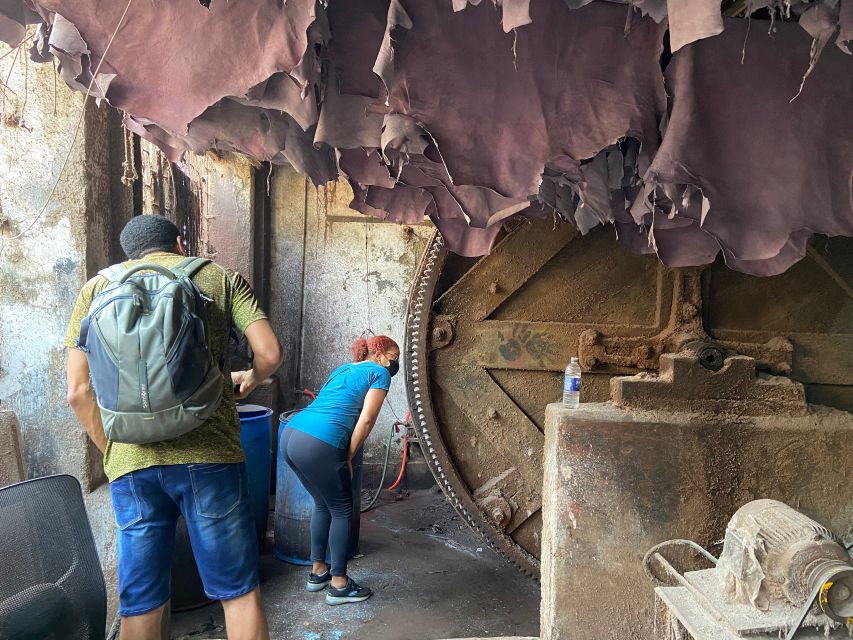
The tour can include soap factories, cloth manufacturing, leather industries, and pottery. These stops give the walk a practical focus. Instead of hearing general statements about poverty or resilience, you can see specific forms of work.
Soap production shows how a basic household product can be made and sold through a small local operation. Cloth and leather work reveal the skilled labor behind goods that are often treated as anonymous products in shops. Pottery adds another craft tradition to the route.
The exact order and length of each stop can vary, and not every visit will feel like a formal factory tour. You are walking through a living neighborhood, not a museum with fixed displays. Some workshops may be active, while others may be viewed from the lane.
I like this approach because it keeps the focus on people’s abilities. At the same time, you should not expect a shopping trip or a hands-on craft class. The main purpose is to understand how production fits into daily life in Dharavi.
More walking tours around India:
- Fontainhas Heritage Walk by Make It Happen
★ 5.0 · 2,834 reviews - The Great Indian Food Tour: Old Delhi Food and Heritage Walk
★ 5.0 · 1,698 reviews - Old Goa Heritage Walk by Make It Happen
★ 5.0 · 797 reviews - Old Delhi Food, Heritage&Cultural Walk with Rickshaw ride to Masterji Kee Haveli
★ 5.0 · 742 reviews
Moving from workshops into homes and schools
A strong feature of this experience is the shift from industrial areas to residential lanes. The route can include schools, colleges, markets, commercial spaces, and homes.
This change helps you avoid seeing Dharavi as one single type of place. A recycling lane and a residential street may be only a short walk apart, yet they serve very different purposes. Your guide can explain how families live alongside businesses and how education fits into the community.
Several guides have been praised for making visitors feel safe and comfortable while walking through these areas. That does not mean you should forget that you are entering someone’s neighborhood. Keep your voice low, follow your guide’s lead, and treat homes and people with the same respect you would expect near your own front door.
Photography deserves care here. The tour information does not promise a photo stop, and the most respectful approach is to ask before photographing people, homes, shops, or workers. You can still pay attention without turning every scene into a picture.
The human stories behind the streets
The most personal part of the tour comes through the stories your guide shares. Several guides connected with the experience are from Dharavi or have grown up there, including Pooja and Varsha. Sneha has also been described as a local resident with personal experience of the area.
That background changes the tone. You are not hearing a distant explanation of a neighborhood. You are hearing how someone who knows the area understands its work, education, family life, and challenges.
The guides have different styles. Pooja is often described as funny, energetic, and easy to talk with. Varsha is praised for detailed answers and strong English. Sneha has been appreciated for helping quieter participants engage with the places and people around them. Anu is noted for patience and a calm way of keeping a group together.
Your own experience will depend partly on which guide leads the walk. Still, the repeated strengths are clear: clear explanations, friendly conversation, patience, and a strong sense of direction through the lanes.
What the $5 price really gives you
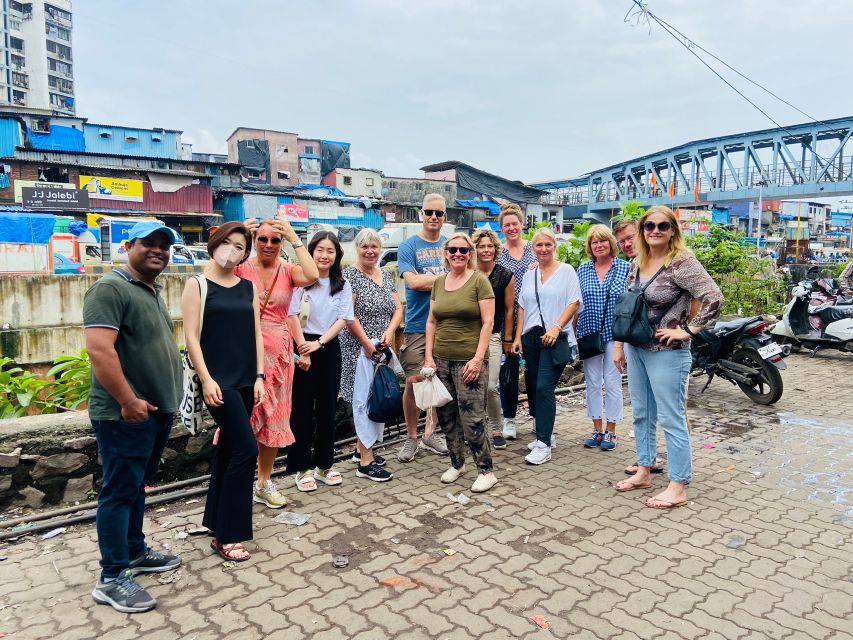
At $5 per person, this is unusually inexpensive for a guided two-and-a-half-hour experience in Mumbai. You are paying for a walking guide, local interpretation, and bottled mineral water. A private group option is also available if you want a more personal format.
The low price does not mean the walk is lightweight. Its value comes from access and context. You could walk near Dharavi by yourself, but you would miss much of what connects the workshops, homes, schools, and markets. You may also have difficulty finding the right routes or knowing how to behave in sensitive areas.
The price is best understood as a budget introduction, not a luxury tour. Do not expect air-conditioned transport, a meal, hotel pickup, or a polished visitor center. The experience is on foot and focused on local life.
The tour also offers free cancellation up to 24 hours before the start, along with a reserve-now, pay-later option. Check the available starting times when booking, since the duration is fixed at about 2.5 hours but the departure time can vary.
Is the walking route demanding?
The tour lasts two to two and a half hours and takes place on foot. The information provided does not give a precise distance or a detailed accessibility statement, so you should plan for continuous walking through active lanes and uneven urban conditions.
Wear shoes you can comfortably walk in. Mumbai can be hot, and narrow streets may feel crowded. The experience is not ideal if you want a quiet, slow-paced sightseeing stop with frequent seating.
Families can take part, and one account describes the experience working well for a family with two teenagers. Still, younger children may find the industrial sections or crowded streets tiring. The walk suits people who are curious, observant, and comfortable seeing a part of Mumbai that is not arranged for tourism.
Who should book this Dharavi tour?
I would choose this tour if you want to understand how people work and live in Mumbai rather than simply collect famous sights. It is especially useful early in your stay, since the experience gives you context for the city’s density, inequality, enterprise, and community life.
You should book it if you value:
- Local explanation over a standard sightseeing script
- Small-scale industry and craft
- Honest discussion of working-class life
- A guide who can answer questions in English
- A short, low-cost activity with plenty of human context
You may want to skip it if you dislike walking, feel uncomfortable entering residential areas, or want a conventional attraction with clear viewing platforms and set photo stops. The tour asks you to be respectful and attentive. It is not entertainment in the usual sense.
A few practical ways to make the walk better
Arrive early enough to find Third Wave Coffee without rushing. Mumbai traffic can cause delays, and the nearby train station may be a better choice than a car.
Wear simple, comfortable clothing and walking shoes. Carry only what you need. The tour includes bottled water, but you may want sun protection and your own drinking water as well.
Ask questions. The guides are praised for answering them in detail, and the best parts of the walk often come from small explanations about work, education, family life, or local businesses.
Keep your camera away unless you have permission. Dharavi is a home and workplace, not a set. You will have a more meaningful experience if you watch first and photograph only when appropriate.
If you prefer extra time for questions, consider the private-group option. A standard small group can be good for meeting other people, while a private group lets you set a more comfortable pace.
Should you book it?
Yes, if you want a grounded introduction to Dharavi and understand that the subject deserves respect. The tour combines recycling, manufacturing, pottery, markets, schools, homes, and personal stories in one compact walk. At $5, it offers strong value.
The biggest reason to book is the local female guiding team. Pooja, Varsha, Sneha, Anu, Anushka, Sarah, and Mahek have been praised for warmth, patience, humor, clear English, and personal knowledge of the area. The guide you receive may vary, but the format is built around local interpretation.
Go with an open mind, comfortable shoes, and realistic expectations. You will not see a neat attraction designed for visitors. You will see a working community, and that is precisely what makes this one of Mumbai’s more useful and memorable first-day activities.
FAQ
Where does the Dharavi walking tour start?
The tour starts outside the Third Wave Coffee shop in Mumbai. Your guide will meet you there.
Where does the tour finish?
The walking tour returns to Third Wave Coffee at the end.
How long does the tour last?
The advertised duration is 2.5 hours. The activity description gives a range of two to two and a half hours.
What language does the guide speak?
The live tour is conducted in English.
What can I see during the Dharavi tour?
The route can include plastic, paper, and aluminium recycling, soap factories, cloth production, leather work, pottery, schools, colleges, markets, commercial areas, and residential neighborhoods.
Is bottled water included?
Yes. Bottled mineral water is included with the walking tour.
Is this a private tour?
A private group option is available. Check the booking choice for the group format you want.
How much does the tour cost?
The listed price is $5 per person.
Can I cancel the booking?
You can cancel up to 24 hours in advance for a full refund. A reserve-now, pay-later option is also available.
New walking tours around India
- Mumbai Street Food Tour with Evening Bazaar Walk★ 4.9 · 79 reviews
- Blue City Heritage Walking Tour With Pick Up & Drop Off★ 4.8 · 164 reviews
- Heritage Walk & Street Food Tasting in Jaipur★ 5.0 · 158 reviews
- Evening Walking Tour with Fire Rituals-The Pushkar Route★ 4.9 · 108 reviews
- Chennai Walking Tour ( 2 hours guided tour)★ 3.8 · 85 reviews
- Bangalore: Palace, Temples, Fort & Markets Walking Tour★ 4.9 · 97 reviews
- Agra: Street Food Walking Tour, Spice Market, & Tuk-tuk Ride★ 4.9 · 102 reviews
- Private Guided Walking Tour in Bandra Queen of Suburbs★ 5.0 · 383 reviews
Mumbai Walking Tours, side by side.

Private Guided Walking Tour in Bandra Queen of Suburbs
Read our review →
Private Guided Spiritual Walk in Banganga Hindu Temples
Read our review →
Mumbai Street Food Tour with Evening Bazaar Walk
Read our review →Lists this walk sits on