
Review · NAIROBI
Nairobi Downtown Walking Tour
Nairobi’s city centre makes the most sense on foot, where grand government buildings, crowded markets, religious landmarks, matatus, street vendors, and ordinary office life all share the same few blocks. This tour gives you a local guide to explain what you are seeing rather than leaving you to guess.
I like the small, personal feel and the chance to visit places such as McMillan Memorial Library, Maasai Market, and City Market in one outing. I also like the practical hotel pickup, especially if this is your first day in Nairobi. The main drawback is that the tour is outdoors, can feel busy, and does not include hotel drop-off or the $4 KICC entrance fee.
Key points at a glance

- See Nairobi beyond the safari stopover: Walk through the working city centre, not just the polished tourist sights.
- Meet the city through its markets: Maasai Market is geared toward crafts and souvenirs, while City Market serves everyday local shopping.
- Hear the stories behind the streets: Guides such as David, William, Daniel, and Ibrahim explain buildings, politics, religion, transport, and city life.
- Reach the KICC rooftop: Pay the extra $4 for a high view across central Nairobi.
- Use the pickup to save time: Collection is available from hotels and apartments in Nairobi, with vehicle details sent before pickup.
- Pack lightly and dress for walking: Comfortable shoes, a hat, sunglasses, and rain protection are more useful than a large bag.
Why Nairobi’s downtown is worth walking
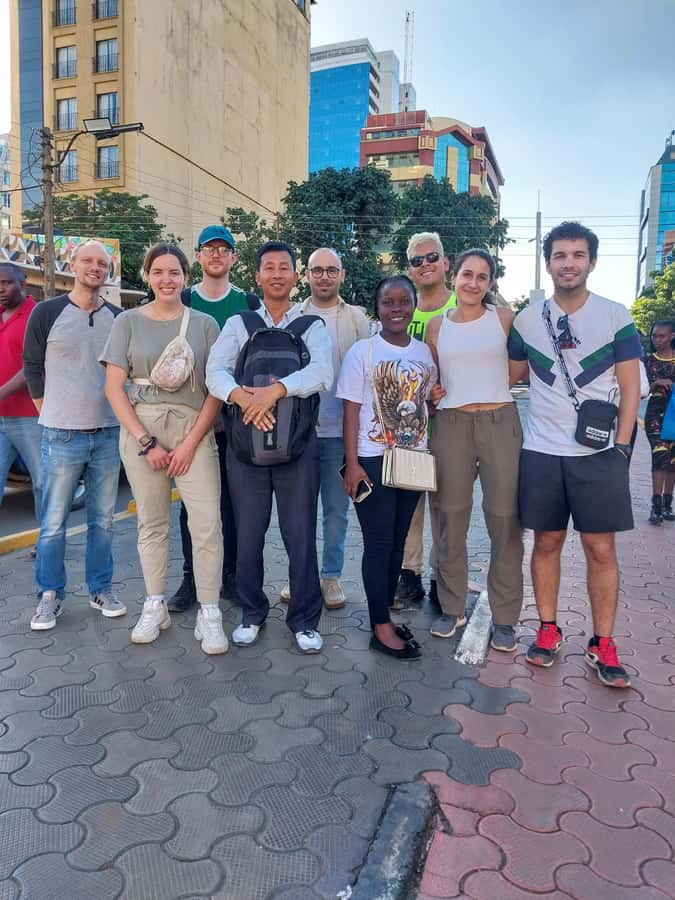
Nairobi can be easy to misunderstand from a car window. You may see traffic, office towers, signs, shops, and people moving quickly, but the meaning of the city reveals itself at street level. This walk brings you into that daily rhythm.
The route mixes civic Nairobi with commercial Nairobi. You pass national institutions and major religious buildings, then move through markets where people shop, sell, bargain, and work. Your guide also explains matatu culture, local religion, and the way Nairobi’s centre functions during an ordinary day.
I would book this early in your stay. It gives you useful bearings before you explore alone, and it helps turn a collection of street names into a readable city. It also suits a short stopover, since the scheduled walk lasts two and a half hours.
The experience is guided in English or Spanish. The tone depends on the guide, but the strongest names in the supplied feedback are David, William, Daniel, and Ibrahim. Guests repeatedly describe them as friendly, patient, punctual, and good at answering questions. Several guides also helped arrange a ride at the end, though that return transport is not part of the stated inclusion.
More walking tours around the world:
- Magical London: Harry Potter Guided Walking Tour
★ 4.7 · 22,044 reviews - Reykjavik Food Walk – Local Foodie Adventure in Iceland
★ 5.0 · 18,952 reviews - History and Hauntings of Salem Guided Walking Tour
★ 5.0 · 14,564 reviews
From Simba Street to Kimathi Street
Pickup begins within Nairobi County, from a hotel or apartment. The exact starting point is supplied after booking, and you receive the car details before pickup. That is useful in a city where finding a guide at a busy street corner could be awkward.
The walking portion begins around Simba Street with a safety briefing. This is a sensible start. You are entering a busy central district, and your guide can explain how the walk will work before you set off.
Kimathi Street follows, with time for sightseeing and photographs. The stop gives your guide room to introduce Nairobi’s central streets and explain how the city developed. I would not expect a long museum-style lecture here. The value is in connecting the road, nearby buildings, and present-day activity to the larger story of Nairobi.
You then pass the Nation Media Group headquarters. It is a sightseeing stop rather than a visit inside. This is a reminder that the tour is mostly about reading the city from its streets, not touring every building.
McMillan Memorial Library and Nairobi’s older buildings

McMillan Memorial Library is one of the more substantial stops because a visit is included. You also have time for photographs and sightseeing. The library adds historical weight to a route that could otherwise feel like a simple market walk.
Your guide can use the building to explain earlier chapters of Nairobi and the changing role of central institutions. Several guides are praised for stopping to explain the background of buildings instead of rushing from one point to another. That approach matters here, since architecture can be easy to overlook when traffic and pedestrians compete for your attention.
The tour then passes Jamia Mosque. It is a sightseeing stop from outside, not a scheduled interior visit. The mosque helps broaden the picture of Nairobi’s public life and gives the guide an opening to discuss religion and the city’s mix of communities.
The pace appears to be one of the tour’s strengths. Daniel, William, David, and Ibrahim are repeatedly described as patient, and some guides adjusted the speed for families, solo visitors, and people who wanted time for photographs. This is a walking tour, but it is not presented as a race.
Maasai Market: crafts, shopping, and practical advice
Maasai Market is one of the liveliest parts of the route. You can look at souvenirs and locally made goods, and the guide allows time for shopping. If you want gifts from Kenya, this is the point where the tour becomes more hands-on.
A local guide is especially useful here. You can ask about items, take your time, and get help finding your way through the stalls. Do not treat this as a quiet gallery visit. It is a working market, and the experience includes the energy and interruptions that come with shopping in a busy city centre.
The tour’s focus is not only on buying things. It also aims to explain the lives of street vendors and marketers. That context makes the market more worthwhile than a quick stop for souvenirs. You see how commerce fits into the city rather than viewing local products as isolated objects.
You should keep your belongings simple. Large bags, jewelry, alcohol, and drugs are not allowed, and high heels are a poor choice for the walk. Comfortable shoes are the clear priority.
Same streets, a different story:
- New Orleans Premier Ghost, Voodoo and Vampire Walking Tour
★ 4.5 · 12,856 reviews - Amsterdam Anne Frank: Small-Group Walking Tour & Local Guide
★ 4.8 · 12,789 reviews - Edinburgh: Harry Potter Magical Guided Walking Tour
★ 4.8 · 11,944 reviews - Edinburgh Castle: Guided Walking Tour with Entry Ticket
★ 4.7 · 11,699 reviews
Street life, the Smoking Zone, and the city’s working rhythm
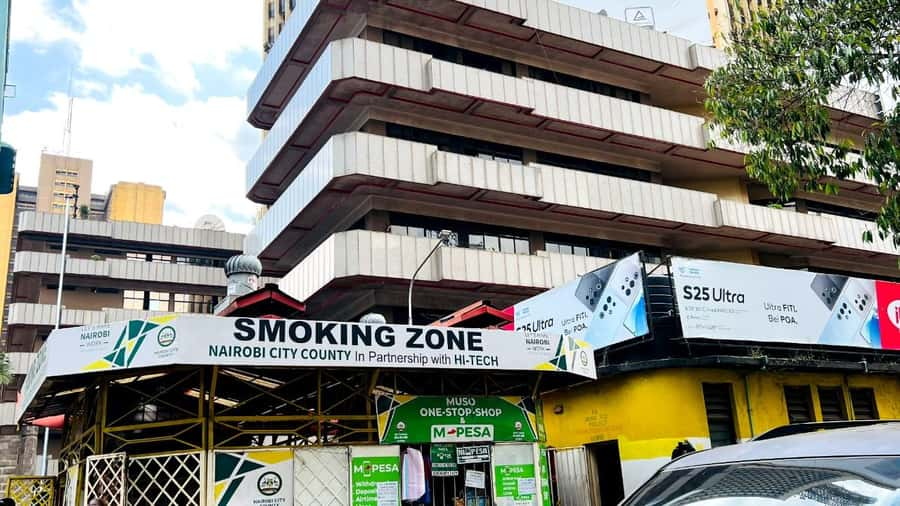
After the market, the route includes the Smoking Zone and additional street views. This section is less about a single landmark and more about seeing downtown as a place where people work, commute, sell goods, and pause during the day.
The guide’s local knowledge is most useful here. A good explanation can help you notice details you might otherwise pass without understanding. The tour specifically covers matatu culture and city culture, giving you a closer look at the systems that shape everyday movement and social life.
The route also includes scenic views along the way, although the schedule does not specify a separate named viewpoint at this stage. Think of these moments as part of the walk rather than a formal attraction. You are moving through the city, with occasional pauses to look, listen, and take photographs.
This is also where personal comfort matters. Nairobi’s weather can be hot, and the tour is outside. Carry sunglasses and a hat in hot seasons, and bring a raincoat during the rainy season. The walk may feel more demanding if you arrive with luggage or unsuitable footwear.
Cathedral Basilica and Kenya’s government quarter
The Cathedral Basilica of the Holy Family is a pass-by sightseeing stop. It adds another religious and architectural reference point to the route, following Jamia Mosque earlier in the walk.
You then pass the Parliament of Kenya. The schedule lists sightseeing rather than an interior visit, so you should not expect a full government building tour. The value is seeing the area in context and hearing your guide explain its role in Nairobi’s civic centre.
This part of the route works well for first-time visitors because it places official Nairobi beside the markets and streets you have already seen. The city is not presented as only a business district or only a cultural stop. You see how government, religion, shopping, media, and transport sit close together.
Several guides are praised for explaining the history of Nairobi from the 1800s through to current events. That wider timeline gives the walk more shape. You are not simply collecting photographs. You are learning why these streets matter.
KICC rooftop and the best city view
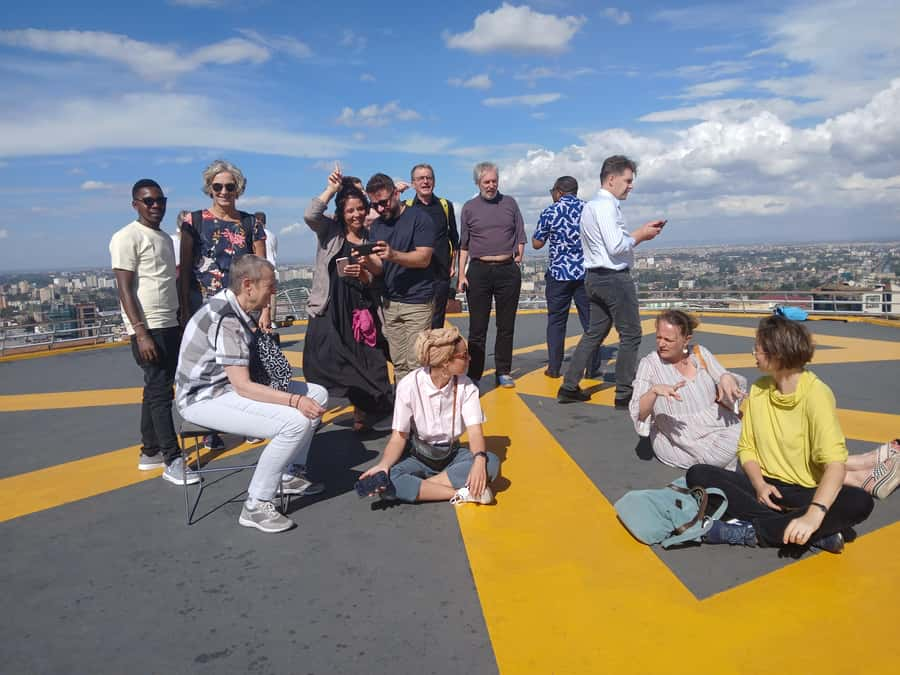
The Kenyatta International Convention Centre rooftop is the tour’s clearest viewpoint. You visit, take photographs, and look across central Nairobi from above. Entry is not included and costs $4 per person.
I consider that a reasonable extra if the weather is clear. After walking through the streets, the rooftop gives you a chance to understand the city’s layout from a different angle. It is also one of the strongest photo opportunities on the route.
Keep the extra fee in mind when comparing the total cost. The tour itself costs $27 per person, so the outing is effectively $31 if you choose the rooftop. The guide, hotel pickup, McMillan Library visit, and market-focused route add value, especially for a first visit. Still, someone seeking only a viewpoint could spend less elsewhere.
The KICC stop is also a useful rest point in a two-and-a-half-hour walk. You get a change from street level before continuing toward City Market.
City Market and the final walk to City Walk
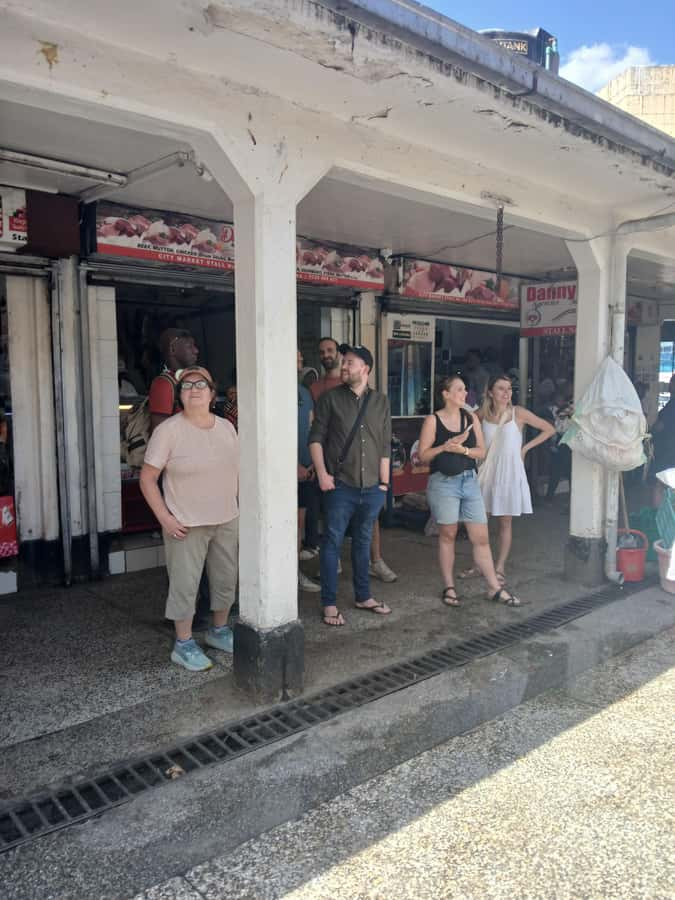
City Market is described as a place where local people shop for flowers and meat. That makes it different from Maasai Market. One is associated more with crafts and visitor shopping, while the other shows a more practical side of city commerce.
I like this contrast. It keeps the tour from turning into a single souvenir circuit. You see the market economy from more than one angle, and your guide can explain how local shopping differs from the goods aimed at visitors.
The route ends with about ten minutes on foot and a break at City Walk Kenya Ltd near the Hilton. This provides a natural end to the walking portion. Since hotel drop-off is not included, you should plan your next move before the tour finishes.
Some guides have helped participants arrange a taxi or Uber after the walk. That is useful, particularly for a solo visitor or someone unfamiliar with Nairobi, but treat it as extra assistance rather than a guaranteed service. You pay for your own return transport.
Price, timing, and who will get the most from it
At $27 per person, this is a fair price for a guided introduction to central Nairobi, especially with hotel pickup and a McMillan Memorial Library visit included. You are paying for local interpretation as much as for the walking route. Without a guide, you could pass several important buildings and markets without understanding their place in the city.
The 150-minute duration is long enough to cover the main sights but short enough to fit around other plans. Families with older children can manage it, and a nine-year-old has completed the route with a parent. Solo female visitors have also found the guided format reassuring.
The tour is less suitable if you need step-free access, have difficulty walking outdoors, or use a wheelchair. It is also not suitable for hearing-impaired participants according to the stated conditions. Since the experience is outside, heavy rain or hot weather may affect your comfort.
Cancellation is flexible up to 24 hours before the start for a full refund, and you can reserve now and pay later. Check the available starting times before booking, since the tour runs at scheduled times rather than whenever you arrive.
Should you book the Nairobi Downtown Walking Tour?
Book it if you want to understand Nairobi’s centre through its people, markets, landmarks, and daily routines. The strongest reason to go is the guide. David, William, Daniel, and Ibrahim are singled out for clear explanations, patience, care, and help with transport or shopping questions.
I would especially recommend it for a first Nairobi visit, a short stopover, a solo visitor, or anyone who wants more than a drive past the city. Bring comfortable shoes, keep your bags small, budget $4 for KICC, and arrange your return ride.
Skip it if you want a quiet, indoor sightseeing experience or a tour focused on major attractions with formal entries. This is an active outdoor walk through the working city. That is exactly its appeal, but it also means heat, crowds, uneven comfort, and a little downtown unpredictability.
FAQ
How long does the Nairobi Downtown Walking Tour last?
The tour lasts 150 minutes, or two and a half hours. The route includes walking between several central Nairobi sights and a final walk of about 10 minutes before the break near City Walk Kenya Ltd and the Hilton.
Is hotel pickup included?
Yes. Pickup is included from any hotel or apartment in Nairobi. You will receive the vehicle details before the pickup time.
Is the return ride to my hotel included?
No. Hotel drop-off is not included. Guides may help arrange a taxi or Uber, but you should plan to pay for your own return transport.
Does the tour include entry to KICC?
No. KICC entry costs an additional $4 per person. The rooftop visit includes sightseeing and photo time.
Which languages are available?
The live tour guide is available in English or Spanish.
What should I bring?
Wear comfortable shoes and bring sunglasses and a hat during hot seasons. A raincoat is useful during the rainy season. Large bags, luggage, high heels, jewelry, alcohol, and drugs are not allowed.
New walking tours around the world
- Niagara Falls, Canada: White Water Walk Entry Ticket★ 4.5 · 147 reviews
- NYC: Walking Tour with Local Guide and 30+ Top NYC Sights★ 4.5 · 248 reviews
- Zadar: Food Tasting & Old Town Walking Tour★ 5.0 · 94 reviews
- Niagara Falls: Walking Tour, Journey Behind Falls, & Cruise★ 4.8 · 773 reviews
- New York City: Gangsters and Ghosts 2-Hour Walking Tour★ 4.7 · 615 reviews
- NYC: History of Slavery & Underground Railroad Walking Tour★ 4.7 · 87 reviews
- New York City’s Hell’s Kitchen: Walking Food Tour★ 4.8 · 200 reviews
- New York City: Central Park Walking Tour★ 4.7 · 82 reviews