
Review · INDIA
Bangalore: Palace, Temples, Fort & Markets Walking Tour
Tipu Sultan’s wooden summer palace, a centuries-old Vishnu temple, Bangalore Fort, and the flower-packed lanes of KR Market make this one of the fastest ways to meet old Bengaluru. I like the strong mix of history and daily life, and I like that a small group lets your guide pause for questions, photos, or help with a purchase.
The market can be crowded, noisy, and hard to navigate, and three hours passes quickly. You also need to cover your shoulders and legs for the Jain temple, carry socks, and pay extra if you want transport to and from the meeting point.
Key points to know before you book
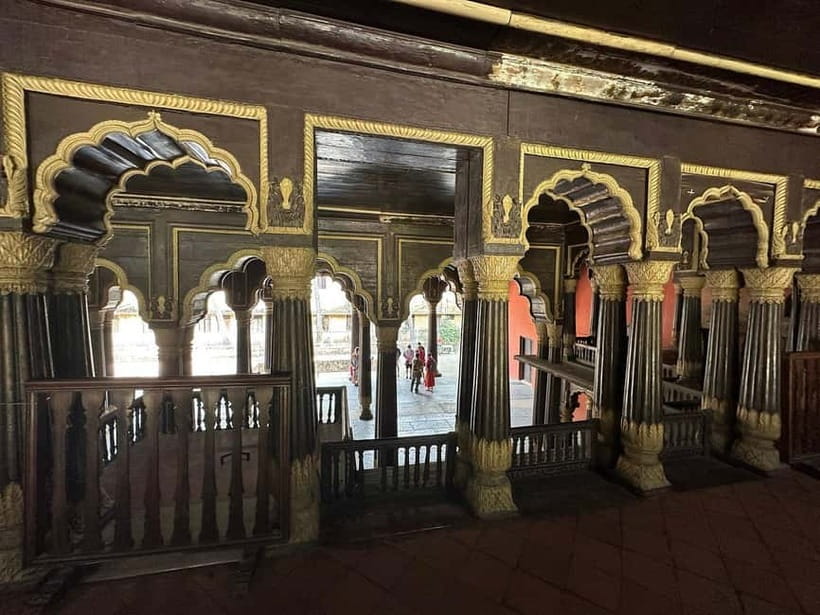
- Tipu Sultan’s Summer Palace: See a 230-year-old teak structure tied to the city’s royal past.
- KR Market at close range: Walk among fruit, vegetable, and flower sellers rather than viewing the market from a vehicle.
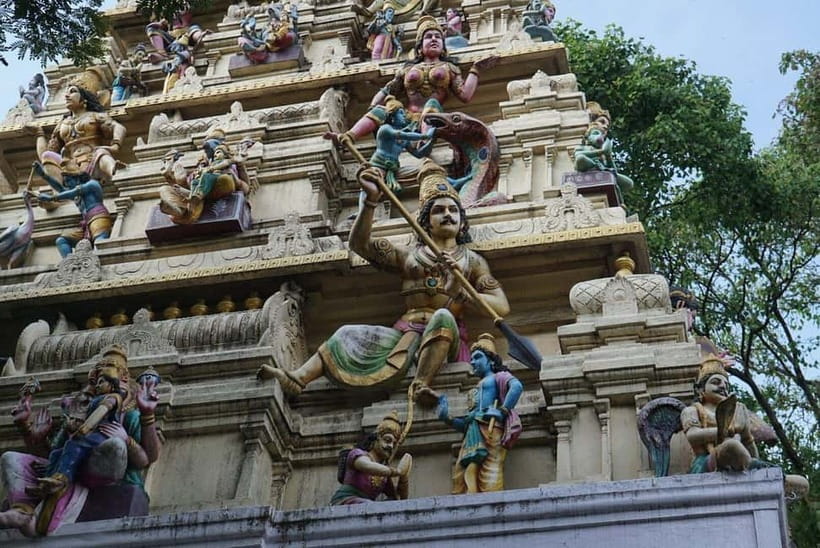
- Several faiths in one walk: Visit a Hindu Vishnu temple and finish at a Jain temple.
- Guides who add local detail: Vijay, Vasuki, Raghu, Vanaja, and other guides are praised for storytelling, safety, and help in the market.
- Small-group format: Groups are limited to 10, with occasional solo or private-feeling departures.
- Dress and walking matter: Wear covered clothing, bring socks and a headscarf, and expect uneven streets and crowded lanes.
Why this old Bengaluru walk works so well
This is not a tour of polished modern Bengaluru. It takes you into the older city, where royal power, religion, trade, and ordinary work all sit close together. In three hours, you move from a palace courtyard to a temple, then through a fort and into one of the city’s busiest markets.
I like the way the route gives you several different ways to read Bengaluru. The palace explains the city’s rulers. The temples show living religious practice. The fort adds military history. KR Market brings you back to the present, with flowers, produce, porters, shoppers, vehicles, cows, and pedestrians sharing tight streets.
The guide matters here. Old Bengaluru can feel confusing at first, especially if you are new to India. Guides named Vijay, Vasuki, Raghu, Vanaja, Ramesh, Varun, and others have led this walk, with particular praise for clear explanations, calm handling of crowds, and a willingness to answer questions. Some guides also help with photographs, shopping, local conversations, or finding your way onward by Metro after the walk.
The tone is friendly rather than formal. You get history, but you also get stories, religious context, and small explanations that help make sense of what is happening around you. That is important in a market where simply walking from one point to another can feel like a full sensory event.
More Castle and Palace Walking Tours around India:
- Edinburgh Castle: Guided Walking Tour with Entry Ticket
★ 4.7 · 11,699 reviews - Venice: Doge’s Palace and St Mark’s Basilica Walking Tour
★ 4.4 · 6,291 reviews - Prague: 3-Hour Walking Tour of Old Town & Prague Castle
★ 4.7 · 5,696 reviews
Starting at Tipu Sultan’s 230-year-old palace
Meet your guide at the gates of Tipu Sultan’s Summer Palace. The palace is built from teak wood and dates back about 230 years, giving the tour an immediate sense of age and place.
This is a useful first stop because it introduces the period when regional rulers shaped the city between the 16th and 18th centuries. The tour also connects that earlier period with later British influence and Bengaluru’s eventual growth into India’s technology center. You are not just looking at an old building. You are beginning a story about how a regional settlement became a major city.
The palace itself is not enormous, so the value comes from the guide’s explanation and from noticing the woodwork and layout. Ask questions here if you want help placing Kempegowda, Tipu Sultan, and the British in the city’s larger story. A good guide can turn a short palace visit into a clear introduction to Bengaluru’s changing identity.
Photography opportunities are part of the appeal. Several guides are praised for knowing good photo spots and giving you time to look around instead of rushing you straight onward. Still, keep your expectations sensible. This is a compact three-hour walk with several stops, not an extended palace tour.
Bangalore Fort and the city’s early defenses
The next major stop is Bangalore Fort, where you spend about 30 minutes. The original fort dates to the 16th century and was later renovated, so it helps show how the city’s defenses changed as power shifted between different rulers.
The fort is valuable because it adds a practical side to the history. Palaces show how rulers lived and represented authority. A fort shows how they protected territory and controlled an important settlement. Your guide can connect the fort to the wider story of Bengaluru’s development, from its earlier royal foundations to later military and colonial changes.
Thirty minutes is enough for an overview, but not for a slow architectural study. If you enjoy old masonry and military history, you may wish the stop were longer. The tradeoff is that the tour continues to places where history is still being lived, rather than spending the whole morning at one monument.
This is also where the guide’s storytelling makes a real difference. Raghu, Vijay, and other guides have been praised for explaining facts in a simple way and adding folklore or personal context. You will get more from the fort if you ask how it fits into the city around it, instead of treating it as an isolated photo stop.
The Hindu temple and living religious practice
The route includes a 320-year-old Vishnu temple, where you can watch Hindu devotees come to pray. This is one of the most useful parts of the experience because it moves beyond monuments and lets you see a place of worship still used by local people.
You need to behave quietly and respectfully. Your guide should explain what you are seeing and where to stand, but you should follow local instructions, avoid blocking worshippers, and ask before taking close photographs. The point is not to treat the temple as a stage. It is to observe a living part of Bengaluru life with care.
The temple also broadens the historical story. The palace and fort are connected to rulers and defense. The Vishnu temple shows how belief and community continue outside the usual sightseeing checklist. You may see prayers being offered and devotees moving through familiar routines that are very different from a museum visit.
One practical caution is that entry and opening hours can change with the season. Temple and monument access is not guaranteed at every moment, so keep a little flexibility in your expectations. One booking party chose not to enter the temples, which made their outing shorter. If you want the full experience, tell your guide that you are comfortable entering the religious sites, while still respecting all rules.
More Market Walking Tours around India:
- Delhi Food Walk: Rickshaw Ride, Street Eats & Market Tour
★ 5.0 · 401 reviews - Old Delhi Food-Spice Market-Temples Tour Soon Featured on NETFLIX
★ 5.0 · 304 reviews - Agra: Street Food Walking Tour, Spice Market, & Tuk-tuk Ride
★ 4.9 · 102 reviews - Mumbai Street Food Tour with Evening Bazaar Walk
★ 4.9 · 79 reviews
KR Market, where the tour gets loud and close
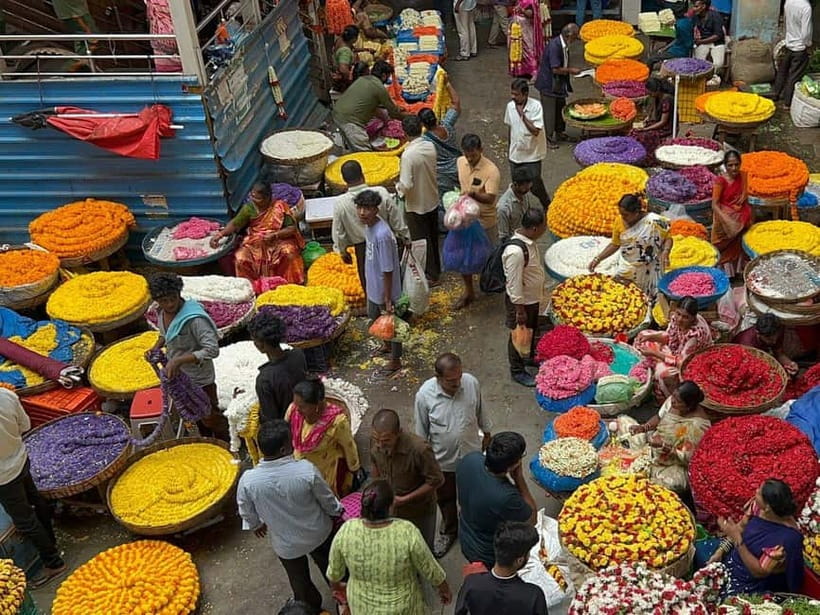
KR Market is the heart of the walk for anyone who wants to see daily commerce at close range. The route gives you about 30 minutes in the market, among fruit, vegetables, and flowers, though the surrounding streets and transitions also add to the experience.
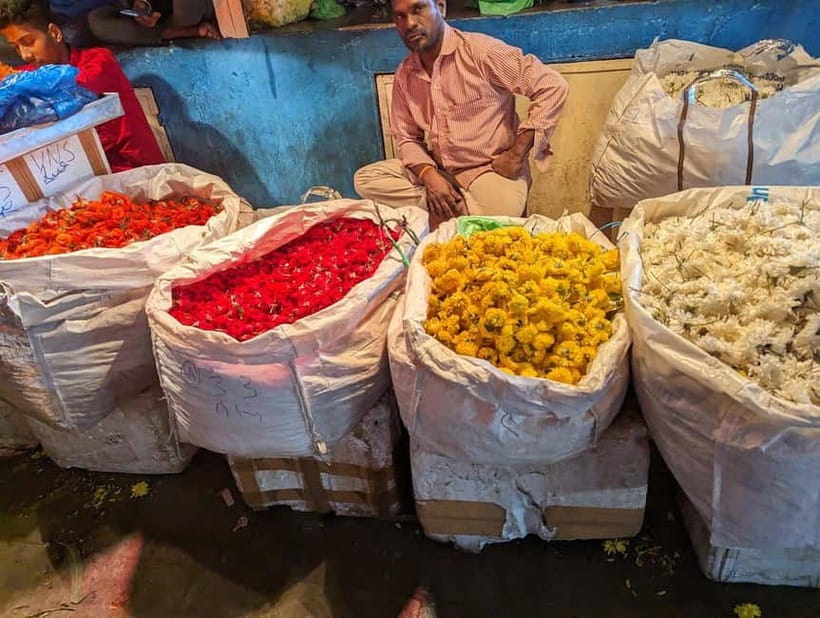
The flower area is especially memorable. Small flowers may be arranged into long decorative strands, and the colors and scents change as you move through the stalls. This is a working market, not a display prepared for visitors. Sellers, buyers, porters, workers, walkers, cows, and vehicles all share the same narrow spaces.
I like that the guide can help you understand what you are seeing instead of simply leading you through. Guides have helped people speak with sellers, choose spices, and find useful shops for silk, scarves, or other purchases. That help can make the market less intimidating, especially if you do not speak the local language or are unsure how to approach a stall.
The market is also the clearest reason to take a small group. A group of up to 10 is easier to keep together than a large coach party, and guides such as Ramesh and Vijay have been praised for staying calm and watching out for everyone in the crowds. Even so, keep your belongings secure and stay close to the guide.
Expect noise. Expect traffic. Expect moments when you need to step aside quickly. The walk is not difficult in a fitness sense, but the ground can be uneven and the streets crowded. You may find the market more tiring than the palace or fort, even though the route is not described as strenuous.
Some guides arrange a coffee break after the market, and one guide helped a solo participant continue by Metro or find a ride back. Food and drinks are not included, so treat any coffee or meal stop as something to arrange separately with your guide.
Finishing at the Jain temple
The tour ends at Shri Adinath Jain Shwetamber Mandir. This gives the walk a quieter finish after the noise of KR Market.
The Jain temple is known here for its carvings and inlay work. It offers a different mood from the Vishnu temple and a different visual language from the palace and fort. The contrast is part of the route’s strength: you move from royal timber to military stone, from active Hindu worship to Jain design, and then through the commerce of the market.
Dress rules are important. Cover your shoulders and legs, and do not wear short skirts, sleeveless shirts, or see-through clothing. Bring a headscarf and spare socks. Socks may be useful when footwear must be removed, and the supplied guidance specifically recommends carrying them.
You should also be ready to remove shoes if required and follow temple instructions. If you are unsure about anything, ask the guide before entering. This is a place for quiet attention, not a rushed final stop.
The temple may be closed or operating on a different schedule because access and opening hours can vary seasonally. That is worth keeping in mind if this particular stop is your main reason for booking.
What the three-hour schedule really feels like
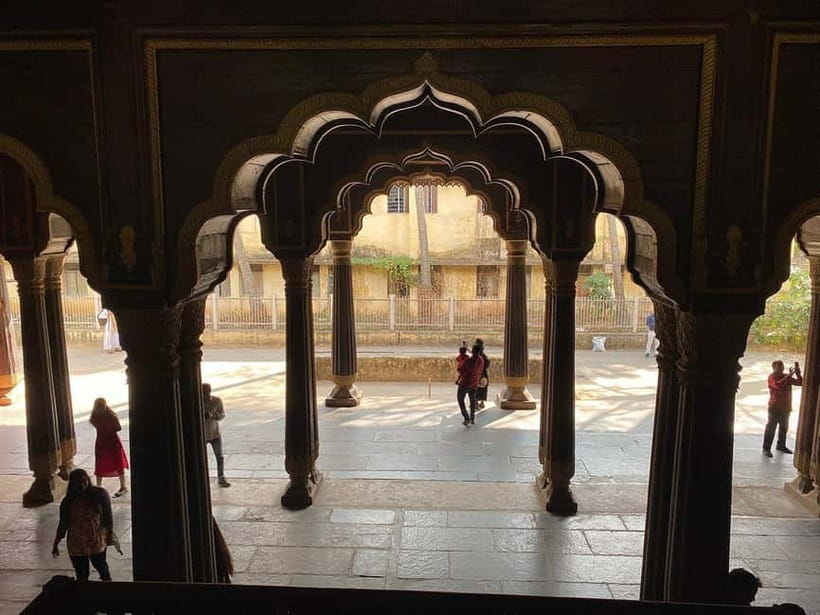
Three hours sounds generous on paper, but this route packs in four main sights, two temple visits, and a market crossing. You will walk quite a lot, even though several people found the pace light rather than strenuous.
The challenge is not distance alone. You are walking through narrow streets, uneven areas, and crowded public spaces. Bengaluru’s traffic and street activity require attention. Wear comfortable walking shoes and avoid carrying anything cumbersome.
The route is best treated as an introduction, not a complete study of old Bengaluru. You get a useful sample of royal history, religion, trade, and street life. You will not have time to linger for long periods at every location, especially if the market is busy or the group stops for questions and photographs.
Small groups can change the feel of the day. With a maximum of 10 people, the guide can often respond to individual interests. Some departures may be much smaller, and solo visitors have received a more personal walk when no one else booked the same time.
Price, transport, and overall value
At $32 per person, I consider this a fair price for a three-hour introduction to old Bengaluru. The fee includes the guided walk and entry to the listed palace, Vishnu temple, Bangalore Fort, and Jain temple. It does not include food, drinks, or transport to the starting point and back.
The value is strongest if you are new to the city, have only a few hours, or want a guide to handle the confusing parts of the market. You are paying not only for entry but also for interpretation, navigation, cultural context, and help speaking with sellers when needed.
Transport from your hotel to the palace and back can be arranged for an additional fee. This may be worthwhile if you are unfamiliar with Bengaluru or finishing the walk with shopping bags. It is not included, so ask about the cost before booking.
The booking terms are flexible: you can cancel up to 24 hours ahead for a full refund, and you can reserve now and pay later. Starting times vary, so check the available slot that suits your day.
Who should book this Bengaluru walking tour
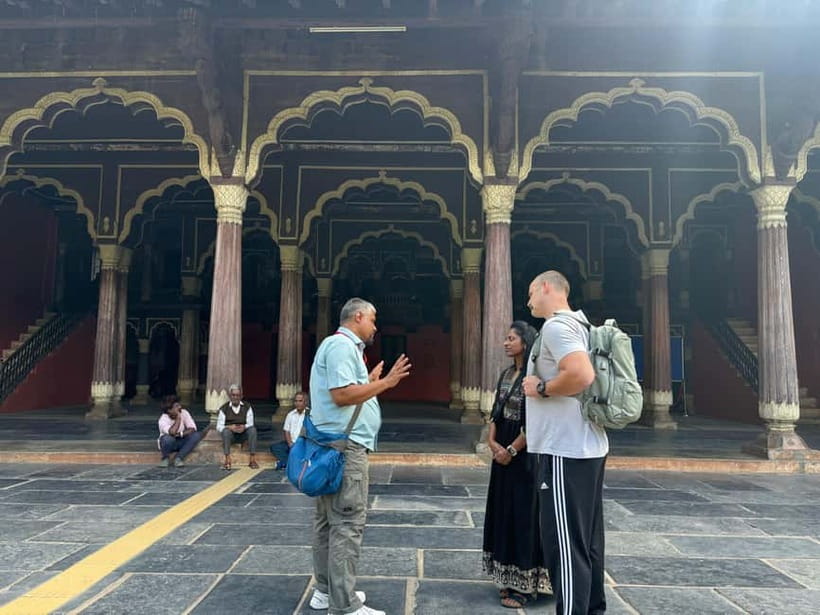
I would choose this walk if you want a fast, well-rounded introduction rather than a single museum or palace visit. It suits first-time visitors, solo travelers, couples, and anyone with one free morning or afternoon.
It is also a good fit if you like seeing ordinary city life alongside major sights. The market is not polished or easy, but that is exactly why it gives you a more direct view of Bengaluru. You will see work, worship, shopping, traffic, and street movement in a short stretch of the city.
You may want a different experience if you dislike crowds, narrow lanes, uneven ground, or religious-site dress rules. The tour is not designed for a slow, private examination of each monument. It is a moving city walk, and the market can feel intense.
Should you book it?
Book it if you want history and street life in one compact outing, especially if you are new to Bengaluru. The palace, fort, temples, and market create a strong sequence, and guides such as Vijay, Vasuki, Raghu, and Vanaja add the local explanation that makes the route easier to understand.
Skip it if you want a quiet sightseeing day or need guaranteed time inside every monument. For most visitors with three hours to spare, though, the $32 price is sensible, the small group is practical, and KR Market gives the walk its strongest sense of place.
FAQ
How long is the Bangalore Palace, Temples, Fort & Markets Walking Tour?
The tour lasts three hours. It includes visits to Tipu Sultan’s Summer Palace, Bangalore Fort, a Vishnu temple, KR Market, and a Jain temple.
Where does the tour start and finish?
The tour starts at the gates of Tipu Sultan’s Summer Palace. It finishes at Shri Adinath Jain Shwetamber Mandir.
Is transport included?
No. Transport is not included in the price. Hotel transport to the walking route and back can be arranged for an additional fee.
What should I wear to the temples?
Cover your shoulders and legs. Short skirts, skirts, sleeveless shirts, and see-through clothing are not allowed. Bring a headscarf and spare socks.
How large is the group?
The group is limited to 10 participants. Some departures may be smaller, depending on bookings.
Is food or coffee included?
No. Food and beverages are not included. Some guides may suggest or arrange a coffee or meal stop, but you should expect to pay separately.
New walking tours around India
- Mumbai Street Food Tour with Evening Bazaar Walk★ 4.9 · 79 reviews
- Mumbai: Dharavi Slum Walking Tour by First Female Tour Guide★ 4.9 · 192 reviews
- Blue City Heritage Walking Tour With Pick Up & Drop Off★ 4.8 · 164 reviews
- Heritage Walk & Street Food Tasting in Jaipur★ 5.0 · 158 reviews
- Evening Walking Tour with Fire Rituals-The Pushkar Route★ 4.9 · 108 reviews
- Chennai Walking Tour ( 2 hours guided tour)★ 3.8 · 85 reviews
- Agra: Street Food Walking Tour, Spice Market, & Tuk-tuk Ride★ 4.9 · 102 reviews
- Private Guided Walking Tour in Bandra Queen of Suburbs★ 5.0 · 383 reviews
India Walking Tours, side by side.

The Great Indian Food Tour: Old Delhi Food and Heritage Walk
Read our review →
Old Delhi Food, Heritage&Cultural Walk with Rickshaw ride to Masterji Kee Haveli
Read our review →

Delhi Food Walk: Rickshaw Ride, Street Eats & Market Tour
Read our review →Lists this walk sits on