
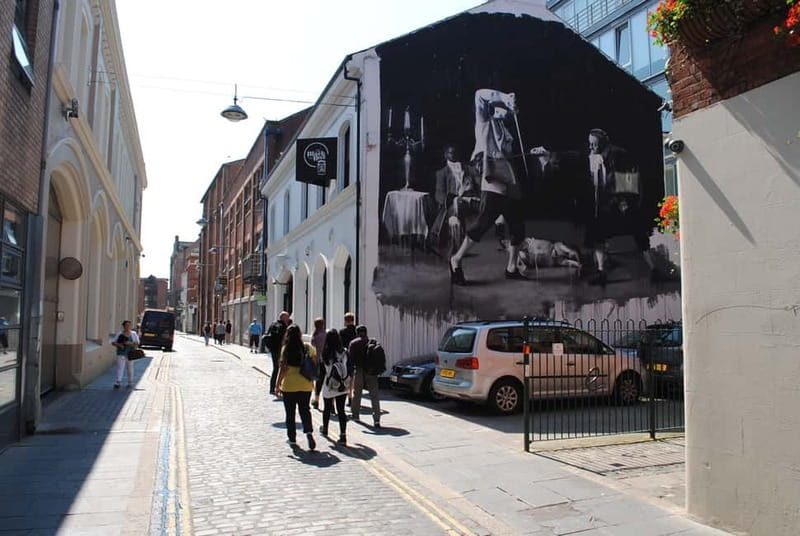
Review · BELFAST
Belfast: A History of Terror Walking Tour
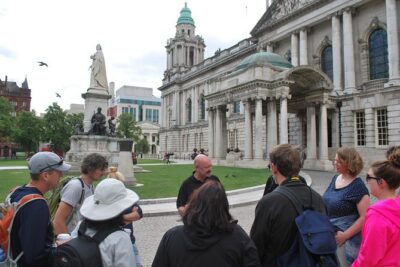
Belfast City Hall is a fitting place to begin a walking tour about a city split by politics, religion, memory, and grief. Over 2.5 hours, A History of Terror connects 800 years of Irish history to the Troubles, then follows Belfast toward peace through sites where violence actually happened.
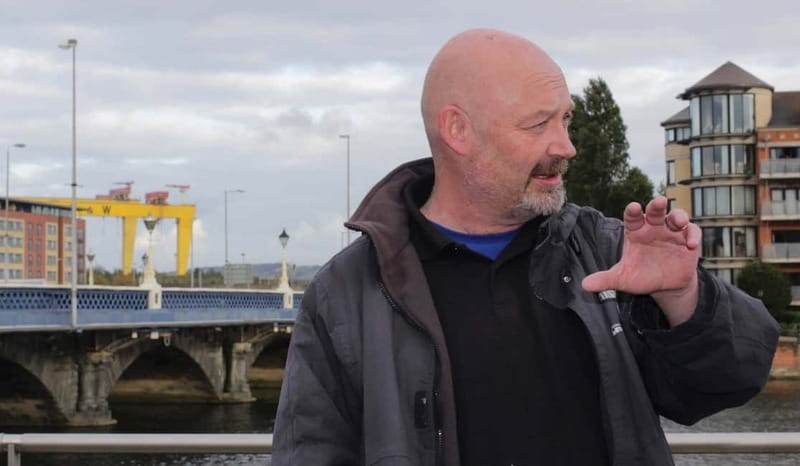
I like the careful balance and the human scale. You hear about political groups, soldiers, police, and paramilitaries, but also about shopkeepers, families, commuters, and children trying to live normal lives. I also like the local guides, including James, Mylie, Anne, Chris, Steve, and Roisin, who explain difficult subjects with personal insight and occasional humor.
The main consideration is the subject matter. This is not a light sightseeing stroll, and some stories are upsetting. The tour is in English, with a lot of information packed into a flat 1.5-mile route, so you need good English and the patience to listen closely.
Key points to know before you book
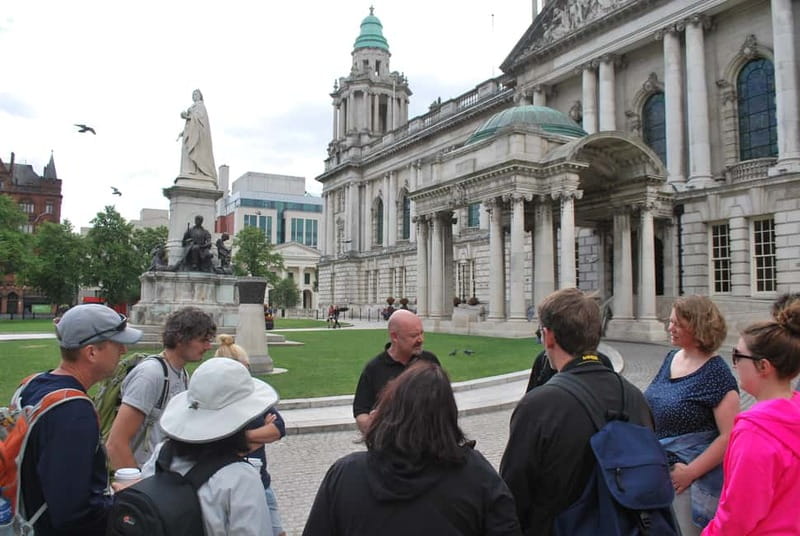
- The route begins at Belfast City Hall: Use the front gates on Donegall Square North, and arrive 10 minutes early.
- The tour covers ten city-centre stops: Expect bombing sites, former security cordons, memorial points, and places tied to major events.
- Local guides make the history personal: James, Anne, Chris, Mylie, Steve, and others have shared first-hand memories of growing up during the Troubles.
- The tone is careful rather than sensational: The tour explains several sides of the conflict and avoids reducing Belfast to a simple political story.
- The route is flat and short: You walk about 1.5 miles with no hills or steps, though comfortable shoes still matter.
- Weather is part of the deal: The tour runs in rain, so bring a waterproof jacket and warm layers in winter.
Starting at Belfast City Hall
Meet at the front gates of Belfast City Hall, on Donegall Square North. Look for a guide wearing a black jacket or shirt with the DC Tours logo on the left breast.
Beginning here works well. City Hall gives your guide room to explain the broad story before the tour moves into specific attacks and personal accounts. You first need the background: how political control, religious division, British rule, Irish nationalism, and unionism developed over centuries.
That long view is important. If you begin with the Troubles alone, the conflict can look like a sudden explosion of violence in the late 1960s. This opening explains why Belfast became the centre of the crisis and why the arguments were about much more than religion.
Your guide also lays out the route and gives a brief safety talk. The pace is steady, with stops for explanation rather than a rushed march between sights. Audio headsets help you hear clearly, a useful feature when traffic, wind, or a larger group makes a normal walking tour harder to follow.
More History Walking Tours in the UK
- A History of Terror – Belfast City Centre Walking Tour
★ 5.0 · 2,883 reviews - Edinburgh: Old Town History and Tales Walking Tour
★ 4.8 · 2,361 reviews - Old Town Walking Tour History and Tales in Edinburgh
★ 5.0 · 2,168 reviews
Ten stops that turn streets into evidence
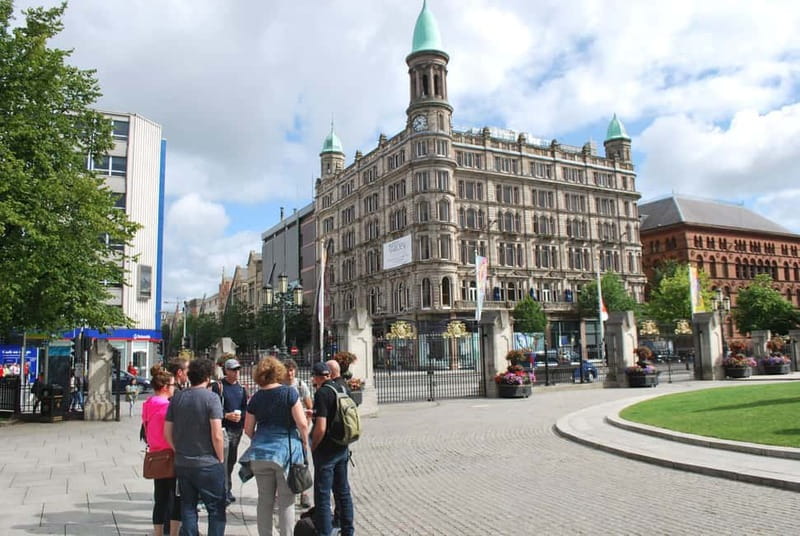
The route uses Belfast city centre as its classroom. You are not simply looking at old buildings and hearing dates. You stop at places connected to bombings, attacks, security measures, public fear, and remembrance.
The exact order can vary, but the ten-stop structure gives the walk a clear shape:
- Belfast City Hall: This is the introduction, where your guide establishes the political and historical setting.
- Major bombing and attack sites: These locations show how violence reached the commercial centre and affected people who were shopping, working, or passing through.
- Former security cordons: These points help you picture a city where movement, access, and public space were shaped by security concerns.
- Memorial and reflection points: These shift attention from events to the people killed, injured, displaced, or left to live with the consequences.
- The Forgotten Troubles Memorial: This brings the conversation toward memory, continuing challenges, and the parts of the conflict that can be overlooked.
The power of this approach is its physical immediacy. A paragraph in a book can tell you that bombs changed daily life. Standing outside the place where an attack occurred, then hearing how the surrounding streets functioned before and after it, gives the fact a human scale.
The drawback is that most stops are interpretive rather than traditional attractions. You may not find plaques, dramatic ruins, or a preserved battlefield. The value comes from the guide’s explanation, so the quality of the storytelling matters greatly.
How the Troubles reached everyday life
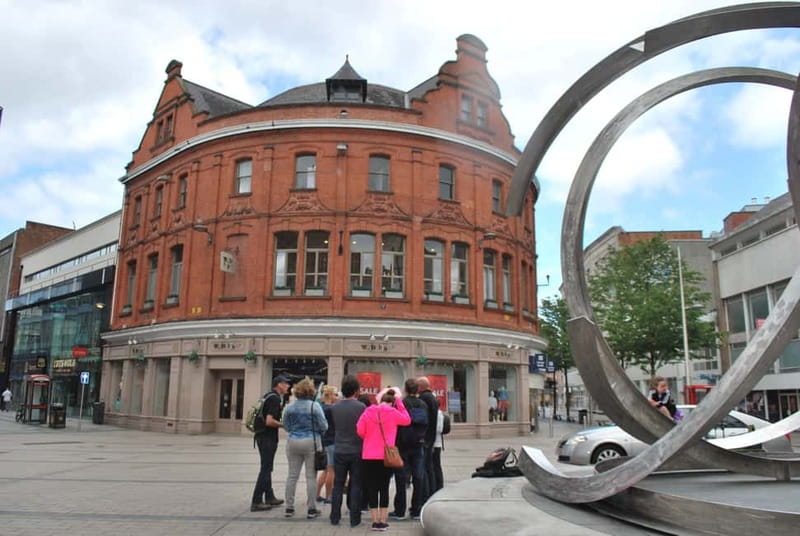
A strong part of the walk is the attention to ordinary routines. The tour explains how violence affected civilians, businesses, public spaces, and movement through the city.
You hear about the tension between fear and normality. People still went to work, opened shops, met friends, and crossed Belfast, even as attacks and security restrictions shaped their choices. That contrast helps you understand the Troubles as a long period of daily pressure, not just a list of headline events.
The tour also explains the roles of the British Army, police, and paramilitary groups. It does not present one simple cause or a single group as the whole story. Instead, the guide sets out how different political aims and responses fed the conflict.
That approach is especially useful if you know little about Northern Ireland. The vocabulary and alliances can be confusing, and a short visit does not leave much time to sort them out alone. A good guide provides the framework first, then adds names, places, and events without losing the main thread.
Personal memories from James, Mylie, Anne, and others
The most praised feature of this experience is the guides’ ability to combine research with lived experience. James has been described as someone who grew up in Belfast and studied politics and history. Anne was born and raised in the city, while Chris and Steve have also drawn on memories of growing up during the Troubles.
That does not mean every guide tells the same story. You may meet James, Mylie, Anne, Rory, Jim, Chris, Paul, Finn, Roisin, Steve, Miles, or another DC Tours guide. The tone and personal details will vary, but the purpose is consistent: to explain what the conflict meant beyond political slogans.
Mylie is particularly noted for presenting local stories with care and empathy. James is known for checking that people understand each section and feel ready to continue. Other guides use humor at suitable moments, which can give the group a breath without making light of the suffering.
This personal element is valuable, but it also means the experience is not emotionally neutral in the bland sense of the word. The tour aims to be politically balanced, yet it still treats loss and trauma seriously. You may feel moved, and at times the subject may stay with you after the walk.
Same streets, a different story:
- Magical London: Harry Potter Guided Walking Tour
★ 4.7 · 22,044 reviews - Edinburgh: Harry Potter Magical Guided Walking Tour
★ 4.8 · 11,944 reviews - Edinburgh Castle: Guided Walking Tour with Entry Ticket
★ 4.7 · 11,699 reviews - Underground Vaults Walking Tour in Edinburgh Old Town
★ 4.5 · 8,506 reviews
Peace, regeneration, and what remains unresolved
The final part of the tour looks beyond the worst years. You learn how the peace process developed and how Belfast has regenerated since the conflict.
This section prevents the tour from ending with violence as the city’s defining feature. Belfast today is not presented as a place frozen in the past. At the same time, the guide does not suggest that peace erased every division.
The Forgotten Troubles Memorial is central to that balance. It provides a place to consider people and experiences that can disappear from official accounts. You also hear about challenges that remain, including the continuing effect of memory, political division, and a difficult shared past.
I value this ending because it gives you a more honest picture of post-conflict Belfast. Peace is not shown as a neat finish line. It is an ongoing effort involving remembrance, public conversation, and the slow rebuilding of trust.
What the 1.5-mile route feels like on foot
The walk covers about 1.5 miles and takes 2.5 hours. Belfast city centre is flat, with no hills or steps on this route, so the physical demand is modest.
The real work is listening. You stop often, absorb complex information, and move between locations connected by different periods of the conflict. Comfortable shoes are still wise, especially in wet weather, but you do not need hiking footwear.
The tour runs in rain, and Belfast weather can change quickly. Bring a waterproof jacket, and wear warm clothing in winter. A rainy day does not prevent the tour, but it can make standing still less comfortable, so waterproof layers are more useful than an umbrella.
The audio headsets are a practical plus. Several people have appreciated them, including those with some hearing difficulty. They let you hear the guide without crowding around or missing a sentence while crossing a street.
Is $35 a fair price?
At $35 per person, this is good value if you want context rather than a quick orientation walk. You are paying for 2.5 hours with a local guide, a structured route, personal interpretation, audio equipment, and access to a subject that is difficult to understand from surface sightseeing alone.
The price looks especially reasonable if this is your first visit to Belfast. The tour can give shape to the rest of your stay. Afterward, you may look at city-centre streets, memorials, museums, or political murals with a clearer sense of how they fit together.
It is less useful if you want a broad tour of Belfast’s architecture, food, shopping, or modern attractions. This experience has a clear focus on the Troubles and the road to peace. At 1.5 miles, it also does not cover every part of the city associated with the conflict.
For many people, the best value comes from taking it early in a Belfast visit. The background can help you understand later sightseeing, though you should not expect this walk to replace a full museum visit or a tour of areas outside the city centre.
Who should take this tour?
I would choose this for adults and teenagers aged 12 or older who want a serious introduction to modern Irish history. It suits you if you prefer explanation, conversation, and real places over a checklist of famous sights.
It also works well for visitors who feel unsure about the political language around Belfast. The guide can give you a starting point without demanding that you arrive with a firm view.
The tour is a good choice for local people, too. One person who grew up in Belfast took it while visiting family and found it useful despite already knowing the city. Familiar streets do not always mean you understand the history attached to them.
I would think twice if you want a relaxed family activity, dislike long spoken explanations, or have only a basic level of English. Children under 12 cannot join, and the material includes death, injury, fear, and political violence.
Practical details that matter
Book a starting time that leaves you comfortable with 2.5 hours of walking and listening. Arrive 10 minutes early at the City Hall gates, since the group needs to form before setting off.
The tour is English only. A good standard of English is needed to follow the history, political terms, and personal stories. The headsets help with sound, but they do not simplify the content.
The route is wheelchair accessible and flat. Weather remains the main practical issue. Wear comfortable shoes, bring a waterproof jacket, and add warm layers in cold months.
You can cancel up to 24 hours before the start for a full refund, and the reserve-now, pay-later option keeps your plans flexible. Those policies are useful if Belfast is one stop in a changeable itinerary.
Should you book A History of Terror?
Book it if you want to understand Belfast through the people and places shaped by the Troubles. The combination of city-centre sites, careful political context, personal memories, and discussion of peace gives you far more than a quick list of incidents.
Skip it if you are looking for a general sightseeing walk or an upbeat introduction to Belfast. The subject is heavy, and the tour asks you to pay attention.
For most curious visitors, I would put this near the start of a Belfast stay. Allow the stories to complicate your first impressions of the city. That is the point of the walk: not to hand you a simple answer, but to help you see how Belfast lived through violence and continues to work through its consequences.
FAQ
Where does the Belfast History of Terror walking tour begin?
The tour begins at the front gates of Belfast City Hall on Donegall Square North, Belfast.
How long does the tour last?
The walking tour lasts 2.5 hours.
How far do you walk?
The route is about 1.5 miles through Belfast city centre.
Is the route physically difficult?
The city-centre route is completely flat, with no hills or steps. Comfortable shoes are recommended.
What language is the tour in?
The live tour is available in English only. You need a good standard of English to follow the information fully.
Is the tour suitable for children?
Children under 12 are not permitted on the tour.
Does the tour run in bad weather?
Yes. The tour takes place regardless of the weather, so bring a waterproof jacket and dress warmly in winter.
Is the tour wheelchair accessible?
Yes, the activity is wheelchair accessible.
New walking tours around the UK
- London: Old City Walking Tour★ 4.8 · 135 reviews
- Manchester: Music-Themed City Walking Tour★ 4.4 · 109 reviews
- Manchester: Media City & The Quays Guided Walking Tour★ 5.0 · 165 reviews
- Manchester City Highlights Walking Tour★ 4.8 · 299 reviews
- London: Witches and History Bankside Walking Tour★ 4.8 · 223 reviews
- London: Palaces and Parliament Walking Tour★ 4.8 · 365 reviews
- London: Winston Churchill and London in WWII Walking Tour★ 4.8 · 143 reviews
- London: Westminster Walking Tour & The Tower of London Entry★ 4.6 · 131 reviews
Belfast Walking Tours, side by side.
A History of Terror – Belfast City Centre Walking Tour
Read our review →
Belfast: Political Conflict 3-Hour Walking Tour
Read our review →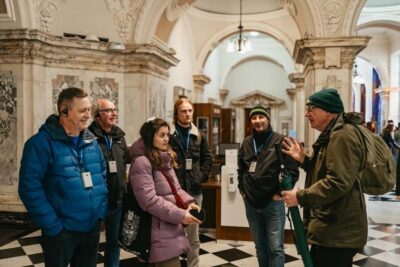
Belfast: The Troubles Walls & Bridges Guided Walking Tour
Read our review →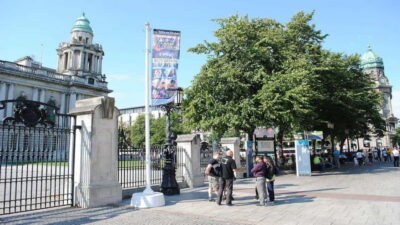
Belfast: Best of Belfast History, Culture & Art Walking Tour
Read our review →
Belfast Walking Tour with a Local – History & Craic
Read our review →Lists this walk sits on