Review · BARCELONA
Ramblas, Old Town, Gothic and Gaudi Architecture Walking Tour
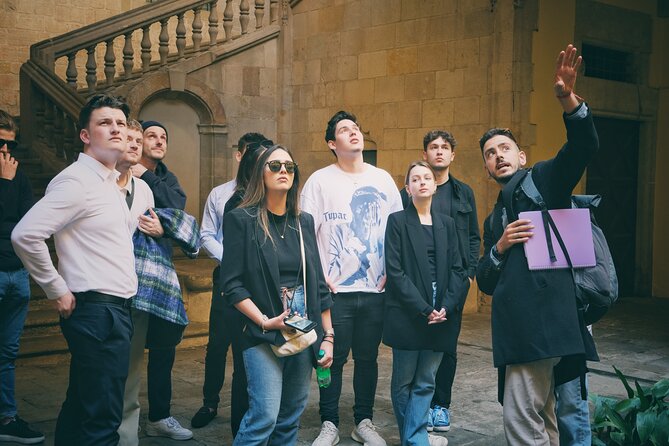
Barcelona reveals itself in layers on this small-group walking tour: Roman ruins and medieval lanes give way to Las Ramblas, then to Gaudí’s wild façades and the polished modernist buildings of Passeig de Gracia. The route links the old and new city in about two hours and 15 minutes, which is a smart way to get your bearings early in a stay.
I like two things especially. First, the route gives you both Barcelona’s street-level past and its famous architecture without making you choose between the Gothic Quarter and the Eixample. Second, guides such as Yannis, Christian, Filipa, Henrietta, and Anna are praised for lively storytelling, local advice, and a pace that works for families and mixed-age groups.
The trade-off is simple: this is a walking tour with a lot of ground to cover. You also see Casa Batlló and La Pedrera from the outside only, and you pay separately for any monument entry, the €1 radio headset rental, and the short metro ride.
Key points to know before you book
- Two eras in one route: Begin among Roman remains and medieval churches, then finish beside Gaudí’s fanciful homes and Passeig de Gracia’s modernist façades.
- Small group size: The tour is limited to 15 people, making it easier to hear the guide and ask questions.
- Strong guide-led experience: Yannis, Christian, Filipa, Henrietta, Anna, Loic, and others are praised for humor, clear explanations, and useful Barcelona tips.
- Mostly an exterior tour: You see Casa Batlló, La Pedrera, and Casa Amatller from the street, with no interior admission included.
- Plan for extra costs: Bring a metro ticket or buy one from the guide, and expect a €1 headset rental paid to an outside provider.
- Best as an early Barcelona activity: The route gives you city context, neighborhood orientation, and ideas for places to return to later.
Why this route works as a first look at Barcelona

The tour begins at Foot Locker on Plaça de Catalunya, a practical meeting point between the old center and the newer Eixample district. From there, you move through streets that show how Barcelona grew from a Roman settlement into a medieval port city and then into a showcase of Catalan modernism.
I like this structure because the buildings make more sense when you see their setting. Gaudí’s Casa Batlló is not just an isolated oddity after a visit through the Gothic Quarter. It becomes part of a larger story about Barcelona’s growth, wealth, civic pride, and fierce architectural imagination.
At 4.9 out of 5 from 723 ratings, with 99 percent of participants recommending the experience, the tour has a strong record. The price, about $35.37 per person, is fair if you want a live guide to connect the sights and answer questions. It is less useful if your main goal is entering major monuments, since admission is not included.
More Old Town Walking Tours in Barcelona
- Barcelona Helicopter, Sailboat & Old Town Private Walking Tour
★ 5.0 · 1,395 reviews - Barcelona: Old Town and Gothic Quarter Walking Tour
★ 4.8 · 1,393 reviews - Barcelona Old Town & Gothic Quarter Small Group Tour
★ 5.0 · 1,308 reviews
Roman stones and medieval lanes in the Gothic Quarter
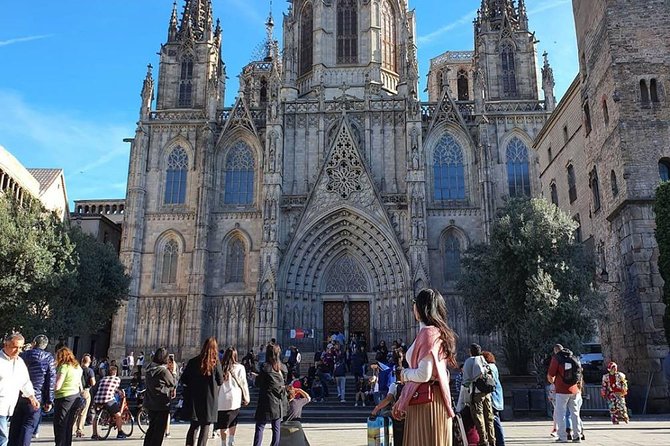
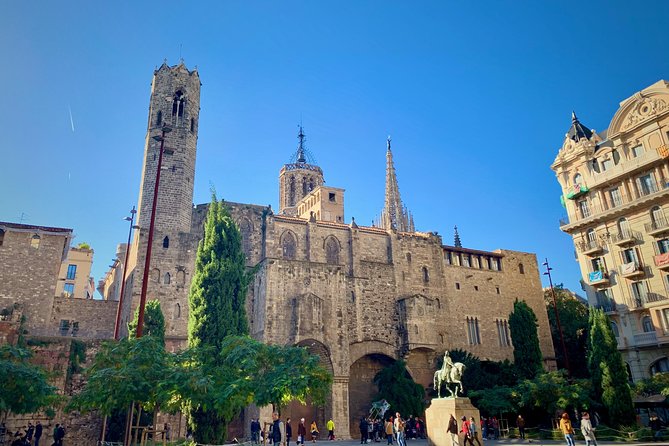
The first substantial stop is the Gothic Quarter, Barcelona’s oldest part of the city. You spend about 30 minutes among Roman remains, medieval churches, narrow lanes, courtyards, small squares, and tucked-away alleys.
This is where a guide earns the fee. On your own, the quarter can feel like a maze of attractive stone buildings. With a good explanation, you begin to understand the layers beneath the streets and why the area feels so different from the broad avenues of the Eixample.
The route includes the Barcelona Cathedral area, though the cathedral admission is not included. The visit here is brief, so you should think of it as an orientation rather than a full church tour. If you want to explore the cathedral’s interior, check the separate entry arrangements and allow extra time after the walk.
The Gothic Quarter is also the part of the tour most likely to slow the pace. Narrow lanes and busy crossings require the group to stay together. That is not a flaw, but you should wear comfortable shoes and avoid treating the two-hour schedule as a relaxed stroll with long pauses.
Las Ramblas, Placa Reial, and the city’s public face
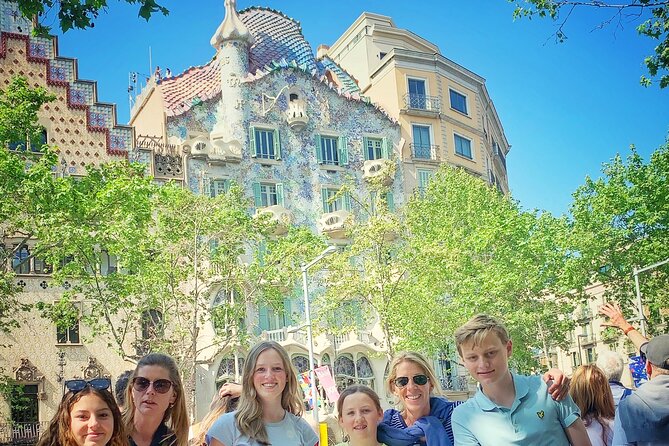
The stop at Las Ramblas is listed as only a couple of minutes, but the street helps connect the old quarter to the rest of the route. This is Barcelona’s famous central promenade, lined with markets, bars, and restaurants.
You will not spend long here, so the tour does not pretend to offer a full food or market experience. Instead, you get a quick look at one of the city’s best-known streets before moving toward two more atmospheric squares.
Placa Sant Felip Neri is a small, quiet square tucked into the Old Town. Its scale changes the mood after the open flow of Las Ramblas. The guide’s explanation gives this stop more weight than a quick photograph would, especially if you enjoy the less obvious corners of a historic city.
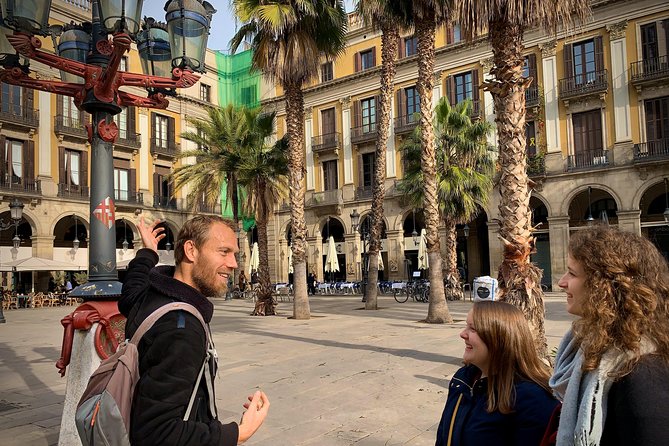
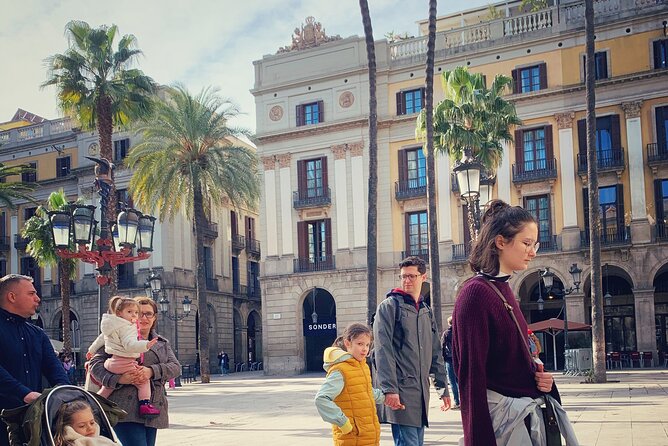
Placa Reial offers a different setting. Palm trees, arcades, restaurants, and evening activity surround this large square. You spend about five minutes here, enough to understand its layout and note it as a place you might revisit later for a meal or a drink.
I appreciate that these stops do not try to compete with the major Gaudí buildings. They show how Barcelona’s public spaces shift from narrow medieval lanes to broad, social squares. The drawback is time: you see each place, but you do not linger long.
Meeting Barcelona Cathedral from the outside
The cathedral receives its own short stop, listed at about three minutes. That tells you what to expect: a close look and an explanation from the street, not an extended interior visit.
The medieval Gothic building sits at the heart of the old city, making it an important landmark for understanding the quarter. You can take note of the entrance and return later if you want more time inside.
This arrangement suits people who want a broad city introduction. It will not satisfy you if the cathedral is a main reason for visiting Barcelona. In that case, treat the tour as a useful preview and plan a separate visit.
More Old Town Walking Tours in Spain
- Barcelona: Gothic Quarter Walking Tour
★ 4.9 · 383 reviews - Barcelona: Gothic Quarter Walking Tour with 10+ Attractions
★ 5.0 · 369 reviews - Barcelona: Ramblas, Old Town & Gaudí Houses Walking Tour
★ 4.9 · 239 reviews - Barcelona: Old Town Private Walking Tour of Past and Present
★ 5.0 · 160 reviews
The short metro ride and why it matters
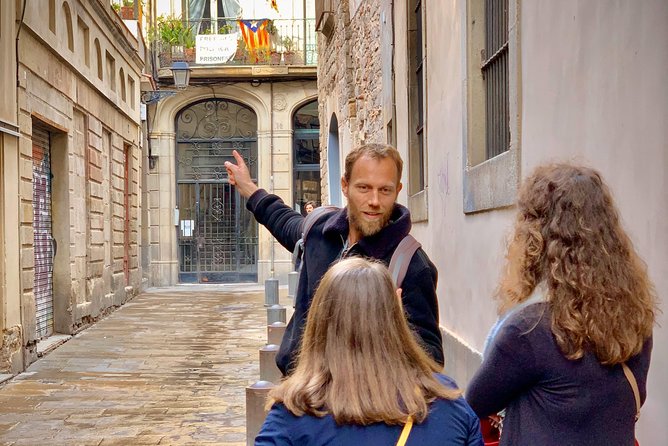
The route connects the Old Town with the Eixample, and a short metro ride is part of the logistics. Public transport is not included, so bring your own ticket or buy one from the guide.
This small detail matters. The metro keeps the walk from becoming even longer and lets the tour cover two districts in one outing. It also means you should not assume every minute is spent on foot.
A headset rental costs €1 per person and is paid at the start to an outside provider. I would take it, especially in the Gothic Quarter, where streets can be tight and the group may need to spread out. Clear audio can make the difference between catching the guide’s explanation and missing half of it.
Casa Batlló and Gaudí’s house of bones
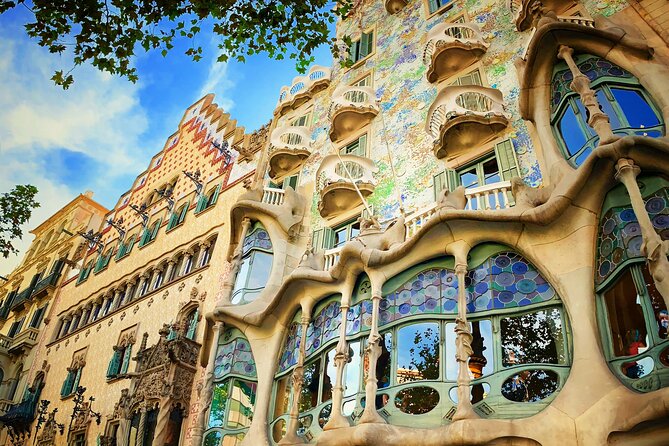
Casa Batlló is one of the tour’s major highlights. The guide presents it as Gaudí’s famous fairy-tale-like house, with a façade that recalls bones, dragons, or an illustration from a strange children’s story.
You stand outside for about 10 minutes. That is enough to examine the unusual balconies, color, curves, and surface details while hearing how the building fits into Barcelona’s modernist period.
The exterior-only format keeps the tour affordable, but it also sets a clear limit. You will not see the interior rooms, roof terrace, or displays on this walk. If Casa Batlló is high on your list, use the guide’s introduction to decide if a separate ticket is worth your time.
The building is particularly rewarding after the Gothic Quarter. The contrast is sharp: medieval stone and religious architecture give way to a private home that appears almost alive. That change is one of the best ideas built into the route.
La Pedrera and Gaudí’s mountain house
The next Gaudí stop is La Pedrera, also called Casa Milà, a large private home created for the Milà family. The tour gives you about five minutes here.
La Pedrera’s exterior is less immediately playful than Casa Batlló, but its heavy stone frontage and irregular lines show a different side of Gaudí. The building is often described as a mountain house, and that comparison helps you look beyond decoration to the larger shape and movement of the façade.
Again, you do not go inside. The time is enough for an introduction and photographs, not for the building’s courtyards, apartments, or roof features. You should consider a separate admission only if you want more than an architectural overview.
The two Gaudí stops work well together. Casa Batlló gives you color and fantasy; La Pedrera gives you mass, texture, and a more forceful presence. Seeing both from the street lets you compare them without spending a large part of your day indoors.
Forty-five minutes along Passeig de Gracia
Passeig de Gracia receives the longest portion of the route, about 45 minutes. That is sensible because this broad avenue is more than a link between buildings. It is the main setting for Barcelona’s modernist architecture, with grand homes, decorative paving, ornate lampposts, and fashionable storefronts.
This is where you can slow down enough to notice the details. Look above street level, where balconies, windows, stonework, and ceramic elements compete for attention. The avenue also gives you a useful contrast with the tight streets of the Gothic Quarter.
The guide’s role here is to help you compare architects and patrons rather than treating every unusual building as Gaudí’s work. That distinction matters. Barcelona’s modernist style was shaped by several architects, and the tour includes one of Gaudí’s nearby rivals.
Passeig de Gracia is also the route’s most comfortable stretch for getting oriented. You have more room to walk, better sightlines, and a clear sense of how the Eixample differs from the Old Town. Still, city traffic, crowds, and frequent stops can make the pace feel brisk. Keep your attention on the guide and the group.
Casa Amatller and the architecture next door
Casa Amatller sits beside Casa Batlló and was designed by Puig i Cadafalch. The stop lasts about five minutes and gives you a useful reminder that the famous buildings on Passeig de Gracia were part of a wider architectural competition.
The façade has its own modernist character, so seeing it next to Casa Batlló helps you compare different approaches to ornament, shape, and medieval references. This is a strong stop for anyone interested in architecture rather than just collecting photographs of Gaudí.
Casa Amatller is also one reason the tour is better than a simple checklist of Barcelona landmarks. You are encouraged to look at the whole street, not only the best-known name. That extra context adds value without requiring another ticket.
Guides, group size, and the human side of the walk
The maximum group size is 15 people. That is small enough for a personal feel while still giving the tour a social character. Solo participants are made welcome, and the mix of people can make the walk feel less formal than a private guide.
The strongest guide feedback centers on clear explanations, humor, local perspective, and patience. Yannis is repeatedly singled out for making Catalan and Barcelona history lively. Christian, described as a Barcelona native, is praised for bringing local context to the streets. Filipa is noted for keeping two young children interested, while Henrietta is praised for a steady pace and useful suggestions.
Other named guides include Anna, Loic, Evan, Tyler, Melanie, Cristina, Creasy, and Hanna. The exact guide depends on the date, so you should not book on the assumption that one particular person will lead your group.
The consistent pattern is more important than any single name: this experience depends heavily on the guide’s delivery. The content is strong, but the best value comes when the guide turns dates, styles, and city changes into stories you can remember.
Walking demands, families, and practical comfort
The route covers two districts and includes a metro transfer, so you should expect a good amount of walking. The pace can be adjusted for breaks, and one guide handled a stroller well, with the route described as suitable for it. Still, you should be ready for urban walking rather than a short sightseeing loop.
Most people can take part, and service animals are allowed. The tour operates outdoors, so rain or poor weather can affect the schedule. If conditions cause cancellation, you are offered another date or a full refund.
Families may find the route a good fit if children can manage city walking. The stories, unusual façades, and short transport break help vary the experience. For very young children, a stroller can work, but you should still expect narrow streets, stops, and the need to keep close to the group.
The tour is offered in English. Bring water, comfortable shoes, and a metro ticket if you already have one. A small amount of cash is useful for the €1 headset, though card payment may be accepted.
What $35.37 buys you
At about $35.37, you are paying for a guided city introduction, not monument admission. The value is strongest if you want history, architecture, and orientation in one compact outing.
You cover the Gothic Quarter, Las Ramblas, several Old Town squares, Casa Batlló, La Pedrera, Casa Amatller, and Passeig de Gracia. Reaching those places independently is possible, but you would need to plan the route and supply the historical context yourself.
The price is less attractive if you want interior access. Cathedral entry and Gaudí monument tickets are not included, and those costs can add up if you return to visit several buildings. Think of this tour as a street-level framework that helps you decide which interiors deserve your time and money.
The free cancellation policy gives you flexibility until 24 hours before the start time. Changes or cancellations inside that window are not refunded, and the tour can also be canceled if the minimum number is not reached.
Should you book this Barcelona walking tour?
I would book it for a first or second day in Barcelona if you want a clear introduction to the city’s old center and modernist architecture. The route is especially useful for first-time visitors, architecture fans, solo participants, families, and anyone who prefers stories and context to a bus ride past façades.
I would skip it if you want long interior visits, a food-focused walk, or a slow photography tour. You see many places in a short period, and the Gothic Quarter, cathedral, Casa Batlló, and La Pedrera each receive only limited time.
For the best experience, schedule it early in your stay, wear good shoes, take the headset, and keep a little time afterward to revisit the building or square that caught your eye. At a reasonable price and with a small group, this tour gives you a useful mental map of Barcelona before you explore the city on your own.
FAQ
How long does the tour last?
The tour lasts approximately two hours and 15 minutes.
Where does the tour start?
It starts at Foot Locker, Pl. de Catalunya, 20, Ciutat Vella, Barcelona.
Where does the tour end?
It ends on Carrer del Consell de Cent, 310, in the Eixample, near Casa Batlló and Casa Milà.
Is the tour offered in English?
Yes. The experience is offered in English.
Are monument tickets included?
No. Tickets for the Barcelona Cathedral and the Gaudí monuments are not included. The tour visits the main Gaudí buildings from the exterior.
Is public transport included?
No. A short metro ride is used during the tour, and you need to bring a ticket or get one from the guide.
What is the cancellation policy?
You can cancel for a full refund up to 24 hours before the experience starts. Cancellations or changes made less than 24 hours before the start time are not refunded.
More Architecture Walking Tours around Barcelona
- The Official Art Deco Walking Tour by The Miami Design Preservation League
★ 5.0 · 1,580 reviews - Lecce: Baroque Architecture and Underground Walking Tour
★ 4.6 · 1,248 reviews - Miami South Beach Art Deco Walking Tour
★ 5.0 · 1,039 reviews - Chicago: Secret Interiors Architecture Walking Tour
★ 4.9 · 498 reviews
New walking tours around Barcelona
- From Barcelona: Montserrat Walking and Horseback Riding Tour★ 4.8 · 81 reviews
- Barcelona: Walking tour with Montjuic Castle & Cable Car★ 4.7 · 832 reviews
- Barcelona: Private Walking Tour with a Local★ 4.5 · 202 reviews
- Barcelona: Gothic Quarter Walking Tour w/ Montjuïc Cable Car★ 4.4 · 90 reviews
- Barcelona Walk Like a Local: El Born & Gothic 15+ Sights★ 4.9 · 88 reviews
- Barcelona: Jewish Quarter 2-Hour Walking Tour★ 4.8 · 333 reviews
- Barcelona: Ramblas, Old Town & Gaudí Houses Walking Tour★ 4.9 · 239 reviews
- Barcelona: Old Town Private Walking Tour of Past and Present★ 5.0 · 160 reviews
Barcelona Walking Tours, side by side.

Barcelona Tapas and Wine Experience Small-Group Walking Tour
Read our review →
Barcelona: Tapas Walking Tour with Food, Wine, and History
Read our review →
Barcelona Helicopter, Sailboat & Old Town Private Walking Tour
Read our review →
Barcelona: Old Town and Gothic Quarter Walking Tour
Read our review →
Barcelona: City Walking Tour with a Local Guide
Read our review →
Barcelona: Helicopter Flight, Boat Ride, and Walking Tour
Read our review →
Barcelona Old Town & Gothic Quarter Small Group Tour
Read our review →