
Review · BELFAST
Belfast: The Troubles Walls & Bridges Guided Walking Tour
Belfast’s Peace Walls are not just sightseeing stops. They are working barriers in a city where politics, memory, housing, and identity still meet. This three-hour walking tour takes you from City Hall through Divis and the Falls, across the divide toward the Shankill area, and back through central Belfast.
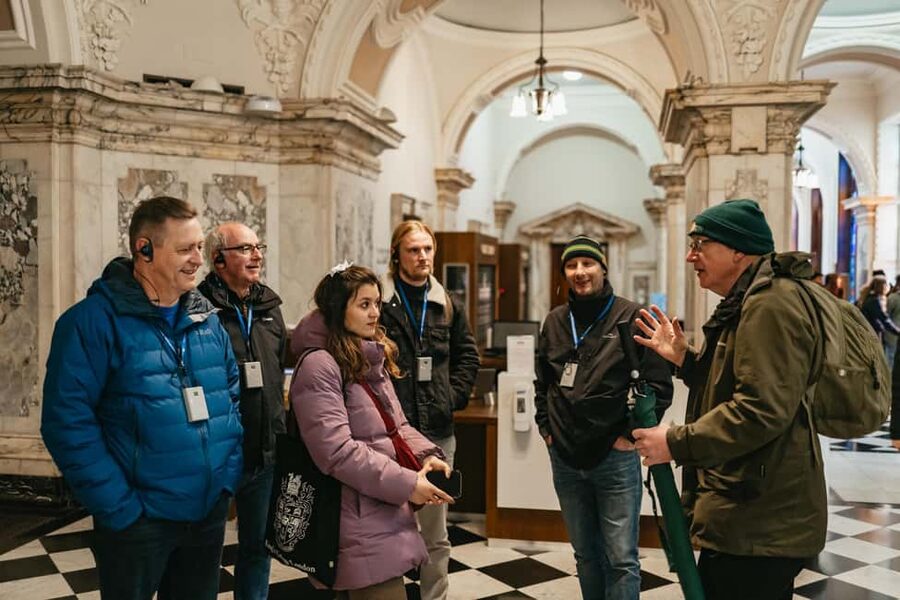
I like the honest balance here. Guides such as Steve and Arthur combine history with personal memories, while the headsets let you keep listening in noisy streets. I also like that the walk shows both communities and ends with a look at bridges between them, not just a row of murals and a bleak photo opportunity.
The main drawback is physical and emotional. You will walk roughly 8,500 steps, often without shelter or a rest stop, and the guide discusses violence and loss in direct detail. This is not a light city stroll, and children under 14 are not permitted.
Key points before you book
- Walk through Divis, the Falls, and the Shankill area: See the places where Belfast’s division took physical form.
- Hear two sides of a living conflict: The guide explains Irish nationalist and British unionist viewpoints without reducing the story to religion alone.
- Study murals, gates, and walls in context: The street details make the political history easier to understand.
- Expect personal storytelling: Steve and Arthur draw on local experience as well as historical facts.
- Allow extra time: The walk is scheduled for three hours but can run longer, so leave at least 90 minutes before your next plan.
- Bring proper clothing: Comfortable shoes, waterproof layers, and an umbrella are sensible in Belfast weather.
Why this walk gives Belfast more meaning
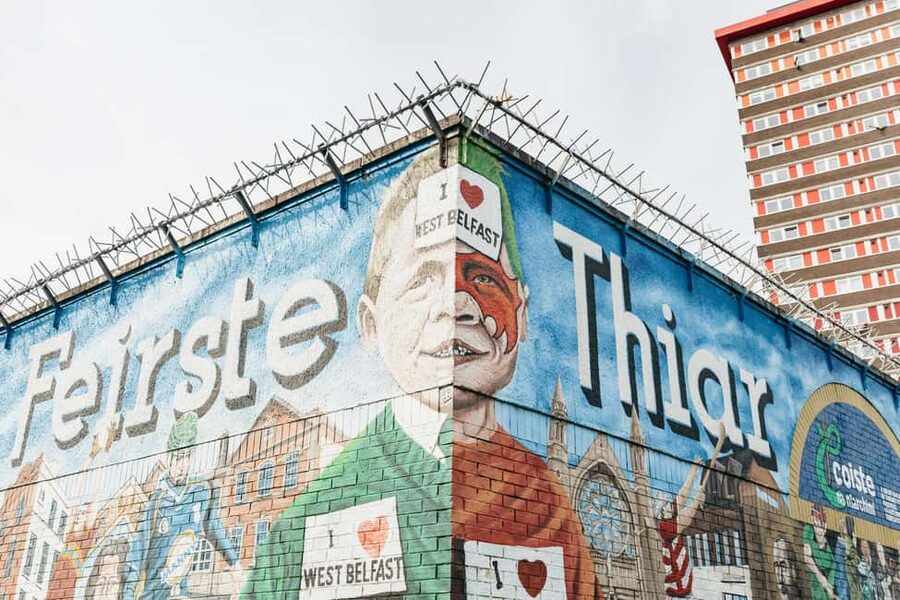
You can see Belfast’s murals from a black taxi or on a shorter city tour. That is useful, but it can leave you looking at symbols without understanding the ground beneath them. This walk takes you through the streets and explains why a security gate, a petrol station, a post box, or a wall can carry political meaning.
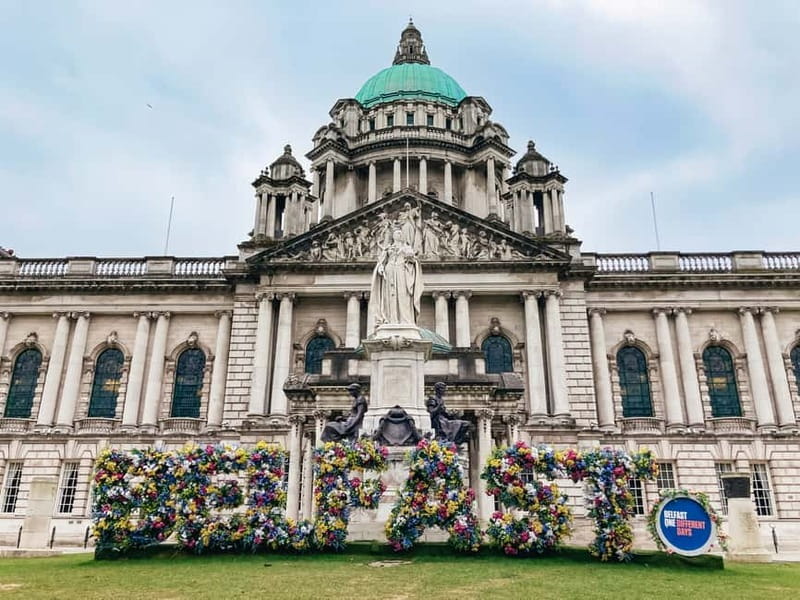
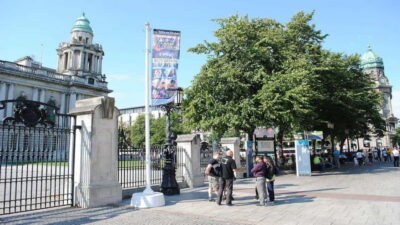
The route begins at Belfast City Hall, a grand Victorian building in the middle of the modern city. From there, the group heads west toward Divis and the Falls Road. You are not simply ticking off landmarks. The guide lays out the older political and social pressures that helped create the conditions for The Troubles, then connects them to the events that followed.
I value that approach because the conflict did not appear from nowhere. Housing, power, identity, discrimination, community loyalty, and competing ideas about Northern Ireland all matter. A simple Catholic versus Protestant explanation misses much of what shaped Belfast. The best parts of this walk help you see those wider forces while keeping the focus on real people.
The tone is serious, but it is not grim from start to finish. Steve is described as a lifelong Belfast resident with a careful, factual style. Arthur brings humor, direct language, and personal memories from growing up around the conflict. Your guide will vary, but you can expect a strong local voice rather than a neutral recording read from a script.
More walks with a guide around the UK:
- Magical London: Harry Potter Guided Walking Tour
★ 4.7 · 22,044 reviews - Edinburgh: Harry Potter Magical Guided Walking Tour
★ 4.8 · 11,944 reviews - Edinburgh Castle: Guided Walking Tour with Entry Ticket
★ 4.7 · 11,699 reviews
Starting beside Belfast City Hall
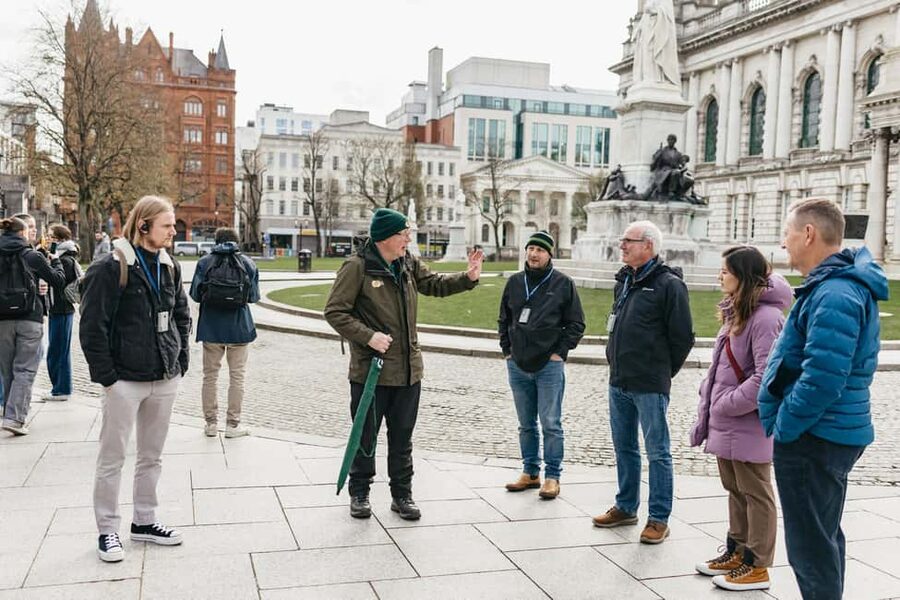
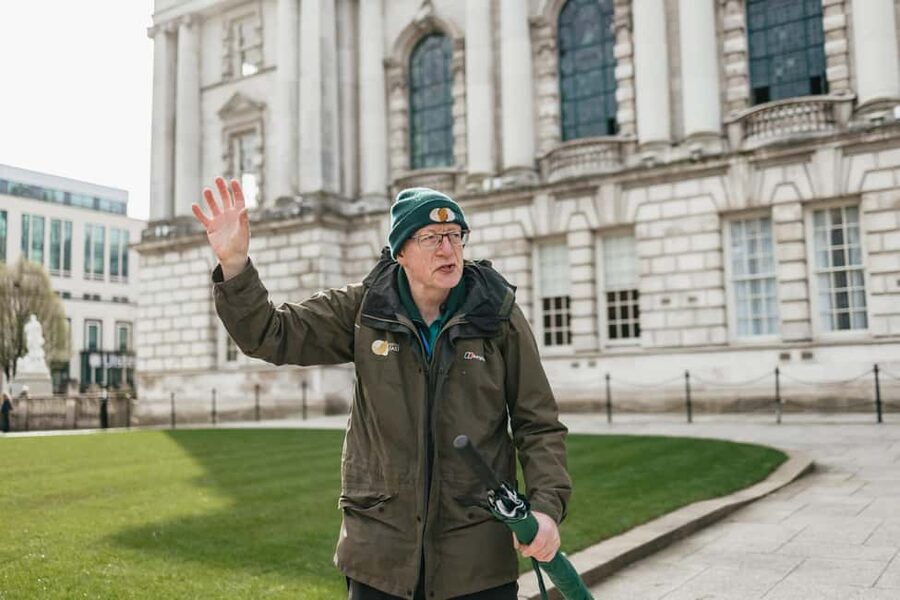
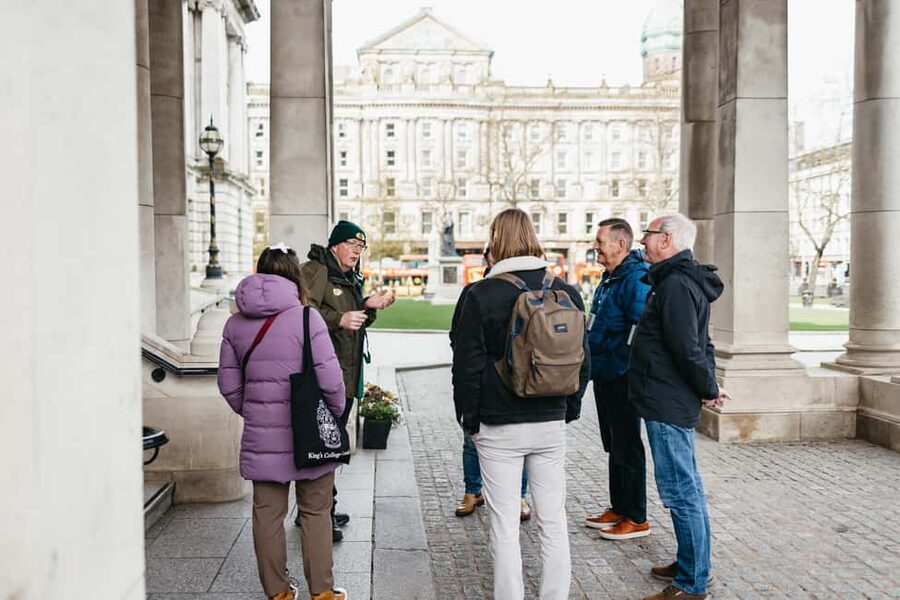
Meet on the pavement outside the large railings of Belfast City Hall, beside a blue information table. The guide carries a large green and white golf umbrella and wears green. Look for the small blue sign between two black ornamental lamp posts, with the statue of Queen Victoria visible inside the grounds.
This detail matters because map apps may send you to Donegall Square West, where buses park, or to the back of City Hall. The actual meeting point is on the front side, across from the main shopping avenue and near a Nationwide Building Society.
The opening section lasts about 20 minutes. It includes a safety briefing, orientation, and an introduction to Belfast’s past and present. This is a useful start because the city centre can feel removed from the streets you will soon visit. The guide begins joining those two parts of Belfast together.
You receive a headset when the group needs one. That is a practical advantage, especially near traffic. You can hear the commentary while walking rather than crowding around the guide at every stop. It also helps if you fall a little behind while crossing a street or taking a photograph.
Divis and the Falls Road: where history turns personal
The walk toward Divis and the Falls Road brings you into the Irish nationalist part of West Belfast. Here, the guide explains how unrest exploded, including mobs, homes set alight, and the fear that spread through local streets.
Expect some graphic detail. The point is not to shock you for effect, but to show what political conflict meant at street level. Families did not experience The Troubles as an abstract argument over constitutional arrangements. They experienced them through damaged homes, armed presence, restricted movement, funerals, suspicion, and grief.
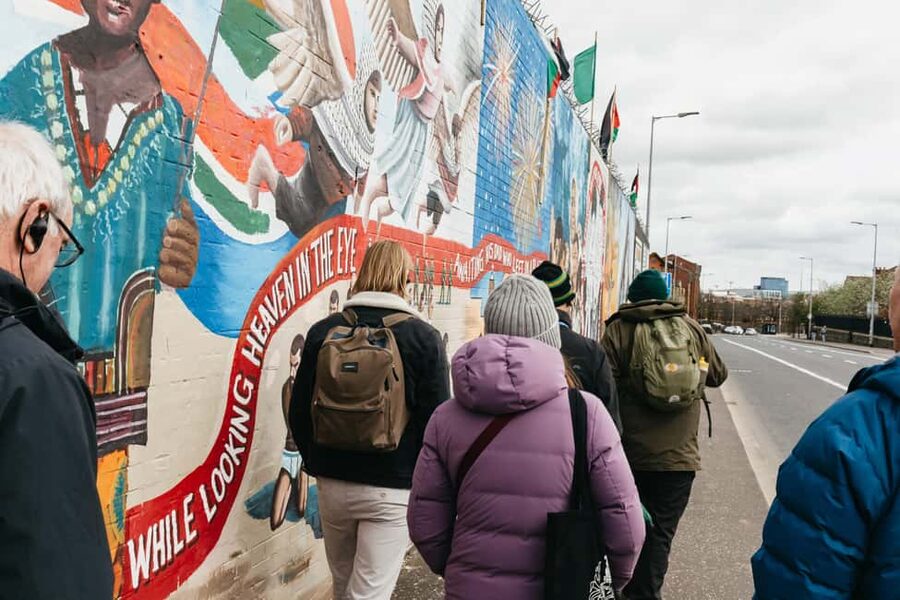
At Divis Tower, you see the first mural on the route. Its message of Irish and local identity introduces a key idea: murals are not mere decoration. They can honor dead comrades, assert a political claim, remember injustice, celebrate culture, or mark a neighborhood’s place in the city.
The guide explains the symbols rather than expecting you to recognize them. That makes a big difference. Without context, a mural can look colorful and striking. With context, you begin to ask who made it, whom it addresses, and what kind of memory it protects.
The walk is not designed as a quick photo circuit. You will stop, listen, and move on through working-class neighborhoods that were never built for tourism. Be respectful. People live here, and the places carry painful memories.
The International Wall and the politics of murals
The International Wall is one of the most visually memorable sections. Political murals here change over time to reflect local and world events. That changing quality is important. The wall is not a frozen museum display. It shows how political messages continue to respond to events beyond Belfast.
You may want photographs, and there is time for them, but listening should come first. The guide uses the murals to explain identity, solidarity, protest, and the way international causes have appeared on Belfast walls. You get a clearer picture of how local politics can connect with struggles elsewhere.
I find this part especially useful for anyone who knows only the familiar image of Belfast murals. The pictures are powerful, but they are not the whole story. The guide adds the voices, arguments, and historical setting that a photograph cannot provide.
The route then moves toward the British Shankill area. The walk does not visit the Shankill Road itself, so book this experience with the correct expectation. You do enter the wider Shankill area and see the separation between communities, but this is not a full tour of every famous mural street.
More walking tours around the UK:
- Underground Vaults Walking Tour in Edinburgh Old Town
★ 4.5 · 8,506 reviews - London: The Original Jack the Ripper Walking Tour
★ 4.7 · 7,833 reviews - Oxford University Walking Tour With University Alumni Guide
★ 5.0 · 6,905 reviews - Edinburgh Castle: Guided Walking Tour with Entry Ticket
★ 5.0 · 5,540 reviews
Security gates and the reality of the Peace Walls
One of the most revealing moments comes when you pass through heavily fortified security gates between the Irish and British communities. These gates are not theatrical props. Their presence shows that movement, safety, and trust have been managed through physical barriers.
At the Peace Walls, the guide explains why they were built and why many are still standing. The name can sound reassuring, but the walls also show how incomplete peace can be. A structure designed to prevent violence can become part of daily life, shaping where people go and how they see the neighborhood next door.
You have around 75 minutes in this central section for a visit, photographs, and explanation. Take time to look at the height of the wall and the surrounding gates. The scale is more affecting in person than in a quick photograph.
The tour may also point out less obvious details, including a post box and a 24-hour garage. These ordinary places help make the story concrete. Political division is not confined to monuments. It can affect where people shop, how businesses operate, and what seems normal on a street.
There is a leisure centre near the walls where facilities may be used around two hours into the walk. Until then, do not count on regular toilet stops. There are no planned rest breaks, and shelter is limited.
Returning through the gates and back to the city centre
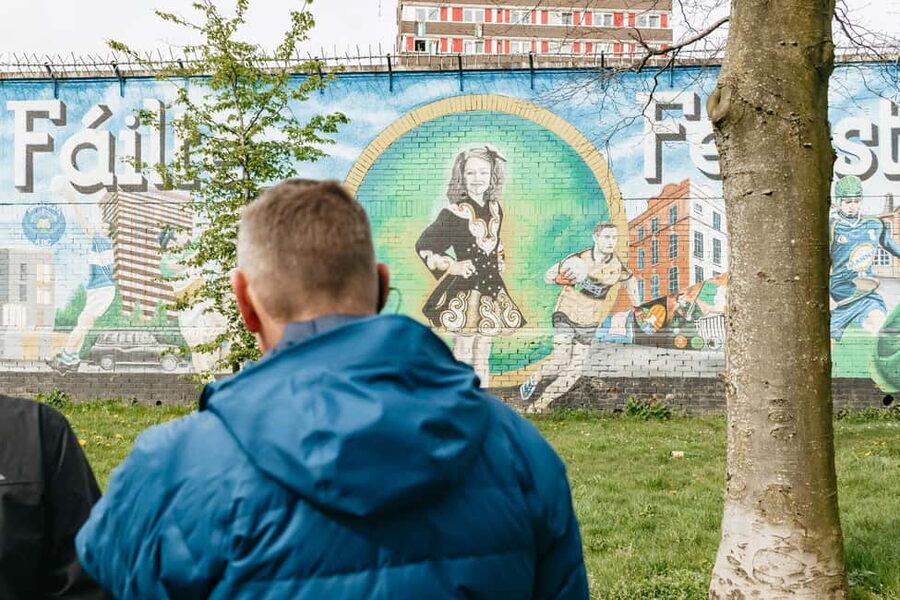
After the Peace Walls, the route returns toward the Falls Road, again passing through fortified gates. The guide may use music, including an Irish ballad, to add another layer to the return walk. Look back as you go and notice how the walls and gates frame the road.
This return route gives you time to process what you have heard. The subject matter can feel heavy, especially when personal stories are added to the political timeline. Arthur’s style is described as frank and humorous, while Steve is known for a measured and factual presentation. Both approaches can make difficult material easier to follow, though direct language will not suit everyone.
Back in the centre, the guide discusses the economic and political setting behind the Peace Process. This is where the tour shifts from what happened to what has changed, and what remains unsettled. You also hear about people who built bridges through music, sport, scholarship, and ordinary contact between communities.
I like this final turn in the story. A tour about division can easily leave you with the impression that Belfast is permanently trapped by its past. This one argues for a fuller view. The walls remain real, but so do the efforts to reduce their importance.
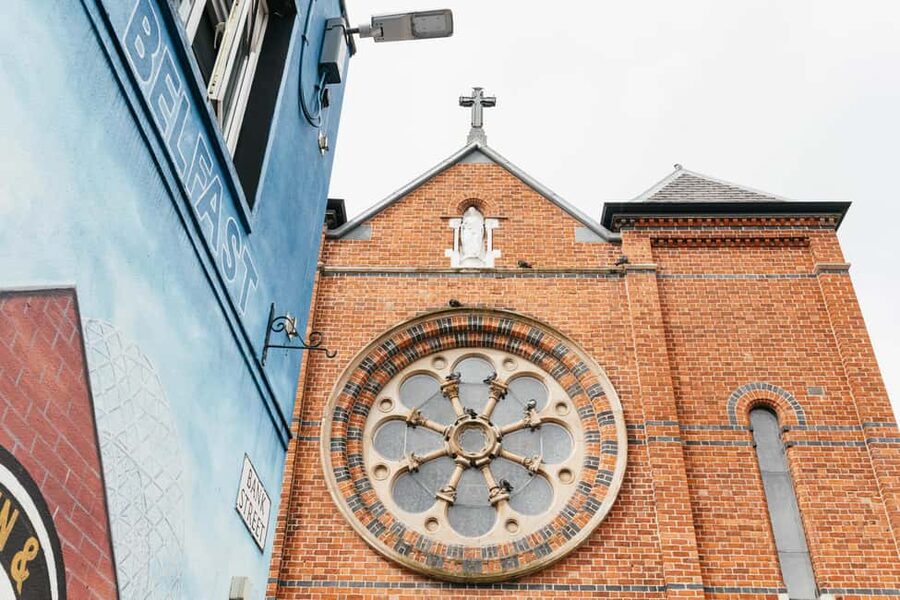
The walk finishes on Rosemary Street in a historic church. Its location and story challenge simple ideas about Irish identity, British identity, and Belfast’s religious past. Ending there gives the tour a thoughtful closing point rather than stopping at the most dramatic wall.
How the guides shape the experience
The guide is the heart of this tour. Steve is praised for explaining complex events in a clear and balanced way, with the perspective of someone who has lived in Belfast for much of his life. His approach suits you if you prefer careful chronology, political context, and a steady presentation.
Arthur is more openly theatrical. He uses humor, personal anecdotes, and plain speaking to keep the group engaged. His lived experience gives the stories force, but his direct language can be strong. If you want a polished sightseeing script, this may feel too unfiltered. If you want an honest account with human detail, it may be exactly right.
The guides do not present a single official answer to Belfast’s past. They explain competing viewpoints and show how history is remembered differently on each side. That does not mean every claim is treated as equally valid. It means you are encouraged to understand the people and structures behind the conflict before reaching your own conclusions.
The headsets are worth noting. In busy areas, you can hear the guide without standing shoulder to shoulder with the rest of the group. This keeps the walk moving and helps the guide maintain a conversational style.
Price, pace, and practical value
At $32 per person, the tour offers three hours of guided access to areas you may not understand by walking alone. The price is good value if your goal is context rather than a long list of landmarks. You are paying for local interpretation, route planning, historical explanation, and the chance to ask questions along the way.
It is less suitable if you want a relaxed introduction to Belfast. There is no food or drink included, no scheduled rest stop, and no transport between locations. You cover a substantial distance on foot, and the tour can last three and a half hours in practice. One guide has been associated with groups reaching about 8,500 steps.
Wear comfortable shoes. Belfast weather can change quickly, and much of the route is outside with little shelter. A waterproof jacket and umbrella are sensible, even if the forecast looks kind. Keep at least 90 minutes free after the advertised finish because delays can happen.
Cancellation is free up to 24 hours before the start, and you can reserve now and pay later. Those policies help if your Belfast plans are still shifting, but the more important booking decision is whether you want this subject matter and walking pace.
Who should book this Belfast walk?
I would choose this tour if you want to understand Belfast beyond the city centre and famous attractions. It suits adults interested in modern history, politics, architecture, memory, and ordinary life during conflict.
It is also a strong choice for a short Belfast visit. If you have only a few hours between other plans, the route gives you a concentrated look at the city’s divided neighborhoods and current character. Just avoid scheduling something immediately afterward.
You may want a different experience if you dislike graphic detail, have limited walking stamina, or prefer a light introduction to the city. The tour is not suitable for children under 14, and some adults may find the personal stories emotionally demanding.
A little preparation will help. You do not need to be an expert on Northern Ireland, but basic background on The Troubles, Irish nationalism, British unionism, and the Peace Process will make the commentary easier to place. The guide covers a great deal in three hours, so do not be afraid to listen first and save questions for the end.
Should you book it?
Book this tour if you want the difficult, human story behind Belfast’s walls and murals. The walk is factual, personal, and sometimes funny, but it does not soften the violence or pretend that every division has disappeared.
At $32, it is a strong choice for adults who value explanation over simple sightseeing. Bring good shoes, weatherproof clothing, and enough time afterward to think about what you have heard. Skip it if you want a gentle city walk or cannot manage a long route without regular stops.
FAQ
Where does the tour start?
Meet outside the large railings of Belfast City Hall, on the pavement beside a blue information table. The guide is near a small blue information board between two black ornamental lamp posts.
Where does the tour finish?
The tour finishes on Rosemary Street in Belfast city centre, at a historic church.
How long does the tour last?
The scheduled duration is three hours. It may run longer, so allow at least 1.5 hours before your next activity.
Which language is used?
The live tour and audio guide are in English.
Are headsets provided?
Listening sets are provided for larger groups. They help you hear the guide while walking through busy areas.
Does the tour visit the Shankill Road?
The route visits the Shankill area but does not visit Shankill Road itself.
Are food and drinks included?
No. Food and drinks are not included.
Is the tour suitable for children?
No. The tour is not suitable for children under 14 because it includes graphic details about violence and The Troubles.
What should I bring?
Bring comfortable shoes and clothing suited to the weather. An umbrella is also sensible because much of the route has little shelter.
New walking tours around the UK
- London: Old City Walking Tour★ 4.8 · 135 reviews
- Manchester: Music-Themed City Walking Tour★ 4.4 · 109 reviews
- Manchester: Media City & The Quays Guided Walking Tour★ 5.0 · 165 reviews
- Manchester City Highlights Walking Tour★ 4.8 · 299 reviews
- London: Witches and History Bankside Walking Tour★ 4.8 · 223 reviews
- London: Palaces and Parliament Walking Tour★ 4.8 · 365 reviews
- London: Winston Churchill and London in WWII Walking Tour★ 4.8 · 143 reviews
- London: Westminster Walking Tour & The Tower of London Entry★ 4.6 · 131 reviews
Belfast Walking Tours, side by side.
A History of Terror – Belfast City Centre Walking Tour
Read our review →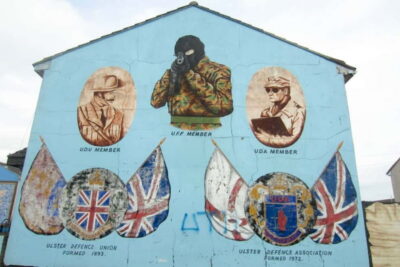
Belfast: Political Conflict 3-Hour Walking Tour
Read our review →
Belfast: Best of Belfast History, Culture & Art Walking Tour
Read our review →
Belfast Walking Tour with a Local – History & Craic
Read our review →Lists this walk sits on