
Review · DAR ES SALAAM
Dar es Salaam City Center: Walking Tour
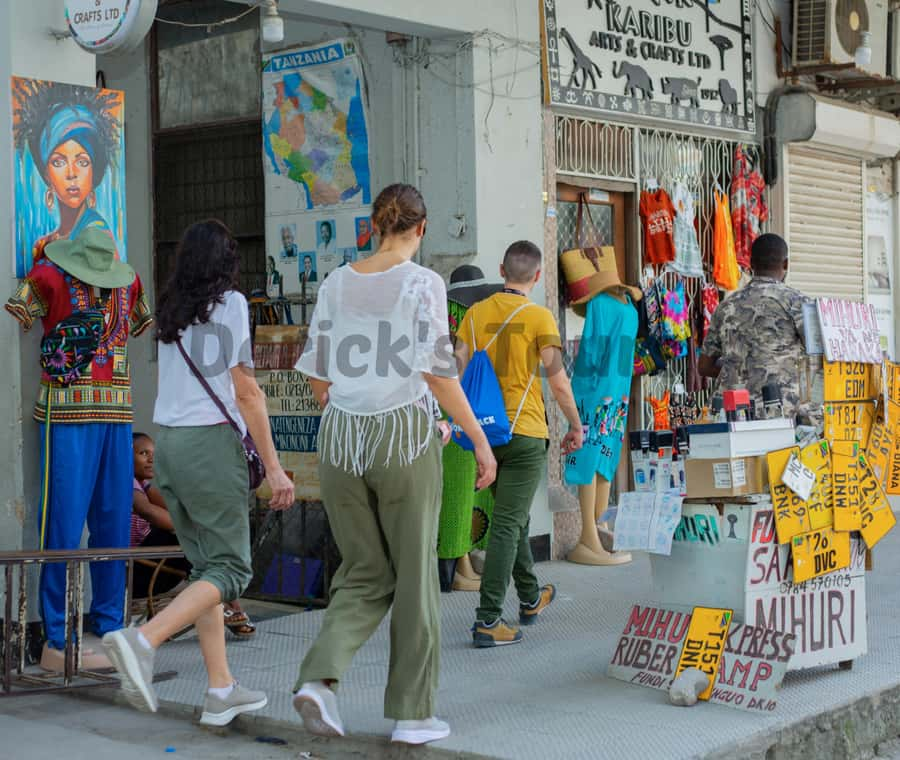
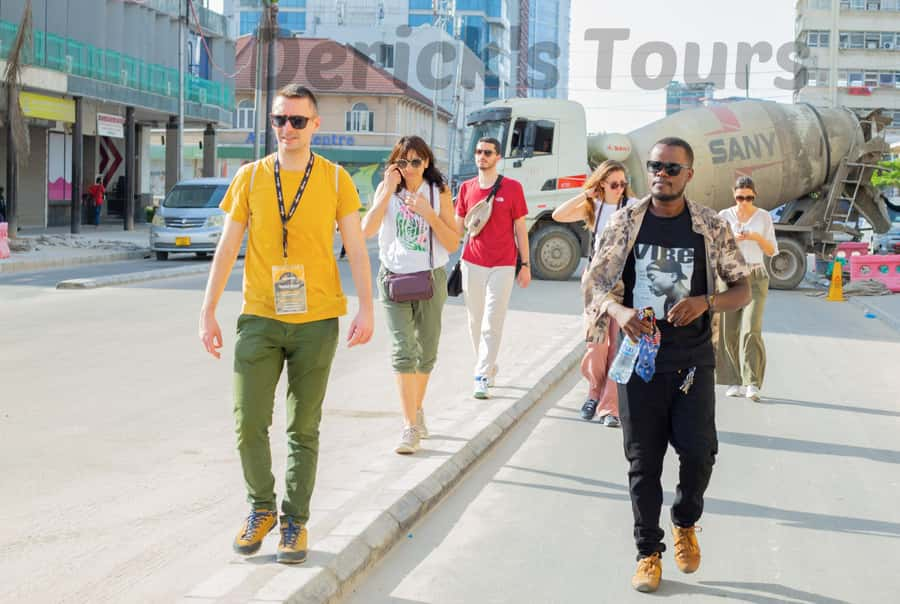
The most memorable part of this two-hour Dar es Salaam walk is the shift from grand churches and colonial-era buildings to the working waterfront at Kivukoni Fish Market. You get history, city views, local commerce, and ordinary street life in one compact outing. Guide Derick Lawrence brings the sites together with clear explanations about Tanzania’s past and present.
I like the tour’s flexible route and its useful pace. Derick has adjusted start times for cooler weather, changed the route for a visitor with a fish-market allergy, and answered questions in detail. The main consideration is time: two hours is enough for a strong first look, but some stops may feel brief if you want lots of photographs.
I also like that this is not just a parade of famous buildings. The churches and monuments matter, but the fish market, small local stops, and chance conversations give you a better feel for how central Dar es Salaam works day to day.
Key points to know before booking
- Kivukoni Fish Market brings the city to life: Expect seafood sellers, fishermen, nets, and strong smells near the waterfront.
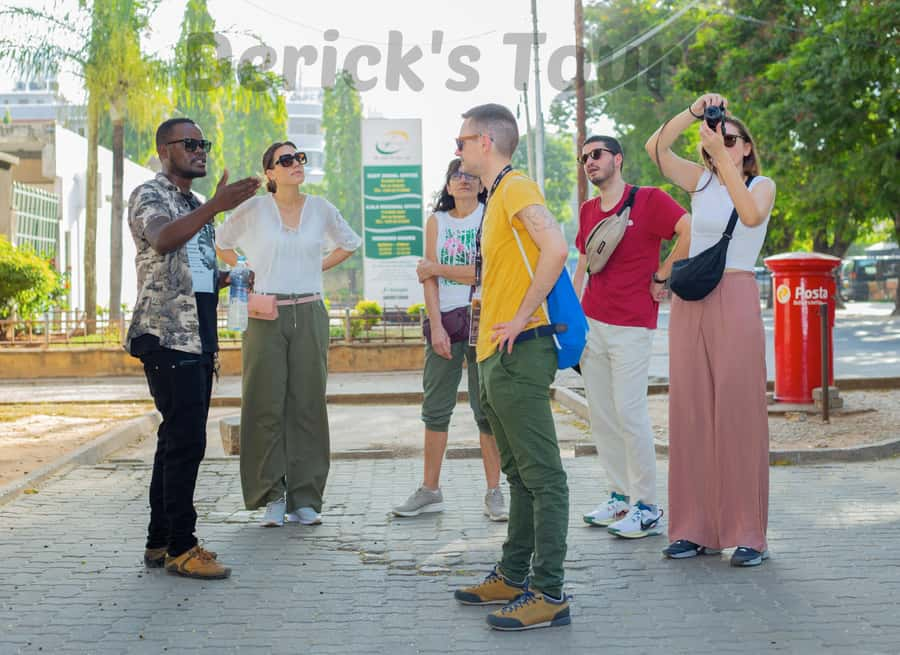
- Derick Lawrence leads in English: He explains the city’s history, buildings, culture, and changing identity in an approachable way.
- The route covers major landmarks: St. Joseph Cathedral, Azania Front Lutheran Church, the Askari Monument, Botanical Garden, and Old Boma are all included.
- You can request changes: The fish market can be replaced with another stop, such as Coco Beach, if you have a health concern or a different interest.
- Late afternoon may be more comfortable: One visitor moved a 2 p.m. start to 5 p.m. to avoid the strongest heat.
- The tour suits first-time visitors: It gives you a quick sense of central Dar es Salaam before you explore on your own.
A smart first look at Dar es Salaam
Dar es Salaam can be hard to read at first. It is a major business center, a port city, a former colonial capital, and a place where formal landmarks sit close to busy streets and local markets. This tour gives you a useful framework.
You begin with the city’s public face: churches, monuments, gardens, and old government buildings. Then you move toward the sea, where the pace becomes more practical and less polished. That contrast is the point. You are not simply checking off sights. You are seeing how Dar es Salaam’s past and present occupy the same few blocks.
At $30 per person, the price is reasonable if you want a private or small-group introduction with a local guide. A two-hour walk gives you more context than you would get by simply taking photographs from a taxi, and it can help you decide where to return later.
I would not book it expecting a full-day cultural program or a slow architectural study. The value comes from orientation, conversation, and access to places that are easy to pass without understanding.
More walking tours around the world:
- Magical London: Harry Potter Guided Walking Tour
★ 4.7 · 22,044 reviews - Reykjavik Food Walk – Local Foodie Adventure in Iceland
★ 5.0 · 18,952 reviews - History and Hauntings of Salem Guided Walking Tour
★ 5.0 · 14,564 reviews
Starting at St. Joseph Cathedral
St. Joseph Cathedral is an important opening stop because it gives the walk a clear visual anchor. Its Gothic-style design makes it one of central Dar es Salaam’s most recognizable buildings, and Derick explains its place in the city rather than treating it as a quick photo stop.
You can expect to hear about the cathedral’s religious and architectural importance, along with the wider forces that shaped the city. For visitors arriving with little background on Dar es Salaam, this opening helps put the different cultural influences into context.
I would take a moment here to look closely at the building’s exterior and listen before rushing to the next stop. The tour moves at a useful pace, but one four-star assessment noted that the route could feel rushed when taking pictures. If photography matters to you, say so at the start.
Azania Front Church and the German period
The walk continues to Azania Front Lutheran Church, a striking building linked to the German colonial period. Its architecture gives Derick a natural way to explain how outside powers shaped Dar es Salaam’s streets, institutions, and public buildings.
This stop works best as part of the larger story. You are not only seeing an old church. You are learning how the city changed under different rulers and how those layers remain visible in the center today.
The tour is particularly useful if you want history explained in plain language. Derick has been praised for covering periods from the sultanate through British rule and into modern Tanzania. That broad timeline helps you understand why the city feels culturally mixed and historically layered without turning the walk into a lecture.
The Askari Monument and Tanzania’s wartime past
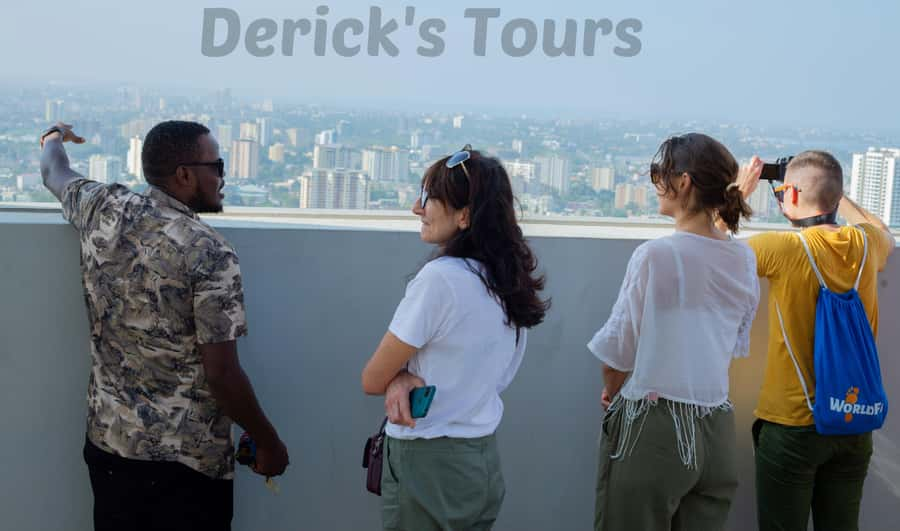
The Askari Monument is dedicated to African soldiers who served during World War I. It is a compact memorial, but it carries a large subject: the role of African soldiers in a global conflict and the way colonial history is remembered in public spaces.
This is one of the stops where a guide adds real value. A monument can be easy to photograph and forget. With an explanation of who it honors and why it occupies such a central location, you get a better sense of Tanzania’s connection to wider world events.
I appreciate that the tour does not present history as a string of disconnected dates. The churches, monument, and old buildings help show how Dar es Salaam developed. You can ask questions as you go, and Derick is described as willing to explain details rather than hurry you through a fixed script.
Same streets, a different story:
- New Orleans Premier Ghost, Voodoo and Vampire Walking Tour
★ 4.5 · 12,856 reviews - Amsterdam Anne Frank: Small-Group Walking Tour & Local Guide
★ 4.8 · 12,789 reviews - Edinburgh: Harry Potter Magical Guided Walking Tour
★ 4.8 · 11,944 reviews - Edinburgh Castle: Guided Walking Tour with Entry Ticket
★ 4.7 · 11,699 reviews
A quiet pause in the Botanical Garden
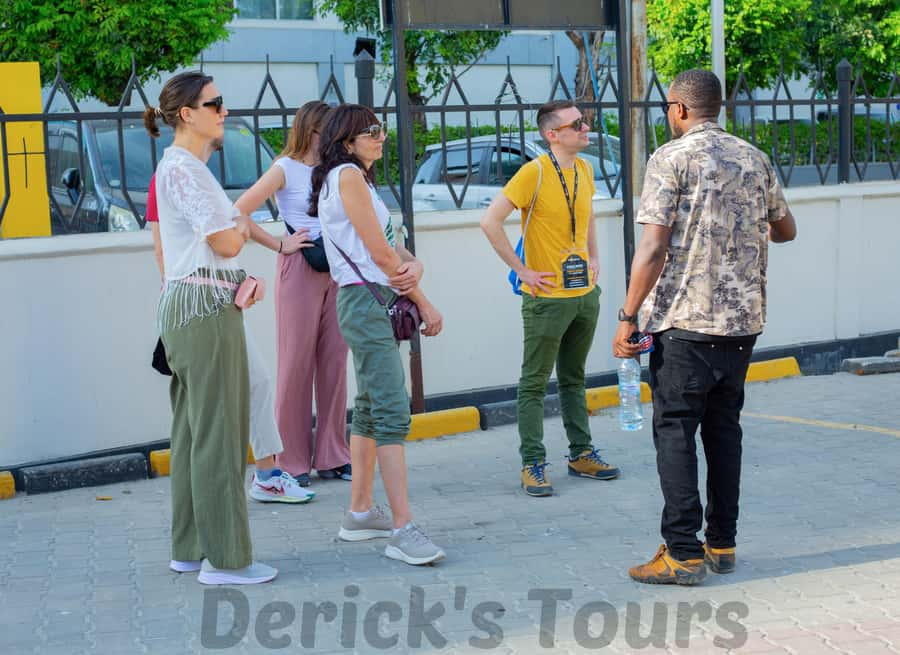
The Botanical Garden offers a change of pace. After central streets and prominent buildings, you step into a green space with tropical plants and trees. It is a useful breathing point in a walking tour, especially in a warm city.
Do not expect a large botanical attraction that takes up half a day. The garden is included as a short retreat within the city-center route. Its value is the pause and the contrast. You can talk with your guide, look at the plant life, and get a break from traffic and hard pavement.
The garden also keeps the itinerary from becoming too heavily focused on colonial architecture. The tour includes buildings and memorials, but this stop adds a little of Dar es Salaam’s natural side.
Old Boma and the city’s early buildings
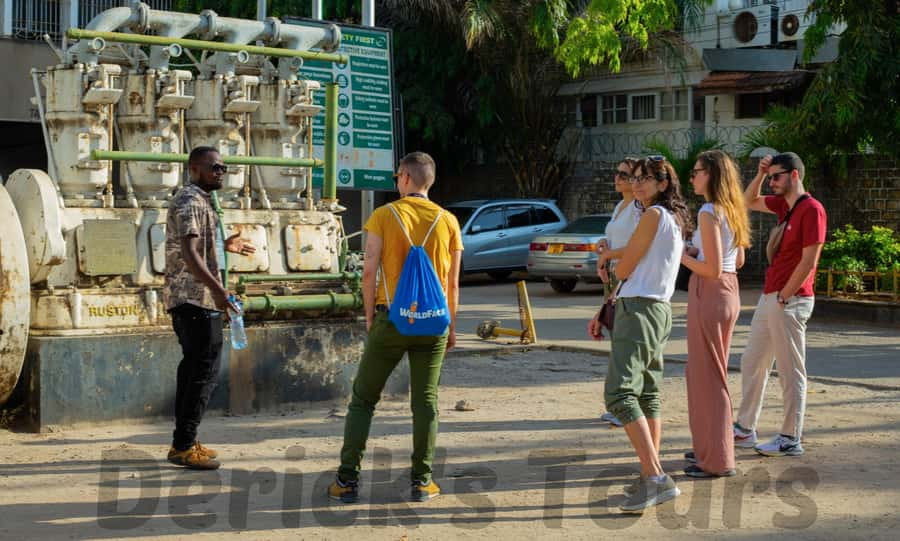
Old Boma is one of the oldest surviving buildings in Dar es Salaam. It gives the tour another strong link to the city’s architectural past and helps explain how the center developed around the port and early administration.
This is a good place to pay attention to details that might otherwise seem ordinary. Old walls, layout, and building style can tell you a great deal when someone explains what they were used for and how the city grew around them.
The stop is not presented as a standalone museum visit, so expectations matter. You are getting historical context during a walking route, not an extended indoor exhibition. For most first-time visitors, that balance works well. You see several key places without spending the full morning in one building.
Kivukoni Fish Market is the tour’s liveliest stop
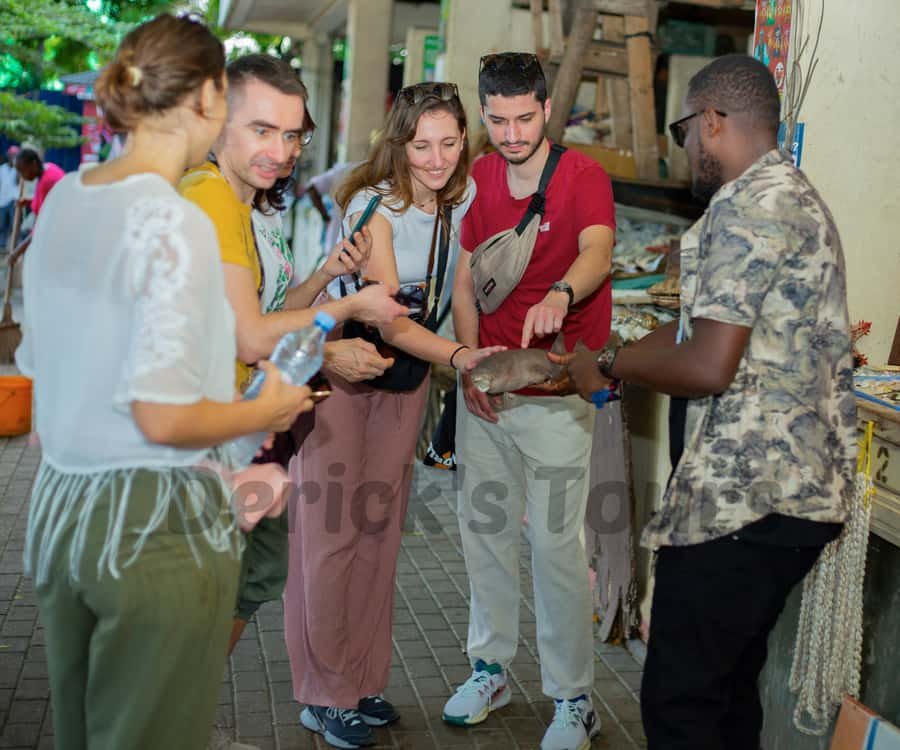
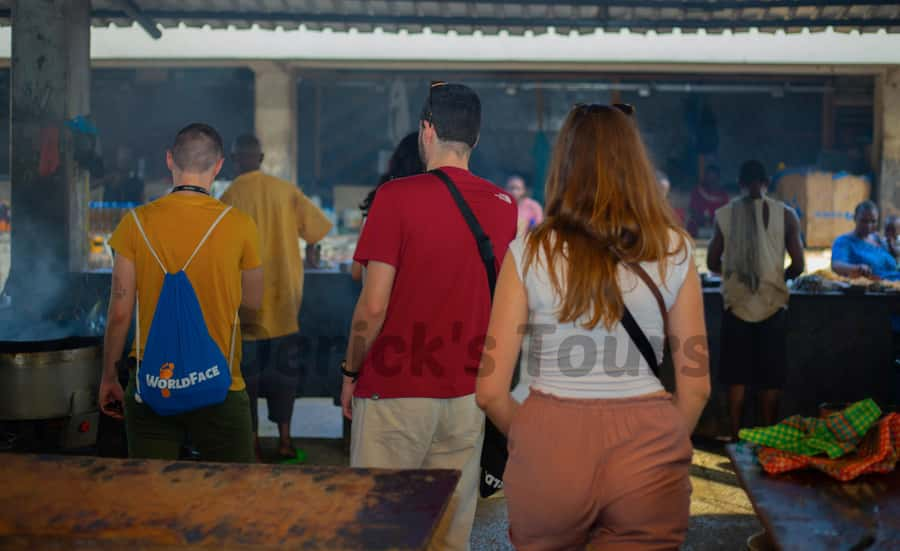
The strongest local experience comes at Kivukoni Fish Market. This is where the route shifts from monuments and churches to the daily business of buying, selling, and handling seafood.
You might see freshly caught fish, sellers arranging their goods, and fishermen repairing or replacing nets. The market has a strong smell, wet surfaces, and plenty of activity. That is not a drawback for everyone. For me, it is the kind of place that gives a city tour its purpose, because you see how the waterfront supports ordinary life.
One visitor ended the tour here and tried street food with Derick. That is not described as a formal included tasting, so you should treat it as an opportunity rather than a guaranteed part of the program. If you are comfortable with the setting, the market can be a memorable final stop.
If you have an allergy or cannot tolerate seafood smells, tell Derick in advance. He has changed the route to include Coco Beach instead. That flexibility is useful, but you should agree on the substitute before the walk begins so the plan is clear.
What Derick adds to the walk
The guide is the main reason this experience works. Derick Lawrence leads in English and explains both major historical periods and small details about city life. His style appears to be friendly, flexible, and responsive to questions.
He has adjusted start times, rescheduled a missed booking, collected visitors from a hotel when requested, and adapted routes to individual interests. Some private arrangements have included a view from one of Dar es Salaam’s twin buildings, a tower visit, and even a motorbike ride when a solo visitor was the only person booked for a time slot. These extras should not be assumed as standard inclusions, but they show that the experience can be tailored.
I would message Derick before booking if you have a specific goal. You might want more architecture, more local markets, a view from above, fewer stairs, or an alternative to the fish market. The listed route is a starting point, not necessarily the only possible version.
Timing, heat, walking pace, and photographs
Dar es Salaam’s heat matters. A 2 p.m. start may feel demanding, while a 5 p.m. outing can be more pleasant. The exact starting times depend on availability, so check before you commit, and ask about a later slot if you prefer cooler conditions.
Wear comfortable walking shoes and bring water. The tour is only two hours, but the city-center route includes outdoor walking, street activity, and time on your feet. Light clothing and sun protection are sensible, though no special equipment is listed.
Plan your photography. One visitor felt the guide moved quickly and left too little time for pictures. Derick’s pace has otherwise been described as good, but the best approach is to say early that you want pauses at the cathedral, monument, garden, or market.
The route may feel more relaxed with a small group or private booking. Group size is not specified, so ask if that matters to you. A smaller party generally makes it easier to ask questions and adjust the walk.
Who will get the most from this tour
I would recommend this experience to a first-time visitor who has a few hours in Dar es Salaam and wants more than a taxi ride between major sights. It is especially useful at the beginning of a stay, when you need a sense of direction and a basic understanding of the city.
It also suits solo visitors. One solo participant felt comfortable on the walk and received suggestions for further places to visit. Another received help after missing the original appointment. That does not replace normal city awareness, but it suggests the guide pays attention to individual needs.
History-minded visitors will appreciate the range of subjects, from the sultanate and colonial rule to World War I and present-day life. Food and market fans will find the fish market the most engaging stop.
You may want something else if you prefer a long museum visit, a nature excursion, or a tour focused only on food. You should also reconsider the standard route if seafood markets are unpleasant for you, although a replacement can be arranged.
Price, flexibility, and overall value
The $30 price is fair for a two-hour guided introduction, especially if you value a local interpreter of the city rather than a simple list of landmarks. The fee includes Derick as your guide and guided visits to the mentioned places. Route changes based on your interests are also part of the offer.
The tour’s value rises if you use it as a starting point. Ask where to return, which districts deserve more time, and what fits your interests. Several participants used the walk to get their bearings, then continued exploring Dar es Salaam with a better sense of what they were seeing.
The value drops slightly if you expect every stop to receive equal time. The route covers a lot for two hours, and the fish market may become the main event for many people. If you want long photo stops or detailed architectural study, request a shorter route with fewer locations.
Free cancellation up to 24 hours before the start and a reserve-now, pay-later option make the booking fairly flexible. Starting times vary, so check availability before planning the rest of your day.
Should you book the Dar es Salaam city walk?
Book it if you want a short, adaptable introduction to central Dar es Salaam, particularly with Derick Lawrence as your guide. The combination of churches, memorials, gardens, Old Boma, and Kivukoni Fish Market gives you a good first reading of the city in just two hours.
I would choose a late afternoon start when available, ask for enough time at the key photo stops, and mention any fish-market concern before arrival. If you want a quick orientation with real local texture, the $30 cost is justified. If you prefer a slow, single-subject tour, ask Derick to narrow the route rather than trying to see everything.
FAQ
How long is the Dar es Salaam city walking tour?
The tour lasts two hours. Starting times vary, so you need to check availability for the date you want.
What language is the tour conducted in?
The live tour guide speaks English.
Which places are included?
The route includes St. Joseph Cathedral, Azania Front Lutheran Church, the Askari Monument, Botanical Garden, Kivukoni Fish Market, and Old Boma, along with other city-center sights.
Can the route be customized?
Yes. You can contact Derick Lawrence in advance to request changes based on your interests. One route was changed from the fish market to Coco Beach because of a visitor’s allergy to the smell.
How much does the tour cost?
The listed price is $30 per person.
Can I cancel or pay later?
You can cancel up to 24 hours in advance for a full refund. You can also reserve your place and pay later.
New walking tours around the world
- Niagara Falls, Canada: White Water Walk Entry Ticket★ 4.5 · 147 reviews
- NYC: Walking Tour with Local Guide and 30+ Top NYC Sights★ 4.5 · 248 reviews
- Zadar: Food Tasting & Old Town Walking Tour★ 5.0 · 94 reviews
- Niagara Falls: Walking Tour, Journey Behind Falls, & Cruise★ 4.8 · 773 reviews
- New York City: Gangsters and Ghosts 2-Hour Walking Tour★ 4.7 · 615 reviews
- NYC: History of Slavery & Underground Railroad Walking Tour★ 4.7 · 87 reviews
- New York City’s Hell’s Kitchen: Walking Food Tour★ 4.8 · 200 reviews
- New York City: Central Park Walking Tour★ 4.7 · 82 reviews