

Review · KIGALI
Kigali: Walking Tour with a Local Guide
Kigali makes a strong first impression from street level, and this tour gets you into that rhythm quickly. You walk through Biryogo Car Free Food Street, pass local art, visit the Belgian Peacekeepers Memorial, and finish around Downtown. Guide Gloria is a major part of the experience, bringing warmth, practical advice, and clear explanations of Rwanda’s past and present.
I like the mix of local culture and useful orientation. You are not simply driven between monuments, and you can ask about food, transport, customs, and daily life as you go. I also like the short motorbike or taxi transfers, which add a distinctly Kigali touch and help you learn how to get around.
The main consideration is that this is not a fully walking tour in the strict sense. You may pay separately for a motorbike or taxi between the Inema Arts Centre and the Belgian Peacekeepers Memorial, and the tour runs in rain or shine. The route can also feel more like a well-chosen introduction than a full survey of the city.
Key points at a glance

- Meet at Kigali Heights: Start at the Radisson and Kigali Heights roundabout, marked by a fountain and statue.
- Taste the city: Biryogo Car Free Food Street brings local snacks, food stalls, crafts, and a relaxed pedestrian setting.
- Face difficult history: The Belgian Peacekeepers Memorial offers a serious stop connected to Rwanda’s 1994 genocide.
- See Kigali’s creative side: Inema Arts Centre gives you time for art, photos, snacks, and conversation.
- Learn the practical details: Guides can explain local transport, places to eat, customs, and how to feel more at ease in Kigali.
- Plan for the weather: Bring water, a hat, cash, and good walking shoes. The tour continues in wet weather.
Why this is a smart first look at Kigali
Kigali is a city best understood in pieces. A market tells you something about food and commerce. A memorial explains a painful chapter that still shapes public life. An art centre shows the country’s creative energy and its interest in looking forward. A walk through Downtown fills in the spaces between those major subjects.
This 150-minute tour links those pieces without asking you to spend a whole day on your feet. You get a guided introduction, but the flexible route also lets you focus on what matters most to you. If you have already visited the Kigali Genocide Memorial, for example, you can use the time to ask questions about culture, neighborhoods, food, or modern city life.
I would book it early in a Kigali stay. The tour gives you a better sense of direction and can make later trips by foot, taxi, or motorbike less intimidating. Several people have found the guided introduction to motorbike taxis especially useful, since Gloria helps explain the process and rides alongside you.
The atmosphere is friendly and conversational rather than formal. Gloria has been praised for making solo visitors feel comfortable, answering questions patiently, and adjusting the pace or route when someone has already seen a particular site. That matters in a city where a local explanation can add more value than another quick photo stop.
More walks with a guide around the world:
- Magical London: Harry Potter Guided Walking Tour
★ 4.7 · 22,044 reviews - History and Hauntings of Salem Guided Walking Tour
★ 5.0 · 14,564 reviews - Amsterdam Anne Frank: Small-Group Walking Tour & Local Guide
★ 4.8 · 12,789 reviews
Meeting at Kigali Heights
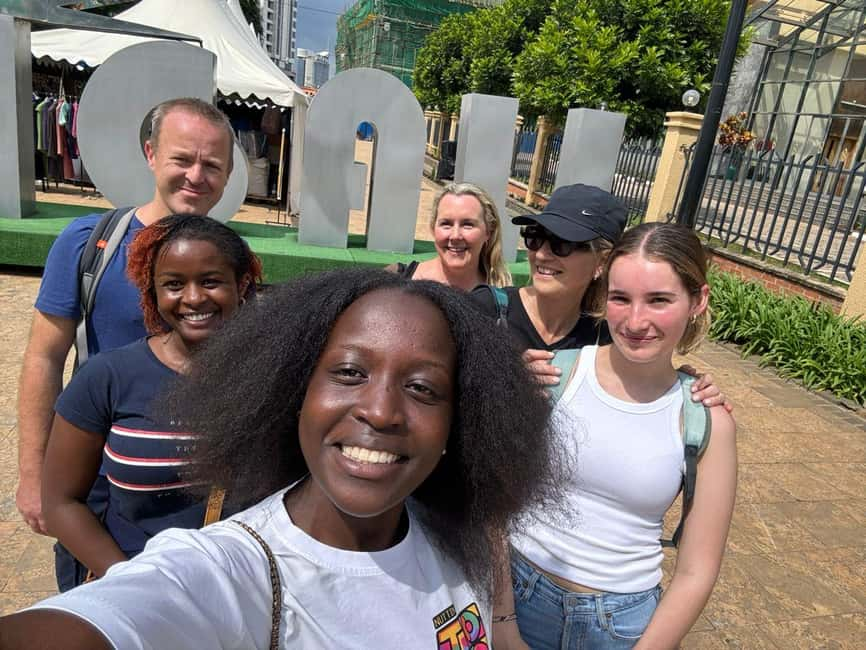
The tour begins at the roundabout by Radisson and Kigali Heights, where you will find a fountain and statue. This is a practical meeting point in an easy-to-recognize part of the city.
Give yourself enough time to arrive without rushing. The guide begins with a short introduction, then starts sharing information about Kigali and Rwanda before the route gets underway. This early conversation helps set the tone: you can explain what you have already seen, ask for food suggestions, or request more time for art, local streets, or history.
Kigali Heights also gives you a useful reference point for the city. You are starting in a modern commercial area, then moving toward food streets, memorial spaces, galleries, and Downtown. That contrast is part of what makes the tour worthwhile.
Biryogo Car Free Food Street for food and local color
Biryogo Car Free Food Street is one of the most approachable stops. For around 20 minutes, you can walk, take photos, browse arts and crafts, and look at local food. The car-free setting makes it easier to pay attention to people, shop fronts, smells, and the small details of everyday Kigali.
Your guide can explain what you are seeing and help you decide what to try. Local snacks and drinks may be available, but food and drinks are not listed as included, so carry some Rwandan francs or other usable cash for purchases.
This is a good place to ask practical questions. You can learn where to eat later, what local dishes to look for, and how neighborhoods differ. The stop is not designed as a full food tour, so do not expect a long tasting menu. It works better as a first introduction to Kigali’s casual food culture.
Biryogo also helps balance the more serious parts of the tour. You begin with an active, social part of the city before moving to a memorial that requires more quiet attention.
The Belgian Peacekeepers Memorial
The Belgian Peacekeepers Memorial is the most solemn stop on the route. You have roughly 30 minutes for a visit, photos, and time around nearby arts and crafts activity. The memorial honors Belgian peacekeepers killed during the 1994 genocide against the Tutsi, and its presence gives the tour an important historical focus.
This is not a place to rush through while taking photos. Listen carefully to the guide, and ask questions in a respectful way. Rwanda’s history is not a decorative background to a city tour. It helps explain the country’s public life, social customs, memorial spaces, and strong focus on peace and reconstruction.
The route information notes that you may use a motorbike or taxi between the art centre and the memorial. That transfer is not included in the $30 tour price, so keep cash ready. The transport itself can be fun, but you should know the arrangement before booking. If you prefer not to ride a motorbike, tell your guide and use a taxi instead.
The tour does not claim to replace a visit to the Kigali Genocide Memorial. If you want a detailed museum experience, plan that separately. This stop works as a shorter, focused introduction to one important part of Rwanda’s recent past.
More walking tours around the world:
- Reykjavik Food Walk – Local Foodie Adventure in Iceland
★ 5.0 · 18,952 reviews - New Orleans Premier Ghost, Voodoo and Vampire Walking Tour
★ 4.5 · 12,856 reviews - Edinburgh: Harry Potter Magical Guided Walking Tour
★ 4.8 · 11,944 reviews - Edinburgh Castle: Guided Walking Tour with Entry Ticket
★ 4.7 · 11,699 reviews
Inema Arts Centre and Kigali’s creative side

Inema Arts Centre adds a lighter, more creative turn. The schedule allows about 30 minutes for photos, sightseeing, free time, street food, and local snacks. You can look at artwork, speak with artists if they are available, and ask your guide about Kigali’s growing art scene.
The value here is the personal context. A gallery visit on your own can be quick and quiet. With a local guide, you can ask what kinds of art connect with Rwanda today, how local artists work, and where else to see creative work in the city. The visit is not only about buying something. It gives you another way to understand how Kigali presents itself.
Do not count on a long studio workshop or formal art lesson. The listed timing is short, and the centre forms one part of a broader city route. Still, it is enough to add texture to the day and to show a side of Kigali that a standard monument-focused outing might miss.
If you have already visited the main historical sites, this may be one of the tour’s strongest sections. It gives you room to talk, look around, and compare what you have learned about Rwanda with how artists express the country now.
Downtown and the final city walk
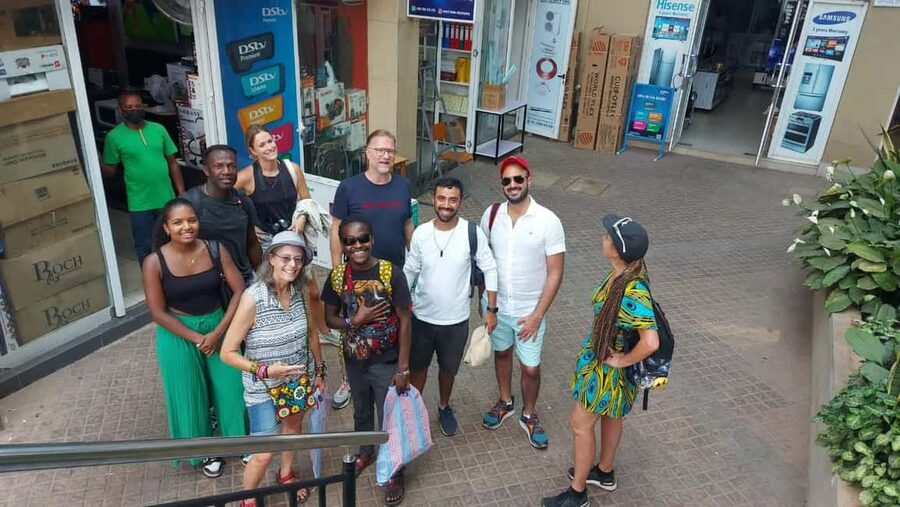
The final stop is Downtown, with about 30 minutes for a guided walk and sightseeing. This section helps connect the earlier stops. You have seen a food area, a memorial, and an art centre. Downtown gives you a more direct sense of movement, work, shops, and the city’s changing shape.
Your guide can point out places you might miss on your own and offer tips for eating or getting around. One useful feature of Gloria’s style is the practical advice. She has helped people understand motorbike taxis, suggested places to eat, and explained how to continue exploring after the tour ends.
The Downtown section is also where expectations matter. You will not see every important part of Kigali in half an hour. If you want a broad city panorama, the route may feel limited. One person specifically wanted a wider overview of the city as a whole. You should see this tour as a focused orientation, not a complete city survey.
You may also finish near a Kigali sign or another useful photo point, depending on the route chosen that day. Since the itinerary is customizable, the exact ending can vary.
How the flexible route affects the experience
The flexible itinerary is one of the tour’s best features. You can discuss what you have already visited and ask the guide to avoid repeating it. You can also lean toward food, art, history, local neighborhoods, or practical city advice.
Possible additions mentioned for a customized walk include Nyarutarama Lake and the Nyamirambo neighborhood. Nyamirambo is especially useful if you want alleyways, local viewpoints, and a stronger sense of neighborhood life. Nyarutarama Lake offers a quieter setting and more open scenery.
These options may not all fit into the standard 150-minute route. Ask early about priorities, especially if you want to include a place that requires extra transport. The more specific you are, the easier it will be for the guide to shape the walk around your interests.
The flexible format also means the tour is not identical for every person. That is good for repeat visitors and anyone with a short stay, but it means you should not expect a fixed checklist of every attraction.
Walking, motorbikes, and practical comfort
You should be comfortable walking for much of the tour. Wear supportive shoes, bring water, and use a hat or other protection from the sun. Weather-appropriate clothing matters because the tour operates rain or shine.
Motorbike taxis, called motos, are part of the experience for some routes. The guide can help arrange the ride, and several people found this a useful introduction to local transport. You pay the transport cost separately, so ask about the expected fare before setting off.
If motorbike travel makes you uneasy, you can discuss a taxi option with the guide. The key point is to speak up about your comfort level. This is a city walk with transport links, not a forced motorbike excursion.
A camera is useful, but stay aware of where you are and what you are photographing. At the memorial, use extra care and follow local guidance. Respectful behavior matters more than getting a perfect picture.
The experience is not suitable for children under 10 or people over 70, according to the stated conditions. The age limit may relate to the walking and transport demands, so check before booking if someone in your group is close to either threshold.
Is $30 good value?
At $30 per person, the tour offers solid value if you want a guide for orientation rather than a long list of paid admissions. Your fee covers the professional guide, the walking tour, and a route that combines food, art, history, and Downtown.
The biggest value is the local conversation. Gloria has helped people understand where to eat, how to use motorbike taxis, what they are seeing, and how to continue exploring with more confidence. That kind of advice can save time during a short Kigali stay.
You should budget extra for snacks, drinks, shopping, and motorbike or taxi fares. The transport cost is not included, and one visitor specifically preferred having those fares folded into the booking price. I agree that including them would make the cost easier to understand, but the separate payment also lets you choose how much transport to use.
If you want museum entry, a full meal, or a private vehicle for the whole outing, this is not the right price comparison. If you want a friendly local guide, a manageable walk, and a taste of several sides of Kigali, $30 is reasonable.
Who should book this Kigali walk?
I would recommend it most strongly for first-time visitors, solo visitors, and anyone arriving with only a day or two in the city. It gives you an early sense of how Kigali works and answers the small questions that can otherwise make a new place feel harder to navigate.
It also suits people who like to ask questions. Gloria’s strongest quality is her personal approach. She has been described as warm, patient, energetic, and easy to talk to, with a good balance between organized guiding and relaxed conversation.
Art lovers will appreciate Inema Arts Centre. Food-focused visitors will enjoy Biryogo and the chance to ask for restaurant suggestions. History-focused visitors will value the Belgian Peacekeepers Memorial, though you should add the Kigali Genocide Memorial separately if you want a longer historical visit.
I would be less likely to choose it if you want a long, uninterrupted walking route, a detailed museum tour, or a fixed schedule with all costs included. The route includes transfers, may change with your interests, and leaves some major Kigali sights for another outing.
Should you book it?
Book this tour if you want a friendly start to Kigali, practical local advice, and a balanced introduction to food, art, difficult history, and city life. Guide Gloria appears to be the central strength, especially if you value a warm guide who adjusts the route and welcomes questions.
Bring cash for local purchases and transport, wear good shoes, and prepare for rain or sun. Ask at the start how much walking and motorbike travel you should expect.
Skip it only if you already know Kigali well or want a more specialized experience. For most first visits, this is a useful 150-minute orientation that can make the rest of your time in Rwanda easier and more rewarding.
FAQ
How long is the Kigali walking tour?
The tour lasts 150 minutes, or two and a half hours. Starting times depend on availability.
Where does the tour meet?
Meet at the roundabout between Radisson and Kigali Heights, by the fountain and statue.
Which language is used during the tour?
The live tour is conducted in English. Guides may also assist with basic translations in Kinyarwanda.
Is transportation included in the price?
The walking tour is included, but motorbike or taxi transfers are not stated as included. Bring cash for those fares.
Will the entire tour be on foot?
No. The experience includes walking, and the guide may use a motorbike or taxi to move between the Inema Arts Centre and the Belgian Peacekeepers Memorial.
What should I bring?
Bring comfortable walking shoes, weather-appropriate clothing, a hat, water, a camera, and cash.
Does the tour operate in bad weather?
Yes. The tour operates rain or shine, so check the forecast and prepare accordingly.
Who cannot join this tour?
The experience is not suitable for children under 10 or people over 70.
Can the itinerary be customized?
Yes. The itinerary is customizable, with possible interests including markets, the Kigali Genocide Memorial, Nyarutarama Lake, Nyamirambo, and local art spaces.
New walking tours around the world
- Niagara Falls, Canada: White Water Walk Entry Ticket★ 4.5 · 147 reviews
- NYC: Walking Tour with Local Guide and 30+ Top NYC Sights★ 4.5 · 248 reviews
- Zadar: Food Tasting & Old Town Walking Tour★ 5.0 · 94 reviews
- Niagara Falls: Walking Tour, Journey Behind Falls, & Cruise★ 4.8 · 773 reviews
- New York City: Gangsters and Ghosts 2-Hour Walking Tour★ 4.7 · 615 reviews
- NYC: History of Slavery & Underground Railroad Walking Tour★ 4.7 · 87 reviews
- New York City’s Hell’s Kitchen: Walking Food Tour★ 4.8 · 200 reviews
- New York City: Central Park Walking Tour★ 4.7 · 82 reviews