Review · ITALY
Alba: Historic Town Highlights Guided Walking Tour
Alba’s old center is a compact lesson in Piedmontese history, where Roman remains and medieval churches share the streets with towers, porticos, boutiques, and food shops. For $11, this two-hour walk gives you a useful first look at the town without taking half a day.
I like the mix of architecture and local life, especially the way the route links old public buildings with today’s elegant shops and typical-product boutiques. I also like the strong guide feedback: Agnieszka is praised for her passion for Alba’s history, architecture, and cuisine, while Giulia is praised for a clear and thorough tour. The main limitation is that this is an overview, not a deep visit inside every monument, and the exact route and group size are not specified.
Key points to know before booking
- Roman and medieval Alba in two hours: See remains and buildings that reflect the town’s long urban story.
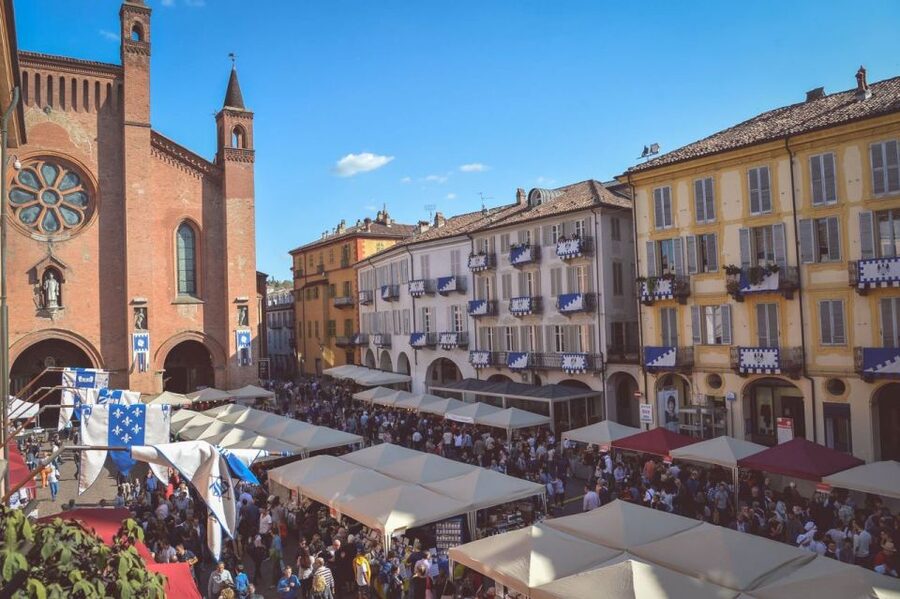
- Towers shape the old center: Surviving towers and houses are among the most distinctive sights on the walk.
- Local guides make the difference: Agnieszka and Giulia have received especially warm praise for their explanations and enthusiasm.
- A good food-town introduction: The route passes typical-product shops and boutiques, with Alba’s culinary identity close at hand.
- Simple, low-cost logistics: Meet at Piazza Risorgimento 2, walk with an English or Italian-speaking guide, and return to the same place.
- Useful flexibility: The tour is wheelchair accessible, lasts two hours, and allows cancellation up to 24 hours before departure for a full refund.
Why Alba works so well on foot
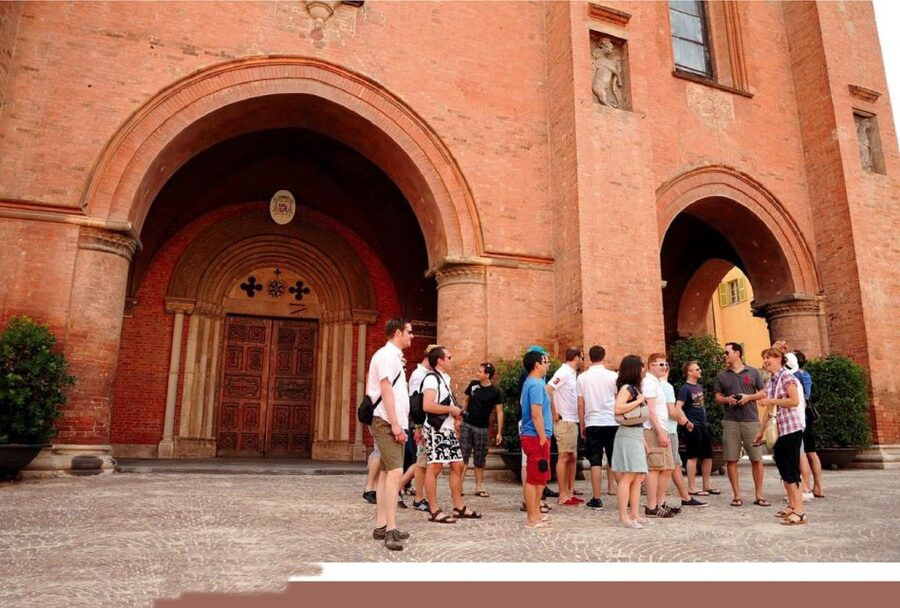
Alba is known as the capital of the Langhe hills, but you do not need a long countryside outing to get a taste of its character. The old town puts much of the story under your feet. A walk here connects ancient remains, religious buildings, towers, covered walkways, civic architecture, shops, and food culture in a small area.
That makes this tour a sensible first activity after arriving in Alba. You can use the two hours to get your bearings, learn the basic shape of the town, and decide where to return later. A guide also helps you notice details that are easy to pass without context, particularly the relationship between the surviving towers and the old urban layout.
I would not book this expecting a major museum visit or a long series of interior tours. The experience is built around walking and explanation. Its value comes from seeing Alba as a whole rather than checking off one famous building.
The tour is conducted in English or Italian, so you can choose the language that suits your booking. The guide is live rather than audio-based, which matters in a town where questions about architecture, food, and local history can shape the experience.
More City Highlights Walking Tours in Italy
- Florence: Highlights Walking Tour with Expert Guide
★ 4.6 · 4,662 reviews - Skip-the-Line Florence Highlights and David Walking Tour
★ 5.0 · 1,127 reviews - Venice: Walking Guided Tour of the City Must-See Sites
★ 4.7 · 1,095 reviews
Starting at Piazza Risorgimento 2
Your meeting point is Piazza Risorgimento, 2. This gives the walk a clear start in the center and avoids the need for a separate transfer or meeting outside town.
From there, the route moves into Alba’s historic core. The precise order of the sights can vary, and the available information does not give a fixed street-by-street plan. That is worth knowing if you prefer a tightly mapped route. For most people, though, the central meeting point and return to the same place keep the logistics easy.
Check the available starting times before booking. The duration is two hours, so the walk can fit neatly before lunch, later in the day, or alongside other plans in Alba. Since no group size is provided, you should not assume a private walk or a small group.
A comfortable pair of shoes is sensible. The experience is a guided walking tour, and its appeal depends on moving through the old center rather than remaining in one square.
Roman traces and Alba’s long story
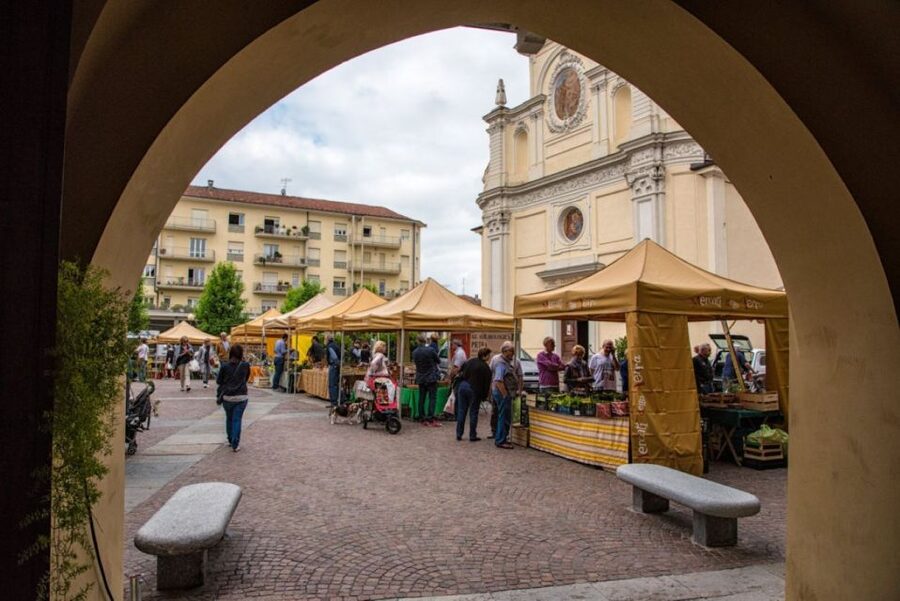
The first major strength of the tour is its historical range. Alba’s center includes Roman remains, medieval churches, bell towers, and later public and private buildings. You are not looking at one single period. You are watching a town change over many centuries while keeping parts of its older form.
The guide’s role is important here. A Roman fragment can be easy to overlook when it sits beside a functioning street or a later building. A church facade may be attractive on its own, but the explanation can show how it fits into the town’s religious and civic story.
The tour description points to an urban system dating back thousands of years. That does not mean every part of the walk is an archaeological site. It means the old center still reflects a long pattern of settlement, rebuilding, and adaptation.
I particularly like this kind of introduction for visitors who want more than pretty streets. Alba has an appealing look, but the guide helps connect the appearance to the town’s past. You leave with a better sense of why the center has its particular shape.
The tradeoff is time. Two hours is enough for a broad introduction, but not enough to study every church, tower, and remnant in detail. If one building captures your attention, you may want to return to it independently.
Alba’s towers and medieval churches
The towers are among the most memorable features of the old center. They remain dominant above the streets and help explain the character of Alba’s historic core. The surviving towers and houses are not isolated curiosities. Together, they reveal something about the older town plan.
A guided look is useful because towers can be difficult to interpret from street level. You may see the upper portion first, then notice how it relates to neighboring houses and the surrounding streets. The tour gives those structures a place in the wider story rather than treating them as background scenery.
The medieval churches add another layer. Their bell towers and architectural details show the importance of religious buildings in the old town. You can expect the guide to point out churches and bell towers as part of the general walk, though the supplied details do not promise entry into each one.
That distinction matters. The experience includes sightseeing and guided explanation, but it does not list admission to specific interiors. If you want a detailed art or church tour, ask about the day’s route when you meet the guide.
Still, the outside views can be rewarding. Alba’s appeal comes from how the buildings sit together, with towers, churches, porticos, and houses creating a connected townscape. You are seeing the historic center as a lived-in place, not as a collection of sealed monuments.
More History Walking Tours in Italy
- Venice: City Center Historical Guided Walking Tour
★ 4.2 · 1,873 reviews - Palermo: Street Food and History Walking Tour
★ 4.9 · 1,486 reviews - Verona: History and Hidden Gems Guided Walking Tour
★ 5.0 · 1,379 reviews - Rome Food Tour in the Historic Centre with 8+ Food Tastings
★ 5.0 · 1,000 reviews
Porticos, public buildings, and everyday Alba
Porticos give the walk a practical side. These covered passages are attractive, but they also show how buildings and public space work together in an Italian town. They provide changing views of facades, doorways, shopfronts, and passing streets.
The route also includes public and private buildings that reflect Alba’s prosperous and varied past. The description does not name each building, so I would not book the tour expecting a precise architectural checklist. Instead, think of it as a guided reading of the center.
This is where a good local guide earns the modest ticket price. A guide can explain why one facade matters, how a bell tower fits into the town, or how a house relates to the older urban plan. The best comments about Agnieszka point to exactly this strength. Her explanations cover history, architecture, and cuisine, and her enthusiasm helps turn small details into part of a larger picture.
Giulia is also singled out for a thorough and well-informed approach. Guide assignments can change, so you should not assume one particular person will lead your departure. Still, the names give you a useful idea of the standard of guiding associated with the experience.
Boutiques, typical products, and Alba’s food culture
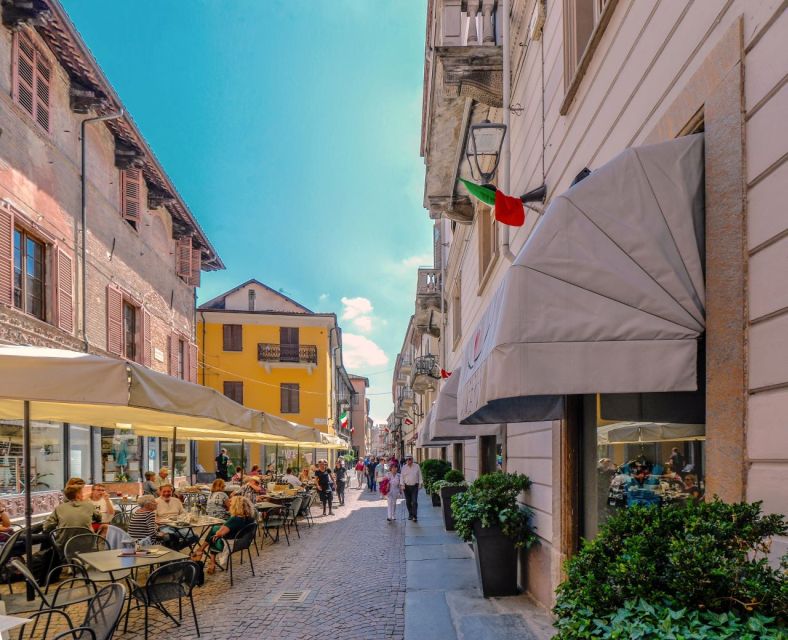
Alba is not presented as a preserved monument that shuts down after the historic sights. The old center also has elegant boutiques, typical-product shops, and art exhibitions. This gives the tour a current, cosmopolitan side without losing its traditional setting.
You can expect to notice the scents and displays of local specialties as you walk. The experience does not list a formal tasting, so do not book it as a food tour. The food connection is visual and atmospheric, with the guide helping you understand the place of typical products in Alba’s identity.
That distinction is useful. A formal tasting usually focuses on samples, portions, and producers. This walk focuses on the town, with local food shops forming part of the setting. If you plan to buy Piedmont products, the tour can help you spot appealing places, but specific purchases are not included.
The combination of old buildings and modern shops is one of the strongest reasons to choose this activity. You get a sense of Alba as a working town, not only a historic display. Art exhibitions and stylish stores add variety to the architecture, while the traditional products keep the experience tied to the region.
The break and photo stop
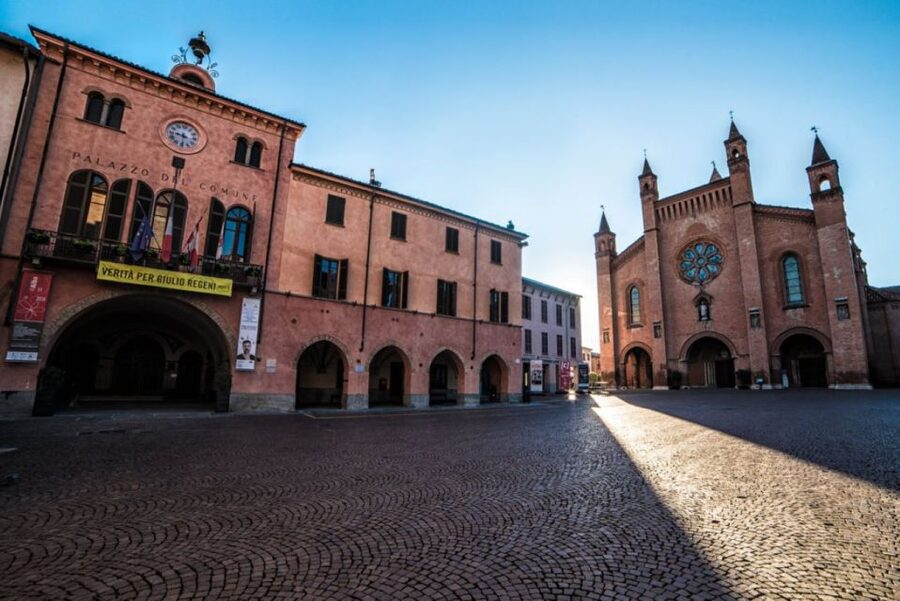
The itinerary includes a break time and photo stop during the walk. The exact length and location are not given, so you should not count on a long cafe visit or a formal refreshment stop.
Think of this as a pause in the sightseeing. You will have a chance to take photographs, look around, and enjoy the center at a slower pace before returning to the meeting point. That short pause can be helpful because two hours of steady walking and listening can feel full, especially if you are also paying attention to architectural details.
The stop also gives you a moment to decide what deserves a second look later. Alba’s center is well suited to this kind of follow-up wandering, with shops, buildings, and churches close enough to revisit on your own.
What the $11 price really buys you
At $11 per person, this is an inexpensive way to add structure to your first look at Alba. You are paying mainly for a local guide’s time and interpretation, not for entrance tickets, a meal, or transport.
That is good value if you would otherwise walk around without context. The price is especially easy to justify for visitors who want to understand the town’s towers, churches, Roman remains, and porticos rather than simply photograph them.
The value is less clear if you already know Alba well or prefer to explore without a schedule. The walk covers a lot in two hours, but it will not replace a specialist architecture tour, an archaeological visit, or a dedicated tasting.
The rating is 4.2 from 80 ratings, which suggests a generally positive but not flawless experience. I read that as a reason to keep expectations sensible. The strongest feature is the guide, and the experience will likely feel better when the day’s guide brings the same energy and care praised in comments about Agnieszka and Giulia.
Who should book this Alba walk?
I would recommend it to first-time visitors who want a quick introduction before exploring on their own. It also suits anyone interested in town history, architecture, churches, towers, and the connection between old buildings and local commerce.
Food-minded visitors may like it as a starting point, especially if they want to locate typical-product shops and understand Alba’s connection to Piedmont cuisine. But I would pair it with a separate food experience if tasting is your main goal.
The tour can also work well for a short stay. Because it lasts two hours and begins and ends at Piazza Risorgimento, it does not demand a full morning or afternoon. The booking system lets you reserve now and pay later, which is useful if your Alba plans are still shifting.
The walk is wheelchair accessible. That is an important practical advantage, although the details provided do not describe the exact street surfaces or any building interiors. If you need specific access information beyond the stated accessibility, confirm it before departure.
Cancellation is flexible up to 24 hours in advance for a full refund. If you need an invoice, contact [email protected] within 24 to 48 hours of purchase.
My verdict on the two-hour Alba experience
Book this tour if you want Alba’s old center explained rather than simply seen. The strongest reasons are the low price, central meeting point, and local guide, with Roman remains, towers, churches, porticos, shops, and art displays all contributing to a well-rounded introduction.
Skip it if you want a formal tasting, long interior visits, or a specialist route focused on only one period. For most first visits, though, the two-hour format is a smart way to get oriented, learn what makes Alba distinctive, and choose where to spend the rest of your time.
FAQ
Where does the tour start?
The tour starts at Piazza Risorgimento, 2, in Alba.
Where does the tour finish?
The walk returns to Piazza Risorgimento, 2.
How long does the tour last?
The guided walking tour lasts two hours.
What languages are available?
The live tour guide speaks English or Italian.
What sights are included?
The walk includes Alba’s historic center, with Roman remains, medieval churches, towers, bell towers, porticos, public and private buildings, boutiques, typical-product shops, and art exhibitions.
Is the tour wheelchair accessible?
Yes, the activity is listed as wheelchair accessible.
How much does the tour cost?
The listed price is $11 per person.
Can I cancel for a refund?
Yes. You can cancel up to 24 hours in advance for a full refund.
New walking tours around Italy
- Rome: Fountains and Squares Small-Group Walking Tour★ 4.7 · 335 reviews
- Napoli: Walking Tour of Naples with Local Tour Guide★ 4.9 · 95 reviews
- Naples: Spanish Quarters Walking Tour★ 4.6 · 72 reviews
- Naples: Street Art, Wine and Food Tasting Walking Tour★ 5.0 · 163 reviews
- Naples: Old Town Guided Walking Tour★ 4.8 · 553 reviews
- Naples: Street Food Experience With 6 Stops★ 4.7 · 392 reviews
- Naples: Historic Center and Sansevero Chapel Walking Tour★ 4.8 · 208 reviews
- Naples Essentials: Monuments, Local Life & Street Art★ 4.9 · 79 reviews
Italy Walking Tours, side by side.
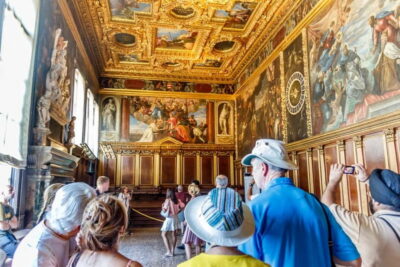
Venice: Doge’s Palace and St Mark’s Basilica Walking Tour
Read our review →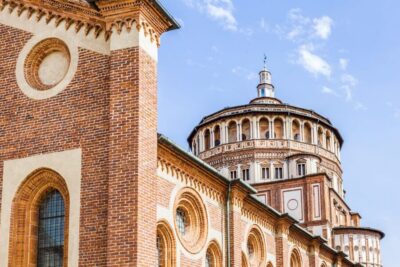
Milan: Guided Walking Tour & Last Supper Visit with Ticket
Read our review →
Naples: Street Food Walking Tour with Local Guide
Read our review →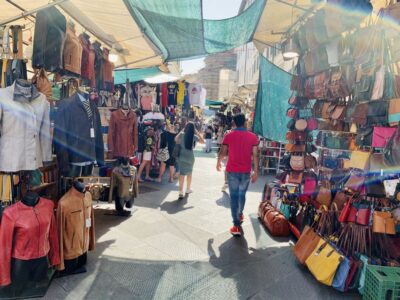
Florence: Highlights Walking Tour with Expert Guide
Read our review →
Venice: San Marco to Rialto Walk & Spritz Like a Local
Read our review →
Uffizi & Accademia Timed Entry: Small Group Duomo Walking Tour
Read our review →