
Review · BATH
Bath: The Bad of Bath Walking Tour
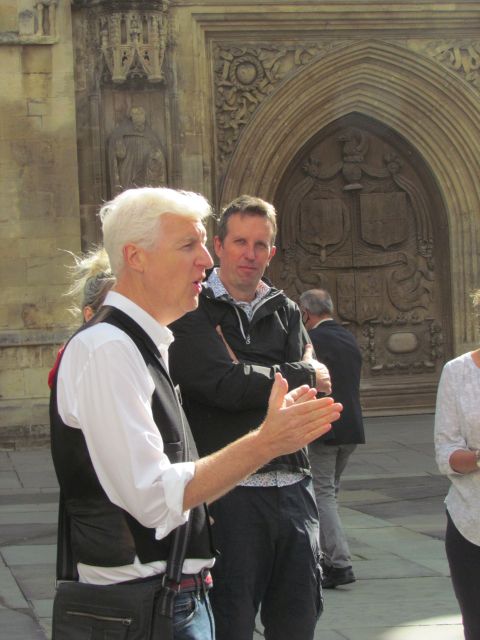
Bath’s polished Georgian buildings hide a less polished past. On The Bad of Bath Walking Tour, you’ll hear about thieves, gamblers, corruption, excess, and the real people who gave the city its more disreputable side. Guide Simon mixes social history with jokes and questions, so this feels more like a lively conversation than a lecture.
I like the way the tour visits Bath’s famous sights while giving each one a sharper, less predictable story. I also like the gentle pace, friendly style, and small-group feel reported on many departures. The main consideration is the subject matter: this is not a quiet architecture walk or a Jane Austen-only tour. Some stories deal with sinful behavior and Georgian attitudes that may not suit young children.
- Georgian Bath with its gloves off: Hear about crime, gambling, corruption, and excess behind the city’s elegant facades.
- Bath’s famous sights included: The route takes in Bath Abbey, the Roman Baths, Pulteney Bridge, The Circus, and the Royal Crescent.
- Simon’s conversational style: Expect humor, questions, and clear explanations rather than a dry recital of dates.
- A manageable circular walk: The route begins and ends at Bath Abbey and usually takes around 90 minutes to two hours.
- Accessible for many visitors: The tour is described as pram and wheelchair friendly and runs in rain or shine.
- Strong value at $29: You get a guided look at much of central Bath without paying entrance fees for attractions you may prefer to visit separately.
Why Bath’s polished facade needs a little scandal

Bath is easy to admire at face value. Its honey-colored stone, grand crescents, formal streets, and graceful bridges make it look unusually well behaved. But the city’s Georgian glory was tied to pleasure, money, status, competition, and people trying hard to appear respectable.
That tension is the heart of this walk. Rather than treating Bath as a string of pretty buildings, Simon uses the city as a stage for stories about the people who lived, visited, gambled, schemed, and misbehaved here. You still see the headline sights, but the focus shifts from what a building looks like to what happened around it.
That makes the tour a useful first activity in Bath. You get your bearings in the central streets, learn the broad shape of the city, and pick up details that can change the way you see the buildings later. A grand facade no longer feels like decoration alone. It becomes part of a story about ambition and social display.
Starting at Bath Abbey and meeting the city’s darker side
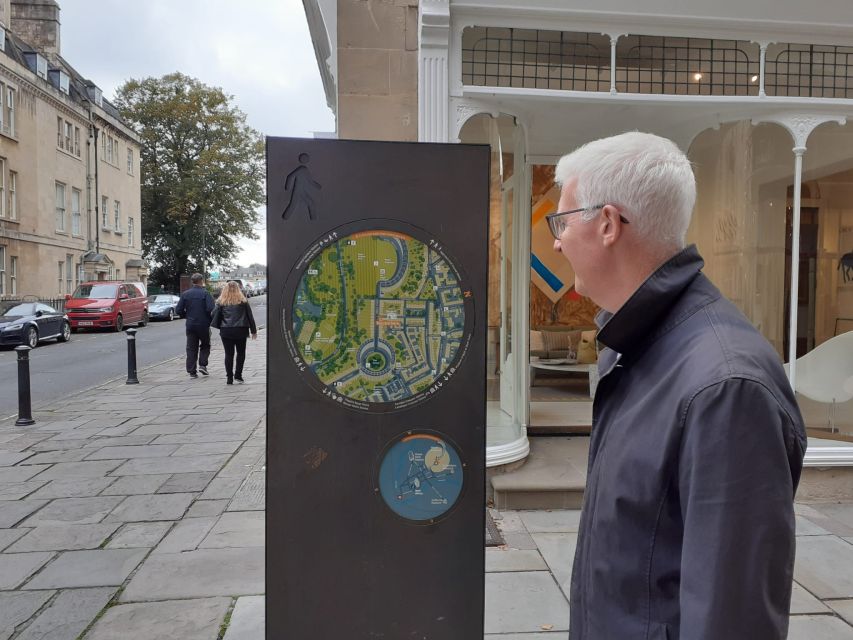
The gentle circular walk starts and finishes at Bath Abbey. That is a practical meeting point because it puts you in the middle of the historic center, close to several of Bath’s major sights.
The opening section sets the tone. You should expect an introduction to Bath’s Georgian period, with attention to both respectable public life and the less respectable habits behind it. Simon’s approach is interactive. He asks questions, welcomes discussion, and adjusts his explanations to the group.
That matters on a walking tour. A guide who simply talks while you trail behind can lose you quickly, especially in a busy city. Here, the style is more personal. Small groups have sometimes included only a few people, and the guide has tailored the conversation to the people present. On larger departures, he has worked to include everyone, from teenagers to older adults.
The subject is not presented as a ghost story or a collection of legends. The emphasis is on real people, social behavior, and the gap between Georgian manners and Georgian appetites. If you enjoy human stories more than lists of building dates, this is a strong fit.
More walking tours around the UK:
- Magical London: Harry Potter Guided Walking Tour
★ 4.7 · 22,044 reviews - Edinburgh: Harry Potter Magical Guided Walking Tour
★ 4.8 · 11,944 reviews - Edinburgh Castle: Guided Walking Tour with Entry Ticket
★ 4.7 · 11,699 reviews
The Roman Baths and the pleasures of public life
The Roman Baths are one of Bath’s defining sights, and the walking tour includes the area as part of its route. The tour itself does not include entry to the attraction, so you should think of this stop as an outside introduction rather than a museum visit.
That distinction is important. The Roman Baths require a separate ticket if you want to go inside, but the walking tour gives you context as you move through the city. You can decide later if the full visit suits your schedule and budget.
The Roman Baths also help frame one of the tour’s central ideas: Bath has long been associated with pleasure, health, display, and social gathering. The Georgian city built on that older reputation and turned it into a fashionable resort culture. The Bad of Bath approach asks what happened when a place built around leisure attracted people eager to spend, compete, flirt, gamble, and show off.
You won’t get a substitute for the museum’s archaeology. What you get is a social lens that helps explain why Bath became such a magnet for fashionable society.
Pulteney Bridge and the city as a public stage
Pulteney Bridge is one of Bath’s most recognizable views, with shops built along the bridge and the River Avon below. It is also a useful stop for understanding how much of Bath’s appeal comes from public display.
The bridge is not merely a crossing to photograph. It is part of the city’s carefully shaped image, where architecture, commerce, and movement meet. The tour’s stories about status, money, and questionable behavior give the setting more bite.
This is where Simon’s humor helps. The subject matter could become heavy if presented as a grim catalogue of vice. Instead, the tone remains light enough to keep the walk moving while still showing that Georgian society had sharp inequalities and plenty of bad behavior behind its polished manners.
Pulteney Bridge is also a reminder that the walk is not confined to one type of attraction. You move between major landmarks, streets, and less obvious corners. The result is a broader view of Bath than you get from stopping only at the Roman Baths or the Royal Crescent.
The Circus and the machinery of Georgian status
The Circus is one of Bath’s great architectural set pieces. Its curved arrangement of stone buildings gives the area a sense of order and grandeur, but the people who lived and socialized in such surroundings were hardly uniform.
This is a good place for the tour’s Georgian stories about social rank and ambition. Bath’s architecture was designed to impress. The people using it had their own reasons for wanting to be seen in the right places, with the right company, and in the right way.
The tour explains those pressures through anecdotes rather than an academic lecture. You may hear about figures associated with the city’s more scandalous side, including people whose conduct sat uneasily beside Bath’s refined image. The point is not simply that the Georgians misbehaved. It is that respectability was often a performance, and Bath provided an elegant setting for that performance.
The Circus is also a visually rewarding stop even if you are not interested in social history. You can look up at the stonework while listening, and the guide gives you a reason to notice how the buildings shape the space.
Same streets, a different story:
- Underground Vaults Walking Tour in Edinburgh Old Town
★ 4.5 · 8,506 reviews - London: The Original Jack the Ripper Walking Tour
★ 4.7 · 7,833 reviews - Oxford University Walking Tour With University Alumni Guide
★ 5.0 · 6,905 reviews - Edinburgh Castle: Guided Walking Tour with Entry Ticket
★ 5.0 · 5,540 reviews
The Royal Crescent and the gap between appearance and reality
The Royal Crescent is Bath’s most famous Georgian address and one of the clearest examples of the city’s grand self-image. Its sweeping curve looks calm, controlled, and expensive. The stories attached to Bath’s Georgian period make that calm seem less complete.
At the Royal Crescent, the tour connects architecture with the people who wanted to live within its orbit. The city’s elegant buildings were not separate from its pleasures and scandals. They helped create the setting in which social position could be displayed and judged.
This is one of the strongest reasons to choose this walk instead of a standard sightseeing circuit. You still see the Royal Crescent, but you do not leave it as a postcard image. You leave with a better sense of the social world it represented.
If you are visiting because of period dramas or Jane Austen, you may enjoy this twist. The tour can include related cultural references when they suit the group, but it does not make Austen the main subject. The focus remains Bath’s broader Georgian society, including its less flattering characters.
A guide who turns facts into conversation
Simon is the central reason this experience works. His style is described as calm, clear, enthusiastic, and funny. He answers questions, explains missed details when needed, and keeps the group involved rather than delivering a fixed speech at one speed.
That flexibility is useful for mixed groups. Families, couples, solo visitors, local residents, and international participants have all been able to follow the tour. English is the only listed language, but Simon has taken time to explain a phrase or joke when a non-native English speaker needed more context.
His humor is not an extra layer pasted onto a standard tour. It is part of the way the information is delivered. That helps with a subject full of names, social customs, and Georgian attitudes that can otherwise blur together.
The best guides also know when to slow down. Simon has been praised for keeping a manageable pace and ensuring the group stays together. The planned duration is around 90 minutes to two hours, though some walks have lasted longer. If you have another booking immediately afterward, leave a little breathing room.
How much walking, and how comfortable is it?
The route is described as a gentle circular walk, with no need to arrange transport between stops. It begins and ends at Bath Abbey, which simplifies your day and makes it easy to continue sightseeing afterward.
The walking distance is not presented as strenuous. People have found the pace manageable, and the route is described as pram and wheelchair friendly. That said, Bath is a historic city with busy streets and old urban surfaces, so comfortable shoes remain sensible. Accessibility information is positive, but you should still check the exact departure details if you have specific mobility needs.
The tour runs rain or shine. Bring a waterproof layer and dress for standing outdoors. Bath’s weather can change quickly, and the experience relies on listening in open streets rather than sitting indoors.
There are no food or drinks included. This is not a problem for most people because the tour is relatively short, but you may want to eat before or after, particularly if you book a longer departure close to lunchtime.
Is $29 a fair price?
At $29 per person, the tour is reasonably priced for a guided experience lasting around two hours. You are paying for a live guide, local storytelling, route planning, and an introduction to several major parts of central Bath.
The value is strongest if you want more than a quick orientation. A standard walk can point out the Royal Crescent and Pulteney Bridge. This one gives you a reason to remember them and a social story to attach to each place.
The price does not include admission to the Roman Baths or any other attraction. That keeps the cost clear, but it also means you should budget separately if you want to tour the interiors. In my view, that separation is useful. You can choose which paid sights deserve your money instead of paying for a package that bundles in places you may not have time to visit.
Free cancellation up to 24 hours before the start and the option to reserve now and pay later add useful flexibility. You can fit the walk into a changing Bath itinerary without paying at once.
Who will enjoy this Bath walking tour?
I would choose this tour if you have already seen the usual postcard descriptions of Bath and want a more human angle. It is especially suitable for:
- First-time visitors who want a city overview with personality
- People interested in Georgian society, crime, gambling, and social behavior
- Visitors who find standard architecture walks too dry
- Families with older children and teenagers who enjoy scandalous stories
- Solo visitors who value an interactive guide
- Couples looking for a relaxed activity before or after the Roman Baths
- Visitors who want a gentle route rather than a strenuous city walk
It may not suit you if you want detailed architectural analysis, a serious academic treatment, or an indoor experience. The tour also deals with adult behavior and moral attitudes, so parents should decide if the tone works for their children.
Practical ways to get more from the walk
Book it early in your Bath stay if you can. The route covers many of the city’s key areas, and you can use Simon’s suggestions to decide what to revisit later.
Keep listening for places that do not look important at first. One strength of a story-led tour is that ordinary streets can gain meaning. A corner may matter because of the people connected to it, not because it has the grandest facade.
Ask questions. The tour works best as a conversation, and Simon has shown a willingness to connect questions to stories beyond the fixed route. If you are late, contact the guide rather than assuming you can find the group. One participant who arrived about 15 minutes late was helped to join and catch up.
Finally, leave extra time after the scheduled finish. The walk is usually around 90 minutes to two hours, but it may run over when the group is engaged. That extra time can be part of the value, but it is worth knowing before you plan a tight connection.
Should you book The Bad of Bath?
I would book it if you want Bath’s famous sights with a sharper edge. Simon’s humor, clear storytelling, and willingness to include the whole group turn a familiar sightseeing route into a lively lesson about Georgian life.
The tour offers particularly good value for visitors who do not want another dry list of dates. It is accessible, gently paced, and broad enough to cover the city’s main visual highlights. Just bring weatherproof clothing, allow up to two hours, and remember that attraction entry fees are separate.
Choose it for the people, scandals, and social history behind Bath’s elegant stone. Skip it only if you want a strictly architectural tour or prefer your Georgian past with the rough edges removed.
FAQ
Where does The Bad of Bath Walking Tour start?
The tour starts at Bath Abbey and follows a circular route that finishes at Bath Abbey.
How long does the walking tour last?
The stated duration is two hours, while the walk itself is described as roughly 90 minutes. Some departures may last a little longer.
What language is the tour in?
The live tour is conducted in English.
Who guides The Bad of Bath Walking Tour?
The guide named in the activity information and many detailed experiences is Simon.
What places does the tour visit?
The route includes famous Bath sights such as the Roman Baths, Pulteney Bridge, The Circus, and the Royal Crescent, along with Bath Abbey at the start and finish.
What is the main focus of the tour?
The tour focuses on Bath’s Georgian past, especially stories involving crime, corruption, gambling, thieves, excess, and other less respectable parts of city life.
Is the tour suitable for wheelchair users?
Yes. The activity is described as wheelchair accessible and suitable for prams.
Does the tour run if it rains?
Yes. The walk takes place rain or shine.
Are entrance fees included?
No. The price covers the guided walking tour only. Attraction entrance fees, food, and drinks are not included.
Can I cancel the booking?
Yes. You can cancel up to 24 hours in advance for a full refund. You can also reserve now and pay later.
New walking tours around the UK
- London: Old City Walking Tour★ 4.8 · 135 reviews
- Manchester: Music-Themed City Walking Tour★ 4.4 · 109 reviews
- Manchester: Media City & The Quays Guided Walking Tour★ 5.0 · 165 reviews
- Manchester City Highlights Walking Tour★ 4.8 · 299 reviews
- London: Witches and History Bankside Walking Tour★ 4.8 · 223 reviews
- London: Palaces and Parliament Walking Tour★ 4.8 · 365 reviews
- London: Winston Churchill and London in WWII Walking Tour★ 4.8 · 143 reviews
- London: Westminster Walking Tour & The Tower of London Entry★ 4.6 · 131 reviews
Bath Walking Tours, side by side.
Walking Tour of Bath with Blue Badge Tourist Guide
Read our review →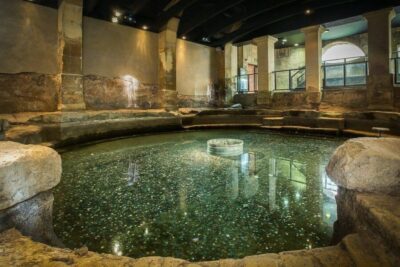
Bath: City Walking Tour with Optional Roman Baths Entry
Read our review →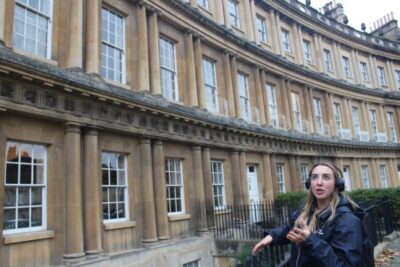
Bath: Bridgerton Filming Locations Walking Tour with Music
Read our review →
Bath: Private Bridgerton Walking Tour for upto 20 people
Read our review →Lists this walk sits on