
Review · BOLOGNA
Bologna: Guided Walking Tour
Bologna’s old center is best understood on foot, and this tour connects its biggest sights with the stories that make them matter. In three hours, you move from the grand palaces of Piazza Maggiore to university halls, food markets, medieval towers, and long covered walkways.
I like the private format, which keeps the group to five and gives you room to ask questions. I also like the unusual stops: the anatomical theater at the Archiginnasio and San Petronio’s enormous sundial, details that are easy to miss on a casual stroll.
The main consideration is that the €3.50 entrance fee for the anatomical theater is extra and must be booked ahead. You also need covered shoulders and no shorts to enter the church.
Key points at a glance
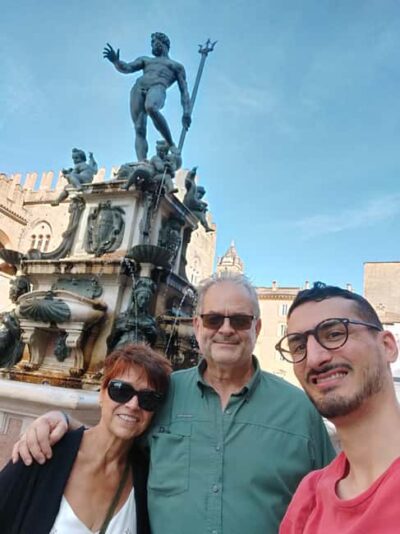
- Piazza Maggiore sets the stage: Begin beside the Fountain of Neptune and the Palazzo del Podestà, right in Bologna’s civic heart.
- The route covers more than postcard sights: You’ll see medieval towers, university buildings, arcades, churches, a market, and a covered passageway.
- The Archiginnasio adds real substance: Its anatomical theater offers a look at how medicine was taught in Bologna.
- The porticoes make the walk practical: Much of the route passes under Bologna’s famous covered arcades, useful in changing weather.
- The small private group matters: Up to five people means a more personal pace and easier conversation with the guide.
- Food is part of the story: Mercato di Mezzo helps explain why Bologna is known as La Grassa, or The Fat.
Why Bologna makes a fine walking city
Bologna does not reveal itself all at once. Its best details sit behind arcades, inside courtyards, above narrow streets, or on the walls of buildings that can look plain at first glance.
A guided walk helps you connect those pieces. The city is often described by three nicknames: La Dotta, The Learned, for its old university; La Grassa, The Fat, for its food culture; and La Rossa, The Red, for its red-toned buildings and political character.
This three-hour route touches all three identities. You see the university and anatomical theater, pass through the market, and walk beneath the long porticoes that give Bologna its distinctive look.
You should expect a steady city walk rather than a museum-heavy outing. The route moves through public squares, churches, streets, and covered passages. Comfortable shoes are essential, and the practical pace should suit most visitors who can walk for three hours in an urban setting.
More walks with a guide around Italy:
- Milan: Guided Walking Tour & Last Supper Visit with Ticket
★ 4.7 · 5,409 reviews - Naples: Street Food Walking Tour with Local Guide
★ 4.9 · 4,976 reviews - Florence: Highlights Walking Tour with Expert Guide
★ 4.6 · 4,662 reviews
Starting at Piazza Maggiore
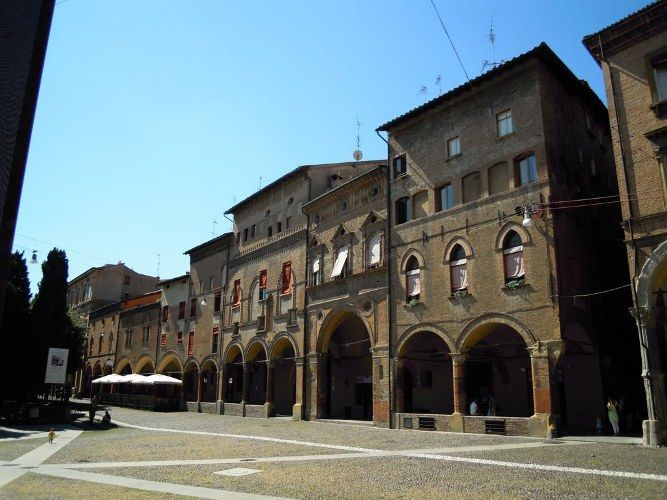
The meeting point is Piazza del Podestà, at Piazza Maggiore 1/e, near the entrance to the Bologna Welcome tourist office. This is a useful place to begin because you are already in the middle of the historic center, with several major buildings close together.
Piazza Maggiore is Bologna’s main public square. Here, the guide introduces the Fountain of Neptune and the Palazzo del Podestà, along with the other palaces that frame the square.
The value of starting here is context. Instead of seeing separate buildings as isolated photo stops, you learn how the square worked as the political and social center of the city. Take a moment to look up at the façades and under the arcades before moving on. Bologna rewards people who pay attention to edges and overhead details.
This opening section is also a good time to ask your guide what you should return to later. Since the activity ends back at the meeting point, you can easily revisit Piazza Maggiore after the walk.
San Petronio and the world’s longest sundial
The Basilica of Saint Petronio is one of the route’s major stops. Its size and position on Piazza Maggiore make it impossible to overlook, but a guide gives you reasons to look more closely.
Inside, you discover the church’s long sundial. It is described as the longest sundial in the world, and it is a fine example of Bologna’s habit of joining science, religion, and public life in one place.
This is one of the tour’s strongest details because it changes the way you see the basilica. You are not only looking at a large church. You are also seeing a working scientific instrument built into a sacred space.
Plan your clothing carefully. Shoulders must be covered, and shorts are not allowed when entering the church. The rules are simple, but they can catch you off guard on a hot Italian afternoon.
The Archiginnasio and Bologna’s university tradition
Bologna is known as La Dotta because of its university, one of the oldest in Europe. The tour uses the Archiginnasio to make that nickname concrete.
The building’s anatomical theater is the special stop here. It shows how anatomy was taught in an earlier age, when students gathered in a carefully designed room to watch lessons and dissections.
You need to book this entrance in advance, and it costs €3.50 per person. That small extra charge is worth considering if you enjoy historic interiors, medical history, or unusual university buildings.
The tour itself includes the guide, but not admission to the anatomical theater. Confirm that the entrance has been arranged before you arrive. If you skip it, you still see the Archiginnasio and learn about Bologna’s academic role, but you miss one of the route’s most distinctive interiors.
The private format helps here. A small group makes it easier to pause for questions about how the university worked and why Bologna became such an important center of learning.
More walking tours around Italy:
- Venice: Doge’s Palace and St Mark’s Basilica Walking Tour
★ 4.4 · 6,291 reviews - Venice: San Marco to Rialto Walk & Spritz Like a Local
★ 4.2 · 3,651 reviews - Uffizi & Accademia Timed Entry: Small Group Duomo Walking Tour
★ 4.5 · 3,630 reviews - Venice Walking Tour and Gondola Ride
★ 3.5 · 3,630 reviews
Medieval towers and Bologna’s vertical skyline

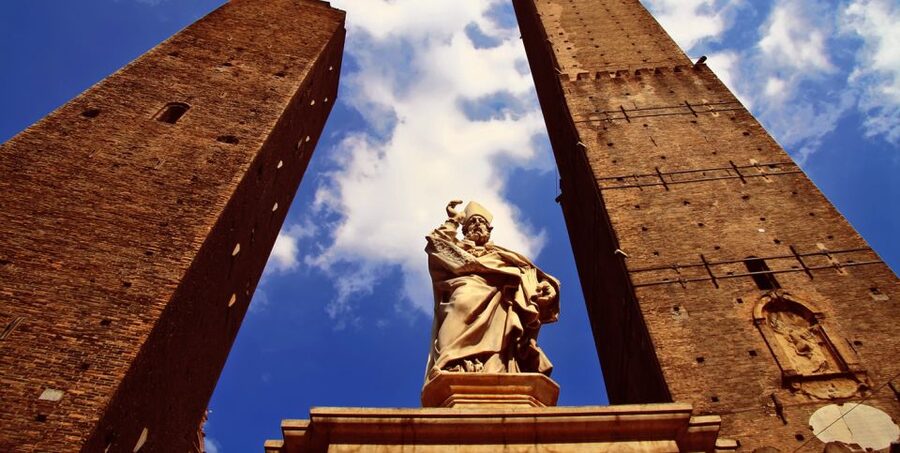
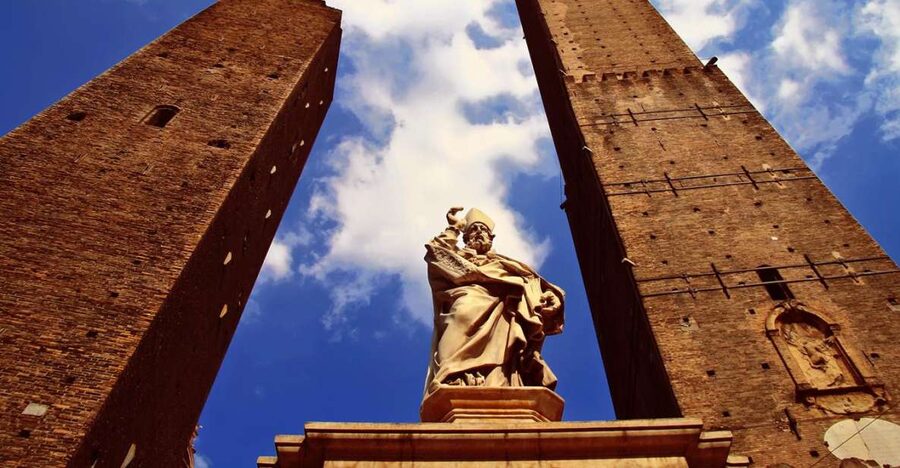
The route continues to the two leaning towers, among the city’s most recognizable sights. Their tilt gives Bologna an instantly memorable skyline, but the guide adds the human and urban context that a quick photograph cannot provide.
You also see the medieval Torre Galluzzi. It is a reminder that Bologna’s old center was shaped by powerful families, fortified homes, and rival groups competing for status.
These towers are not just decorative leftovers. They help you picture a medieval city where architecture could signal wealth, power, and protection. Look closely at how the towers fit into the surrounding streets. They rise from a dense urban setting rather than from an open monument plaza.
The tour focuses on seeing and understanding the towers. It does not list a climb to the top, so do not book this experience expecting a tower ascent. If your main goal is a high viewpoint, this walk may need to be paired with another activity.
Via Farini and the porticoes of Santo Stefano
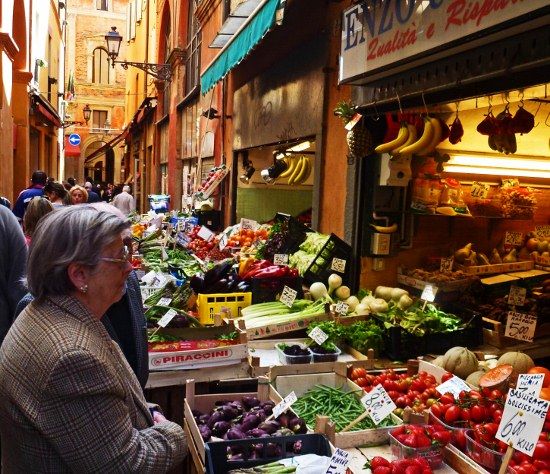
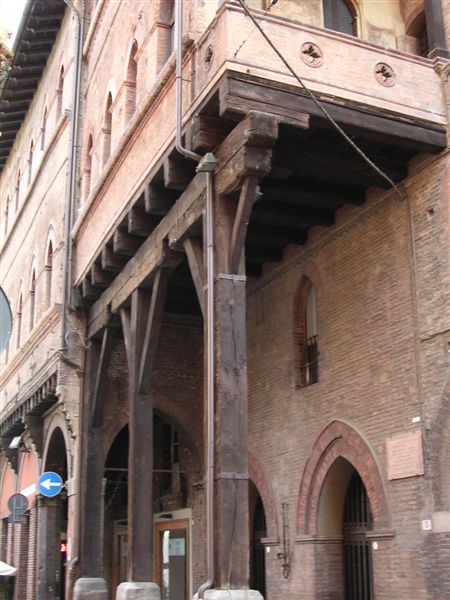
After the university and tower sections, the route heads along Via Farini toward Piazza Santo Stefano. This part shows off one of Bologna’s most practical architectural features: its porticoes.
The covered arcades make walking easier in sun and rain. They also create a calm transition between the busy streets and the open space of Santo Stefano. You can study columns, paving, shopfronts, and the changing shape of the arcades without constantly worrying about traffic or weather.
Piazza Santo Stefano is known for its remarkable church complex, often described as the Seven Churches. The route lets you see the basilica and the square as part of Bologna’s religious and civic life.
This is a good section for slowing down. The square has an unusual atmosphere, and the porticoes frame it from several directions. Your guide can help you separate the parts of the complex and explain why the site matters, instead of leaving you with a blur of church names and façades.
Keep in mind that church access depends on the clothing rule mentioned earlier. Covered shoulders and no shorts are required.
Court Isolani and the pleasures of a covered route
On the way to Via Strada Maggiore, you pass through the Court Isolani covered passageway. It is a smaller, more intimate part of the route than Piazza Maggiore or Santo Stefano.
This passage shows how Bologna’s arcades are not limited to broad city streets. Covered walkways can also run through private or semi-private spaces, linking one part of the center to another.
I like this kind of stop because it gives the walk texture. The grand squares explain Bologna’s public face, while a passageway such as Court Isolani shows how people moved through the city at a more ordinary level.
It is also a useful reminder that the route is not simply a checklist of famous monuments. You get a mixture of major buildings and small urban details. That balance usually makes a walking tour easier to remember.
Mercato di Mezzo and the meaning of La Grassa
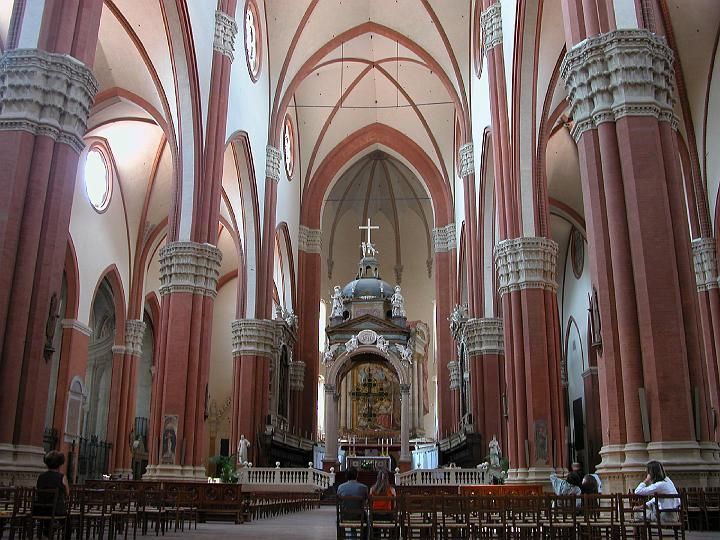
Food is not an optional side note in Bologna. The route brings you to Mercato di Mezzo, where the guide discusses why eating is so important to the city.
This is where La Grassa becomes more than a nickname. The market helps connect Bologna’s identity to its daily habits, local cooking, and social life.
You should not expect a meal or a tasting to be included. The market is used as a place for conversation and explanation, not as a separate food tour. If you want to eat there afterward, the location gives you a useful starting point, but the included activity remains a guided walk.
This stop also breaks up the architectural focus. After churches, palaces, towers, and university rooms, the market brings you back to ordinary life. It helps explain Bologna through what people do, not only through what the city built.
Your guide and the private group setup
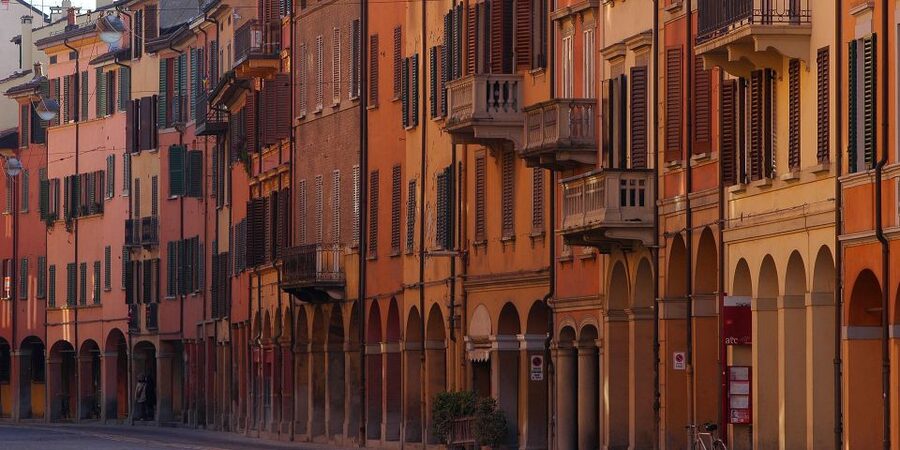
The experience is provided by Manuela Roversi, and the guiding team includes names such as Giulia. Manuela is repeatedly described as warm, clear, passionate about Bologna, and able to adapt explanations to the people in front of her.
That matters more than a memorized list of dates. The strongest part of a city walk is often the guide’s ability to answer a question, explain a local custom, or connect a building to your own interests.
The group is private and limited to five people. At $118.95 per group, the maximum cost works out to about $23.79 per person before any additional entrance fee, if you fill all five places. For one or two people, the per-person price is higher, but you are paying for a private guide rather than joining a large public group.
I see good value here for families, couples, or a small group of friends who want to set the pace and ask questions. It is less compelling if you prefer to wander alone with an audio guide or want a low-cost general orientation.
The tour is available in English, Italian, Spanish, and German. The guide leads the walk live, and the activity is wheelchair accessible. Still, because this is a three-hour route through historic streets and interiors, confirm any specific mobility needs when booking.
Timing, weather, and what to bring
The walk lasts three hours, with starting times based on availability. A morning departure can help you get oriented before spending more time in the center, while a later start may fit better with a full day in Bologna. The best choice depends on your schedule.
Weather should not automatically stop you. Much of the route uses covered porticoes, and the guide has managed the walk even in heavy rain. Still, you should bring suitable footwear and clothing for changing conditions.
Wear comfortable shoes. Bologna’s historic center is made for walking, but three hours is long enough for poor footwear to become a problem.
The meeting point is also the end point, which simplifies planning. You do not need to arrange transport back across town or guess where the walk finishes. Afterward, you can remain in the center for food, shopping, or a second look at Piazza Maggiore.
Who will get the most from this walk
I would choose this tour for a first visit to Bologna, especially if you want a clear introduction without giving up the character of a small group.
It suits you if you want:
- A private walk for up to five people
- Major sights mixed with less obvious details
- A guide who can explain Bologna’s three nicknames
- A closer look at the university and anatomical theater
- A route that includes food culture as well as architecture
- A walk that works in several weather conditions because of the porticoes
Families may appreciate the variety. Children who lose interest in church façades may respond better to the leaning towers, anatomical theater, covered passages, and market.
The tour also works well for visitors who want cultural background before exploring alone. You finish at the same place where you began, so it is easy to continue around the center.
You may want something else if you are looking for a dedicated food tasting, a tower climb, a long museum visit, or a walk focused only on medieval architecture. This experience touches each subject but does not spend the entire three hours on any one of them.
Should you book this Bologna walking tour?
Book it if you want a compact, private introduction to Bologna that goes beyond the main square. The route gives you the city’s major monuments, but its best moments come from the connections between them: the university behind La Dotta, the market behind La Grassa, and the red arcades and medieval towers behind La Rossa.
The price is reasonable for a private group of five, especially when you value personal attention. Add the €3.50 anatomical theater entrance if that interior interests you, and plan your clothing carefully for San Petronio and other church spaces.
I would skip it only if your priority is independent wandering, extensive food sampling, or a single major attraction. For a first look at Bologna with a guide who can bring its history, buildings, and food culture together, this is a practical and well-rounded choice.
FAQ
How long does the Bologna walking tour last?
The tour lasts three hours.
Where does the tour begin?
It begins at Piazza del Podestà, Piazza Maggiore 1/e, near the entrance to the Bologna Welcome tourist office.
Where does the tour end?
The activity ends back at the meeting point.
How many people can join the private group?
The price covers a private group of up to five people.
What is included in the price?
The price includes the three-hour walking tour and a live guide.
Is entry to the anatomical theater included?
No. Entrance costs €3.50 per person and must be booked in advance.
Which languages are available?
The tour is available in English, Italian, Spanish, and German.
Is the tour wheelchair accessible?
Yes, the activity is listed as wheelchair accessible.
What should I wear to enter the church?
You must have covered shoulders, and shorts are not allowed.
Can I cancel the booking?
Yes. You can cancel up to 24 hours in advance for a full refund. You can also reserve now and pay later.
New walking tours around Italy
- Rome: Fountains and Squares Small-Group Walking Tour★ 4.7 · 335 reviews
- Napoli: Walking Tour of Naples with Local Tour Guide★ 4.9 · 95 reviews
- Naples: Spanish Quarters Walking Tour★ 4.6 · 72 reviews
- Naples: Street Art, Wine and Food Tasting Walking Tour★ 5.0 · 163 reviews
- Naples: Historic Center and Sansevero Chapel Walking Tour★ 4.8 · 208 reviews
- Naples: Old Town Guided Walking Tour★ 4.8 · 553 reviews
- Naples: Street Food Experience With 6 Stops★ 4.7 · 392 reviews
- Naples Essentials: Monuments, Local Life & Street Art★ 4.9 · 79 reviews
Bologna Walking Tours, side by side.

Bologna: Walking Food Tour with a Local Guide
Read our review →
Bologna Food & Market Tour with 6 Tastings, Pasta, Wines & More
Read our review →
Lists this walk sits on