Review · BOLOGNA
Bologna Food & Market Tour with 6 Tastings, Pasta, Wines & More
Bologna’s best introduction may be a plate of handmade pasta followed by a tasting of balsamic vinegar aged for 8, 12, and 25 years. This tour takes you through the Quadrilatero market and nearby old streets while connecting each bite to the city’s food traditions.
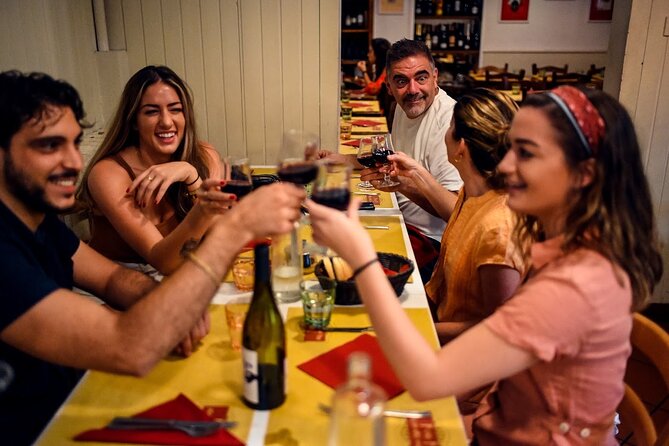
I like the small maximum group of 12, which keeps market stops manageable, and the broad tasting list: Parmigiano Reggiano, Modena balsamic, two pastas, local meats, wine, gelato, coffee, and more. Guides such as Claire, Federica, Caterina, and Mattia are praised for mixing food facts with city history and good humor.
The catch is simple: this is a walking and eating workout. You should wear comfortable shoes and arrive hungry, and you must report dietary needs ahead of time. The menu and stops can change with weather and shop availability.
Key points to know before booking
- The Quadrilatero is the heart of the tour: You’ll explore Bologna’s historic market district, with stalls selling cheese, cured meats, fresh produce, and local specialties.
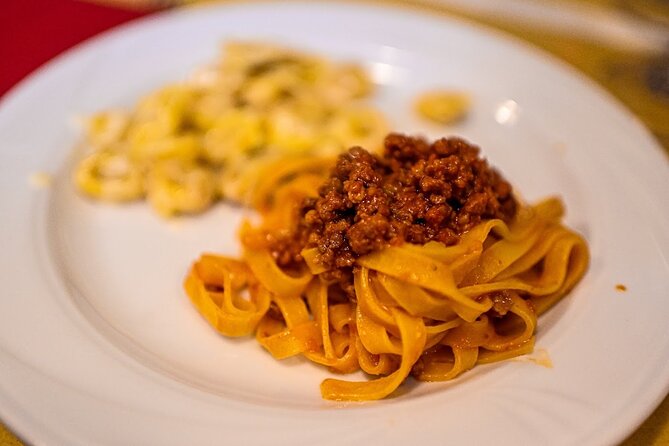
- Fresh pasta is more than a tasting: You’ll watch pasta being made from scratch, then sample two traditional homemade types.
- The balsamic stop offers useful context: You’ll compare Modena vinegar aged for 8, 12, and 25 years rather than simply tasting one bottle.
- Expect a full meal’s worth of food: Gelato, Parmigiano, cold cuts, wine, pasta, a secret dish, digestif, and coffee are included.
- Guides shape the experience: Claire, Federica, Caterina, Matt, and Mattia have been praised for clear explanations, warmth, and strong knowledge of Bologna.
- The tour works best early in your stay: It gives you ideas for ordering pasta, buying cheese, and choosing food shops for the rest of your visit.
Why Bologna is best tasted on foot
Bologna is an easy city to enjoy with your appetite leading the way. Its food culture is not confined to one restaurant or one famous dish. It appears in market counters, old food shops, pasta kitchens, wine pours, and the small habits of buying and serving local products.
This 3-hour-30-minute tour gives you a guided route through that food world. You start near Palazzo della Mercanzia, move through the Quadrilatero, and finish at Piazza Santo Stefano. Along the way, you taste enough food to replace a meal while learning what makes products from Emilia-Romagna so prized.
I like this format because it gives structure to a part of Bologna that can otherwise feel scattered. You could wander the Quadrilatero alone, but you might not know which shop is worth your time, how to compare aged balsamic, or why one piece of Parmigiano costs more than another. A local guide gives those stops purpose.
The tour is offered in English and is limited to 12 people. That number matters in a narrow market district. You are less likely to lose the guide in a crowded lane, and a smaller group makes tastings and questions easier to manage.
More Food Walking Tours in Italy
- Naples: Street Food Walking Tour with Local Guide
★ 4.9 · 4,976 reviews - Eat Like a Local: Venice 3-Hour Small-Group Food Tasting Tour
★ 5.0 · 3,137 reviews - Rome: Guided Food Walking Tour with Wine in Trastevere
★ 4.9 · 3,105 reviews
Starting at Palazzo della Mercanzia
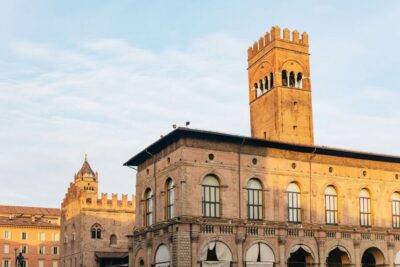
The meeting point is Via Zamboni 8c, while the tour itself begins at Palazzo della Mercanzia. The building dates to the 14th century and once handled Bologna’s commercial and economic affairs. That makes it a fitting place to begin a food tour, since the city’s trade traditions are part of the story.
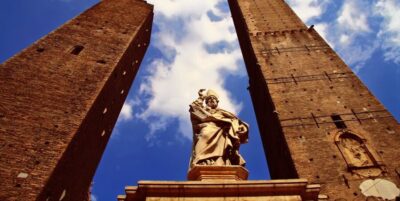
The facade includes a wooden statue of San Petronio, Bologna’s patron saint. Your guide uses the area to introduce the group and set up the route through the city’s food traditions. The first stop is scheduled for about an hour, though the exact flow can change.
This opening is useful for two reasons. First, you get a little city orientation before the tastings begin. Second, the food is placed in a wider setting. Bologna’s famous products did not appear by magic. They grew from local trade, farming, preservation, and the daily business of feeding a busy city.
Do not expect Palazzo della Mercanzia to function as a long museum visit. Admission is free, and the building serves mainly as a starting point and historical reference. If you want an in-depth look at its interior, you will need to plan that separately.
Walking the narrow lanes of the Quadrilatero
The Quadrilatero is the main stage of the experience. This old market quarter takes its name from its roughly rectangular street plan. Its narrow medieval lanes are lined with traditional porticoes and food businesses, creating the kind of setting where a short walk can lead to several very different tastes.
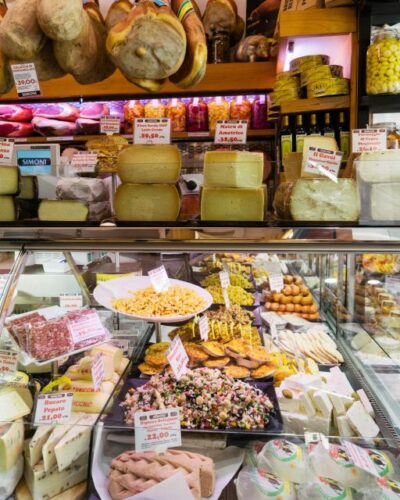
You’ll see stalls and shops connected with fresh produce, meat, cheese, and other local products. The guide points out the most interesting stops rather than asking you to wander without direction. That is one of the tour’s strongest practical features.
The district is also a working market area, not a decorative set built for sightseeing. Conditions can be busy, and you may need to pause, keep close to the group, and move around other shoppers. That is part of the charm, but people who prefer quiet, seated tastings should know what they are signing up for.
The Quadrilatero portion lasts about an hour in the listed plan. It gives you time to see how food is presented and sold, not just how it tastes on a plate. This can be especially helpful if you want to return later to buy cheese, cured meat, vinegar, or a small edible gift.
The pasta lesson and two traditional varieties
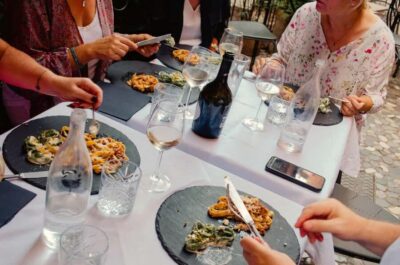
The pasta demonstration is one of the clearest reasons to book this tour. You watch fresh pasta being made from scratch, then taste the finished product. Two traditional homemade pastas are included.
The demonstration adds something a restaurant meal cannot. You get to see the work behind Bologna’s pasta culture and understand why handmade pasta has such a central place here. The presentation is also a welcome break from simply moving from counter to counter and eating.
The exact pasta shapes or preparation can change, so you should not book expecting one guaranteed recipe. Still, the tour specifically focuses on two traditional types, and pasta is repeatedly singled out as a highlight of the experience.
Several guides are praised for making this section entertaining as well as informative. Claire is known for a lively approach, while Mattia is praised for explaining Bologna’s cuisine with enthusiasm. The guide matters here because a good demonstration depends on clear explanation, not just watching hands move across a work surface.
More Wine and Tapas Walking Tours around Italy:
- Authentic Naples Food Tour with 8+ Tastings of Pizza, Wine & More
★ 5.0 · 824 reviews - Florence: Street Food Walking Tour with Wine
★ 4.9 · 719 reviews - Florence: Food Walking Tour with Local Steak and Tuscan Wine
★ 4.9 · 529 reviews - Genoa: Food and Wine Tasting Walking Tour
★ 4.9 · 215 reviews
Parmigiano Reggiano, cold cuts, and the logic of quality
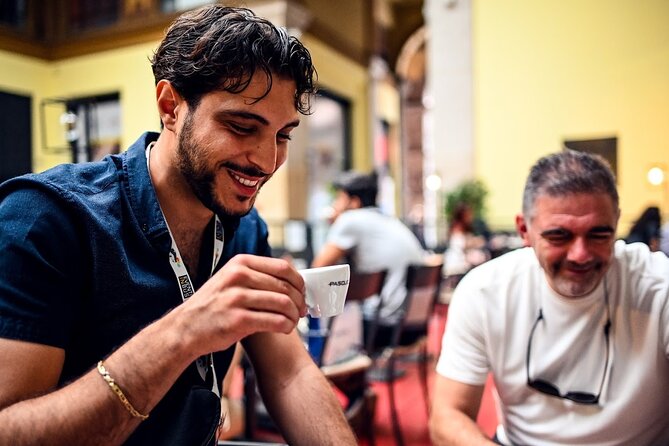
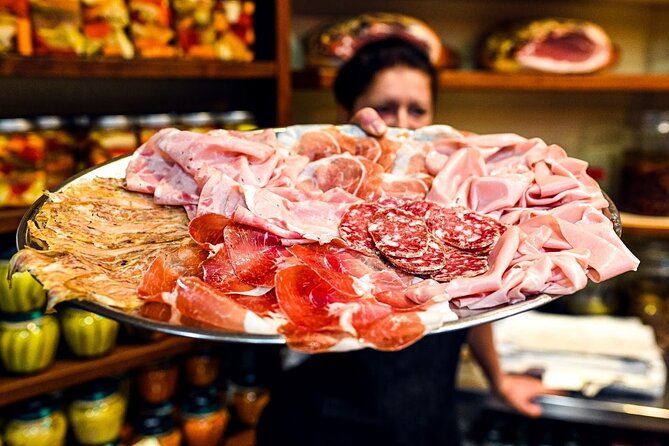
The cheese and cured meat tastings show why Bologna’s food identity reaches beyond pasta. You’ll sample aged Parmigiano Reggiano, along with Prosciutto di Parma, Mortadella, and other regional cold cuts.
The cheese discussion includes practical shopping advice. You learn what to consider when buying Parmigiano in Bologna, which is more useful than a quick sample with no explanation. If you plan to take cheese home, ask your guide for advice during the stop.
The cold cuts give you a chance to compare different textures and flavors in one sitting. Mortadella is the product most closely tied to Bologna, while Prosciutto di Parma connects the city to the wider Emilia-Romagna food region. The inclusion of regional cuts helps you see how local food traditions overlap rather than stopping at the city line.
This is also where the tour can begin to feel like a full meal. The portions are designed as tastings, but the number of stops adds up. A recurring piece of advice is to skip a large breakfast or lunch before the tour.
Tasting Modena balsamic at three ages
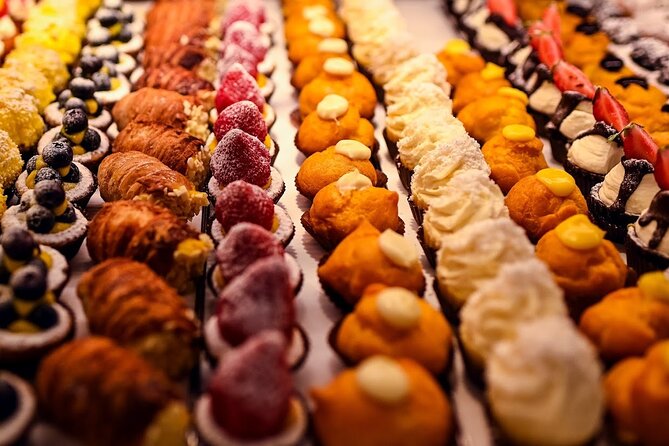
The balsamic tasting is another strong part of the route. You compare Modena balsamic vinegar aged for 8, 12, and 25 years at an authentic bottega.
That age comparison gives you a useful reference point. Instead of hearing that an older vinegar is better and accepting the claim, you can taste how the different ages vary. The experience also explains the patience and storage behind traditional balsamic production.
This stop is especially valuable for anyone who has bought inexpensive balsamic at home and wondered why bottles in Italy can cost so much more. The tasting will not turn you into a vinegar expert, but it should help you understand why age, texture, sweetness, and production methods affect price.
Keep in mind that the bottega visit depends on location availability. The operator can adjust the route, so the precise shop or order of stops may change.
Gelato, wine, coffee, and the secret dish
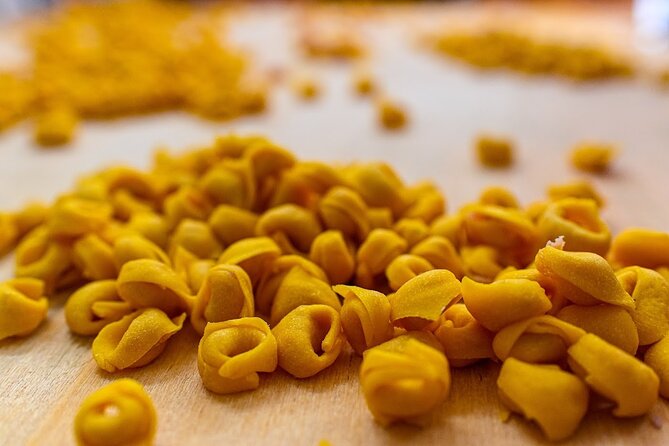
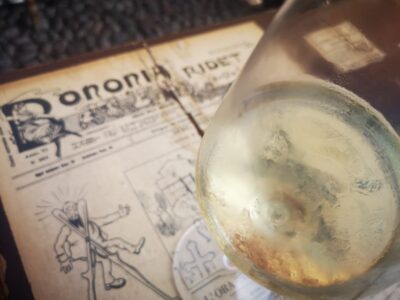
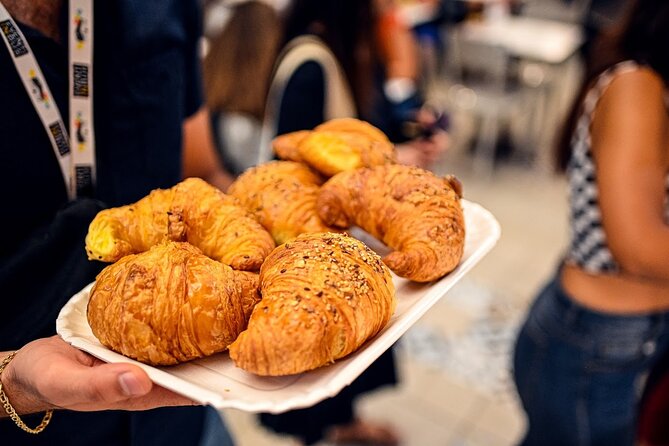
The tour begins with a traditional welcoming sweet and includes creamy artisanal gelato. That gives you a lighter, sweeter pause between savory tastings. You also receive a selection of local red and white wines, a traditional local digestif, and espresso or macchiato.
The wine is important because it keeps the tour tied to the full table, not only to food-shop sampling. You get a chance to see how local drinks fit with cheese, meat, and pasta. The digestif and coffee provide a distinctly Italian finish.
There is also a secret dish. Its exact identity is not provided in advance, and that is deliberate. It gives the guide room to respond to what is fresh, available, or especially interesting that day.
I like that the tour does not reduce Bologna to tortellini and tagliatelle alone. Those pastas may feature prominently, but the complete food picture includes dairy, preserved meat, vinegar, wine, sweets, coffee, and an unexpected bite. The tradeoff is that you cannot plan every taste in advance.
Finishing near Basilica di San Petronio and Piazza Santo Stefano
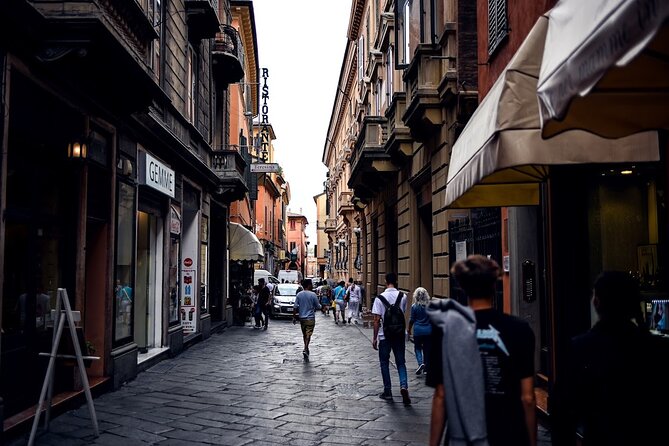
The route includes the Basilica di San Petronio, one of Bologna’s major landmarks. Construction began in 1390, and the church is dedicated to San Petronio, the city’s patron saint.
The basilica adds visual and historical weight to a food-focused walk. You are not just moving between shops. You are also passing through the civic center of Bologna and seeing how food, religion, trade, and public life share the same old streets.
The tour ends in Piazza Santo Stefano, also called St Stephen Square, on Via Santo Stefano. This is a useful endpoint because it leaves you in a central part of town with plenty of options for continuing your day. If you need directions afterward, you can ask the guide before leaving.
The schedule does not promise an extended interior visit to the basilica, so think of it as part of the route rather than a dedicated church tour. If the basilica is high on your list, make time to return separately.
What the $118.51 price really covers
At $118.51 per person, this is not a cheap snack walk. The value depends on how much you want from the experience.
You are paying for about three and a half hours with an English-speaking guide, a small group capped at 12, a guided route through the Quadrilatero, a pasta demonstration, and a long list of tastings. The included food covers enough ground to replace a meal, and wine, digestif, coffee, and gelato are part of the package.
The price makes more sense if you are interested in explanation as well as eating. A self-guided market visit costs less, but it will not necessarily show you how to compare balsamic ages, where to look for Parmigiano, or how the city’s food traditions connect.
Group discounts may be available. The experience is booked, on average, well ahead of time, around 56 days in advance, so you should not assume that a last-minute slot will be available during a busy visit.
Guide style and group atmosphere
The guide can make or break a food tour, and the people leading this one receive unusually strong praise. Names that come up include Claire, Federica, Caterina, Matt, Mattia, and Gabriela. Their reported strengths include warmth, humor, clear explanations, local knowledge, and a talent for keeping the group moving.
Claire is described as energetic and engaging. Federica is praised for presenting food history clearly and handling an unexpected medical situation with calm professionalism. Caterina is noted for her friendly style and strong connection to Bologna. Matt and Mattia are praised for making the tour a good first introduction to the city.
You should not expect every departure to feel identical. Guides have different personalities, and the exact businesses can change. The reliable feature is the format: a small English-speaking group, several tastings, market walking, and stories about food and the city.
The group size helps keep the mood social without becoming unwieldy. You may make conversation with the other participants, but you will still spend much of the time listening, walking, and eating.
Practical advice about timing, walking, and dietary needs
Wear comfortable shoes. The tour covers historic streets and involves a fair amount of walking, often with stops rather than long seated breaks.
Arrive hungry, but do not arrive dehydrated or unprepared for a long food session. The combined tastings can be substantial, especially when pasta, cold cuts, cheese, sweets, wine, and coffee are all included.
Tell the operator about dietary requirements in advance. The request is not something to leave until the meeting point, since the team needs time to work with the participating food shops. One person with a food allergy was accommodated successfully, but no specific dietary menu is guaranteed.
The tour is near public transportation, and hotel pickup and drop-off are not included. You will need to reach Via Zamboni 8c on your own and arrange your own way onward from Piazza Santo Stefano.
The itinerary and menu may change because of weather, shop availability, or other circumstances. The experience also requires good weather and a minimum number of participants. If the operator cancels for either reason, you are offered another date or a full refund.
Free cancellation is available up to 24 hours before the start time. Changes or cancellations inside that window are not accepted for a refund.
Who should book this Bologna food tour
I would choose this tour if you are visiting Bologna for the first time and want a fast, useful introduction to both the city and its food. It is also a good fit if you normally walk past market shops without knowing what to buy.
The tour suits people who enjoy generous tastings, casual conversation, and a mix of history with food. It is particularly useful at the start of a visit because you leave with a better idea of what to order and where to shop.
It may not suit you if you want a quiet sit-down lunch, a fixed menu, or a tour focused only on pasta. You also need to be comfortable walking for much of the 3.5-hour outing and eating several courses in succession.
Should you book it?
Yes, if you want Bologna explained through its food rather than viewed only from a sightseeing route. The strongest reasons are the small group, the pasta demonstration, the three-age balsamic tasting, and the wide range of included food.
I would book it near the beginning of your stay, then use the advice for the rest of your meals and market visits. Skip the heavy breakfast, wear good shoes, report dietary needs early, and allow for a full afternoon of tasting.
If $118.51 feels high for a food walk, compare it with the cost of buying all these products and drinks yourself, then add the value of a guide who knows where to go and what to explain. For many visitors, that combination makes the price fair.
FAQ
How long does the Bologna Food and Market Tour last?
The tour lasts approximately 3 hours and 30 minutes.
Where does the tour start?
The meeting point is Via Zamboni, 8c, 40126 Bologna, Italy. The route begins at Palazzo della Mercanzia.
Where does the tour end?
The tour ends at Piazza Santo Stefano, also called St Stephen Square, on Via Santo Stefano, 40125 Bologna.
What food and drinks are included?
Included tastings are gelato, aged Parmigiano Reggiano, Modena balsamic aged 8, 12, and 25 years, two traditional homemade pastas, Prosciutto di Parma, Mortadella, regional cold cuts, a secret dish, local red and white wines, a traditional digestif, and espresso or macchiato.
Is the tour suitable for dietary requirements?
You should contact the operator in advance with any dietary requirements so the team can determine how best to accommodate you.
Can I cancel for a full refund?
Yes. You can cancel at least 24 hours before the start time for a full refund. Cancellations or changes made less than 24 hours before the start time are not accepted for a refund.
More Pasta in Italy
- Bari: Pasta Experience Walking Tour
★ 4.7 · 660 reviews
More Market Walking Tours around Italy
- Bangkok: City Highlights Temple and Market Walking Tour
★ 4.5 · 3,990 reviews - Tokyo Tsukiji Fish Market Food and Culture Walking Tour
★ 5.0 · 3,184 reviews - London Bridge & Borough Market Food Tour with 7 Authentic Dishes
★ 5.0 · 1,972 reviews - Air Raid Shelter + St. Nicholas Market Walking Tour
★ 5.0 · 1,950 reviews
New walking tours around Italy
- Rome: Fountains and Squares Small-Group Walking Tour★ 4.7 · 335 reviews
- Napoli: Walking Tour of Naples with Local Tour Guide★ 4.9 · 95 reviews
- Naples: Spanish Quarters Walking Tour★ 4.6 · 72 reviews
- Naples: Street Art, Wine and Food Tasting Walking Tour★ 5.0 · 163 reviews
- Naples: Historic Center and Sansevero Chapel Walking Tour★ 4.8 · 208 reviews
- Naples: Old Town Guided Walking Tour★ 4.8 · 553 reviews
- Naples: Street Food Experience With 6 Stops★ 4.7 · 392 reviews
- Naples Essentials: Monuments, Local Life & Street Art★ 4.9 · 79 reviews
Bologna Walking Tours, side by side.
Bologna: Walking Food Tour with a Local Guide
Read our review →