
Review · THE UK
Bristol: Air Raid Shelter & St. Nicholas Market Walking Tour
Bristol’s best surprise may be underground. This tour takes you from the Corn Exchange through old streets and Blitz sites into a WWII air raid shelter hidden below the city, with stories, wartime objects, and even a possible appearance by Margaret, the resident ghost. I like the mix of street history and a place you cannot simply wander into, plus the chance to end at St. Nicholas Market with lunch in hand.
The guides, including Owen and Duncan, bring plenty of energy and character to the walk. The main drawback is that the shelter is still a developing museum rather than a polished exhibition, and its tight spaces, stairs, and uneven conditions will not suit everyone.
Key points to know before booking
- An unusual underground stop: Enter Bristol’s large public air raid shelter, preserved as a wartime time capsule.
- A city story with a clear route: Walk from the Corn Exchange through the Old City, Blitz damage, old trading streets, and major architecture.
- Strong guiding is central: Owen, Duncan, and other English-speaking guides use stories, costume, humor, and clear explanations to bring the past to life.
- A useful market finish: The tour ends at St. Nicholas Market, where you can buy sweet and savory food and souvenirs.
- A developing attraction: The shelter has great atmosphere, but limited museum space and ongoing preservation needs.
- Check the physical demands: Comfortable shoes are essential, and the tour is not suitable for people with mobility impairments, claustrophobia, or a weight over 300 pounds, or for people over 95.
Starting at the Corn Exchange
Meet at the main entrance of the Corn Exchange. This is a sensible starting point because the building connects several parts of the experience: Bristol’s commercial past, its wartime story, and its music history.
Your guide first sets the scene outside and around the Old City. You are not simply being marched from one attraction to another. The point is to understand how Bristol worked as a trading city, how its old streets fit together, and what happened when wartime bombing changed the city.
The Corn Exchange also contains areas normally unavailable to the public. The tour includes access to exclusive rooms, including spaces linked with the best bands of the 1960s. The Rolling Stones are part of that story, giving the building a surprising connection with popular music as well as commerce and wartime Bristol.
Guides may wear WWII costume, which adds a bit of theater without turning the whole experience into a show. Owen is praised for clear delivery and strong energy, while Duncan is especially tied to the development of the shelter project. The style can vary by guide, but the common thread is enthusiasm and a personal connection to the subject.
More Market Walking Tours around the UK:
- London Bridge & Borough Market Food Tour with 7 Authentic Dishes
★ 5.0 · 1,972 reviews - Air Raid Shelter + St. Nicholas Market Walking Tour
★ 5.0 · 1,950 reviews - Bangkok: City Highlights Temple and Market Walking Tour
★ 4.5 · 3,990 reviews
Bristol’s Old City and the scars of the Blitz
The first outdoor section takes you through ancient streets near the Corn Exchange. You’ll hear about Bristol’s trading past and see architecture that helps explain the city’s growth over roughly 1,000 years.
The wartime section focuses on the Bristol Blitz, including areas around Temple Church, Wine Street, and Corn Street. These places matter because the story is easier to grasp when you are standing in the streets affected by the raids. The guide connects visible buildings and street layouts with the damage, disruption, and shelter life that followed.
This is also where the tour earns its wider appeal. You do not need to be a military-history specialist. The walk links wartime events to ordinary city life, commerce, buildings, and the people who had to find safety below ground.
For locals, this section can be just as worthwhile as it is for first-time visitors. Several people who had lived in Bristol for years found that the tour changed how they understood familiar streets. That is a good sign: the walk is not only a quick introduction for someone who has never seen the city.
The outdoor route is not described as a strenuous hike, but you should wear comfortable shoes. You’ll be walking through old streets before entering the shelter, and the tour involves the kind of footing and movement that can make poor footwear annoying.
Going below the streets into the air raid shelter
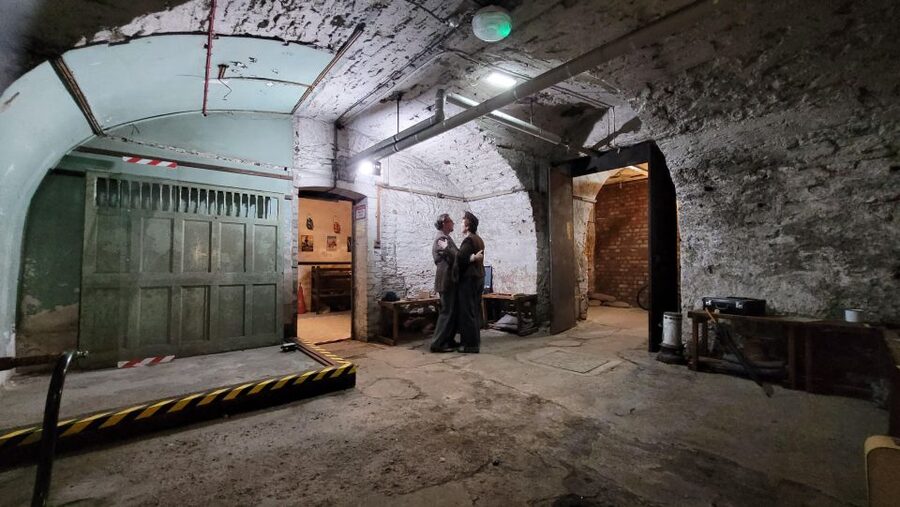
The shelter is the heart of the experience. Access takes you below the streets into Bristol’s largest public air raid shelter, located beneath the Corn Exchange and St. Nicholas Market area.
This is not a glossy museum set. Its appeal comes from the sense that you are seeing a place left largely in its original condition. Rooms, corridors, and wartime spaces give the guide a real setting in which to explain what shelter life meant.
You’ll hear about the physical conditions people faced during bombing raids. The important detail is not just that people went underground, but what it meant to spend time there, wait for danger to pass, and live with limited comfort and uncertainty.
Owen and Duncan are particularly effective when they use the shelter itself to set the scene. A guide who can speak clearly in an underground room matters, since acoustics and group movement can make this part harder to follow than the street walk.
The shelter also contains WWII items and the beginnings of a museum collection. You might have time to look at articles and objects near the end, but the guided storytelling is the main attraction. If you enjoy studying every label in a museum, you may wish for more time here. Some people specifically wanted a longer chance to examine the displays and ask questions.
That limitation is worth understanding before you book. The shelter has great atmosphere, but it is not yet a large, finished museum with extensive interpretation in every room. Its condition and unfinished presentation are part of what makes it feel genuine, but they also mean you should arrive expecting a working historical project rather than a major national museum.
The Margaret story and the shelter’s atmosphere
The tour includes the possibility of meeting Margaret, described as a friendly ghost. A group photograph with Margaret has also been part of the experience.
Treat this as a light extra rather than the reason to book. The wartime setting and guide-led history carry the tour. The ghost story adds personality and gives the shelter a memorable local detail, especially if you enjoy a little folklore alongside documented history.
The guide’s approach seems to keep the tone balanced. The subject includes bombing, fear, and hardship, but the delivery can also be humorous and engaging. That matters for mixed groups, since a long, solemn lecture underground would quickly become tiring.
You should also think about how you react to enclosed spaces. The shelter is the kind of location that gives the tour its power, but it may feel uncomfortable if you are claustrophobic. The activity is not suitable for people with claustrophobia or mobility impairments, and the stated restrictions also exclude people over 300 pounds, or 136 kilograms, and people over 95 years old.
More walking tours around the UK:
- Magical London: Harry Potter Guided Walking Tour
★ 4.7 · 22,044 reviews - Edinburgh: Harry Potter Magical Guided Walking Tour
★ 4.8 · 11,944 reviews - Edinburgh Castle: Guided Walking Tour with Entry Ticket
★ 4.7 · 11,699 reviews - Underground Vaults Walking Tour in Edinburgh Old Town
★ 4.5 · 8,506 reviews
St. Nicholas Market as the final stop
The final part brings you to St. Nicholas Market, described as the nation’s No. 1 covered market. Here the mood changes from wartime history to food, shopping, and present-day Bristol.
Food and drink are not included, but this is one of the tour’s practical strengths. You finish in a place where you can buy sweet and savory treats instead of being left at an isolated drop-off point. It is easy to turn the end of the tour into lunch, a snack stop, or a look at local souvenirs.
The market also gives the route a useful sense of time. You have moved from Bristol’s ancient trading life, through wartime disruption, and back to a working city center where people eat, shop, and meet.
The market section is listed as a guided tour, but the exact balance between commentary and free browsing may depend on the day and guide. If you want a long, leisurely food stop, plan to stay after the formal tour ends. Food is purchased separately.
Why the guide makes such a difference
This is a guide-led experience in the strongest sense. The shelter is interesting on its own, but without explanation it would be a series of underground rooms. The stories connect the Corn Exchange, the Old City, Blitz damage, wartime shelters, music history, and St. Nicholas Market.
Owen is repeatedly singled out for enthusiasm, clear speaking, and the ability to keep a group engaged. Duncan is described as passionate about preserving and developing the shelter project. Theresa has also led the tour, bringing the stories to life through a warm presentation.
Names matter here because the experience can feel personal. You are not listening to a standard audio track. The guide’s timing, costume, jokes, historical examples, and answers shape the visit.
The strongest guides also make the walk work for people who already know Bristol. A local may learn more about the bombing raids, the old shelter entrances, or buildings passed every day. A first-time visitor gets a compact introduction to the city’s older core without needing to arrange separate history and food tours.
Value at $16 per person
At $16 per person, the tour offers good value if you want more than a basic city walk. The price covers a live guide, entry to the WWII shelter, and access to parts of the Corn Exchange that are not normally open to the public.
The value comes from the combination. A standard walking tour may cover the Old City but not take you underground. A museum visit may show wartime objects but not connect them to the streets above. This tour puts both parts together, then finishes at a market where you can choose and pay for your own food.
The one qualification is the shelter’s developing state. You are paying for access and interpretation, not a large display-filled museum. If you want polished galleries, extensive labels, and lots of time to browse objects, the experience may feel basic.
If you care about local preservation, the ticket also supports attention for a site that needs more investment. Several guides discuss future plans for the museum and the need to protect the shelter. Do not book expecting every improvement to be complete. Book because you want to see the place while its story is still being built.
The tour has free cancellation up to 24 hours before the start, and you can reserve now and pay later. Those terms are useful if your Bristol plans are still shifting.
Timing, pace, and practical planning
The advertised duration ranges from 75 minutes to two hours. In practice, allow up to two hours so you are not rushing to another booking. Some tours have taken about an hour and 15 minutes, while others have filled closer to two hours.
The route begins at the Corn Exchange and can finish at St. Nicholas Market or return toward the Corn Exchange, depending on the stated drop-off arrangement. Check the exact departure time and end point when booking, especially if you have a meal reservation.
Food is not included. That is no problem if you want control over your budget, but remember to bring extra money for the market. Comfortable shoes are the one listed item to bring.
The tour is conducted in English. The guide’s clarity is important underground, and the strongest reports describe the delivery as easy to hear and follow.
Who should book this experience?
I would choose this tour if you like local history, wartime sites, old city streets, or unusual access. It is also a smart option if you want a compact Bristol activity that finishes near food and shopping.
It suits families and mixed-age groups when everyone is comfortable with the shelter conditions. The guide-led style keeps it from becoming a dry lecture, and the ghost story and former music rooms add variety.
It is especially useful for Bristol residents. The tour does not assume that you know nothing about the city, and familiar streets can take on new meaning when you hear about Blitz damage and the lives of people who sheltered below them.
I would be more cautious if you have mobility issues, dislike enclosed spaces, or need a fully accessible attraction. The shelter’s physical nature is central to the experience, not a minor side detail.
Should you book the Bristol shelter tour?
Yes, if you want a distinctive history walk with real underground access. The combination of the Corn Exchange, Blitz sites, wartime shelter, 1960s music links, and St. Nicholas Market gives you far more variety than the $16 price suggests.
Go in with realistic expectations. This is a passionate, developing project, not a finished museum. You may wish for more time with the objects, better renovation, or a larger display area, but the shelter’s unfinished quality also helps preserve its sense of place.
Book it for the guide, the stories, and the chance to see what lies below central Bristol. Skip it only if enclosed spaces or physical access are a concern.
FAQ
Where does the tour begin?
Meet at the main entrance of the Corn Exchange in Bristol.
How long does the tour last?
The stated duration is between 75 minutes and two hours. Check the available start times when booking.
What does the ticket include?
The ticket includes a guided walking tour, entry to the WWII air raid shelter, and entry to exclusive areas of the Corn Exchange.
Is food included?
No. Food and drinks are available to buy separately at St. Nicholas Market.
What language is the tour in?
The live tour guide speaks English.
Can I cancel the booking?
Yes. You can cancel up to 24 hours in advance for a full refund.
Who should not take this tour?
The activity is not suitable for people with mobility impairments, claustrophobia, a weight over 300 pounds or 136 kilograms, or people over 95 years old.
New walking tours around the UK
- London: Old City Walking Tour★ 4.8 · 135 reviews
- Manchester: Music-Themed City Walking Tour★ 4.4 · 109 reviews
- Manchester: Media City & The Quays Guided Walking Tour★ 5.0 · 165 reviews
- Manchester City Highlights Walking Tour★ 4.8 · 299 reviews
- London: Witches and History Bankside Walking Tour★ 4.8 · 223 reviews
- London: Palaces and Parliament Walking Tour★ 4.8 · 365 reviews
- London: Winston Churchill and London in WWII Walking Tour★ 4.8 · 143 reviews
- London: Westminster Walking Tour & The Tower of London Entry★ 4.6 · 131 reviews
UK Walking Tours, side by side.

Magical London: Harry Potter Guided Walking Tour
Read our review →
Edinburgh Castle: Guided Walking Tour with Entry Ticket
Read our review →
Underground Vaults Walking Tour in Edinburgh Old Town
Read our review →
London: The Original Jack the Ripper Walking Tour
Read our review →
Oxford University Walking Tour With University Alumni Guide
Read our review →
Edinburgh Castle Guided Walking Tour in English
Read our review →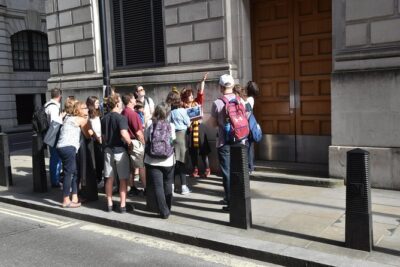
Tour for Muggles The Ultimate Harry Potter Walking Tour in London
Read our review →
Edinburgh Darkside Walking Tour: Mysteries, Murder and Legends
Read our review →Lists this walk sits on