
Review · BUCHAREST
Bucharest: Hidden Markets Walking Tour with Tastings
Bucharest’s best stories often sit away from the postcard center, and this tour gets you there by tram, on foot, and with a fork in hand. I like the mix of local food and city history, especially the stop at Obor Market, and I like that guides such as Angelica, Alex, Daniel, Michaela, and Bogdan add personal context rather than reciting dates. The main drawback is simple: five hours of eating can be a lot, so skip the large breakfast.
I also like the small size, capped at 12 people, and the fact that transport tickets, beer, brandy, and generous tastings are included. The walking is mostly flat, but you should still expect a full half-day outdoors, with changing weather and busy public spaces.
Key points at a glance
- Obor Market is the food anchor: Try tuica, local cheeses, seasonal produce, peasant-style meats, mici, mustard, beer, and a warm Wallachian doughnut.
- The route shows a less polished Bucharest: You move from the National Theatre to Batistei, the Armenian Quarter, Calea Moșilor, and Obor.
- The tram ride matters: It gives you a look at everyday Bucharest and links the historic center with a working local market.
- The food is substantial: This is not a few token bites. Several portions together can replace lunch.
- The group stays personal: A maximum of 12 people leaves room for questions and conversation with the guide.
- The cost includes a lot: At $100, you receive food, drinks, transport, and five to five and a half hours with an English-speaking local guide.
Why this Bucharest tour feels different
Many Bucharest tours stay around the Old Town and the grand central boulevards. This one uses the city center as a starting point, then moves into neighborhoods where daily life matters more than polished façades.
That change is the point. You see how Bucharest shifts from major public buildings to older residential streets, religious landmarks, tram lines, and a market used for ordinary shopping. The route gives you a more useful sense of the city than a quick loop around the historic center.
The experience also links food with place. You do not simply taste Romanian dishes in a restaurant while someone explains them. You see market produce, travel through the city on public transport, and eat foods that fit Romanian social life: grilled mici, salty cheeses, rustic bread, seasonal vegetables, beer, and tuica.
At 4.9 out of 5 from 329 ratings, the tour has a strong record. The praise centers on the guides, the amount of food, the relaxed pace, and the unusual route. That matches what matters most here: the guide is the thread holding the history, transport, and tastings together.
More Food Walking Tours in the world:
- Reykjavik Food Walk – Local Foodie Adventure in Iceland
★ 5.0 · 18,952 reviews - Little Havana Food and Walking Tour in Miami
★ 5.0 · 8,882 reviews - New Orleans Food Walking Tour of the French Quarter with Small-Group Option
★ 5.0 · 6,118 reviews
Starting at the National Theatre
Meet on the stairs in front of the main entrance to the National Theatre on Nicolae Bălcescu 2. If you use Uber, enter Bd. Nicolae Bălcescu 2 rather than relying on the venue name alone.
This is a practical starting point because it places you near the center of Bucharest, but the tour does not linger only around the theatre. Your guide begins with the city’s political and cultural setting, then leads you toward streets that are easier to miss on your own.
The early section helps you get your bearings. You are not expected to know Bucharest’s complicated past before arriving. Guides including Daniel, Alex, Angelica, and Michaela have been praised for explaining the city clearly and answering questions without making the walk feel like a lecture.
The guide can also shape the experience around the group. One small outing had only two participants, while others had six or seven. The advertised limit is 12, so you can expect a more conversational feel than on a large coach excursion.
Batistei and the forgotten American embassy

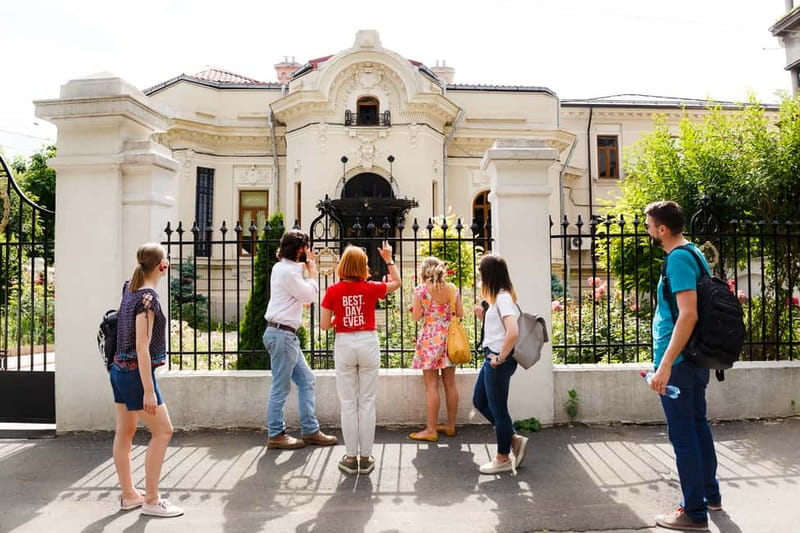
The walk continues toward Biserica Batiștei and Strada Batiștei, an area once compared with Paris’s St. Germain. That old nickname hints at a more fashionable past, while the current streets offer a less polished view of Bucharest.
One memorable detail here is the former American embassy, now a neglected landmark. It is the kind of stop that gives the tour its character. You are not just looking at a famous building and taking a photograph. You are considering how a place once tied to international power can fade into the background of a changing city.
This part is also a good example of the tour’s approach to architecture. Instead of presenting Bucharest as one clear style, the guide shows how different periods sit beside each other. The city’s appearance can shift quickly from formal and grand to worn, residential, or quietly historic.
You will want comfortable shoes, though the route is described as fairly flat rather than strenuous. The main challenge is duration, not steep terrain.
The Armenian Quarter’s unusual mix

The Armenian Quarter brings together European and Ottoman influences around the Armenian Church. This is one of the most interesting architectural sections because it gives you a compact view of Bucharest’s layered past.
The church is not treated as an isolated sight. It forms part of a neighborhood story involving trade, migration, religion, and urban design. Your guide explains what you are seeing and connects the buildings to the wider development of Bucharest.
I find this kind of context more useful than a long list of architectural labels. You begin to notice how the city’s identity was shaped by groups moving through it and settling here. The result is not a single tidy style, but a city with overlapping influences.
The area also breaks up the food stops nicely. You are walking, listening, and looking before the larger meal at Obor. That pacing matters, since the tastings later are generous.
More Market Walking Tours around the world:
- Bangkok: City Highlights Temple and Market Walking Tour
★ 4.5 · 3,990 reviews - Tokyo Tsukiji Fish Market Food and Culture Walking Tour
★ 5.0 · 3,184 reviews - Air Raid Shelter + St. Nicholas Market Walking Tour
★ 5.0 · 1,950 reviews - Tokyo: Tsukiji Fish Market Food and Walking tour
★ 5.0 · 1,724 reviews
Calea Moșilor and the tram ride
From the central neighborhoods, the route reaches Calea Moșilor and then uses the tram toward Obor Market. The tram is not just a way to save your feet. It lets you watch Bucharest from street level while locals go about their day.
This is one of the tour’s strongest ideas. Public transport connects the city’s past with its present in a way that a private vehicle cannot. You see the distance between the central landmarks and Obor, and you get a better feel for how the neighborhoods relate to one another.
The transport plan includes tram tickets. Some outings have also included two tram rides and subway travel, though the exact pattern can vary. The important point is that the tour does not keep you inside a sightseeing bubble. You are using the same system residents use.
For some people, public transport is part of the fun. If you want a tightly controlled route with no waiting or street-level uncertainty, this may feel less polished. For me, that ordinary movement through the city is one of the reasons the tour works.
Obor Market: the main event
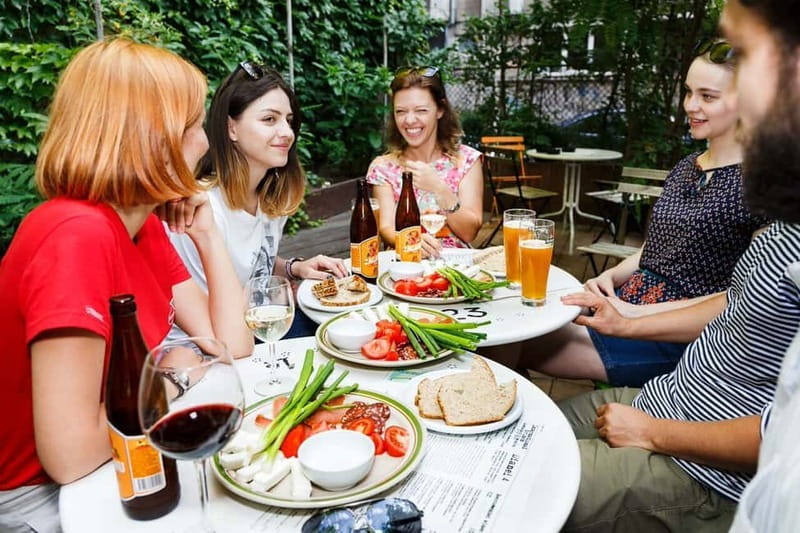
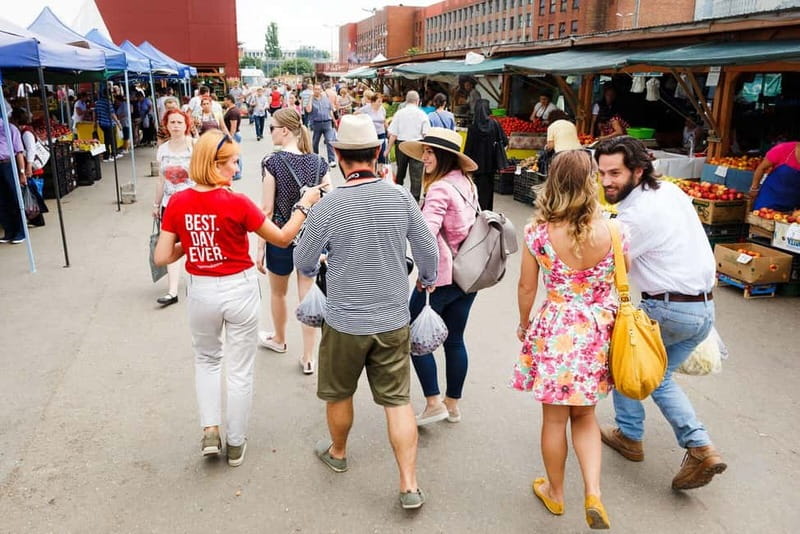
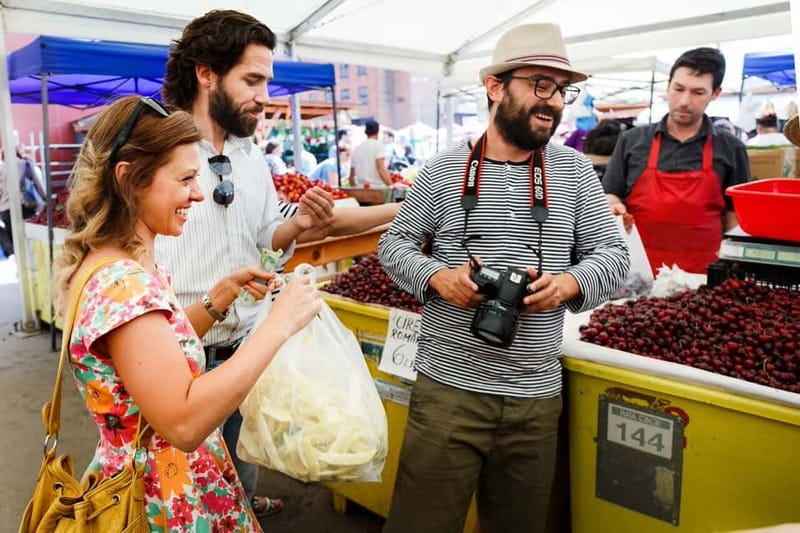
Obor is Bucharest’s largest peasant market and the culinary center of the tour. This is where the food changes from explanation to participation.
You begin with a shot of tuica, a traditional Romanian fruit brandy. It is strong, so do not treat it like a mild aperitif. Non-alcoholic choices are available, and you can request soft drinks, coffee, or tea instead.
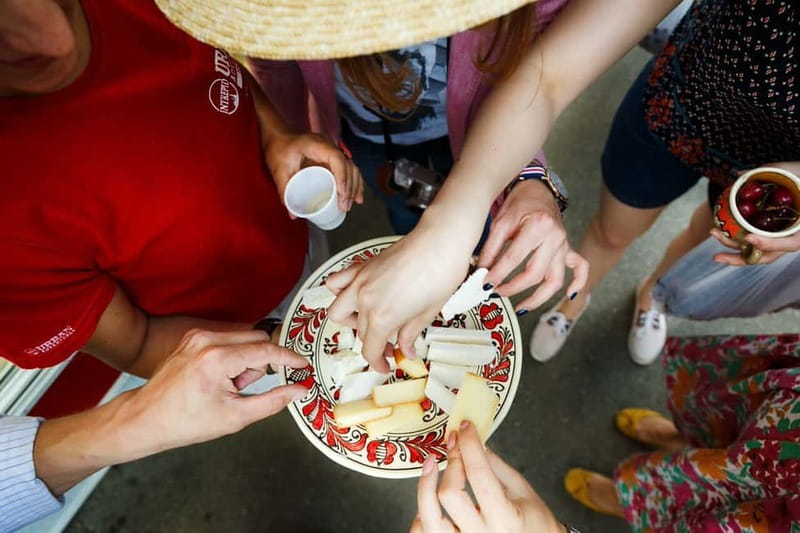
The first substantial tasting is a peasant platter with local cheeses, meats, seasonal vegetables, dips, and homemade bread. This gives you a useful introduction to Romanian eating habits: simple ingredients, hearty portions, and plenty of savory flavors.
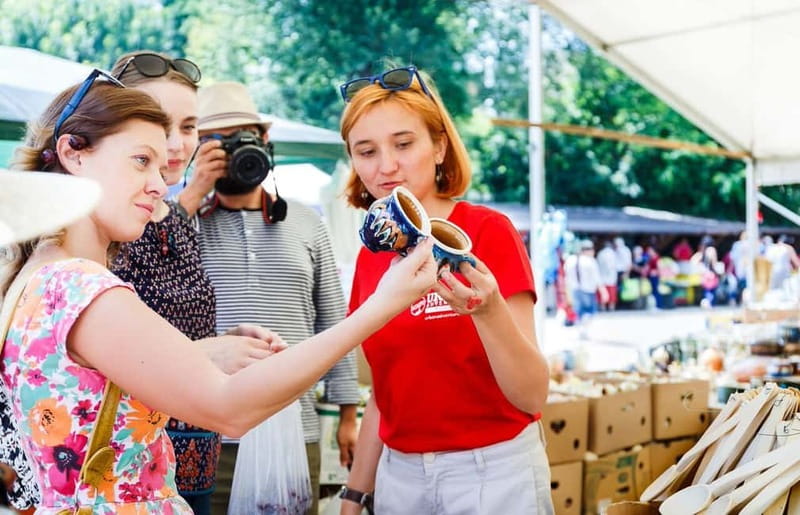
The market setting adds value. You can see the produce and food culture around you rather than tasting everything in an anonymous dining room. Seasonal items may change, and the guide can explain what you are eating and how it fits into local life.
You then sample several Romanian cheeses and try two mici with bread and mustard. Mici are small grilled sausage rolls made for eating hot and casually, often with mustard and a cold beer. They are one of the country’s signature street foods, and they are usually the bite people remember most.
Three beers are included, although you can replace them with soft drinks, coffee, or tea. That makes the tour easier for people in a mixed group, including those who do not drink alcohol.
Finally, there is a Wallachian doughnut. After the brandy, platter, cheeses, sausages, beer, and other samples, the warm sweet is not a token ending. It gives the meal a proper finish, though you may already be full.
Several people who joined the tour wished they had eaten less before meeting the guide. Take that advice seriously. A small breakfast is sensible, and you should plan for the tastings to function as lunch.
How much walking and waiting should you expect?
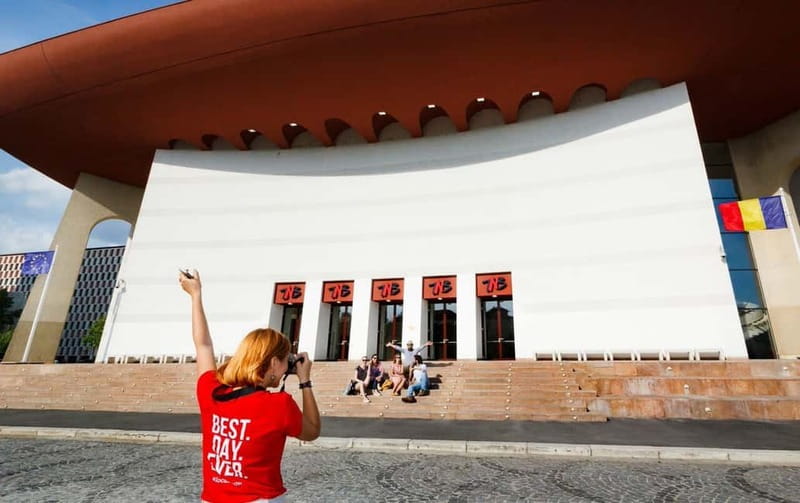
The experience lasts five to five and a half hours. It combines walking, guided stops, public transport, market time, and food breaks, so the pace is varied rather than one long march.
The walking is generally flat and has been described as manageable. Still, you spend much of the day outside, and the tour continues in poor weather. One outing remained enjoyable despite difficult weather, but a sunny day will make the market and street sections more pleasant.
The route ends at Piața Unirii, not back at the National Theatre. That is useful if you want to continue exploring from the southern part of central Bucharest, but remember that you will need to arrange your own return to your accommodation.
The small group helps with timing. A guide can keep people together on the streets and public transport, while still allowing time for questions. Names such as Angelica and Michaela come up often because they combine organization with an easy, friendly manner, but guides vary by date.
Is $100 a fair price?
At $100 per person, this is not the cheapest way to eat in Bucharest. The value depends on how you use the five-hour outing.
You receive an English-speaking guide, walking commentary, tram tickets, a large platter, several cheese and produce samples, two mici, a street snack, a doughnut, three beers or non-alcoholic drinks, and a shot of tuica. You also get a neighborhood route that would take planning to reproduce on your own.
If you only want a cheap meal, spend less at Obor and explore independently. If you want food plus a structured introduction to Bucharest’s neighborhoods, architecture, transport, and social history, the price is easier to justify.
The strongest value comes from the guide. People who have joined with Angelica, Alex, Daniel, Bogdan, Elena, Michaela, and other local guides describe a good balance of facts, personal stories, humor, and practical help. The guide also handles the logistics, which means you can focus on the food and streets instead of figuring out where to go next.
Who should book this experience?
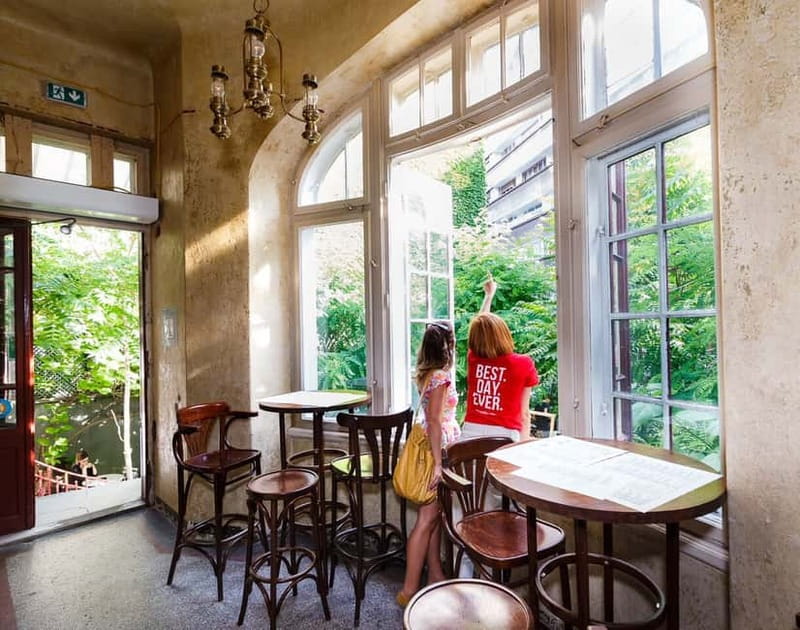
I would choose this tour for a first visit to Bucharest, especially if you have only a few days. It gives you a broad introduction to the city and helps you decide which areas deserve a second look.
It suits curious eaters who want familiar local staples rather than a formal fine-dining meal. It also works well for solo visitors because the small group creates an easy chance to meet people from different countries.
You should be comfortable with a half-day outing, several food portions, public transport, and outdoor walking. Children under six are not permitted. Dietary needs such as vegetarian, vegan, and gluten-free requirements can be accommodated, but you must provide notice at least 24 hours ahead.
This is not the best pick if you want to spend the whole day inside historic buildings, avoid alcohol entirely without planning for substitutions, or control every stop yourself. It is also not a focused architecture tour. Food, neighborhoods, and conversation are the main attraction.
Final call: book it early in your Bucharest stay
I would book this tour near the start of a Bucharest visit. The tram ride and market stop give you a working sense of the city, while the guide can point you toward other places to eat and explore afterward.
Book it if you want generous tastings, local transport, lesser-seen streets, and a guide who can connect architecture with everyday Romanian life. Arrive hungry, wear comfortable shoes, and tell the operator about dietary needs at least a day ahead.
Skip it only if you dislike group dining, prefer a short tour, or want a strictly central sightseeing route. For most visitors who want Bucharest to feel like a real city rather than a list of monuments, this is a strong use of five hours and $100.
FAQ
Where does the Bucharest Hidden Markets Walking Tour begin?
It begins on the stairs in front of the main entrance to the National Theatre at Nicolae Bălcescu 2 in Bucharest. For Uber, use Bd. Nicolae Bălcescu 2.
Where does the tour finish?
The tour finishes at Piața Unirii.
How long does the experience last?
The tour lasts approximately five to five and a half hours. Starting times vary, so check availability when booking.
What food and drinks are included?
Included tastings include tuica, a platter of local cheeses, meats, seasonal vegetables, dips, and homemade bread, two mici with bread and mustard, local cheeses and produce, a street snack, and one Wallachian doughnut. Three beers are included, with soft drinks, coffee, or tea available instead.
Is transportation included?
Yes. Tram tickets are included. The tour uses public transport as part of the route between the central neighborhoods and Obor Market.
Can dietary requirements be accommodated?
Vegetarian, vegan, and gluten-intolerant needs can be accommodated. Notify the operator at least 24 hours before the tour and provide details about allergies or sensitivities.
Are young children allowed to join?
Children under six are not permitted on this tour. The standard group has a maximum of 12 participants, and a private group option is available.
New walking tours around the world
- Niagara Falls, Canada: White Water Walk Entry Ticket★ 4.5 · 147 reviews
- NYC: Walking Tour with Local Guide and 30+ Top NYC Sights★ 4.5 · 248 reviews
- Zadar: Food Tasting & Old Town Walking Tour★ 5.0 · 94 reviews
- Niagara Falls: Walking Tour, Journey Behind Falls, & Cruise★ 4.8 · 773 reviews
- New York City: Gangsters and Ghosts 2-Hour Walking Tour★ 4.7 · 615 reviews
- NYC: History of Slavery & Underground Railroad Walking Tour★ 4.7 · 87 reviews
- New York City’s Hell’s Kitchen: Walking Food Tour★ 4.8 · 200 reviews
- New York City: Central Park Walking Tour★ 4.7 · 82 reviews
Bucharest Walking Tours, side by side.
Bucharest: City Highlights Guided Walking Tour
Read our review →
Bucharest: Communism and History Guided City Walking Tour
Read our review →

Bucharest: Ghost Stories & Romanian Mythology Walking Tour
Read our review →
Bucharest: Guided Walking Tour with Romanian Snack
Read our review →
Bucharest: Relics of Communism 3-Hour Walking Tour
Read our review →Lists this walk sits on