
Review · CARTAGENA
Cartagena: Walled City and Getsemani Shared Walking Tour
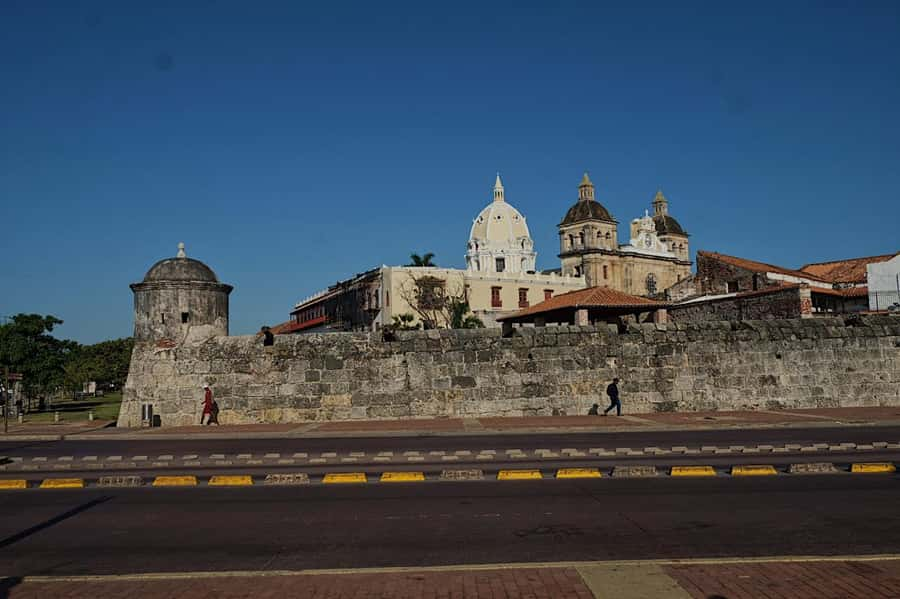
Cartagena reveals itself best on foot, where bright colonial walls, old stone defenses, church towers, and neighborhood life all meet within a few blocks. This two-hour walk links the Walled City with Getsemani, giving you both the grand colonial center and the more relaxed, artistic side of town.
I like the strong mix of history and present-day life, plus the small-group feel many visitors have experienced with guides such as Arthur, Jorge, Nelson, and Rafael. I also like the value: at $16 per person, you get a local guide, a useful first look at two important districts, and tips that can shape the rest of your stay. The main consideration is Cartagena’s heat, and a bilingual English-Spanish group can sometimes mean faster or less even-paced explanations.
Key points at a glance
- Two distinct Cartagena districts: See the formal colonial center, then walk into the bohemian streets of Getsemani.
- Major sights in a short time: Visit Plaza Santo Domingo, the cathedral, Las Bovedas, Plaza de la Trinidad, and other central landmarks.
- Street art with local context: Calle de la Sierpe, Calle San Juan, Calle de la Media Luna, and Calle Larga are part of the Getsemani route.
- Guide quality is a major strength: Arthur, Rafael, Jorge, Nelson, Isaac, and others are praised for storytelling, patience, city knowledge, and practical advice.
- Good first-day activity: The route helps you understand where you are before you return to museums, restaurants, shops, or plazas on your own.
- Prepare for sun and rain: Wear walking shoes, carry water and sunscreen, and bring weather-appropriate clothing. An umbrella is provided if rain arrives.
Why this walk works as a first look at Cartagena
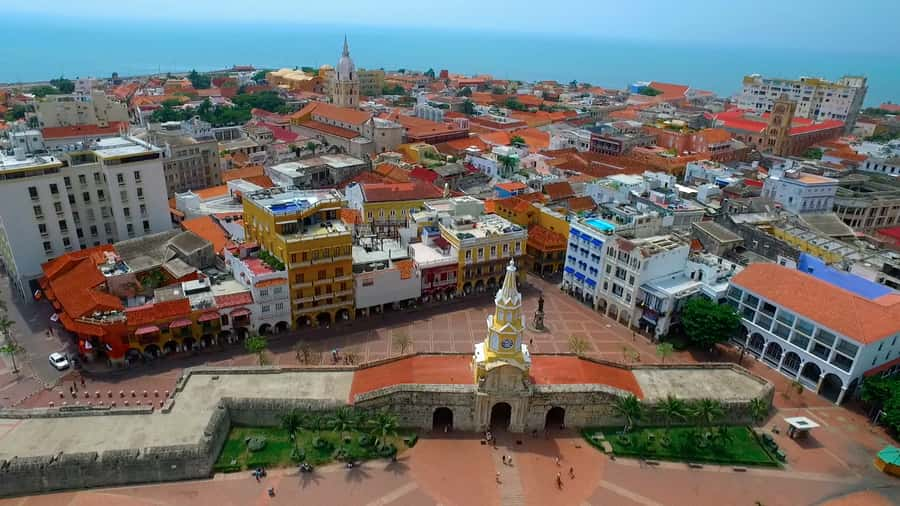
Cartagena can feel confusing at first. The old center has a tight web of streets, grand squares, churches, balconies, walls, and entrances that are easy to pass without knowing their importance. Getsemani, just beyond the formal center, has a different mood and a less polished street scene.
This tour gives you the basic map in your head. You begin at Plaza Santo Domingo, then move through the colonial center before heading toward Getsemani. That order makes sense because you see the city’s official face first, then its more relaxed and creative neighborhood life.
I would take this walk early in a Cartagena stay. Several guides have offered restaurant, café, bar, shopping, and activity suggestions at the end, and some people used the tour to decide which places deserved a second visit. The walk is not a substitute for a museum visit or a full historical study, but it gives meaning to what you see afterward.
The tour lasts about two hours. The stated route includes roughly one hour in Cartagena’s Walled City and about an hour and a half in Getsemani, so the timing may run a little beyond the simple two-hour label depending on the group and stops. One participant described it as just over two hours, which is useful to keep in mind if you have a tightly timed reservation afterward.
More walking tours around the world:
- Magical London: Harry Potter Guided Walking Tour
★ 4.7 · 22,044 reviews - Reykjavik Food Walk – Local Foodie Adventure in Iceland
★ 5.0 · 18,952 reviews - History and Hauntings of Salem Guided Walking Tour
★ 5.0 · 14,564 reviews
Meeting at Plaza Santo Domingo
The listed meeting point is Plaza Santo Domingo. Look for the black umbrella. The activity information also refers to Plaza de la Aduana in its general description, so check the current booking instructions carefully and use the confirmed meeting point supplied for your departure.
Plaza Santo Domingo is a practical starting place because it puts you straight into the old center. You do not spend the opening minutes on a long transfer or hotel pickup. Hotel transportation is not included, so you need to reach the plaza yourself.
The square is also a good place to arrive a little early. You can get oriented, find shade where available, and make sure you have water before the walk begins. Cartagena’s heat and humidity can be tiring even on a short route, especially when the sun reflects off stone streets and walls.
The guide carries a black umbrella for identification, and an umbrella is available if rain begins. The tour operates in all weather, so do not assume a rainy forecast means automatic cancellation. Comfortable shoes matter more than fashion here. The old streets are made for walking, not soft sandals or stiff dress shoes.
Plaza Santo Domingo and the Walled City
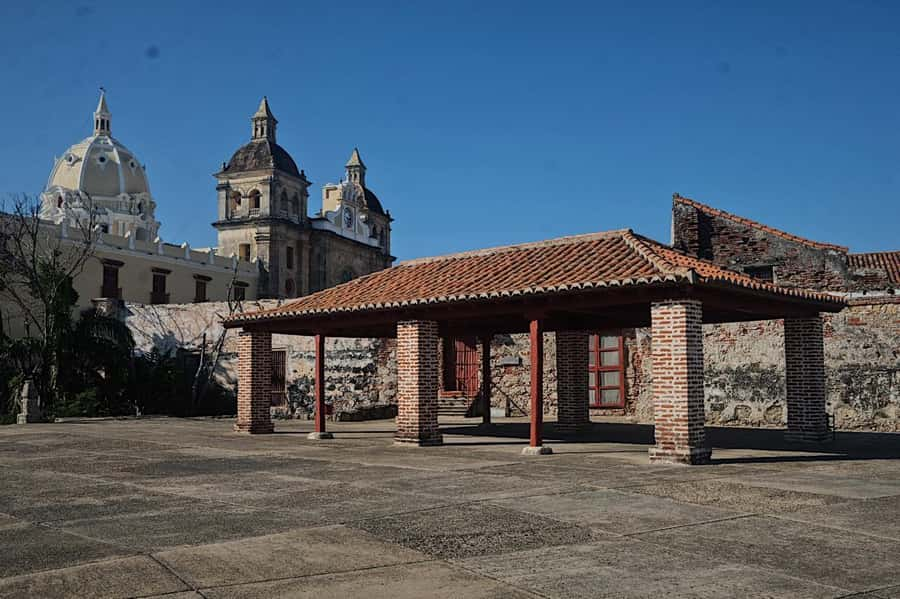
The first part takes you through Cartagena’s colonial center, where the appeal comes from the close mix of architecture, public squares, churches, and fortifications. You will see colorful houses and hear how the main streets, squares, and bastions fit into the city’s road toward independence.
The guide’s job here is less about rushing from one photo stop to the next and more about showing you how the city is put together. Look upward at balconies and façades, then back down at the street plan and defensive walls. The setting can look decorative at first, but the stories explain why these buildings and walls matter.
Plaza Santo Domingo and its church are among the important early stops. The square gives you one of the clearest examples of Cartagena’s public life, with architecture and people sharing the same space. The church adds a religious and historical layer to the route without requiring a long indoor visit.
The Cathedral of Santa Catalina de Alejandría is another key sight. Its scale and position help explain the importance of Cartagena during the colonial period. You will likely hear about the building’s cultural role and see how it anchors the surrounding streets.
A guide can make a big difference in this section. Arthur has been praised for animated storytelling and strong knowledge of Cartagena and Getsemani. Jorge has been described as clear, friendly, and good at answering questions without drowning the group in facts. Isaac, who has more than 30 years of guiding experience according to the information provided, has also been praised for adding lesser-noticed places and adjusting the pace to the heat.
That range matters. Cartagena’s old center is full of details, but too much information can blur together. The best approach is to listen for the big ideas, then mark places you want to revisit later. One useful feature reported by several people is the use of maps or pictures to explain the city’s past.
Las Bovedas and the old defenses
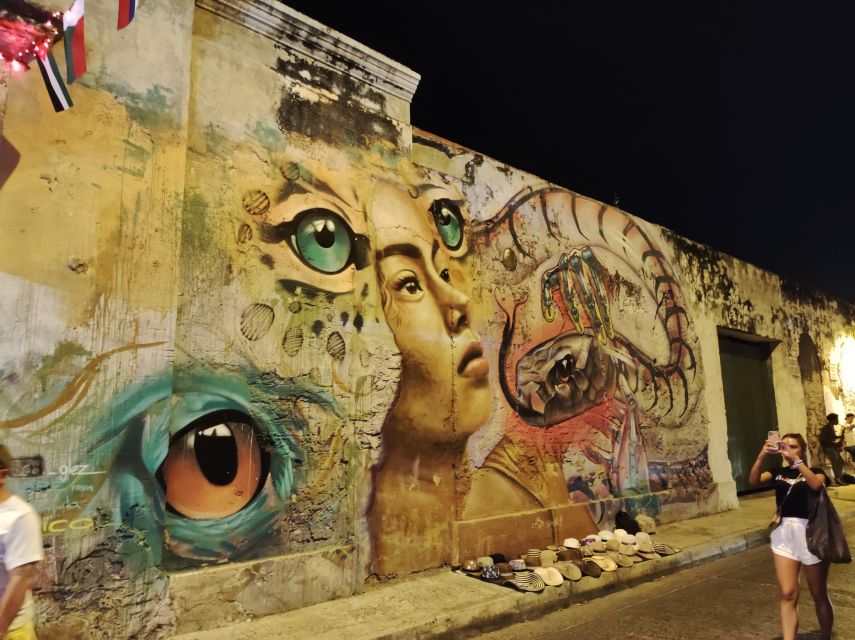
Las Bovedas is included among the principal stops. This long arcade is tied to the city’s defensive walls and is one of the easier places to connect Cartagena’s military past with its modern visitor life.
You will not simply be looking at old stone. The walk helps explain how bastions and walls shaped movement around the city and protected it from attack. That context makes the fortifications easier to read when you later walk along them independently.
Las Bovedas can also be busy and warm, depending on the time of day. Do not expect a quiet, museum-like stop. The value comes from the explanation and the position within the route, not from spending a long period in one place.
The route is primarily outdoors, with no hotel pickup and no listed admission to a separate attraction. That keeps the price low, but it also means you should think of this as a guided orientation walk rather than a ticketed monument tour. If you want extended time inside churches or museums, plan those visits separately.
Same streets, a different story:
- New Orleans Premier Ghost, Voodoo and Vampire Walking Tour
★ 4.5 · 12,856 reviews - Amsterdam Anne Frank: Small-Group Walking Tour & Local Guide
★ 4.8 · 12,789 reviews - Edinburgh: Harry Potter Magical Guided Walking Tour
★ 4.8 · 11,944 reviews - Edinburgh Castle: Guided Walking Tour with Entry Ticket
★ 4.7 · 11,699 reviews
Crossing into Getsemani
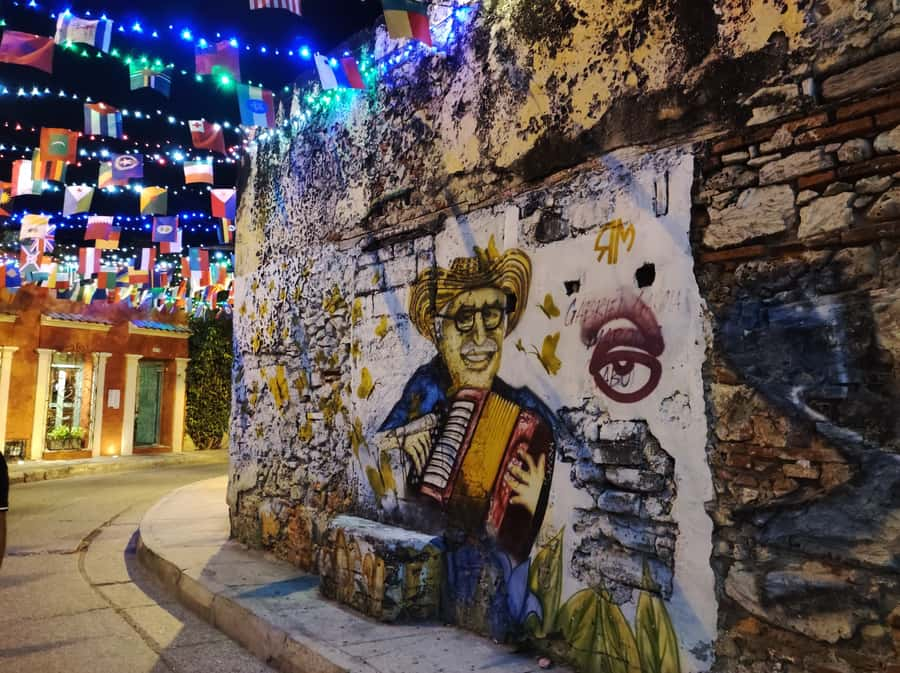
The change from the Walled City to Getsemani is the most interesting part of the experience. The old center presents Cartagena through grand architecture and formal squares. Getsemani feels more personal, with colorful houses, narrow lanes, music, murals, and people spending time outside their homes.
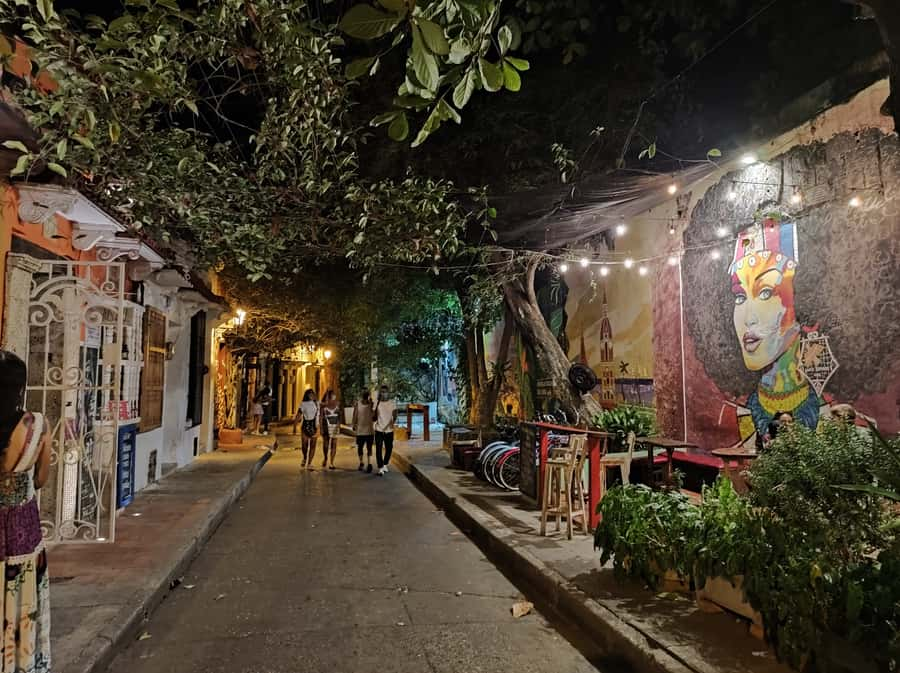
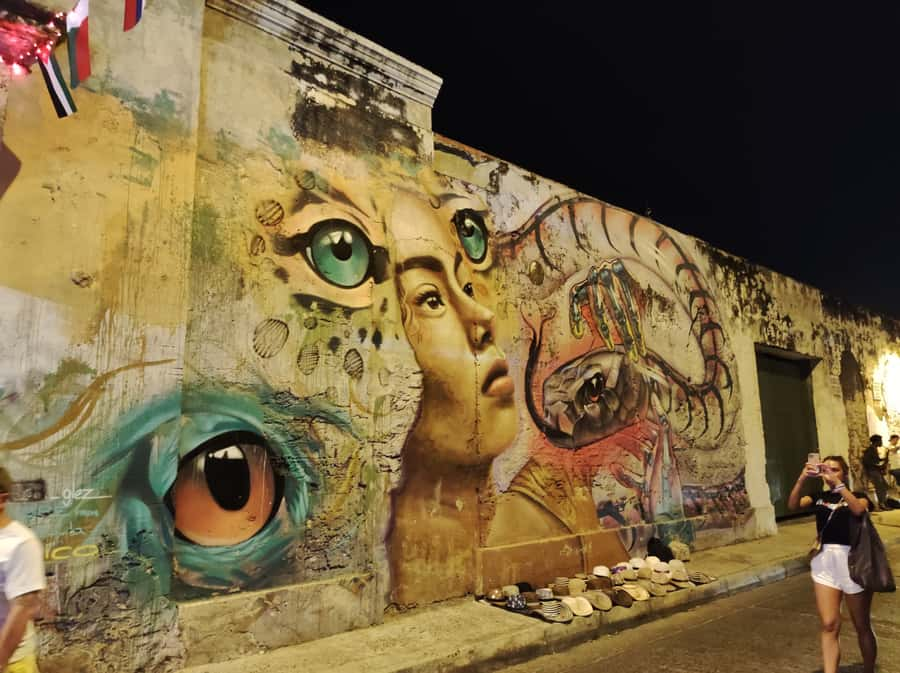
The neighborhood is known for its bohemian spirit, but that label only tells part of the story. You will see a place where street art sits beside everyday life, and where the streets are as important as individual monuments. The guide can help you read the artwork and understand why this part of Cartagena feels younger and more informal.
Plaza de la Trinidad is a central stop in Getsemani. It is a useful place to pause because the square brings together the neighborhood’s social side and its religious architecture. You can expect a livelier setting than the more formal plazas of the old center.
The tour then moves through streets such as Calle de la Sierpe, Calle San Juan, Calle de la Media Luna, and Calle Larga. These names are useful to remember because they give you a simple framework for returning on your own. You are not just seeing random alleys. You are learning the route through the neighborhood’s main public spaces and art-filled corridors.
Street art is one of the strongest reasons to choose this walk instead of a purely historical city tour. Murals and graffiti give the neighborhood a modern voice, while the guide adds local context. You will have plenty of photo opportunities, but the artwork is also a reminder that Getsemani is a lived-in district, not an outdoor gallery built only for sightseeing.
What the guides add to the experience
The assigned guide can vary, so do not book with the expectation that one specific person is guaranteed. Arthur, Rafael, Jorge, Nelson, Isaac, Oscar, Miguel, Rebecca, Manuel, Katherine, and Luis have all guided this experience at different times.
The strongest pattern is personal delivery. Arthur has been praised for energy, humor, historical storytelling, and taking many photos. Rafael has been described as patient, funny, and helpful with food and activity suggestions. Nelson has been praised for his warmth, city connections, bilingual ability, and attention to photos at monuments.
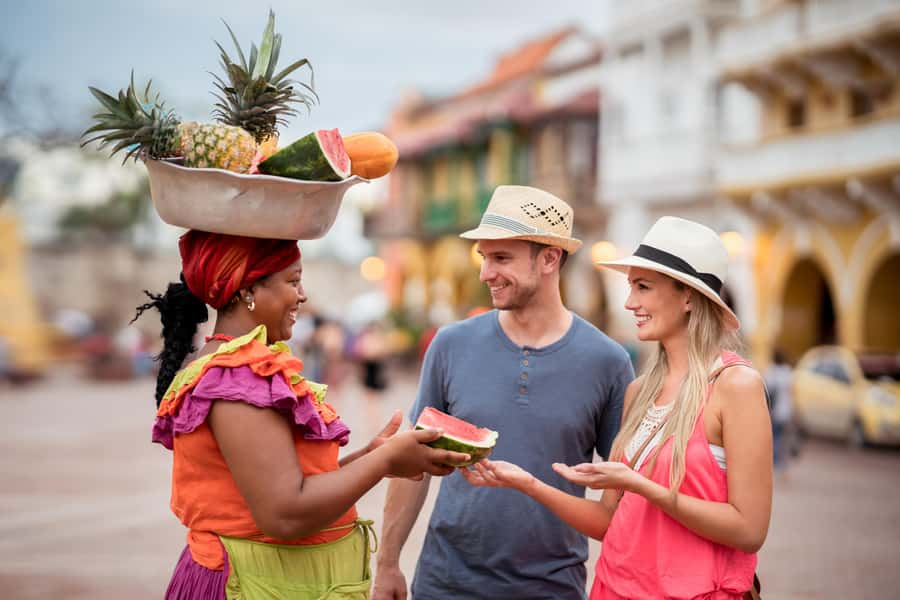
Jorge appears particularly suited to people who want a measured pace and room for questions. He has been praised for combining history, architecture, local food details, and practical advice. One walk included local juice, sweets, and fresh fruit, along with an unexpected look at sloths and titi monkeys in a park. Those details may depend on the exact route and guide, so treat them as possibilities rather than guaranteed stops.
Isaac’s long experience is useful if you want more historical depth. Miguel has been praised for café, bar, and restaurant suggestions. Several guides have also helped with photographs, which is valuable if you are traveling as a couple or small group and do not want every picture to be a selfie.
There are a few practical limits. The tour may run in English and Spanish at the same time, depending on the group. That can make the delivery slower or less even, and one person found that the guide spoke too quickly. If you need very slow, detailed English, tell the guide early and stay near the front.
Group size, pace, and comfort
The walk is described as a shared tour, but several experiences were notably small. One group had only two people, and another praised the smaller format because it was easier to hear the guide and ask questions. Group size can change, so do not assume every departure will feel private.
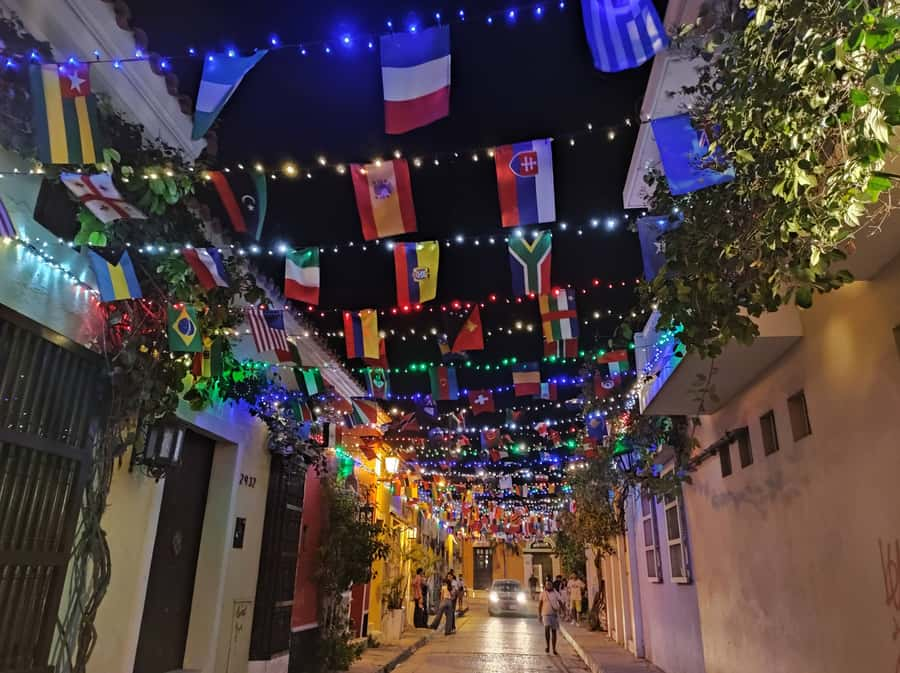
A smaller group is especially useful in Getsemani, where the streets and lanes can be tight. It also allows the guide to stop for questions without holding up a large crowd. On the other hand, a larger group may mean more waiting at crossings, monuments, or photo points.
The walking pace has generally been described as comfortable. You should still expect continuous movement for around two hours, with stops for explanations and pictures. The route is listed as wheelchair accessible, but you may want to confirm the specific departure details if you have mobility needs, since old streets and crowded public areas can affect the pace.
Timing matters. A 9 a.m. departure was singled out as a smart choice because Cartagena becomes hotter later in the day. Bring a hat or use the umbrella for shade, apply sunscreen before meeting the group, and carry water. The guide may look for shade when possible, but you should not depend on shade at every stop.
The $16 price and what it buys you
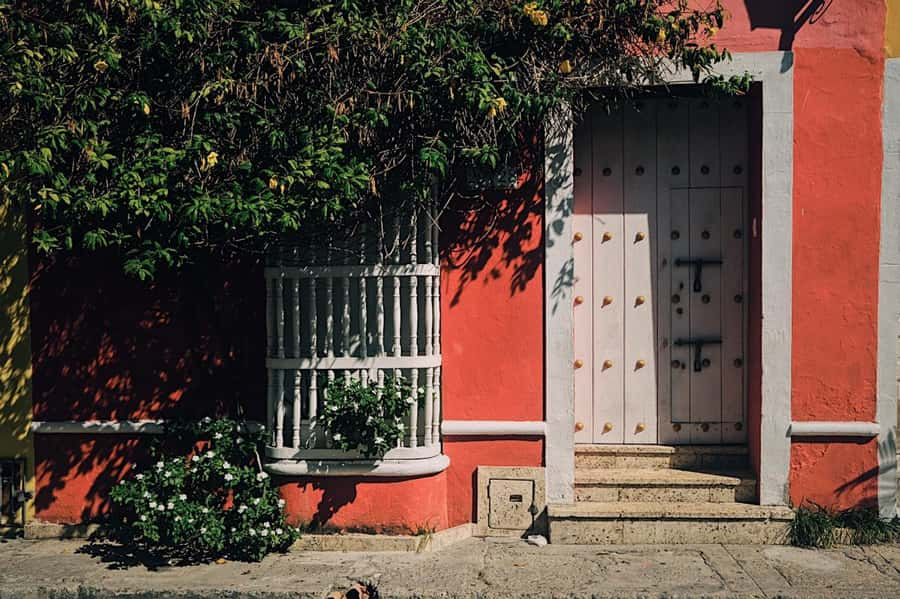
At $16 per person, this is a strong-value introduction to Cartagena. The cost covers the guide and tip, so you are not expected to calculate a separate gratuity at the end. Extra purchases are not included, and there is no hotel transfer.
The value is highest if you take the walk near the start of your visit. You get a working map of the Walled City and Getsemani, learn which streets and squares deserve another look, and can ask for advice about eating and shopping. That can save time and help you avoid spending your first day wandering without context.
The price is less compelling if you already know Cartagena well or want extended interior visits. This is a walking overview, not a private deep-history tour and not a package with admissions, transport, or food included.
Free cancellation up to 24 hours before departure and the option to reserve now and pay later make the booking less rigid. Starting times vary, so check availability for your date. The overall rating is 4.5 from 352 reviews, which fits the main strengths of the experience: friendly guides, useful historical background, manageable length, and good value.
Who should book this walk
I would recommend it to first-time visitors, cruise passengers with a few hours, couples, solo visitors, and anyone who wants a clear introduction before exploring independently. It is also useful for people who enjoy street photography, architecture, public squares, and local stories more than formal museum interiors.
Families and older walkers may appreciate the two-hour length, provided everyone is comfortable in heat and on city streets. The wheelchair-accessible listing is helpful, but confirm any route concerns before booking.
You should look elsewhere if you want a private tour guaranteed in one language, a full-day historical study, air-conditioned transport, or a route built around interior admissions. You may also prefer a shorter tour if you are very sensitive to heat.
Practical tips for a better walk
- Choose the earliest suitable departure if you can. The 9 a.m. timing has been praised for avoiding the worst heat.
- Wear shoes made for steady city walking.
- Carry water, sunscreen, a camera, and a hat or light weather protection.
- Arrive at Plaza Santo Domingo and look for the black umbrella, while checking your confirmed meeting details because Plaza de la Aduana also appears in the general description.
- Stay close enough to hear the guide, especially if the group includes both English and Spanish speakers.
- Ask for restaurant, café, bar, shopping, and museum suggestions before the tour ends.
- Treat the first walk as an orientation. Return later to the plazas, murals, churches, and streets that interest you most.
Should you book the Walled City and Getsemani walk?
Book it if you want a friendly, affordable first encounter with Cartagena’s two most important central districts. The best parts are the contrast between colonial defenses and modern street art, the practical advice from guides such as Arthur, Jorge, Rafael, Nelson, and Isaac, and the chance to get your bearings without spending half a day on a formal excursion.
Skip it if you already know the city or need a private, slow-paced tour with guaranteed language and guide choice. For most first visits, though, $16 buys a useful map, a generous dose of local history, and a better sense of where to spend the rest of your time.
FAQ
Where does the tour meet?
The listed meeting point is Plaza Santo Domingo. Look for a black umbrella. The general activity description also mentions Plaza de la Aduana, so check the confirmed meeting instructions for your selected departure.
How long does the tour last?
The advertised duration is two hours. The route is described as about one hour in Cartagena’s Walled City and about one and a half hours in Getsemani, and one experience ran just over two hours.
What languages are available?
The tour is offered in English and Spanish. Depending on the group, both languages may be used during the same departure.
Is the tour wheelchair accessible?
The activity is listed as wheelchair accessible. Since the route uses historic streets and public areas, confirm any specific mobility needs when booking.
What should I bring?
Bring comfortable shoes, a camera, sunscreen, water, and clothing suited to the weather. A hat is useful in the sun, and an umbrella is provided if rain begins.
Can I cancel or pay later?
You can cancel up to 24 hours in advance for a full refund. You can also reserve now and pay later, so no payment is required at the time of booking.
New walking tours around the world
- Niagara Falls, Canada: White Water Walk Entry Ticket★ 4.5 · 147 reviews
- NYC: Walking Tour with Local Guide and 30+ Top NYC Sights★ 4.5 · 248 reviews
- Zadar: Food Tasting & Old Town Walking Tour★ 5.0 · 94 reviews
- Niagara Falls: Walking Tour, Journey Behind Falls, & Cruise★ 4.8 · 773 reviews
- New York City: Gangsters and Ghosts 2-Hour Walking Tour★ 4.7 · 615 reviews
- NYC: History of Slavery & Underground Railroad Walking Tour★ 4.7 · 87 reviews
- New York City’s Hell’s Kitchen: Walking Food Tour★ 4.8 · 200 reviews
- New York City: Central Park Walking Tour★ 4.7 · 82 reviews