
Review · KRAKOW
Creepy Krakow: 2-Hour City Walking Tour
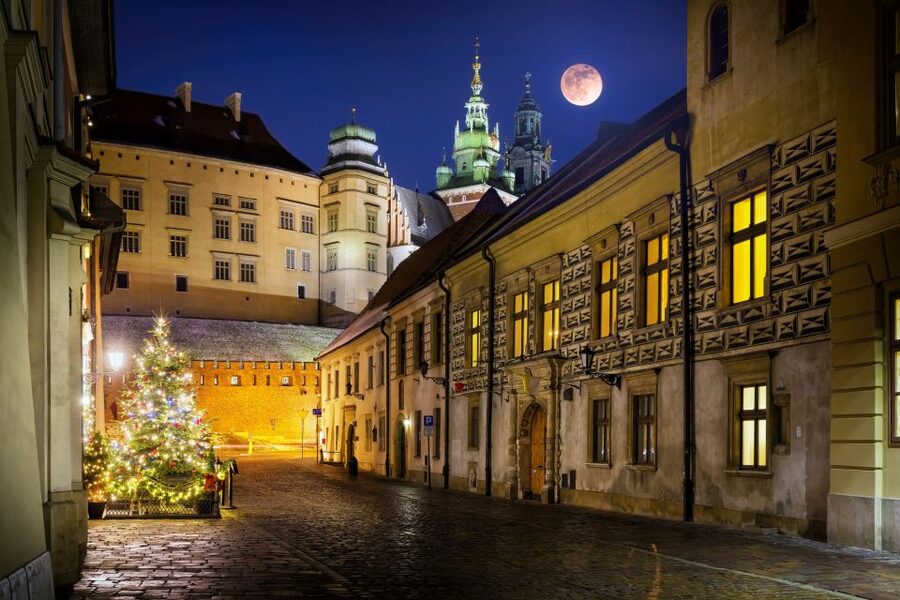
Krakow looks different after sunset. The lit towers of St. Mary’s Basilica, the Cloth Hall, and Florian Gate become a backdrop for stories about murder, witchcraft, ghosts, vampires, and the city’s legendary dragon. This is less a haunted-house show than a dark history walk, mixing folklore with true events and social history.
I like two things here: the route covers the Old Town’s major sights, and the guides use humor to keep grim subjects from becoming heavy. Guides such as Navia, Tomasz, Anna, and Stefan have been singled out for strong storytelling and easy conversation. The main drawback is the weather. You are outside for two hours, and cold rain or snow can make the standing stops feel long.
Key points to know before you book
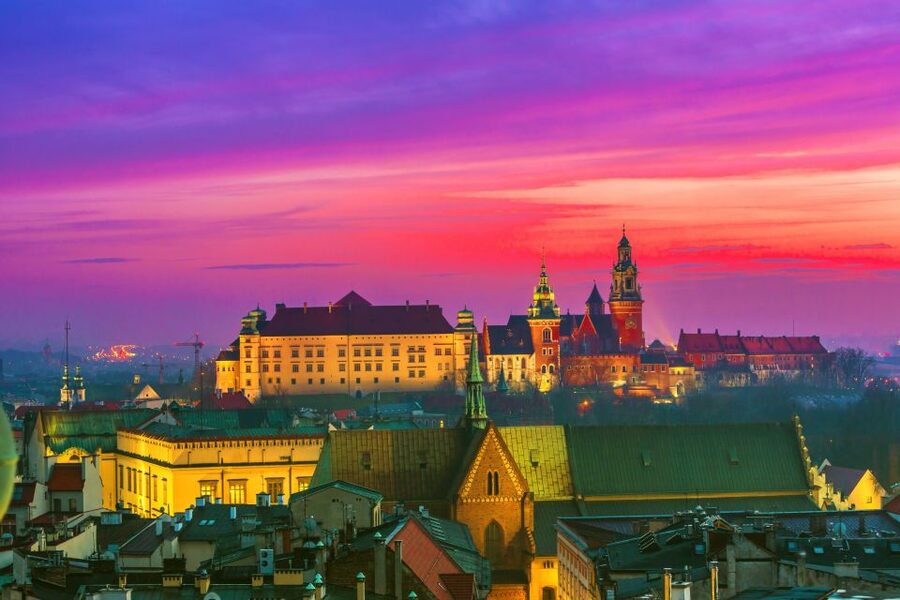
- A night route through central Krakow: See St. Mary’s Basilica, the Cloth Hall, Collegium Maius, Florian Gate, and Wawel after dark.
- Stories range from folklore to true crime: Expect tales of ghosts, killers, witchcraft, vampires, the undead, and real criminal history.
- The walking is broken into short sections: Several stops let you stand, listen, and catch your breath rather than march continuously.
- The guide makes the difference: Navia, Tomasz, Anna, Stefan, and other guides are praised for humor, warmth, and strong storytelling.
- A good value at $24: Two hours with a live guide is a fair price if you want history with an unusual angle.
- Best for ages 15 and up: The subject matter can be gruesome, and children under 15 are not permitted.
Why Krakow’s Old Town works so well after dark
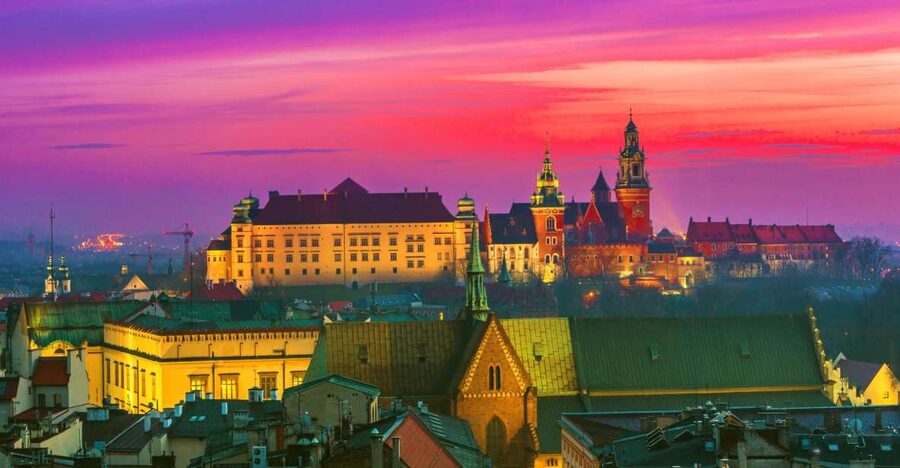
Krakow’s center is already one of Poland’s most rewarding places to walk. By night, familiar landmarks take on a different mood. The Gothic towers are lit, the broad Main Market Square opens around you, and narrow streets such as St. John Street give the stories a more atmospheric setting.
The tour does not depend on special effects or staged actors. Its appeal comes from hearing what happened, or what people once believed happened, at the same places you are seeing. That makes the walk useful even if you are not normally drawn to ghost tours.
I especially like the mix of eras. The stories reach from Krakow’s early legends to later crimes and modern history. You are not given one long tale about ghosts. Instead, the guide moves between folklore, law, social customs, religion, and criminal behavior.
That wider scope also keeps the evening from feeling repetitive. One stop may concern a supernatural legend, while the next explains a darker part of city life or Poland’s past. The exact stories can vary by guide, but the format gives you a broad look at Krakow’s less polished side.
More two-hour walks around Krakow:
- Krakow: 2h Kazimierz (Jewish Quarter) Walking Tour
★ 4.5 · 75 reviews - Berlin’s Best: 2 Hour Walking Tour Third Reich and the Cold War
★ 5.0 · 5,486 reviews - Budapest City Landmarks Walking Tour in 2 Hours
★ 5.0 · 2,048 reviews
Meeting at Hotel Polski and entering the Old Town
The walk begins in front of Hotel Polski pod Białym Orłem, commonly described as Hotel Polski. This is a practical starting point near the Old Town, so you are already close to the central sights when the tour begins.
You meet after sunset and set off on foot. The evening timing matters. During the day, Krakow’s churches, market buildings, and university courtyards can feel bright and formal. At night, the guide can point out the same places and explain their darker associations.
Do not expect a rapid sightseeing circuit. The walk is built around stops where the guide tells a story, asks questions, and lets you take in the surroundings. Several people found the pace manageable, with short walks between stops and time to sit or pause during the two hours.
That makes this a good option if you like walking tours but do not want a strenuous outing. You still need to remain outdoors and on your feet for much of the evening, though, so comfortable shoes and warm clothing are sensible.
Florian Gate and the city’s old defenses
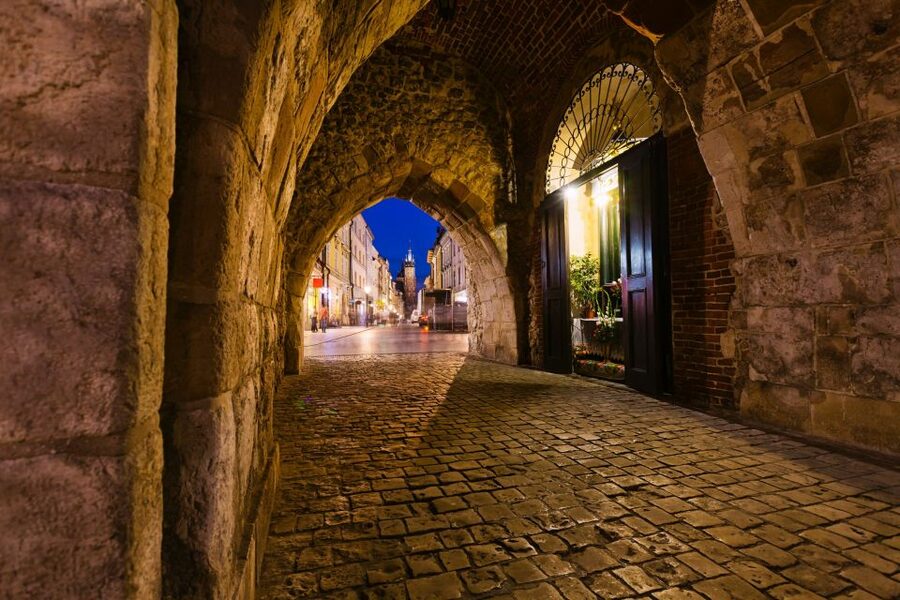
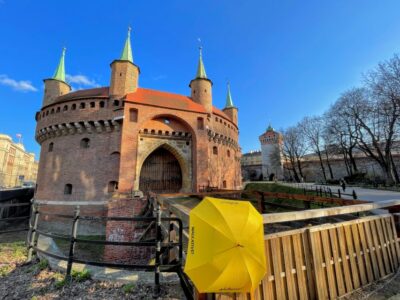
One of the early sights is Florian Gate, a Polish Gothic gateway that once formed part of Krakow’s defenses. Its towers and masonry are especially effective at night, when the lighting gives the entrance a more severe look.
The value of stopping here is not simply the view. A city gate is a natural place to discuss crime, punishment, danger, and the fear of people arriving from outside. The guide uses the old defensive setting to explain stories connected with the city’s past.
This is also a useful orientation point. If you have just arrived in Krakow, the route begins to show how the medieval center fits together. You can connect Florian Gate with the streets leading toward the Main Market Square and later toward Wawel.
The tour does not promise entry into every landmark. Much of the evening takes place outside, which keeps the price down and lets the guide maintain a steady route through the Old Town.
St. John Street and Krakow’s darker tales
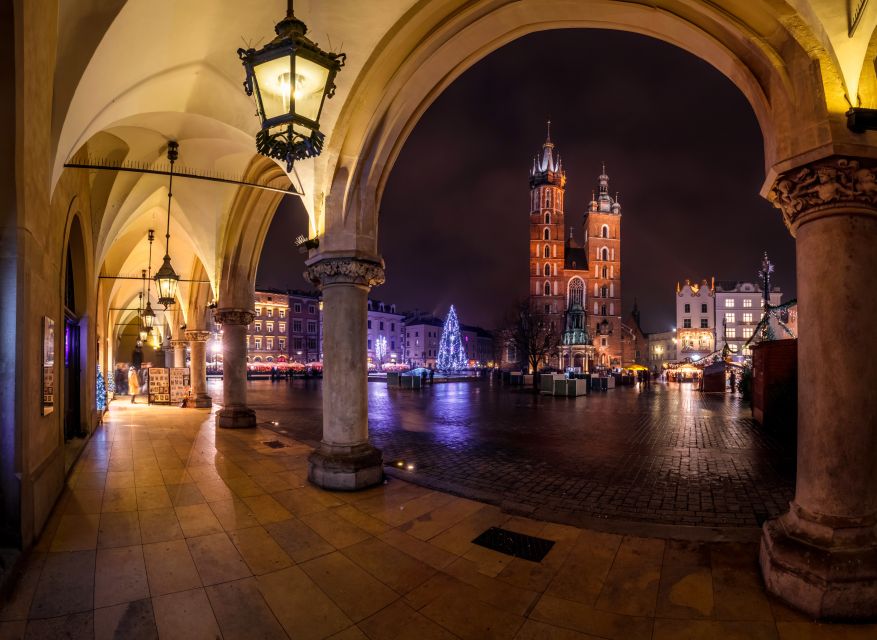
The walk continues along St. John Street, one of the central streets leading toward the Main Market Square. Here, you get the feeling of old Krakow as a lived-in city rather than a set of isolated monuments.
The guide may use the street to move from broad history into more personal stories. Murder, strange deaths, superstition, and alleged supernatural events work better when tied to a real street plan. You can see how close the old buildings are and imagine how quickly rumors could spread in a compact city.
This part also shows why a good guide matters. The subject is dark, but the tone is not meant to be grim from start to finish. Several guides are praised for using humor without losing the seriousness of the history. That balance is important. Too much theatrical fright would make the tour feel shallow, while a dry lecture would miss the point.
Guides such as Navia and Tomasz have been praised for involving the group and answering questions. Anna has also been noted for adding current information and research to the stories. Those details suggest that the best version of the tour is interactive rather than a memorized speech.
More walking tours around Krakow:
- Old Town Krakow & Wawel Castle Walking Tour
★ 5.0 · 1,508 reviews - Krakow: The Old Town Walking Tour
★ 4.8 · 794 reviews - Krakow: Kazimierz Jewish Quarter Walking Tour
★ 4.8 · 571 reviews - Kraków: Old Town & Wawel Castle Walking Tour in English
★ 4.8 · 532 reviews
Main Market Square, Cloth Hall, and St. Mary’s Basilica
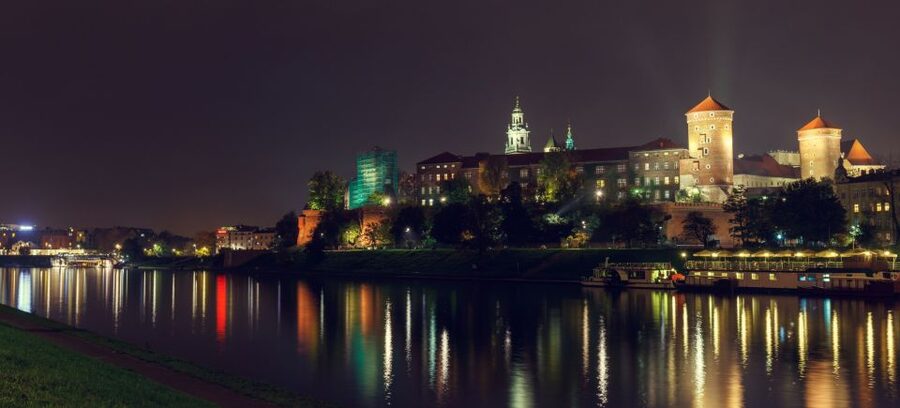
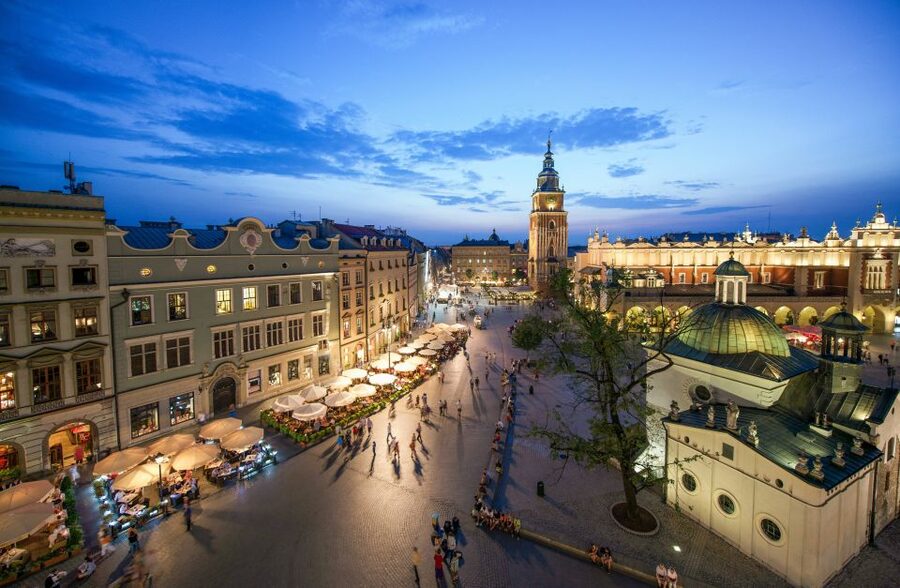
The Main Market Square brings together several of the tour’s most striking sights. The Cloth Hall sits at the center, while St. Mary’s Basilica rises along the edge with its two uneven Gothic towers. The Town Hall Tower adds another strong landmark nearby.
At night, the lighting gives these buildings a more dramatic setting than you may notice during a busy daytime visit. The tour asks you to look again, this time for stories tied to death, belief, punishment, and the legends that have grown around the city.
The Cloth Hall is useful as a reminder that Krakow was not only a religious center. Trade brought people, money, disputes, and temptation into the square. Dark stories become more interesting when you understand that the market was a working center of city life, not just a pretty building for photographs.
St. Mary’s Basilica adds another layer. Its towers and long history make it a natural setting for tales shaped by faith and fear. You stop outside rather than touring the interior as part of this activity, so plan a separate daytime visit if you want to see the church inside.
The Town Hall Tower and City Hall area help broaden the theme to civic authority. The guide may connect the city’s dark stories with law, order, and the changing idea of justice. One particularly useful feature is the way the tour can raise questions about how modern Poland formed and how society treated crime in earlier periods.
Collegium Maius and Maria Magdalena’s Square
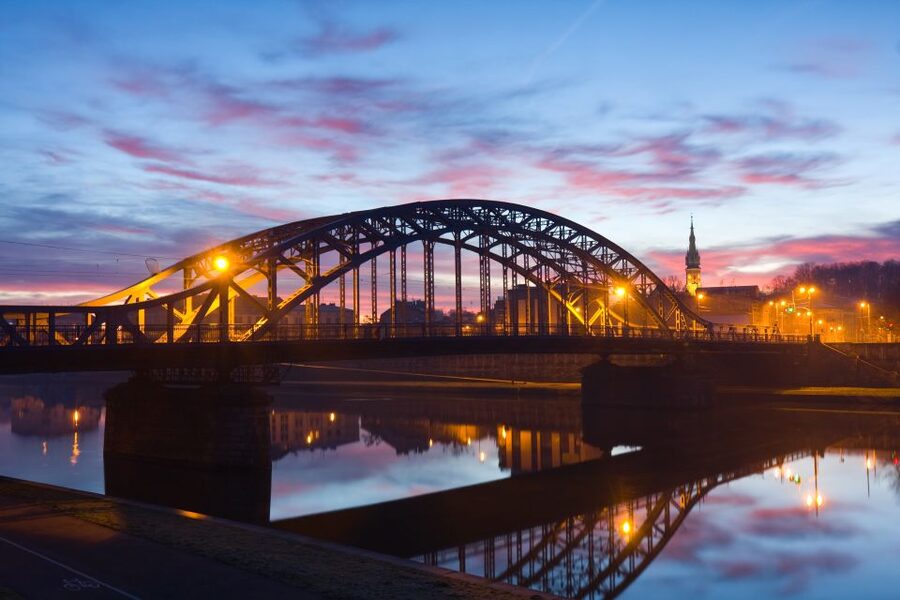
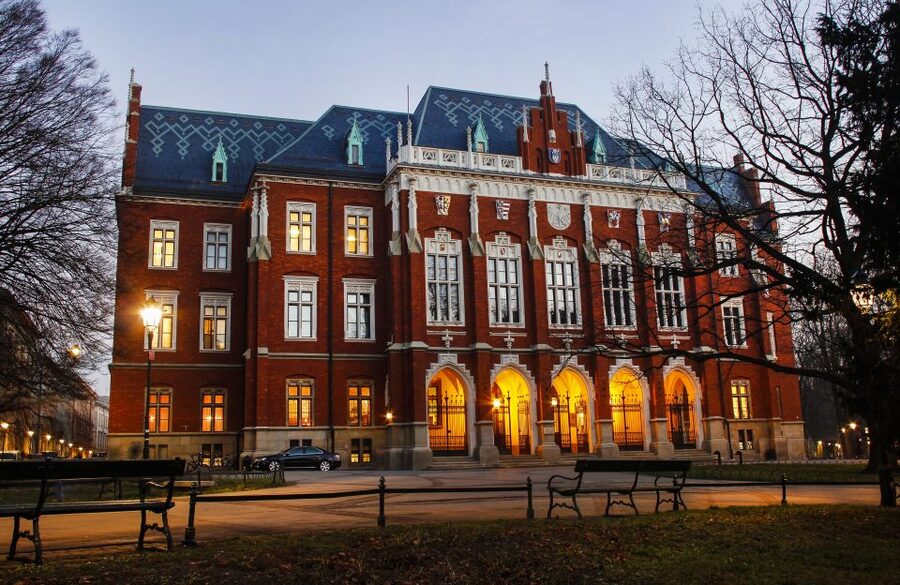
The route also includes Collegium Maius, the historic university building, and Maria Magdalena’s Square. These stops give the tour some welcome variety.
Collegium Maius brings the world of learning into the story. A university setting can suggest old ideas about medicine, religion, science, and superstition. It also shows that Krakow’s unusual stories are not limited to alleys and churches.
Maria Magdalena’s Square offers another change of scene. The open space makes a good place to pause and listen, and the tour’s frequent stops mean you are not walking without a break for the full two hours. If you prefer constant movement, this may feel slower than a standard city highlights tour. If you enjoy storytelling, the pauses are a benefit.
Several people describe the tour as easy to follow even in unpleasant weather because the group keeps moving and stops are well spaced. Still, bring a coat that can handle wind or rain. The guide cannot turn an outdoor walk into an indoor activity if conditions change.
Katyński’s Square and the road toward Wawel
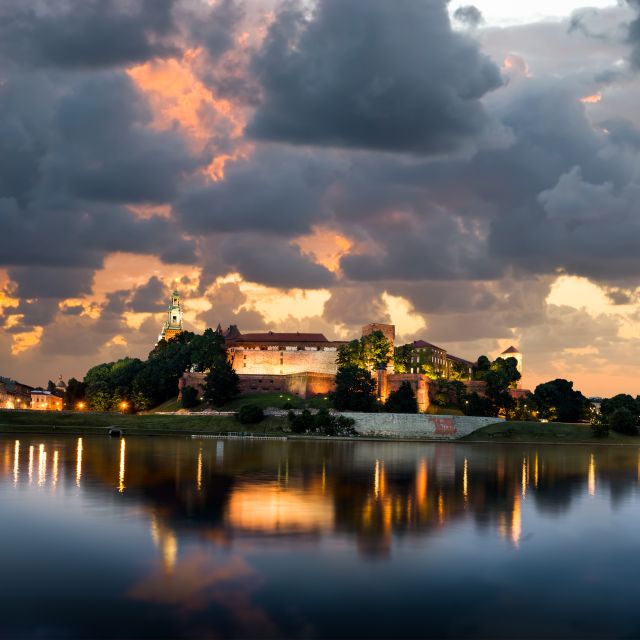
Katyński’s Square is another stop on the route before the walk continues toward Wawel. The square gives the guide room to discuss more recent historical memory alongside older legends.
This shift in time is one of the tour’s strengths. You are not left with the idea that Krakow’s dark side belongs only to medieval superstition. The route connects old beliefs with later events and more recent questions about Polish society and politics.
That wider view suits people who want more than a collection of spooky anecdotes. The tour remains entertaining, but it can also prompt you to think about who controls a city, how laws develop, and how stories change as they are passed down.
The route finishes at the Royal Castle on Wawel Hill, or Zamek Królewski na Wawelu. The ending is fitting because Wawel is tied to Krakow’s best-known dragon legend. From this part of the city, you can also take in views toward the Vistula River and hear where the legendary dragon was said to have lived.
The finish is not just a convenient endpoint. Wawel gives the tour a final link between landscape, legend, and royal Krakow. If you are planning your evening after the walk, check your route from Wawel in advance. The tour ends there rather than returning you to the hotel or the starting point.
What the $24 price buys you
At $24 per person, this is fairly priced for a two-hour guided walk in central Krakow. You are paying for a live guide, a planned route, and the added value of interpretation at places you could otherwise pass without noticing.
The price makes the most sense if you are interested in stories and context. A self-guided walk can show you the same buildings, but it will not give you the guide’s delivery, local anecdotes, questions, or connections between different periods of history.
The value is also strong for a first visit. You cover many central sights in one evening and can return to the most appealing ones later in daylight. The tour is not a replacement for a full Krakow history tour, but it adds a different layer to the usual church-and-square route.
Food and drinks are not included. That is not a major issue because the walk lasts two hours and finishes near plenty of central options, but you should plan your own meal or drink afterward.
Who will enjoy this walk most
I would choose this tour if you like folklore, true crime, local legends, or history with a macabre edge. It also works well for people who have already seen Krakow’s main sights during the day and want to understand them from another angle.
The guides’ style makes it suitable for a mixed group. You do not need to be a specialist in Polish history, and the questions and humor help keep the material accessible. The tour can also suit solo visitors because the guide actively involves the group.
It is less suitable for young children. Anyone under 15 is excluded, and the subjects include murder, witchcraft, ghosts, vampires, and the undead. If graphic or frightening stories are not your thing, a standard Old Town history walk would be a better choice.
You should also consider the season. Winter can bring snow and a genuinely creepy atmosphere, but it can also bring bitter cold. Wear layers, gloves, and shoes with a good grip. In warmer months, the night setting remains part of the appeal, and rain is still possible.
The tour is wheelchair accessible, but the supplied details do not explain the exact surface conditions or every stopping point. If you need specific access arrangements, confirm them when booking.
Booking details that matter
The tour runs for two hours, with starting times depending on availability. It is offered in English, Polish, Italian, and Spanish, so check the selected language carefully before paying.
Cancellation is flexible up to 24 hours before the start for a full refund. You can also reserve now and pay later, which helps if your Krakow schedule may change.
Pets, oversized luggage, alcohol, and drugs are not allowed. Anyone under the influence or causing trouble for the group can be removed without a refund. These rules are sensible for a walking tour, especially one moving through crowded central streets.
The starting point is in front of Hotel Polski, and the finish is at Wawel Castle. You do not need food or special equipment, but you do need weather-ready clothing and a willingness to listen outdoors.
Should you book Creepy Krakow?
Book it if you want a fun, story-led evening that adds murder, myth, and local belief to Krakow’s famous landmarks. The strongest reason to choose it is the combination of a central route and guides who bring personality to the material. Names such as Navia, Tomasz, Anna, and Stefan have been associated with warm, engaging delivery, though your guide will depend on the date.
Skip it if you want to enter the monuments, study art, or hear a formal architectural lecture. This is an outdoor storytelling walk, not a museum visit or a full survey of Krakow’s past.
For most adults and older teenagers who enjoy a darker angle, $24 is a reasonable price for two hours. Bring a warm layer, meet at Hotel Polski after sunset, and expect Krakow’s familiar center to feel a little less innocent by the time you reach Wawel.
FAQ
How long does the Creepy Krakow tour last?
The walking tour lasts two hours.
Where does the tour start?
You meet in front of Hotel Polski pod Białym Orłem, also referred to as Hotel Polski.
Where does the tour finish?
The tour finishes at Zamek Królewski na Wawelu, the Royal Castle on Wawel Hill.
Which Krakow sights are included?
The route includes sights such as Florian Gate, St. Mary’s Basilica, the Cloth Hall, the Town Hall Tower, Collegium Maius, City Hall, Maria Magdalena’s Square, Katyński’s Square, Wawel, and views toward the Vistula River.
What languages are available?
The live guide service is available in Polish, Italian, English, and Spanish.
Is the tour suitable for children?
Children under 15 are not permitted, so the tour is intended for people aged 15 and older.
Is the tour wheelchair accessible?
Yes, the activity is listed as wheelchair accessible.
Can I cancel the booking?
You can cancel up to 24 hours in advance for a full refund. You can also reserve now and pay later.
New walking tours around Krakow
- Krakow: Old Town Highlights Walking Tour★ 4.5 · 173 reviews
- Kraków: Old Town & Wawel Castle Walking Tour in English★ 4.8 · 532 reviews
- Krakow: Street Food Walking Tour★ 4.8 · 285 reviews
- Krakow: 2h Kazimierz (Jewish Quarter) Walking Tour★ 4.5 · 75 reviews
- Krakow: Legends and Tales of Old Town Walking Tour★ 4.8 · 227 reviews
- Krakow: Jewish Ghetto Walking Tour★ 4.6 · 349 reviews
- Krakow: Spooky Tales Guided Walking Tour★ 4.6 · 164 reviews
- Krakow: Evening Walking Tour with Spooky Stories★ 4.7 · 500 reviews
Krakow Walking Tours, side by side.
Kraków: Old Town & Wawel Castle Walking Tour in English
Read our review →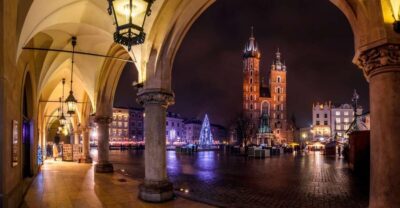
Krakow: Evening Walking Tour with Spooky Stories
Read our review →

Krakow: Legends and Tales of Old Town Walking Tour
Read our review →Lists this walk sits on