
Review · ROME
Dark Heart of Rome – Facts, Legend & Mystery Walking Tour
Rome after dark is not just prettier. It feels like a different city, and this 90-minute evening walk uses that change in mood to tell stories of executions, ghosts, strange characters, and Rome’s less-polished past. The facts and legends often sit side by side, leaving you to decide where history ends and folklore begins.
I like two things right away. First, the route uses streets and details you might pass in daylight without a second glance. Second, the guides make the material lively rather than gloomy. Rob, Alethea, Alberto, Inti, and other guides have earned praise for clear storytelling, humor, and strong audience interaction. The main consideration is the walking: this is not suitable for wheelchairs, mobility-impaired visitors, or strollers, and some stories involve murder, cruelty, and disturbing events.
Key points to know before you book
- Rome at night: See central Rome lit up after sunset, when quieter lanes take on a more atmospheric feel.
- A darker angle: Hear supernatural tales, true-crime-style stories, and overlooked episodes from Roman history.
- A useful route: Walk from Sant’Andrea della Valle Church through Campo de Fiori and Via Giulia to Castel Sant’Angelo.
- Strong guide element: The experience depends heavily on the guide’s delivery, with Rob, Alethea, Alberto, Inti, and others praised for wit and expressive storytelling.
- Good value: At $14 per person, this is an inexpensive way to add a distinct evening activity to a Rome stay.
- Plan for walking: The tour lasts 1.5 hours, ends near public transport and taxis, and requires comfortable shoes.
Why Rome feels different after sunset
Rome is full of dramatic monuments, but the city’s smaller streets can be just as memorable. At night, the traffic and daytime crowds often fade from the foreground. Church façades, old stone walls, narrow lanes, and piazzas become the setting rather than mere scenery.
This tour takes advantage of that mood without pretending that every tale is proven fact. Its subject is the space between documented events, local legends, supernatural beliefs, and stories passed down through the centuries. That mix suits Rome, a city where ancient religion, papal power, public punishment, and everyday superstition have long shared the same streets.
I would not book this as your main introduction to Roman art or archaeology. You will not spend the evening studying the Colosseum, the Vatican Museums, or ancient engineering. Instead, you get a different key to the historic center, one that helps you notice odd details and imagine the people behind the grand façades.
The tone is usually entertaining rather than frightening. Guides use jokes and theatrical delivery to keep the walk moving, even when the subject turns sad or gruesome. If you enjoy dark history, ghost stories, unusual facts, or true crime, this is the right kind of Rome tour for you.
More crime and mystery walks around Rome:
- Rome by Night Walking Tour – Legends & Criminal Stories
★ 4.5 · 1,003 reviews - Ghosts, Legends & Mysteries of Rome Tip-Based Walking Tour
★ 4.7 · 284 reviews - Prague: Ghost Walking Tour Where Legends Come To Life
★ 4.4 · 5,253 reviews
Starting at Sant’Andrea della Valle Church
The meeting point is on the steps of Sant’Andrea della Valle Church on Corso Vittorio Emanuele II. It is about 150 meters from Largo di Torre Argentina, on the left if you walk toward the Tiber, beside Piazza Vidoni and Piazza Sant’Andrea della Valle.
This is a practical starting point in the historic center. You are not being sent to an isolated corner of the city, and the location is close to places you may already visit during the day. Still, allow time to find the church and identify the tour coordinator. You need to show your voucher before the walk begins.
The church provides an appropriate opening scene, with its monumental setting and central location. From here, the guide shifts your attention away from standard sightseeing and toward stories attached to streets, buildings, and public spaces.
The guide makes a big difference. Past guides have included Rob, Alethea, Alberto, Inti, Ricardo, Giacomo, Max, and others. Names and assignments can change, so you cannot select a particular storyteller with certainty. The consistent pattern is an emphasis on clear English, expressive delivery, humor, and interaction with the group.
One useful point: several guides have been praised for speaking clearly without needing an audio system. That matters on a walking tour, since you can keep your eyes on the street rather than constantly adjusting a device.
Campo de Fiori and Rome’s public darkness
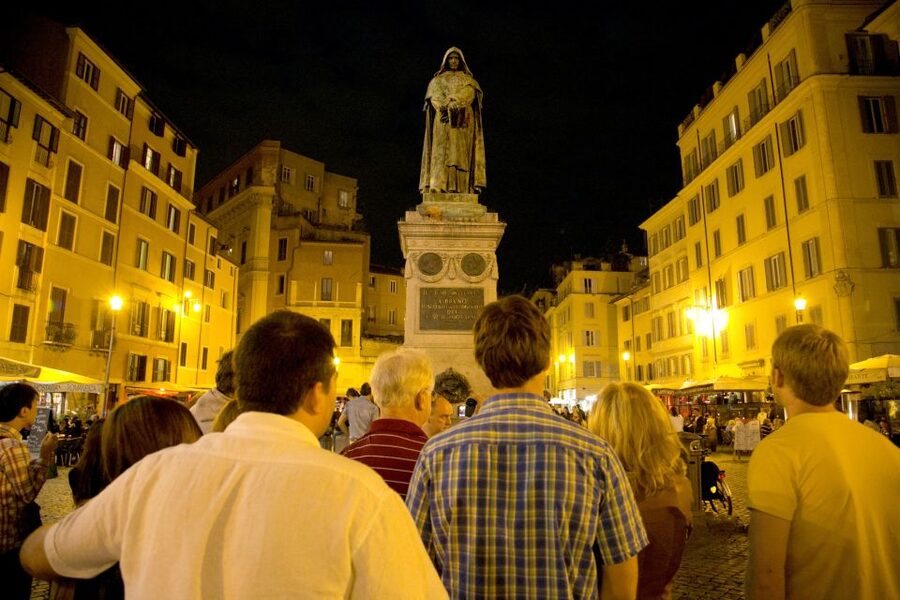
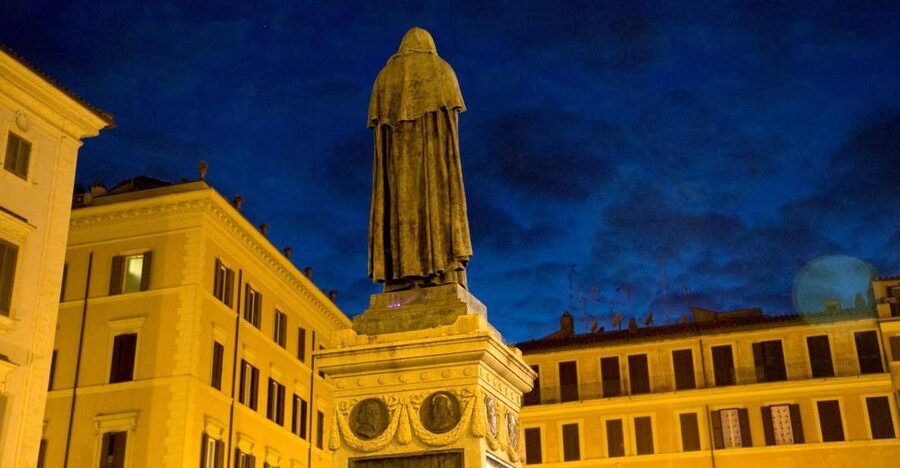
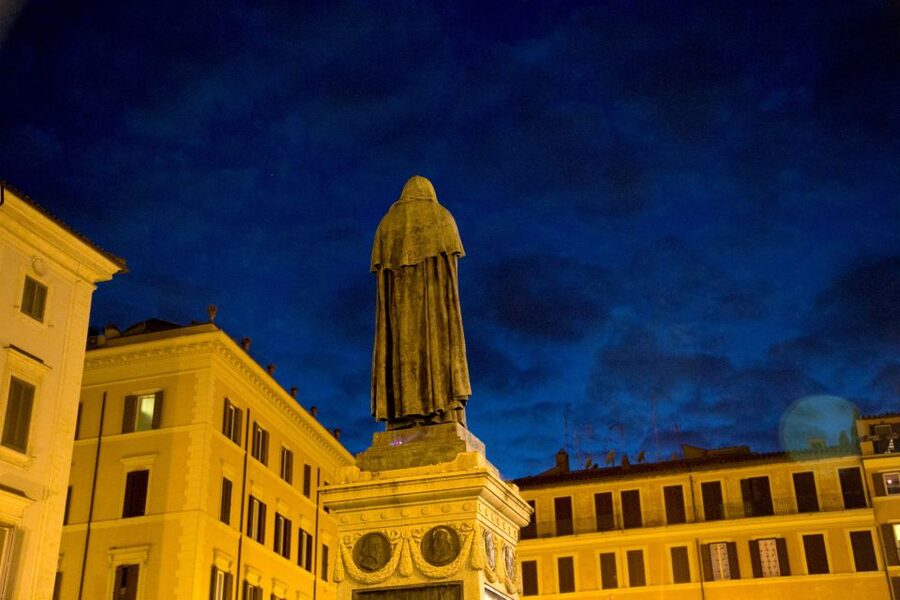
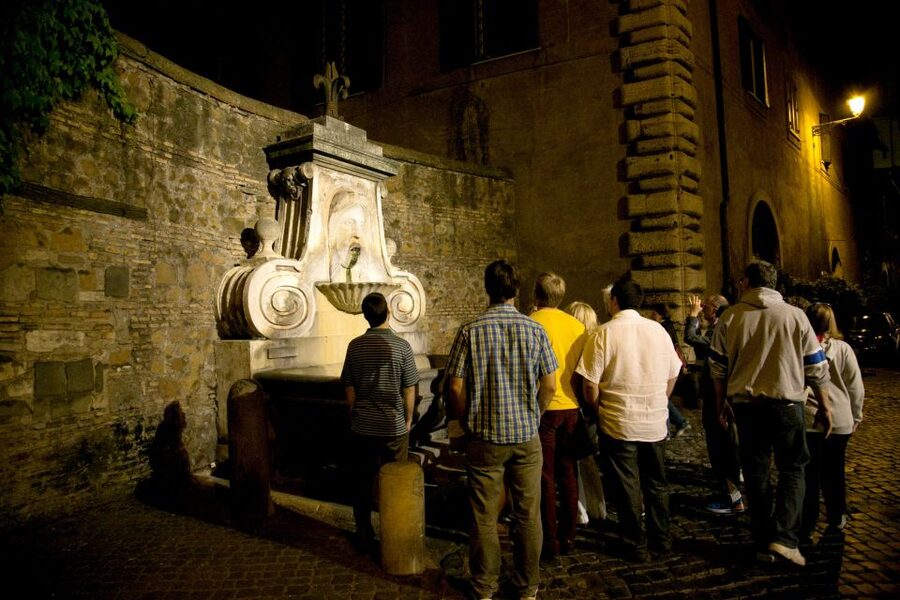
Campo de Fiori is one of the route’s most fitting stops. By day, it is known for its market, restaurants, and lively public space. After sunset, its past becomes more noticeable. The square has long been tied to public spectacle and punishment, making it a natural setting for the tour’s darker stories.
Here, you can expect the guide to connect the physical square with Rome’s history of religious authority, public judgment, and death. The point is not simply to frighten you. The setting gives weight to stories that might feel abstract inside a museum or history book.
This is also where the tour’s blend of fact and legend becomes clear. Some material is firmly historical. Some belongs to local tradition or supernatural belief. A good guide keeps the difference understandable while still telling the stories with dramatic force.
You may find the subject matter sad as well as macabre. The tour does not treat every dark event as a joke, but humor helps prevent the evening from becoming relentlessly bleak. Guides have been praised for keeping a relaxed atmosphere even when discussing cruel or disturbing episodes.
Campo de Fiori also shows why the route works better at night than during a standard daytime walk. The lighting changes the square’s character, and the guide can point out details that are easy to overlook when you are focused on restaurants, shopping, or a packed schedule of major sights.
Corso Vittorio Emanuele II and the overlooked details
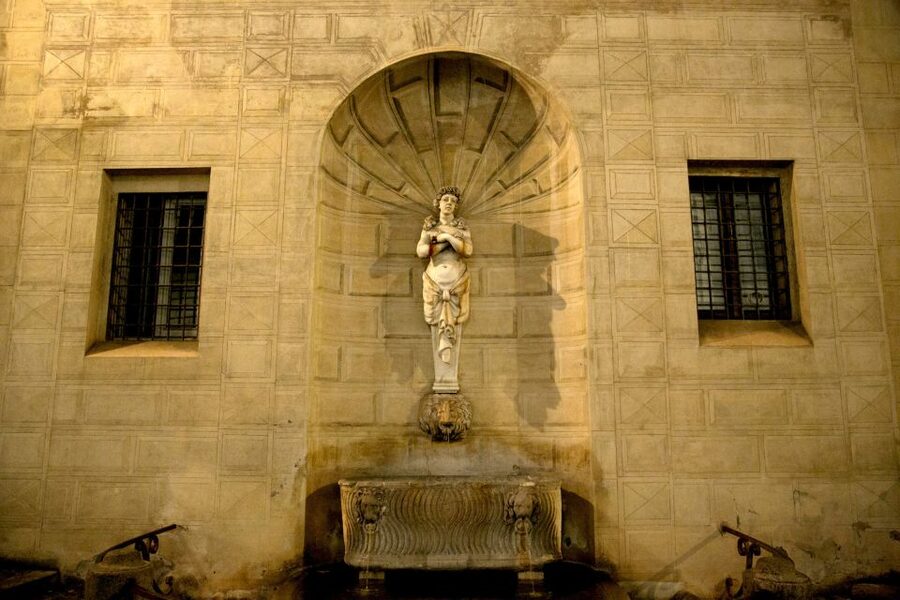
The walk continues through central Rome along Corso Vittorio Emanuele II. This broad road is useful as a link between several historic areas, but it is not usually the part of Rome that people remember most vividly.
That is exactly why it works in this tour. The guide can use familiar streets as a backdrop for stories that do not appear in a standard list of major attractions. You may hear about historical figures, crimes, strange beliefs, or events that reveal a harsher side of life in the Eternal City.
Several people who have taken the walk have later looked up the stories and locations for themselves. That is a good sign for anyone who wants more than a string of spooky claims. The tour is designed to spark curiosity, and the material can give you new questions to investigate after the walk.
Do not expect every stop to have a dramatic visible feature. Some moments depend on the guide explaining what happened in a particular place or drawing attention to a small architectural detail. If you prefer large monuments and constant photo opportunities, parts of this walk may feel understated.
I see that as part of its value. Rome rewards a slower look. A doorway, inscription, statue, or side street can gain meaning once you know the story attached to it.
More walking tours around Rome:
- Rome: Guided Food Walking Tour with Wine in Trastevere
★ 4.9 · 3,105 reviews - Rome: Trastevere & Campo de Fiori Street Food Walking Tour
★ 4.9 · 2,768 reviews - Rome: Paranormal Night Walking Tour & Secret Backstreets
★ 4.9 · 1,921 reviews - Rome: Trastevere Street Food Walking Tour with Local Expert
★ 4.8 · 1,784 reviews
Via del Governo Vecchio and Via Giulia
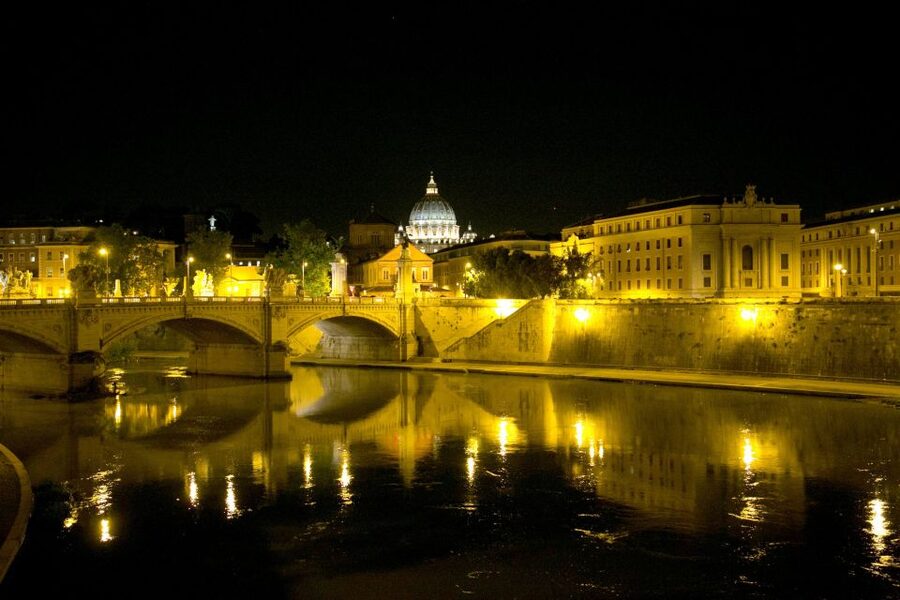
Via del Governo Vecchio and Via Giulia bring the walk into streets where the atmosphere becomes more intimate. These lanes and old façades are part of the historic center, but the tour asks you to see them through a less familiar lens.
Via del Governo Vecchio is close to some of Rome’s most visited central areas, yet it can feel removed from the formal route between major monuments. Via Giulia is especially suited to an evening walk, with its long historic alignment and quieter visual character compared with the city’s busiest squares.
Here, expect more storytelling than formal sightseeing. You will hear about people and events that rarely make it into a basic Rome orientation tour. The guide may also connect the stories to broader themes: power, fear, punishment, superstition, and the way Roman society dealt with outsiders and criminals.
This section is where comfortable footwear matters. The walk is only 1.5 hours, but you are on your feet throughout, and Rome’s central streets can be tiring after a full day of sightseeing. Wear shoes you trust rather than saving your most stylish pair for dinner.
The route is also better for adults and older children who can handle grim subject matter. The activity data does not set a specific minimum age, but the focus on murder, death, supernatural tales, and cruel historical figures makes it less suitable for very young children.
Piazza Farnese and the strength of the storytelling
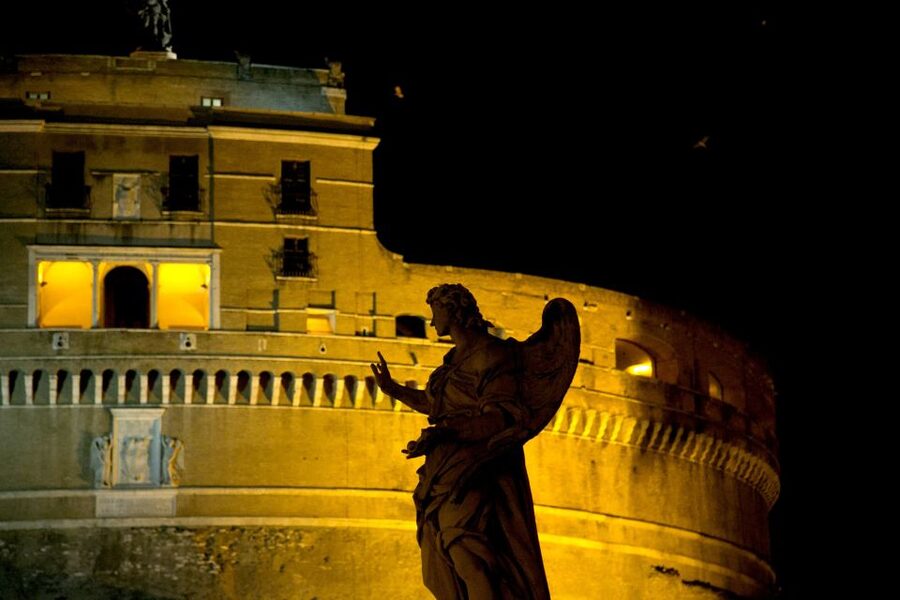
Piazza Farnese gives the tour another grand Roman setting. Its scale and architecture contrast with the narrower streets, allowing the guide to shift between impressive public spaces and the darker human stories connected to them.
The square is a good reminder that Rome’s beauty and brutality often sit close together. A polished façade can frame a story about political power, punishment, or personal obsession. That contrast is one of the best reasons to take this walk instead of simply joining another monument-by-monument tour.
The guide’s delivery matters most here. Past guides such as Rob and Alethea have been praised for expressive storytelling, while Alberto and Inti have been singled out for warmth, interaction, and a well-judged sense of humor. Alethea has also been praised for speaking clearly and keeping the group engaged without relying on an audio system.
You should expect some audience participation in the mild sense of questions, reactions, and conversation. It is not a theatrical show with actors or staged scenes. The guide is the focus, using voice, timing, facial expression, and local context to make each stop work.
That human element is a major part of the $14 value. You are paying less for admission to a monument and more for an informed evening walk that gives familiar places a new story.
Finishing near Castel Sant’Angelo
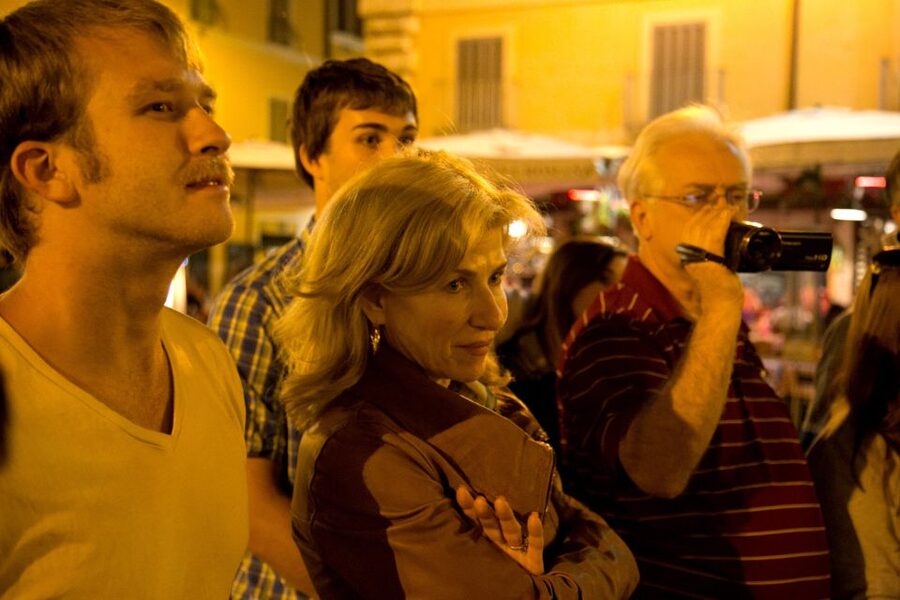
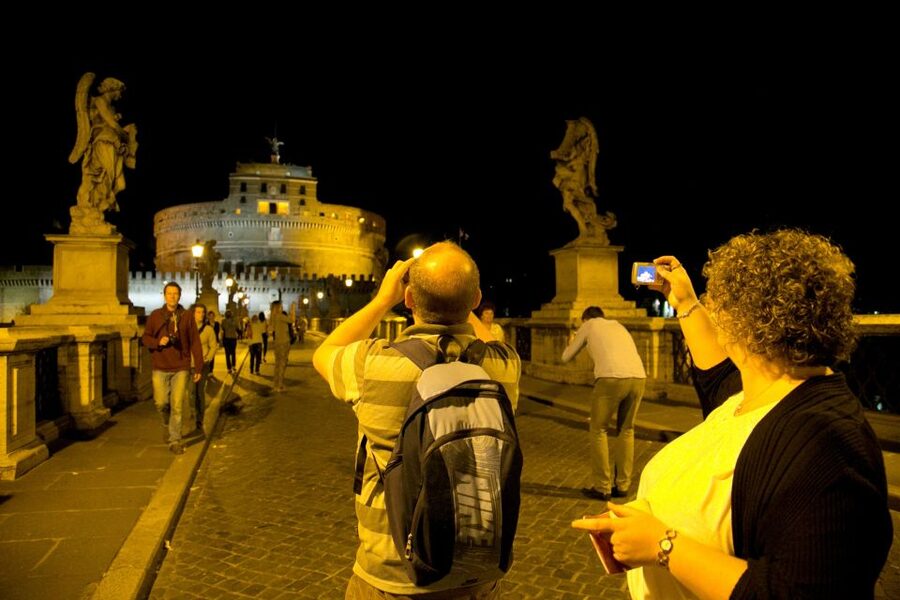
The tour ends at Castel Sant’Angelo. The activity does not include entry to the castle, so this is an exterior endpoint rather than a museum visit.
It is a strong place to finish. Castel Sant’Angelo has an imposing presence at night, and the ending gives you a memorable final view after the quieter streets and morbid tales earlier in the walk. It also puts you near public transport and taxis, which is useful if you are ready to return to your hotel or continue your evening.
Because the walk ends here, think ahead about dinner and transport. You are not returned to your starting point. That is not a serious problem in central Rome, but it matters if your accommodation is near Sant’Andrea della Valle or if you have a timed booking elsewhere.
The endpoint also makes the tour easy to pair with other plans. You could use it as a first-night orientation, as several people have done, because it introduces streets and landmarks you may want to revisit in daylight. Or you could schedule it late in your stay, when you already know the famous sights and want a different angle.
Price, timing, and practical value
At $14 per person, this is a low-cost activity by Rome standards. The price covers the evening city walk and an English-speaking guide. There are no museum admissions, hotel transfers, or extra transportation included.
That makes the value straightforward. You receive 90 minutes of guided storytelling through several central areas, with Rome’s nighttime setting included at no extra cost. It is especially useful for a first or second evening when you want an organized activity without committing to an expensive dinner, show, or ticketed attraction.
The tradeoff is that the experience depends strongly on the guide and the group atmosphere. A lively storyteller can make the same street feel fascinating. A quieter delivery may leave the material feeling less dramatic. The consistently strong guide feedback suggests that this is usually a strength, but no tour can guarantee one particular guide.
You can cancel up to 24 hours before the start for a full refund, and you can reserve now and pay later. Starting times vary, so check availability for your date. The tour is offered in English.
For access, be realistic. The provider cannot accommodate wheelchair users or people with mobility impairments, and baby strollers are not permitted. The walk involves a fair amount of walking, so comfortable shoes are essential.
Who should book the Dark Heart of Rome tour?
I would choose this tour if you have already seen, or plan to see, Rome’s major landmarks and want something less predictable. It works particularly well for people interested in dark history, ghosts, crimes, unusual personalities, and local legends.
It also suits curious first-time visitors. The route can help you get your bearings in the historic center, while the stories give you reasons to notice places you might otherwise ignore. The evening setting is a bonus in summer, when a night walk is cooler than a long afternoon outdoors.
I would skip it if you dislike stories about death, execution, cruelty, or supernatural events. I would also choose another activity if you need step-free access, cannot walk comfortably for 90 minutes, or want a formal art and architecture lesson.
Should you book it?
Book it if you want a funny, atmospheric alternative to standard Rome sightseeing and you are happy to let a storyteller guide the evening. At $14, it is an easy addition to a Rome trip, especially when you want to explore after dinner or fill a free night.
The best reason to go is not the promise of seeing ghosts. It is the chance to connect Rome’s beautiful streets with the unsettling, human stories that usually get left out. Just bring good shoes, expect some grim material, and remember that the quality of the evening rests largely with the guide leading your group.
FAQ
How long does the Dark Heart of Rome tour last?
The tour lasts 1.5 hours, or 90 minutes.
What language is the tour offered in?
The tour is conducted in English with a live English-speaking guide.
Where does the tour begin?
Meet on the steps of Sant’Andrea della Valle Church on Corso Vittorio Emanuele II. The church is about 150 meters from Largo di Torre Argentina, on the left when heading toward the Tiber.
Where does the tour end?
The walk ends at Castel Sant’Angelo. Public transport and taxis are available from the area.
What places are included on the route?
The route includes areas around Campo de Fiori, Corso Vittorio Emanuele II, Via del Governo Vecchio, Via Giulia, Piazza Farnese, and Castel Sant’Angelo.
Is hotel pickup included?
No. Hotel pickup and drop-off are not included.
Can wheelchair users or people with mobility impairments join?
No. The provider cannot accommodate wheelchair users or people with mobility impairments.
Are baby strollers allowed?
No. Baby strollers and pushchairs cannot be accommodated.
New walking tours around Rome
- Rome: Fountains and Squares Small-Group Walking Tour★ 4.7 · 335 reviews
- Highlights of Jewish Ghetto And Trastevere Walking Tour★ 4.8 · 233 reviews
- Ghosts, Legends & Mysteries of Rome Tip-Based Walking Tour★ 4.7 · 284 reviews
- Alternative Walking Tour of Rome’s City Center & Hidden Gems★ 4.8 · 244 reviews
- Rome: Small-Group Guided Day or Night Walking Tour★ 4.8 · 1,009 reviews
- Rome by Night Walking Tour – Legends & Criminal Stories★ 4.5 · 1,003 reviews
- Rome Food Tour in the Historic Centre with 8+ Food Tastings★ 5.0 · 1,000 reviews
- Rome: Small-Group City Highlights Moonlight Walking Tour★ 4.9 · 949 reviews
Rome Walking Tours, side by side.
Rome: Guided Food Walking Tour with Wine in Trastevere
Read our review →
Rome: Trastevere & Campo de Fiori Street Food Walking Tour
Read our review →
Rome: Paranormal Night Walking Tour & Secret Backstreets
Read our review →
Rome: Colosseum Arena, Roman Forum & Palatine Hill Tour
Read our review →
Rome: Trastevere Street Food Walking Tour with Local Expert
Read our review →
Rome: Small-Group Guided Day or Night Walking Tour
Read our review →
Rome by Night Walking Tour – Legends & Criminal Stories
Read our review →
Rome Food Tour in the Historic Centre with 8+ Food Tastings
Read our review →Lists this walk sits on