
Review · ROME
Alternative Walking Tour of Rome’s City Center & Hidden Gems
Rome gets more interesting when you stop treating its monuments as isolated photo stops. This 2.5-hour walking tour links Trajan’s Column, Trevi Fountain, the Pantheon, and Piazza Navona with stories about the families, popes, artists, and schemers who shaped the city. The history comes with scandals, crime, betrayal, and the occasional politically incorrect joke.
I like the mix of famous sights and lesser-known corners, especially the chance to see church interiors and a private area listed as papal garden access. I also like the guide-led storytelling. Guides including Simone, Jacopo, Iris, and Jacob are praised for clear explanations, humor, and a willingness to answer questions. The main consideration is the tip-based price: the booking price is very low, but you should plan to pay the guide separately at the end.
Key points to know before you book
- Rome’s power families are the main thread: The tour explains how dynasties, popes, and wealthy patrons shaped the streets, churches, fountains, and art around you.
- The route covers the classic center: You visit Trajan’s Column, Piazza Venezia, Trevi Fountain, Sant’Ignazio, the Pantheon, and Piazza Navona.
- The lesser-known stops give the tour its character: A secret stop and a monastery visit add places you might miss on your own.
- The guides rely on stories, not just dates: Expect tales of corruption, murder, war, religious power, and family rivalry.
- It is pay what you want, but not truly free: The guide works for tips, commonly €10 to $50 per person.
- It suits first visits and repeat visits: First-time visitors get a useful map of central Rome, while return visitors get fresh context for familiar monuments.
Why the family stories make Rome easier to understand
Many Rome tours give you a date, a name, and a quick explanation before moving on. This one uses the people behind the buildings as its organizing idea. That matters because Rome’s center can otherwise feel like a beautiful jumble of ancient ruins, churches, fountains, and government buildings.
Here, you learn to ask who paid for a fountain, who wanted a church built, which family controlled a neighborhood, and how religious art also served political aims. The result is a more useful way to read the city. You are not just looking at marble. You are seeing power made visible.
The tone is lively rather than solemn. Stories may involve papal ambition, family feuds, corruption, crime, betrayal, and murder. Dark humor is part of the promised style, so this is not the best match if you want a quiet, formal lecture on Roman art.
Several guides receive especially strong praise for their delivery. Simone is described as energetic, clear, and able to connect Roman history with everyday life. Jacopo is known for family history, art, and Rome’s political past. Iris brings humor and enthusiasm, while Jacob is praised for an easy-to-follow style and a comfortable pace.
The exact feel may change with the guide. That is normal on a walking tour built around interpretation rather than a fixed audio script. What appears consistent is the focus on stories, questions, and connections between the stops.
More Hidden Gems Walking Tours in Rome:
- Rome: Paranormal Night Walking Tour & Secret Backstreets
★ 4.9 · 1,921 reviews - Dublin Highlights and Hidden Gems Guided Walking Tour
★ 5.0 · 6,020 reviews - Explore Berlin: See All The Iconic Sights & Some Hidden Gems
★ 5.0 · 4,429 reviews
Starting beside Trajan’s Column and the Forum
The meeting point is on the church steps at Chiesa del Santissimo Nome di Maria al Foro Traiano, beside Trajan’s Column and Trajan’s Forum. Look for the guide holding a sign with the tour name.
This is a strong place to begin. Trajan’s Column is not just an impressive ancient monument. Its carved spiral tells the story of Emperor Trajan’s military campaigns, turning stone into a giant political message. Your guide uses the area to set up the larger theme of Rome: rulers built monuments to shape how people remembered them.
The opening stop lasts about 15 minutes, enough time for a guided explanation, photographs, and a look at the surrounding ruins. The area can be busy, and Rome’s traffic and crowds may make it harder to hear at times. One useful detail from the experience is that the guides generally speak loudly and clearly, and some tours run without headphones. That allows a more direct conversation, though you still need to stay close to the group.
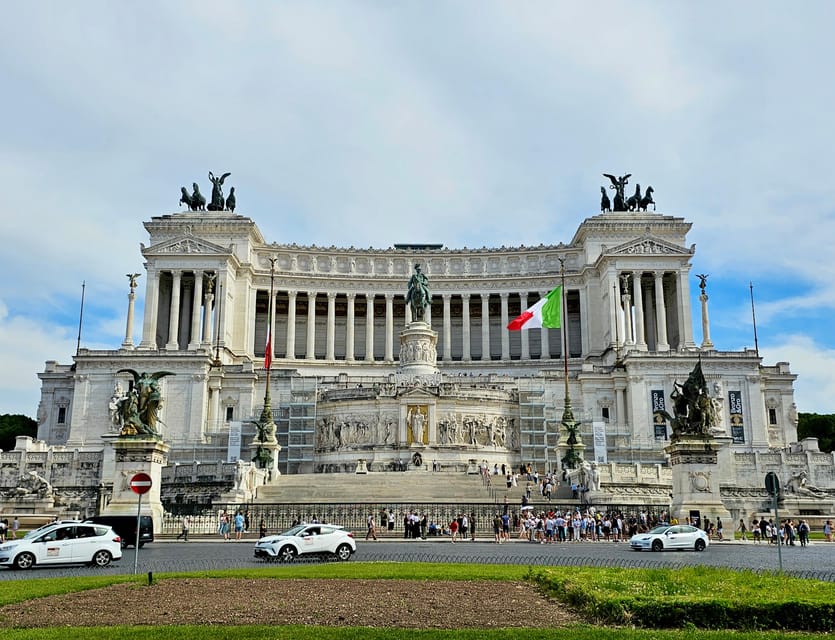
From here, the group walks toward Piazza Venezia. The square is broad, busy, and visually dominated by the Vittoriano, the large white monument often nicknamed the wedding cake. You only spend about five minutes here, so do not expect an extended visit. Instead, treat it as a quick orientation stop where ancient, papal, royal, and modern Rome meet.
Secret corners and a monastery visit
The next two stops give the tour its alternative angle. One is described simply as a secret stop, with about five minutes for a visit, photos, and explanation. The limited detail is part of the appeal, but you should not book expecting a long private tour of a major attraction. It is a short interlude that breaks up the standard route.
The monastery stop lasts roughly 25 minutes and is likely to be one of the more substantial parts of the walk. The tour description promises access to places not normally included in a standard city-center route, and the inclusion list refers to admission to private papal gardens. Because access can depend on the day and local arrangements, you should treat this as a special possibility rather than assume every inch of a restricted site is guaranteed.
One particularly useful feature is the guide’s ability to explain how religious spaces functioned as political spaces. A monastery, church, or garden may look peaceful now, but its history can involve patronage, status, rival families, and papal authority. The guide helps connect the building to those larger forces.
You may also find that this is where questions make the tour better. Some guides have answered questions about inscriptions, ancient languages, architecture, and regional customs. One guide was noted for reading Latin and Ancient Greek, which allowed old marble text to become part of the explanation rather than mere decoration.
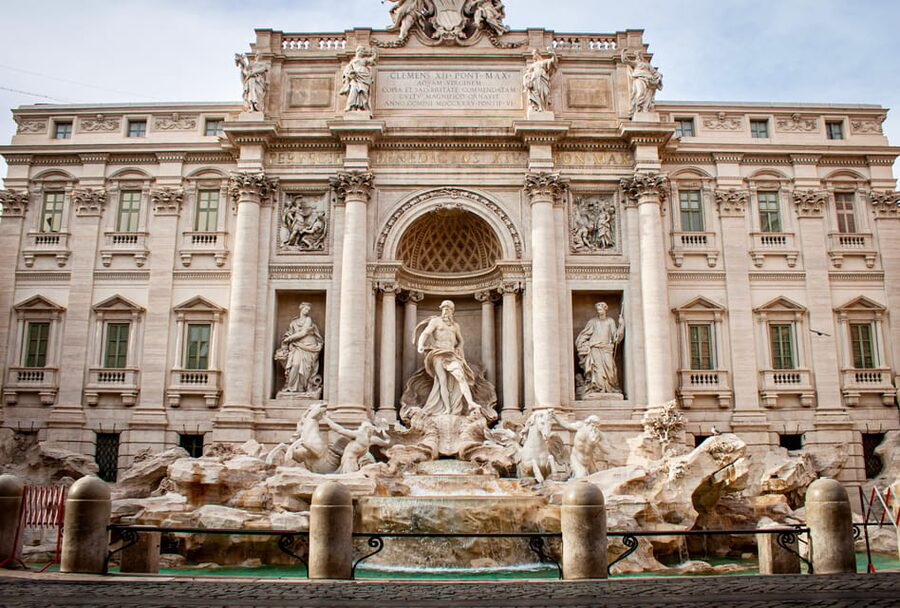
Trevi Fountain beyond the usual photograph
Trevi Fountain is a guaranteed crowd magnet, even on a well-planned walking route. The tour allows around 15 minutes here, including a short break, photos, guided commentary, and free time.
You will have enough time to see the fountain and take pictures, but this is not a long, quiet study of every figure in the sculpture. The guide’s job is to explain why fountains mattered in Rome. They were practical sources of water, but they also displayed wealth, control, and religious or political messaging.
That context changes how you look at the water rushing over the stone. Instead of seeing Trevi as only a famous backdrop, you begin to read it as a public statement paid for and shaped by people with something to prove.
The practical issue is crowd pressure. Trevi is one of the hardest places in central Rome for a group to gather. Keep the guide in sight, listen closely during the explanation, and save your longer photo session for the free-time portion. The tour is more useful here for context than for solitude.
More walking tours around Rome:
- Rome: Guided Food Walking Tour with Wine in Trastevere
★ 4.9 · 3,105 reviews - Rome: Trastevere & Campo de Fiori Street Food Walking Tour
★ 4.9 · 2,768 reviews - Rome: Trastevere Street Food Walking Tour with Local Expert
★ 4.8 · 1,784 reviews - Rome: Small-Group Guided Day or Night Walking Tour
★ 4.8 · 1,009 reviews
Sant’Ignazio and Rome’s theatrical church interiors
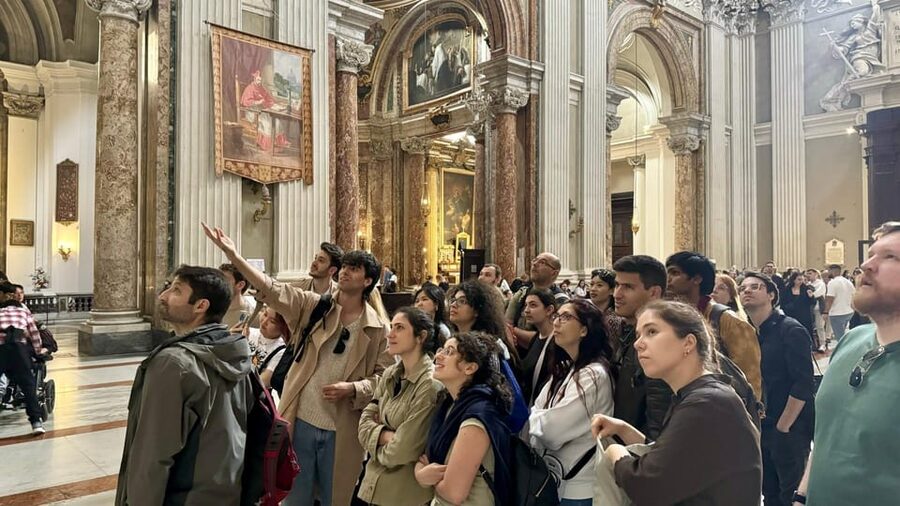
The Church of Sant’Ignazio di Loyola receives about 10 minutes on the route. It is a valuable stop because it shows how Rome’s churches can surprise you from the inside.
The church is known for its dramatic ceiling decoration and the painted illusion of architecture extending upward. The point is not only that the ceiling is beautiful. It demonstrates how Baroque artists used perspective, light, and visual tricks to create a sense of height and grandeur.
This stop also supports one of the tour’s best themes: Rome’s churches are not random. The city has so many because religious orders, popes, wealthy families, and patrons competed to build, decorate, and control sacred spaces. Art helped teach religious ideas, but it also advertised influence.
Ten minutes is brief. You probably will not get a full art-history lecture or time to sit and study every detail. Still, a good explanation here can make later church visits more rewarding, especially if you understand what to look for in ceilings, chapels, family tombs, and donor symbols.
The Pantheon in a five-minute stop
The Pantheon is one of Rome’s essential sights, but the listed stop lasts about five minutes. That tells you how to use this part of the walk. You get an exterior explanation, a quick visit or photo opportunity, and historical context, rather than an extended interior examination.
The building gives the guide another chance to connect ancient Rome with later religious and civic use. Its enormous dome, central opening, and long survival help explain why Rome feels layered. Ancient engineering, Christian practice, Renaissance admiration, and modern tourism all occupy the same site.
If entering the Pantheon is a priority, check what the tour includes on your date and plan extra time separately. The itinerary does not promise a long independent visit. Do not assume this short guided stop replaces a dedicated Pantheon visit.
Still, the brief stop can be useful early in your trip. A guide can point out details you might otherwise overlook, then you can return later with more time and a better set of questions.
Piazza Navona and the final look at papal Rome
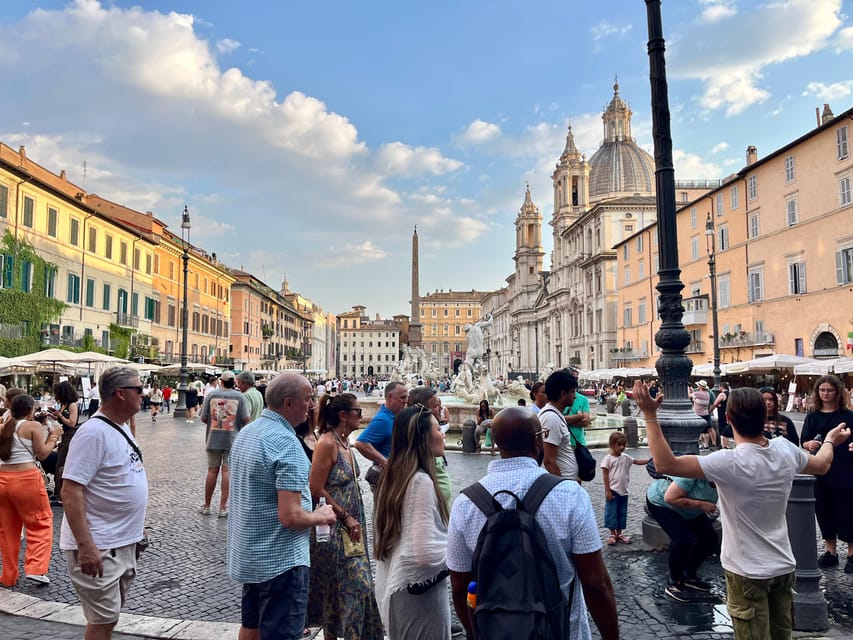
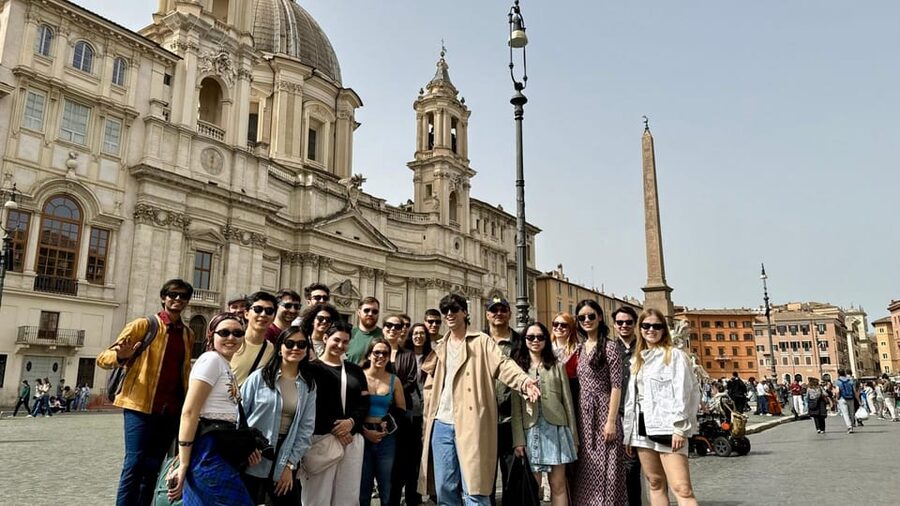
The walk ends in Piazza Navona after about 15 minutes of guided sightseeing. This is a sensible finish because the square brings together several themes from the tour: ancient foundations, Baroque design, church influence, fountains, artistic rivalry, and public display.
Piazza Navona’s long shape reflects the ancient stadium beneath it. The fountains and church architecture belong to a later Rome, when powerful patrons used public spaces to show wealth and authority. A guide who explains those connections can turn the square from a postcard scene into a readable piece of urban history.
The finish is practical, too. You are left in one of central Rome’s most convenient areas for continuing on foot. Guides may also suggest other places to visit, restaurants, or sights for later in your stay. One useful touch reported from the experience is a recommended list given at the end, which can help you plan beyond the standard monuments.
Because the tour ends here, you can continue exploring without having to find transport back to the starting point. The route is all on foot, so wear shoes you can comfortably use for two and a half hours on Rome’s hard streets and uneven surfaces.
What the low booking price really means
The advertised price of $3.77 per person makes this look almost free. In practice, it is a tip-based tour. The guides are paid through tips, and the usual suggested range is €10 to $50 per person.
That model can offer good value when the guide gives you a strong introduction to Rome. At €10, it remains inexpensive compared with many fixed-price guided walks. At $50, it becomes a more serious purchase, so you should judge the experience by the guide’s preparation, clarity, route, and ability to involve the group.
I recommend deciding your tip budget before you arrive. Carrying cash is useful, although one participant specifically noted that payment by card was also possible. The important point is to understand the arrangement in advance. You are reserving a place, then paying the guide what you think the experience was worth.
The flexibility can work well for different budgets, but it also creates uncertainty. A set-price tour tells you the final cost upfront. This one asks you to make that judgment at the end.
Who will enjoy this walk most
This tour is a good fit if you want an orientation to central Rome with more personality than a basic monument checklist. First-time visitors can use it to understand the layout and return later to places that deserve more time.
It also suits repeat visitors. If you have already seen Trevi Fountain, the Pantheon, and Piazza Navona, the family stories, church details, inscriptions, and lesser-known stops can give familiar places a new frame.
You will probably enjoy it most if you like history delivered through people and anecdotes. The guides are encouraged to answer questions and branch into related subjects, so curious participants can get more from the walk.
It may not suit you if you want long visits inside each monument, a quiet pace, or a strictly academic lecture. The route covers many subjects in 2.5 hours, and the major sights often receive only short stops. Dark jokes and stories about scandal may also not match every group.
The tour is offered in English and Spanish. Since the experience depends heavily on spoken explanation, choose the language in which you can follow fast-moving stories and ask questions comfortably.
Practical details that affect the day
The meeting point is on the steps of the church beside Trajan’s Column. Arrive with enough time to identify the sign and settle in, since Piazza Venezia and the Forum area can be confusing at first glance.
The tour lasts 2.5 hours and ends at Piazza Navona. There is no listed transport between stops. You walk the entire route, with brief pauses for photos and explanations.
Bring water, especially in warm weather, and wear supportive shoes. The route includes busy squares, churches, ancient remains, and city streets rather than a single controlled attraction.
Free cancellation is available up to 24 hours before the start time, and you can reserve now and pay later through the booking arrangement. Starting times depend on availability, so check the chosen date carefully.
Should you book this Rome walking tour?
Book it if you want Rome’s main sights explained through family power, papal politics, art, scandal, and everyday Roman character. The best reason to choose it is the combination of famous places and smaller stops, especially when the guide adds clear storytelling and humor.
I would be cautious if you expect guaranteed private access or a long visit at every major monument. The short Pantheon and Trevi stops are designed to keep the route moving, and the secret or restricted locations may vary.
For a first morning in Rome, this is a useful way to get your bearings. For a repeat visit, it offers enough unusual material to justify seeing the center again. Set aside the tip, wear good shoes, and choose this tour for the stories rather than simply for the low booking price.
FAQ
How long does the walking tour last?
The tour lasts 2.5 hours.
Where does the tour start?
It starts on the steps of Chiesa del Santissimo Nome di Maria al Foro Traiano, beside Trajan’s Column and Trajan’s Forum.
Where does the tour finish?
The tour finishes in Piazza Navona.
Which languages are available?
The live guide is available in English and Spanish.
Is the tour free?
It uses a pay-what-you-want model. The booking price is listed as $3.77 per person, but the guide works for tips. The usual tip range is €10 to $50 per person.
Which main sights are included?
The route includes Trajan’s Column, Piazza Venezia, Trevi Fountain, the Church of Sant’Ignazio di Loyola, the Pantheon, and Piazza Navona. It also includes a secret stop, a monastery visit, and listed admission to papal private gardens.
New walking tours around Rome
- Rome: Fountains and Squares Small-Group Walking Tour★ 4.7 · 335 reviews
- Highlights of Jewish Ghetto And Trastevere Walking Tour★ 4.8 · 233 reviews
- Ghosts, Legends & Mysteries of Rome Tip-Based Walking Tour★ 4.7 · 284 reviews
- Dark Heart of Rome – Facts, Legend & Mystery Walking Tour★ 4.5 · 329 reviews
- Rome: Small-Group Guided Day or Night Walking Tour★ 4.8 · 1,009 reviews
- Rome by Night Walking Tour – Legends & Criminal Stories★ 4.5 · 1,003 reviews
- Rome Food Tour in the Historic Centre with 8+ Food Tastings★ 5.0 · 1,000 reviews
- Rome: Small-Group City Highlights Moonlight Walking Tour★ 4.9 · 949 reviews
Rome Walking Tours, side by side.

Rome: Guided Food Walking Tour with Wine in Trastevere
Read our review →
Rome: Trastevere & Campo de Fiori Street Food Walking Tour
Read our review →
Rome: Paranormal Night Walking Tour & Secret Backstreets
Read our review →
Rome: Colosseum Arena, Roman Forum & Palatine Hill Tour
Read our review →
Rome: Trastevere Street Food Walking Tour with Local Expert
Read our review →
Rome: Small-Group Guided Day or Night Walking Tour
Read our review →
Rome by Night Walking Tour – Legends & Criminal Stories
Read our review →
Rome Food Tour in the Historic Centre with 8+ Food Tastings
Read our review →Lists this walk sits on