
Review · THE UK
Derry City: The Troubles Bogside Walking Tour.
Derry’s Bogside is not a backdrop for history. It is the place where that history happened, and this tour puts you beside the Free Derry Wall, the Bloody Sunday site, and murals that tell the story in the streets. The strongest part is the first-person guidance. Guides such as Noel and John grew up in the Bogside, and John’s family connection to Bloody Sunday gives the subject a painful, direct human face.
I like the way the walk connects public events to ordinary lives, and I like that it ends at the Museum of Free Derry, where you can continue at your own pace. The main consideration is emotional weight: this is a serious tour, not a light city stroll. The walk itself is short, and some visitors were also unclear about the difference between this paid tour and free tours advertised outside the museum.
Key points to know before you book
- Bloody Sunday site: You stand in the area where the massacre took place and hear how the day fits into the wider Civil Rights struggle.
- Lived experience: Guides including Noel and John describe growing up during the Troubles, with personal links to the events.
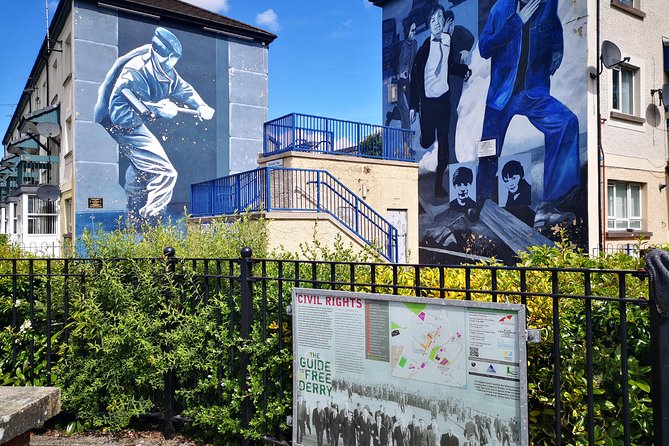
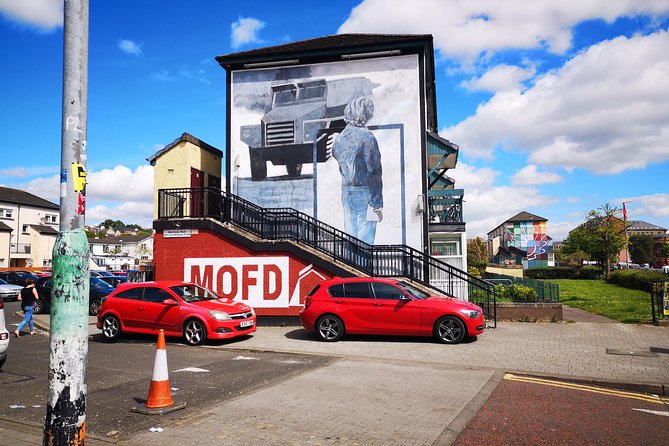
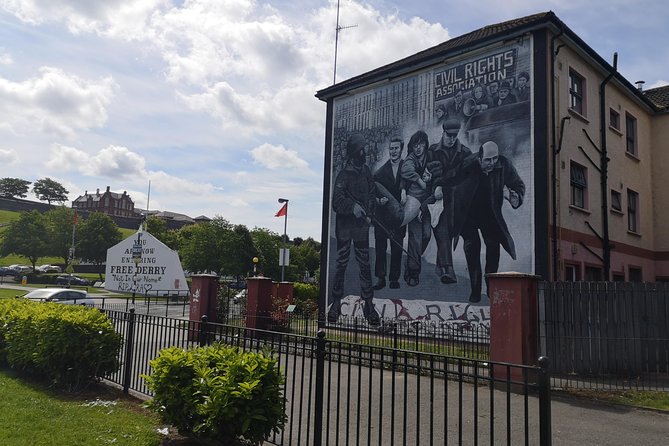
- Bogside murals: The life-size murals give you a visual timeline of civil rights, conflict, loss, and peace.
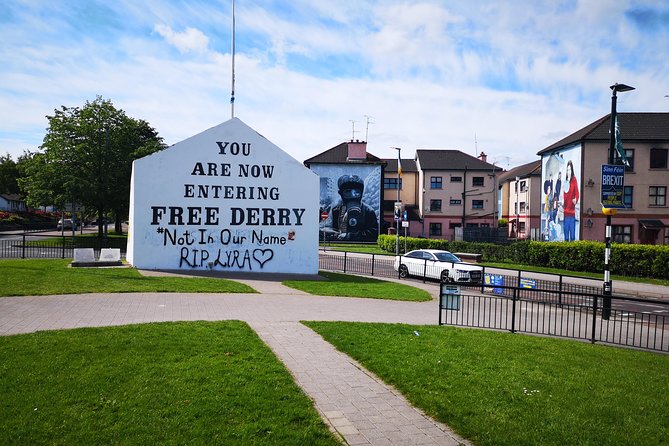
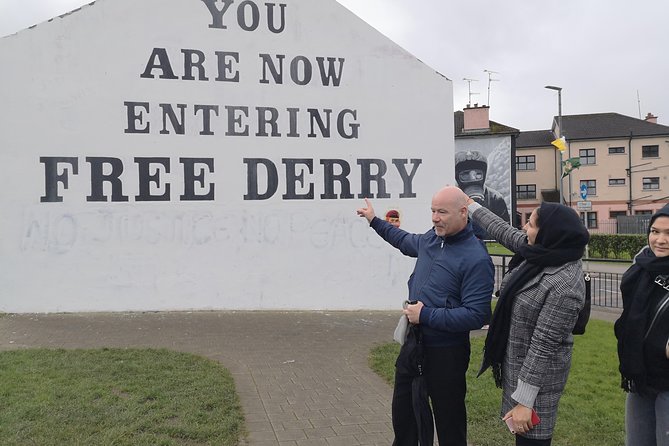
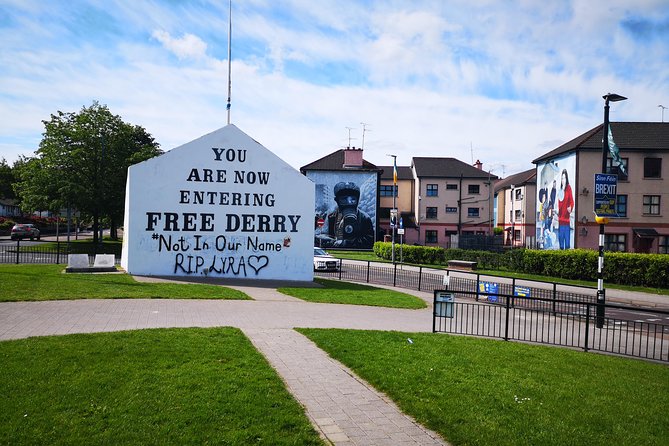
- Free Derry Wall: The famous wall is one of the tour’s clearest photo stops and a lasting symbol of the Bogside.
- Short, focused walk: The route lasts about 1.5 hours and does not cover a great distance, which helps if you have limited mobility.
- Strong value for history-minded visitors: At about $30 per person, the price pays for context, access to local memory, and the chance to ask questions directly.
Why the Bogside is the right place to learn this story
The Bogside is a compact area, but the story held in its streets is large. Civil rights marches, the Battle of the Bogside, Bloody Sunday, the hunger strikes, and the long road to the 1998 peace agreement are all tied to this part of Derry.
That setting matters. A museum can show photographs and objects, but here you are standing where people marched, gathered, resisted, and mourned. The walls and streets help you connect dates to real places. You are not simply hearing that an event happened in Derry. You are shown where it happened.
The tour begins and ends outside the Museum of Free Derry. That makes the meeting point easy to identify, and it lets you pair the walk with the museum before or after. If you visit the museum first, you will have useful background. If you take the walk first, the museum can help you sort and expand what you have just heard.
More walking tours around the UK:
- Magical London: Harry Potter Guided Walking Tour
★ 4.7 · 22,044 reviews - Edinburgh: Harry Potter Magical Guided Walking Tour
★ 4.8 · 11,944 reviews - Edinburgh Castle: Guided Walking Tour with Entry Ticket
★ 4.7 · 11,699 reviews
Meeting the guide outside the Museum of Free Derry
The quality of this experience depends heavily on the guide, and that is especially important when the subject is contested, painful, and politically charged. The guides named in the tour feedback include Noel, John, Mick Kinsella, and Dave. Their styles vary, but the common thread is a close personal connection to Derry and the Troubles.
Noel is repeatedly described as an eyewitness to Bloody Sunday and as someone born and raised in the Bogside. John also has a deeply personal connection, having lost his brother William on Bloody Sunday. Mick Kinsella is praised for his account of the Battle of the Bogside, while Dave is noted for sharing his own story with warmth and care.
That does not mean every departure will have the same guide. It does mean you should expect a person who can explain the official sequence of events alongside memories of daily life during the conflict. The personal material gives the tour its force, but the guides also leave room for questions.
The English delivery is clear and unhurried, according to the experience of many people who took the walk. That matters when you are dealing with names, dates, political groups, and unfamiliar local terms. You need time to listen, and the tour appears to allow it.
Reading the Bogside murals as a timeline
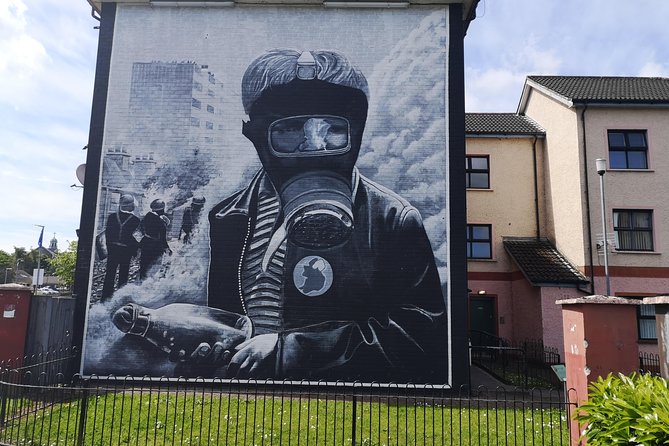
The Bogside murals are not just colorful street art. They are part of the tour’s historical framework. The guides use the life-size images to explain key moments in the Troubles and to show how local people remember them.
You will be guided through the meaning behind each mural rather than left to guess from the imagery. That is a major advantage. Without explanation, a mural can look striking but remain vague. With a local guide, it becomes a doorway into the civil rights campaign, the violence that followed, and the community’s response.
The murals also give the walk a useful visual rhythm. You move from one large image to another while the story develops. This helps break up a difficult subject and gives you time to take in the details.
I would not treat this as a standard street-art tour. The images are tied to grief, protest, identity, and political memory. You may want photographs, but the subject deserves attention before the camera comes out. The guide’s explanation is the important part.
Bloody Sunday and the human cost of history
The Bloody Sunday section is the emotional center of the walk. You visit the site of the massacre and hear about the circumstances leading up to it, what happened that day, and the long campaign by families seeking recognition and justice.
The personal accounts can be difficult to hear. John’s family loss and Noel’s eyewitness connection mean that the subject is not presented as a distant chapter in a textbook. The event is connected to people, relatives, neighborhoods, and memories that remain close.
That directness is also why you should allow yourself some quiet time after the tour. The guides are described as compassionate and hopeful, but the story does not become comfortable simply because it is told with humor or warmth. The occasional craic helps humanize the guide, yet it does not soften the facts.
A strong point is the effort to explain Bloody Sunday within the larger civil rights story. You hear about the conditions that led to the Troubles, the Battle of the Bogside, and the later search for accountability. This wider frame prevents the tour from becoming a single-event retelling.
Same streets, a different story:
- Underground Vaults Walking Tour in Edinburgh Old Town
★ 4.5 · 8,506 reviews - London: The Original Jack the Ripper Walking Tour
★ 4.7 · 7,833 reviews - Oxford University Walking Tour With University Alumni Guide
★ 5.0 · 6,905 reviews - Edinburgh Castle: Guided Walking Tour with Entry Ticket
★ 5.0 · 5,540 reviews
Free Derry Wall and the meaning behind the photograph
The Free Derry Wall is the tour’s most recognizable stop. You can have your photograph taken there, but the wall is more than a famous image for your album. It represents the declaration of a community and the wider struggle over control, rights, and identity.
The guide gives the wall a place in the story rather than treating it as a quick photo stop. That context makes the visit more worthwhile. You learn why the words mattered and how the wall became linked to the Bogside’s identity.
This is also one of the easier moments to share with people who may not know much about the Troubles. The image is simple and memorable. The history behind it is not, and the guide helps bridge that gap.
From the Battle of the Bogside to the peace process
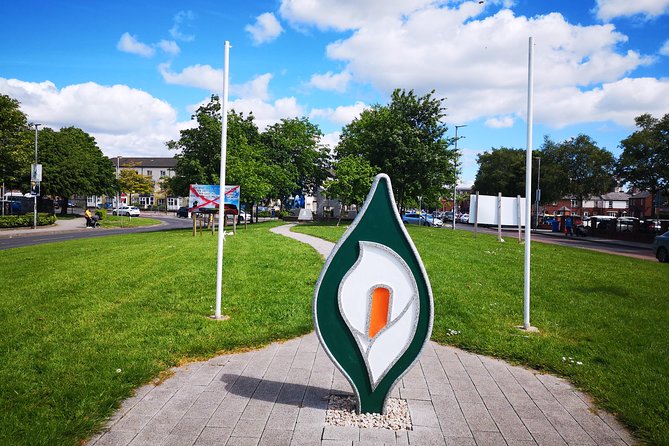
The tour moves beyond Bloody Sunday to explain the beginning of the Troubles and the Battle of the Bogside. You also hear about the Irish hunger strikes and the peace process that brought the thirty-five-year conflict toward an end.
This part is important because it keeps the walk from presenting the Bogside only as a place of tragedy. The story includes resistance, community strength, political change, and the difficult work of moving toward peace.
The peace process is presented as an achievement still connected to unresolved questions. You may find the tone hopeful without being tidy. The guides speak about a future for younger generations, including their own grandchildren, while also acknowledging that the work of coming to terms with the past is unfinished.
That balance is one of the tour’s best features. You are not asked to accept a neat ending. You are given a sense of how people in Derry carry both memory and hope at the same time.
How much walking is involved?
The tour lasts 1.5 hours, but the route is not a long-distance hike. The focus is on several nearby places in the Bogside, with stops for explanations and questions.
This makes it a practical choice if you want serious historical content without spending half a day on foot. People with mobility concerns may find the limited walking helpful, and the activity is listed as wheelchair accessible. You should still consider ordinary outdoor conditions and confirm any personal access needs when booking.
Because the distance is short, do not choose this tour for exercise or broad sightseeing. Choose it for the quality of the commentary. The value comes from what is explained at each stop, not from how many streets you cover.
Is $30 a fair price?
At around $30 per person, this tour costs more than a casual free walk, but the comparison is not quite equal. You are paying for a focused account from guides with personal experience of the conflict, along with time to ask questions and visit the key Bogside sites.
The price looks strongest if you are genuinely interested in Derry’s recent past. You receive a clear route, a live English-speaking guide, the murals, the Bloody Sunday site, and Free Derry Wall in one compact experience. The tour also gives you a starting point for a separate visit to the Museum of Free Derry.
One practical issue deserves attention. A paid group arrived and saw free tours advertised outside the museum, with no ticket check at the meeting point. If you see the same arrangement, ask which tour you are joining and confirm what your booking covers. The concern is not necessarily the quality of the walk, but avoiding confusion about what you paid for.
With a rating of 4.9 out of 5 from 274 ratings, the experience has a strong record. More important for your decision, the praise centers on specific things: clear storytelling, personal experience, compassion, willingness to answer questions, and a sense of hope alongside grief.
Pairing the walk with the Museum of Free Derry
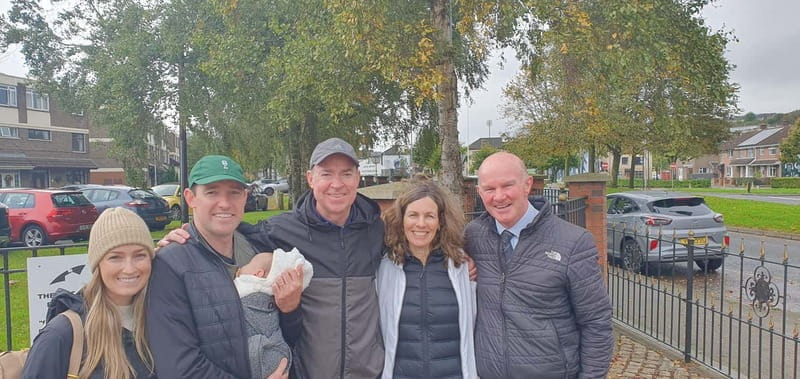
The museum is not included as part of the walking tour itself, but it begins and ends at the museum entrance. That makes it easy to add.
You may prefer to visit the museum first, especially if the names and sequence of events are new to you. The exhibits can give you a basic framework before you hear the local account outdoors. Another good plan is to take the walking tour first, then return to the museum while the locations and stories are fresh.
Allow roughly another hour if you want to look through the museum carefully. The collection focuses on Derry and the surrounding conflict, rather than presenting distant objects with no local link. That local focus can make the museum a strong follow-up to the walk.
The tour and museum serve different purposes. The museum organizes evidence and displays. The guide connects that evidence to people and places. Together, they give you a fuller picture than either one alone.
Who will get the most from this tour?
I would recommend it most strongly to anyone who wants to understand Derry beyond its medieval walls and attractive city center. It suits you if you value local voices, recent history, and direct conversation.
It is also a good choice if you have already read about Bloody Sunday but still find the story abstract. Standing at the site and hearing from someone connected to the community can change how you understand the event.
The tour may be harder for children or anyone looking for light entertainment. The subject includes death, injustice, family loss, and political violence. Guides may use humor and warmth, but the central story remains painful.
You do not need to share a particular political view to take the walk. The best approach is to listen carefully, ask respectful questions, and recognize that the tour presents the experience of a community shaped by the conflict. The personal viewpoint is a strength, but it is also the reason you should not expect a completely detached academic lecture.
Practical details for planning your visit
The meeting point is outside the Museum of Free Derry in the Bogside. The tour is conducted in English and lasts about 90 minutes.
You can cancel up to 24 hours in advance for a full refund, and the reserve-now, pay-later option lets you keep your plans flexible. Starting times vary, so check availability for your date.
Wear comfortable shoes and bring clothing suitable for an outdoor walk. The activity is listed as wheelchair accessible, and the short route may help if you need to limit walking, though the museum and street conditions should still be considered for your own circumstances.
If you are visiting Derry for only one day, place this tour early in your schedule. It will give you context for other city sights and leave time for the museum afterward. If you have more time, take the tour, visit the museum, and then return to the city center with the story still fresh.
Should you book the Troubles Bogside Walking Tour?
Book it if you want a serious, local account of Derry’s recent past and you are comfortable with difficult subject matter. The combination of murals, historic sites, personal testimony, and the museum meeting point makes good use of 90 minutes.
The strongest reason to go is the guide’s lived connection to the Bogside. Noel, John, Mick Kinsella, and Dave are not simply reciting a timeline. They bring family memories, local detail, and an understanding of how the Troubles affected ordinary people.
Skip it if you want a relaxed sightseeing walk with little political or emotional content. Also clarify the paid tour arrangement at the museum if free walks are being promoted outside.
For most people interested in Derry’s identity and the peace process, I would make this a priority. It is short, focused, and difficult to forget.
FAQ
Where does the Troubles Bogside Walking Tour begin?
The meeting point is outside the Museum of Free Derry in the Bogside.
Where does the tour end?
The walking tour begins and ends at the Museum of Free Derry.
How long does the tour last?
The tour lasts approximately 1.5 hours.
What language is the tour conducted in?
The tour is conducted in English with a live guide.
Which places are included?
The walk includes the Bloody Sunday site, the Bogside murals, the Free Derry Wall, and locations connected with the Battle of the Bogside and the wider Troubles story.
Will the guide discuss Bloody Sunday?
Yes. Bloody Sunday is a central part of the tour, including the events surrounding the massacre and its place in the wider civil rights story.
Is the tour wheelchair accessible?
The activity is listed as wheelchair accessible.
Can I cancel for a full refund?
Yes. You can cancel up to 24 hours in advance for a full refund.
New walking tours around the UK
- London: Old City Walking Tour★ 4.8 · 135 reviews
- Manchester: Music-Themed City Walking Tour★ 4.4 · 109 reviews
- Manchester: Media City & The Quays Guided Walking Tour★ 5.0 · 165 reviews
- Manchester City Highlights Walking Tour★ 4.8 · 299 reviews
- London: Witches and History Bankside Walking Tour★ 4.8 · 223 reviews
- London: Palaces and Parliament Walking Tour★ 4.8 · 365 reviews
- London: Winston Churchill and London in WWII Walking Tour★ 4.8 · 143 reviews
- London: Westminster Walking Tour & The Tower of London Entry★ 4.6 · 131 reviews
UK Walking Tours, side by side.

Magical London: Harry Potter Guided Walking Tour
Read our review →
Edinburgh Castle: Guided Walking Tour with Entry Ticket
Read our review →
Underground Vaults Walking Tour in Edinburgh Old Town
Read our review →
London: The Original Jack the Ripper Walking Tour
Read our review →
Oxford University Walking Tour With University Alumni Guide
Read our review →
Edinburgh Castle Guided Walking Tour in English
Read our review →
Tour for Muggles The Ultimate Harry Potter Walking Tour in London
Read our review →
Edinburgh Darkside Walking Tour: Mysteries, Murder and Legends
Read our review →Lists this walk sits on