Review · DUBROVNIK
Dubrovnik: Old Town Walking Tour
Dubrovnik’s Old Town looks like a perfect stone stage set, but the real pleasure is learning how this compact city became the Republic of Ragusa, a wealthy maritime power that protected its independence through trade, diplomacy, and careful politics. This 90-minute walk gives you the backstory before the names and buildings blur together.
I like the clear headsets, which matter when the lanes are crowded, and I like the guides’ mix of old history, recent events, and practical local advice. Guides such as Branko, Davor, Goran, and Lana are often praised for humor and strong storytelling. The main limitation is simple: you do not enter churches or museums, and the tour moves at an introductory pace rather than offering an in-depth look at every site.
Key points to know before booking
- Start at Pile Gate: Meet by the local bus stop at Brsalje 8, beneath the Dubrovnik Walks orange umbrella.
- See the essential sights: The route includes Stradun, Large Onofrio’s Fountain, Sponza Palace, Rector’s Palace, the Cathedral, and the Old Port.
- Hear the guide clearly: Headset devices help you follow the commentary even when the streets are noisy.
- Get history and local tips: Expect stories about the Republic of Ragusa, modern Dubrovnik, places to eat, ice cream, and what to visit next.
- Allow 90 minutes: It is a useful first look, not a full day of museum visits or city walls.
- Bring basic gear: Comfortable shoes, water, and sunscreen are important, especially in warm weather.
Why this short walk works so well in Dubrovnik
Dubrovnik can be hard to read at first. You see pale limestone, polished streets, grand stone houses, and a steady flow of people, but the city’s past is not always obvious from its appearance. A local guide gives you the missing thread.
The focus is the old Republic of Ragusa, the small maritime state that ruled Dubrovnik for centuries. You learn how its merchants built wealth, how the city managed diplomacy between larger powers, and how its social and cultural life developed behind the walls. The tour also connects the medieval city with modern Croatia, which helps the old buildings feel less like scenery and more like part of a living place.
I see the biggest value in the structure. Instead of walking randomly and checking names in a guidebook, you move from the western gate through the main street and onward to the port. Each stop adds another piece of the city’s story.
The tour costs $23 per person. That is a fair price for a licensed local guide, a planned route, and headset equipment. It becomes especially good value if you are in Dubrovnik for only a day, arriving by cruise ship, or want an orientation before choosing which sites deserve more of your time.
More Old Town Walking Tours in Croatia
- Dubrovnik Discovery Old Town Walking Tour
★ 5.0 · 4,458 reviews - Dubrovnik Old Town History Walking Tour
★ 5.0 · 1,684 reviews - Dubrovnik: City Walls, Old Town Walking Tour & Adriatic View
★ 4.9 · 982 reviews
Meeting at Pile Gate
The meeting point is at Brsalje 8, by the Pile local bus stop and the final bus stop before the Old Town. Look for Dubrovnik Walks staff under an orange umbrella. Arrive about 10 minutes early because Pile Gate is one of the busiest approach points in Dubrovnik, and it is easier to find the group before the walk begins.
Pile Gate is more than a practical meeting place. It is the western entrance to the fortified city, and it immediately gives you a sense of how Dubrovnik controlled access to its streets and harbor. The tour includes about 10 minutes here for sightseeing and explanation.
You will not need to arrange separate transport once you arrive at the meeting point. The route continues on foot into the Old Town and ends near the Old Town port. That start and finish make sense for a first visit, though you should plan your onward route in advance if you need to catch a bus or meet a cruise schedule.
Walking into Dubrovnik’s Old Town
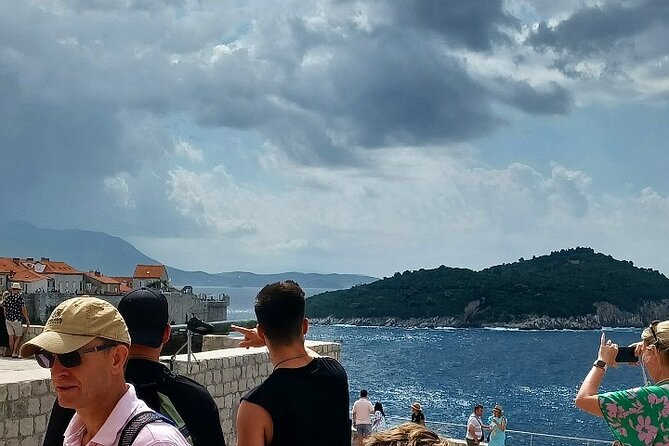
Passing through Pile Gate feels like crossing a boundary between present-day Dubrovnik and the old republic. The guide introduces the city’s long story here, including the forces that shaped its trade, politics, and defenses.
The first section through the Old Town lasts about 25 minutes. This is where the tour begins to connect individual buildings with the city’s larger plan. You will walk along polished stone streets and through narrow side lanes, while the guide points out details you might otherwise pass without noticing.
The route is described as suitable for everyone and is generally easy-paced and flat. That does not mean the whole city is flat, since Dubrovnik has many stairways away from the main route, but this tour avoids making the walk a strenuous climb. Comfortable shoes still matter because you will be walking on hard stone for most of the 90 minutes.
The group uses headset devices, a small but useful feature. You can keep your eyes on the buildings instead of standing shoulder to shoulder around the guide. The equipment was repeatedly praised for making the commentary easy to hear in crowded streets and background noise.
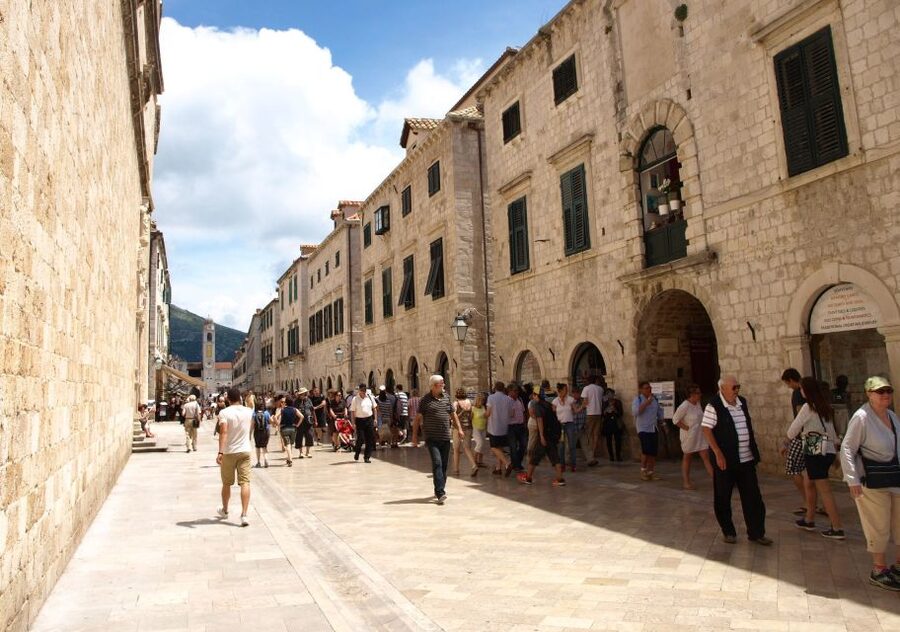
Stradun, Dubrovnik’s grand central street
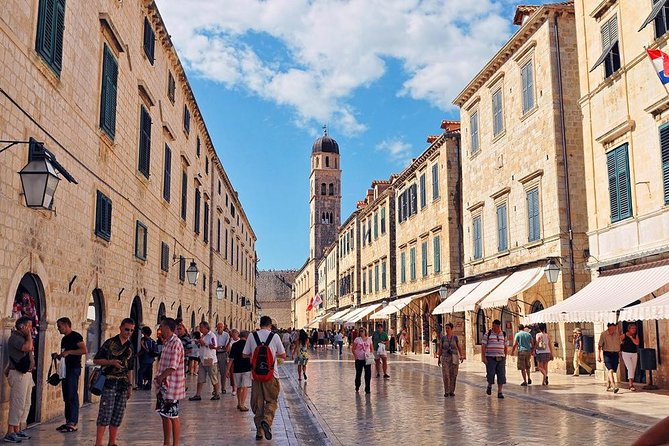
Stradun is the Old Town’s main artery, and the tour allows about 10 minutes here. Its broad limestone surface gives Dubrovnik a formal, orderly feel, quite different from the tight lanes that branch away from it.
Your guide explains how Stradun functions as the social and commercial center of the walled city. This is a good place to pay attention to the relationship between the street, the surrounding facades, and the public spaces farther east. The city’s wealth was not hidden away in one grand palace. It shaped the whole urban setting.
Stradun is also where the headset proves its worth. Depending on the time of day, you may have other groups, pedestrians, and general street noise around you. Guides such as Antun, Branko, and Davor were praised for keeping the commentary lively without losing the historical thread.
Do not expect a long stop for photographs. The walk keeps moving, which is part of its appeal, but you may want to return later if you wish to study the architecture at your own pace.
More Old Town Walking Tours in Dubrovnik:
- Dubrovnik: Old Town Walking Tour
★ 4.9 · 792 reviews - Dubrovnik: Old Town History Walking Tour
★ 4.9 · 474 reviews - Dubrovnik: Panoramic Ride and Old Town Guided Walking Tour
★ 4.7 · 261 reviews - Dubrovnik: Old Town & City Walls Private Walking Tour
★ 5.0 · 206 reviews
Large Onofrio’s Fountain and the city’s water supply

Large Onofrio’s Fountain receives about 10 minutes. It is one of Dubrovnik’s most recognizable landmarks, but its importance goes beyond decoration. The fountain represents the city’s ability to provide public water, a major civic achievement in a densely built medieval town.
This is the sort of detail that makes a guided walk useful. On your own, you might photograph the fountain and move on. With the guide’s explanation, you begin to see the practical systems that supported Dubrovnik’s prosperity.
The stop also offers a natural pause in the route. The guide can answer questions here, and the group gets a clear example of how public works supported daily life. If you are visiting in warm weather, drink some of the water you bring with you rather than relying on the route to provide refreshment.
Orlando’s Column and Sponza Palace
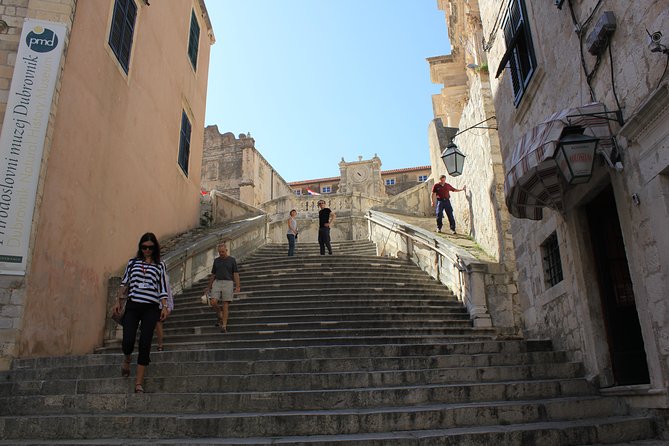
The tour then reaches Orlando’s Column, a brief five-minute stop. The column is tied to Dubrovnik’s civic identity and public traditions, and the guide uses it to explain how the city presented its independence and values.
This is a quick look rather than a long lecture. That is helpful if you want to cover the main sights without spending the whole morning in one square. It also means you should not expect every symbol or carving to receive a detailed architectural analysis.
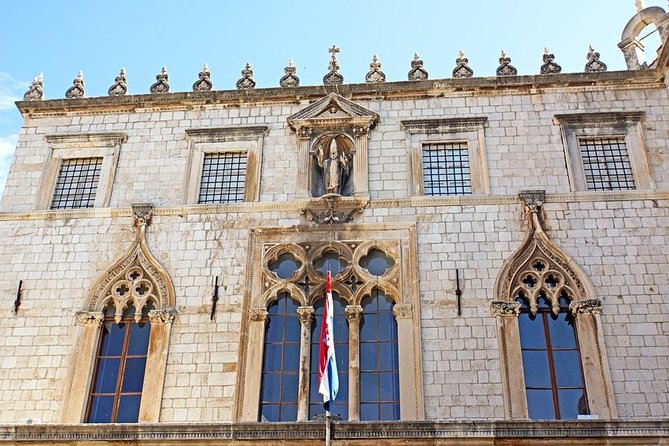
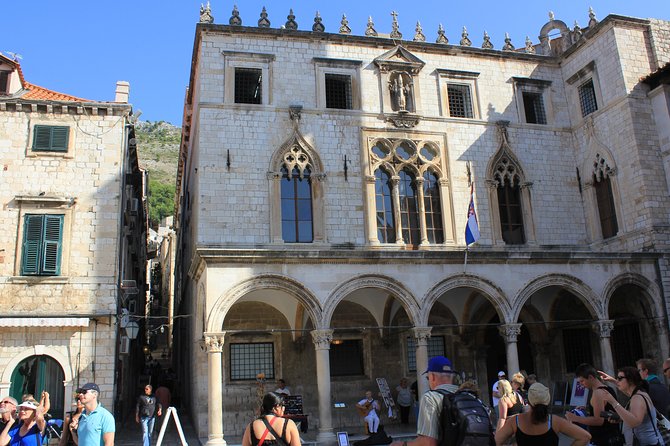
Sponza Palace follows, with another five-minute stop. This elegant building is linked to the republic’s commercial and administrative life. Its presence helps show that Dubrovnik’s wealth came from more than seafaring adventure. Trade, record keeping, public administration, and diplomacy all mattered.
The guide’s broader explanation is more useful than a list of dates. Several guides, including Branko and Goran, were praised for mixing older events with modern Croatian identity and personal stories. That approach helps you understand why Dubrovnik’s past still matters to people who live there.
Rector’s Palace and Gundulićeva Square
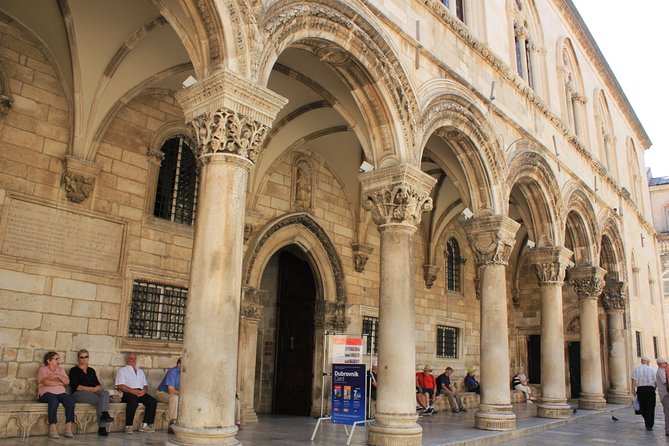
At Rector’s Palace, the group pauses outside for about five minutes. You pass by rather than enter. The building is one of the clearest symbols of the former republic’s political system, and it gives the guide a chance to explain the role of the rector and the way Dubrovnik governed itself.
The short stop is both a strength and a limitation. You get the essential context without paying an additional museum admission, but you will not see the interior rooms, collections, or exhibits. If the palace catches your attention, save it for a separate visit.
Gundulićeva poljana comes next, also for about five minutes. This square brings together architecture, public space, and everyday city life. The guide can help you read the square as more than a pretty pause between monuments.
This is also the sort of point where practical advice becomes useful. Guides have offered suggestions about restaurants, ice cream, and other places to visit. You should treat those tips as a starting point and ask follow-up questions if you have particular interests.
Dubrovnik Cathedral and the Old Port
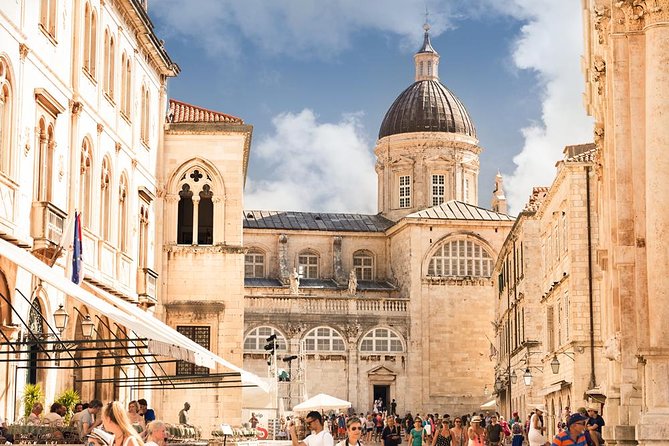
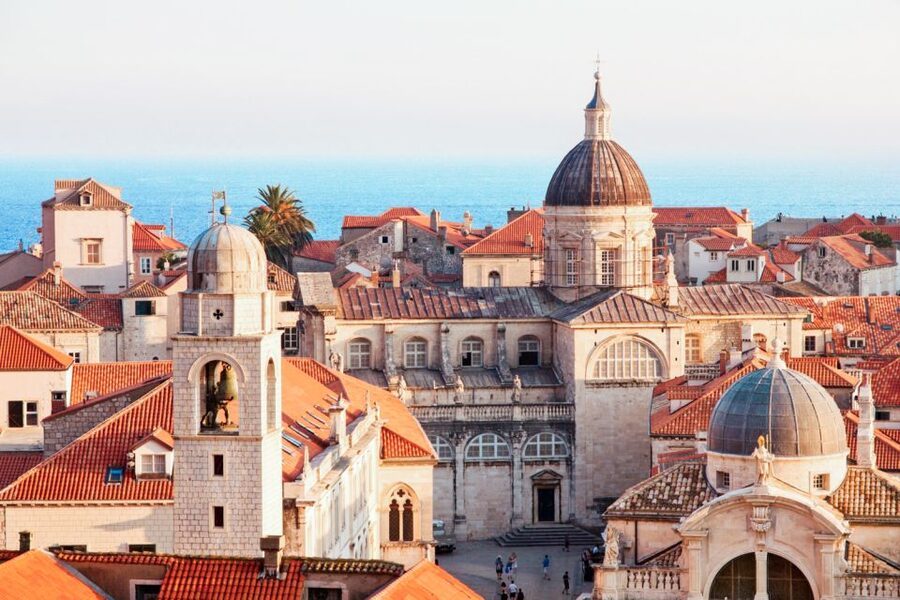
The Cathedral is another pass-by stop, lasting around five minutes. Since the tour does not enter churches, you will hear about the building from outside rather than viewing its interior. That arrangement keeps the tour moving and avoids adding admission procedures, but it leaves less time for religious art and architectural detail.
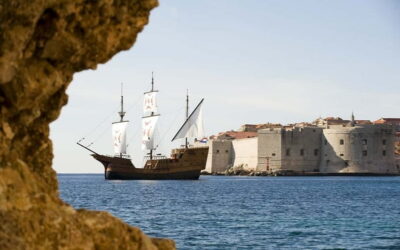
The final 10 minutes take you toward Dubrovnik’s Old Port. This is a fitting end because the port explains much of the city’s success. Dubrovnik was not simply a fortified hill town. Its location and maritime connections allowed it to trade, negotiate, and maintain links across the Adriatic and beyond.
The tour ends near the port, which is convenient if you want to continue along the waterfront or find a place for lunch. It also gives you a clear sense of the route from the western entrance to the eastern side of the Old Town.
The guide makes the difference
The route is strong, but the guide determines how much you get from it. The most praised qualities are clear English, humor, personal stories, and the ability to answer questions without losing the group.
Names that appear often in the experience feedback include Branko, Davor, Goran, Lana, Antun, Alex, and Davor’s fellow guides. You may not receive a particular guide, so book this for the format and route rather than for one individual. Still, the consistent pattern is encouraging: the guides tend to explain history in an engaging way rather than reciting dates.
A few practical points are worth noting. Some guides speak quickly, especially when covering a lot in 90 minutes. The headsets help, but if you miss something, ask the guide to repeat it. The group setting can support questions, and the guides are described as receptive to them.
Weather need not ruin the experience. One guide carried rain ponchos when rain arrived, though you should still bring suitable clothing and water. Sunscreen is equally sensible during hot, bright weather because much of the route is outdoors.
Who should book this walk
I would choose this tour early in a Dubrovnik visit. It gives you a useful map of the Old Town and helps you decide what to return to. One guide specifically advised doing the city walls afterward, and that is good planning: the walking tour explains the city from street level, while the walls show its defensive design and coastal position from above.
This tour suits:
- First-time visitors who want the main story quickly
- Cruise passengers with a limited stay
- Families and mixed-age groups seeking an easy route
- People who prefer local explanation to self-guided sightseeing
- Anyone who wants restaurant and sightseeing tips from a local guide
- Visitors who want to understand Dubrovnik before entering museums or churches
It may not satisfy you if you want extensive interior visits, detailed architectural study, or a quiet private experience. You also need to be comfortable walking for 90 minutes on stone streets. The route is described as wheelchair accessible, but you should still contact Dubrovnik Walks directly about any specific mobility needs.
Booking, timing, and value
The activity is offered in English and lasts 90 minutes. Starting times vary, so check availability before booking and confirm the time on your voucher. The meeting point is shared by the operator’s tours, so the orange umbrella and Brsalje 8 address are important details.
You can cancel up to 24 hours before the tour for a full refund, and the reserve-now, pay-later option keeps your plans flexible. If your schedule changes, contact Dubrovnik Walks rather than simply going to a different departure.
At $23, the walk is not the cheapest possible way to stroll through the Old Town, since you can walk in without a ticket. The fee pays for context, organization, a licensed guide, and audio equipment. For most first-time visitors, that is worthwhile because the city’s beauty is obvious, while the reasons behind its wealth and independence are much easier to miss.
Should you book the Dubrovnik Old Town Walking Tour?
Yes, if you want a lively introduction to Dubrovnik in a short window. The route covers the essential public sights, the guide explains the Republic of Ragusa in accessible terms, and the headsets solve one of the common problems with guided walks in crowded streets.
Book it near the beginning of your stay, then use the final stop at the Old Port to plan the rest of your time. Return to the palace, cathedral, city walls, or museums that catch your interest. Skip it only if you have already studied Dubrovnik closely or want a private, slower tour with interior visits.
FAQ
Where does the Dubrovnik Old Town walking tour meet?
Meet at Brsalje 8, by the Pile local bus stop, under the Dubrovnik Walks orange umbrella. This is the final bus stop before reaching the Old Town.
Where does the tour end?
The walk ends near the Old Town port in Dubrovnik.
How long does the walking tour last?
The tour lasts 90 minutes.
What language is the tour in?
The live tour guide speaks English.
Does the tour enter churches or museums?
No. The tour explains major sights from outside and does not include entry into churches or museums.
Which landmarks are included?
The route includes Pile Gate, the Old Town, Stradun, Large Onofrio’s Fountain, Orlando’s Column, Sponza Palace, Rector’s Palace, Gundulićeva poljana, Dubrovnik Cathedral, and the Old Port.
Is the walking tour wheelchair accessible?
The activity is listed as wheelchair accessible.
What should I bring?
Bring comfortable shoes, sunscreen, and water. Arrive 10 minutes early and check your voucher for the exact departure time.
New walking tours around Dubrovnik
- Dubrovnik: Old Town Walking Tour★ 4.9 · 792 reviews
- Dubrovnik: Walls and Wars Walking Tour★ 4.8 · 501 reviews
- Dubrovnik: Panoramic Ride and Old Town Guided Walking Tour★ 4.7 · 261 reviews
- Dubrovnik: Game of Thrones And Iron Throne Walking Tour★ 4.8 · 505 reviews
- Dubrovnik: Game of Thrones&Lokrum Island Walking Tour★ 4.8 · 245 reviews
- Dubrovnik: Karaka – Game of Thrones Cruise & Walking Tour★ 4.8 · 613 reviews
- Dubrovnik By Night Walking Tour★ 4.8 · 208 reviews
- Dubrovnik: City Walls, Old Town Walking Tour & Adriatic View★ 4.9 · 982 reviews
Dubrovnik Walking Tours, side by side.
Dubrovnik: The Original Game of Thrones Tour & Lokrum Option
Read our review →


Dubrovnik: City Walls Early Morning or Sunset Walking Tour
Read our review →
Dubrovnik: Ancient City Walls & Wars Walking Tour
Read our review →
Dubrovnik: City Walls, Old Town Walking Tour & Adriatic View
Read our review →