
Review · DUBROVNIK
Dubrovnik: Walls and Wars Walking Tour
Dubrovnik’s walls are far more than a scenic walkway. They explain how a small maritime republic protected its people, trade, and independence while surrounded by stronger powers. This tour connects the stone defenses with the city’s political choices, medieval warfare, and the painful story of the 1991 Homeland War.
I like the licensed local guides, especially guides such as Davor, Goran, Andreja, and Darko, who have been praised for mixing clear history with personal knowledge of Croatia. I also like the headsets, which make it easier to follow the story while walking in a long line. The main drawback is the cost: the tour is $29, but the mandatory wall ticket is extra, and the walk includes roughly 1,000 to 1,150 steps with little shade.
Key points to know before you book
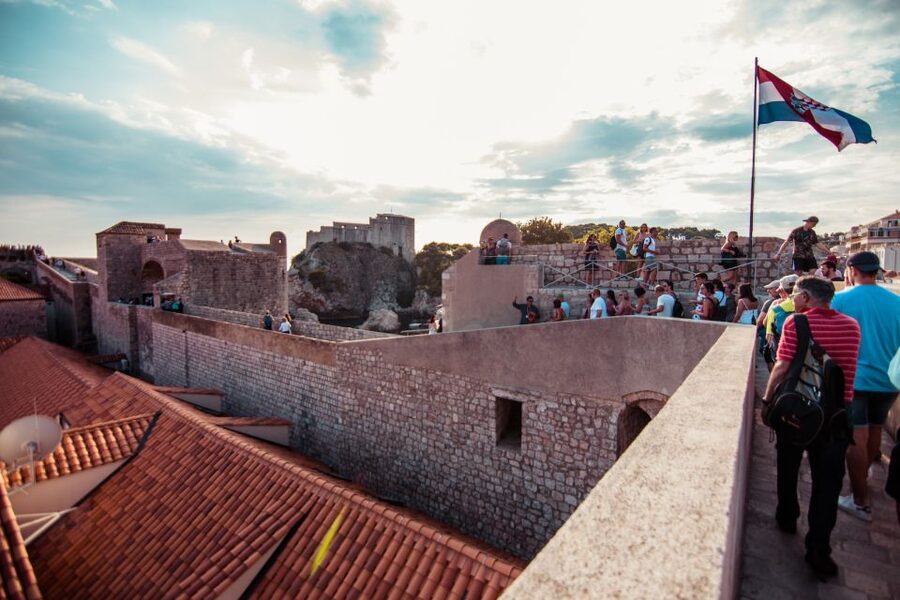
- The wall ticket costs extra: Allow €40 per adult and €15 per child aged 7 to 18, unless you use a Dubrovnik Pass.
- The walk is physically demanding: Expect many stairs, exposed sections, height, and little shade on sunny days.
- The strongest guides add personal insight: Davor, Goran, Andreja, and Darko have received particular praise for history, humor, and wartime context.
- Headsets improve the experience: You can hear the guide while moving along the narrow fortifications, though reception may weaken if you fall far behind.
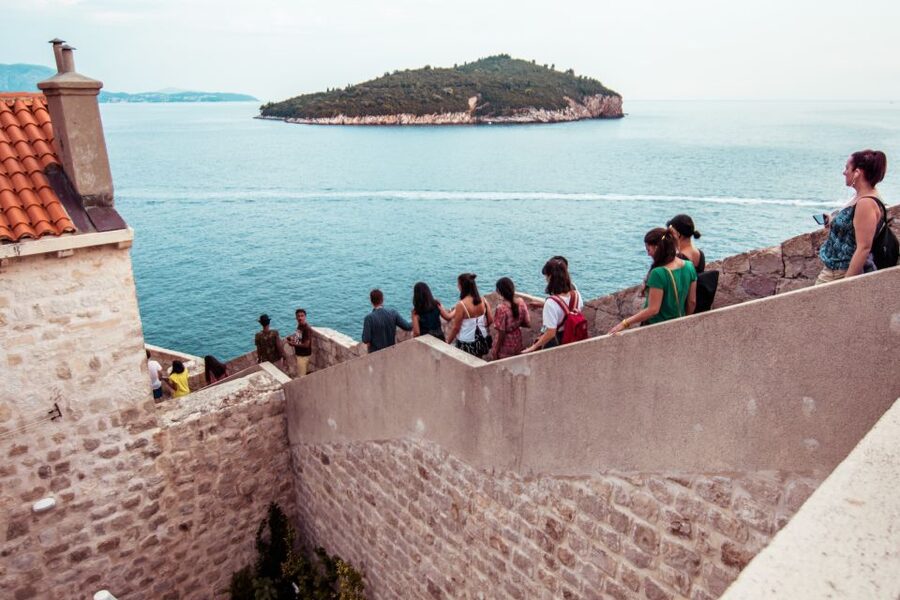
- The views are a major reward: You look over Dubrovnik’s Old Town, harbor, fortresses, and surrounding coast from several angles.
- Evening departures can help: The 6 p.m. tour has been appreciated for cooler temperatures and lighter crowds.
Why Dubrovnik’s walls are worth a guided walk
You can walk Dubrovnik’s walls alone, but the stonework does not explain itself. Without a guide, you see towers, battlements, rooftops, and sea views. With a guide, you learn why each section was built, what it protected, and how the city’s leaders used diplomacy alongside military defenses.
That difference matters here. Dubrovnik was a small independent republic facing pressure from powerful neighbors and rival states. Its survival depended on trade, negotiation, careful political choices, and strong fortifications. The tour gives you that larger picture instead of treating the walls as a simple viewpoint.
I especially like that the subject is not limited to the medieval period. The walk also covers the Homeland War and the shelling of Dubrovnik in the early 1990s. Several guides have personal connections to that period. Goran has spoken about living through the 1991 war as a young person, while Andreja and other local guides have shared family and local perspectives. That makes the recent past feel present, not like a footnote added after the old stones.
The tour is led in English by a local guide approved by Croatia’s Ministry of Tourism. Guides vary, but the best-known names connected with this experience include Davor, Goran, Andreja, Darko, Mara, and Branko. You should expect a mix of military history, political background, local stories, and time for questions.
More walking tours around Dubrovnik:
- Dubrovnik: Old Town Walking Tour
★ 4.8 · 5,174 reviews - Dubrovnik Discovery Old Town Walking Tour
★ 5.0 · 4,458 reviews - Dubrovnik: Game of Thrones Walking Tour
★ 5.0 · 1,732 reviews
Meeting at Pile Gate and starting the climb
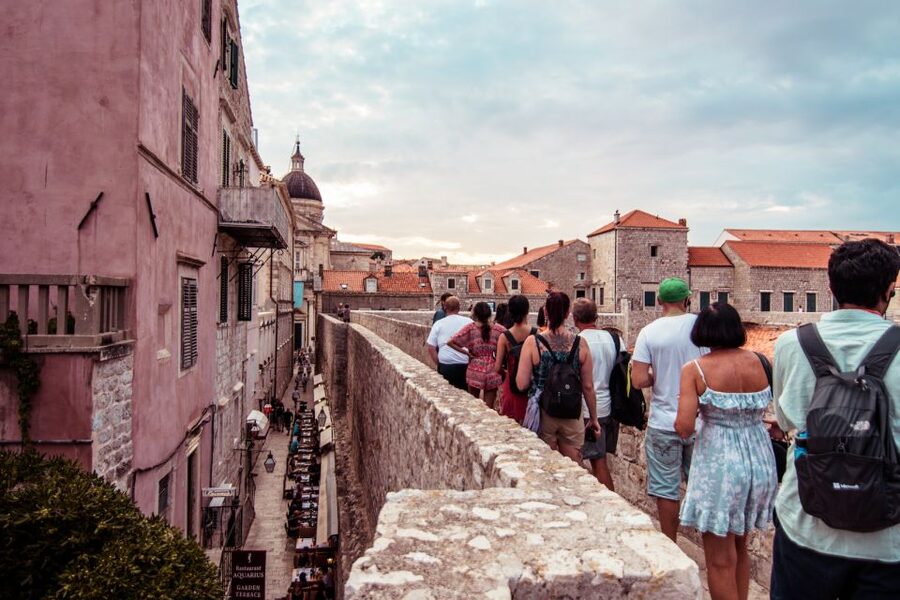
The meeting point is at Brsalje 8, by the Pile local bus stop, the last stop before Dubrovnik’s Old Town. Look for the Dubrovnik Walks staff holding orange umbrellas. This is a useful meeting point because Pile Gate is one of the main approaches to the Old Town, but give yourself time to find the correct spot in the busy area.
The tour begins with a short orientation before you head toward the walls. Your guide explains how Dubrovnik developed as a fortified port and why its position beside the sea shaped both its wealth and its dangers.
You then begin climbing. This is not a flat stroll through town. The route includes regular stairs and narrow walking sections, and one guide estimated the total at about 1,150 steps. That number gives you a better idea of the effort than the two-hour duration does.
I recommend comfortable shoes with a firm sole. Bring water, a hat, and a credit card for the wall entrance. In summer, the stone can reflect a great deal of heat, and there is very little shade on exposed parts of the route.
Revelin Fortress and Dubrovnik’s defensive thinking
Revelin Fortress is one of the landmarks used to explain Dubrovnik’s defensive system. Your guide puts the fortress into the larger story of the city’s threats and how its leaders strengthened vulnerable approaches.
This is where the tour’s focus on strategy becomes useful. You are not just looking at thick walls. You are learning how towers, gates, harbor defenses, and elevated positions worked together. The guide helps you understand why a fortress was placed where it was and what kind of attack it was designed to resist.
The political side matters just as much. Dubrovnik’s leaders had to protect commerce while avoiding unnecessary conflict with larger powers. The fortifications gave the republic a stronger position in negotiations, but the city also relied on diplomacy and careful relations with its neighbors.
The experience is most rewarding when you stay close to the guide. Headsets are provided, which is a real help on the narrow wall. You may be walking in a line while other groups pass, and the devices let you hear explanations without everyone stopping in one tight cluster.
There is one limitation. If you drift too far behind, the headset signal can weaken. Keep moving with the group, especially on crowded days, and you should be able to follow the commentary more easily.
Minceta Tower and the high views over the Old Town
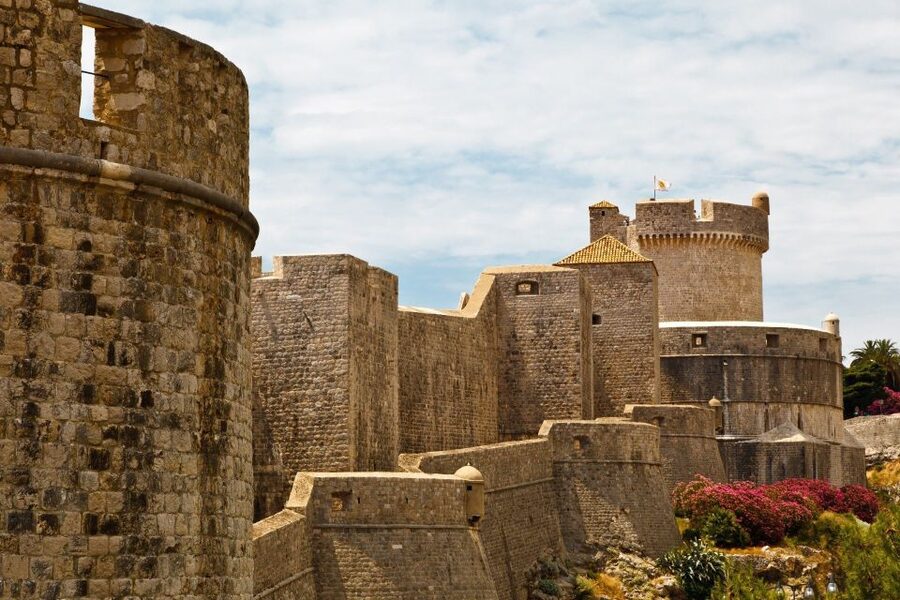
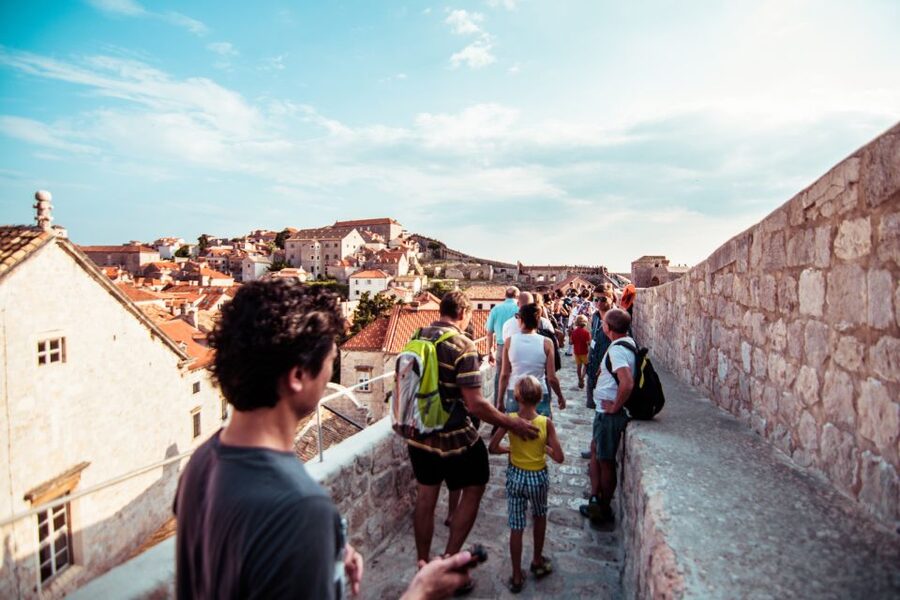
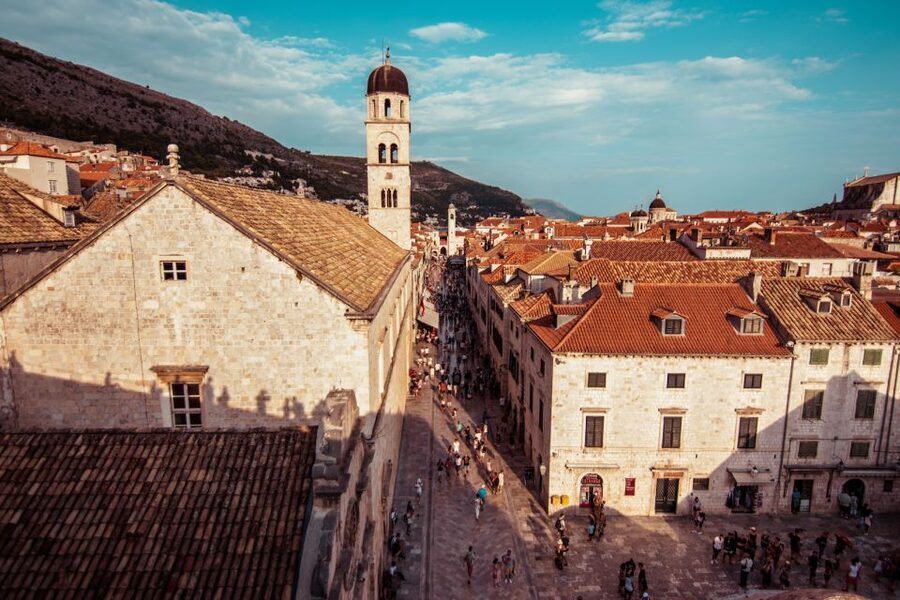
Minceta Tower is among the most memorable parts of the walk. It is a strong defensive point and one of the places where the city’s military planning becomes easy to grasp. From the fortifications, you see the dense roofs of the Old Town on one side and the open sea and harbor on the other.
The views are beautiful, but I find them more interesting after the history has been explained. You can see why control of the port mattered. You can also understand the value of high positions, thick walls, and clear sightlines across the city and coastline.
This is a good place for photographs, though you should pay attention to your footing and the people around you. The wall is long and narrow, and stopping in the wrong place can hold up the group. Your guide usually builds in time for pictures and questions, but the pace is still a walking tour, not a free-roaming visit.
The height can be uncomfortable for anyone with vertigo or a fear of heights. There are exposed sections, stairs, and drop-offs beyond the parapets. If you are unsure how you handle elevated walkways, this is worth considering before booking.
Same streets, a different story:
- Dubrovnik: The Original Game of Thrones Tour & Lokrum Option
★ 4.8 · 5,064 reviews - Dubrovnik Old Town History Walking Tour
★ 5.0 · 1,684 reviews - Dubrovnik: City Walls Early Morning or Sunset Walking Tour
★ 4.8 · 1,523 reviews - Dubrovnik: Ancient City Walls & Wars Walking Tour
★ 5.0 · 1,270 reviews
Lovrijenac Fortress and the story of survival
Lovrijenac Fortress is another important defensive landmark included in the tour’s story. Your guide explains why it mattered to Dubrovnik’s protection and how the city’s fortifications worked as a connected system rather than a set of isolated monuments.
The tour also uses the fortifications to discuss Dubrovnik’s endurance through earthquakes, changing rulers, wars, and modern conflict. The city’s story is not presented as a simple tale of one victorious side. You hear about threats, compromises, rebuilding, and the hard work of keeping a small republic alive.
That balance is one of the best reasons to take a guided walk instead of simply buying a wall ticket. The ticket gives you access to the route. The guide supplies the sequence of events and explains why one location matters in relation to the next.
The recent war section may be especially meaningful for visitors who know little about modern Croatian history. Local guides can explain the subject with a directness that a sign or audio recording may not provide. At the same time, this is a group tour, so the amount of detail and personal discussion depends on the guide and the questions asked.
What the two-hour pace feels like
Two hours is enough time to cover the main wall experience without turning the day into an all-day exercise. The pace is steady, with stops for explanations, photographs, and questions.
Guides have been praised for adjusting the pace when people need rest or water. Andreja, for example, has been particularly attentive to comfort breaks, while Davor has been noted for finding shaded spots during hot weather. That kind of care matters because the physical conditions can change quickly with sun, wind, or rain.
The wall can be windy, and bad weather does not always make the walk unpleasant. Rain and wind may make the stone slippery, however, so sensible footwear is important. In high summer, heat is the bigger concern. One afternoon tour took place in temperatures around 34 degrees Celsius, and some people needed to stop because of exhaustion.
For that reason, I would choose an early or late departure when possible. The 6 p.m. option has the practical advantage of cooler temperatures and fewer people in some periods. Check the available start times when booking, since schedules can change.
The real price: $29 plus the wall entrance
The advertised tour price is $29 per person. That covers the guide, the two-hour guided walk, and the headset. It does not cover the required Dubrovnik City Walls entrance ticket.
The additional ticket is listed at €40 per adult and €15 per child aged 7 to 18. You can buy it at the wall entrance, purchase it ahead of time, or use a Dubrovnik Pass. This is a major part of your budget, and you should include it when comparing the tour with a self-guided visit.
The wall ticket can also provide access to other heritage attractions in Dubrovnik, depending on the ticket option and current rules. That can improve the value if you plan to visit several included sites. Still, the total cost is high for a two-hour activity, especially for a family.
I think the guide makes the extra tour fee worthwhile if you care about history and want to understand what you are seeing. If you only want photographs from the top of the walls, a self-guided visit may be enough. If you want the meaning behind Revelin, Minceta, Lovrijenac, the port, and the wartime damage, the guided version offers much more.
Who should take this tour

This tour suits you if you enjoy history, can manage a long uphill walk, and want local explanation rather than a quick photo stop. It is also a strong choice if the 1991 Homeland War is an important part of your interest in Croatia.
You should be reasonably fit and comfortable with stairs. The experience is not suitable for wheelchair users, people with mobility impairments, pregnant women, people with heart or respiratory problems, people with vertigo or a fear of heights, people with low fitness, or people over 80 according to the stated restrictions.
Baby strollers are not allowed. Video recording is also not allowed, though you can take photographs during the visit. Bring water and a hat, and do not assume that the sea breeze will keep you cool.
Families with older children may manage the walk, but the €15 child wall ticket applies to ages 7 to 18. Younger children may find the stairs and heat tiring, so judge the route by your child’s ability rather than the tour’s short duration.
What the guides add to the experience

The guide quality is a major strength of this activity, but each person brings a different style. Goran is often praised for clear explanations, humor, and personal insight into the war. Davor is known for an engaging presentation and local experience. Andreja has been appreciated for answering questions and watching the group’s comfort.
Darko has been praised for lively stories about Dalmatian history, while Mara has received credit for knowing her subject and looking after the group. Branko has also shared personal wartime stories during an alternate Old Town experience for someone unable to manage the walls.
That last point is worth noting. In one case, a participant found the wall stairs too steep and was moved to an Old Town tour instead. Do not count on that option being available, but it suggests the operator may try to help when someone discovers the route is beyond their ability.
The guides generally combine facts with humor, which helps during a demanding climb. You will get more from the tour if you ask questions. The experience is not just a speech delivered while you walk. It can become a useful conversation about Dubrovnik, Croatia, the city’s wars, and daily life.
Should you book Dubrovnik: Walls and Wars?
I would book this tour if you can handle the stairs and are willing to pay the separate wall entrance fee. The views alone are memorable, but the guided explanation turns a costly walk into a lesson about Dubrovnik’s military planning, political survival, and modern scars.
I would skip it if you have serious mobility, heart, respiratory, or balance concerns, or if you dislike heights and exposed walkways. On a very hot day, schedule it early or late, carry water, and take the heat seriously.
For most fit visitors, this is one of the better ways to make sense of Dubrovnik’s fortifications. The $29 guide fee is reasonable beside the wall ticket, especially when the guide is someone such as Goran, Davor, Andreja, or Darko and brings local wartime experience to the walk.
FAQ
How long does the Walls and Wars Walking Tour last?
The tour lasts two hours.
What language is the tour conducted in?
The live tour is conducted in English.
Is the Dubrovnik City Walls entrance ticket included?
No. The entrance ticket is separate and costs €40 per adult and €15 per child aged 7 to 18.
Where does the tour meet?
Meet at Dubrovnik Walks, Brsalje 8, by the Pile local bus stop. Look for representatives holding orange umbrellas.
Where does the tour finish?
The tour ends near the Old Town port in Dubrovnik.
What is included in the tour price?
The price includes the guide, the guided city walls walk, and headset devices to help you hear the guide.
Are there many stairs?
Yes. The walk involves substantial stair climbing, with one guide estimating roughly 1,150 steps.
What should I bring?
Bring comfortable shoes, a hat, water, and a credit card.
Can I use a Dubrovnik Pass for the wall entrance?
Yes. The city wall ticket can be purchased at the entrance, in advance, or with the Dubrovnik Pass.
New walking tours around Dubrovnik
- Dubrovnik: Old Town Walking Tour★ 4.9 · 792 reviews
- Dubrovnik: Panoramic Ride and Old Town Guided Walking Tour★ 4.7 · 261 reviews
- Dubrovnik: Game of Thrones And Iron Throne Walking Tour★ 4.8 · 505 reviews
- Dubrovnik: Game of Thrones&Lokrum Island Walking Tour★ 4.8 · 245 reviews
- Dubrovnik: Karaka – Game of Thrones Cruise & Walking Tour★ 4.8 · 613 reviews
- Dubrovnik By Night Walking Tour★ 4.8 · 208 reviews
- Dubrovnik: City Walls, Old Town Walking Tour & Adriatic View★ 4.9 · 982 reviews
- Dubrovnik: Early Bird Walking Tour★ 4.9 · 123 reviews
Dubrovnik Walking Tours, side by side.

Dubrovnik: The Original Game of Thrones Tour & Lokrum Option
Read our review →

Dubrovnik: City Walls Early Morning or Sunset Walking Tour
Read our review →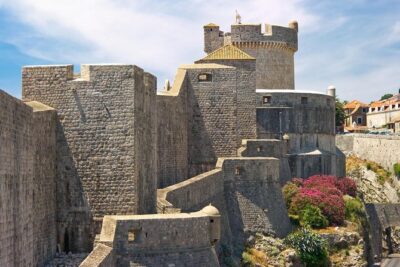
Dubrovnik: Ancient City Walls & Wars Walking Tour
Read our review →
Dubrovnik: City Walls, Old Town Walking Tour & Adriatic View
Read our review →
Dubrovnik: Karaka – Game of Thrones Cruise & Walking Tour
Read our review →
Dubrovnik: Game of Thrones And Iron Throne Walking Tour
Read our review →Lists this walk sits on