
Review · SPAIN
English Cádiz Tour: Walking Tour with Local Guide
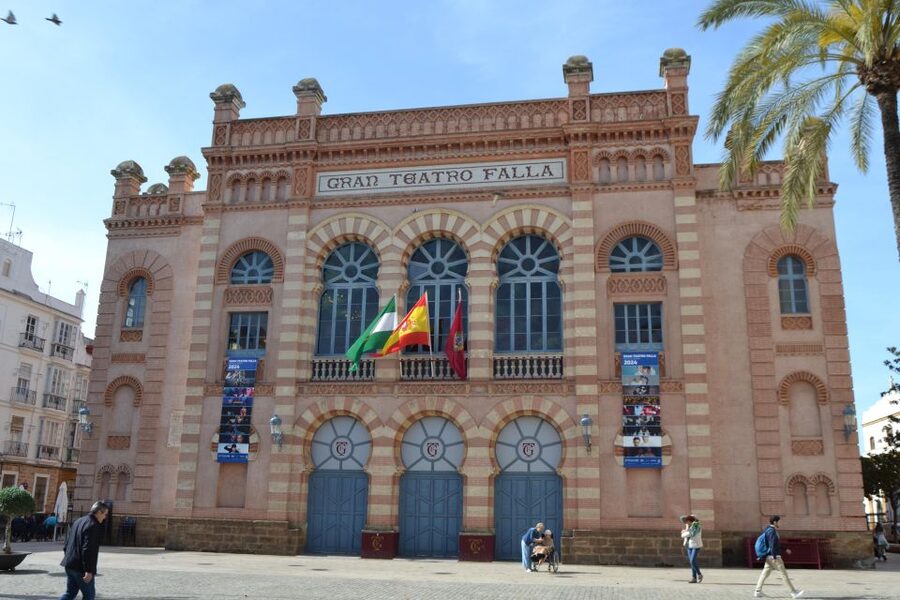
Cádiz reveals itself through odd details: cannon corners, shell-covered walls, watchtowers, market customs, and stories that a standard history lesson can miss. This two-hour walk uses local guides such as Alejandro and Alba to turn the city’s past into something easy to remember.
I like the friendly, informal tone and the chance to ask for food and sightseeing tips as you go. I also like the low $15 price, which makes this a smart first activity in Cádiz. The main consideration is that you’ll be on your feet for two hours, and noise can sometimes make it hard to hear the guide.
Key points to know before you go

- Local stories beat a dry lecture: Expect legends, odd facts, food customs, architecture, and daily life alongside major historical events.
- The Constitution monument is the meeting point: Look for the guide with a white umbrella bearing the company logo.
- Alejandro and Alba bring different local perspectives: Both are praised for clear English, humor, passion, and pride in Cádiz.
- The walk covers major old-town sights: Expect Plaza de España, La Caleta beach, the cathedral exterior, and other central landmarks.
- The market advice can be especially useful: You can ask what to eat, where to go, and how to feel more at ease ordering local food.
- Plan for sun and pavement: Wear comfortable shoes, use sunscreen, and tell the company ahead of time about physical disabilities.
Why this Cádiz walk works so well
Cádiz is easy to underestimate. On a map, the old city looks compact. Once you begin walking, though, you start noticing layers everywhere: Roman and Phoenician connections, seafaring wealth, constitutional politics, defensive architecture, food traditions, and the stubborn local pride that keeps the city feeling like a real home rather than a museum.
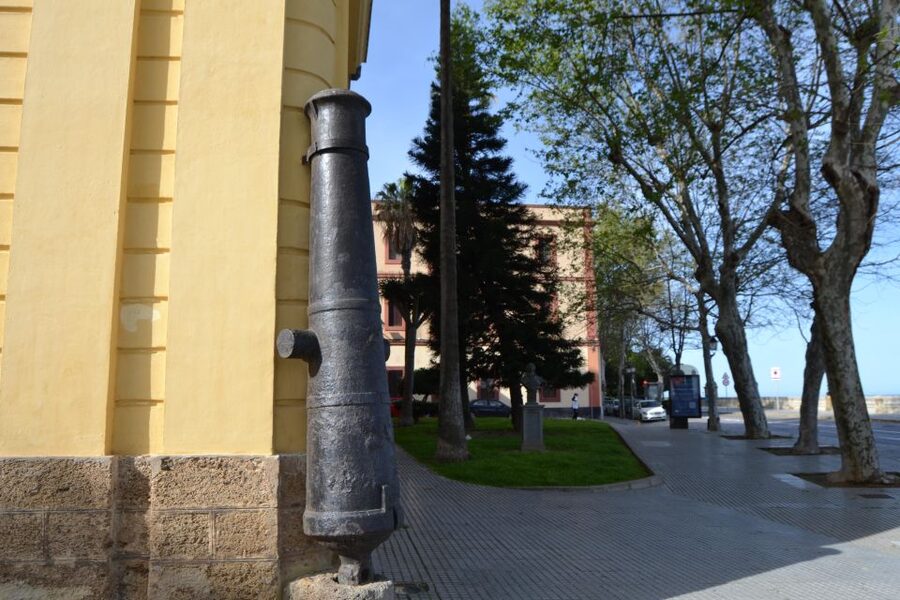
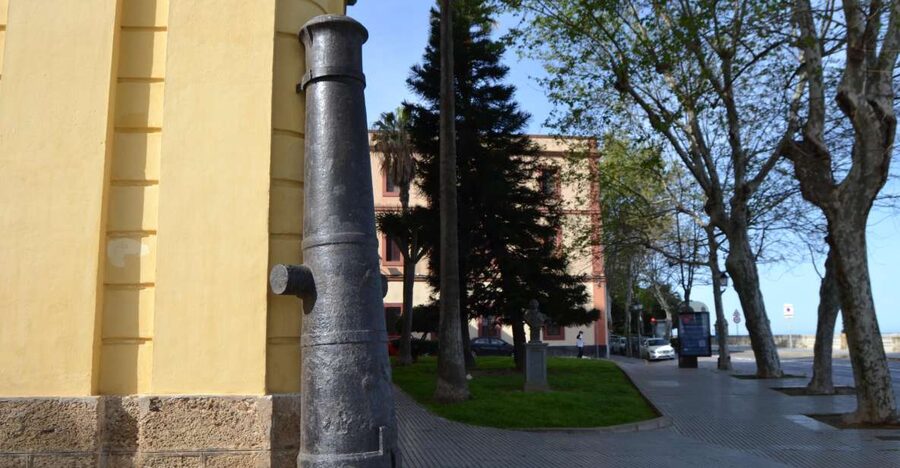
This tour is built around those layers. You still get the big names, but the guide’s job is to explain the details that make them stick. A cannon built into a street corner is easier to remember than a date. A story about a market vendor can tell you more about local food habits than a paragraph in a guidebook.
The tone is deliberately conversational. You are encouraged to ask questions, interrupt with a thought, and request recommendations. It is not meant to feel like an exam or a formal classroom. That makes it a good choice if you want context without sitting through a long string of dates.
The guides are a major part of the experience. Alejandro is from Cádiz and brings a playful, personal approach, with local stories and plenty of humor. He has also been praised for adapting the route when weather turned unpleasant. Alba offers a similarly warm style, with a strong command of English and an interest in the city’s food, architecture, culture, and past.
You should not expect every tour to feel identical. Different guides may emphasize different parts of Cádiz, and the exact balance between history, local life, and jokes can change. That is part of the appeal of a local-led walk, but it also means this is not a tightly scripted sightseeing circuit.
More walks with a guide around Spain:
- Granada: Albaicín and Sacromonte Guided Sunset Walking Tour
★ 4.9 · 2,962 reviews - Madrid: Tapas & Wine Tasting Tour with Local Guide
★ 4.8 · 2,171 reviews - Madrid: Royal Palace Skip-the-Line Guided Tour
★ 4.5 · 2,140 reviews
Starting at the Constitution monument
The walk begins at the Monumento a la Constitución de 1812, a fitting place to start because it connects Cádiz with one of Spain’s major political moments. The meeting point is in front of the monument of the woman carrying a sword. Look for a white umbrella with the company logo.
This location is particularly convenient if you arrive by cruise ship. It is opposite the cruise terminal, and clear meeting instructions are sent before the tour. The monument also gives the guide a natural way to introduce the city’s political story before moving into the older streets.
The Constitution of 1812 was drawn up in Cádiz during the Peninsular War, when political leaders gathered in the city. The supplied tour details specifically highlight the Constitution and its importance, so you can expect this opening section to provide useful context rather than simply serving as a place to gather.
I like starting here because it gives the walk a clear theme: Cádiz is not only an old port with attractive buildings. It has played a serious role in Spain’s political and commercial life. The guide can then connect that larger story to the streets, towers, and homes you see later.
Walking through the old city
The main portion lasts two hours and takes place in Cádiz’s old city. The center is mostly flat, which helps, but you should still expect a steady walk over urban pavement. The tour is described as wheelchair accessible, though anyone with a disability should contact the provider in advance so the guide can plan sensibly.
The route includes major sights such as Plaza de España, La Caleta beach, and the exterior of the cathedral. You will also pass buildings and street details that help explain how Cádiz grew as a port and trading center.
One of the best features is the focus on details that are easy to miss. The city’s towers once helped merchants watch for ships. Cannons built into corners of buildings served a practical defensive purpose. Walls decorated with seashells and other unusual features become clues to the city’s relationship with the sea.
The guide may also point out architectural features connected to Cádiz’s trading past. These details matter because they turn a walk into a way of reading the city. You are not simply looking at attractive façades. You are learning why the buildings look the way they do.
The pace appears designed for explanation rather than speed. You stop, listen, look up, and ask questions. That makes the tour manageable for most people with a moderate level of fitness, but it is not suitable if standing and walking for two hours would be difficult.
Plaza de España and Cádiz’s political story
Plaza de España is one of the tour’s key stops. Here, the guide can connect the city’s public spaces to the Constitution of 1812 and explain why Cádiz became such an important meeting place.
This is where a local guide adds value. A plaque or monument can tell you what happened. A good guide can explain why the event mattered, how it affected the city, and how local people remember it.
The tour does not appear to be built around entering monuments. You will see important buildings and landmarks from outside, and entrance fees are not included. That keeps the price low and the walk moving, but it also means you should not book this experience expecting extended interior visits.
If you want to visit the cathedral or another attraction afterward, ask the guide about timing and practical arrangements. The informal format makes that sort of question welcome.
More walking tours around Spain:
- Barcelona Tapas and Wine Experience Small-Group Walking Tour
★ 5.0 · 5,804 reviews - Barcelona: Tapas Walking Tour with Food, Wine, and History
★ 4.8 · 4,261 reviews - Madrid Tapas & Wine Tasting Walking Tour – Small Group Local Bars
★ 5.0 · 3,644 reviews - Toledo Tour & Vineyard Walk with Wine Tasting from Madrid
★ 5.0 · 2,546 reviews
The cathedral exterior and Cádiz’s layers of time
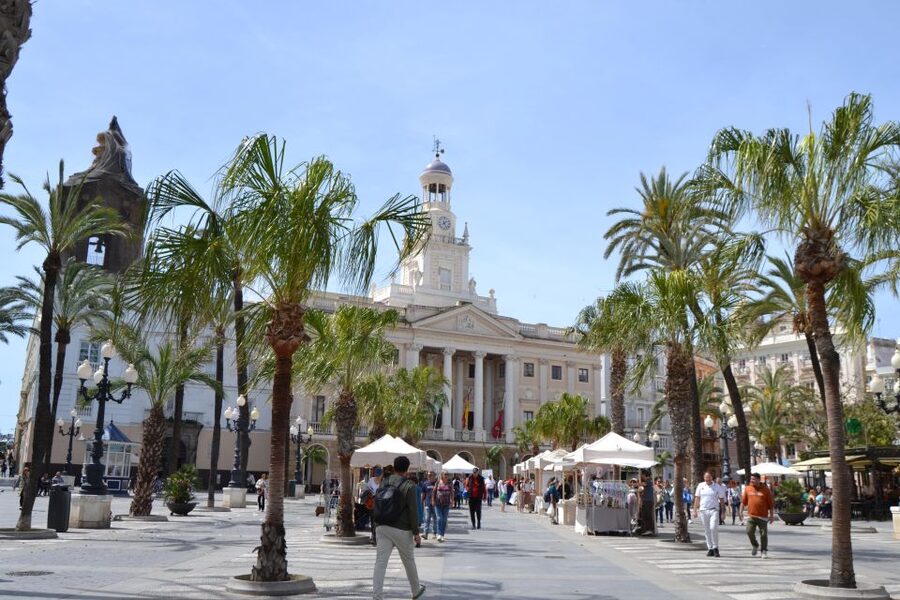
The cathedral is another major reference point. Even from outside, it gives the guide a chance to discuss Cádiz’s architectural development, its religious life, and the wealth that flowed through the port.
The city is often described as the oldest in Europe, and the walk pays attention to its long past. The historical picture includes Phoenician influence, archaeology, geology, trade, and later political events. One guide has been praised for bringing together these different subjects in a short period, which is useful if you want more than a single historical theme.
The Phoenician connection can be especially interesting. Cádiz’s ancient origins are not treated as a distant fact with no bearing on the modern city. The guide can show how the city’s position shaped its role in trade and contact between cultures.
That said, two hours only allows for an overview. You will not receive a full archaeological course or a detailed tour of every period. The strength lies in giving you enough context to make later independent visits more rewarding.
La Caleta and the city’s relationship with the sea
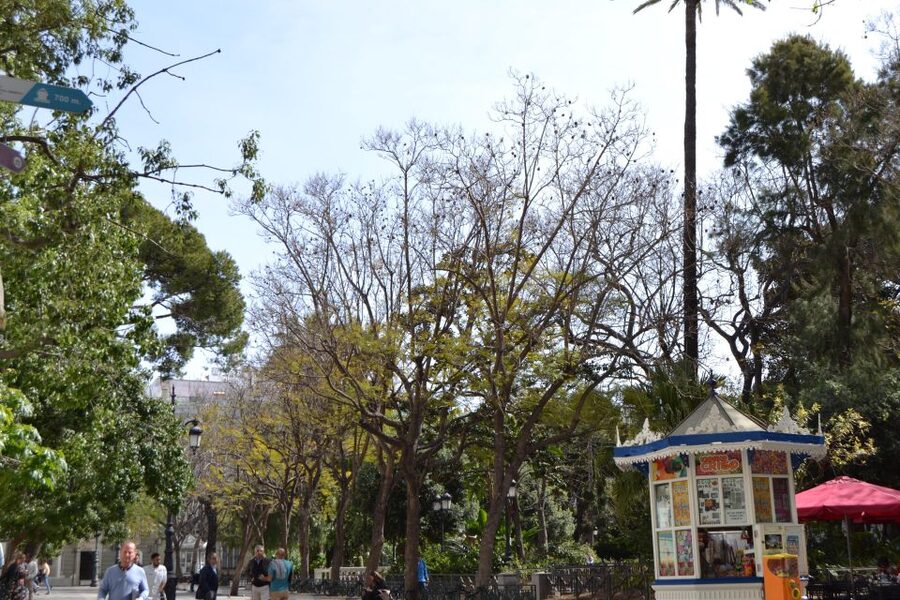
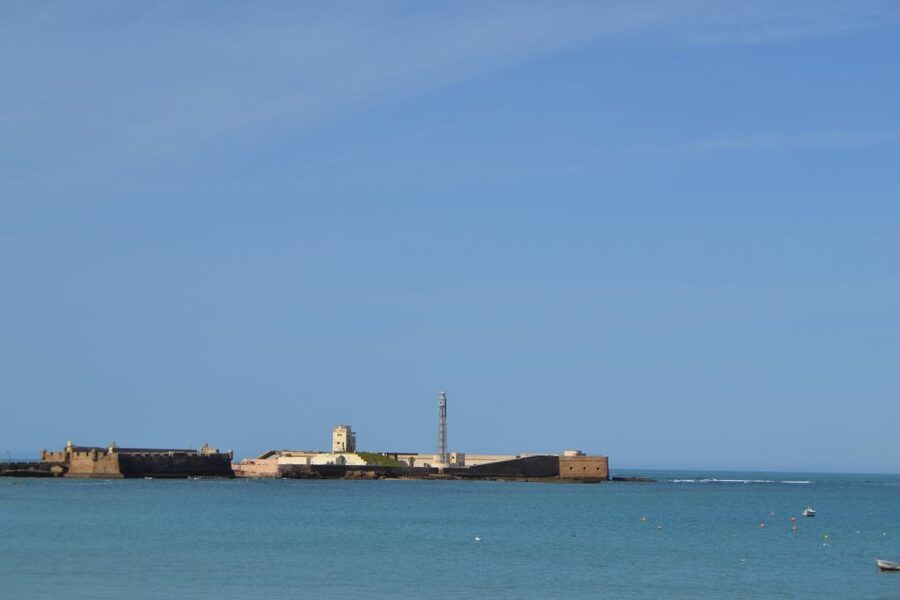
La Caleta beach adds a welcome change of scene. After narrow streets and historic buildings, you reach an open waterfront with broad views across the bay.
The tour promises panoramic views of Cádiz, and La Caleta is one of the places where that promise makes sense. The waterfront helps you understand the city’s physical setting. Cádiz is not simply an old center with a beach added for leisure. The sea shaped its work, defenses, trade, food, and identity.
The guide may use this part of the route to tell stories about the city’s relationship with ships and the Atlantic. Even if you are not especially interested in naval history, the views help make the rest of the walk easier to picture.
Weather matters here. Cádiz can be sunny and bright, but poor weather is possible, especially outside summer. The tour has continued in bad conditions with route adjustments, though you should still bring suitable clothing and sunscreen on clear days. A wet coastal walk is less comfortable than a dry one, even when the guide does everything possible to improve the experience.
The market, food, and useful local advice

The food angle may be the most practical part of the walk. One guide has taken visitors through the market, explained local foods and traditions, and pointed out vendors. That sort of help can remove the hesitation many visitors feel when they see unfamiliar seafood, unclear displays, or Spanish menus.
You can ask about tapas, drinks, markets, restaurants, and local specialties. The guide may not remain with you for a separate meal, since that is not included, but the advice can make it easier to return on your own.
This is where I see the tour moving beyond sightseeing. A city becomes more rewarding when you feel able to use it. Knowing how to approach a market stall, what kinds of food to look for, or which areas deserve more time can change the rest of your stay.
The market is not listed as a guaranteed full stop on every version of the walk, so do not book this solely for a food tour. Still, the provider’s style clearly leaves room for local food discussion, and you should ask the guide about the market if that is a priority.
Stories you are likely to remember

The tour’s best material is not necessarily the most important material in a textbook. It is the small fact that gives a place character.
You might hear about cannons used as street-corner bumpers, watchtowers built for trade, or walls with seashell decoration. These details help you recognize Cádiz later when you walk alone. They also give you something useful to share with family and friends without reciting a list of kings and battles.
The guides also bring personal connections. Alejandro’s attachment to Cádiz includes local neighborhoods, family ties, and even football pride through Cádiz FC. Alba’s approach has been praised for connecting history with food, culture, and architecture.
That personal element is a real strength, but it comes with a small caution. If you prefer a highly formal, tightly timed tour with a microphone and set script, this may feel loose. In noisy areas, one person found it difficult to hear without a loudspeaker. A guide with a strong voice can help, but standing near the front of the group is sensible.
How much does the $15 price deliver?

At $15 per person, this is unusually good value for a two-hour introduction to Cádiz. The price covers the walking tour and local guide, while attraction entry fees are not included.
You are paying mainly for orientation and interpretation. The guide helps you understand the city quickly, points out places you might otherwise pass, and gives recommendations you can use after the walk. That is a better deal than simply following a route between landmarks without context.
The value is strongest if you take the tour early in your stay. You can return to the cathedral, beach, market, or other places with a better sense of what you are seeing. Cruise passengers also benefit because the meeting point is close to the terminal and the tour returns to the same monument.
The price does not include a private experience. Some departures may be small, while others can have more people. A small group allows more questions and easier conversation. A larger group may make hearing harder, especially on busy streets.
You can reserve now and pay later, and cancellation is free up to 24 hours before the start for a full refund. Those terms make it easier to fit the walk around changing travel plans.
Who should book this Cádiz walking tour?
I would choose this tour if you want a first look at Cádiz with local context, especially if you enjoy stories more than a long list of dates. It suits first-time visitors, cruise passengers, families with older children, and people who want restaurant or market advice.
It is also useful for repeat visitors who have seen the main sights but still feel they have missed the city’s smaller details. The focus on towers, cannons, markets, food, local traditions, and personal stories can add another layer.
Families should note that the tour has worked well for children aged 11 and 15, but it is still a two-hour walking experience. Younger children may need patience, particularly during the historical sections.
I would think twice if you have a low fitness level, significant difficulty walking, or hearing loss. The activity specifically says it is not suitable for people with low fitness or hearing impairment. If you have a physical disability, tell the provider ahead of time, even though the tour is described as wheelchair accessible.
Practical tips for a better walk
Wear shoes that can handle two hours of city walking. Cádiz is mostly flat, but comfort matters more than style once you have been standing for a while.
Bring sunscreen on sunny days. The waterfront and open plazas can feel exposed, and the advice to protect yourself is worth taking seriously.
Arrive at the monument with enough time to identify the guide. The key clues are the woman with the sword and the white company umbrella.
If you want food recommendations, ask early. The guide can point you toward market choices, tapas, restaurants, and local customs, but you will get more useful advice if you explain what you like to eat and how adventurous you feel.
If you have trouble hearing in crowds, stay close to the guide and mention it at the start. One person found the streets noisy without a speaker, while another found the guide easy to hear, so conditions and group size can make a difference.
Should you book it?
Book this walk if you want Cádiz explained by someone who feels personally connected to the city. The combination of local stories, major landmarks, food advice, and a $15 price makes it a strong opening activity.
Do not choose it as a substitute for paid attractions or a full food tour. You will mainly see sights from outside, and the two-hour route gives you an overview rather than exhaustive detail.
For most visitors, the balance is right. You get the Constitution monument, old-town streets, Plaza de España, the cathedral exterior, La Caleta, and plenty of odd local details. Guides such as Alejandro and Alba add humor and warmth, while the open question period lets you shape the experience around your own interests.
FAQ
How long does the Cádiz walking tour last?
The tour lasts two hours, including the walk through Cádiz and the return to the starting monument.
What language is the tour conducted in?
The tour is conducted in English with a live guide.
Where does the tour meet?
Meet in front of the monument of the woman with the sword at the Monumento a la Constitución de 1812. The guide carries a white umbrella with the company logo.
Where does the tour finish?
The walk returns to the Monumento a la Constitución de 1812.
What sights are included?
The route includes Cádiz’s old city and highlights such as Plaza de España, La Caleta beach, and the exterior of the cathedral. The guide also discusses local stories, legends, architecture, food, and history.
Are entrance fees included?
No. The activity includes the walking tour and local guide, but entry fees to attractions are not included.
Is the tour wheelchair accessible?
The tour is described as wheelchair accessible. If you have a physical disability, inform the provider in advance.
What should I bring?
Bring comfortable footwear and sunscreen on sunny days. A passport or identity card is required for children.
Can I cancel the booking?
Yes. You can cancel up to 24 hours in advance for a full refund. You can also reserve now and pay later.
New walking tours around Spain
- Menorca: Mahon Guided Walking Tour with History & Tastings★ 4.9 · 110 reviews
- Malaga: Taste-of-Spain Walking Food Tour★ 4.8 · 72 reviews
- Malaga Private Walking Tour, Alcazaba & Catamaran Cruise★ 4.7 · 92 reviews
- Málaga: 2h Walking Historical Tour–Art, Culture and Legends★ 4.9 · 341 reviews
- Malaga: Walking Tour of Must-See Attractions★ 4.8 · 79 reviews
- Málaga: Cathedral, Alcazaba, Roman Theater Walking Tour★ 4.7 · 315 reviews
- Ardales: Caminito del Rey Private Walking Tour★ 4.7 · 91 reviews
- Madrid: Visit to the Royal Palace & Walking Tour of the City★ 4.4 · 288 reviews
Spain Walking Tours, side by side.

Barcelona Tapas and Wine Experience Small-Group Walking Tour
Read our review →
Barcelona: Tapas Walking Tour with Food, Wine, and History
Read our review →
Madrid Tapas & Wine Tasting Walking Tour – Small Group Local Bars
Read our review →
Granada: Albaicín and Sacromonte Guided Sunset Walking Tour
Read our review →
Toledo Tour & Vineyard Walk with Wine Tasting from Madrid
Read our review →
Madrid: Tapas & Wine Tasting Tour with Local Guide
Read our review →
Madrid: Royal Palace Skip-the-Line Guided Tour
Read our review →Lists this walk sits on