
Review · GRANADA
Granada: Albaicín and Sacromonte Walking Tour
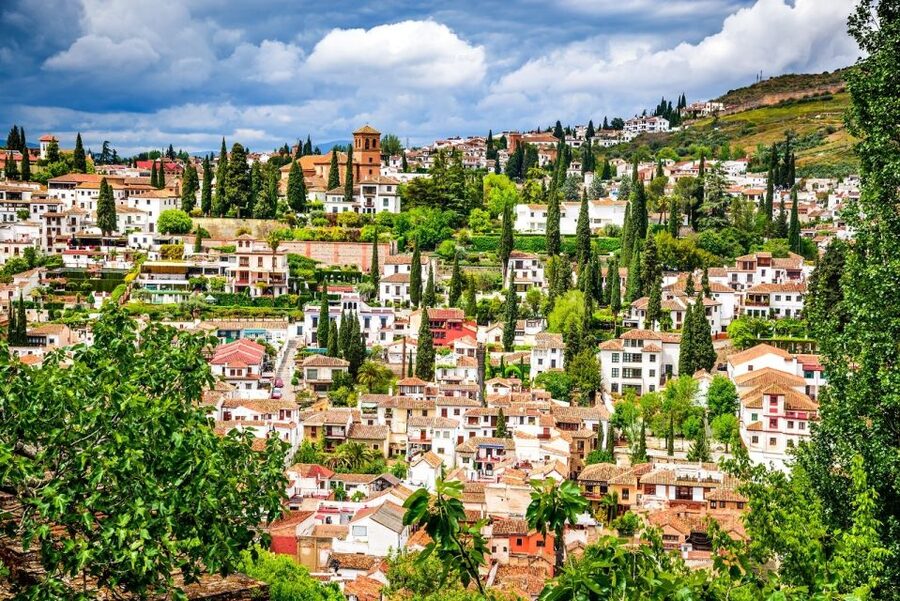
Granada’s best introduction may come on foot, high above the city in the Albaicín and Sacromonte. This tour threads through Moorish lanes, old gates, whitewashed houses, and cave homes before reaching the famous Alhambra views at Plaza de San Nicolás. It gives you the story behind the scenery, not just a string of photo stops.
I like two things in particular: the guides bring together Granada’s Islamic past and Gypsy culture, and the route reaches places you could easily miss in the tangled streets. Guides such as Maria, Carmen, Francesco, Paula, and Chema have been praised for clear explanations, local stories, and useful advice about food and flamenco.
The catch is the climb. Steep slopes, stairs, uneven paving, and slippery surfaces after rain make this a poor choice for anyone with mobility problems. Comfortable shoes, water, sun protection, and a reasonable level of fitness matter more here than the modest price suggests.
Key points at a glance
- Alhambra views from Plaza de San Nicolás: The main photo moment comes with a guided explanation of what you are seeing.
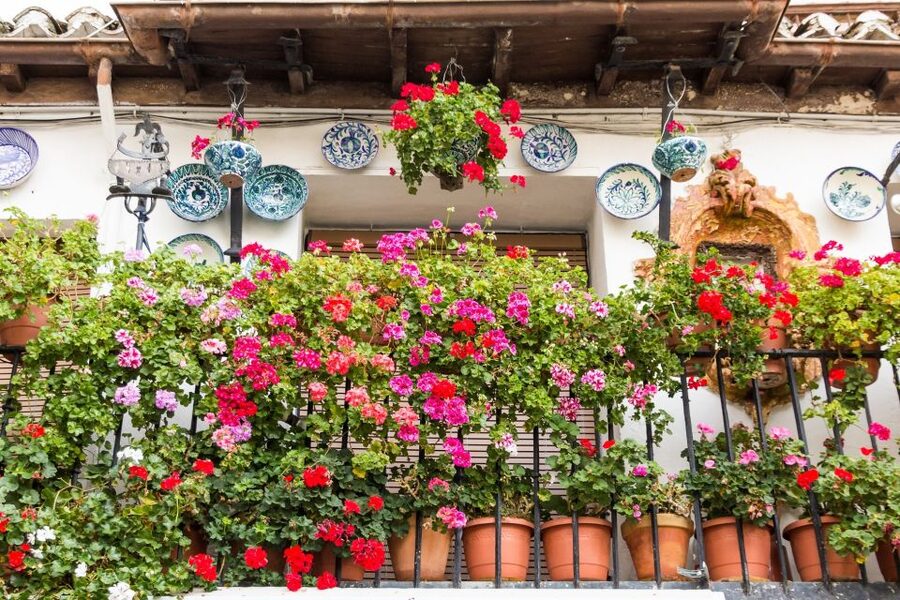
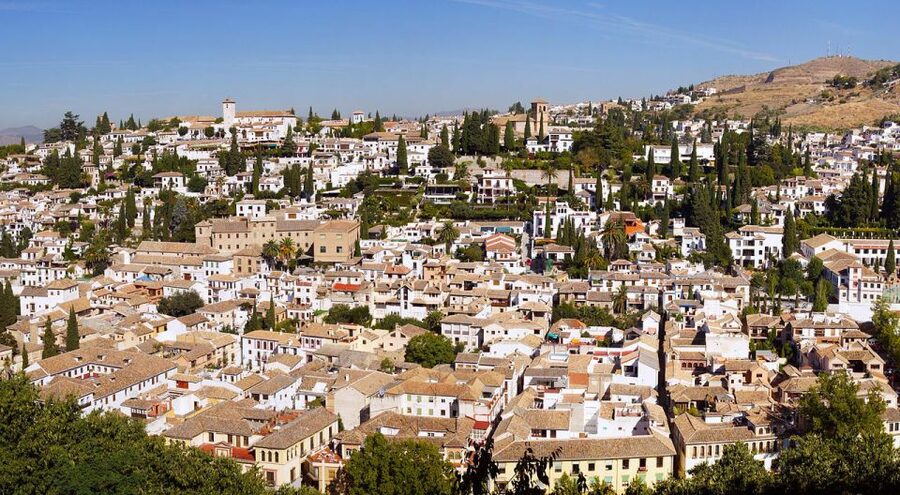
- Moorish Albaicín lanes: White houses, flowered balconies, old walls, gates, and traces of mosques reveal Granada’s Islamic past.
- Sacromonte cave quarter: Learn why cave homes were dug into the hillside and how Gypsy communities became linked with this part of the city.
- A useful first-day orientation: The route helps you get your bearings before exploring the neighborhoods alone.
- Strong guide-led storytelling: Past guides including Maria, Carmen, Francesco, Eduardo, and Paula have been praised for humor, patience, and clear English.
- A real uphill walk: The advertised two to two and a half hours includes frequent stops, but this is not a flat city stroll.
Why this walk matters in Granada
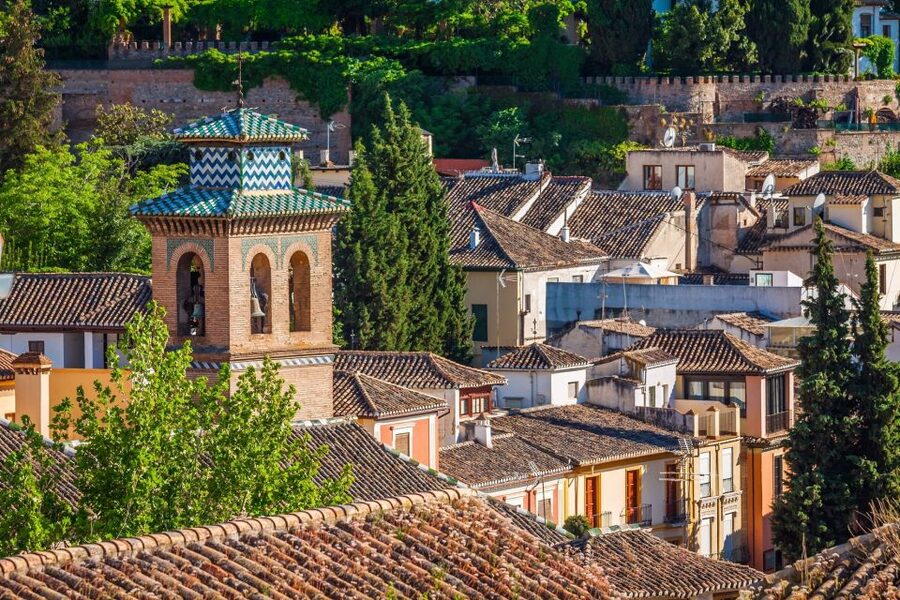
Granada is easy to admire and surprisingly hard to read. The Alhambra sits across the valley, the old quarters climb the hills, and the narrow streets can leave you unsure which way you are going. A guide gives the city a timeline and helps connect the buildings, viewpoints, and people.
This route focuses on two quarters with very different identities. The Albaicín grew from Granada’s Muslim past, with narrow lanes designed for shade and defense. Sacromonte is tied to cave homes, flamenco, and Gypsy culture. Walking between them lets you see how the city changed while keeping traces of earlier communities.
I would book this early in a Granada stay. The route works well as a get your bearings fast walk. Afterward, you can return to a favorite viewpoint, explore the lanes at your own pace, or decide where you want to eat and hear flamenco.
The tour costs $18 per person. That is good value if you want context, directions, and a local guide rather than simply following a map. It does not include transport, food, drinks, or entrance to a major monument, so you are paying for the guided walk and the interpretation. For two to two and a half hours, that is a sensible price.
More walking tours around Spain:
- Barcelona Tapas and Wine Experience Small-Group Walking Tour
★ 5.0 · 5,804 reviews - Barcelona: Tapas Walking Tour with Food, Wine, and History
★ 4.8 · 4,261 reviews - Madrid Tapas & Wine Tasting Walking Tour – Small Group Local Bars
★ 5.0 · 3,644 reviews
From Plaza Isabel la Católica to Granada’s old center
The meeting point is Plaza Isabel la Católica, behind the monument showing Queen Isabella I and Christopher Columbus. It is a central starting point, which keeps the first part of the walk simple. The group then heads toward Plaza Nueva, one of the city’s main public spaces.
At Plaza Isabel la Católica, the guide sets up the broad story of Granada. This is a useful place to begin because the city’s Christian and Muslim pasts meet in the names, monuments, and streets around you. Guides speak English, French, or Spanish, but the tour runs in only one language, the one selected when booking.
The walk to Plaza Nueva takes about 20 minutes, with guided stops along the way. You are not simply marching toward the hills. The guide uses this opening section to explain how central Granada connects with the older quarters above the Darro River.
Plaza Nueva is also a practical point to note for later. You will pass through the central city before heading into streets that become narrower and steeper. If you need water, sunscreen, or a quick comfort break, this is the last easy part of the walk to prepare.
Into the Albaicín’s narrow lanes
From Plaza Nueva, the route turns into the Albaicín. The change is immediate. Broad city streets give way to lanes, white walls, small squares, and flowered balconies. The quarter is attractive, but its real appeal comes from how much of its street pattern still feels shaped by its Moorish past.
The Callejón del Aljibe de Trillo and Placeta Comino are small stops, yet they show why a guide helps here. An aljibe is a water cistern, and features such as these can be easy to walk past without explanation. The guide points out the remains of old walls, gates, palaces, and mosques, giving meaning to details that otherwise look like ordinary stonework.
The Albaicín is not a museum laid out in neat rooms. It is a living neighborhood with confusing turns and uneven surfaces. That is part of its charm, but it can also make independent sightseeing frustrating. The guided route keeps the walk moving while leaving enough time for questions and photographs.
The pace seems to be one of the tour’s strengths. Guides such as Maria and Francesco have been praised for allowing rest stops, adjusting the pace, and keeping the group together on steep sections. That does not make the route flat, but it makes the climb more manageable for people who are generally comfortable walking.
Plaza de San Nicolás and the Alhambra view
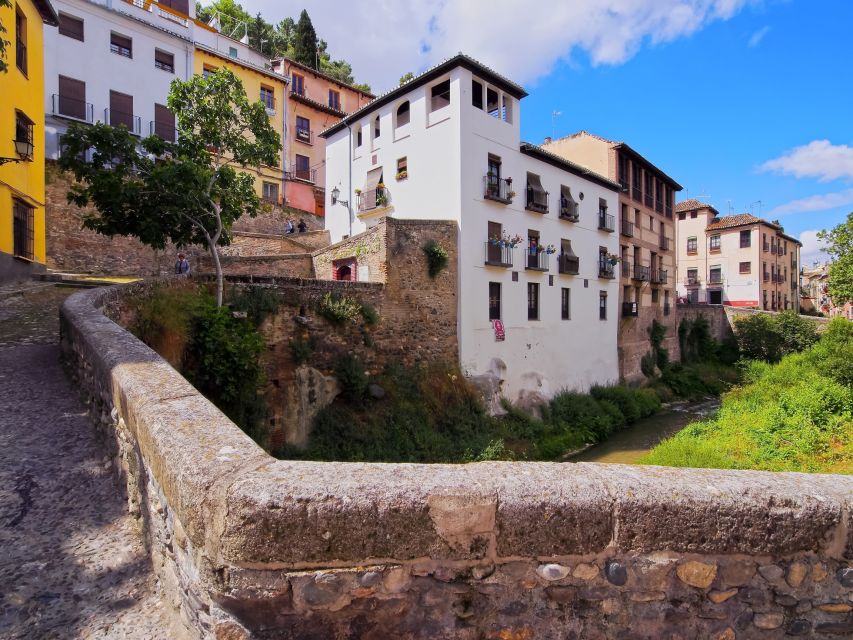
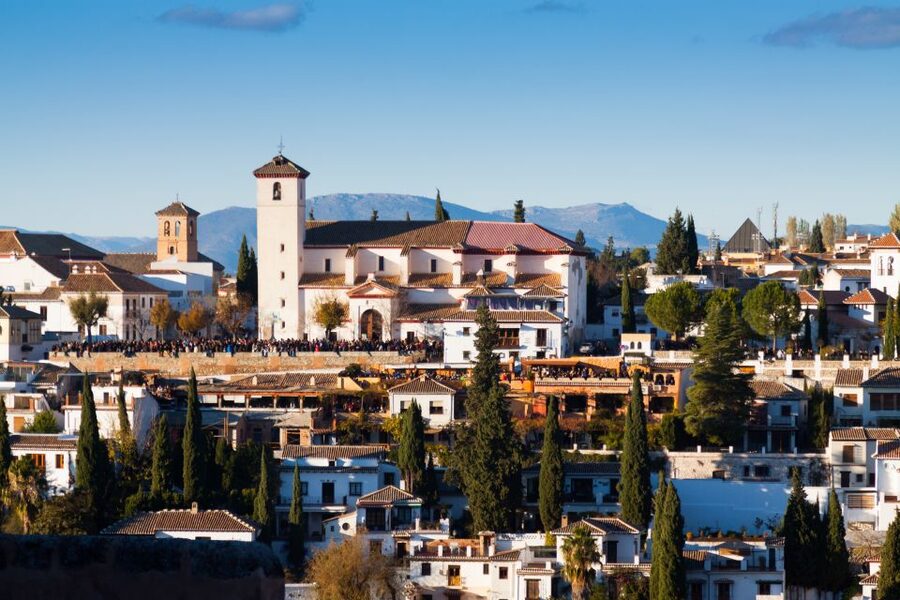
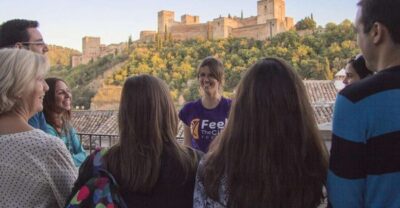
The major viewpoint is Plaza de San Nicolás. Here, the Alhambra spreads across the valley with the Sierra Nevada behind it on clear days. This is the place where many people pause for photographs, but the guide adds something a solo visit cannot: an explanation of the palaces, walls, and dynasties visible from across the valley.
You should allow time for the view to sink in. It is one of Granada’s classic scenes, and the tour usually pauses for photographs and commentary rather than treating the plaza as a quick checkpoint. Guides have also offered to take photos for participants, a small but useful touch if you are traveling alone or with a group that wants everyone in the picture.
Sunset departures can be especially appealing because the light changes across the Alhambra. The activity information does not promise a particular sunset time, so check the available start times rather than assuming every departure reaches the plaza at dusk. The same viewpoint is worthwhile in daylight.
Plaza de San Nicolás can be busy, and the open setting offers little shade. Bring a hat, sunglasses, sunscreen, and water. The tour takes place in rain or shine, so the viewpoint may feel very different on a hot afternoon than on a cool or wet evening.
Same streets, a different story:
- Granada: Albaicín and Sacromonte Guided Sunset Walking Tour
★ 4.9 · 2,962 reviews - Toledo Tour & Vineyard Walk with Wine Tasting from Madrid
★ 5.0 · 2,546 reviews - Madrid Walking Tour from Puerta del Sol to Retiro Park
★ 5.0 · 2,285 reviews - Barcelona: Food Walking Tour with Tapas and Wine
★ 4.9 · 2,180 reviews
Through Puerta de las Pesas and Plaza Larga
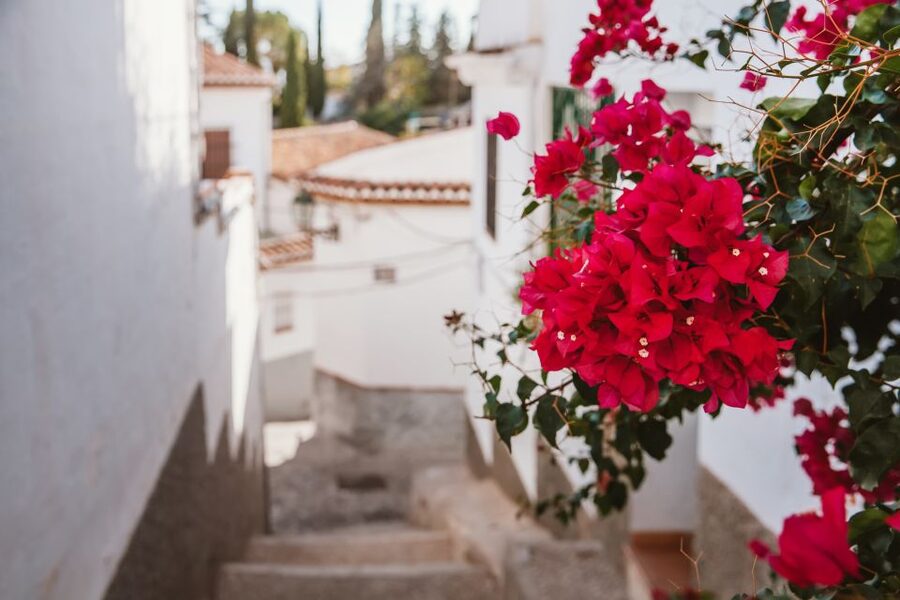
After San Nicolás, the walk continues through Puerta de las Pesas and Plaza Larga. These stops deepen the sense that the Albaicín is a network of old entrances, neighborhood squares, and defensive routes rather than a single scenic street.
Puerta de las Pesas is one of the historic gateways associated with the old quarter. The name and surviving structure give the guide a chance to explain how access into the Albaicín once worked. At Plaza Larga, the scale opens slightly, offering a useful break after the tighter lanes and climbs.
The tour is strongest when it combines these modest details with larger stories. You hear about the Muslim kingdom that lasted in Granada after other parts of Iberia had changed hands, then move through streets where later generations built homes and reshaped the quarter. The result is more useful than memorizing dates because you see how the past sits inside the modern neighborhood.
I would not expect long interior visits at these stops. This is a walking and interpretation tour, not a series of palace admissions. If you want extended time inside the Alhambra, the Nasrid Palaces, or other monuments, you need separate tickets and a separate visit.
Sacromonte and the cave homes
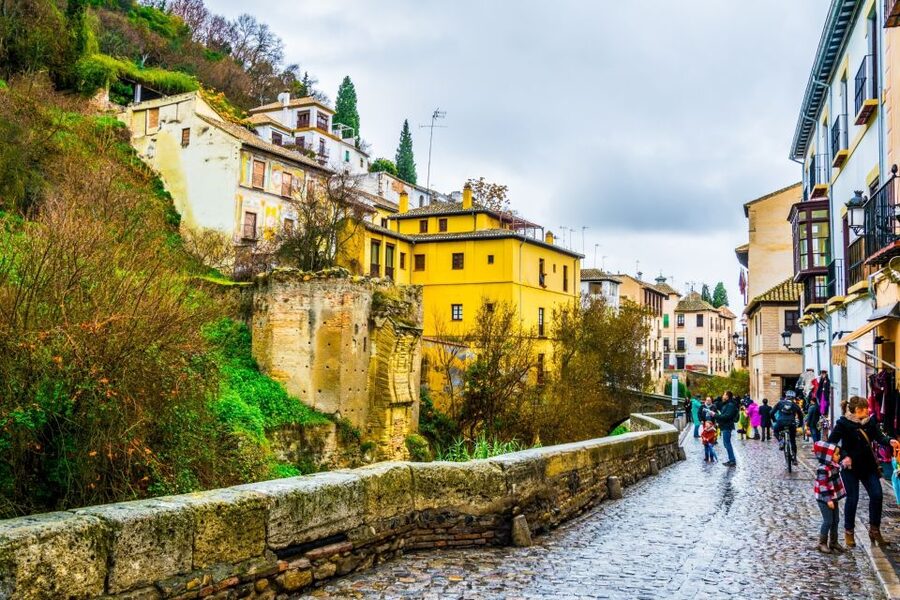
The route then enters Sacromonte, often called Granada’s flamenco quarter. The character changes again. The guide explains the cave homes dug into the hillside and why Gypsy communities established themselves here centuries ago.
This section adds human context to the scenery. Sacromonte is not just a place to watch flamenco or photograph unusual houses. Its caves reflect practical ways of adapting to the hillside, while the quarter’s identity has grown around music, family, migration, and local tradition.
The route does not promise a flamenco performance, meal, or cave-house admission as part of the $18 price. Instead, you learn about the quarter while walking through it. Several guides have also offered suggestions for flamenco venues and restaurants at the end, which can help you plan the rest of your evening.
Cuesta del Chapiz is one of the walk’s steeper stretches. The name matters for practical planning: you will be moving up and down rather than following a level promenade. Stop when the guide stops, use the pause to drink water, and do not judge the difficulty only by the distance. The hills and paving are the real challenge.
Down to Paseo de los Tristes and Carrera del Darro
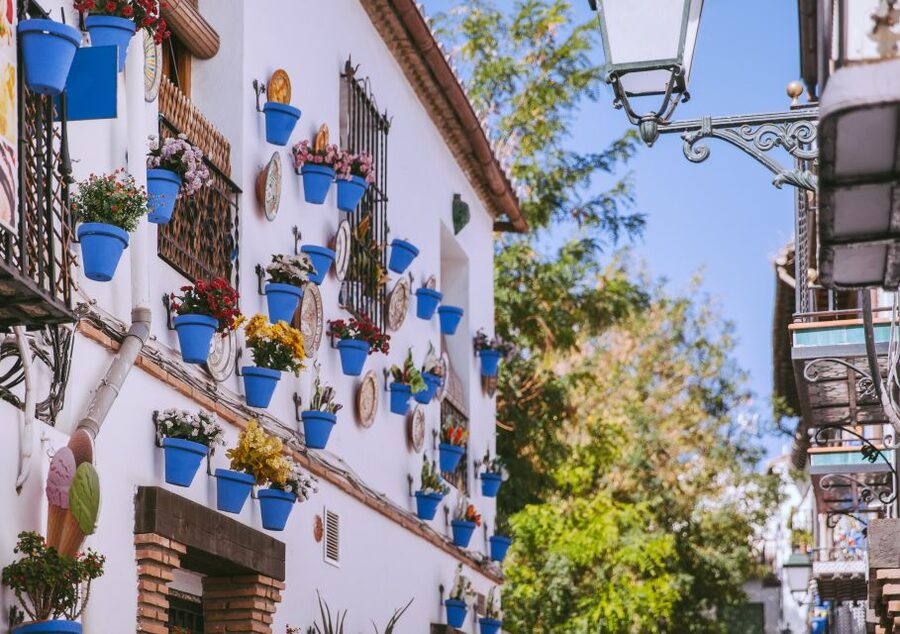
After Sacromonte, the walk turns toward Cuesta del Chapiz and descends toward Paseo de los Tristes. This change of direction is welcome after the uphill sections, though downhill streets can be hard on knees and less steady if the pavement is wet.
Paseo de los Tristes follows the Darro River and offers a different view of Granada. From here, the city feels more enclosed and intimate than it does from San Nicolás. The Alhambra rises above the river corridor, while the old buildings and stone surfaces bring the route back toward the central city.
The final stretch along Carrera del Darro takes about 10 minutes before the group returns to Plaza Isabel la Católica. This closing section makes the route feel like a loop rather than an out-and-back climb. It also leaves you near the center, where you can continue to dinner or make your own way back to your accommodation.
The full walk is listed as two to two and a half hours. Timing can vary with group size, questions, photo stops, weather, and the pace of the climb. The guides praised in the feedback include Alejandra, Lorene, Carmen, Jaime, Maria, and Fernando, among many others. The common pattern is clear: the quality of the day depends heavily on the individual guide, and the strongest guides make the history lively rather than academic.
How hard is the walk?
Take the warnings seriously. This tour is not suitable for wheelchair users or people with mobility impairments, and it is not a good choice if stairs, steep slopes, or uneven paving are a concern.
At the same time, it is not presented as a race. Guides have stopped for water, photographs, and rest, and some have helped participants manage tricky surfaces. Several people with different ages in one group completed it comfortably, but that should not hide the central fact: you need to be able to walk uphill and handle steps.
Wear flat, secure shoes. Avoid luggage, large bags, baby strollers, and anything that makes balance harder. Pets are not allowed, and flash photography is not allowed. Dress for the season, but always carry water and sun protection because shade is not guaranteed.
Who should book this tour?
I would choose it for a first visit to Granada, especially if you want the Albaicín and Sacromonte explained rather than simply photographed. It suits curious walkers, solo visitors who want an easy way to meet a guide and group, and anyone interested in the overlap of Islamic, Christian, and Gypsy culture.
It is also useful for people who want practical local advice. Guides have suggested places to eat, flamenco options, and other attractions after the walk. That advice can help turn one organized outing into a better Granada stay.
I would skip it if you want a relaxed, flat stroll, a private tour, or extended time inside historic buildings. You should also reconsider if your Granada schedule is already packed with hill walks. The route is rewarding, but it asks something from your legs.
Should you book the Albaicín and Sacromonte walk?
Book it if you want excellent views with a clear story, and if you can handle a genuine uphill walk. At $18, the guide’s explanations, route-finding, and local suggestions make the price easy to justify.
For the best experience, choose a time that fits your tolerance for heat or your interest in evening light. Arrive at Plaza Isabel la Católica in comfortable shoes, carry water, and keep your expectations focused on neighborhoods, viewpoints, and storytelling rather than monument interiors.
This is a smart early-visit activity. It helps you understand where you are, shows you the Alhambra from across the valley, and gives you enough local context to explore Granada on your own afterward.
FAQ
How long does the Albaicín and Sacromonte walking tour last?
The tour lasts about two to two and a half hours. The exact duration can vary with the pace of the group, questions, photographs, and rest stops.
Where does the tour begin?
It begins at Isabel la Católica Square in Granada, behind the Monument of the Capitulations showing Queen Isabella I and Christopher Columbus.
Where does the tour finish?
The walk returns to Plaza Isabel la Católica after passing through Carrera del Darro.
What languages are available?
The tour is available in English, French, and Spanish. It is conducted in one language, selected when you make the reservation.
Does the tour include transport?
No. This is a walking tour, and transport is not included.
Are food and drinks included?
No. Food and drinks are not included. Bring water, especially in warm weather.
Is the tour suitable for wheelchair users?
No. The route is not suitable for wheelchair users or people with mobility impairments because it includes steep slopes, stairs, and uneven surfaces.
What should I bring?
Bring comfortable shoes, water, sunglasses, a sun hat, sunscreen, and comfortable clothing. Flat shoes are especially important on uneven or potentially slippery paving.
Can I cancel the booking?
Yes. You can cancel up to 24 hours in advance for a full refund. The reserve-now, pay-later option lets you book without paying immediately.
New walking tours around Spain
- Menorca: Mahon Guided Walking Tour with History & Tastings★ 4.9 · 110 reviews
- Malaga: Taste-of-Spain Walking Food Tour★ 4.8 · 72 reviews
- Malaga Private Walking Tour, Alcazaba & Catamaran Cruise★ 4.7 · 92 reviews
- Málaga: 2h Walking Historical Tour–Art, Culture and Legends★ 4.9 · 341 reviews
- Malaga: Walking Tour of Must-See Attractions★ 4.8 · 79 reviews
- Málaga: Cathedral, Alcazaba, Roman Theater Walking Tour★ 4.7 · 315 reviews
- Madrid: Visit to the Royal Palace & Walking Tour of the City★ 4.4 · 288 reviews
- Madrid: Welcome to Madrid Guided Walking Tour in English★ 4.9 · 263 reviews
Granada Walking Tours, side by side.
Granada: Albaicín and Sacromonte Guided Sunset Walking Tour
Read our review →
Granada: Albaicín and Sacromonte 2.5-Hour Walking Tour
Read our review →

Golden Hour in Granada: Sunset Walking Tour with Play Granada
Read our review →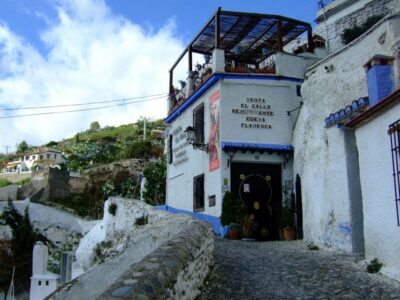
Granada: Albaicín, Sacromonte & Museum of Caves Walking Tour
Read our review →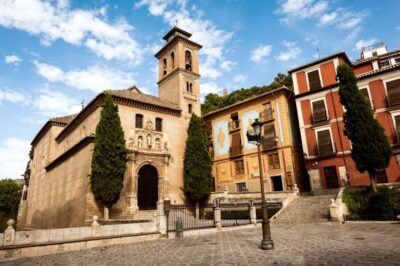
Granada: Historic Center and Lower Albaicin Walking Tour
Read our review →Lists this walk sits on