
Review · TALLINN
Hidden Tallinn: Soviet Walking Tour
Tallinn’s medieval Old Town is the city’s star, but this tour points you toward the less polished story: how ordinary people lived under Soviet rule. You’ll pass the former KGB Headquarters, look at the vast Linnahall, visit the city’s last remaining Soviet-era market, and hear how surveillance and shortages shaped daily life.
I like two things here. First, guide Tom makes buildings and streets meaningful with well-researched stories, including the small acts of defiance that rarely appear on a standard city tour. Second, the route shows places you could easily walk past, including the Viru Hotel and KGB prison cells. The main drawback is weather: winter ice can make the Linnahall steps unsafe, and the ending may move to Old Town.
Key points
- A sharp look at everyday Soviet life: Learn about shortages, surveillance, travel controls, and quiet resistance.
- Tom’s storytelling: He is praised for clear explanations, humor, personal stories, and detailed follow-up reading.
- Major Soviet sites: See the former KGB Headquarters, Viru Hotel, Linnahall, and KGB prison cells.
- The Central Market: Visit Tallinn’s last remaining Soviet-era market, an everyday place rather than a preserved exhibit.
- A compact two-hour walk: Frequent stops keep the pace manageable, though you should dress for the weather.
- Best for curious adults and older children: The tour is not suitable for children under 12.
Why Soviet Tallinn belongs on your itinerary
This is not a tour of grand monuments alone. Its strength is the link between large political events and ordinary routines.
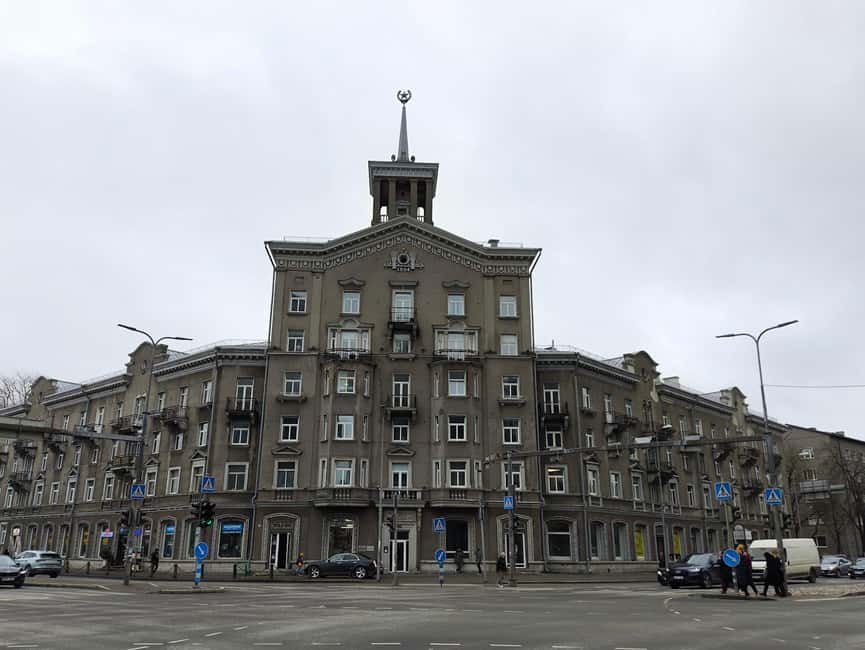
A former security building tells you about fear and surveillance. A market shows how people found food and goods during shortages. A hotel reveals how visitors could be watched while enjoying one of the city’s most modern addresses. A crumbling concert hall points to the ambitions, costs, and later neglect of Soviet architecture.
That mix gives the tour a useful shape. You are not simply looking at old concrete buildings and hearing dates. You are being asked to imagine how these places worked when Tallinn was part of the Soviet Union, and how their meaning changed after independence.
The subject is serious, but the presentation is not dry. Tom’s style, based on the feedback provided, combines facts with anecdotes and humor. He also answers questions readily, which matters on a topic that can quickly become complicated.
The tour has a 4.9 rating from 76 reviews, and the praise is unusually consistent. The strongest theme is Tom’s preparation and storytelling. Several people describe the tour as a highlight of their visit, while one local participant found that the walk revealed stories behind buildings they had seen many times.
More walking tours around the world:
- Magical London: Harry Potter Guided Walking Tour
★ 4.7 · 22,044 reviews - Reykjavik Food Walk – Local Foodie Adventure in Iceland
★ 5.0 · 18,952 reviews - History and Hauntings of Salem Guided Walking Tour
★ 5.0 · 14,564 reviews
Meeting Tom near Hampton by Hilton
The walk begins outside Hampton by Hilton Tallinn, next to the Hampton Hilton sign. If it is raining, the meeting point moves into the hotel lobby, a small but useful detail in Tallinn’s changeable weather.
The tour is conducted in English and lasts about two hours. You do not need to arrange transport as part of the experience, but you do need to make your own way to the starting hotel. Since the route finishes elsewhere, plan for a walk back, onward sightseeing, or a short local transport connection after the tour.
The pace appears to be comfortable rather than hurried. Stops break up the walking, giving Tom time to explain a site before moving on. One particularly useful detail from the feedback is that people felt they had walked a fair distance without it becoming exhausting, thanks to those regular pauses.
Wear shoes suited to city streets and bring weather-appropriate clothing. In cold weather, the subject may feel especially fitting, but Tallinn’s winter conditions can affect the final section.
The former KGB Headquarters and the prison cells
The former KGB Headquarters is one of the tour’s most important stops. It gives the political story a physical address. Here, the focus turns to state surveillance, control, and the fear attached to a building that ordinary people did not approach casually.
The tour also passes the KGB prison cells. The supplied route describes them as a pass-by rather than a guaranteed interior visit, so you should not expect a long museum visit inside the building. Their value lies in the explanation surrounding them: Tom connects the site to the machinery of Soviet control and to the lives affected by it.
This is where the tour is likely to feel darkest. The experience deals with prison, surveillance, restricted freedom, and the pressure of living under an authoritarian system. It is not designed as light sightseeing, though the guide uses amusing details and lively delivery to keep the two hours approachable.
I appreciate this balance. A tour about the Soviet period can become a list of grim facts, or it can become too casual. The feedback points to a middle path, with difficult subjects explained clearly and human stories used to make them understandable.
Viru Hotel and the business of watching people
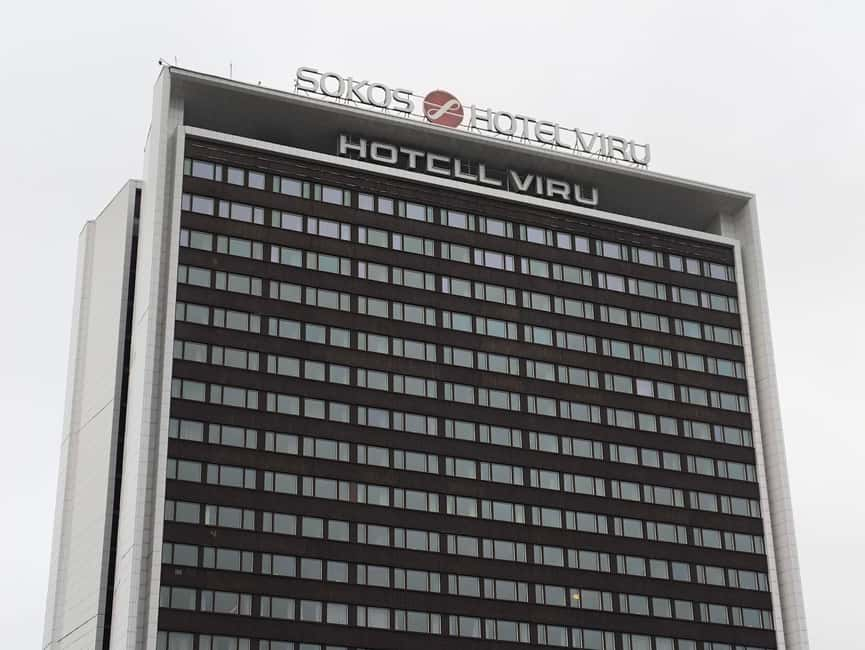
The Viru Hotel adds a different angle. It was a striking Soviet hotel, but its story is not just about architecture or luxury. It also had a complicated connection with surveillance.
A large hotel can appear open and modern, yet still operate within a tightly controlled society. Visitors, staff, and local residents moved through the building under conditions shaped by the state. The Viru Hotel helps explain how surveillance could reach into spaces associated with travel, business, and hospitality.
This stop is particularly useful if you are interested in Cold War history. It shows that control was not limited to prisons or government offices. It could also be part of the city’s public face.
Tom’s presentation is important here. The story works best when the guide explains both the building and the human response to it. The supplied feedback repeatedly highlights his ability to connect architecture with people’s experiences, rather than treating buildings as isolated objects.
Same streets, a different story:
- New Orleans Premier Ghost, Voodoo and Vampire Walking Tour
★ 4.5 · 12,856 reviews - Amsterdam Anne Frank: Small-Group Walking Tour & Local Guide
★ 4.8 · 12,789 reviews - Edinburgh: Harry Potter Magical Guided Walking Tour
★ 4.8 · 11,944 reviews - Edinburgh Castle: Guided Walking Tour with Entry Ticket
★ 4.7 · 11,699 reviews
Central Market, where Soviet life continues in the present
The Central Market is one of the tour’s most effective stops because it remains part of everyday Tallinn. It is described as the city’s last remaining Soviet-era market, so you are not looking only at a preserved relic. You are seeing a working place with layers of time attached to it.
This is the kind of stop that gives context to shortages and shopping under Soviet rule. The market helps you think about how people obtained food and household goods, how informal systems developed, and why an ordinary shopping trip could require patience and persistence.
It also keeps the tour from becoming a procession of abandoned buildings. The Soviet past still echoes in places that people use now. That is a more useful lesson than simply photographing old concrete.
Allow yourself to pay attention to the setting, not just Tom’s words. Look at how the market functions today and consider the contrast between a normal shopping stop and the historical pressures discussed during the tour.
Small sites and the overlooked corners of the city
Several parts of the route are described only as pass-by stops. That may sound vague, but it fits the purpose of Hidden Tallinn. The tour is built around overlooked locations, not a fixed list of headline attractions.
You may pass buildings or small sites that have little meaning until Tom explains what happened there or how they were used. This approach rewards curiosity. A plain facade can become evidence of a former institution, a change in city life, or an old system that has not quite disappeared from public memory.
The route also helps you see why a walking tour is useful for this subject. Soviet history is scattered across Tallinn. You can visit a museum and learn a great deal, but walking between real streets lets you connect different parts of the story.
One local participant found the experience eye-opening despite already knowing most of the buildings. That is a good sign for repeat visitors and residents, but it also means first-time visitors should expect more than a basic introduction.
Linnahall, Soviet ambition and a practical winter warning
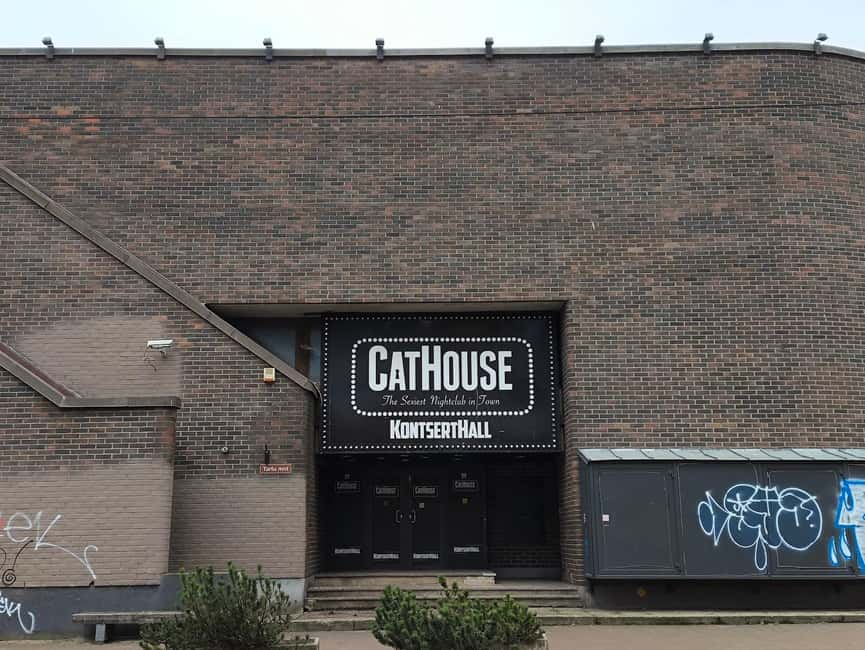
The tour finishes at Tallinna Linnahall, an imposing Soviet-era structure built on a grand scale. Today it is an abandoned relic, and its worn condition creates a sharp contrast with the original ambition behind it.
Linnahall is visually striking because it is both architecture and evidence of change. It suggests the confidence of a system that wanted to build large public spaces, while its present state raises questions about maintenance, politics, money, and what a city chooses to preserve.
The steps are part of the experience, but they need care. In winter, icy conditions can make them unsafe. When that happens, the tour’s ending may change to Tallinn’s Old Town. This is not a minor point if you are booking around December, January, or February. Wear shoes with good grip, and accept that the final stop may depend on the weather on the day.
The adjusted ending does not cancel the rest of the walk, but it can change the final impression. If Linnahall is the main reason you want to book, check the conditions and ask about the planned ending before setting out.
What the $35 price gets you
At $35 per person, this is a focused two-hour tour rather than a full-day history program. The value comes from the guide’s research, the route, and the way ordinary places are explained.
You are paying for interpretation, not admission to a collection of interiors. The route includes important exteriors and pass-by sites, and the KGB prison cells are listed as a pass-by stop. Meals, drinks, transport to the meeting point, and personal spending are not included.
For someone interested in Soviet history, the price is reasonable if you want a clear introduction with local context. It is less compelling if you only want famous sights or prefer to explore at your own pace without a guide.
Tom has also sent additional reading material after the walk, according to the information provided. That adds value because the subject is large, and two hours can only cover so much. One person also received suggestions for further places to visit, including the Soviet Garden and KGB Museum, though you should treat those as possible follow-up ideas rather than included stops.
Who will enjoy this walk most
I would choose this tour if you like modern history, Cold War politics, architecture, or stories about daily life. It also suits people who have already seen Tallinn’s Old Town and want to understand the city beyond its medieval center.
It works well for older teenagers and adults. Children under 12 are not suitable for the tour, and the subject matter may be too heavy for younger children even if the age restriction were different.
You do not need specialist knowledge. Tom’s role is to make the period accessible, and the feedback repeatedly points to clear explanations and engaging stories. You can come with a strong interest in Soviet history or simply a desire to understand Estonia’s recent past.
The walk may also suit you if you enjoy photography, but it is not primarily a photo tour. Some sites are worn, abandoned, or visually stark rather than conventionally beautiful.
Accessibility, weather and booking details
The activity information contains conflicting accessibility details. One section says the tour is wheelchair accessible, while another says it is not suitable for wheelchair users. Because the route includes walking and the Linnahall steps may become unsafe in icy weather, contact Hidden Tallinn before booking if you use a wheelchair or have limited mobility.
Free cancellation is available up to 24 hours before the tour for a full refund. You can also reserve now and pay later, which is useful when your Tallinn plans are still shifting.
The tour is offered in English. Bring clothing suited to the forecast, especially in late autumn and winter. Rain moves the meeting point into the hotel lobby, while severe ice may change the ending.
Should you book Hidden Tallinn?
Book it if you want Tallinn explained through its recent past rather than only its medieval streets. The strongest reasons are Tom’s detailed storytelling, the focus on everyday life, and the route’s mix of major sites and easy-to-miss places.
Skip it if you dislike walking in poor weather, want extensive interior visits, or are mainly interested in medieval Tallinn. Also think twice if Linnahall is essential to your plan and you are visiting during icy weather.
For most curious adults, this is a good use of two hours and $35. It gives you a sharper understanding of surveillance, shortages, architecture, and quiet resistance, then leaves you with ideas for exploring Tallinn on your own.
FAQ
How long is the Hidden Tallinn Soviet Walking Tour?
The tour lasts two hours.
What language is the tour conducted in?
The tour is conducted in English.
Where does the tour begin?
It begins outside Hampton by Hilton Tallinn, next to the Hampton Hilton sign. In rainy weather, the meeting point is inside the hotel lobby.
Where does the tour finish?
The planned finishing point is Tallinna Linnahall. In winter, the ending may move to Tallinn’s Old Town if weather conditions make the Linnahall steps unsafe.
Does the tour visit the former KGB Headquarters?
The former KGB Headquarters is one of the key sites included in the walking route.
Are the KGB prison cells included?
The KGB prison cells are listed as a pass-by stop, so you should not assume that an interior visit is included.
Does the route include Tallinn Central Market?
Yes. The tour visits Tallinn’s Central Market, described as the city’s last remaining Soviet-era market.
Is transport included?
No. You are responsible for getting to the Hampton by Hilton meeting point. Transport after the tour is also not included.
Is the tour suitable for children?
The tour is not suitable for children under 12.
What happens if I need to cancel?
You can cancel up to 24 hours in advance for a full refund. You can also reserve now and pay later.
New walking tours around the world
- Niagara Falls, Canada: White Water Walk Entry Ticket★ 4.5 · 147 reviews
- Zadar: Food Tasting & Old Town Walking Tour★ 5.0 · 94 reviews
- Niagara Falls: Walking Tour, Journey Behind Falls, & Cruise★ 4.8 · 773 reviews
- NYC: Walking Tour with Local Guide and 30+ Top NYC Sights★ 4.5 · 248 reviews
- New York City: Gangsters and Ghosts 2-Hour Walking Tour★ 4.7 · 615 reviews
- NYC: History of Slavery & Underground Railroad Walking Tour★ 4.7 · 87 reviews
- New York City’s Hell’s Kitchen: Walking Food Tour★ 4.8 · 200 reviews
- New York City: Central Park Walking Tour★ 4.7 · 82 reviews